Using Active Voice in
Police Reports
by Jean Reynolds, Ph.D.
Using Active Voice in
Police Reports
by Jean Reynolds, Ph.D.
Many traditions have shaped
police practices over the years.
Some of those traditions are
useful, and some aren’t.
Passive voice is one tradition that law
enforcement would be better off
without.
What is “passive voice,” how did it
find its way into police reports, and
why should you avoid using it?
Let’s start with a look at some
active voice and passive voice
sentences.
Active voice: I questioned Boaz about
the argument.
Passive voice: Boaz was questioned
about the argument.
Active voice: Jerome stole the watch.
Passive voice: The watch was stolen
by Jerome.
Active voice: I requested medical help.
Passive voice: Medical help was
requested.
How did the “passive voice”
tradition get started?
Police officers used to believe that
the word “I” was too subjective.
Anyone who said “I” couldn’t be
trusted.
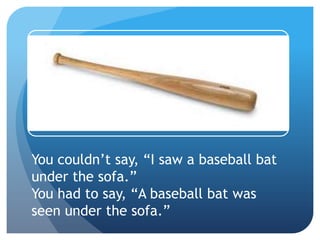
You couldn’t say, “I saw a baseball bat
under the sofa.”
You had to say, “A baseball bat was
seen under the sofa.”
Do you think
that’s true? Is
“I” a dangerous
word?
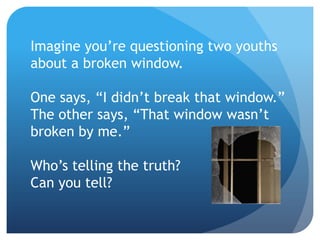
Imagine you’re questioning two youths
about a broken window.
One says, “I didn’t break that window.”
The other says, “That window wasn’t
broken by me.”
Who’s telling the truth?
Can you tell?
Of course not.
Now let’s think about a courtroom.
The next time you’re in court for a
hearing, listen carefully to the
testimony.
You’ll hear the word “I” over and over.
Does that
automatically mean
the witness is lying?
Of course not.
It’s just not that easy
to figure out who’s
trustworthy and who
isn’t.
Honesty and
credibility are
character traits,
not verbal
tricks.
But passive voice is still very common in
police reports. So why should you avoid
it?
Two reasons.
1. Passive voice
sentences don’t
state who did
what.
2. Usage mistakes
may creep in.
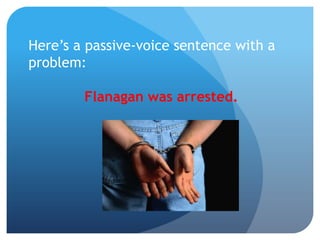
Here’s a passive-voice sentence with a
problem:
Flanagan was arrested.
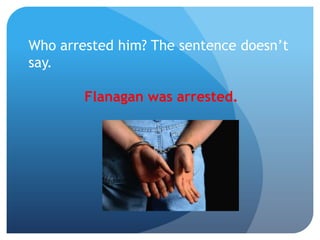
Who arrested him? The sentence doesn’t
say.
Flanagan was arrested.
If you write the sentence in active voice,
you solve the problem:
I arrested Flanagan.
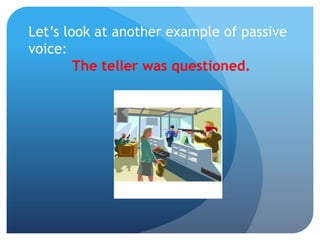
Let’s look at another example of passive
voice:
The teller was questioned.
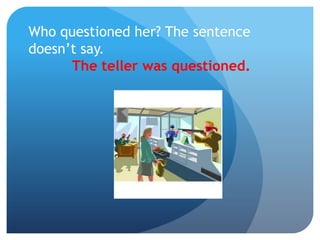
Who questioned her? The sentence
doesn’t say.
The teller was questioned.
Passive voice can create problems during
a court hearing.
The teller was questioned.
What if you can’t remember who
questioned the teller?
Or what if you do remember…and the
officer who did the interview isn’t in the
courtroom?
The teller was questioned.
It’s embarrassing—and you could lose the
case.
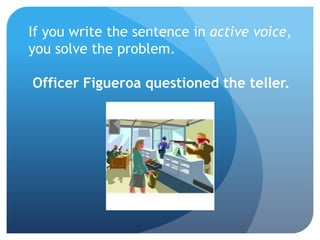
If you write the sentence in active voice,
you solve the problem.
Officer Figueroa questioned the teller.
There’s one more problem to think
about: Usage errors.
Passive voice sentences often require –ed
endings. Busy officers sometimes forget

those endings.
The teller was question. INCORRECT
The teller was questioned. CORRECT
One more caution: Don’t assume that
every is or was sentence is passive
voice.
Farrell was eating breakfast when I
knocked on the door. ACTIVE VOICE
Farrell was driven to the meeting by a
neighbor. PASSIVE VOICE
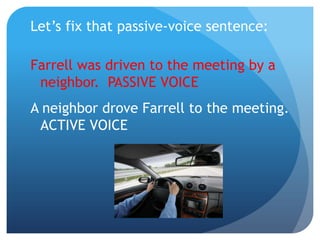
Let’s fix that passive-voice sentence:
Farrell was driven to the meeting by a
neighbor. PASSIVE VOICE
A neighbor drove Farrell to the meeting.
ACTIVE VOICE
Here’s a question for you:
One of these sentences is written in
passive voice. Can you figure out which
one it is?
Joe was living in Miami in 1954.
The house was purchased in 1954.
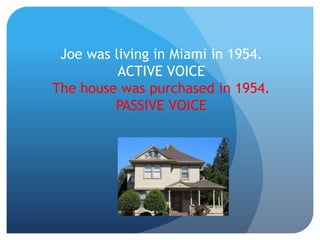
Joe was living in Miami in 1954.
ACTIVE VOICE
The house was purchased in 1954.
PASSIVE VOICE
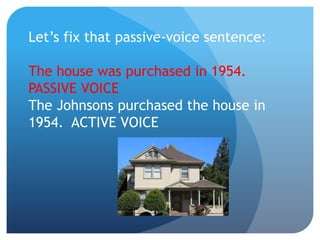
Let’s fix that passive-voice sentence:
The house was purchased in 1954.
PASSIVE VOICE
The Johnsons purchased the house in
1954. ACTIVE VOICE
You can learn more about passive voice
at www.YourPoliceWrite.com.
All the resources there are FREE:
www.YourPoliceWrite.com.
And if you’re
looking for a
low-cost,
practical book…
Criminal Justice Report
Writing is available
from www.Amazon.com
for just $19.95.
View a free sample
online.
An e-book edition is
available from
www.Smashwords.com
for only $9.99.
A discount price is
available for class sets
(minimum five books).
A free Instructor’s Manual
is available for instructors
and administrators.
Send an e-mail request
from your official account
to jreynoldswrite at
aol.com.

Using Active Voice in Police Reports

  • 1.
    Using Active Voicein Police Reports by Jean Reynolds, Ph.D.
  • 2.
    Using Active Voicein Police Reports by Jean Reynolds, Ph.D.
  • 3.
    Many traditions haveshaped police practices over the years.
  • 4.
    Some of thosetraditions are useful, and some aren’t.
  • 5.
    Passive voice isone tradition that law enforcement would be better off without.
  • 6.
    What is “passivevoice,” how did it find its way into police reports, and why should you avoid using it?
  • 7.
    Let’s start witha look at some active voice and passive voice sentences.
  • 8.
    Active voice: Iquestioned Boaz about the argument. Passive voice: Boaz was questioned about the argument.
  • 9.
    Active voice: Jeromestole the watch. Passive voice: The watch was stolen by Jerome.
  • 10.
    Active voice: Irequested medical help. Passive voice: Medical help was requested.
  • 11.
    How did the“passive voice” tradition get started? Police officers used to believe that the word “I” was too subjective. Anyone who said “I” couldn’t be trusted.
  • 12.
    You couldn’t say,“I saw a baseball bat under the sofa.” You had to say, “A baseball bat was seen under the sofa.”
  • 13.
    Do you think that’strue? Is “I” a dangerous word?
  • 14.
    Imagine you’re questioningtwo youths about a broken window. One says, “I didn’t break that window.” The other says, “That window wasn’t broken by me.” Who’s telling the truth? Can you tell?
  • 15.
    Of course not. Nowlet’s think about a courtroom. The next time you’re in court for a hearing, listen carefully to the testimony. You’ll hear the word “I” over and over.
  • 16.
  • 17.
    Of course not. It’sjust not that easy to figure out who’s trustworthy and who isn’t.
  • 18.
    Honesty and credibility are charactertraits, not verbal tricks.
  • 19.
    But passive voiceis still very common in police reports. So why should you avoid it?
  • 20.
    Two reasons. 1. Passivevoice sentences don’t state who did what. 2. Usage mistakes may creep in.
  • 21.
    Here’s a passive-voicesentence with a problem: Flanagan was arrested.
  • 22.
    Who arrested him?The sentence doesn’t say. Flanagan was arrested.
  • 23.
    If you writethe sentence in active voice, you solve the problem: I arrested Flanagan.
  • 24.
    Let’s look atanother example of passive voice: The teller was questioned.
  • 25.
    Who questioned her?The sentence doesn’t say. The teller was questioned.
  • 26.
    Passive voice cancreate problems during a court hearing. The teller was questioned. What if you can’t remember who questioned the teller?
  • 27.
    Or what ifyou do remember…and the officer who did the interview isn’t in the courtroom? The teller was questioned. It’s embarrassing—and you could lose the case.
  • 28.
    If you writethe sentence in active voice, you solve the problem. Officer Figueroa questioned the teller.
  • 29.
    There’s one moreproblem to think about: Usage errors. Passive voice sentences often require –ed endings. Busy officers sometimes forget those endings. The teller was question. INCORRECT The teller was questioned. CORRECT

  • 30.
    One more caution:Don’t assume that every is or was sentence is passive voice. Farrell was eating breakfast when I knocked on the door. ACTIVE VOICE Farrell was driven to the meeting by a neighbor. PASSIVE VOICE
  • 31.
    Let’s fix thatpassive-voice sentence: Farrell was driven to the meeting by a neighbor. PASSIVE VOICE A neighbor drove Farrell to the meeting. ACTIVE VOICE
  • 32.
    Here’s a questionfor you: One of these sentences is written in passive voice. Can you figure out which one it is? Joe was living in Miami in 1954. The house was purchased in 1954.


  • 33.
    Joe was livingin Miami in 1954. ACTIVE VOICE The house was purchased in 1954. PASSIVE VOICE
  • 34.
    Let’s fix thatpassive-voice sentence: The house was purchased in 1954. PASSIVE VOICE The Johnsons purchased the house in 1954. ACTIVE VOICE
  • 35.
    You can learnmore about passive voice at www.YourPoliceWrite.com.
  • 36.
    All the resourcesthere are FREE: www.YourPoliceWrite.com.
  • 37.
    And if you’re lookingfor a low-cost, practical book…
  • 38.
    Criminal Justice Report Writingis available from www.Amazon.com for just $19.95. View a free sample online.
  • 39.
    An e-book editionis available from www.Smashwords.com for only $9.99.
  • 40.
    A discount priceis available for class sets (minimum five books). A free Instructor’s Manual is available for instructors and administrators. Send an e-mail request from your official account to jreynoldswrite at aol.com.