Teaching Report Writing:
“But I’m Not an English
Teacher!”
Part Three
by Jean Reynolds,
Ph.D.
These tips are for instructors and
administrators who want to help
officers with their writing.
Let’s deal with pronouns first.
Many writers have
difficulty with
expressions like
“John and I,” “him
and me,” and “Susan
and her.”
There’s an easy way to get these words
right every time: Just shorten the
sentence.
Take a look at this sentence:
Watson told John and I about the
missing money.
Should it be “John and me?”
Just shorten the sentence, and you’ll
have your answer.
Watson told I about the missing money. X
Watson told me about the missing money.

Watson told John and me about the
missing money. 
Let’s try a few more:
Karen and me met with the bank
manager.
Me met with the bank manager. X
I met with the bank manager. 
Karen and I met with the bank
manager. 
Him and I searched the basement.
Him searched the basement. X
He searched the basement. 
I searched the basement. 
He and I searched the basement. 
Sometimes you’ll need to make a
sentence longer to hear the correct
answer.
Comparison
sentences work
this way.
Try this one: Linda scored higher on the
test than me.
Linda scored higher on the test than me
did. X
Linda scored higher on the test than I
did. ✔
Linda scored higher on the test than I. ✔
(Did you notice the spelling of than?)
Now try this one: Sgt. Corelli arrived
earlier than him.
Sgt. Corelli arrived earlier than him did.
X
Sgt. Corelli arrived earlier than he did.
✔
Sgt. Corelli arrived earlier than he. ✔
(Again: Did you notice the spelling of
than?)
You should start most sentences with a
person, place or thing.
This is also good
police practice
because you’ll always
have a written record
of who did what.
Now let’s look at the word his.
his
It’s an interesting
word because it’s
possessive—but his
doesn’t have an
apostrophe.
Now let’s look at sentence structure.
You can avoid most
sentence mistakes by
keeping your
sentences simple.
But some writers are puzzled when they come
across other possessive words that never have
apostrophes.
That money is his.
That money is hers.
That money is ours.
That money is yours.
That money is theirs.
No apostrophes!
This “shorten the sentence” trick will
work in many sentences with pronouns:
I, me, he, she,
him, her, we, us,
they, them
If you think about his, you’ll never make a
mistake with a possessive pronoun.
That money is his.
That money is hers.
That money is ours.
That money is yours.
That money is theirs.
No apostrophes!
Then is a time word: I unlocked the door, and
then I went inside.
Many people never
think about a similar
word used for
comparisons: than.
He’s been on the
force longer than I
have.
What about the possessive of it?
The same principle applies: Think about his.
No apostrophe.
Joe hurt his foot.
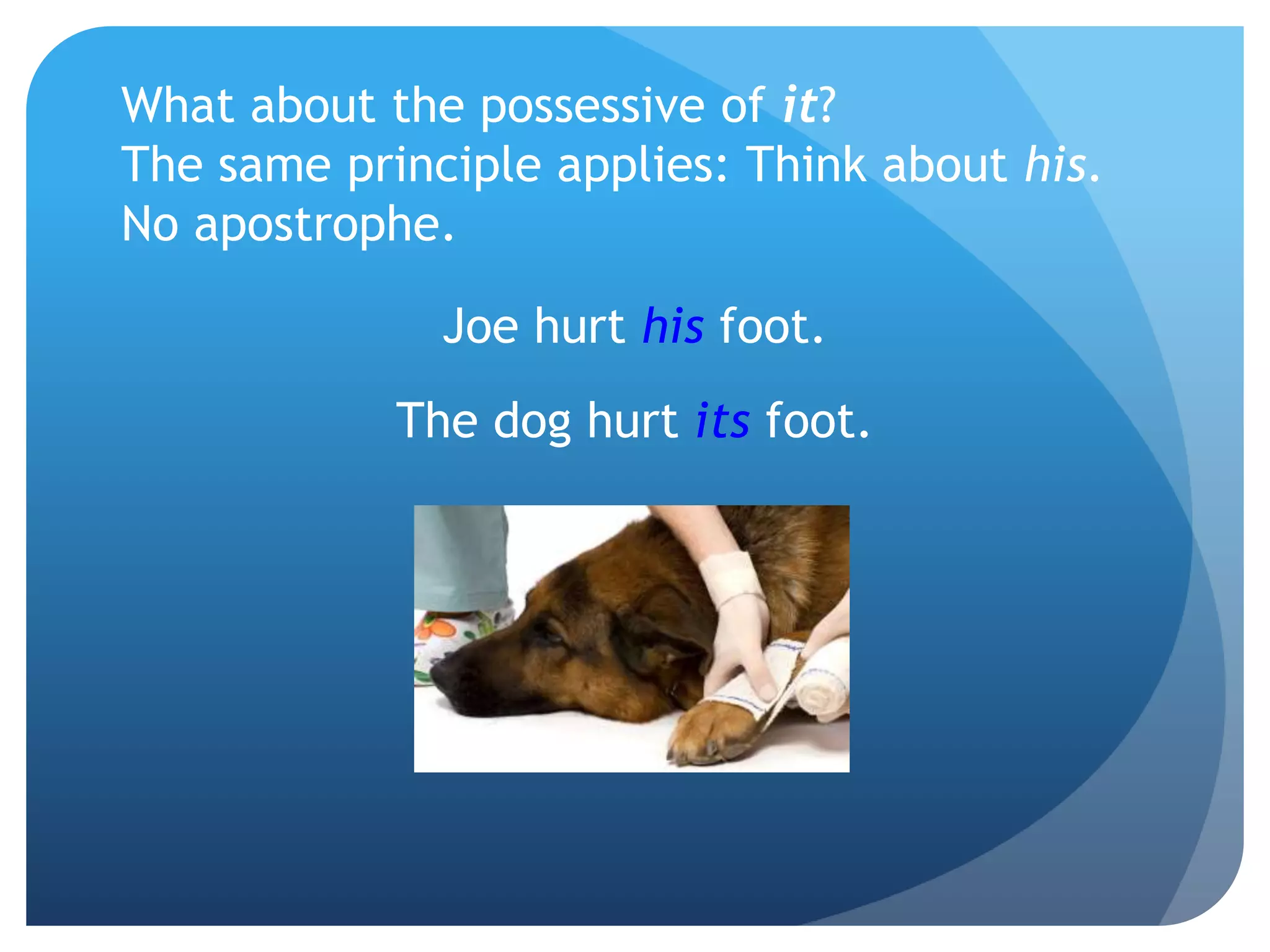
The dog hurt its foot.
The coat lost one
of its buttons.
The club is seeing
a decline in its
membership.
his
its
But what is the
contraction of
it is?
Easy: it’s.
I like to
pretend that
the apostrophe
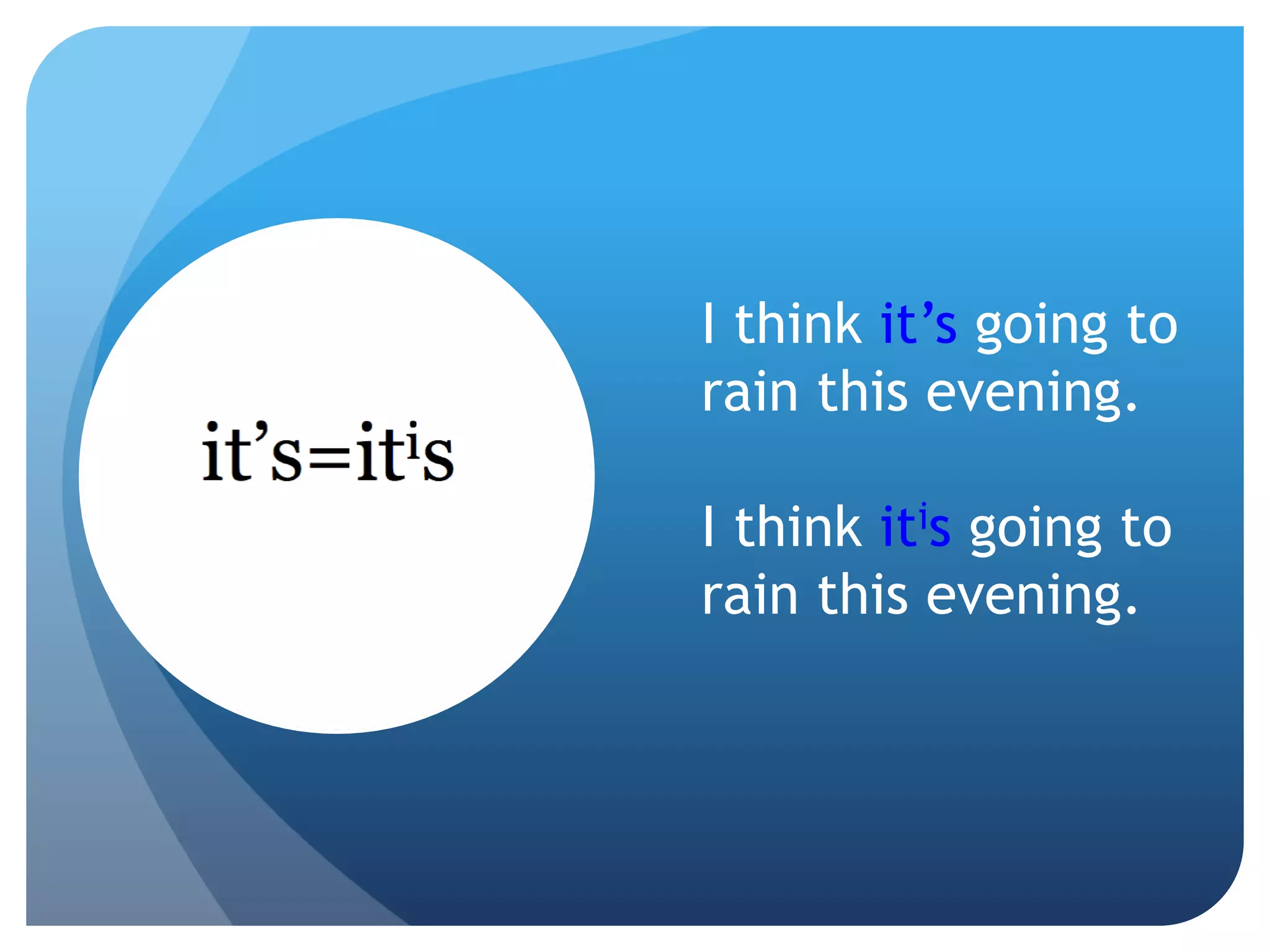
is a tiny “i.”
I think it’s going to
rain this evening.
I think itis going to
rain this evening.
Here’s one more hint: NEVER put an
apostrophe after it: its’
There are only two correct forms:
The dog hurt its
foot.
I think it’s going to
rain this evening.
its (possessive, like
his)
it’s (contraction of
itis)
Let’s look at a few
more of these
troublesome words.
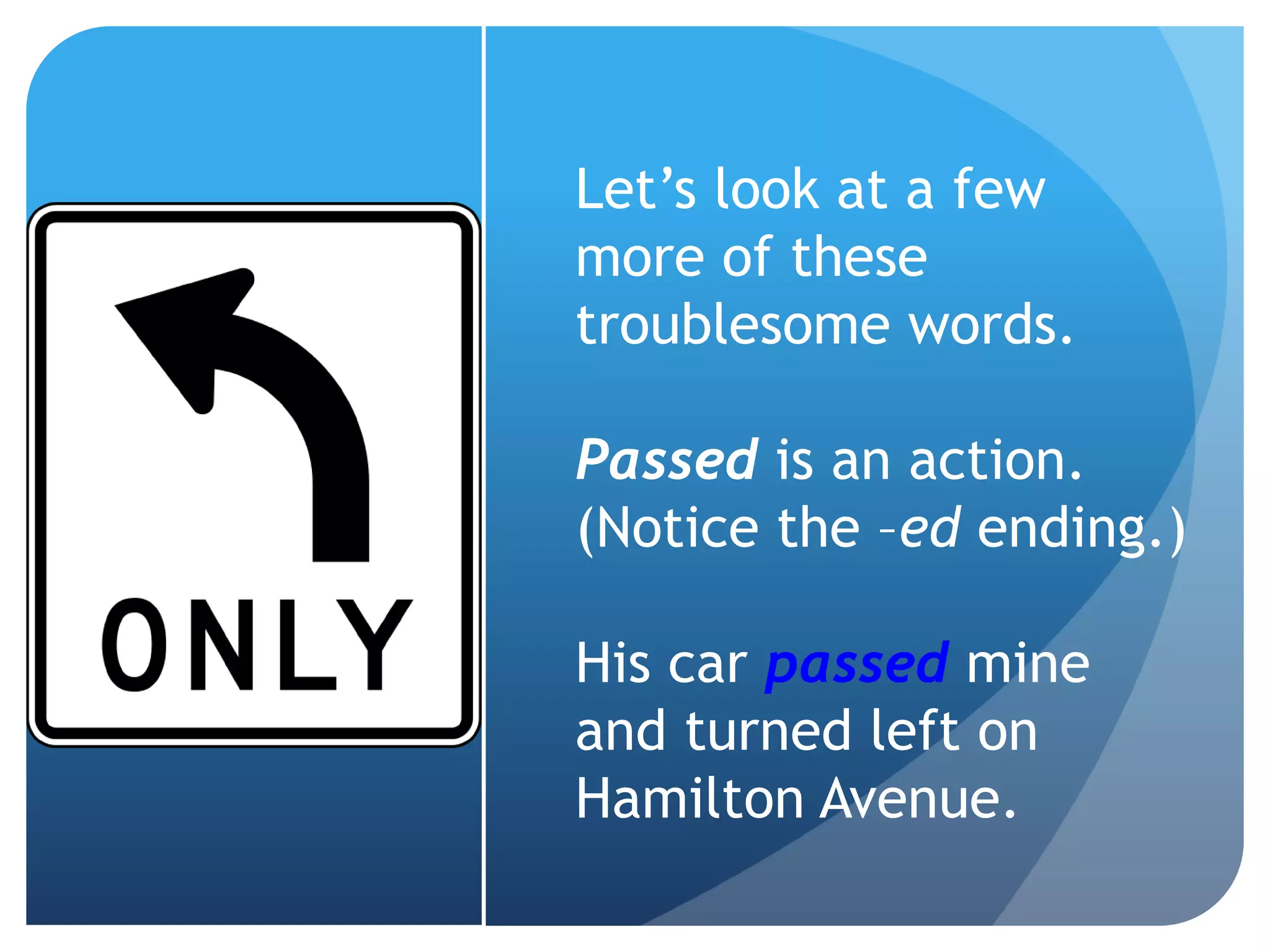
Passed is an action.
(Notice the –ed ending.)
His car passed mine
and turned left on
Hamilton Avenue.
Past refers to
time.
Although he had a
drinking problem
in the past, he’s
been sober for five
years.
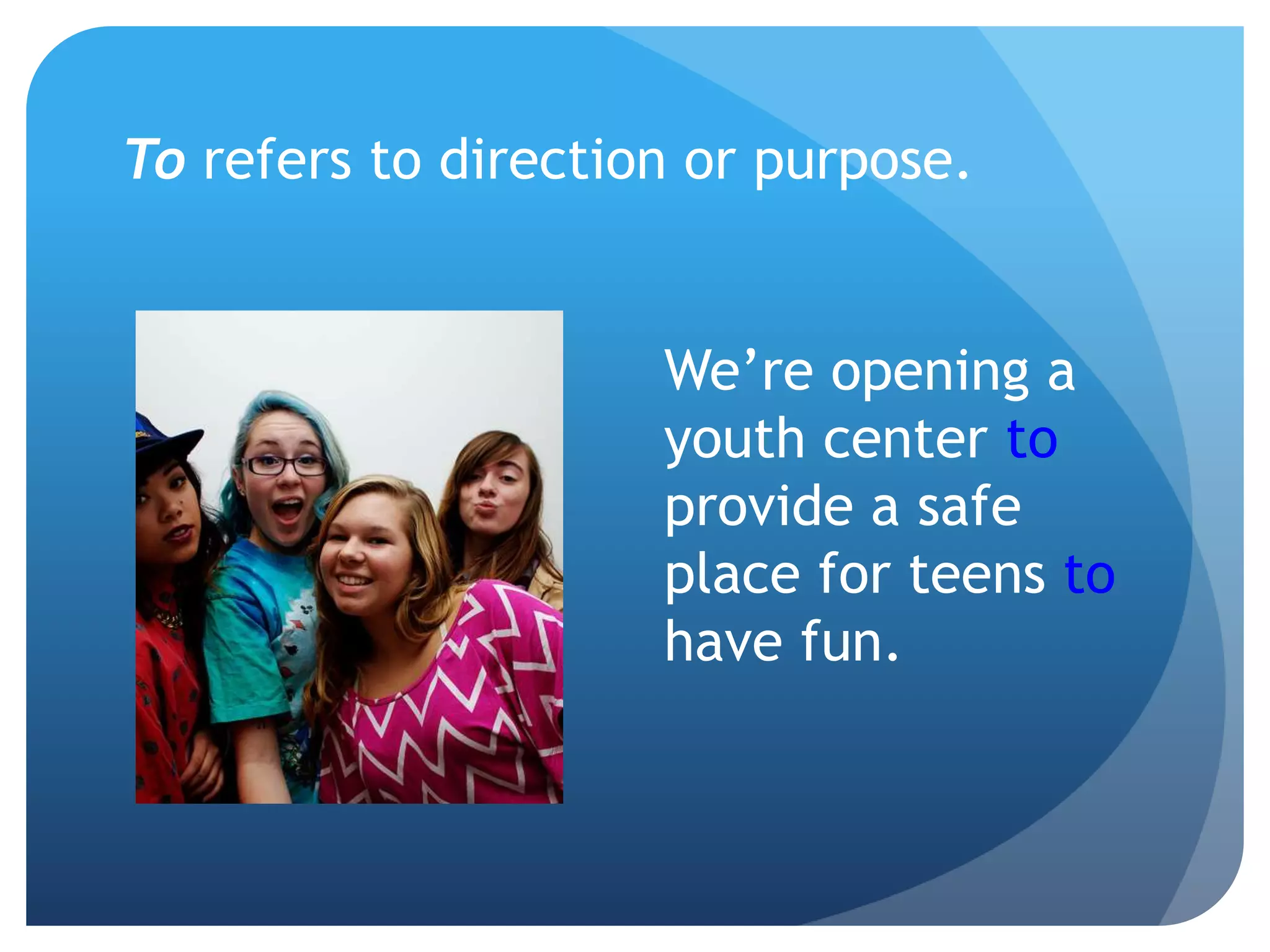
To refers to direction or purpose.
We’re opening a
youth center to
provide a safe
place for teens to
have fun.
Too means excess. (Think of a couple of
extra o’s: tooooo much.)
I ate too much at
lunch and started
feeling sleepy.
Additionally, too can mean also.
I drive a Nissan;
Harris has one
too.
Where refers to a place:
I can’t remember where I laid my
wallet.
Where did you live before you moved to
Rosedale?
(Notice the word here inside: where.)
Were is a verb (action).
While we were
talking to Mrs.
Clemons, her
husband returned
home from work.
And here’s one more troublesome word:
a lot.
It’s always two
words, never one.
Most of these
words are so
ordinary and
familiar that some
writers never
notice them.
How can students
train their brains
to stop and think
about them every
time?
The answer is repetition.
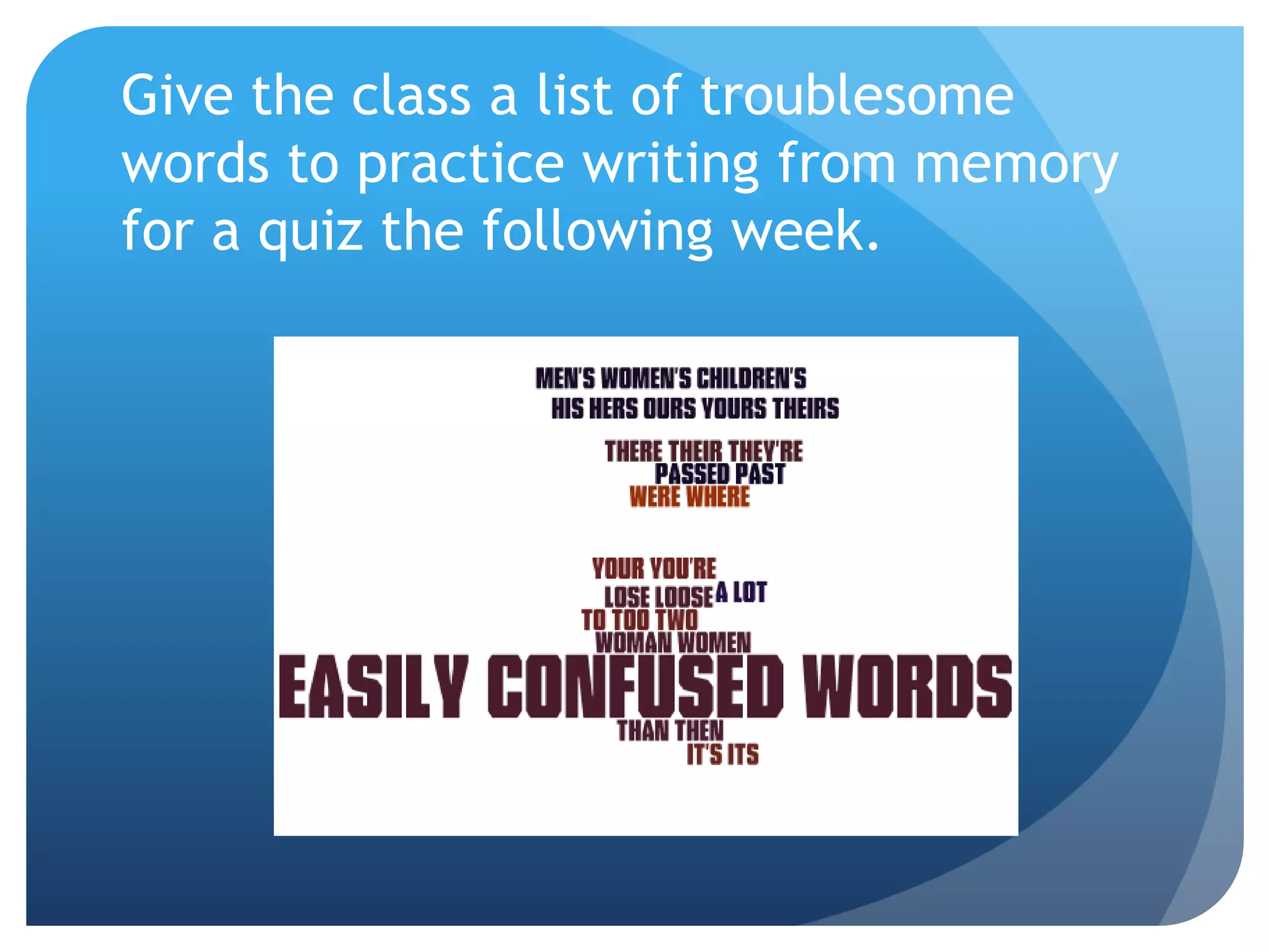
Give the class a list of troublesome
words to practice writing from memory
for a quiz the following week.
a lot
his, hers, ours, yours,
theirs
it’s, its
lose, loose
passed, past
than, then
there, their, they’re
to, too, two
were, where
woman, women
your, you’re
When students spend time practicing
these words…
…they’ll also
develop the habit
of stopping to
think when they
use them in
sentences.
Result? Success!

But I'm Not an English Teacher Part Three

  • 1.
    Teaching Report Writing: “ButI’m Not an English Teacher!” Part Three by Jean Reynolds, Ph.D.
  • 2.
    These tips arefor instructors and administrators who want to help officers with their writing.
  • 3.
    Let’s deal withpronouns first. Many writers have difficulty with expressions like “John and I,” “him and me,” and “Susan and her.”
  • 4.
    There’s an easyway to get these words right every time: Just shorten the sentence.
  • 5.
    Take a lookat this sentence: Watson told John and I about the missing money. Should it be “John and me?” Just shorten the sentence, and you’ll have your answer.
  • 6.
    Watson told Iabout the missing money. X Watson told me about the missing money.  Watson told John and me about the missing money. 
  • 7.
    Let’s try afew more: Karen and me met with the bank manager. Me met with the bank manager. X I met with the bank manager.  Karen and I met with the bank manager. 
  • 8.
    Him and Isearched the basement. Him searched the basement. X He searched the basement.  I searched the basement.  He and I searched the basement. 
  • 9.
    Sometimes you’ll needto make a sentence longer to hear the correct answer. Comparison sentences work this way.
  • 10.
    Try this one:Linda scored higher on the test than me.
  • 11.
    Linda scored higheron the test than me did. X Linda scored higher on the test than I did. ✔ Linda scored higher on the test than I. ✔ (Did you notice the spelling of than?)
  • 12.
    Now try thisone: Sgt. Corelli arrived earlier than him.
  • 13.
    Sgt. Corelli arrivedearlier than him did. X Sgt. Corelli arrived earlier than he did. ✔ Sgt. Corelli arrived earlier than he. ✔ (Again: Did you notice the spelling of than?)
  • 14.
    You should startmost sentences with a person, place or thing. This is also good police practice because you’ll always have a written record of who did what.
  • 15.
    Now let’s lookat the word his. his It’s an interesting word because it’s possessive—but his doesn’t have an apostrophe.
  • 16.
    Now let’s lookat sentence structure. You can avoid most sentence mistakes by keeping your sentences simple.
  • 17.
    But some writersare puzzled when they come across other possessive words that never have apostrophes. That money is his. That money is hers. That money is ours. That money is yours. That money is theirs. No apostrophes!
  • 18.
    This “shorten thesentence” trick will work in many sentences with pronouns: I, me, he, she, him, her, we, us, they, them
  • 19.
    If you thinkabout his, you’ll never make a mistake with a possessive pronoun. That money is his. That money is hers. That money is ours. That money is yours. That money is theirs. No apostrophes!
  • 20.
    Then is atime word: I unlocked the door, and then I went inside. Many people never think about a similar word used for comparisons: than. He’s been on the force longer than I have.
  • 21.
    What about thepossessive of it? The same principle applies: Think about his. No apostrophe. Joe hurt his foot. The dog hurt its foot.
  • 22.
    The coat lostone of its buttons. The club is seeing a decline in its membership. his its
  • 23.
    But what isthe contraction of it is? Easy: it’s. I like to pretend that the apostrophe is a tiny “i.”
  • 24.
    I think it’sgoing to rain this evening. I think itis going to rain this evening.
  • 25.
    Here’s one morehint: NEVER put an apostrophe after it: its’ There are only two correct forms: The dog hurt its foot. I think it’s going to rain this evening. its (possessive, like his) it’s (contraction of itis)
  • 26.
    Let’s look ata few more of these troublesome words. Passed is an action. (Notice the –ed ending.) His car passed mine and turned left on Hamilton Avenue.
  • 27.
    Past refers to time. Althoughhe had a drinking problem in the past, he’s been sober for five years.
  • 28.
    To refers todirection or purpose. We’re opening a youth center to provide a safe place for teens to have fun.
  • 29.
    Too means excess.(Think of a couple of extra o’s: tooooo much.) I ate too much at lunch and started feeling sleepy.
  • 30.
    Additionally, too canmean also. I drive a Nissan; Harris has one too.
  • 31.
    Where refers toa place: I can’t remember where I laid my wallet. Where did you live before you moved to Rosedale? (Notice the word here inside: where.)
  • 32.
    Were is averb (action). While we were talking to Mrs. Clemons, her husband returned home from work.
  • 33.
    And here’s onemore troublesome word: a lot. It’s always two words, never one.
  • 34.
    Most of these wordsare so ordinary and familiar that some writers never notice them.
  • 35.
    How can students traintheir brains to stop and think about them every time?
  • 36.
    The answer isrepetition.
  • 37.
    Give the classa list of troublesome words to practice writing from memory for a quiz the following week.
  • 38.
    a lot his, hers,ours, yours, theirs it’s, its lose, loose passed, past than, then there, their, they’re to, too, two were, where woman, women your, you’re
  • 39.
    When students spendtime practicing these words… …they’ll also develop the habit of stopping to think when they use them in sentences. Result? Success!