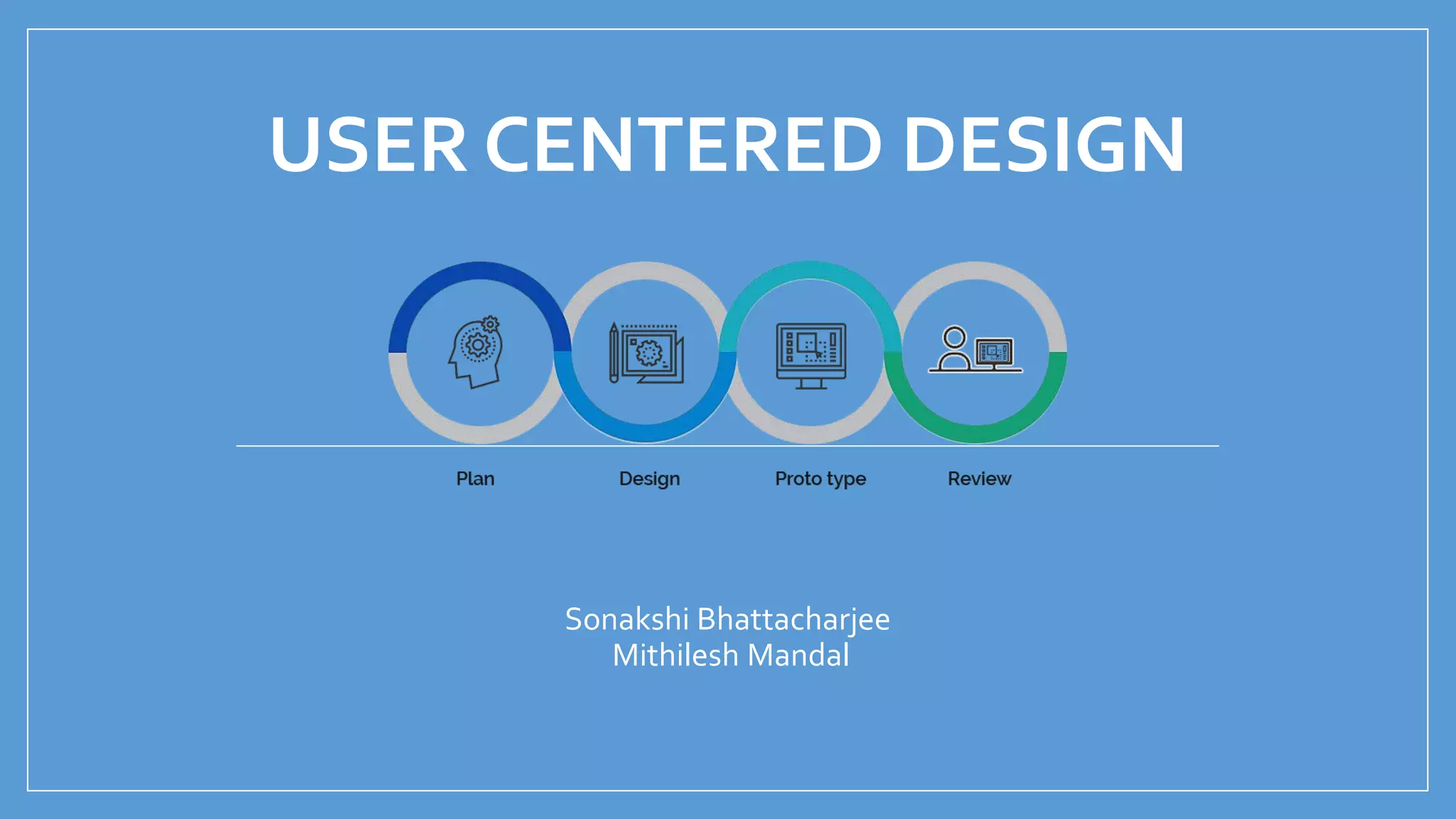
USER CENTERED DESIGN
Sonakshi Bhattacharjee
Mithilesh Mandal
What is UCD?
• ‘… user-centred design emphasizes that the purpose of the system is to serve the
user, not to use a specific technology, not to be an elegant piece of programming.
The needs of the users should dominate the design of the interface, and the needs
of the interface should dominate the design of the rest of the system.’
(Norman 1986)
DEFINITION
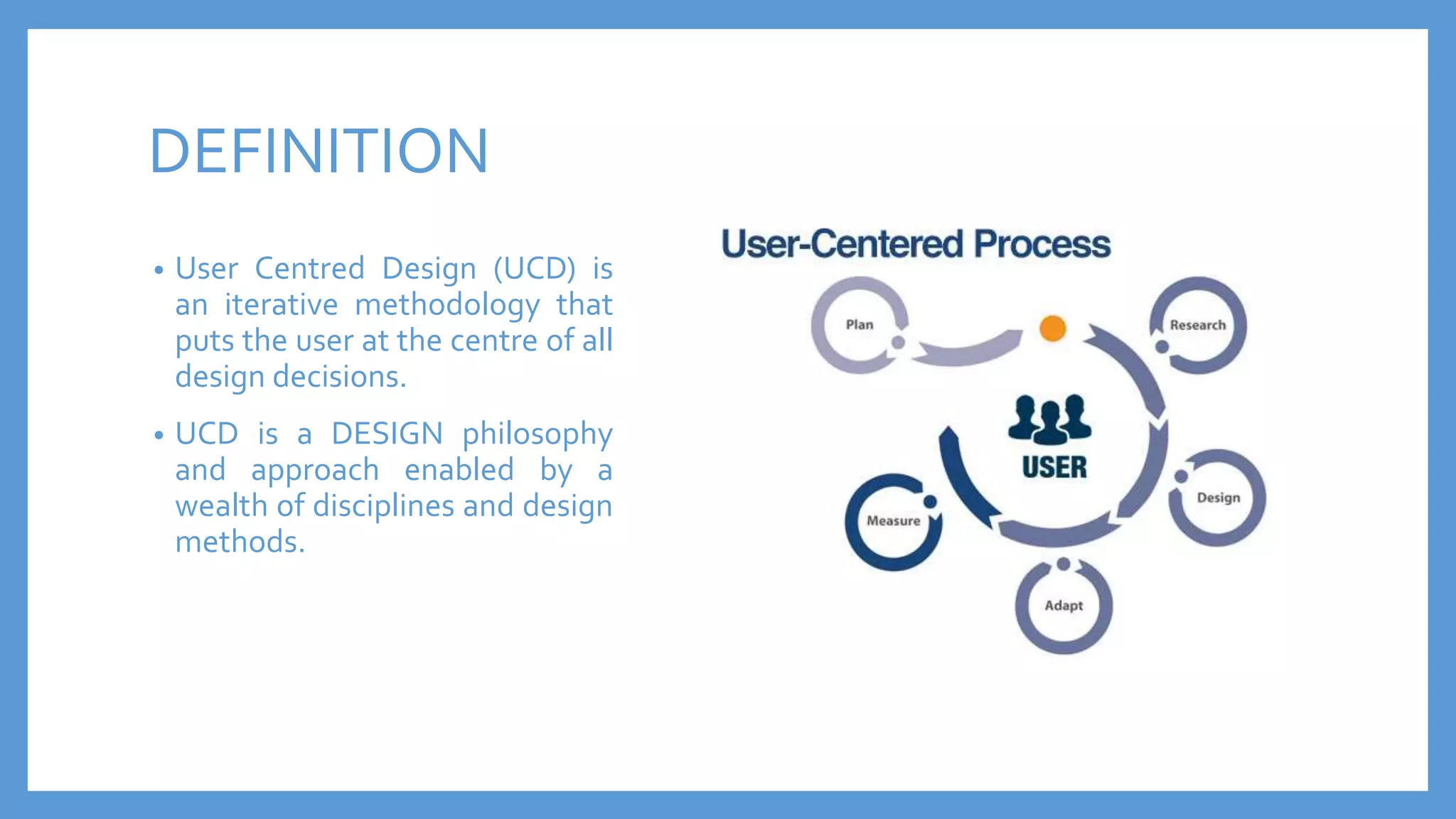
• User Centred Design (UCD) is
an iterative methodology that
puts the user at the centre of all
design decisions.
• UCD is a DESIGN philosophy
and approach enabled by a
wealth of disciplines and design
methods.
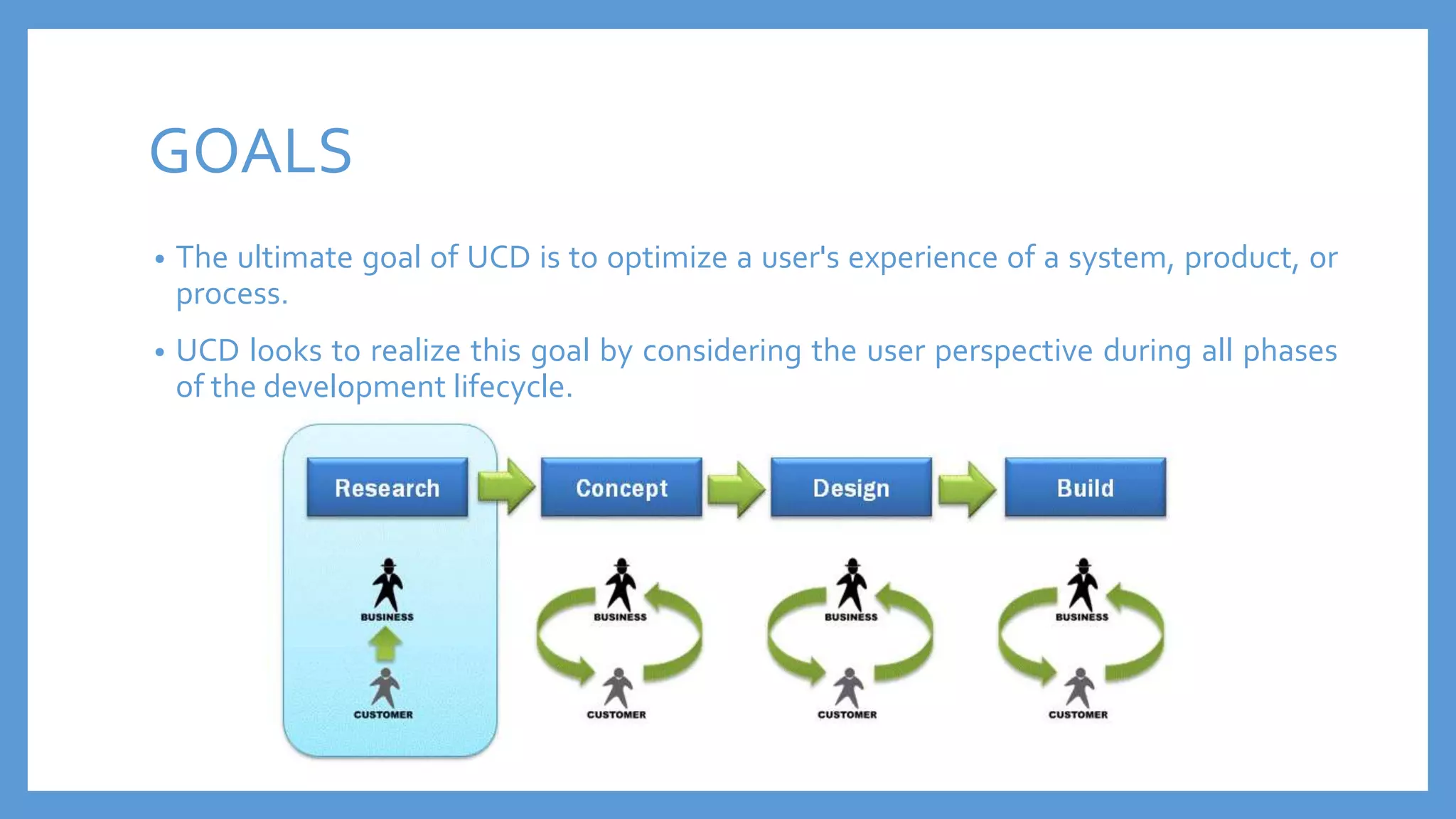
• The ultimate goal of UCD is to optimize a user's experience of a system, product, or
process.
• UCD looks to realize this goal by considering the user perspective during all phases
of the development lifecycle.
GOALS
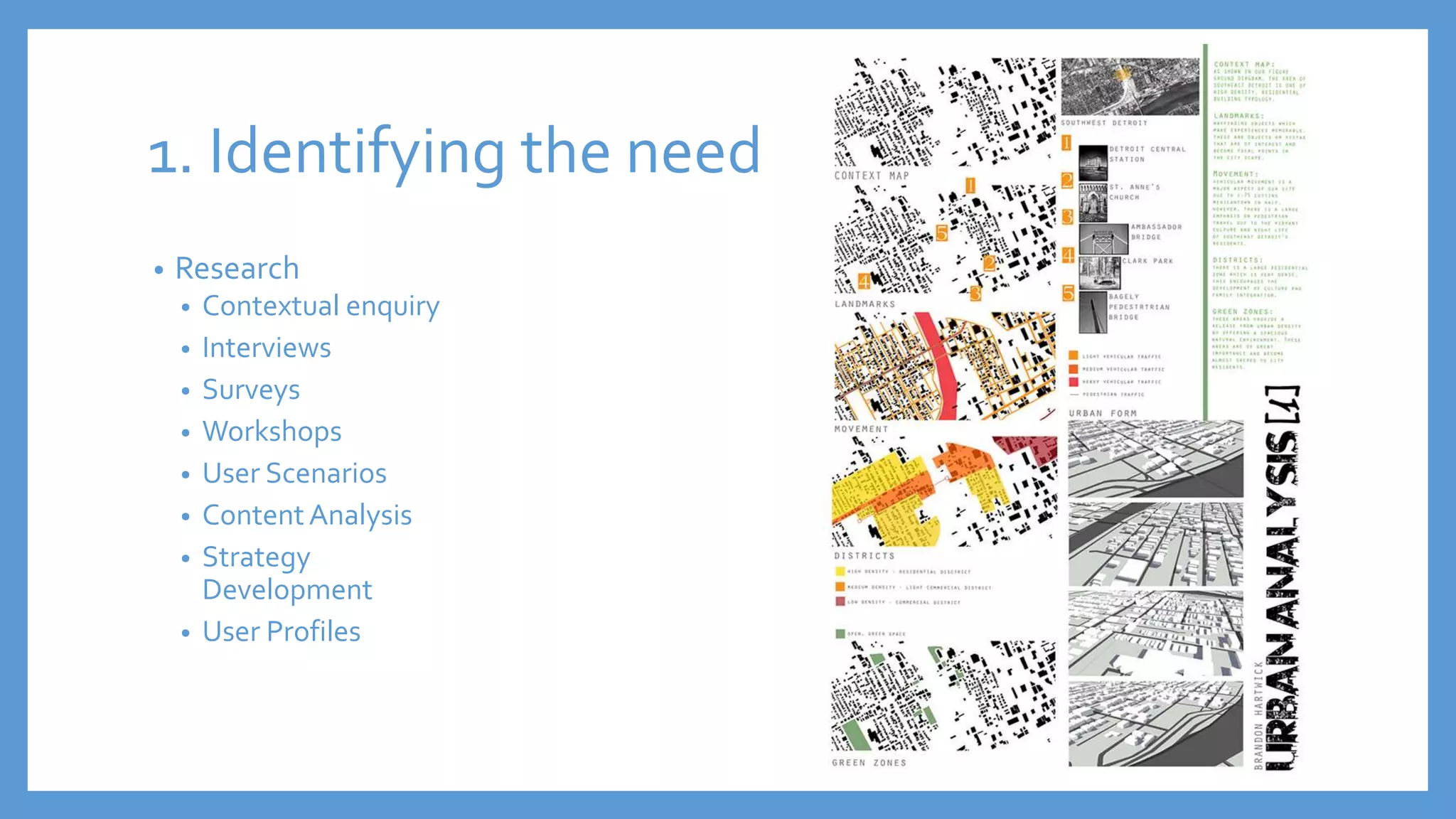
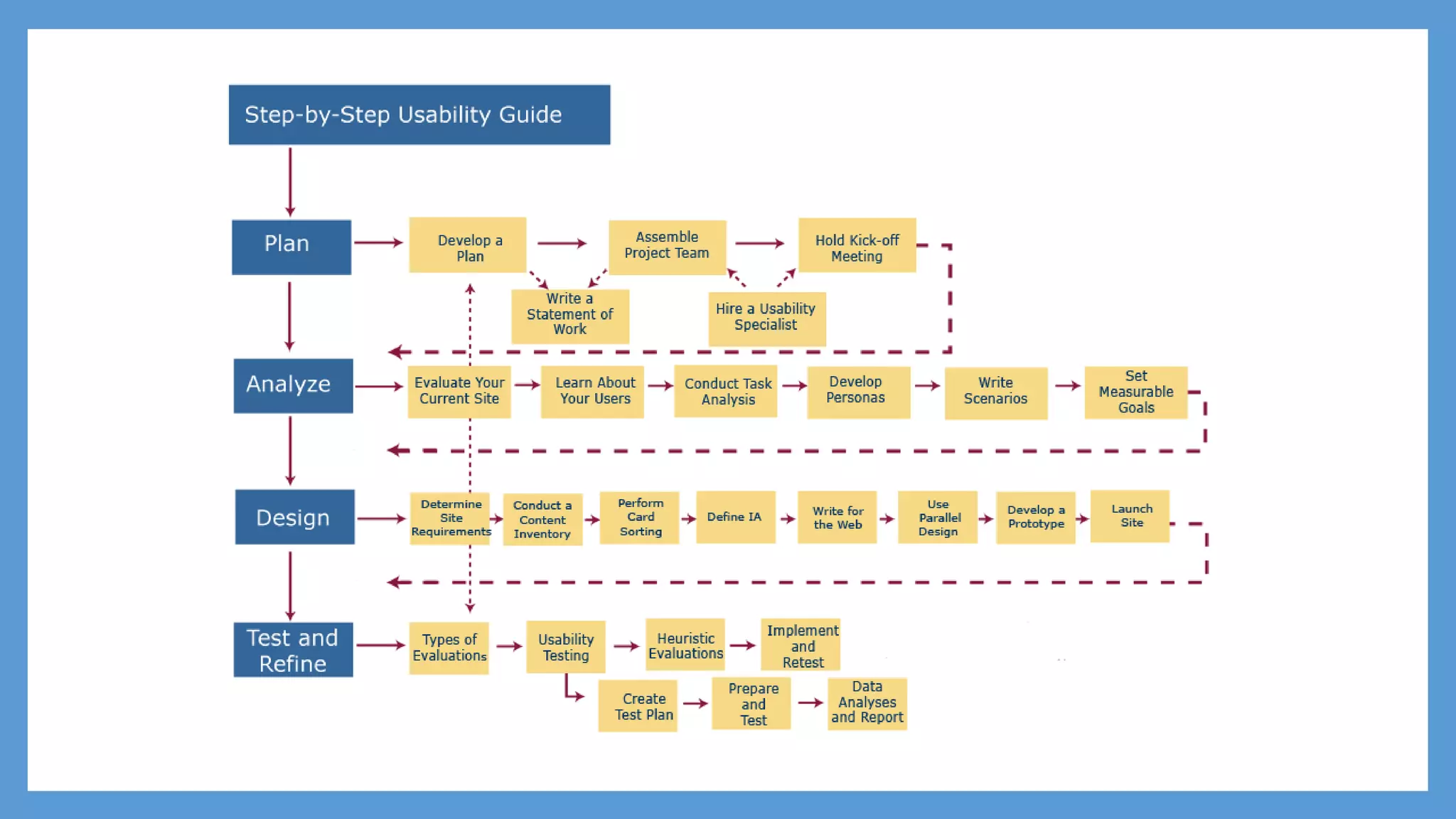
1. Identifying the need
• Research
• Contextual enquiry
• Interviews
• Surveys
• Workshops
• User Scenarios
• ContentAnalysis
• Strategy
Development
• User Profiles
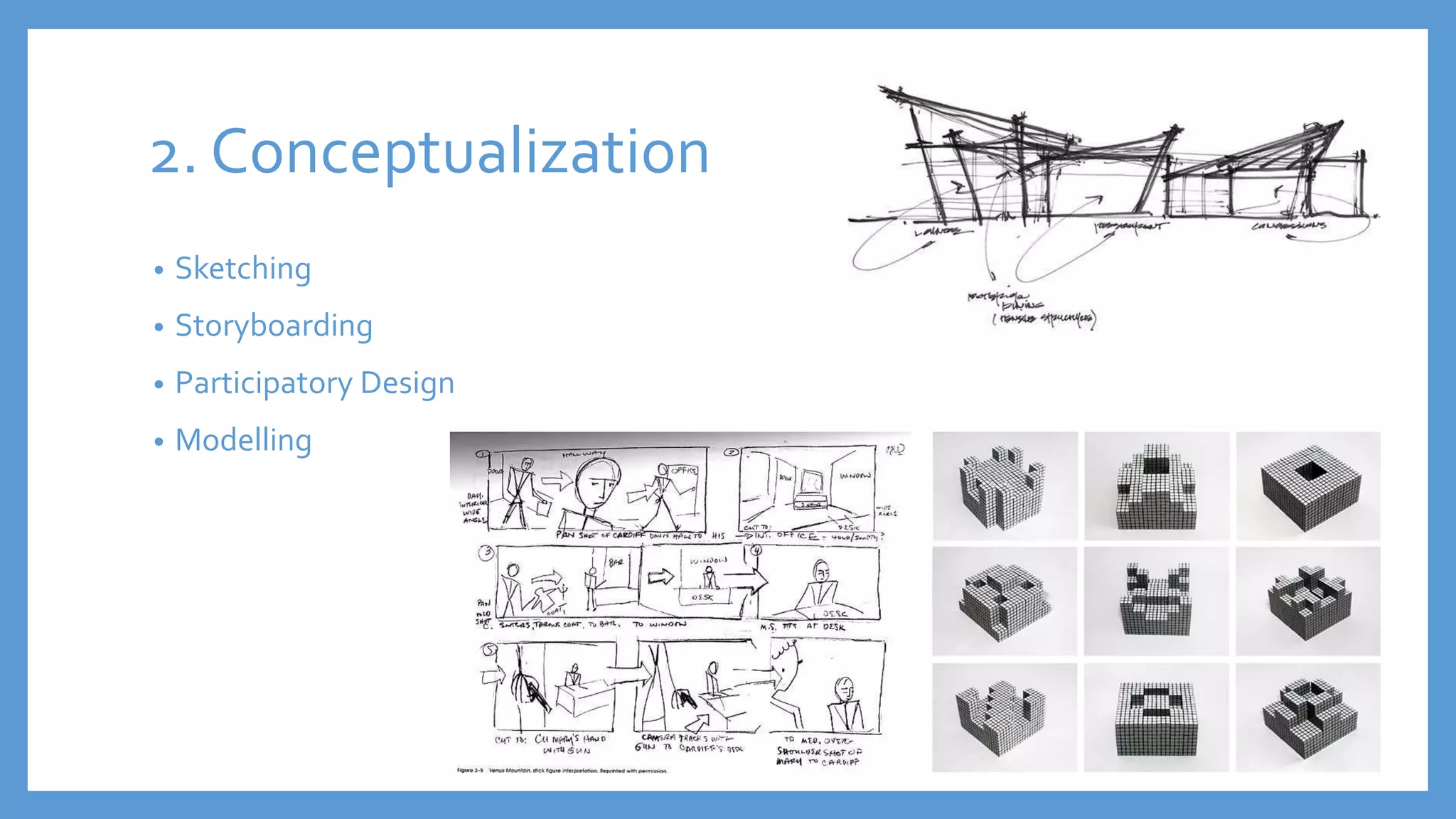
2. Conceptualization
• Sketching
• Storyboarding
• Participatory Design
• Modelling
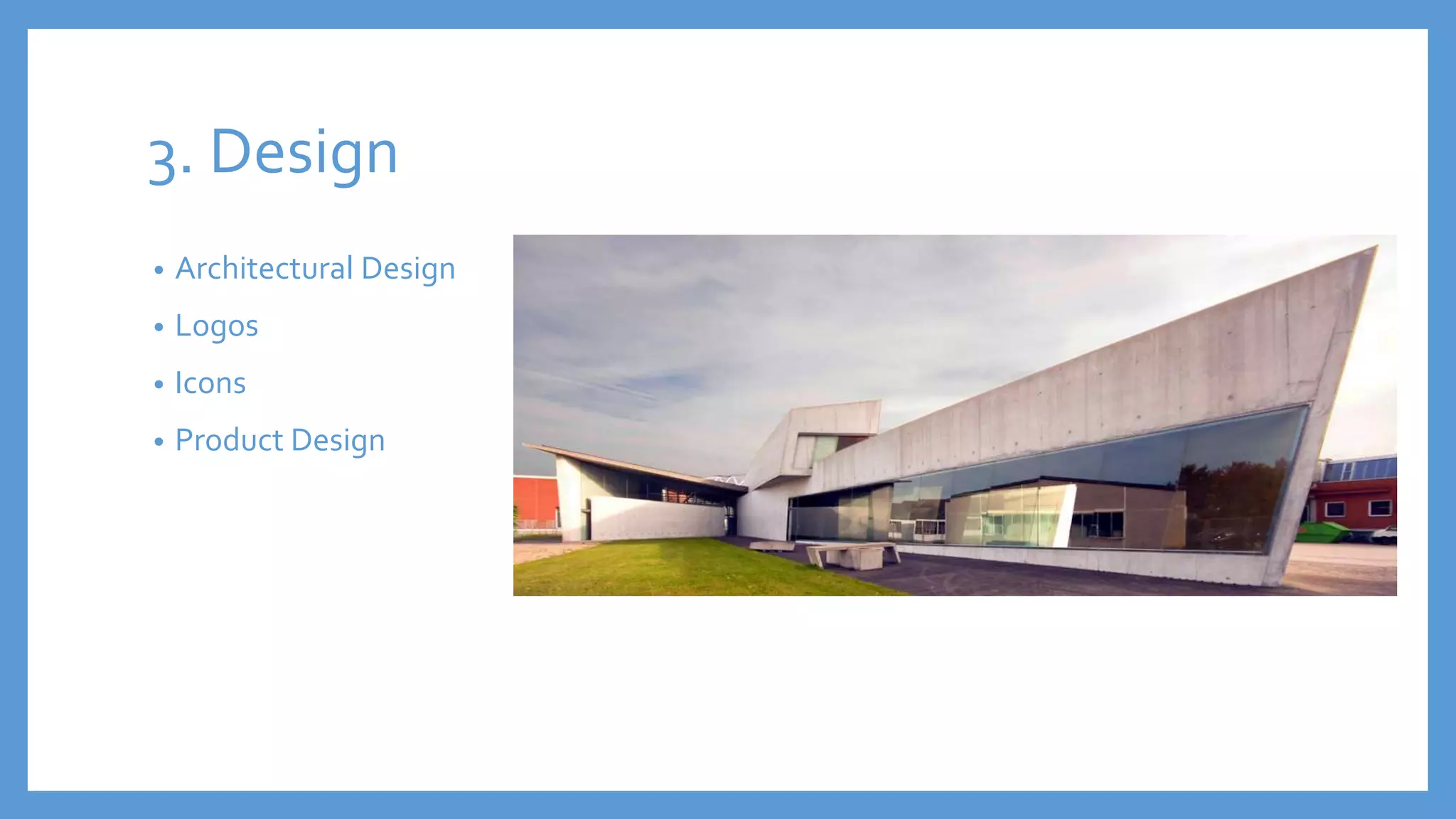
3. Design
• Architectural Design
• Logos
• Icons
• Product Design
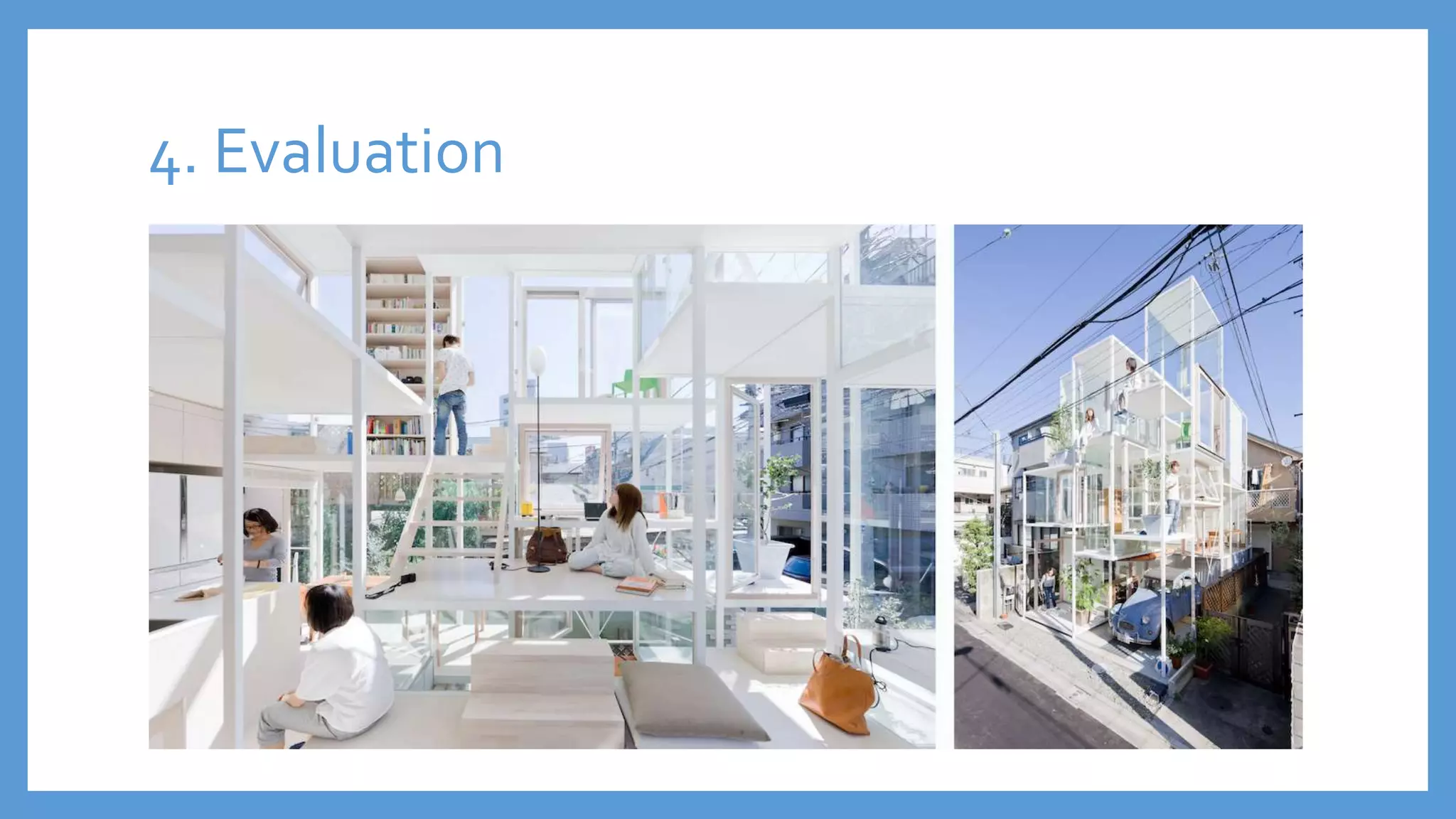
4. Evaluation
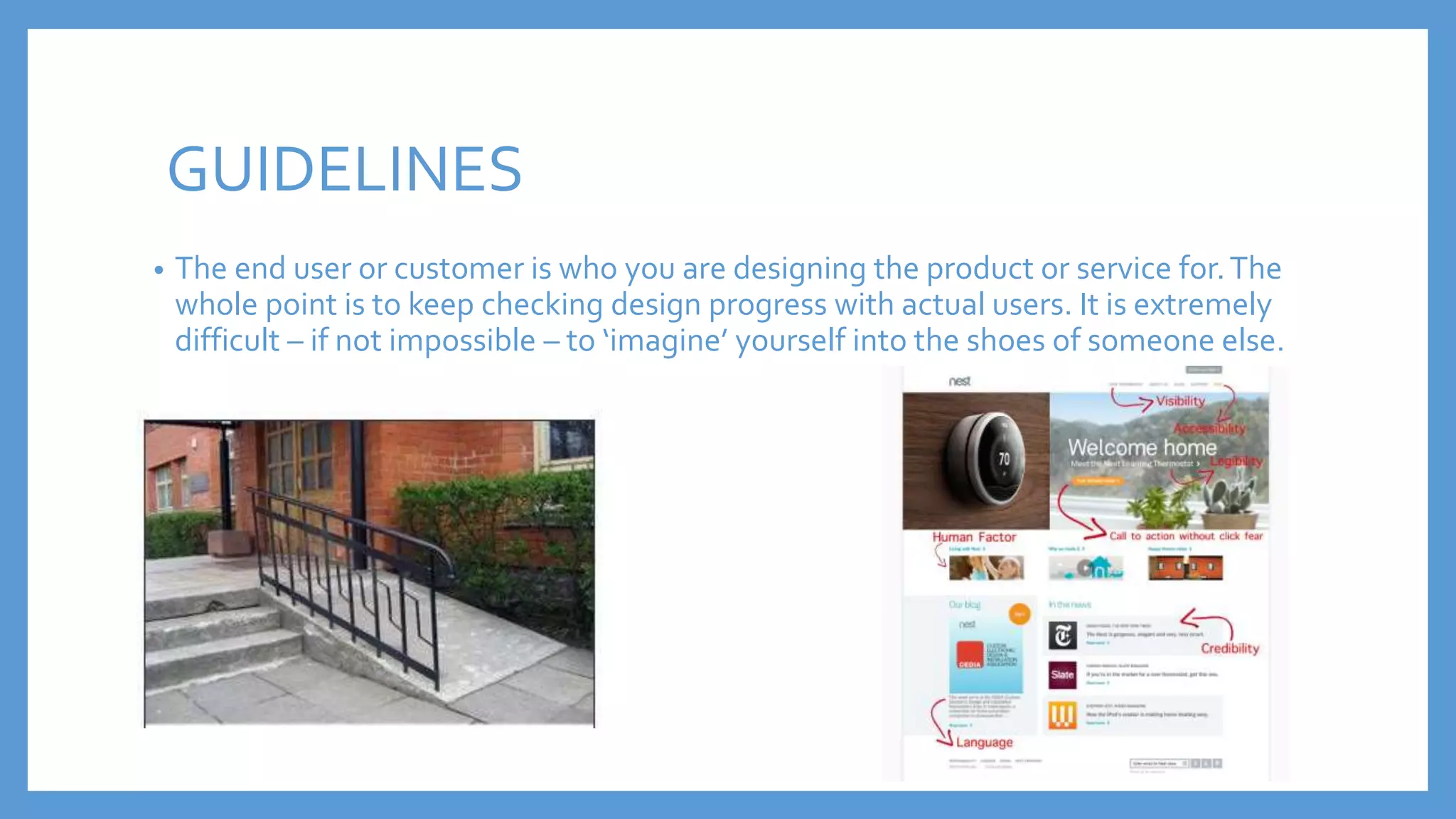
• The end user or customer is who you are designing the product or service for.The
whole point is to keep checking design progress with actual users. It is extremely
difficult – if not impossible – to ‘imagine’ yourself into the shoes of someone else.
GUIDELINES
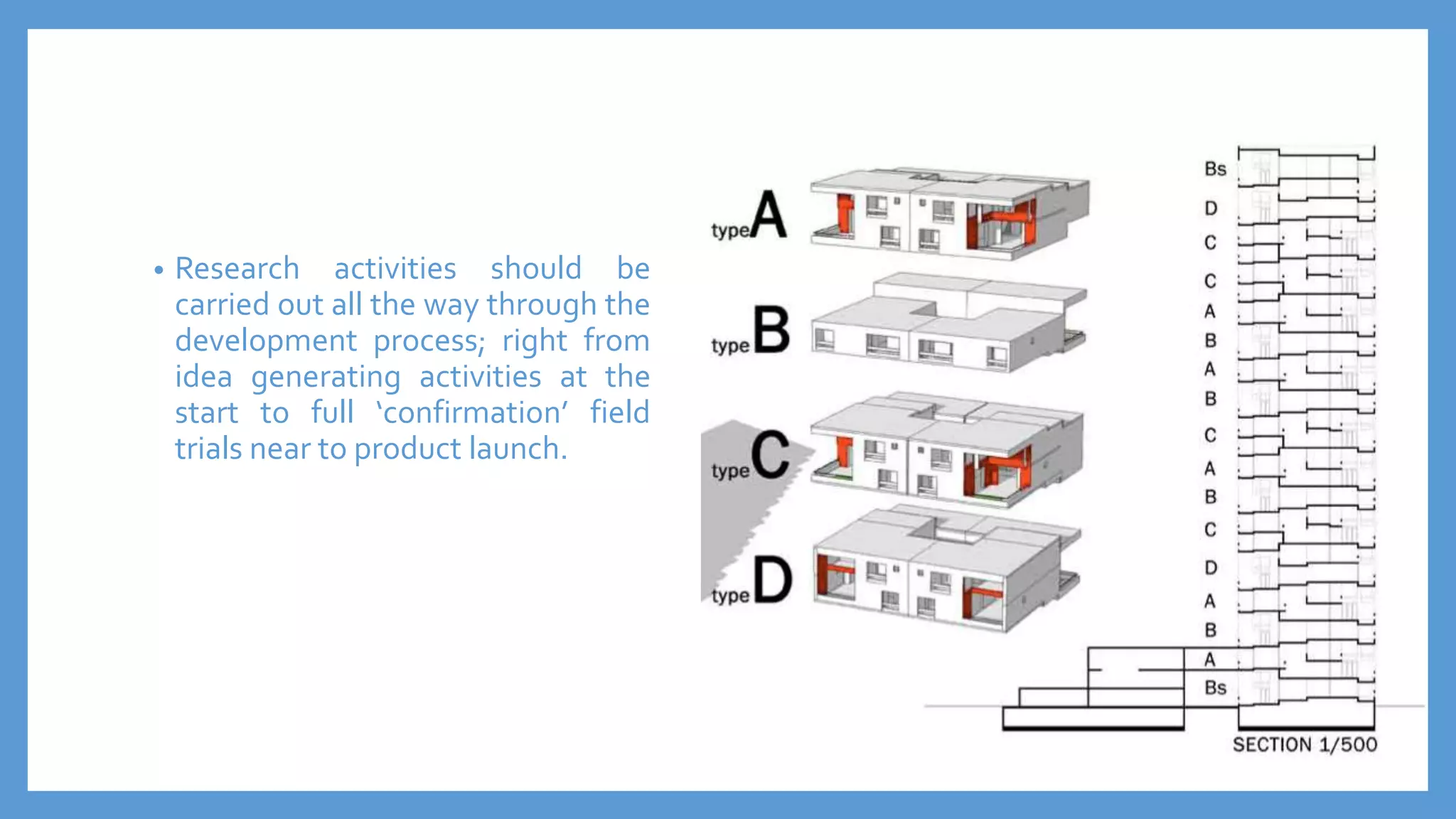
• Research activities should be
carried out all the way through the
development process; right from
idea generating activities at the
start to full ‘confirmation’ field
trials near to product launch.
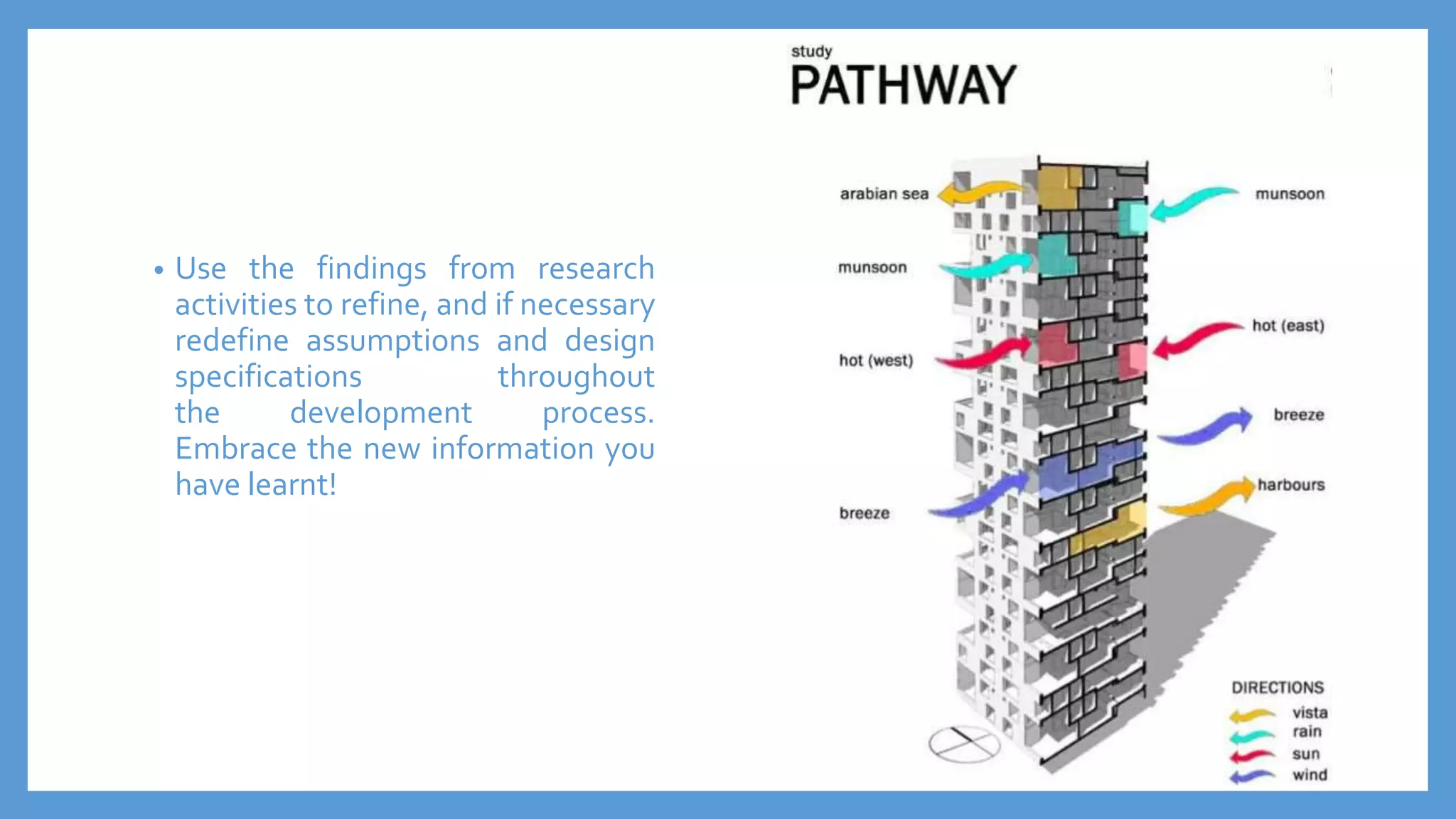
• Use the findings from research
activities to refine, and if necessary
redefine assumptions and design
specifications throughout
the development process.
Embrace the new information you
have learnt!
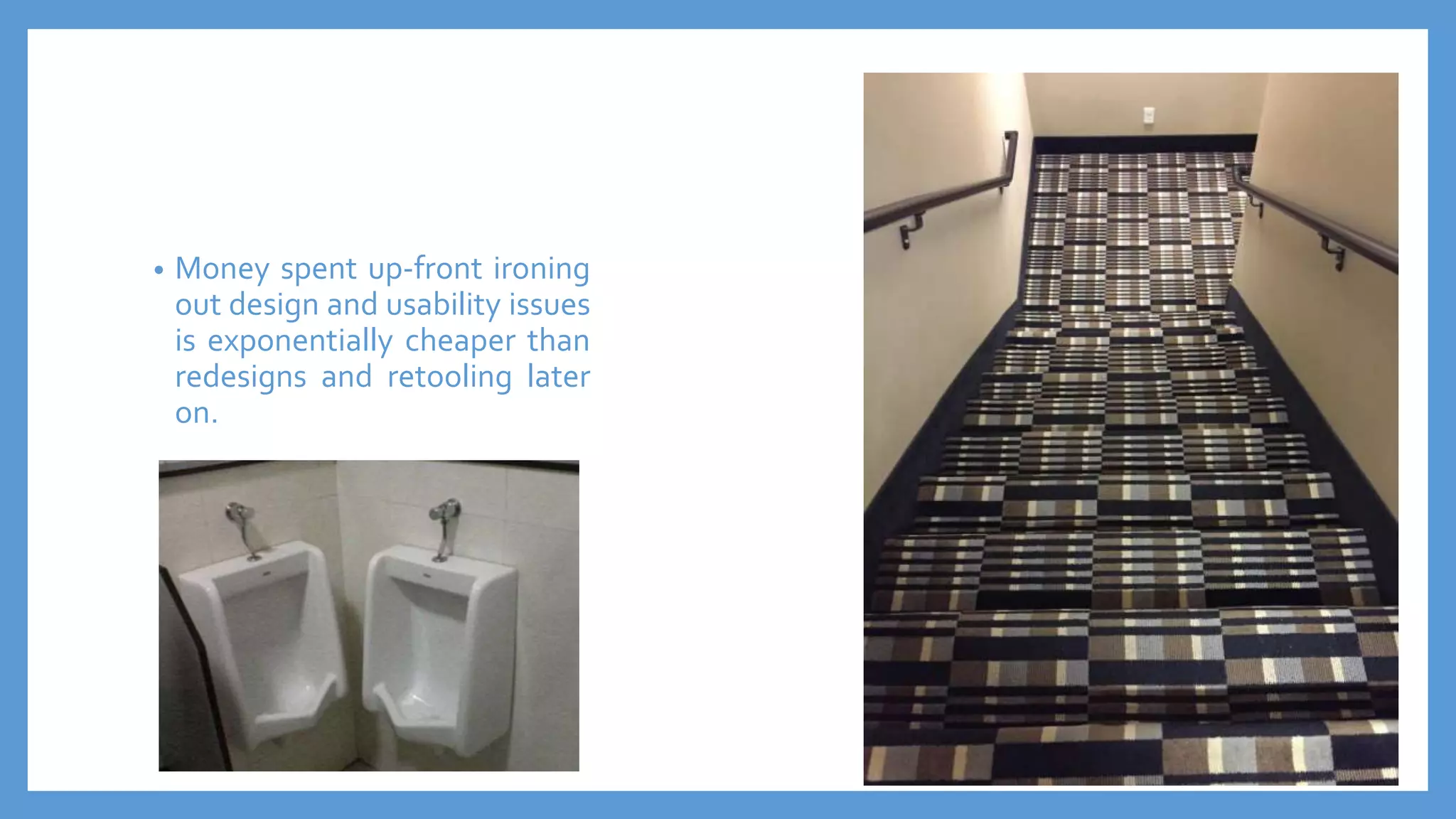
• Money spent up-front ironing
out design and usability issues
is exponentially cheaper than
redesigns and retooling later
on.
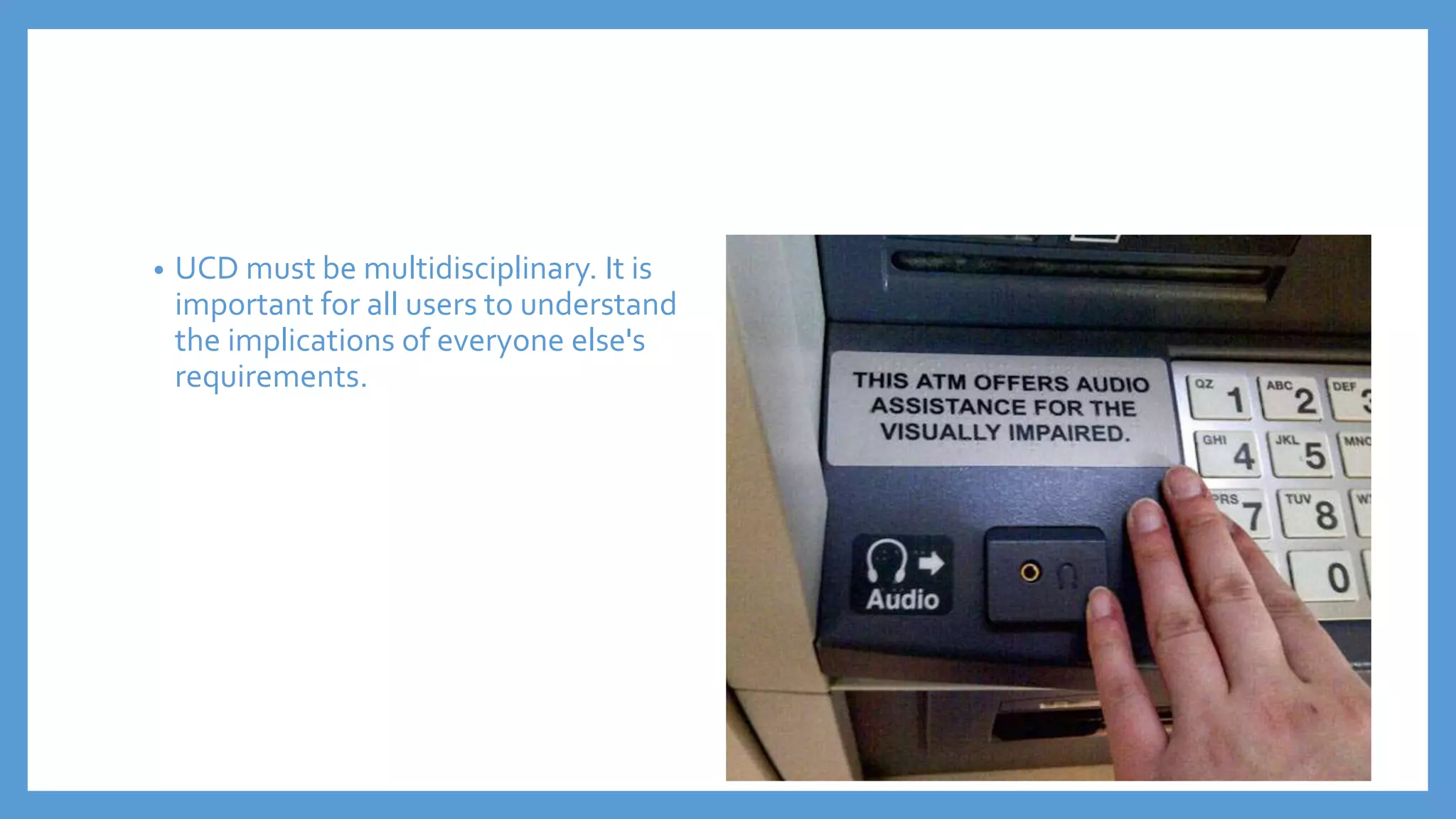
• UCD must be multidisciplinary. It is
important for all users to understand
the implications of everyone else's
requirements.
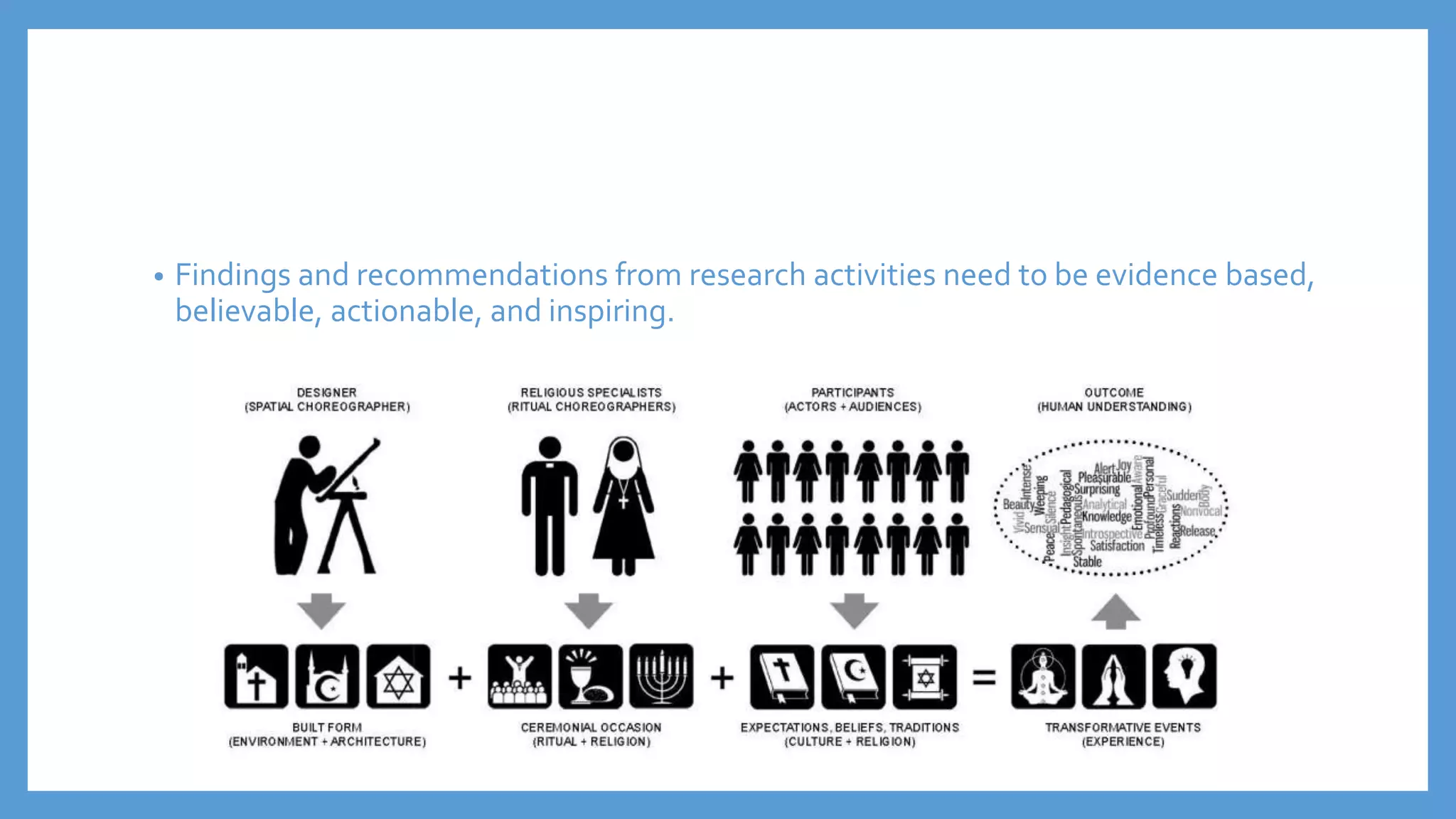
• Findings and recommendations from research activities need to be evidence based,
believable, actionable, and inspiring.
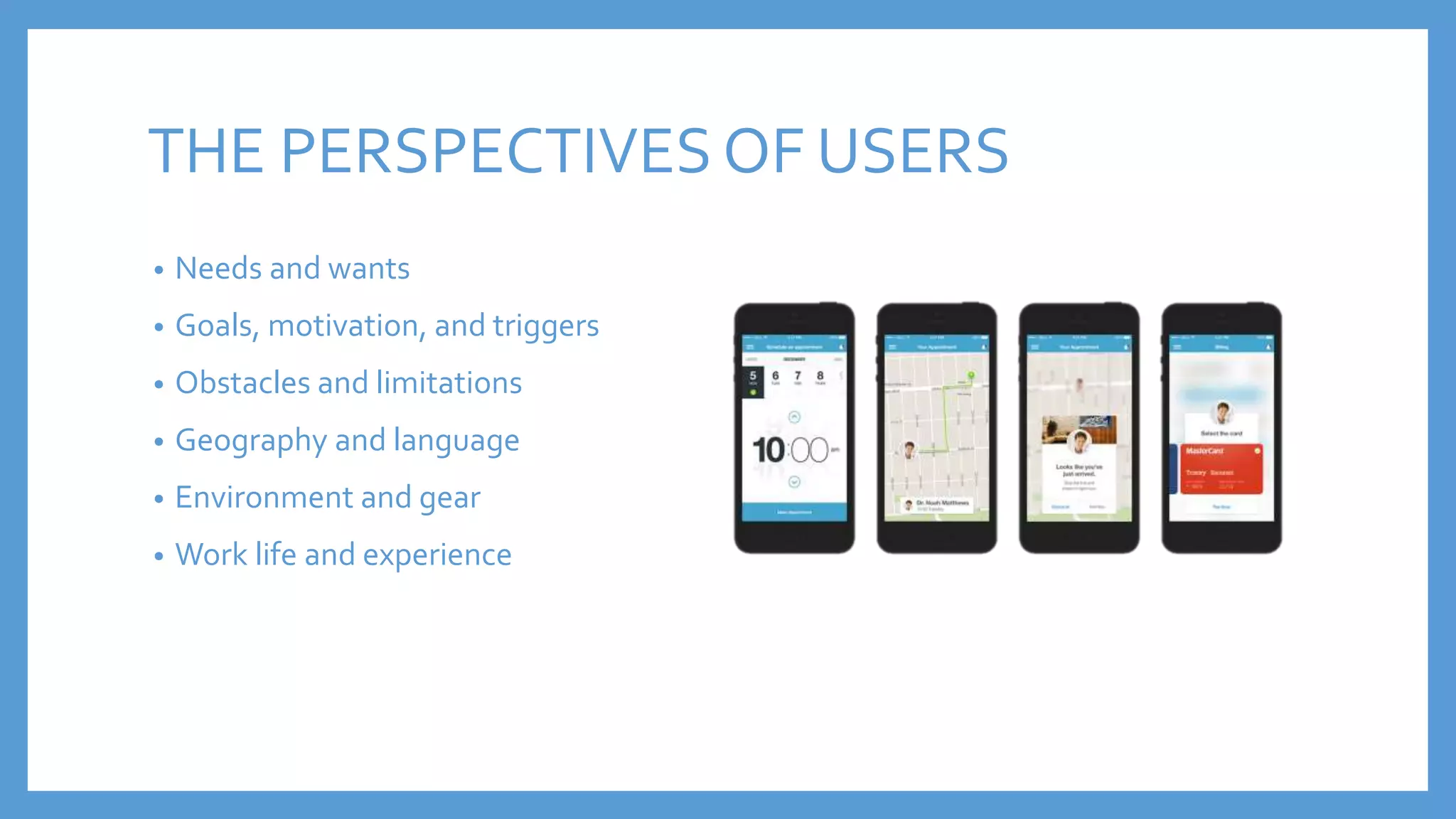
THE PERSPECTIVES OF USERS
• Needs and wants
• Goals, motivation, and triggers
• Obstacles and limitations
• Geography and language
• Environment and gear
• Work life and experience
HUMAN CENTERED DESIGN
“… human-centered design (HCD), an approach that puts human needs, capabilities, and
behaviour first, then designs to accommodate those needs, capabilities, and ways of
behaving. Good design starts with an understanding of psychology and technology. Good
design requires good communication, especially from machine to person, indicating what
actions are possible, what is happening, and what is about to happen. Communication is
especially important when things go wrong. It is relatively easy to design things that work
smoothly and harmoniously as long as things go right.”
(Norman D., Design of EverydayThings)
HUMAN CENTERED DESIGN
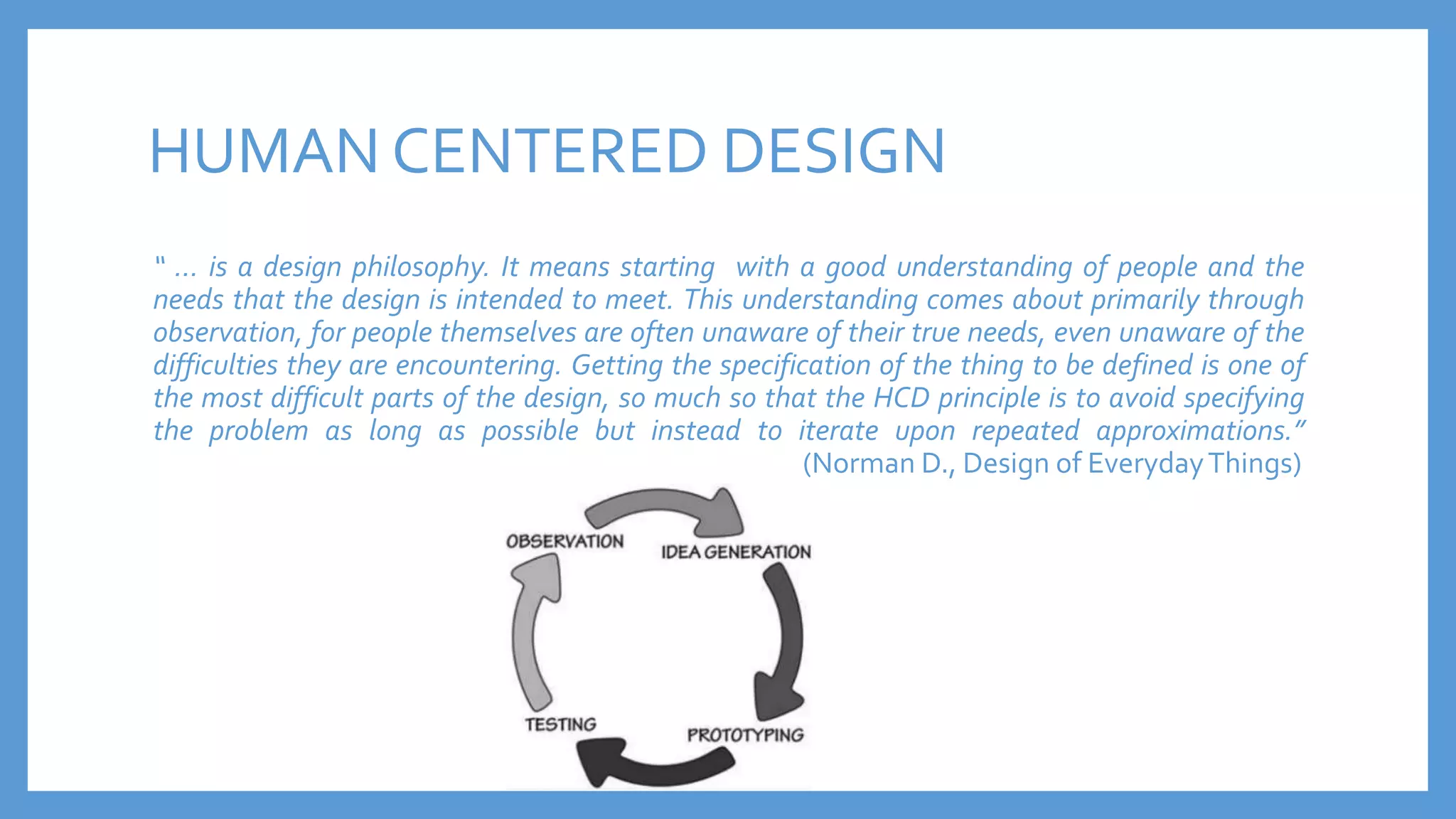
“ … is a design philosophy. It means starting with a good understanding of people and the
needs that the design is intended to meet. This understanding comes about primarily through
observation, for people themselves are often unaware of their true needs, even unaware of the
difficulties they are encountering. Getting the specification of the thing to be defined is one of
the most difficult parts of the design, so much so that the HCD principle is to avoid specifying
the problem as long as possible but instead to iterate upon repeated approximations.”
(Norman D., Design of EverydayThings)
• According to the ISO definition: Human-centered design is a creative approach to
interactive systems development that aims to make systems usable and useful by
focusing on the users, designing around their needs and requirements at all
stages, and by applying human factors/ergonomics, usability knowledge, and
techniques.This approach enhances effectiveness and efficiency improves human
well-being, user satisfaction, accessibility and sustainability; and counteracts
possible adverse effects of use on human health, safety and performance. ISO
9241-210:2010(E).
THANKYOU
“We spend a lot time designing the bridge, but not enough time thinking
about the people who are crossing it.”
– Dr. Prabhjot Singh, Director of Systems Design at the Earth Institute

User Centered Design

  • 1.
    USER CENTERED DESIGN SonakshiBhattacharjee Mithilesh Mandal
  • 2.
    What is UCD? •‘… user-centred design emphasizes that the purpose of the system is to serve the user, not to use a specific technology, not to be an elegant piece of programming. The needs of the users should dominate the design of the interface, and the needs of the interface should dominate the design of the rest of the system.’ (Norman 1986)
  • 3.
    DEFINITION • User CentredDesign (UCD) is an iterative methodology that puts the user at the centre of all design decisions. • UCD is a DESIGN philosophy and approach enabled by a wealth of disciplines and design methods.
  • 5.
    • The ultimategoal of UCD is to optimize a user's experience of a system, product, or process. • UCD looks to realize this goal by considering the user perspective during all phases of the development lifecycle. GOALS
  • 6.
    1. Identifying theneed • Research • Contextual enquiry • Interviews • Surveys • Workshops • User Scenarios • ContentAnalysis • Strategy Development • User Profiles
  • 7.
    2. Conceptualization • Sketching •Storyboarding • Participatory Design • Modelling
  • 8.
    3. Design • ArchitecturalDesign • Logos • Icons • Product Design
  • 9.
  • 10.
    • The enduser or customer is who you are designing the product or service for.The whole point is to keep checking design progress with actual users. It is extremely difficult – if not impossible – to ‘imagine’ yourself into the shoes of someone else. GUIDELINES
  • 11.
    • Research activitiesshould be carried out all the way through the development process; right from idea generating activities at the start to full ‘confirmation’ field trials near to product launch.
  • 12.
    • Use thefindings from research activities to refine, and if necessary redefine assumptions and design specifications throughout the development process. Embrace the new information you have learnt!
  • 13.
    • Money spentup-front ironing out design and usability issues is exponentially cheaper than redesigns and retooling later on.
  • 14.
    • UCD mustbe multidisciplinary. It is important for all users to understand the implications of everyone else's requirements.
  • 15.
    • Findings andrecommendations from research activities need to be evidence based, believable, actionable, and inspiring.
  • 16.
    THE PERSPECTIVES OFUSERS • Needs and wants • Goals, motivation, and triggers • Obstacles and limitations • Geography and language • Environment and gear • Work life and experience
  • 18.
    HUMAN CENTERED DESIGN “…human-centered design (HCD), an approach that puts human needs, capabilities, and behaviour first, then designs to accommodate those needs, capabilities, and ways of behaving. Good design starts with an understanding of psychology and technology. Good design requires good communication, especially from machine to person, indicating what actions are possible, what is happening, and what is about to happen. Communication is especially important when things go wrong. It is relatively easy to design things that work smoothly and harmoniously as long as things go right.” (Norman D., Design of EverydayThings)
  • 19.
    HUMAN CENTERED DESIGN “… is a design philosophy. It means starting with a good understanding of people and the needs that the design is intended to meet. This understanding comes about primarily through observation, for people themselves are often unaware of their true needs, even unaware of the difficulties they are encountering. Getting the specification of the thing to be defined is one of the most difficult parts of the design, so much so that the HCD principle is to avoid specifying the problem as long as possible but instead to iterate upon repeated approximations.” (Norman D., Design of EverydayThings)
  • 20.
    • According tothe ISO definition: Human-centered design is a creative approach to interactive systems development that aims to make systems usable and useful by focusing on the users, designing around their needs and requirements at all stages, and by applying human factors/ergonomics, usability knowledge, and techniques.This approach enhances effectiveness and efficiency improves human well-being, user satisfaction, accessibility and sustainability; and counteracts possible adverse effects of use on human health, safety and performance. ISO 9241-210:2010(E).
  • 22.
    THANKYOU “We spend alot time designing the bridge, but not enough time thinking about the people who are crossing it.” – Dr. Prabhjot Singh, Director of Systems Design at the Earth Institute