Information and Communication
Technologies(ICT)
Principles and Perspectives
Chapter 6 Study Guide
User Centered Design
• Focus on meeting the requirements that users have of computer systems
• An approach which views knowledge about users and their involvement in
the design process as a central concern
• It is an approach to design that is based on the needs and interests of the
user, with an emphasis on making the product usable and understandable
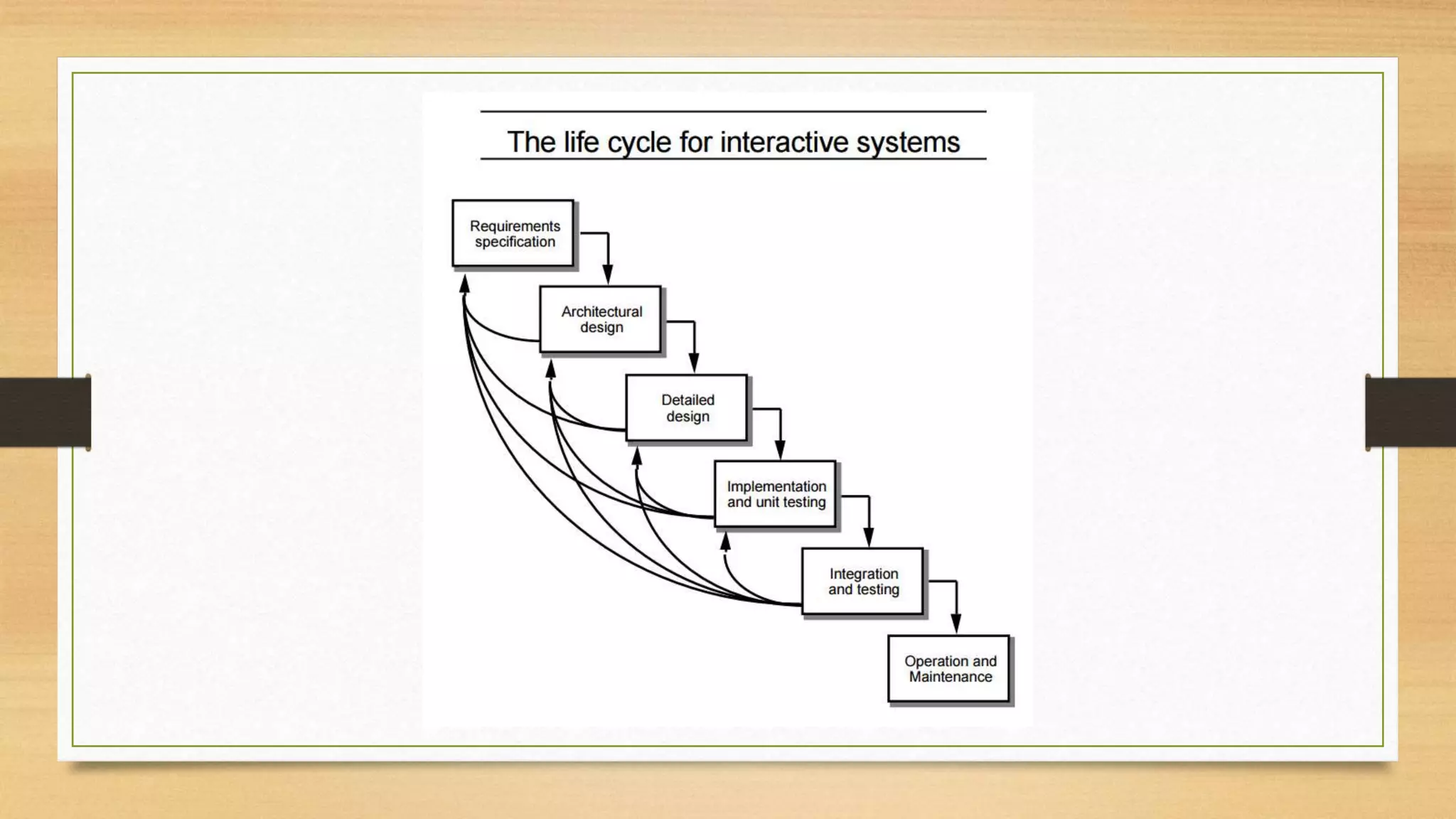
Software Engineering
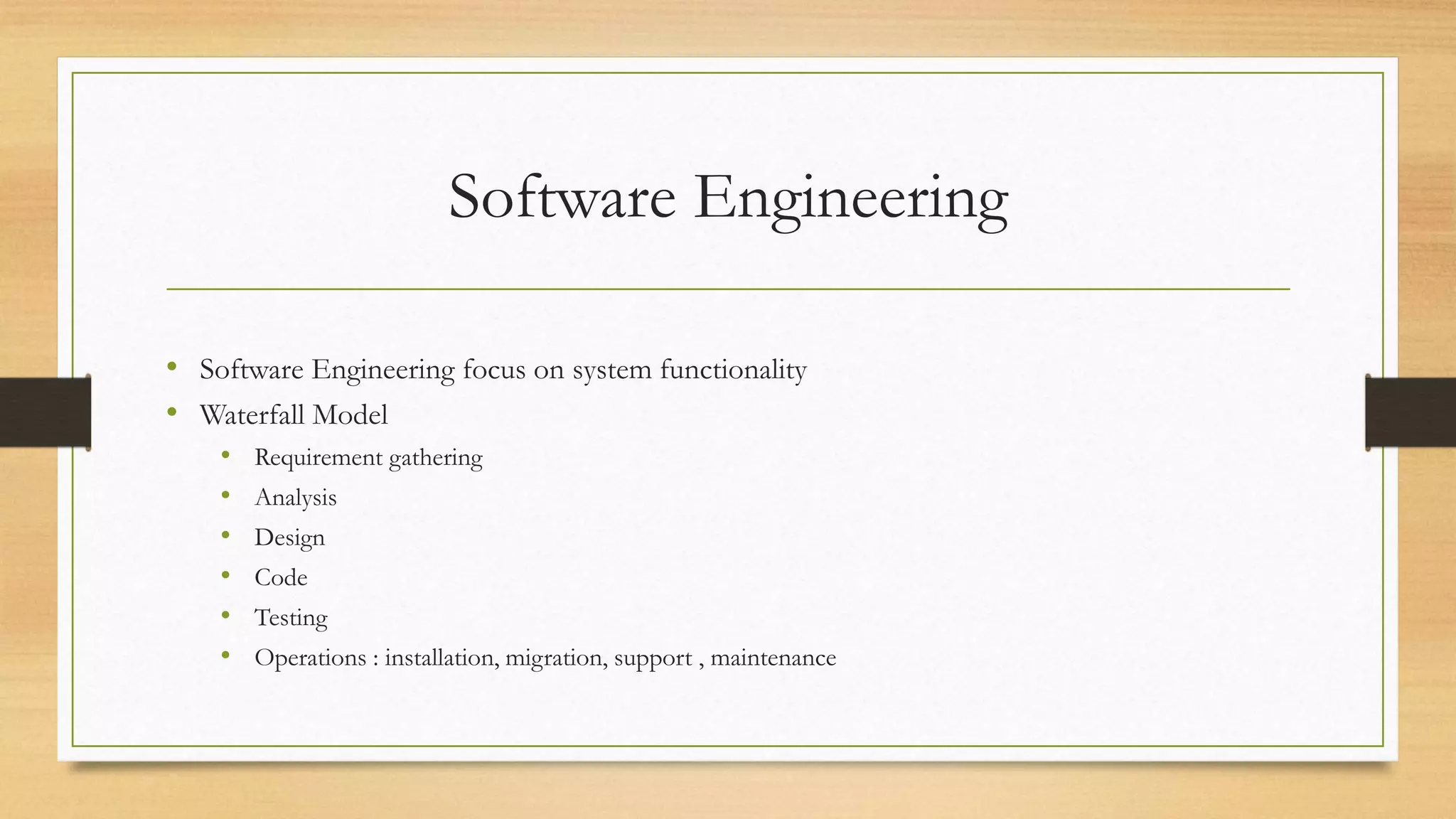
• Software Engineering focus on system functionality
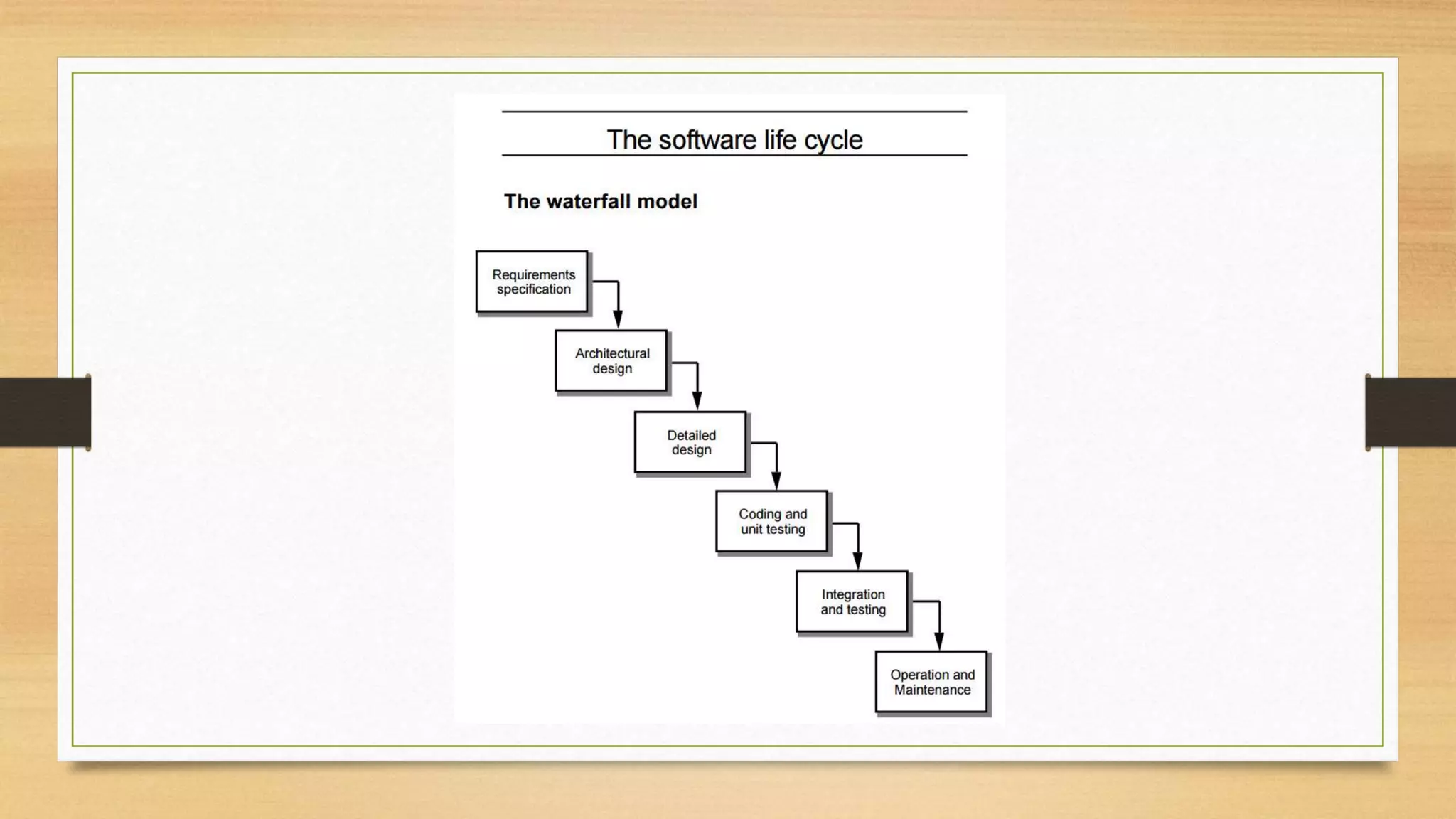
• Waterfall Model
• Requirement gathering
• Analysis
• Design
• Code
• Testing
• Operations : installation, migration, support , maintenance
Design Process
• Determining problem exists and performing series of steps to resolve it
• A feature of the design process is the creation of representations (Prototype)
• Usability requirements vs functional requirements
• Usability covers features about ease of learning, comfortable and efficient
performance
• Functionality covers areas relating to the technical competency of the
product
Activity
• Think of three likely usability requirements for a microwave oven. Describe
the distinctions between functionality and usability.
• What kind of design representations might we use to test the usability of the
microwave oven?
User Centered Design
• Based on real data
• User center design has 4 core aspects
1. It places the user at the center of design
2. It focuses on involvement of the user
3. It integrates knowledge and expertise from different disciplines in HCI
4. It is highly iterative
Rationale for user involvement
Levels of user-centeredness
• Technical centered UCD: where the users provide functional requirements.
These users will inform, commission and be consulted with, but are
essentially passive with respect to the design itself.
• Joint user-specialist UCD: where the users are collaboratively involved in the
design and are represented at all of the stages in the design process. A range
of users are typically selected for this role where they act as ‘proxies’ for the
other users and can see developments and make suggestions at all phases of
the design.
Levels of user-centeredness
• User-led UCD: where the developers provide a technical service to users, the
users are actively in control of the design process. This technique is
especially useful in the design of organizational information systems, for
example databases, where users have a good understanding of what they
need, although they may not be placed to address the technical aspects of
technology and systems design best
Criticism on UCD
• Project management
• Contractual obligations
• Costing
UCD Methods/Approaches
• The Soft Systems Methodology concentrates on a holistic view of the
system and its environment / context. SSM analyses the "situation of
concern" rather than the "problem" (which has to be defined). It is a highly
qualitative, interpretative, and subjective approach.
• Co-operative and participatory design methods involve working with
actual users of the system (both current and future users). The involvement
of management from the client business is reduced in order to let the users
express their needs and concerns free from any pressures from "above".
Star Life Cycle Design Approach
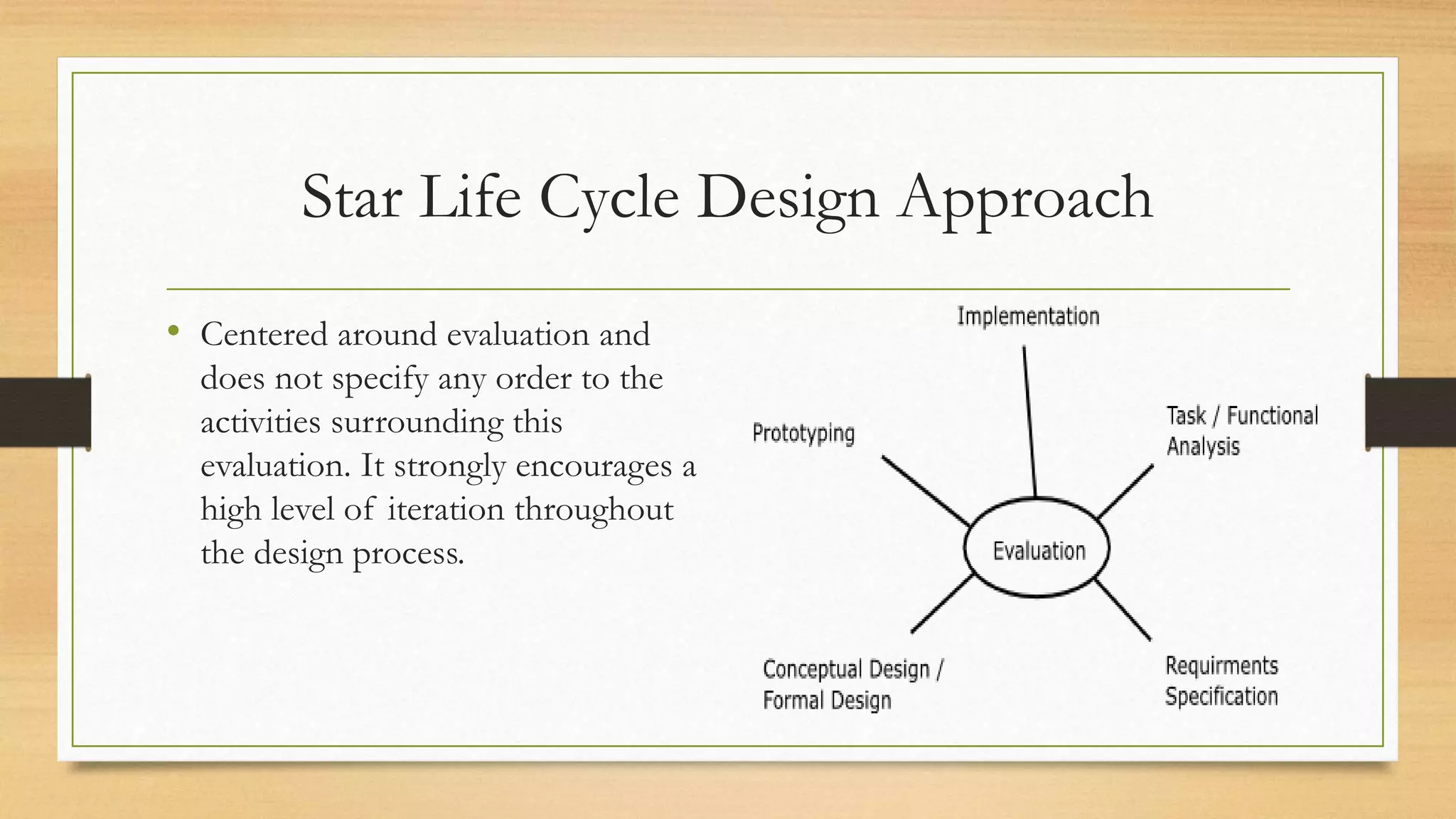
• Centered around evaluation and
does not specify any order to the
activities surrounding this
evaluation. It strongly encourages a
high level of iteration throughout
the design process.
Factors for measuring UCD
• System effectiveness: the accurateness and completeness of goal
completion in that particular environment.
• Efficiency: the amount of resources expended in relation to the goals
achieved.
• Satisfaction: the comfort and acceptability of the work systems to its users
(and other people affected by its use)
Principles for design
• Learnability: offers ease of learning for novice users.
• Flexibility: provides multiple ways to exchange information.
• Robustness: supports successful achievement and assessment of the goals.

User centered Design

  • 1.
    Information and Communication Technologies(ICT) Principlesand Perspectives Chapter 6 Study Guide
  • 2.
    User Centered Design •Focus on meeting the requirements that users have of computer systems • An approach which views knowledge about users and their involvement in the design process as a central concern • It is an approach to design that is based on the needs and interests of the user, with an emphasis on making the product usable and understandable
  • 3.
    Software Engineering • SoftwareEngineering focus on system functionality • Waterfall Model • Requirement gathering • Analysis • Design • Code • Testing • Operations : installation, migration, support , maintenance
  • 6.
    Design Process • Determiningproblem exists and performing series of steps to resolve it • A feature of the design process is the creation of representations (Prototype) • Usability requirements vs functional requirements • Usability covers features about ease of learning, comfortable and efficient performance • Functionality covers areas relating to the technical competency of the product
  • 7.
    Activity • Think ofthree likely usability requirements for a microwave oven. Describe the distinctions between functionality and usability. • What kind of design representations might we use to test the usability of the microwave oven?
  • 8.
    User Centered Design •Based on real data • User center design has 4 core aspects 1. It places the user at the center of design 2. It focuses on involvement of the user 3. It integrates knowledge and expertise from different disciplines in HCI 4. It is highly iterative
  • 9.
    Rationale for userinvolvement
  • 10.
    Levels of user-centeredness •Technical centered UCD: where the users provide functional requirements. These users will inform, commission and be consulted with, but are essentially passive with respect to the design itself. • Joint user-specialist UCD: where the users are collaboratively involved in the design and are represented at all of the stages in the design process. A range of users are typically selected for this role where they act as ‘proxies’ for the other users and can see developments and make suggestions at all phases of the design.
  • 11.
    Levels of user-centeredness •User-led UCD: where the developers provide a technical service to users, the users are actively in control of the design process. This technique is especially useful in the design of organizational information systems, for example databases, where users have a good understanding of what they need, although they may not be placed to address the technical aspects of technology and systems design best
  • 12.
    Criticism on UCD •Project management • Contractual obligations • Costing
  • 13.
    UCD Methods/Approaches • TheSoft Systems Methodology concentrates on a holistic view of the system and its environment / context. SSM analyses the "situation of concern" rather than the "problem" (which has to be defined). It is a highly qualitative, interpretative, and subjective approach. • Co-operative and participatory design methods involve working with actual users of the system (both current and future users). The involvement of management from the client business is reduced in order to let the users express their needs and concerns free from any pressures from "above".
  • 14.
    Star Life CycleDesign Approach • Centered around evaluation and does not specify any order to the activities surrounding this evaluation. It strongly encourages a high level of iteration throughout the design process.
  • 15.
    Factors for measuringUCD • System effectiveness: the accurateness and completeness of goal completion in that particular environment. • Efficiency: the amount of resources expended in relation to the goals achieved. • Satisfaction: the comfort and acceptability of the work systems to its users (and other people affected by its use)
  • 16.
    Principles for design •Learnability: offers ease of learning for novice users. • Flexibility: provides multiple ways to exchange information. • Robustness: supports successful achievement and assessment of the goals.

Editor's Notes

  • #15 http://www.computingstudents.com/notes/interactive_systems/hci_star_life_cycle_design_approach.php