Tor
st
en
H
en
ning H
en
sel
Berlin, Juni 2023
USE-CASE-BASED
AI TRANSFORMATION
CANVAS
The Use-Case-Based AI Transformation
Canvas is a strategic tool inspired by Alex
Osterwalder's Business Model Canvas,
designed to identify potential use cases
within companies that can be transformed
through the implementation of digital and
AI processes. This canvas aims to provide a
structured approach for organizations to
envision and plan their AI transformation
initiatives. By systematically examining the
current setup, desired outcomes, and the
transformation process, companies can gain
a comprehensive understanding of the
opportunities and challenges involved in
leveraging AI technologies.
INTRODUCTION
Tor
st
en
H
en
ning H
en
sel 2
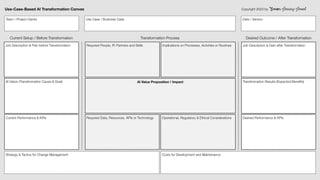
Use Case / Business Case
Job Description & Pain before Transformation
Strategy & Tactics for Change Management Costs for Development and Maintenance
Job Description & Gain after Transformation
Required People, IP, Partners and Skills Implications on Processes, Activities or Routines
Required Data, Resources, APIs or Technology Operational, Regulatory & Ethical Considerations
Transformation Process Desired Outcome / After Transformation
Current Setup / Before Transformation
AI Vision (Transformation Cause & Goal)
Current Performance & KPIs
Transformation Results (Expected Bene
fi
ts)
Desired Performance & KPIs
Team / Project Owner Date / Version
AI Value Proposition / Impact
Use-Case-Based AI Transformation Canvas Tor
st
en
H
en
ning H
en
sel
Copyright 2023 by
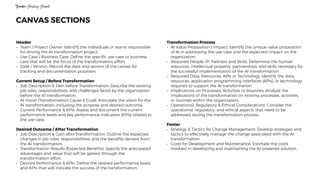
Header
• Team / Project Owner: Identify the individuals or teams responsible
for driving the AI transformation project.
• Use Case / Business Case: De
fi
ne the speci
fi
c use case or business
case that will be the focus of the transformation effort.
• Date / Version: Record the date and version of the canvas for
tracking and documentation purposes.
Current Setup / Before Transformation
• Job Description & Pain before Transformation: Describe the existing
job roles, responsibilities, and challenges faced by the organization
before the AI transformation.
• AI Vision (Transformation Cause & Goal): Articulate the vision for the
AI transformation, including the purpose and desired outcome.
• Current Performance & KPIs: Assess and document the current
performance levels and key performance indicators (KPIs) related to
the use case.
Desired Outcome / After Transformation
• Job Description & Gain after Transformation: Outline the expected
changes in job roles, responsibilities, and the bene
fi
ts derived from
the AI transformation.
• Transformation Results (Expected Bene
fi
ts): Specify the anticipated
advantages and value that will be gained through the
transformation effort.
• Desired Performance & KPIs: De
fi
ne the desired performance levels
and KPIs that will indicate the success of the transformation.
Transformation Process
• AI Value Proposition / Impact: Identify the unique value proposition
of AI in addressing the use case and the expected impact on the
organization.
• Required People, IP, Partners and Skills: Determine the human
resources, intellectual property, partnerships, and skills necessary for
the successful implementation of the AI transformation.
• Required Data, Resources, APIs or Technology: Identify the data,
resources, application programming interfaces (APIs), or technology
required to support the AI transformation.
• Implications on Processes, Activities or Routines: Analyze the
implications of the transformation on existing processes, activities,
or routines within the organization.
• Operational, Regulatory & Ethical Considerations: Consider the
operational, regulatory, and ethical aspects that need to be
addressed during the transformation process.
Footer
• Strategy & Tactics for Change Management: Develop strategies and
tactics to effectively manage the change associated with the AI
transformation.
• Costs for Development and Maintenance: Estimate the costs
involved in developing and maintaining the AI-powered solution.
CANVAS SECTIONS
Tor
st
en
H
en
ning H
en
sel
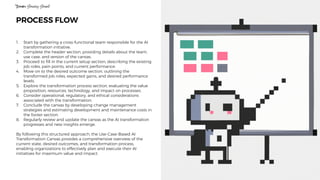
1. Start by gathering a cross-functional team responsible for the AI
transformation initiative.
2. Complete the header section, providing details about the team,
use case, and version of the canvas.
3. Proceed to
fi
ll in the current setup section, describing the existing
job roles, pain points, and current performance.
4. Move on to the desired outcome section, outlining the
transformed job roles, expected gains, and desired performance
levels.
5. Explore the transformation process section, evaluating the value
proposition, resources, technology, and impact on processes.
6. Consider operational, regulatory, and ethical considerations
associated with the transformation.
7. Conclude the canvas by developing change management
strategies and estimating development and maintenance costs in
the footer section.
8. Regularly review and update the canvas as the AI transformation
progresses and new insights emerge.
By following this structured approach, the Use-Case-Based AI
Transformation Canvas provides a comprehensive overview of the
current state, desired outcomes, and transformation process,
enabling organizations to effectively plan and execute their AI
initiatives for maximum value and impact.
PROCESS FLOW
Tor
st
en
H
en
ning H
en
sel 5
Tor
st
en
H
en
ning H
en
sel
THANK
YOU.

Use-case-based AI Transformation Canvas

  • 1.
    Tor st en H en ning H en sel Berlin, Juni2023 USE-CASE-BASED AI TRANSFORMATION CANVAS
  • 2.
    The Use-Case-Based AITransformation Canvas is a strategic tool inspired by Alex Osterwalder's Business Model Canvas, designed to identify potential use cases within companies that can be transformed through the implementation of digital and AI processes. This canvas aims to provide a structured approach for organizations to envision and plan their AI transformation initiatives. By systematically examining the current setup, desired outcomes, and the transformation process, companies can gain a comprehensive understanding of the opportunities and challenges involved in leveraging AI technologies. INTRODUCTION Tor st en H en ning H en sel 2
  • 3.
    Use Case /Business Case Job Description & Pain before Transformation Strategy & Tactics for Change Management Costs for Development and Maintenance Job Description & Gain after Transformation Required People, IP, Partners and Skills Implications on Processes, Activities or Routines Required Data, Resources, APIs or Technology Operational, Regulatory & Ethical Considerations Transformation Process Desired Outcome / After Transformation Current Setup / Before Transformation AI Vision (Transformation Cause & Goal) Current Performance & KPIs Transformation Results (Expected Bene fi ts) Desired Performance & KPIs Team / Project Owner Date / Version AI Value Proposition / Impact Use-Case-Based AI Transformation Canvas Tor st en H en ning H en sel Copyright 2023 by
  • 4.
    Header • Team /Project Owner: Identify the individuals or teams responsible for driving the AI transformation project. • Use Case / Business Case: De fi ne the speci fi c use case or business case that will be the focus of the transformation effort. • Date / Version: Record the date and version of the canvas for tracking and documentation purposes. Current Setup / Before Transformation • Job Description & Pain before Transformation: Describe the existing job roles, responsibilities, and challenges faced by the organization before the AI transformation. • AI Vision (Transformation Cause & Goal): Articulate the vision for the AI transformation, including the purpose and desired outcome. • Current Performance & KPIs: Assess and document the current performance levels and key performance indicators (KPIs) related to the use case. Desired Outcome / After Transformation • Job Description & Gain after Transformation: Outline the expected changes in job roles, responsibilities, and the bene fi ts derived from the AI transformation. • Transformation Results (Expected Bene fi ts): Specify the anticipated advantages and value that will be gained through the transformation effort. • Desired Performance & KPIs: De fi ne the desired performance levels and KPIs that will indicate the success of the transformation. Transformation Process • AI Value Proposition / Impact: Identify the unique value proposition of AI in addressing the use case and the expected impact on the organization. • Required People, IP, Partners and Skills: Determine the human resources, intellectual property, partnerships, and skills necessary for the successful implementation of the AI transformation. • Required Data, Resources, APIs or Technology: Identify the data, resources, application programming interfaces (APIs), or technology required to support the AI transformation. • Implications on Processes, Activities or Routines: Analyze the implications of the transformation on existing processes, activities, or routines within the organization. • Operational, Regulatory & Ethical Considerations: Consider the operational, regulatory, and ethical aspects that need to be addressed during the transformation process. Footer • Strategy & Tactics for Change Management: Develop strategies and tactics to effectively manage the change associated with the AI transformation. • Costs for Development and Maintenance: Estimate the costs involved in developing and maintaining the AI-powered solution. CANVAS SECTIONS Tor st en H en ning H en sel
  • 5.
    1. Start bygathering a cross-functional team responsible for the AI transformation initiative. 2. Complete the header section, providing details about the team, use case, and version of the canvas. 3. Proceed to fi ll in the current setup section, describing the existing job roles, pain points, and current performance. 4. Move on to the desired outcome section, outlining the transformed job roles, expected gains, and desired performance levels. 5. Explore the transformation process section, evaluating the value proposition, resources, technology, and impact on processes. 6. Consider operational, regulatory, and ethical considerations associated with the transformation. 7. Conclude the canvas by developing change management strategies and estimating development and maintenance costs in the footer section. 8. Regularly review and update the canvas as the AI transformation progresses and new insights emerge. By following this structured approach, the Use-Case-Based AI Transformation Canvas provides a comprehensive overview of the current state, desired outcomes, and transformation process, enabling organizations to effectively plan and execute their AI initiatives for maximum value and impact. PROCESS FLOW Tor st en H en ning H en sel 5
  • 6.