Time Contrasts
In the Past 
● In the past, people used to live in old houses. 
● A few years ago, people in Tuxtepec used to sit 
in the evenings on the sidewalks. 
● A few years ago, the people used to send 
letters by mail. 
● 10 years ago, the students visited the library to 
search some information. 
● 50 years ago, people in Tuxtepec drove their 
carts.
In the Present 
● These days Tuxtepec is growing. 
● Nowadays, teenagers and adults visit cyber 
cafes. 
● Today, our town has a better high school. 
● These days, the people drive their cars to 
commute. 
● Nowadays, everyone have their own celular.
In the Future 
● In twenty years, Tuxtepec might be a big city. 
● In the future, students are going to take classes 
at home. 
● Soon, there will be smart classroom in all the 
schools. 
● In the future, Tuxtepec will have subways and a 
better service transportation. 
● In ten more years, people might buy groceries 
at home.
Time Contrast 
● Para describir como han cambiado nuestras 
vidas a traves de los años podemos utilizar 
diferentes tiempos. 
Past 
In the Past I used to wear 
tennis shoes and shorts 
Present 
Nowadays, I wear casual 
clothes. 
Future 
In the future, I'm going to wear formal 
clothes.
Ejemplos 
Past 
A few years ago, I was living 
In U.S.A. 
Present 
In these days, I'm living 
in Mexico. 
Future 
In ten more years, I will live in Europe.
Ejemplos 
Past 
10 years ago, I didn't 
have a car 
Present 
Now, I have a new car. 
Future 
Soon, I might buy a Ferrari.
Ejemplos 
Past 
In the 2002, I started working 
In the High School 
Present 
Today I'm working in the 
High School and in the 
Seconday. 
Future 
In 5 more years, I will work at the 
“Tecnologico de Monterrey”
Conditional Sentences 
With 
If Clauses
Conditional Sentences 
● Tambien conocidas como “Conditional Clauses” 
o “If Clauses”. 
● Son empleadas para expresar que una acción 
en el futuro solo ocurrirá si cierta condición es 
llevada a cabo a tiempo.
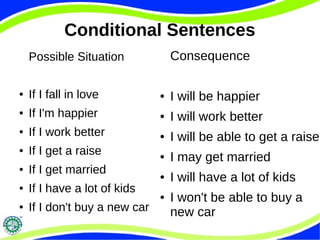
Conditional Sentences 
Possible Situation 
● If I fall in love 
● If I'm happier 
● If I work better 
● If I get a raise 
● If I get married 
● If I have a lot of kids 
● If I don't buy a new car 
Consequence 
● I will be happier 
● I will work better 
● I will be able to get a raise 
● I may get married 
● I will have a lot of kids 
● I won't be able to buy a 
new car
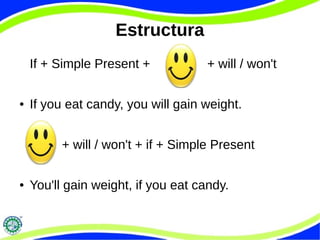
Estructura 
If + Simple Present + + will / won't 
● If you eat candy, you will gain weight. 
+ will / won't + if + Simple Present 
● You'll gain weight, if you eat candy.
Tips 
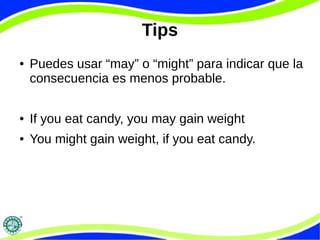
● Puedes usar “may” o “might” para indicar que la 
consecuencia es menos probable. 
● If you eat candy, you may gain weight 
● You might gain weight, if you eat candy.
Tips 
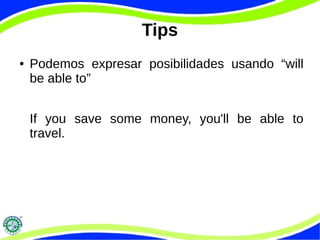
● Podemos expresar posibilidades usando “will 
be able to” 
If you save some money, you'll be able to 
travel.
Tips 
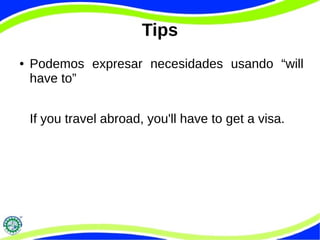
● Podemos expresar necesidades usando “will 
have to” 
If you travel abroad, you'll have to get a visa.
Gerunds (short responses)
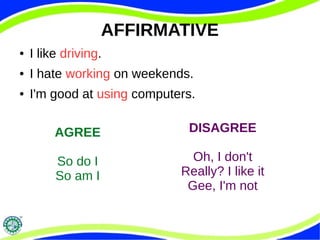
AFFIRMATIVE 
● I like driving. 
● I hate working on weekends. 
● I'm good at using computers. 
AGREE 
So do I 
So am I 
DISAGREE 
Oh, I don't 
Really? I like it 
Gee, I'm not
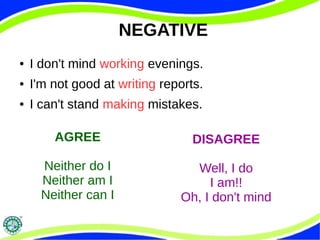
NEGATIVE 
● I don't mind working evenings. 
● I'm not good at writing reports. 
● I can't stand making mistakes. 
AGREE 
Neither do I 
Neither am I 
Neither can I 
DISAGREE 
Well, I do 
I am!! 
Oh, I don't mind
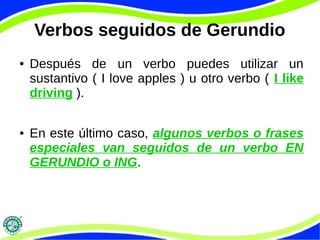
Verbos seguidos de Gerundio 
● Después de un verbo puedes utilizar un 
sustantivo ( I love apples ) u otro verbo ( I like 
driving ). 
● En este último caso, algunos verbos o frases 
especiales van seguidos de un verbo EN 
GERUNDIO o ING.
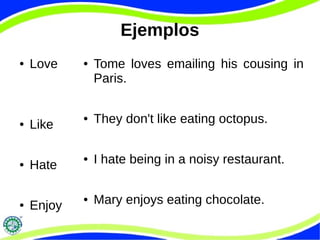
Ejemplos 
● Love 
● Like 
● Hate 
● Enjoy 
● Tome loves emailing his cousing in 
Paris. 
● They don't like eating octopus. 
● I hate being in a noisy restaurant. 
● Mary enjoys eating chocolate.
Ejemplos 
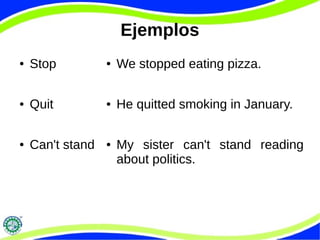
● Stop 
● Quit 
● Can't stand 
● We stopped eating pizza. 
● He quitted smoking in January. 
● My sister can't stand reading 
about politics.
Ejemplos 
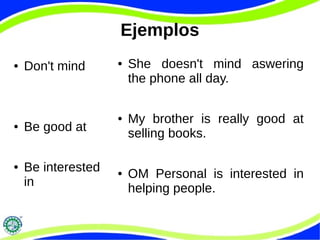
● Don't mind 
● Be good at 
● Be interested 
in 
● She doesn't mind aswering 
the phone all day. 
● My brother is really good at 
selling books. 
● OM Personal is interested in 
helping people.
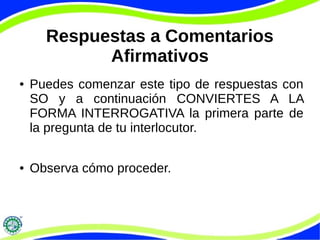
Respuestas a Comentarios 
Afirmativos 
● Puedes comenzar este tipo de respuestas con 
SO y a continuación CONVIERTES A LA 
FORMA INTERROGATIVA la primera parte de 
la pregunta de tu interlocutor. 
● Observa cómo proceder.
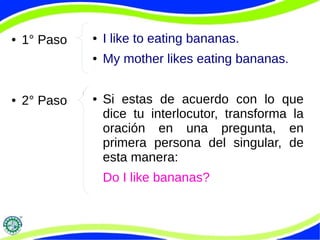
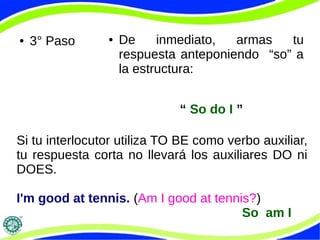
● 1° Paso 
● 2° Paso 
● I like to eating bananas. 
● My mother likes eating bananas. 
● Si estas de acuerdo con lo que 
dice tu interlocutor, transforma la 
oración en una pregunta, en 
primera persona del singular, de 
esta manera: 
Do I like bananas?
● 3° Paso ● De inmediato, armas tu 
respuesta anteponiendo “so” a 
la estructura: 
“ So do I ” 
Si tu interlocutor utiliza TO BE como verbo auxiliar, 
tu respuesta corta no llevará los auxiliares DO ni 
DOES. 
I'm good at tennis. (Am I good at tennis?) 
So am I
Respuestas a Comentarios 
Negativos 
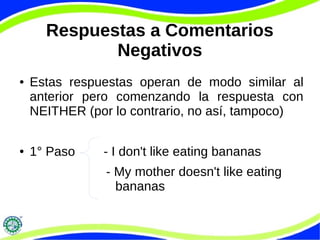
● Estas respuestas operan de modo similar al 
anterior pero comenzando la respuesta con 
NEITHER (por lo contrario, no así, tampoco) 
● 1° Paso - I don't like eating bananas 
- My mother doesn't like eating 
bananas
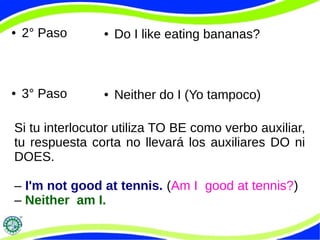
● 2° Paso 
● 3° Paso 
● Do I like eating bananas? 
● Neither do I (Yo tampoco) 
Si tu interlocutor utiliza TO BE como verbo auxiliar, 
tu respuesta corta no llevará los auxiliares DO ni 
DOES. 
– I'm not good at tennis. (Am I good at tennis?) 
– Neither am I.

Sesion9-Time Contrast

  • 1.
  • 2.
    In the Past ● In the past, people used to live in old houses. ● A few years ago, people in Tuxtepec used to sit in the evenings on the sidewalks. ● A few years ago, the people used to send letters by mail. ● 10 years ago, the students visited the library to search some information. ● 50 years ago, people in Tuxtepec drove their carts.
  • 3.
    In the Present ● These days Tuxtepec is growing. ● Nowadays, teenagers and adults visit cyber cafes. ● Today, our town has a better high school. ● These days, the people drive their cars to commute. ● Nowadays, everyone have their own celular.
  • 4.
    In the Future ● In twenty years, Tuxtepec might be a big city. ● In the future, students are going to take classes at home. ● Soon, there will be smart classroom in all the schools. ● In the future, Tuxtepec will have subways and a better service transportation. ● In ten more years, people might buy groceries at home.
  • 5.
    Time Contrast ●Para describir como han cambiado nuestras vidas a traves de los años podemos utilizar diferentes tiempos. Past In the Past I used to wear tennis shoes and shorts Present Nowadays, I wear casual clothes. Future In the future, I'm going to wear formal clothes.
  • 6.
    Ejemplos Past Afew years ago, I was living In U.S.A. Present In these days, I'm living in Mexico. Future In ten more years, I will live in Europe.
  • 7.
    Ejemplos Past 10years ago, I didn't have a car Present Now, I have a new car. Future Soon, I might buy a Ferrari.
  • 8.
    Ejemplos Past Inthe 2002, I started working In the High School Present Today I'm working in the High School and in the Seconday. Future In 5 more years, I will work at the “Tecnologico de Monterrey”
  • 9.
  • 10.
    Conditional Sentences ●Tambien conocidas como “Conditional Clauses” o “If Clauses”. ● Son empleadas para expresar que una acción en el futuro solo ocurrirá si cierta condición es llevada a cabo a tiempo.
  • 11.
    Conditional Sentences PossibleSituation ● If I fall in love ● If I'm happier ● If I work better ● If I get a raise ● If I get married ● If I have a lot of kids ● If I don't buy a new car Consequence ● I will be happier ● I will work better ● I will be able to get a raise ● I may get married ● I will have a lot of kids ● I won't be able to buy a new car
  • 12.
    Estructura If +Simple Present + + will / won't ● If you eat candy, you will gain weight. + will / won't + if + Simple Present ● You'll gain weight, if you eat candy.
  • 13.
    Tips ● Puedesusar “may” o “might” para indicar que la consecuencia es menos probable. ● If you eat candy, you may gain weight ● You might gain weight, if you eat candy.
  • 14.
    Tips ● Podemosexpresar posibilidades usando “will be able to” If you save some money, you'll be able to travel.
  • 15.
    Tips ● Podemosexpresar necesidades usando “will have to” If you travel abroad, you'll have to get a visa.
  • 16.
  • 17.
    AFFIRMATIVE ● Ilike driving. ● I hate working on weekends. ● I'm good at using computers. AGREE So do I So am I DISAGREE Oh, I don't Really? I like it Gee, I'm not
  • 18.
    NEGATIVE ● Idon't mind working evenings. ● I'm not good at writing reports. ● I can't stand making mistakes. AGREE Neither do I Neither am I Neither can I DISAGREE Well, I do I am!! Oh, I don't mind
  • 19.
    Verbos seguidos deGerundio ● Después de un verbo puedes utilizar un sustantivo ( I love apples ) u otro verbo ( I like driving ). ● En este último caso, algunos verbos o frases especiales van seguidos de un verbo EN GERUNDIO o ING.
  • 20.
    Ejemplos ● Love ● Like ● Hate ● Enjoy ● Tome loves emailing his cousing in Paris. ● They don't like eating octopus. ● I hate being in a noisy restaurant. ● Mary enjoys eating chocolate.
  • 21.
    Ejemplos ● Stop ● Quit ● Can't stand ● We stopped eating pizza. ● He quitted smoking in January. ● My sister can't stand reading about politics.
  • 22.
    Ejemplos ● Don'tmind ● Be good at ● Be interested in ● She doesn't mind aswering the phone all day. ● My brother is really good at selling books. ● OM Personal is interested in helping people.
  • 23.
    Respuestas a Comentarios Afirmativos ● Puedes comenzar este tipo de respuestas con SO y a continuación CONVIERTES A LA FORMA INTERROGATIVA la primera parte de la pregunta de tu interlocutor. ● Observa cómo proceder.
  • 24.
    ● 1° Paso ● 2° Paso ● I like to eating bananas. ● My mother likes eating bananas. ● Si estas de acuerdo con lo que dice tu interlocutor, transforma la oración en una pregunta, en primera persona del singular, de esta manera: Do I like bananas?
  • 25.
    ● 3° Paso● De inmediato, armas tu respuesta anteponiendo “so” a la estructura: “ So do I ” Si tu interlocutor utiliza TO BE como verbo auxiliar, tu respuesta corta no llevará los auxiliares DO ni DOES. I'm good at tennis. (Am I good at tennis?) So am I
  • 26.
    Respuestas a Comentarios Negativos ● Estas respuestas operan de modo similar al anterior pero comenzando la respuesta con NEITHER (por lo contrario, no así, tampoco) ● 1° Paso - I don't like eating bananas - My mother doesn't like eating bananas
  • 27.
    ● 2° Paso ● 3° Paso ● Do I like eating bananas? ● Neither do I (Yo tampoco) Si tu interlocutor utiliza TO BE como verbo auxiliar, tu respuesta corta no llevará los auxiliares DO ni DOES. – I'm not good at tennis. (Am I good at tennis?) – Neither am I.