Revised 8/17/14. Email justin.berk@ttuhsc.edu with any feedback.
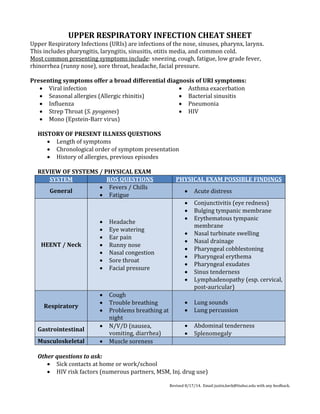
UPPER RESPIRATORY INFECTION CHEAT SHEET
Upper Respiratory Infections (URIs) are infections of the nose, sinuses, pharynx, larynx.
This includes pharyngitis, laryngitis, sinusitis, otitis media, and common cold.
Most common presenting symptoms include: sneezing, cough, fatigue, low grade fever,
rhinorrhea (runny nose), sore throat, headache, facial pressure.
Presenting symptoms offer a broad differential diagnosis of URI symptoms:
 Viral infection
 Seasonal allergies (Allergic rhinitis)
 Influenza
 Strep Throat (S. pyogenes)
 Mono (Epstein-Barr virus)
 Asthma exacerbation
 Bacterial sinusitis
 Pneumonia
 HIV
HISTORY OF PRESENT ILLNESS QUESTIONS
 Length of symptoms
 Chronological order of symptom presentation
 History of allergies, previous episodes
REVIEW OF SYSTEMS / PHYSICAL EXAM
SYSTEM ROS QUESTIONS PHYSICAL EXAM POSSIBLE FINDINGS
General
 Fevers / Chills
 Fatigue
 Acute distress
HEENT / Neck
 Headache
 Eye watering
 Ear pain
 Runny nose
 Nasal congestion
 Sore throat
 Facial pressure
 Conjunctivitis (eye redness)
 Bulging tympanic membrane
 Erythematous tympanic
membrane
 Nasal turbinate swelling
 Nasal drainage
 Pharyngeal cobblestoning
 Pharyngeal erythema
 Pharyngeal exudates
 Sinus tenderness
 Lymphadenopathy (esp. cervical,
post-auricular)
Respiratory
 Cough
 Trouble breathing
 Problems breathing at
night
 Lung sounds
 Lung percussion
Gastrointestinal
 N/V/D (nausea,
vomiting, diarrhea)
 Abdominal tenderness
 Splenomegaly
Musculoskeletal  Muscle soreness
Other questions to ask:
 Sick contacts at home or work/school
 HIV risk factors (numerous partners, MSM, Inj. drug use)
Revised 8/17/14. Email justin.berk@ttuhsc.edu with any feedback.
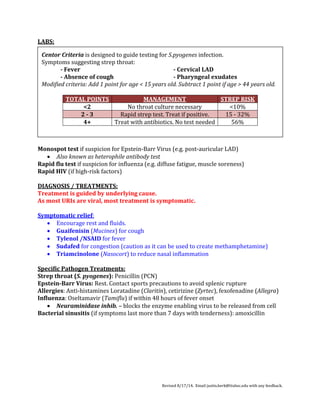
LABS:
Monospot test if suspicion for Epstein-Barr Virus (e.g. post-auricular LAD)
 Also known as heterophile antibody test
Rapid flu test if suspicion for influenza (e.g. diffuse fatigue, muscle soreness)
Rapid HIV (if high-risk factors)
DIAGNOSIS / TREATMENTS:
Treatment is guided by underlying cause.
As most URIs are viral, most treatment is symptomatic.
Symptomatic relief:
 Encourage rest and fluids.
 Guaifenisin (Mucinex) for cough
 Tylenol /NSAID for fever
 Sudafed for congestion (caution as it can be used to create methamphetamine)
 Triamcinolone (Nasocort) to reduce nasal inflammation
Specific Pathogen Treatments:
Strep throat (S. pyogenes): Penicillin (PCN)
Epstein-Barr Virus: Rest. Contact sports precautions to avoid splenic rupture
Allergies: Anti-histamines Loratadine (Claritin), cetirizine (Zyrtec), fexofenadine (Allegra)
Influenza: Oseltamavir (Tamiflu) if within 48 hours of fever onset
 Neuraminidase inhib. – blocks the enzyme enabling virus to be released from cell
Bacterial sinusitis (if symptoms last more than 7 days with tenderness): amoxicillin
Centor Criteria is designed to guide testing for S.pyogenes infection.
Symptoms suggesting strep throat:
- Fever - Cervical LAD
- Absence of cough - Pharyngeal exudates
Modified criteria: Add 1 point for age < 15 years old. Subtract 1 point if age > 44 years old.
TOTAL POINTS MANAGEMENT STREP RISK
<2 No throat culture necessary <10%
2 - 3 Rapid strep test. Treat if positive. 15 - 32%
4+ Treat with antibiotics. No test needed 56%

Upper Respiratory Infection (URI) Cheat Sheet

  • 1.
    Revised 8/17/14. Emailjustin.berk@ttuhsc.edu with any feedback. UPPER RESPIRATORY INFECTION CHEAT SHEET Upper Respiratory Infections (URIs) are infections of the nose, sinuses, pharynx, larynx. This includes pharyngitis, laryngitis, sinusitis, otitis media, and common cold. Most common presenting symptoms include: sneezing, cough, fatigue, low grade fever, rhinorrhea (runny nose), sore throat, headache, facial pressure. Presenting symptoms offer a broad differential diagnosis of URI symptoms:  Viral infection  Seasonal allergies (Allergic rhinitis)  Influenza  Strep Throat (S. pyogenes)  Mono (Epstein-Barr virus)  Asthma exacerbation  Bacterial sinusitis  Pneumonia  HIV HISTORY OF PRESENT ILLNESS QUESTIONS  Length of symptoms  Chronological order of symptom presentation  History of allergies, previous episodes REVIEW OF SYSTEMS / PHYSICAL EXAM SYSTEM ROS QUESTIONS PHYSICAL EXAM POSSIBLE FINDINGS General  Fevers / Chills  Fatigue  Acute distress HEENT / Neck  Headache  Eye watering  Ear pain  Runny nose  Nasal congestion  Sore throat  Facial pressure  Conjunctivitis (eye redness)  Bulging tympanic membrane  Erythematous tympanic membrane  Nasal turbinate swelling  Nasal drainage  Pharyngeal cobblestoning  Pharyngeal erythema  Pharyngeal exudates  Sinus tenderness  Lymphadenopathy (esp. cervical, post-auricular) Respiratory  Cough  Trouble breathing  Problems breathing at night  Lung sounds  Lung percussion Gastrointestinal  N/V/D (nausea, vomiting, diarrhea)  Abdominal tenderness  Splenomegaly Musculoskeletal  Muscle soreness Other questions to ask:  Sick contacts at home or work/school  HIV risk factors (numerous partners, MSM, Inj. drug use)
  • 2.
    Revised 8/17/14. Emailjustin.berk@ttuhsc.edu with any feedback. LABS: Monospot test if suspicion for Epstein-Barr Virus (e.g. post-auricular LAD)  Also known as heterophile antibody test Rapid flu test if suspicion for influenza (e.g. diffuse fatigue, muscle soreness) Rapid HIV (if high-risk factors) DIAGNOSIS / TREATMENTS: Treatment is guided by underlying cause. As most URIs are viral, most treatment is symptomatic. Symptomatic relief:  Encourage rest and fluids.  Guaifenisin (Mucinex) for cough  Tylenol /NSAID for fever  Sudafed for congestion (caution as it can be used to create methamphetamine)  Triamcinolone (Nasocort) to reduce nasal inflammation Specific Pathogen Treatments: Strep throat (S. pyogenes): Penicillin (PCN) Epstein-Barr Virus: Rest. Contact sports precautions to avoid splenic rupture Allergies: Anti-histamines Loratadine (Claritin), cetirizine (Zyrtec), fexofenadine (Allegra) Influenza: Oseltamavir (Tamiflu) if within 48 hours of fever onset  Neuraminidase inhib. – blocks the enzyme enabling virus to be released from cell Bacterial sinusitis (if symptoms last more than 7 days with tenderness): amoxicillin Centor Criteria is designed to guide testing for S.pyogenes infection. Symptoms suggesting strep throat: - Fever - Cervical LAD - Absence of cough - Pharyngeal exudates Modified criteria: Add 1 point for age < 15 years old. Subtract 1 point if age > 44 years old. TOTAL POINTS MANAGEMENT STREP RISK <2 No throat culture necessary <10% 2 - 3 Rapid strep test. Treat if positive. 15 - 32% 4+ Treat with antibiotics. No test needed 56%