Download to read offline
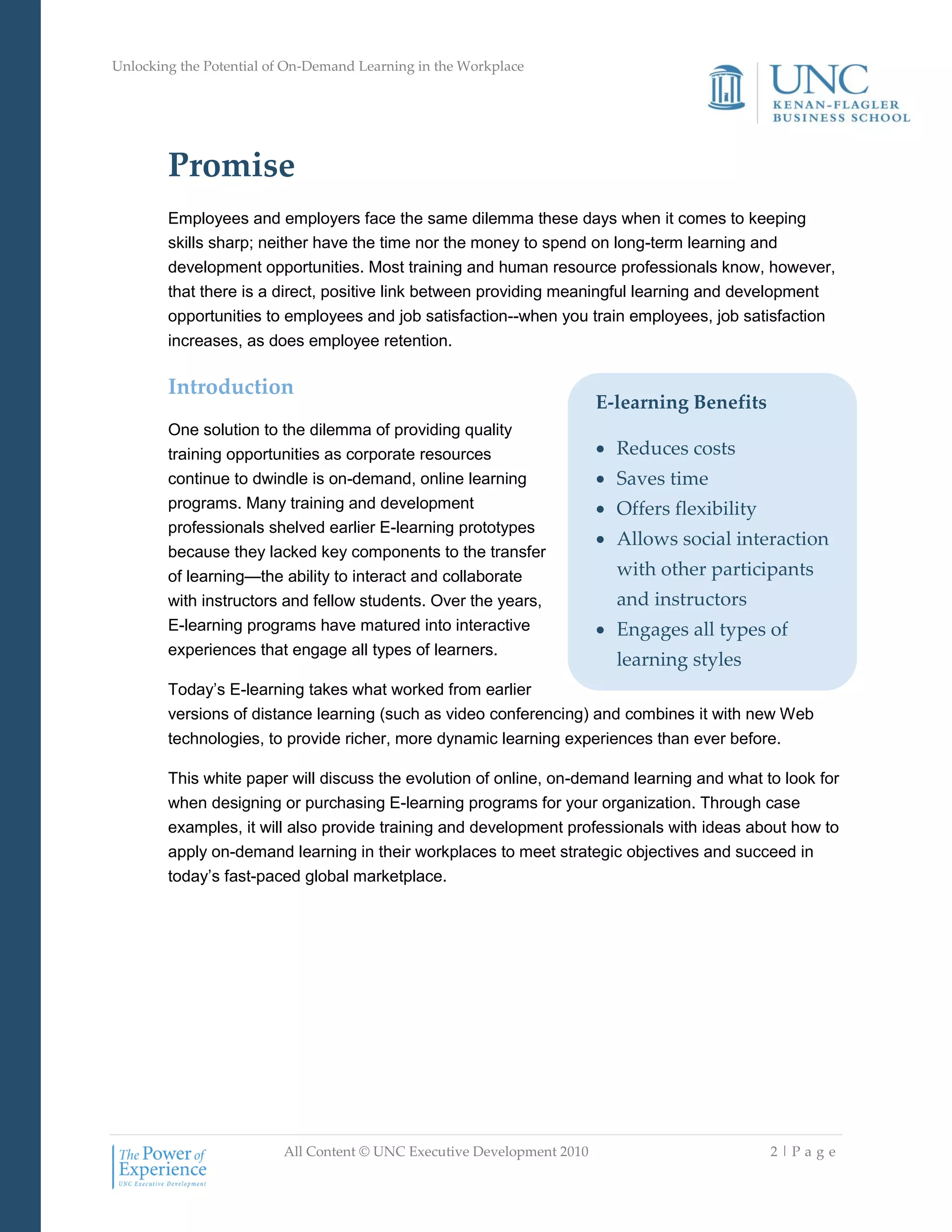

The document discusses the evolution and benefits of on-demand, online learning in the workplace, emphasizing its cost-effectiveness, flexibility, and enhanced employee engagement compared to traditional training methods. It highlights the growth of e-learning, particularly e-learning 2.0, which incorporates social interaction and collaboration, and provides case studies from organizations like UNC and Saint Elizabeth Health Care as examples of successful implementation. The paper encourages training professionals to consider blended approaches and to select high-quality e-learning programs that meet their organization's specific needs.


![Tau Seminar 2 material [part 4]](https://cdn.slidesharecdn.com/ss_thumbnails/taulearnmeraseminar2materialpart4-180710162449-thumbnail.jpg?width=640&height=640&fit=bounds)


