UNIVERSAL PRECAUTIONS
BY
G. THEJASWI
Universal Precautions
– Applied universally in caring for all patients
• Hand washing
• Decontamination of equipment and devices
• Use and disposal of needles and sharps safely (no
recapping)
• Wearing protective items
• Prompt cleaning up of blood and body fluid spills
• Systems for safe collection of waste and disposal
DEFINITION
Standard Precautions
 Previously known by various names including “ universal
precautions”
 Standard precautions are designed to reduce the risk of
transmission of bloodborne and other pathogens from both
recognized and unrecognized sources to a susceptible host.
 They are the basic level of infection control precaution
 Hospital Infection is the result of a combination of factors:
Microbial source + Transmission + Susceptible host =
Infection
Why Universal health
Precautions.
The concept of Universal Health Precautions
emphasizes that all our patients should be treated as
though they have potential blood born infections, and
can infect the caring health care workers. ( CDC )
Human materials/Tissues
considered Highly Infectious
 Blood
 Semen
 Vaginal secretions
 C S F
 Synovial fluids
 Amniotic fluid
 All other body fluids
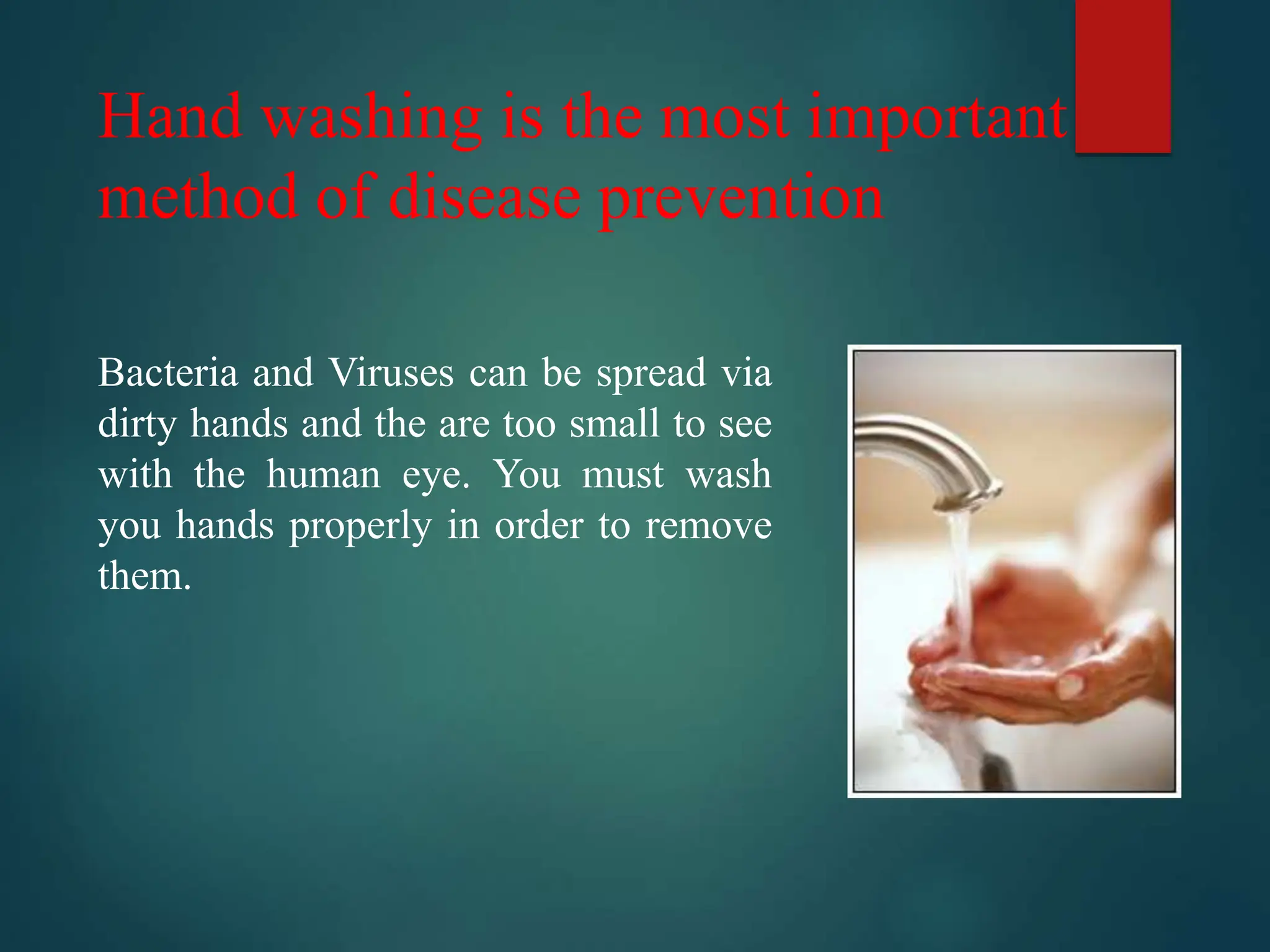
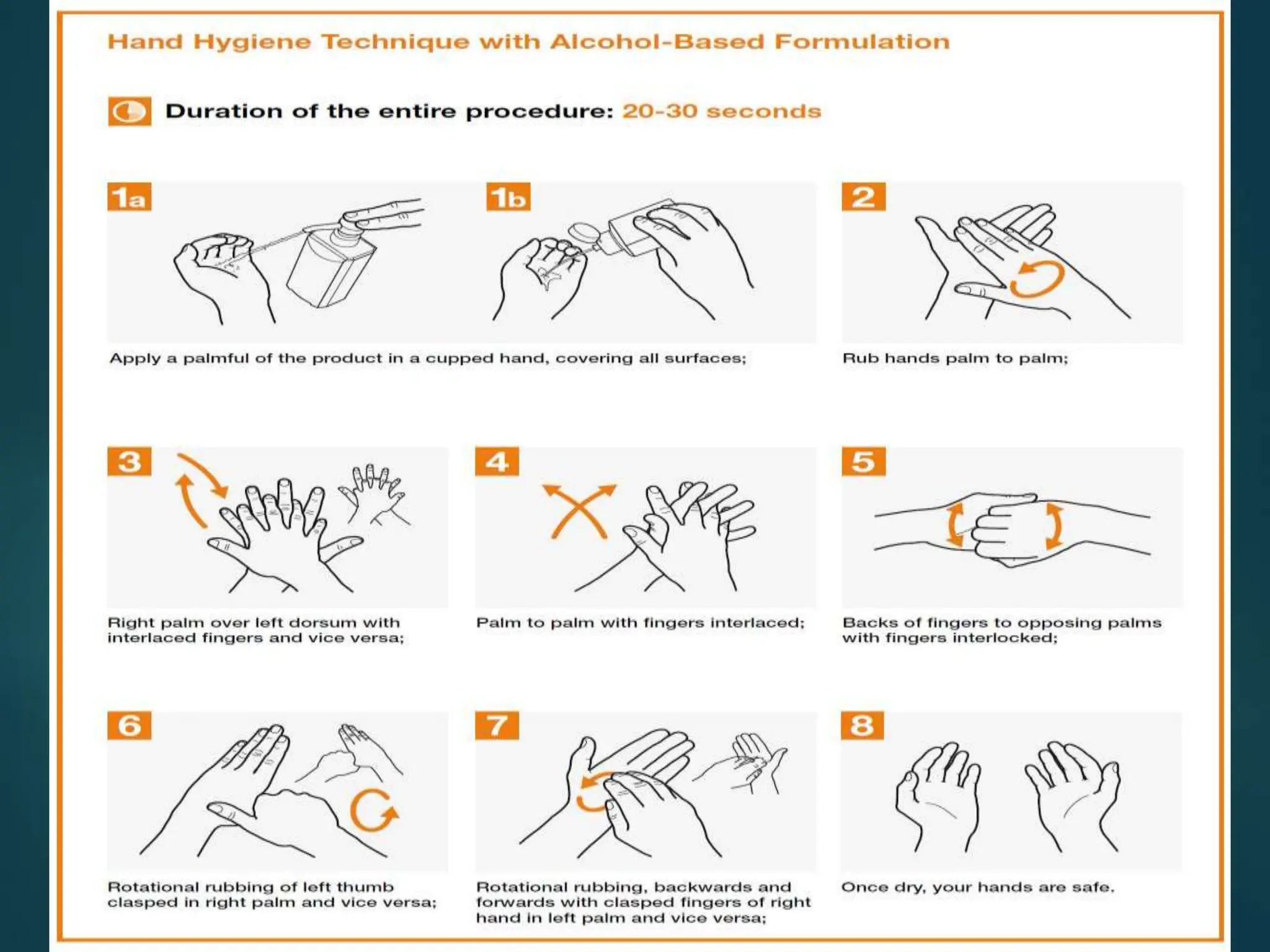
Hand washing is the most important
method of disease prevention
Bacteria and Viruses can be spread via
dirty hands and the are too small to see
with the human eye. You must wash
you hands properly in order to remove
them.
Indications for Hand
Washing
 In prolonged contact with patient.
 Before taking care of Immune suppressed,
New born infants, patients in ICU / ICCU,
Dialysis Units, Burn’s Units.
 Before and after touching wounds.
 When Microbial contamination of Hands,
likely to occur when in contact with mucous
membranes, body fluids, and other secretions
contaminated with Blood, and serous fluids.
Use of Gloves
Use of a pair of
disposable gloves
can protect if
chances of contact
with Blood or Body
fluid is
anticipated/inevitable.
 1. Remove any jewelry/ accessories
 2. Remove glove from box. Gloves come in small, medium
and large. Most are rubber latex and are pre-powdered. Those
who are allergic to latex should use vinyl gloves.
 3. Hold glove with your thumb and forefinger and insert hand
into gloves
 4. Work fingers into proper places
PUTTING ON GLOVES
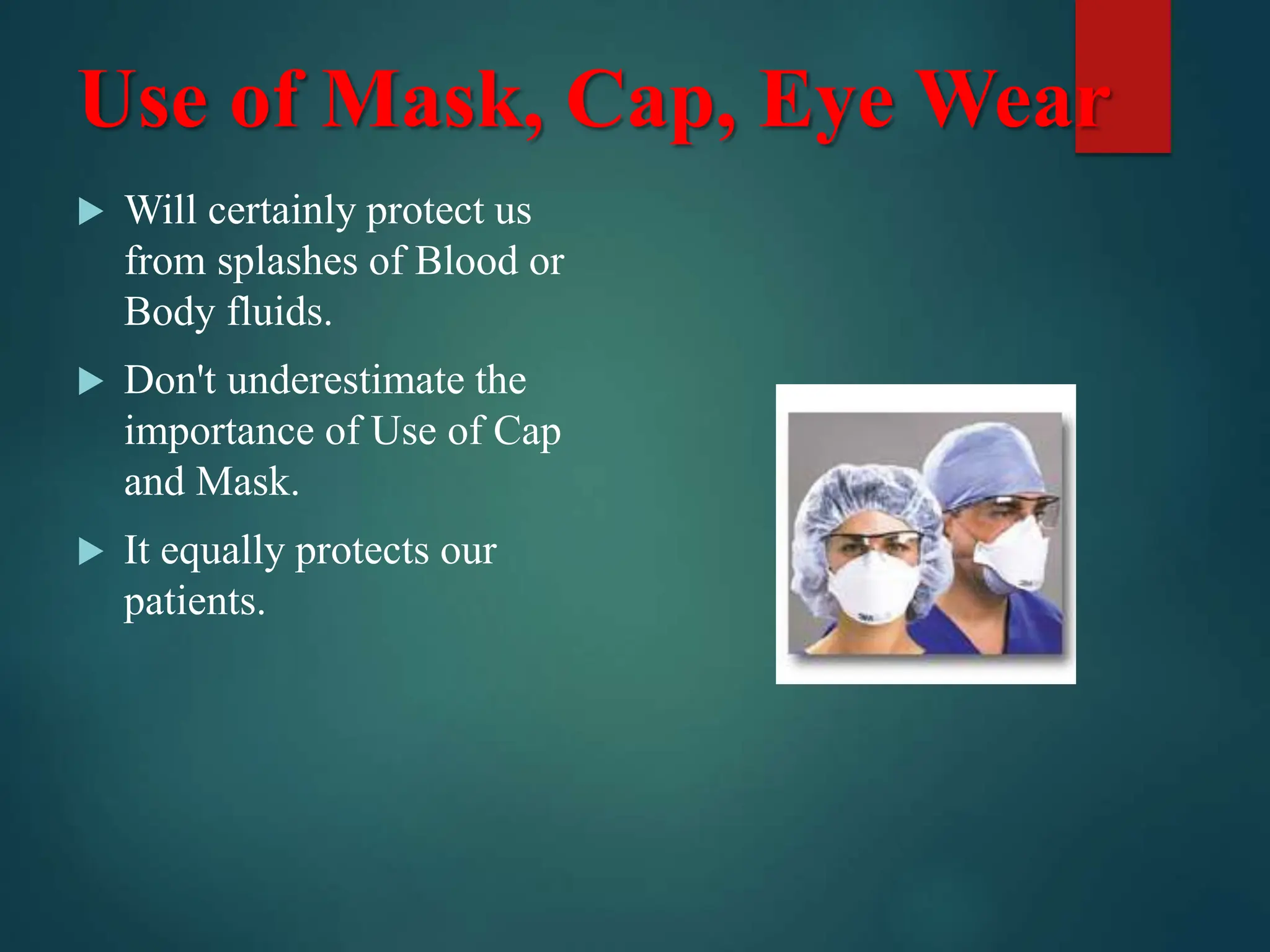
Use of Mask, Cap, Eye Wear
 Will certainly protect us
from splashes of Blood or
Body fluids.
 Don't underestimate the
importance of Use of Cap
and Mask.
 It equally protects our
patients.
UP recommends the use of Personal Protective
Equipment
Gloves
Aprons
Gowns
Protective
eyewear
Face shields
Masks
Universal Precautions also include:
 Proper handling and
disposal of needles.
 Taking precautions to prevent injury
from scalpels, needles, and other sharp
instruments.
Disposal of Needles and Sharps
 All used needles and sharps should be deposited
in thick walled puncture resistant containers
(PPC’s).
 Bending, Reshaping, should be prohibited.
 Do not recap the needles to avoid needle stick
injures.
Dealing with Needle stick
Injuries
 Consider all Needle stick injuries as a serious
health hazard
 All events of Needle stick injuries to be reported.
 Wash the injured areas with soap and water.
 Encourage bleeding if any.
 Prophylaxis for prevention of HIV/HBV is top
priority.
Spillage of Blood/Body
fluids
 A common health hazard in the working
environment.
 Never wipe the spillage with working wet mop.
 Always cover the spills with paper and pour 1 %
Sodium Hypochlorite to decontaminate the spills
Patient care equipment
 Handle equipment soiled with blood, body fluids,
secretions, and excretions in a manner that
prevents skin and mucous membrane exposures,
contamination of clothing, and transfer of
pathogens to other patients or the environment.
 Clean, disinfect, and reprocess reusable equipment
appropriately before use with another patient.
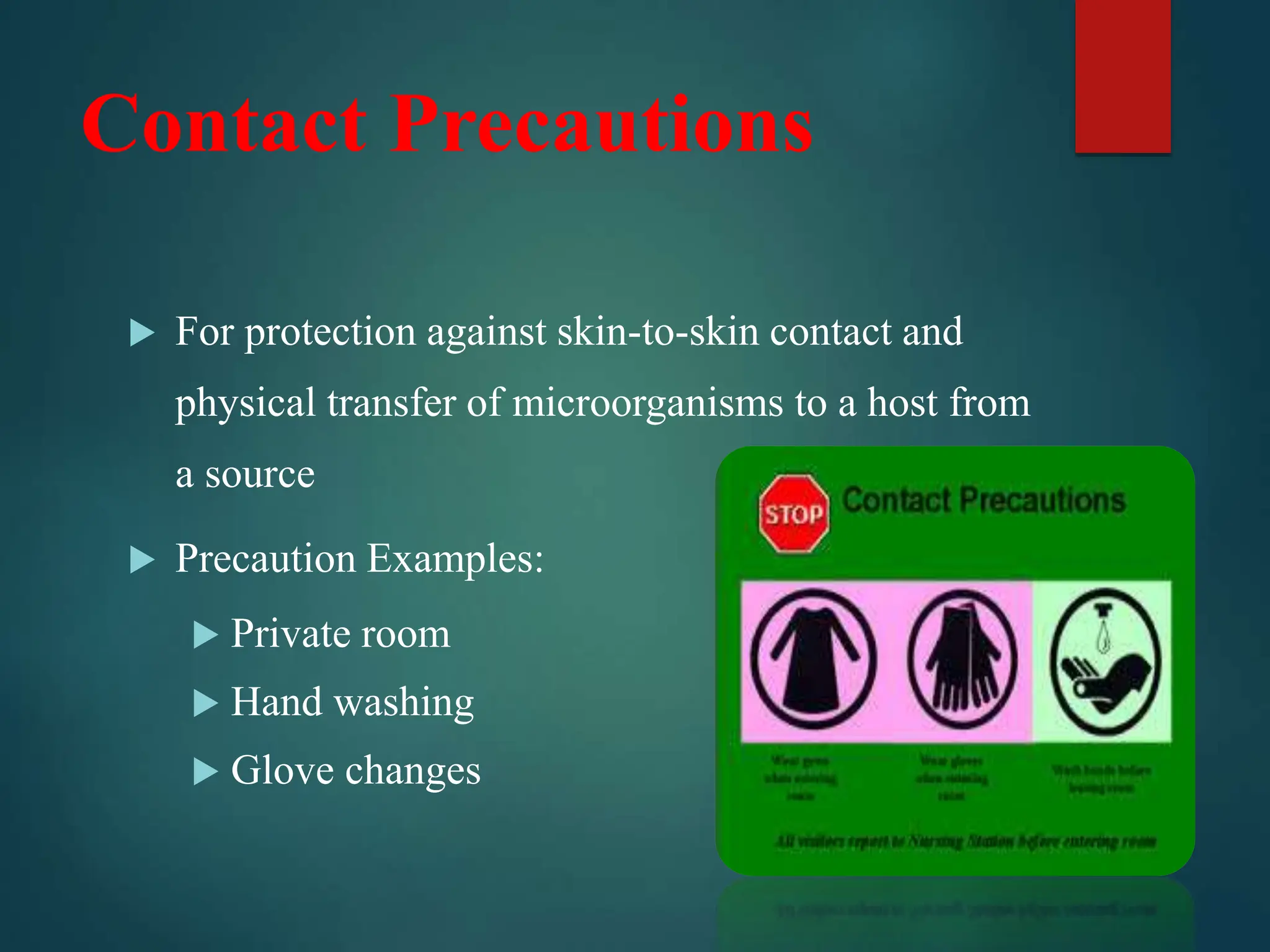
Contact Precautions
 For protection against skin-to-skin contact and
physical transfer of microorganisms to a host from
a source
 Precaution Examples:
 Private room
 Hand washing
 Glove changes
Universal Safety Precautions for safety.ppt

Universal Safety Precautions for safety.ppt

  • 1.
  • 2.
    Universal Precautions – Applieduniversally in caring for all patients • Hand washing • Decontamination of equipment and devices • Use and disposal of needles and sharps safely (no recapping) • Wearing protective items • Prompt cleaning up of blood and body fluid spills • Systems for safe collection of waste and disposal
  • 3.
    DEFINITION Standard Precautions  Previouslyknown by various names including “ universal precautions”  Standard precautions are designed to reduce the risk of transmission of bloodborne and other pathogens from both recognized and unrecognized sources to a susceptible host.  They are the basic level of infection control precaution  Hospital Infection is the result of a combination of factors: Microbial source + Transmission + Susceptible host = Infection
  • 4.
    Why Universal health Precautions. Theconcept of Universal Health Precautions emphasizes that all our patients should be treated as though they have potential blood born infections, and can infect the caring health care workers. ( CDC )
  • 5.
    Human materials/Tissues considered HighlyInfectious  Blood  Semen  Vaginal secretions  C S F  Synovial fluids  Amniotic fluid  All other body fluids
  • 6.
    Hand washing isthe most important method of disease prevention Bacteria and Viruses can be spread via dirty hands and the are too small to see with the human eye. You must wash you hands properly in order to remove them.
  • 8.
    Indications for Hand Washing In prolonged contact with patient.  Before taking care of Immune suppressed, New born infants, patients in ICU / ICCU, Dialysis Units, Burn’s Units.  Before and after touching wounds.  When Microbial contamination of Hands, likely to occur when in contact with mucous membranes, body fluids, and other secretions contaminated with Blood, and serous fluids.
  • 9.
    Use of Gloves Useof a pair of disposable gloves can protect if chances of contact with Blood or Body fluid is anticipated/inevitable.
  • 10.
     1. Removeany jewelry/ accessories  2. Remove glove from box. Gloves come in small, medium and large. Most are rubber latex and are pre-powdered. Those who are allergic to latex should use vinyl gloves.  3. Hold glove with your thumb and forefinger and insert hand into gloves  4. Work fingers into proper places PUTTING ON GLOVES
  • 12.
    Use of Mask,Cap, Eye Wear  Will certainly protect us from splashes of Blood or Body fluids.  Don't underestimate the importance of Use of Cap and Mask.  It equally protects our patients.
  • 13.
    UP recommends theuse of Personal Protective Equipment Gloves Aprons Gowns Protective eyewear Face shields Masks
  • 14.
    Universal Precautions alsoinclude:  Proper handling and disposal of needles.  Taking precautions to prevent injury from scalpels, needles, and other sharp instruments.
  • 15.
    Disposal of Needlesand Sharps  All used needles and sharps should be deposited in thick walled puncture resistant containers (PPC’s).  Bending, Reshaping, should be prohibited.  Do not recap the needles to avoid needle stick injures.
  • 16.
    Dealing with Needlestick Injuries  Consider all Needle stick injuries as a serious health hazard  All events of Needle stick injuries to be reported.  Wash the injured areas with soap and water.  Encourage bleeding if any.  Prophylaxis for prevention of HIV/HBV is top priority.
  • 17.
    Spillage of Blood/Body fluids A common health hazard in the working environment.  Never wipe the spillage with working wet mop.  Always cover the spills with paper and pour 1 % Sodium Hypochlorite to decontaminate the spills
  • 18.
    Patient care equipment Handle equipment soiled with blood, body fluids, secretions, and excretions in a manner that prevents skin and mucous membrane exposures, contamination of clothing, and transfer of pathogens to other patients or the environment.  Clean, disinfect, and reprocess reusable equipment appropriately before use with another patient.
  • 19.
    Contact Precautions  Forprotection against skin-to-skin contact and physical transfer of microorganisms to a host from a source  Precaution Examples:  Private room  Hand washing  Glove changes