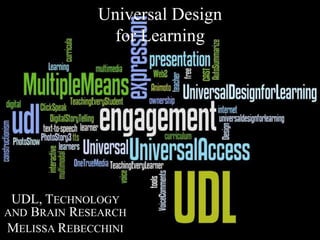
Universal Design for LearningUDL, Technology and Brain ResearchMelissa Rebecchini
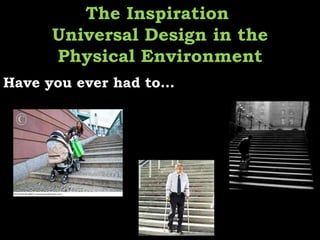
The Inspiration:Universal Design in the Physical EnvironmentHave you ever had to…
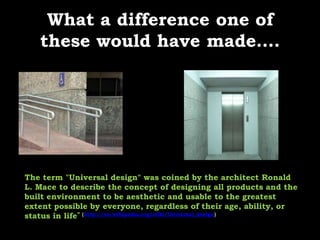
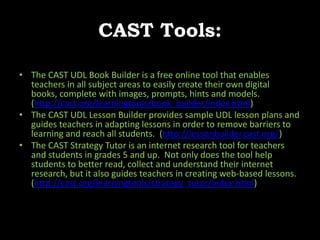
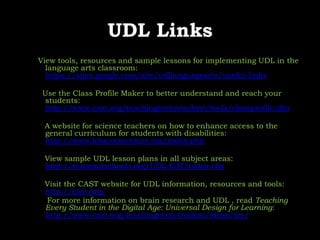
What a difference one of these would have made….The term "Universal design" was coined by the architect Ronald L. Mace to describe the concept of designing all products and the built environment to be aesthetic and usable to the greatest extent possible by everyone, regardless of their age, ability, or status in life” (http://en.wikipedia.org/wiki/Universal_design)
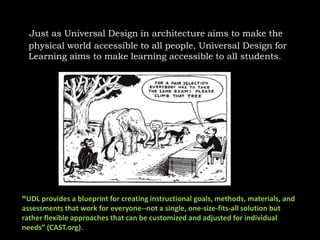
What is UDL?Just as Universal Design in architecture aims to make the physical world accessible to all people, Universal Design for Learning aims to make learning accessible to all students. “UDL provides a blueprint for creating instructional goals, methods, materials, and assessments that work for everyone--not a single, one-size-fits-all solution but rather flexible approaches that can be customized and adjusted for individual needs” (CAST.org).
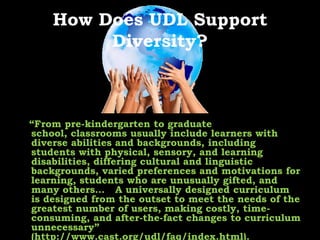
How Does UDL Support Diversity?   “From pre-kindergarten to graduate school, classrooms usually include learners with diverse abilities and backgrounds, including students with physical, sensory, and learning disabilities, differing cultural and linguistic backgrounds, varied preferences and motivations for learning, students who are unusually gifted, and many others… 	A universally designed curriculum is designed from the outset to meet the needs of the greatest number of users, making costly, time-consuming, and after-the-fact changes to curriculum unnecessary” (http://www.cast.org/udl/faq/index.html).
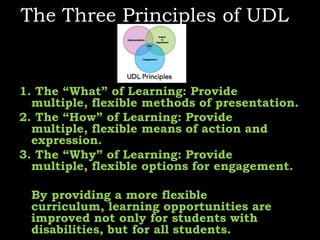
The Three Principles of UDL1. The “What” of Learning: Provide multiple, flexible methods of presentation.2. The “How” of Learning: Provide multiple, flexible means of action and expression.3. The “Why” of Learning: Provide multiple, flexible options for engagement.     By providing a more flexible curriculum, learning opportunities are improved not only for students with disabilities, but for all students.
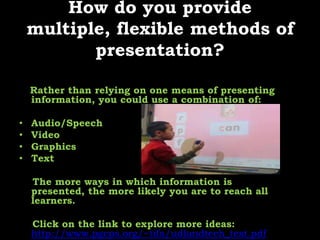
How do you provide multiple, flexible methods of presentation?Rather than relying on one means of presenting information, you could use a combination of:Audio/Speech
Video
Graphics
Text    The more ways in which information is presented, the more likely you are to reach all learners.    Click on the link to explore more ideas:  http://www.pgcps.org/~tifa/udlandtech_text.pdf
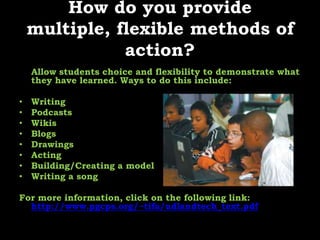
How do you provide multiple, flexible methods of action?    Allow students choice and flexibility to demonstrate what they have learned. Ways to do this include:Writing
Podcasts
Wikis
Blogs
Drawings
Acting
Building/Creating a model
Writing a song For more information, click on the following link:  http://www.pgcps.org/~tifa/udlandtech_text.pdf
How do you provide multiple, flexible methods of engagement? Students come to us with a variety of learning styles, interests, and levels of motivation.  To help all students engage in learning, you can:Offer choices of content and tools to tap into your students’ interests.

Universal Design for Learning Presentation

  • 1.
    Universal Design forLearningUDL, Technology and Brain ResearchMelissa Rebecchini
  • 2.
    The Inspiration:Universal Designin the Physical EnvironmentHave you ever had to…
  • 3.
    What a differenceone of these would have made….The term "Universal design" was coined by the architect Ronald L. Mace to describe the concept of designing all products and the built environment to be aesthetic and usable to the greatest extent possible by everyone, regardless of their age, ability, or status in life” (http://en.wikipedia.org/wiki/Universal_design)
  • 4.
    What is UDL?Justas Universal Design in architecture aims to make the physical world accessible to all people, Universal Design for Learning aims to make learning accessible to all students. “UDL provides a blueprint for creating instructional goals, methods, materials, and assessments that work for everyone--not a single, one-size-fits-all solution but rather flexible approaches that can be customized and adjusted for individual needs” (CAST.org).
  • 5.
    How Does UDLSupport Diversity? “From pre-kindergarten to graduate school, classrooms usually include learners with diverse abilities and backgrounds, including students with physical, sensory, and learning disabilities, differing cultural and linguistic backgrounds, varied preferences and motivations for learning, students who are unusually gifted, and many others… A universally designed curriculum is designed from the outset to meet the needs of the greatest number of users, making costly, time-consuming, and after-the-fact changes to curriculum unnecessary” (http://www.cast.org/udl/faq/index.html).
  • 6.
    The Three Principlesof UDL1. The “What” of Learning: Provide multiple, flexible methods of presentation.2. The “How” of Learning: Provide multiple, flexible means of action and expression.3. The “Why” of Learning: Provide multiple, flexible options for engagement. By providing a more flexible curriculum, learning opportunities are improved not only for students with disabilities, but for all students.
  • 7.
    How do youprovide multiple, flexible methods of presentation?Rather than relying on one means of presenting information, you could use a combination of:Audio/Speech
  • 8.
  • 9.
  • 10.
    Text The more ways in which information is presented, the more likely you are to reach all learners. Click on the link to explore more ideas: http://www.pgcps.org/~tifa/udlandtech_text.pdf
  • 11.
    How do youprovide multiple, flexible methods of action? Allow students choice and flexibility to demonstrate what they have learned. Ways to do this include:Writing
  • 12.
  • 13.
  • 14.
  • 15.
  • 16.
  • 17.
  • 18.
    Writing a songFor more information, click on the following link: http://www.pgcps.org/~tifa/udlandtech_text.pdf
  • 19.
    How do youprovide multiple, flexible methods of engagement? Students come to us with a variety of learning styles, interests, and levels of motivation. To help all students engage in learning, you can:Offer choices of content and tools to tap into your students’ interests.