IIMT College of Pharmacy, Greater Noida
Antibiotic
Ms. Bharti Chauhan
(ASSISTANT
PROFESSOR)
Unit: II
Subject Name- Medicinal Chemistry-III
BP-601T
B Pharm VI Sem
Macrolides
Introduction
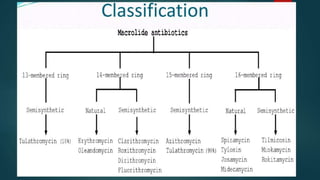
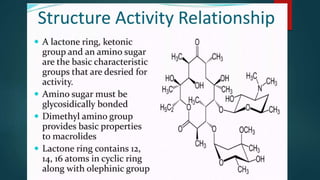
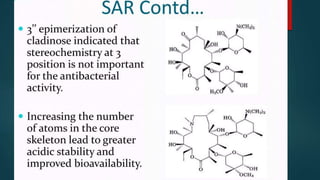
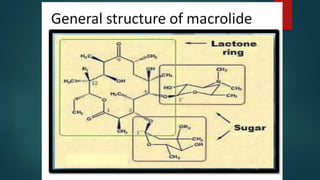
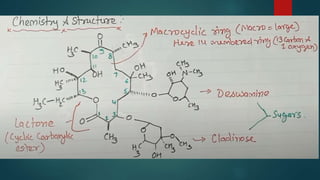
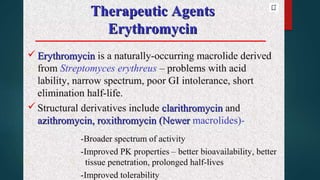
 The macrolides are a class of natural products that consist of a large macrocyclic lactone ring
to which one or more deoxy sugars, usually cladinose and desosamine, may be attached.
 The lactone rings are usually 14-, 15-, or 16-membered.
 Macrolides belong to the polyketide class of natural products
History
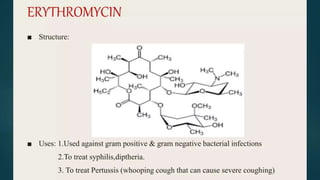
 The first macrolide discovered was erythromycin, which was first used in 1952.
 Erythromycin was widely used as a substitute to penicillin in cases where patients were allergic to
penicillin or had penicillin-resistant illnesses.
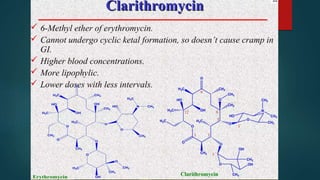
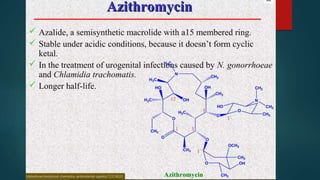
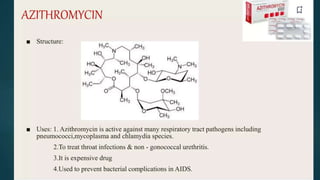
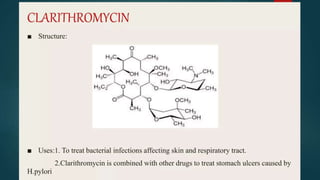
 Later macrolides developed, including azithromycin and clarithromycin, stemmed from chemically
modifying erythromycin; these compounds were designed to be more easily absorbed and have
fewer side-effects (erythromycin caused gastrointestinal side-effects in a significant proportion of
users).
Chloramphenicol
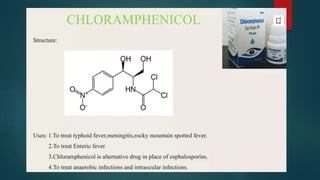
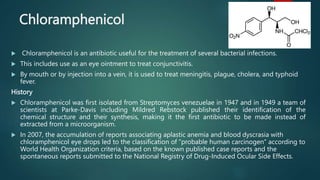
 Chloramphenicol is an antibiotic useful for the treatment of several bacterial infections.
 This includes use as an eye ointment to treat conjunctivitis.
 By mouth or by injection into a vein, it is used to treat meningitis, plague, cholera, and typhoid
fever.
History
 Chloramphenicol was first isolated from Streptomyces venezuelae in 1947 and in 1949 a team of
scientists at Parke-Davis including Mildred Rebstock published their identification of the
chemical structure and their synthesis, making it the first antibiotic to be made instead of
extracted from a microorganism.
 In 2007, the accumulation of reports associating aplastic anemia and blood dyscrasia with
chloramphenicol eye drops led to the classification of “probable human carcinogen” according to
World Health Organization criteria, based on the known published case reports and the
spontaneous reports submitted to the National Registry of Drug-Induced Ocular Side Effects.
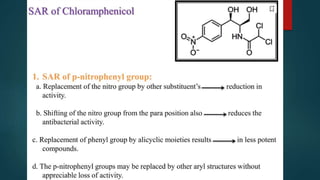
Chloramphenicol
Mechanism of Action
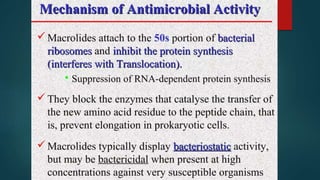
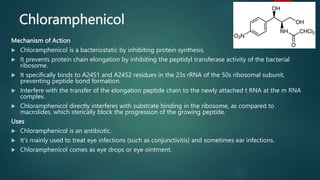
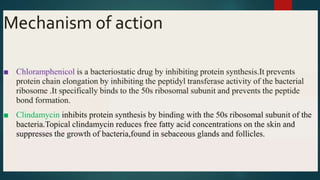
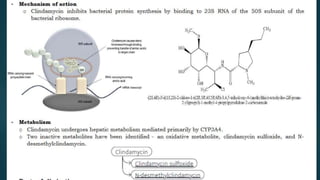
 Chloramphenicol is a bacteriostatic by inhibiting protein synthesis.
 It prevents protein chain elongation by inhibiting the peptidyl transferase activity of the bacterial
ribosome.
 It specifically binds to A2451 and A2452 residues in the 23s rRNA of the 50s ribosomal subunit,
preventing peptide bond formation.
 Interfere with the transfer of the elongation peptide chain to the newly attached t RNA at the m RNA
complex.
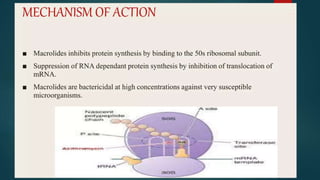
 Chloramphenicol directly interferes with substrate binding in the ribosome, as compared to
macrolides, which sterically block the progression of the growing peptide.
Uses
 Chloramphenicol is an antibiotic.
 It's mainly used to treat eye infections (such as conjunctivitis) and sometimes ear infections.
 Chloramphenicol comes as eye drops or eye ointment.
Clindamycin
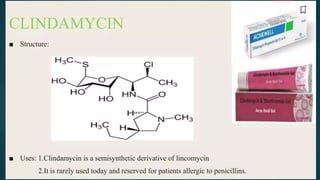
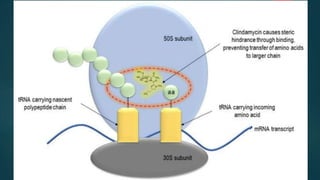
 Clindamycin is a lincosamide antibiotic used to treat serious infections caused by susceptible
anaerobic,
 streptococcal, staphylococcal, and pneumococcal bacteria.
 - Clindamycin is an antibiotic used for the treatment of a number of bacterial infections, including
bone or
 joint infections, pelvic inflammatory disease, strep throat, pneumonia, middle ear infections, and
 endocarditis. It can also be used to treat acne, and some cases of methicillin-resistant Staphylococcus
 aureus.
 - In combination with quinine, it can be used for malaria. Clindamycin is effective and well tolerated
in treating
 Plasmodium falciparum malaria.
 - Clindamycin exerts its bacteriostatic effect. Clindamycin is active against a number of gram-positive
aerobic
 bacteria, as well as both gram-positive and gram-negative anaerobes.
SAR
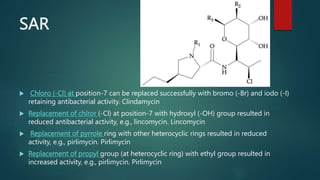
 Chloro (-Cl) at position-7 can be replaced successfully with bromo (-Br) and iodo (-I)
retaining antibacterial activity. Clindamycin
 Replacement of chlror (-Cl) at position-7 with hydroxyl (-OH) group resulted in
reduced antibacterial activity, e.g., lincomycin. Lincomycin
 Replacement of pyrrole ring with other heterocyclic rings resulted in reduced
activity, e.g., pirlimycin. Pirlimycin
 Replacement of propyl group (at heterocyclic ring) with ethyl group resulted in
increased activity, e.g., pirlimycin. Pirlimycin
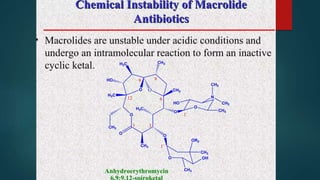
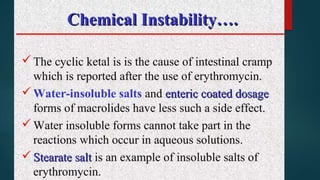
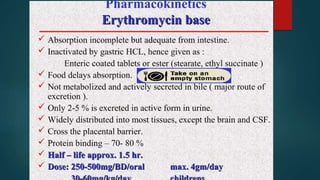
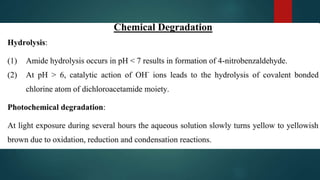
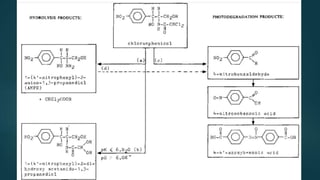
Chemical Degradation
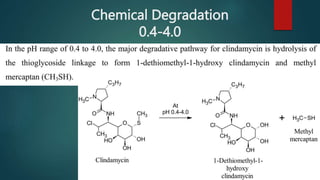
0.4-4.0
Chemical Degradation
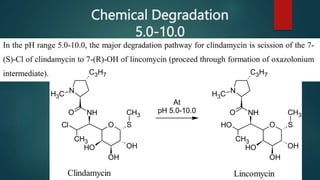
5.0-10.0

unit_2.pptx ANTIBIOTIC UNIT 2 MEDICINAL CHEMISTRY

  • 1.
    IIMT College ofPharmacy, Greater Noida Antibiotic Ms. Bharti Chauhan (ASSISTANT PROFESSOR) Unit: II Subject Name- Medicinal Chemistry-III BP-601T B Pharm VI Sem
  • 2.
    Macrolides Introduction  The macrolidesare a class of natural products that consist of a large macrocyclic lactone ring to which one or more deoxy sugars, usually cladinose and desosamine, may be attached.  The lactone rings are usually 14-, 15-, or 16-membered.  Macrolides belong to the polyketide class of natural products History  The first macrolide discovered was erythromycin, which was first used in 1952.  Erythromycin was widely used as a substitute to penicillin in cases where patients were allergic to penicillin or had penicillin-resistant illnesses.  Later macrolides developed, including azithromycin and clarithromycin, stemmed from chemically modifying erythromycin; these compounds were designed to be more easily absorbed and have fewer side-effects (erythromycin caused gastrointestinal side-effects in a significant proportion of users).
  • 30.
    Chloramphenicol  Chloramphenicol isan antibiotic useful for the treatment of several bacterial infections.  This includes use as an eye ointment to treat conjunctivitis.  By mouth or by injection into a vein, it is used to treat meningitis, plague, cholera, and typhoid fever. History  Chloramphenicol was first isolated from Streptomyces venezuelae in 1947 and in 1949 a team of scientists at Parke-Davis including Mildred Rebstock published their identification of the chemical structure and their synthesis, making it the first antibiotic to be made instead of extracted from a microorganism.  In 2007, the accumulation of reports associating aplastic anemia and blood dyscrasia with chloramphenicol eye drops led to the classification of “probable human carcinogen” according to World Health Organization criteria, based on the known published case reports and the spontaneous reports submitted to the National Registry of Drug-Induced Ocular Side Effects.
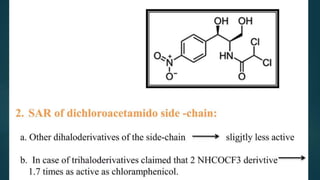
  • 31.
    Chloramphenicol Mechanism of Action Chloramphenicol is a bacteriostatic by inhibiting protein synthesis.  It prevents protein chain elongation by inhibiting the peptidyl transferase activity of the bacterial ribosome.  It specifically binds to A2451 and A2452 residues in the 23s rRNA of the 50s ribosomal subunit, preventing peptide bond formation.  Interfere with the transfer of the elongation peptide chain to the newly attached t RNA at the m RNA complex.  Chloramphenicol directly interferes with substrate binding in the ribosome, as compared to macrolides, which sterically block the progression of the growing peptide. Uses  Chloramphenicol is an antibiotic.  It's mainly used to treat eye infections (such as conjunctivitis) and sometimes ear infections.  Chloramphenicol comes as eye drops or eye ointment.
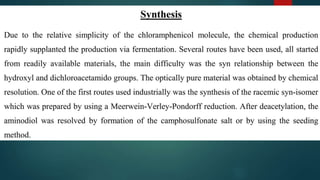
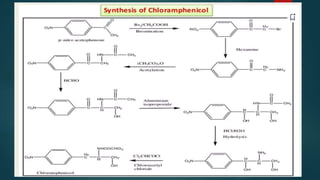
  • 41.
    Clindamycin  Clindamycin isa lincosamide antibiotic used to treat serious infections caused by susceptible anaerobic,  streptococcal, staphylococcal, and pneumococcal bacteria.  - Clindamycin is an antibiotic used for the treatment of a number of bacterial infections, including bone or  joint infections, pelvic inflammatory disease, strep throat, pneumonia, middle ear infections, and  endocarditis. It can also be used to treat acne, and some cases of methicillin-resistant Staphylococcus  aureus.  - In combination with quinine, it can be used for malaria. Clindamycin is effective and well tolerated in treating  Plasmodium falciparum malaria.  - Clindamycin exerts its bacteriostatic effect. Clindamycin is active against a number of gram-positive aerobic  bacteria, as well as both gram-positive and gram-negative anaerobes.
  • 47.
    SAR  Chloro (-Cl)at position-7 can be replaced successfully with bromo (-Br) and iodo (-I) retaining antibacterial activity. Clindamycin  Replacement of chlror (-Cl) at position-7 with hydroxyl (-OH) group resulted in reduced antibacterial activity, e.g., lincomycin. Lincomycin  Replacement of pyrrole ring with other heterocyclic rings resulted in reduced activity, e.g., pirlimycin. Pirlimycin  Replacement of propyl group (at heterocyclic ring) with ethyl group resulted in increased activity, e.g., pirlimycin. Pirlimycin
  • 48.
  • 49.