PATHOPHYSIOLOGY
b.Pharma 2nd semester unit-IVTH
Mr. Bulet Kumar Gupta
Assistant Professor
Sai College of Pharmacy, Mau
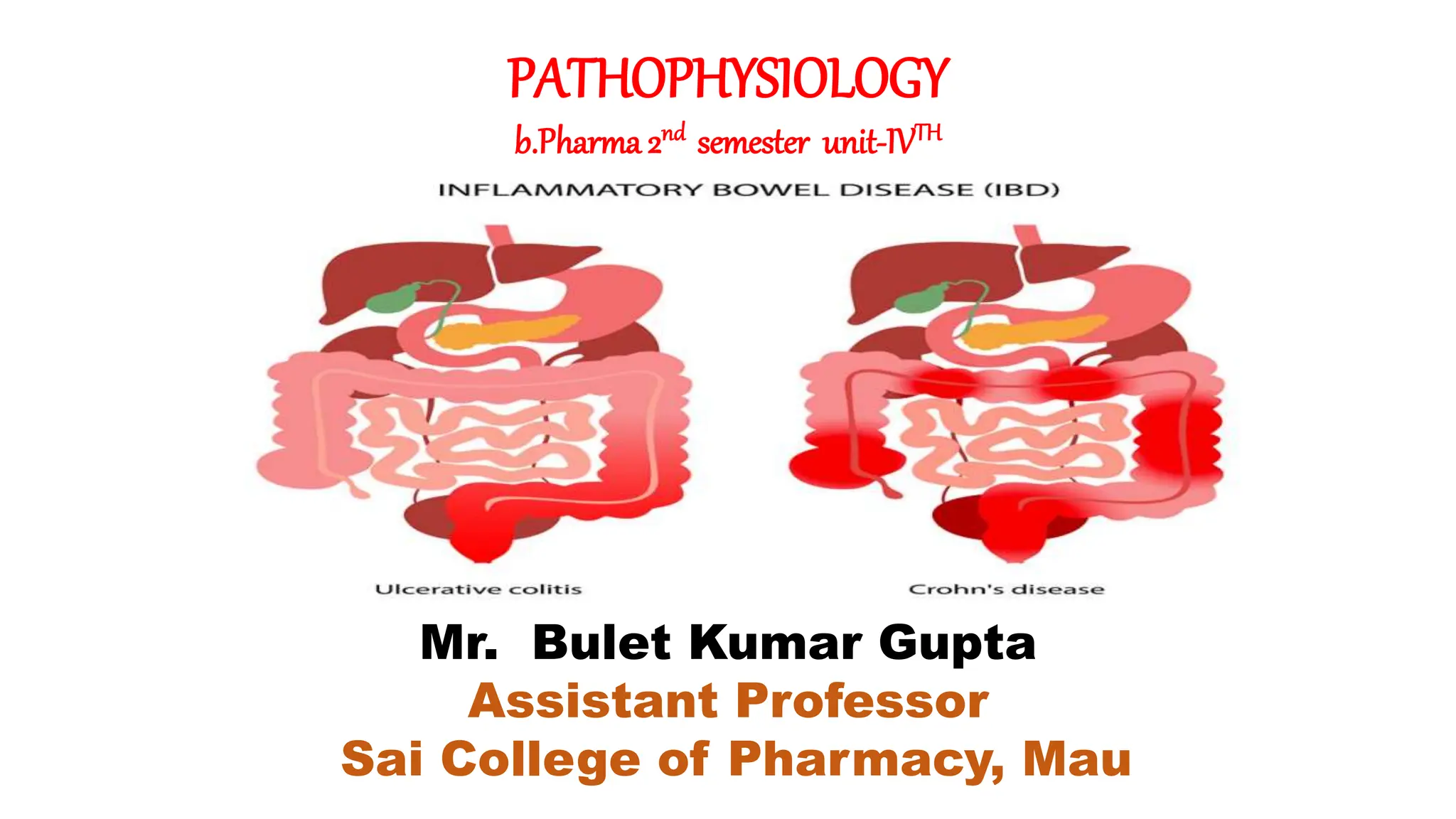
INFLAMMATORY BOWEL DISEASE (IBD)
IBD is comprised of two major disorders: Ulcerative colitis (UC) and Crohn’s disease(CD) also
include Microscopic Colitis & Indeterminate (Undetermined) Colitis When it’s difficult to
distinguish between Crohn’s Disease & Ulcerative Colitis.
IBD is the common name used to describe two chronic diseases of the intestinal tract ― Crohn’s
disease and ulcerative colitis― that cause inflammation in the intestines.
EPIDEMIOLOGY
● More common in the west, but the incidence is increasing in the developing countries
including Saudi Arabia.
IBD can present at any age:-
● The peak: 15-30 years
● A second peak is 50 years old
•Crohn’s disease- It can affect any part of the gastrointestinal tract from the mouth to the anus.
It is immune related disorders triggered by Pathogens. Such as- Mycobacterium, Pseudomonas &
Listeria.
•Ulcerative colitis- It can affect any part of the large intestine. It is Autoimmune disease triggered
by itself.
A third category indeterminate colitis inflammatory bowel disease, refers to IBD that has features
of both Crohn’s disease and ulcerative colitis.
ETIOLOGY OF IBD
• Defective Mucosal integrity *Dysregulated immune response
• Diet (Frozen) *Environmental factors(Smoking)
• Persistent infection
• Dysbiosis (Change in microbiota of the gut: ↓protective bacteria ↑aggressive commensals)
Pathophysiology of IBD
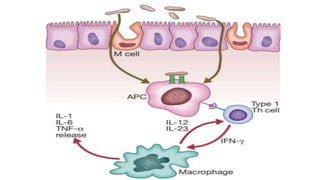
1) Bacterial antigens are taken up by specialized M cells, pass between leaky epithelial cells or
enter the lamina propria through ulcerated mucosa.
2) After processing, they are presented to type 1 T-helper cells by antigen- presenting cells
(APCs) in the lamina propria.
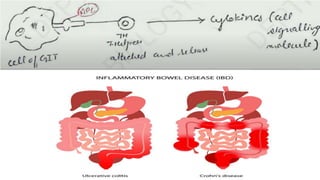
3) T-cell activation and differentiation results in a Th1 T cell-mediated cytokine response.
4) with secretion of cytokines, including interferon gamma (IFN-γ). Further amplification of T
cells perpetuates the inflammatory process with activation of non-immune cells and release
of other important cytokines, including interleukin 12 (IL-12), IL-23, IL-1, IL-6 and tumour
necrosis factor alpha (TNF-α). These pathways occur in all normal individuals exposed to an
inflammatory insult and this is self-limiting in healthy subjects. In genetically predisposed
persons, dysregulation of innate immunity may trigger inflammatory bowel disease.
Common IBD symptoms include: Diagnosis-
• Abdominal pain (pain in the stomach area) Thorough health and family history and physical exam
•Diarrhea, sometimes with blood Colonoscopy with Biopsy
•Rectal bleeding Upper endoscopy with biopsy
•Weight loss Stool sample analysis
•Fever Imaging (X-ray, CT scan, MRI)
•Anemia IBD Medications
•Malnutrition and delayed growth in people Immunosuppressant
who develop IBD as children. Topical anti-inflammatory inflammation
•Anxiety and depression. Pain Killer
Antibiotics
Steroids.
Irritable bowel syndrome (IBS)
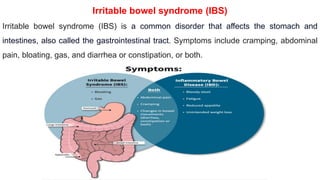
Irritable bowel syndrome (IBS) is a common disorder that affects the stomach and
intestines, also called the gastrointestinal tract. Symptoms include cramping, abdominal
pain, bloating, gas, and diarrhea or constipation, or both.
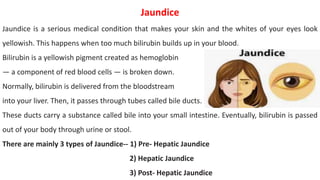
Jaundice
Jaundice is a serious medical condition that makes your skin and the whites of your eyes look
yellowish. This happens when too much bilirubin builds up in your blood.
Bilirubin is a yellowish pigment created as hemoglobin
— a component of red blood cells — is broken down.
Normally, bilirubin is delivered from the bloodstream
into your liver. Then, it passes through tubes called bile ducts.
These ducts carry a substance called bile into your small intestine. Eventually, bilirubin is passed
out of your body through urine or stool.
There are mainly 3 types of Jaundice-- 1) Pre- Hepatic Jaundice
2) Hepatic Jaundice
3) Post- Hepatic Jaundice
•Pre-hepatic jaundice: Health conditions that affect the blood’s rate of breaking down blood cells
cause bilirubin to overflow into bodily tissues. It occurs before the blood reaches the liver.
•Hepatic jaundice: Hepatic jaundice happens when your liver tissue becomes less effective at
filtering out bilirubin from your blood.
•Post-hepatic jaundice: This type of jaundice happens when bilirubin filtered from the blood
can’t drain properly into the bile ducts or digestive tract to be passed out of the body. It occurs
after bilirubin is filtered out in the liver and occurs because of a blockage.
Causes of pre-hepatic jaundice Symptoms of jaundice
• Malaria Fever, chills, cold sweats.
• Sickle cell anemia Abdominal pain.
• Thalassemia Dark urine & Pale yellow Stool.
Abnormal weight loss.
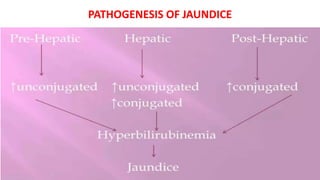
PATHOGENESIS OF JAUNDICE
Diagnosis of jaundice
• HIDA Scan (hepatobiliary iminodiacetic acid is an imaging procedure used to diagnose
problems of the liver, gallbladder and bile ducts.)
• Urine Analysis
• Blood test
• Imagine test
Treatment for jaundice
• Anti-malarial drug
• Blood infusion
• Folic acid supplements
• Low protein diet.
• Anti-viral medication.
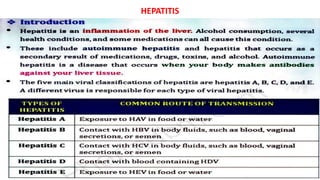
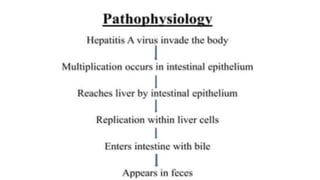
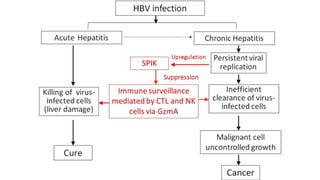
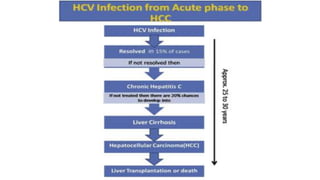
HEPATITIS
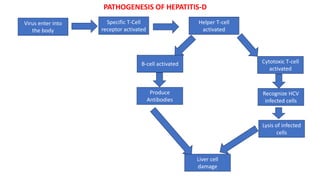
Virus enter into
the body
Specific T-Cell
receptor activated
Helper T-cell
activated
Cytotoxic T-cell
activated
B-cell activated
Produce
Antibodies
Recognize HCV
infected cells
Lysis of infected
cells
Liver cell
damage
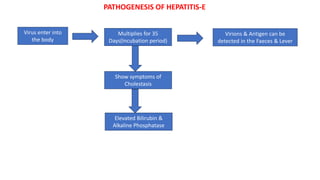
PATHOGENESIS OF HEPATITIS-D
Virus enter into
the body
Multiplies for 35
Days(Incubation period)
Virions & Antigen can be
detected in the Faeces & Lever
Show symptoms of
Cholestasis
Elevated Bilirubin &
Alkaline Phosphatase
PATHOGENESIS OF HEPATITIS-E
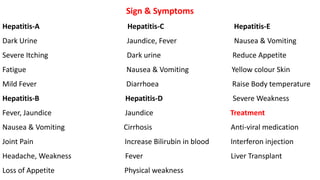
Sign & Symptoms
Hepatitis-A Hepatitis-C Hepatitis-E
Dark Urine Jaundice, Fever Nausea & Vomiting
Severe Itching Dark urine Reduce Appetite
Fatigue Nausea & Vomiting Yellow colour Skin
Mild Fever Diarrhoea Raise Body temperature
Hepatitis-B Hepatitis-D Severe Weakness
Fever, Jaundice Jaundice Treatment
Nausea & Vomiting Cirrhosis Anti-viral medication
Joint Pain Increase Bilirubin in blood Interferon injection
Headache, Weakness Fever Liver Transplant
Loss of Appetite Physical weakness
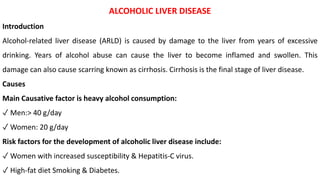
ALCOHOLIC LIVER DISEASE
Introduction
Alcohol-related liver disease (ARLD) is caused by damage to the liver from years of excessive
drinking. Years of alcohol abuse can cause the liver to become inflamed and swollen. This
damage can also cause scarring known as cirrhosis. Cirrhosis is the final stage of liver disease.
Causes
Main Causative factor is heavy alcohol consumption:
✓ Men:> 40 g/day
✓ Women: 20 g/day
Risk factors for the development of alcoholic liver disease include:
✓ Women with increased susceptibility & Hepatitis-C virus.
✓ High-fat diet Smoking & Diabetes.
Pathogenesis of Alcoholic Liver Disease
A. Ethanol Metabolism
There are multiple pathways, but the major one is the acetaldehyde pathway:
• Acetaldehyde and reduced nicotinamide adenine dinucleotide (NAD+) are generated.
• Acetaldehyde is metabolized to acetate by acetaldehyde dehydrogenase.
• Acetaldehyde dehydrogenase has multiple isoforms with different levels of activity.
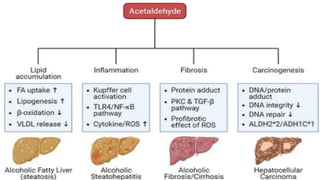
• Accumulation of acetaldehyde is one factor responsible for liver injury.
Signs and symptoms Complication
Abdominal discomfort Portal Hypertension
Low-grade fever Splenomegaly
Loss of appetite Jaundice
Nausea Hepatorenal syndrome
Jaundice Hepatocellular Carcinoma
Hepatomegaly
Lethargy
Alopecia
Confusion
Fatigue
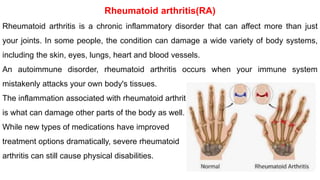
Rheumatoid arthritis(RA)
Rheumatoid arthritis is a chronic inflammatory disorder that can affect more than just
your joints. In some people, the condition can damage a wide variety of body systems,
including the skin, eyes, lungs, heart and blood vessels.
An autoimmune disorder, rheumatoid arthritis occurs when your immune system
mistakenly attacks your own body's tissues.
The inflammation associated with rheumatoid arthritis
is what can damage other parts of the body as well.
While new types of medications have improved
treatment options dramatically, severe rheumatoid
arthritis can still cause physical disabilities.
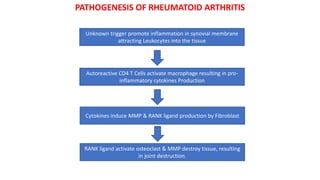
Unknown trigger promote inflammation in synovial membrane
attracting Leukocytes into the tissue
PATHOGENESIS OF RHEUMATOID ARTHRITIS
Autoreactive CD4 T Cells activate macrophage resulting in pro-
inflammatory cytokines Production
Cytokines induce MMP & RANK ligand production by Fibroblast
RANK ligand activate osteoclast & MMP destroy tissue, resulting
in joint destruction.
Causes
Rheumatoid arthritis is an autoimmune disease. Normally, your immune system helps
protect your body from infection and disease. In rheumatoid arthritis, your immune
system attacks healthy tissue in your joints. It can also cause medical problems with your
heart, lungs, nerves, eyes and skin.
Environmental factors — such as infection with certain viruses and bacteria — that may
trigger the disease.
Symptoms
Signs and symptoms of rheumatoid arthritis may include:
•Warm, swollen joints
•Joint stiffness that is usually worse in the mornings and after inactivity
•Fatigue, fever and loss of appetite
Risk factors
• Age (Mostly begins in middle age)
• Sex (In women more than men)
• Family History
• Smoking
• Excess weight
Complication
• Osteoporosis Carpal tunnel syndrome
• Dry eye & Mouth Heart problems
• Infection Lungs disease
• Abnormal body composition
• Lymphoma
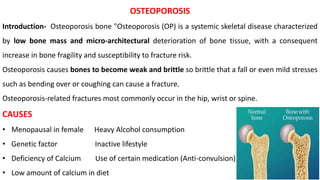
OSTEOPOROSIS
Introduction- Osteoporosis bone "Osteoporosis (OP) is a systemic skeletal disease characterized
by low bone mass and micro-architectural deterioration of bone tissue, with a consequent
increase in bone fragility and susceptibility to fracture risk.
Osteoporosis causes bones to become weak and brittle so brittle that a fall or even mild stresses
such as bending over or coughing can cause a fracture.
Osteoporosis-related fractures most commonly occur in the hip, wrist or spine.
CAUSES
• Menopausal in female Heavy Alcohol consumption
• Genetic factor Inactive lifestyle
• Deficiency of Calcium Use of certain medication (Anti-convulsion)
• Low amount of calcium in diet
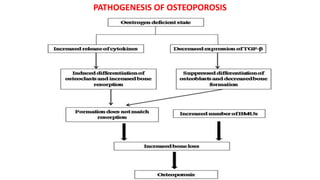
PATHOGENESIS OF OSTEOPOROSIS
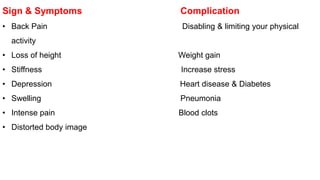
Sign & Symptoms Complication
• Back Pain Disabling & limiting your physical
activity
• Loss of height Weight gain
• Stiffness Increase stress
• Depression Heart disease & Diabetes
• Swelling Pneumonia
• Intense pain Blood clots
• Distorted body image
GOUT
Introduction- Gout is a metabolic disorder of purine metabolism, characterized by intermittent
attacks of acute pain, swelling and inflammation.
It always preceded by hyperuricemia (6.0mg/dl)
• Hyperuricemia due to excessive amount of uric acid production or decreased excretion.
• Hyperuricemia - primary or secondary.
• Primary hyperuricemia classified as "Overproducers" or "under execrator”
Causes
• Uric acid under secretion(80%-90%)
• Urate overproduction
• HGPRT Deficiency
• Developed during other disease(Chemotherapy)
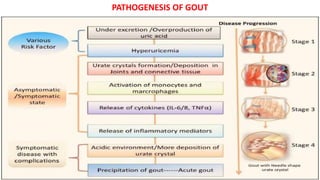
PATHOGENESIS OF GOUT
Sign & Symptoms Complication
Sudden Redness, Swelling, Heat & Pain Swelling in joint regularly
Acute pain during night Kidney stone
Affect Peripheral joints like- Kidney Failure
Elbow Joint Urate crystal may collect in
Urinary tract
Thumb joint
Knee Joint
Fingers Joint
Ankles Joints
Cancer
Cancer is a serious disease in which the cells start dividing abnormally in an uncontrolled
manner. Most cancer cells are found in the shape of tumors, with a few notable exceptions such
as leukemia.
All tumours are not cancerous. Some tumors, such as moles, stop growing and are not
malignant.
Classification
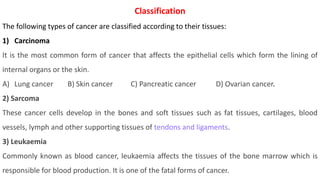
The following types of cancer are classified according to their tissues:
1) Carcinoma
It is the most common form of cancer that affects the epithelial cells which form the lining of
internal organs or the skin.
A) Lung cancer B) Skin cancer C) Pancreatic cancer D) Ovarian cancer.
2) Sarcoma
These cancer cells develop in the bones and soft tissues such as fat tissues, cartilages, blood
vessels, lymph and other supporting tissues of tendons and ligaments.
3) Leukaemia
Commonly known as blood cancer, leukaemia affects the tissues of the bone marrow which is
responsible for blood production. It is one of the fatal forms of cancer.
4) Lymphoma- Lymphoma is a form of cancer that affects the lymphocytes in the lymph nodes,
which are a part of the immune system. There are two kinds of lymphoma:
•Hodgkin lymphoma – originates in the B cells
•Non-Hodgkin lymphoma, – originates in B or T cells.
5) Melanoma
It is a form of skin cancer that targets melanin – the pigment responsible for skin colour.
In this form of cancer, the melanocytes are affected resulting in the abnormal formation of
melanin. It may also affect other tissues that are pigmented, such as the eyes.
6) Myeloma
Myeloma targets another part of the immune system- the plasma cells. The affected plasma
cells, called myeloma cells divide in the bone marrow causing multiple tumours in the
bones (Multiple Myeloma also called Kahler disease).
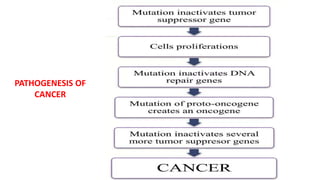
PATHOGENESIS OF
CANCER
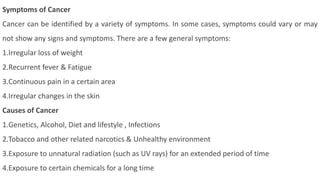
Symptoms of Cancer
Cancer can be identified by a variety of symptoms. In some cases, symptoms could vary or may
not show any signs and symptoms. There are a few general symptoms:
1.Irregular loss of weight
2.Recurrent fever & Fatigue
3.Continuous pain in a certain area
4.Irregular changes in the skin
Causes of Cancer
1.Genetics, Alcohol, Diet and lifestyle , Infections
2.Tobacco and other related narcotics & Unhealthy environment
3.Exposure to unnatural radiation (such as UV rays) for an extended period of time
4.Exposure to certain chemicals for a long time
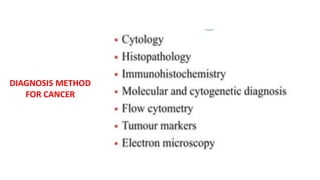
DIAGNOSIS METHOD
FOR CANCER
unit4 IBD PPT BKG.pptx Pathophysiology B.pharma 2nd sem

unit4 IBD PPT BKG.pptx Pathophysiology B.pharma 2nd sem

  • 1.
    PATHOPHYSIOLOGY b.Pharma 2nd semesterunit-IVTH Mr. Bulet Kumar Gupta Assistant Professor Sai College of Pharmacy, Mau
  • 2.
    INFLAMMATORY BOWEL DISEASE(IBD) IBD is comprised of two major disorders: Ulcerative colitis (UC) and Crohn’s disease(CD) also include Microscopic Colitis & Indeterminate (Undetermined) Colitis When it’s difficult to distinguish between Crohn’s Disease & Ulcerative Colitis. IBD is the common name used to describe two chronic diseases of the intestinal tract ― Crohn’s disease and ulcerative colitis― that cause inflammation in the intestines. EPIDEMIOLOGY ● More common in the west, but the incidence is increasing in the developing countries including Saudi Arabia. IBD can present at any age:- ● The peak: 15-30 years ● A second peak is 50 years old
  • 4.
    •Crohn’s disease- Itcan affect any part of the gastrointestinal tract from the mouth to the anus. It is immune related disorders triggered by Pathogens. Such as- Mycobacterium, Pseudomonas & Listeria. •Ulcerative colitis- It can affect any part of the large intestine. It is Autoimmune disease triggered by itself. A third category indeterminate colitis inflammatory bowel disease, refers to IBD that has features of both Crohn’s disease and ulcerative colitis. ETIOLOGY OF IBD • Defective Mucosal integrity *Dysregulated immune response • Diet (Frozen) *Environmental factors(Smoking) • Persistent infection • Dysbiosis (Change in microbiota of the gut: ↓protective bacteria ↑aggressive commensals)
  • 5.
    Pathophysiology of IBD 1)Bacterial antigens are taken up by specialized M cells, pass between leaky epithelial cells or enter the lamina propria through ulcerated mucosa. 2) After processing, they are presented to type 1 T-helper cells by antigen- presenting cells (APCs) in the lamina propria. 3) T-cell activation and differentiation results in a Th1 T cell-mediated cytokine response. 4) with secretion of cytokines, including interferon gamma (IFN-γ). Further amplification of T cells perpetuates the inflammatory process with activation of non-immune cells and release of other important cytokines, including interleukin 12 (IL-12), IL-23, IL-1, IL-6 and tumour necrosis factor alpha (TNF-α). These pathways occur in all normal individuals exposed to an inflammatory insult and this is self-limiting in healthy subjects. In genetically predisposed persons, dysregulation of innate immunity may trigger inflammatory bowel disease.
  • 7.
    Common IBD symptomsinclude: Diagnosis- • Abdominal pain (pain in the stomach area) Thorough health and family history and physical exam •Diarrhea, sometimes with blood Colonoscopy with Biopsy •Rectal bleeding Upper endoscopy with biopsy •Weight loss Stool sample analysis •Fever Imaging (X-ray, CT scan, MRI) •Anemia IBD Medications •Malnutrition and delayed growth in people Immunosuppressant who develop IBD as children. Topical anti-inflammatory inflammation •Anxiety and depression. Pain Killer Antibiotics Steroids.
  • 8.
    Irritable bowel syndrome(IBS) Irritable bowel syndrome (IBS) is a common disorder that affects the stomach and intestines, also called the gastrointestinal tract. Symptoms include cramping, abdominal pain, bloating, gas, and diarrhea or constipation, or both.
  • 9.
    Jaundice Jaundice is aserious medical condition that makes your skin and the whites of your eyes look yellowish. This happens when too much bilirubin builds up in your blood. Bilirubin is a yellowish pigment created as hemoglobin — a component of red blood cells — is broken down. Normally, bilirubin is delivered from the bloodstream into your liver. Then, it passes through tubes called bile ducts. These ducts carry a substance called bile into your small intestine. Eventually, bilirubin is passed out of your body through urine or stool. There are mainly 3 types of Jaundice-- 1) Pre- Hepatic Jaundice 2) Hepatic Jaundice 3) Post- Hepatic Jaundice
  • 10.
    •Pre-hepatic jaundice: Healthconditions that affect the blood’s rate of breaking down blood cells cause bilirubin to overflow into bodily tissues. It occurs before the blood reaches the liver. •Hepatic jaundice: Hepatic jaundice happens when your liver tissue becomes less effective at filtering out bilirubin from your blood. •Post-hepatic jaundice: This type of jaundice happens when bilirubin filtered from the blood can’t drain properly into the bile ducts or digestive tract to be passed out of the body. It occurs after bilirubin is filtered out in the liver and occurs because of a blockage. Causes of pre-hepatic jaundice Symptoms of jaundice • Malaria Fever, chills, cold sweats. • Sickle cell anemia Abdominal pain. • Thalassemia Dark urine & Pale yellow Stool. Abnormal weight loss.
  • 11.
  • 12.
    Diagnosis of jaundice •HIDA Scan (hepatobiliary iminodiacetic acid is an imaging procedure used to diagnose problems of the liver, gallbladder and bile ducts.) • Urine Analysis • Blood test • Imagine test Treatment for jaundice • Anti-malarial drug • Blood infusion • Folic acid supplements • Low protein diet. • Anti-viral medication.
  • 13.
  • 17.
    Virus enter into thebody Specific T-Cell receptor activated Helper T-cell activated Cytotoxic T-cell activated B-cell activated Produce Antibodies Recognize HCV infected cells Lysis of infected cells Liver cell damage PATHOGENESIS OF HEPATITIS-D
  • 18.
    Virus enter into thebody Multiplies for 35 Days(Incubation period) Virions & Antigen can be detected in the Faeces & Lever Show symptoms of Cholestasis Elevated Bilirubin & Alkaline Phosphatase PATHOGENESIS OF HEPATITIS-E
  • 19.
    Sign & Symptoms Hepatitis-AHepatitis-C Hepatitis-E Dark Urine Jaundice, Fever Nausea & Vomiting Severe Itching Dark urine Reduce Appetite Fatigue Nausea & Vomiting Yellow colour Skin Mild Fever Diarrhoea Raise Body temperature Hepatitis-B Hepatitis-D Severe Weakness Fever, Jaundice Jaundice Treatment Nausea & Vomiting Cirrhosis Anti-viral medication Joint Pain Increase Bilirubin in blood Interferon injection Headache, Weakness Fever Liver Transplant Loss of Appetite Physical weakness
  • 20.
    ALCOHOLIC LIVER DISEASE Introduction Alcohol-relatedliver disease (ARLD) is caused by damage to the liver from years of excessive drinking. Years of alcohol abuse can cause the liver to become inflamed and swollen. This damage can also cause scarring known as cirrhosis. Cirrhosis is the final stage of liver disease. Causes Main Causative factor is heavy alcohol consumption: ✓ Men:> 40 g/day ✓ Women: 20 g/day Risk factors for the development of alcoholic liver disease include: ✓ Women with increased susceptibility & Hepatitis-C virus. ✓ High-fat diet Smoking & Diabetes.
  • 21.
    Pathogenesis of AlcoholicLiver Disease A. Ethanol Metabolism There are multiple pathways, but the major one is the acetaldehyde pathway: • Acetaldehyde and reduced nicotinamide adenine dinucleotide (NAD+) are generated. • Acetaldehyde is metabolized to acetate by acetaldehyde dehydrogenase. • Acetaldehyde dehydrogenase has multiple isoforms with different levels of activity. • Accumulation of acetaldehyde is one factor responsible for liver injury.
  • 23.
    Signs and symptomsComplication Abdominal discomfort Portal Hypertension Low-grade fever Splenomegaly Loss of appetite Jaundice Nausea Hepatorenal syndrome Jaundice Hepatocellular Carcinoma Hepatomegaly Lethargy Alopecia Confusion Fatigue
  • 24.
    Rheumatoid arthritis(RA) Rheumatoid arthritisis a chronic inflammatory disorder that can affect more than just your joints. In some people, the condition can damage a wide variety of body systems, including the skin, eyes, lungs, heart and blood vessels. An autoimmune disorder, rheumatoid arthritis occurs when your immune system mistakenly attacks your own body's tissues. The inflammation associated with rheumatoid arthritis is what can damage other parts of the body as well. While new types of medications have improved treatment options dramatically, severe rheumatoid arthritis can still cause physical disabilities.
  • 25.
    Unknown trigger promoteinflammation in synovial membrane attracting Leukocytes into the tissue PATHOGENESIS OF RHEUMATOID ARTHRITIS Autoreactive CD4 T Cells activate macrophage resulting in pro- inflammatory cytokines Production Cytokines induce MMP & RANK ligand production by Fibroblast RANK ligand activate osteoclast & MMP destroy tissue, resulting in joint destruction.
  • 26.
    Causes Rheumatoid arthritis isan autoimmune disease. Normally, your immune system helps protect your body from infection and disease. In rheumatoid arthritis, your immune system attacks healthy tissue in your joints. It can also cause medical problems with your heart, lungs, nerves, eyes and skin. Environmental factors — such as infection with certain viruses and bacteria — that may trigger the disease. Symptoms Signs and symptoms of rheumatoid arthritis may include: •Warm, swollen joints •Joint stiffness that is usually worse in the mornings and after inactivity •Fatigue, fever and loss of appetite
  • 27.
    Risk factors • Age(Mostly begins in middle age) • Sex (In women more than men) • Family History • Smoking • Excess weight Complication • Osteoporosis Carpal tunnel syndrome • Dry eye & Mouth Heart problems • Infection Lungs disease • Abnormal body composition • Lymphoma
  • 28.
    OSTEOPOROSIS Introduction- Osteoporosis bone"Osteoporosis (OP) is a systemic skeletal disease characterized by low bone mass and micro-architectural deterioration of bone tissue, with a consequent increase in bone fragility and susceptibility to fracture risk. Osteoporosis causes bones to become weak and brittle so brittle that a fall or even mild stresses such as bending over or coughing can cause a fracture. Osteoporosis-related fractures most commonly occur in the hip, wrist or spine. CAUSES • Menopausal in female Heavy Alcohol consumption • Genetic factor Inactive lifestyle • Deficiency of Calcium Use of certain medication (Anti-convulsion) • Low amount of calcium in diet
  • 29.
  • 30.
    Sign & SymptomsComplication • Back Pain Disabling & limiting your physical activity • Loss of height Weight gain • Stiffness Increase stress • Depression Heart disease & Diabetes • Swelling Pneumonia • Intense pain Blood clots • Distorted body image
  • 31.
    GOUT Introduction- Gout isa metabolic disorder of purine metabolism, characterized by intermittent attacks of acute pain, swelling and inflammation. It always preceded by hyperuricemia (6.0mg/dl) • Hyperuricemia due to excessive amount of uric acid production or decreased excretion. • Hyperuricemia - primary or secondary. • Primary hyperuricemia classified as "Overproducers" or "under execrator” Causes • Uric acid under secretion(80%-90%) • Urate overproduction • HGPRT Deficiency • Developed during other disease(Chemotherapy)
  • 32.
  • 33.
    Sign & SymptomsComplication Sudden Redness, Swelling, Heat & Pain Swelling in joint regularly Acute pain during night Kidney stone Affect Peripheral joints like- Kidney Failure Elbow Joint Urate crystal may collect in Urinary tract Thumb joint Knee Joint Fingers Joint Ankles Joints
  • 34.
    Cancer Cancer is aserious disease in which the cells start dividing abnormally in an uncontrolled manner. Most cancer cells are found in the shape of tumors, with a few notable exceptions such as leukemia. All tumours are not cancerous. Some tumors, such as moles, stop growing and are not malignant.
  • 35.
    Classification The following typesof cancer are classified according to their tissues: 1) Carcinoma It is the most common form of cancer that affects the epithelial cells which form the lining of internal organs or the skin. A) Lung cancer B) Skin cancer C) Pancreatic cancer D) Ovarian cancer. 2) Sarcoma These cancer cells develop in the bones and soft tissues such as fat tissues, cartilages, blood vessels, lymph and other supporting tissues of tendons and ligaments. 3) Leukaemia Commonly known as blood cancer, leukaemia affects the tissues of the bone marrow which is responsible for blood production. It is one of the fatal forms of cancer.
  • 36.
    4) Lymphoma- Lymphomais a form of cancer that affects the lymphocytes in the lymph nodes, which are a part of the immune system. There are two kinds of lymphoma: •Hodgkin lymphoma – originates in the B cells •Non-Hodgkin lymphoma, – originates in B or T cells. 5) Melanoma It is a form of skin cancer that targets melanin – the pigment responsible for skin colour. In this form of cancer, the melanocytes are affected resulting in the abnormal formation of melanin. It may also affect other tissues that are pigmented, such as the eyes. 6) Myeloma Myeloma targets another part of the immune system- the plasma cells. The affected plasma cells, called myeloma cells divide in the bone marrow causing multiple tumours in the bones (Multiple Myeloma also called Kahler disease).
  • 38.
  • 39.
    Symptoms of Cancer Cancercan be identified by a variety of symptoms. In some cases, symptoms could vary or may not show any signs and symptoms. There are a few general symptoms: 1.Irregular loss of weight 2.Recurrent fever & Fatigue 3.Continuous pain in a certain area 4.Irregular changes in the skin Causes of Cancer 1.Genetics, Alcohol, Diet and lifestyle , Infections 2.Tobacco and other related narcotics & Unhealthy environment 3.Exposure to unnatural radiation (such as UV rays) for an extended period of time 4.Exposure to certain chemicals for a long time
  • 40.