The Spiritual Science
  of Everyday Life
                 www.spiritualscience.co.uk
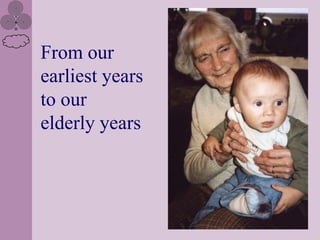
From our
earliest years
to our
elderly years
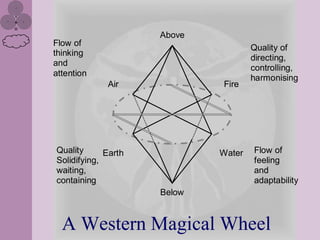
Above
Flow of
                                     Quality of
thinking
                                     directing,
and
                                     controlling,
attention
                                     harmonising
             Air             Fire


Quality      Earth           Water   Flow of
Solidifying,                         feeling
waiting,                             and
containing                           adaptability
                     Below


  A Western Magical Wheel
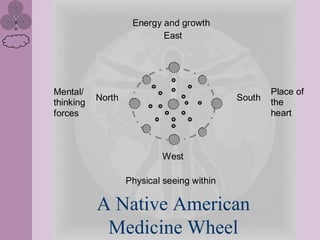
Energy and growth
                           East


Mental/                                             Place of
           North                            South   the
thinking
forces                                              heart


                           West

                   Physical seeing within

           A Native American
            Medicine Wheel
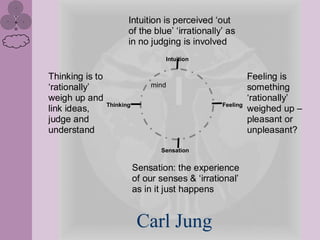
Intuition is perceived ‘out
                        of the blue’ ‘irrationally’ as
                        in no judging is involved
                                    Intuition


Thinking is to                                               Feeling is
‘rationally’                    mind                         something
weigh up and                                                 ‘rationally’
                 Thinking                          Feeling
link ideas,                                                  weighed up –
judge and                                                    pleasant or
understand                                                   unpleasant?

                                   Sensation


                            Sensation: the experience
                            of our senses & ‘irrational’
                            as in it just happens


                             Carl Jung
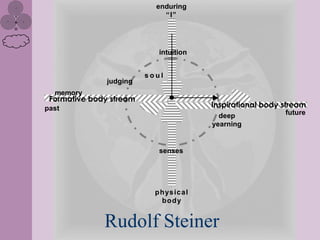
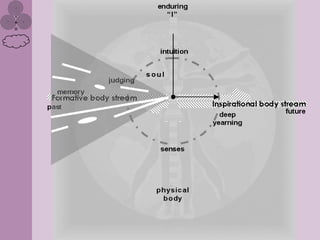
enduring
                             “I”


                            intuition


                         soul
               judging
  memory
 Formative body stream
past                                    Inspirational body stream
                                          deep             future
                                        yearning


                            senses


                           physical
                            body


              Rudolf Steiner
The Matrix
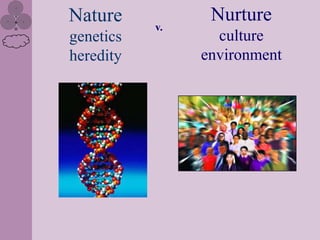
Nature           Nurture
           v.

genetics          culture
heredity        environment
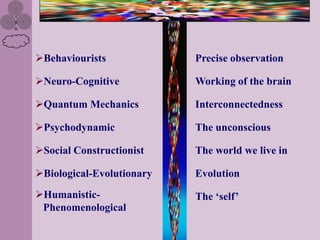
Behaviourists             Precise observation

Neuro-Cognitive           Working of the brain

Quantum Mechanics         Interconnectedness

Psychodynamic             The unconscious

Social Constructionist    The world we live in

Biological-Evolutionary   Evolution
Humanistic-               The „self‟
. Phenomenological
Memory in a Nutshell (1)
“Encoding” what we sense
“Storage”
“Retrieval”
Sense impression>>>buffer>>>STM
(usually less than 1 min.) >>>LTM
new/old----significance----brain health

Remembering – by recognition – by recall

Forgetting – the absence of “cues”
             confusion with another memory
             displacement of information from STM
             repression / motivated forgetting
             decay or “atrophy” of the memory “engram”
“buffer”                       “primarymemory”

    “rehearsal”             “compression”

                  “chunking”

    “optimise                  “central
    capacity”                  executive”

   “articulatory loop”         “visuospatial
                                sketch pad”

“audio-video information”        “displacement”

“interference”                        “engram”
“Even though its common knowledge
 these days, it never ceases to amaze me
 that all the richness of our mental life –
     all our feelings, our thoughts, our
   ambitions, our love life, our religious
   sentiments and even what each of us
regards as our own intimate private self –
is simply the activity of these little specks
    of jelly in your head, in your brain.
            There is nothing else.”
Vilayanur S. Ramchandran, neuroscientist and Director of the Centre for
Brain and Cognition at the University of California,
2003 BBC Reith Lectures
“The events of inner experience
become themselves explanatory
 causal constructs in their own
 right, interacting at their own
 level with their own laws and
           dynamics.”
Roger Sperry, 1981, Nobel Lecture
How do we explore the essence of
memory, our thinking and
consciousness – our activity
of connecting the
present with the past?
Who prompts „the brain
into action‟?
If things only exist when we
observe them what happens
to our memory when we
forget? Does it not exist?
If we only become conscious of a
memory when we experience it,
where has it been hiding?
“How is it possible that
mathematics, a product of
human thought that is
independent of experience,
fits so excellently the
objects of physical reality?
Can human reason
without experience
discover by pure thinking
properties of real things?”
Albert Einstein, from Sidelights on Relativity, 1922
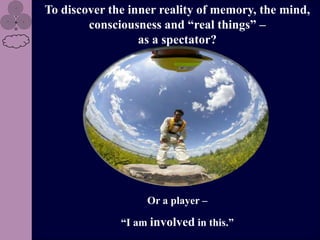
To discover the inner reality of memory, the mind,
        consciousness and “real things” –
                  as a spectator?


                   Or a player –

              “I am involved in this.”
Unit1
Unit1
Unit1
Unit1
Unit1
Unit1
Unit1

Unit1

  • 8.
    The Spiritual Science of Everyday Life www.spiritualscience.co.uk
  • 9.
    From our earliest years toour elderly years
  • 12.
    Above Flow of Quality of thinking directing, and controlling, attention harmonising Air Fire Quality Earth Water Flow of Solidifying, feeling waiting, and containing adaptability Below A Western Magical Wheel
  • 14.
    Energy and growth East Mental/ Place of North South the thinking forces heart West Physical seeing within A Native American Medicine Wheel
  • 15.
    Intuition is perceived‘out of the blue’ ‘irrationally’ as in no judging is involved Intuition Thinking is to Feeling is ‘rationally’ mind something weigh up and ‘rationally’ Thinking Feeling link ideas, weighed up – judge and pleasant or understand unpleasant? Sensation Sensation: the experience of our senses & ‘irrational’ as in it just happens Carl Jung
  • 16.
    enduring “I” intuition soul judging memory Formative body stream past Inspirational body stream deep future yearning senses physical body Rudolf Steiner
  • 21.
  • 22.
    Nature Nurture v. genetics culture heredity environment
  • 23.
    Behaviourists Precise observation Neuro-Cognitive Working of the brain Quantum Mechanics Interconnectedness Psychodynamic The unconscious Social Constructionist The world we live in Biological-Evolutionary Evolution Humanistic- The „self‟ . Phenomenological
  • 25.
    Memory in aNutshell (1) “Encoding” what we sense “Storage” “Retrieval” Sense impression>>>buffer>>>STM (usually less than 1 min.) >>>LTM new/old----significance----brain health Remembering – by recognition – by recall Forgetting – the absence of “cues” confusion with another memory displacement of information from STM repression / motivated forgetting decay or “atrophy” of the memory “engram”
  • 26.
    “buffer” “primarymemory” “rehearsal” “compression” “chunking” “optimise “central capacity” executive” “articulatory loop” “visuospatial sketch pad” “audio-video information” “displacement” “interference” “engram”
  • 27.
    “Even though itscommon knowledge these days, it never ceases to amaze me that all the richness of our mental life – all our feelings, our thoughts, our ambitions, our love life, our religious sentiments and even what each of us regards as our own intimate private self – is simply the activity of these little specks of jelly in your head, in your brain. There is nothing else.” Vilayanur S. Ramchandran, neuroscientist and Director of the Centre for Brain and Cognition at the University of California, 2003 BBC Reith Lectures
  • 29.
    “The events ofinner experience become themselves explanatory causal constructs in their own right, interacting at their own level with their own laws and dynamics.” Roger Sperry, 1981, Nobel Lecture
  • 30.
    How do weexplore the essence of memory, our thinking and consciousness – our activity of connecting the present with the past? Who prompts „the brain into action‟? If things only exist when we observe them what happens to our memory when we forget? Does it not exist? If we only become conscious of a memory when we experience it, where has it been hiding?
  • 31.
    “How is itpossible that mathematics, a product of human thought that is independent of experience, fits so excellently the objects of physical reality? Can human reason without experience discover by pure thinking properties of real things?” Albert Einstein, from Sidelights on Relativity, 1922
  • 32.
    To discover theinner reality of memory, the mind, consciousness and “real things” – as a spectator? Or a player – “I am involved in this.”