Learning Activities
Objective:
 Develop a skill on engaging students through learning
activities.
 Analyze traditional method of teaching and educative
method through learning activities
 Practice strategies used for students learning activities
Learning Activity
 A learning activity is an opportunity to engage in
thinking, reflection, investigation, or doing.
 It's goal is to increase skill, provide insights, stimulate
criticality, increase competence, and aid in meaning making.
 Learning activities can be planned so that they are done by
one student alone or by a group of any size.
Cont...
 It is the learning activities in a unit that are used to teach
the students the things that we want them to know,
understand and be able to do.
 Activities which involve student interaction with content
can include
 listening to and/or watching a live or recorded talk,
 engaging with a written or visual text,
 engaging with multimedia,
 or a combination of these.
Cont...
 Common features of learning activities that make up a
high impact learning experience;
 They are planned in advance
 They have clearly defined session/module outcomes
 The focus is on what the students are doing (they are engaged
in active, authentic learning)
 Students receive feedback on their learning as part of the
experience
Planning Learning Activities
 Effective learning activities and experiences take many
shapes, and can occur synchronously (at the same time for
everyone) or asynchronously (at different times for
different participants).
 Every learning activity in your unit should
be intentional, meaningful and useful.
Learning must be…
6
Learning relates directly
to the objective.
Learning involves ‘mental
processing’ and practice
with feedback.
Relevant
Purposeful
+
Stair-Step Learning
Environments
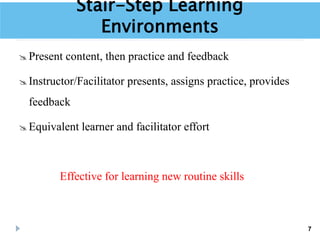
 Present content, then practice and feedback
 Instructor/Facilitator presents, assigns practice, provides
feedback
 Equivalent learner and facilitator effort
Effective for learning new routine skills
7
Lectures/Presentations
8
 Less effective than most other learning activities
 Teach facts and simple concepts
 Improve by adding response activities
 Use methods that help learners process information
Do not use for: procedural tasks, clinical decision-
making, strategic decision-making
How Much Practice to Include?
 Consequences of error
 Acceptability of job aids
 Complexity of task
 ‘Spaced’ practice results in better preservation
 Consider ‘spacing’ training with practice
9
Selecting Activities: Ask
yourself:
10
Does learning relate
directly to the objective?
Does the activity involve
‘mental processing’ and
practice with feedback?
Relevant
Purposeful
+
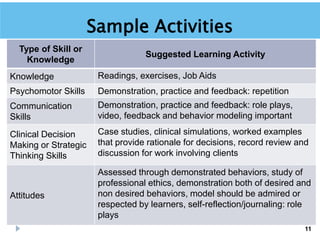
Sample Activities
Type of Skill or
Knowledge
Suggested Learning Activity
Knowledge Readings, exercises, Job Aids
Psychomotor Skills Demonstration, practice and feedback: repetition
Communication
Skills
Demonstration, practice and feedback: role plays,
video, feedback and behavior modeling important
Clinical Decision
Making or Strategic
Thinking Skills
Case studies, clinical simulations, worked examples
that provide rationale for decisions, record review and
discussion for work involving clients
Attitudes
Assessed through demonstrated behaviors, study of
professional ethics, demonstration both of desired and
non desired behaviors, model should be admired or
respected by learners, self-reflection/journaling: role
plays
11
Consider similarity
Objective Assessment Method Learning activity
During at least one
client group session in
clinic, counsel women
about ways to prevent
cervical cancer
Direct observation: in
a role play, provides
counseling for
cervical cancer
prevention
Using a role play
demonstrate cervical
cancer prevention
counseling.
In trios, learners
practice counseling and
receive feedback. Rotate
every 10 minutes.
12
Cont...
Cont...
Cont...

Unit V-Learning Activities.pptx

  • 1.
    Learning Activities Objective:  Developa skill on engaging students through learning activities.  Analyze traditional method of teaching and educative method through learning activities  Practice strategies used for students learning activities
  • 2.
    Learning Activity  Alearning activity is an opportunity to engage in thinking, reflection, investigation, or doing.  It's goal is to increase skill, provide insights, stimulate criticality, increase competence, and aid in meaning making.  Learning activities can be planned so that they are done by one student alone or by a group of any size.
  • 3.
    Cont...  It isthe learning activities in a unit that are used to teach the students the things that we want them to know, understand and be able to do.  Activities which involve student interaction with content can include  listening to and/or watching a live or recorded talk,  engaging with a written or visual text,  engaging with multimedia,  or a combination of these.
  • 4.
    Cont...  Common featuresof learning activities that make up a high impact learning experience;  They are planned in advance  They have clearly defined session/module outcomes  The focus is on what the students are doing (they are engaged in active, authentic learning)  Students receive feedback on their learning as part of the experience
  • 5.
    Planning Learning Activities Effective learning activities and experiences take many shapes, and can occur synchronously (at the same time for everyone) or asynchronously (at different times for different participants).  Every learning activity in your unit should be intentional, meaningful and useful.
  • 6.
    Learning must be… 6 Learningrelates directly to the objective. Learning involves ‘mental processing’ and practice with feedback. Relevant Purposeful +
  • 7.
    Stair-Step Learning Environments  Presentcontent, then practice and feedback  Instructor/Facilitator presents, assigns practice, provides feedback  Equivalent learner and facilitator effort Effective for learning new routine skills 7
  • 8.
    Lectures/Presentations 8  Less effectivethan most other learning activities  Teach facts and simple concepts  Improve by adding response activities  Use methods that help learners process information Do not use for: procedural tasks, clinical decision- making, strategic decision-making
  • 9.
    How Much Practiceto Include?  Consequences of error  Acceptability of job aids  Complexity of task  ‘Spaced’ practice results in better preservation  Consider ‘spacing’ training with practice 9
  • 10.
    Selecting Activities: Ask yourself: 10 Doeslearning relate directly to the objective? Does the activity involve ‘mental processing’ and practice with feedback? Relevant Purposeful +
  • 11.
    Sample Activities Type ofSkill or Knowledge Suggested Learning Activity Knowledge Readings, exercises, Job Aids Psychomotor Skills Demonstration, practice and feedback: repetition Communication Skills Demonstration, practice and feedback: role plays, video, feedback and behavior modeling important Clinical Decision Making or Strategic Thinking Skills Case studies, clinical simulations, worked examples that provide rationale for decisions, record review and discussion for work involving clients Attitudes Assessed through demonstrated behaviors, study of professional ethics, demonstration both of desired and non desired behaviors, model should be admired or respected by learners, self-reflection/journaling: role plays 11
  • 12.
    Consider similarity Objective AssessmentMethod Learning activity During at least one client group session in clinic, counsel women about ways to prevent cervical cancer Direct observation: in a role play, provides counseling for cervical cancer prevention Using a role play demonstrate cervical cancer prevention counseling. In trios, learners practice counseling and receive feedback. Rotate every 10 minutes. 12
  • 13.
  • 14.
  • 15.