LOGO
engranwarcivil@gmail.com
UNIT HYDROGRAPH
By Engineer Mr. Anwar Marwat
.
Coverage
Flood pictorial views
Hydrograph - Review
Unit Hydrograph
Unit Hydrograph. Why ?
Assumptions For UH
Terminology for UH
Creating Unit Hydrograph
Applications of Unit H
Text in
here
Text in
here
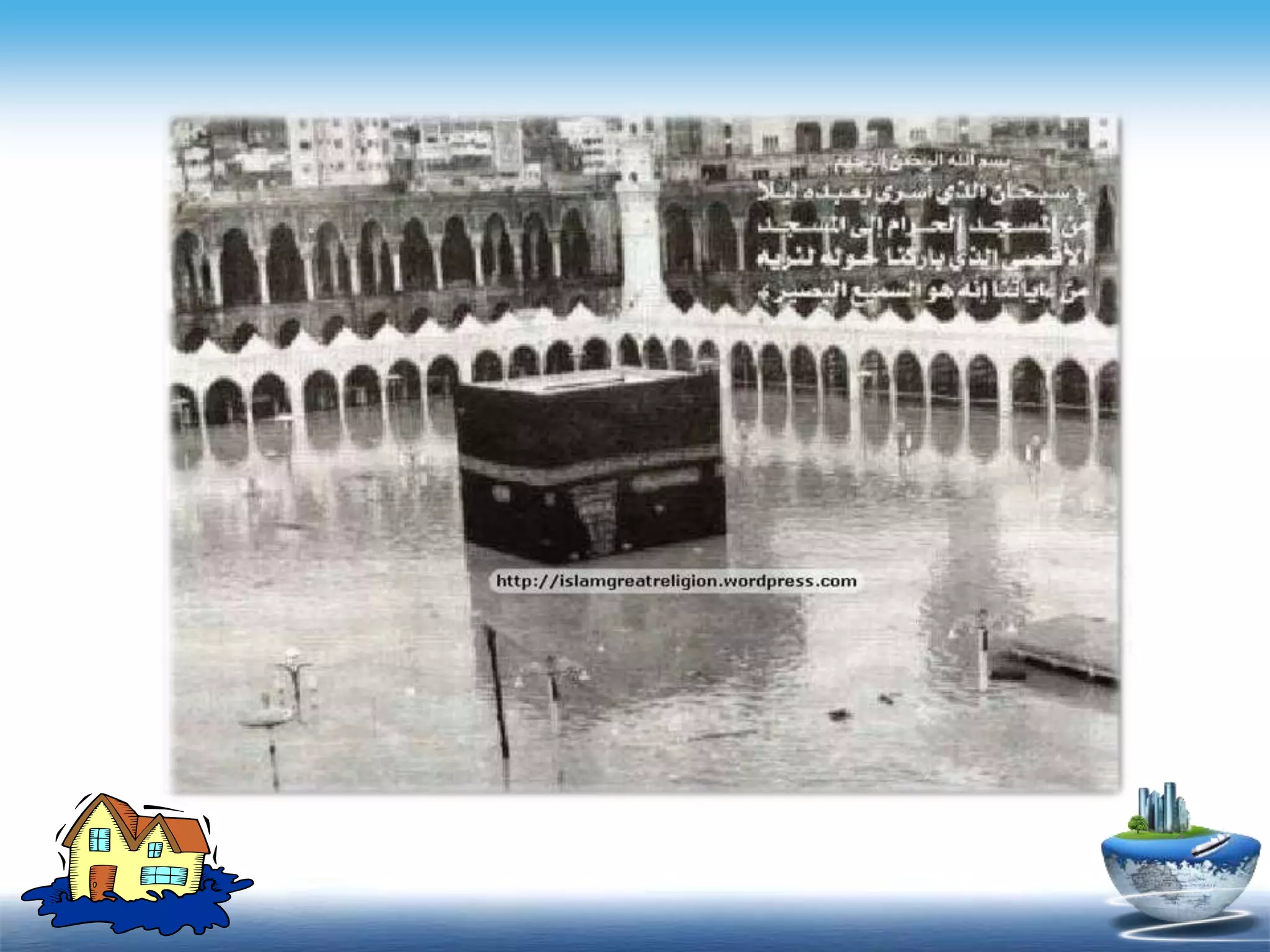
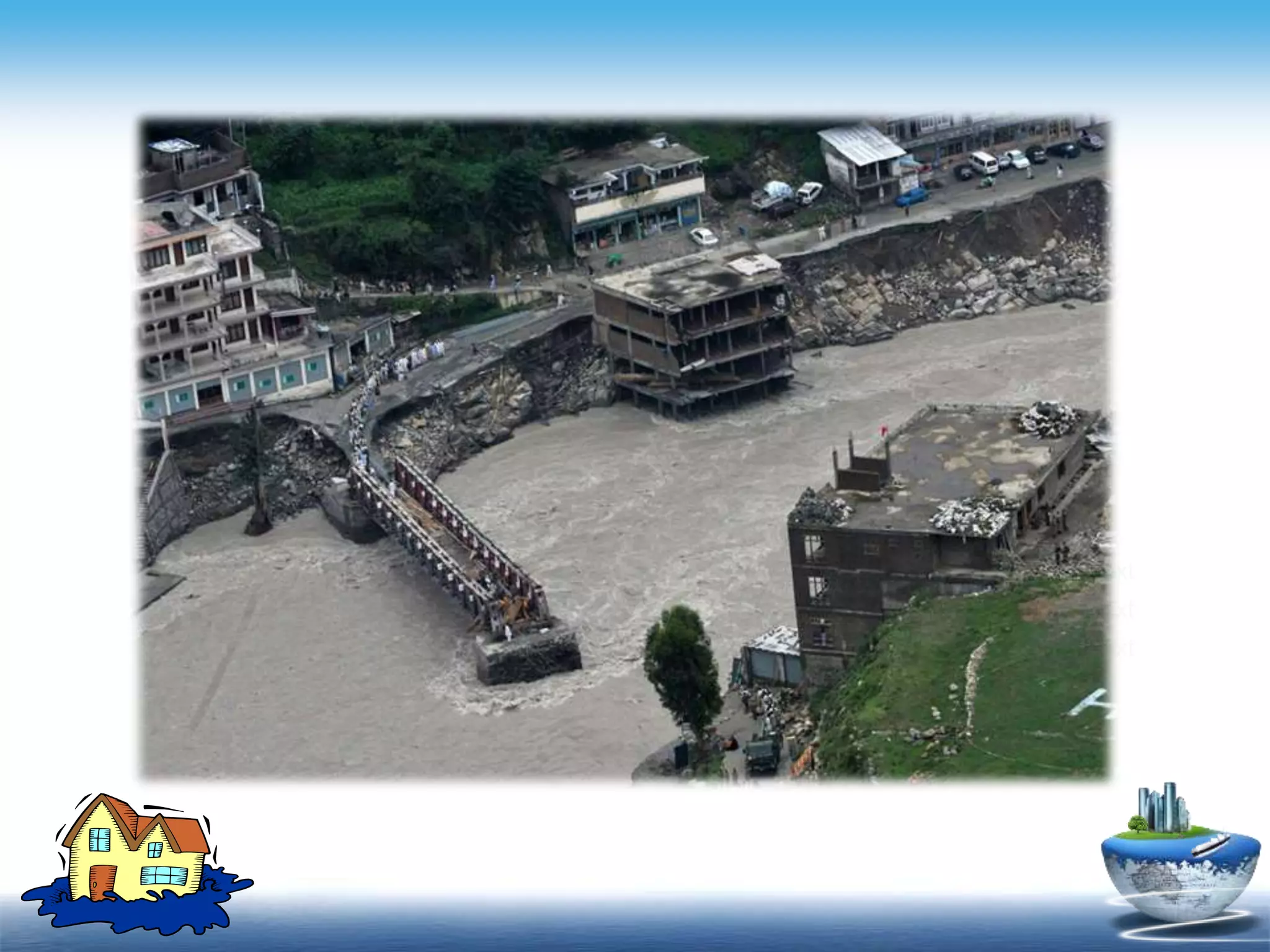
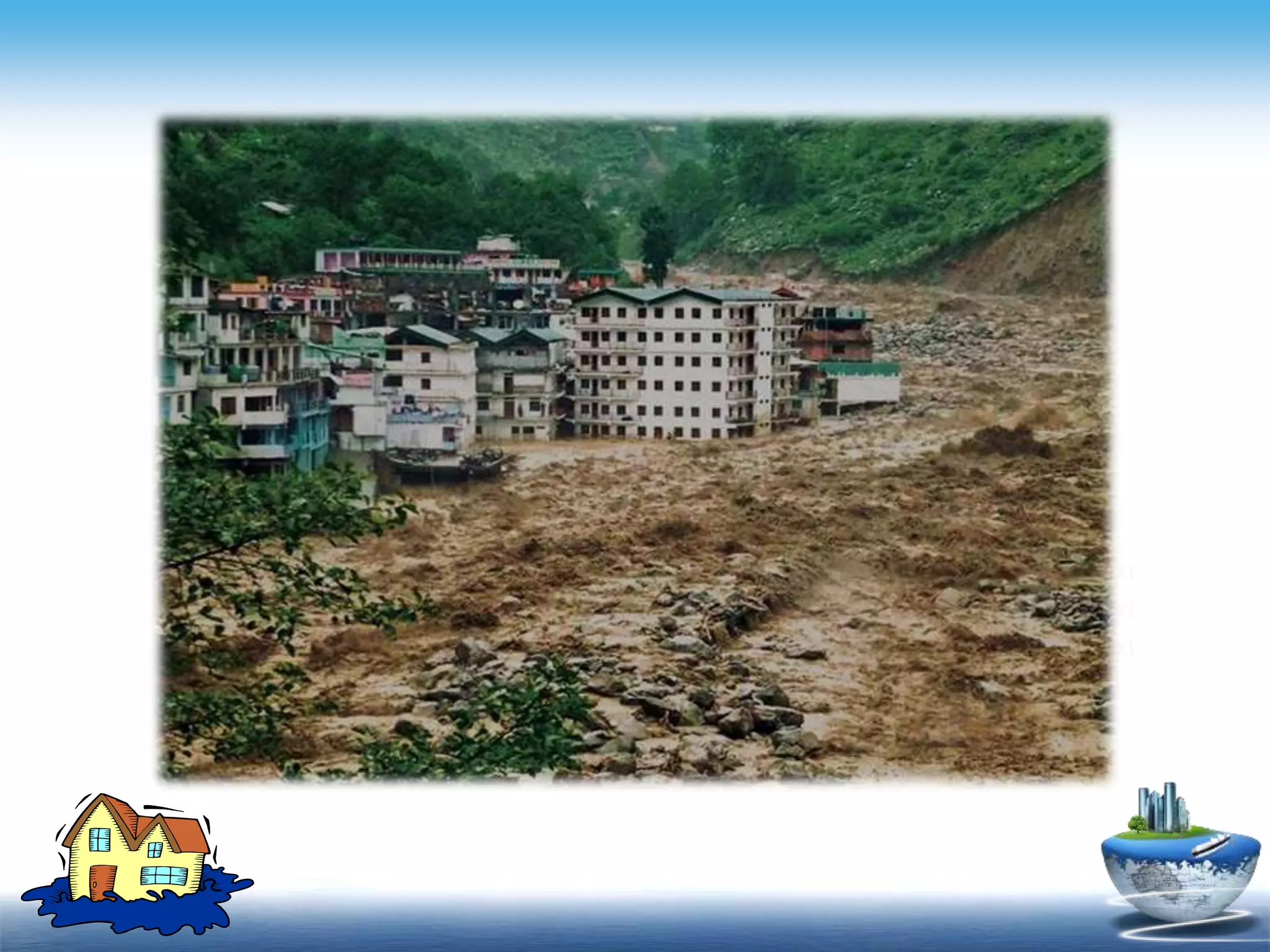
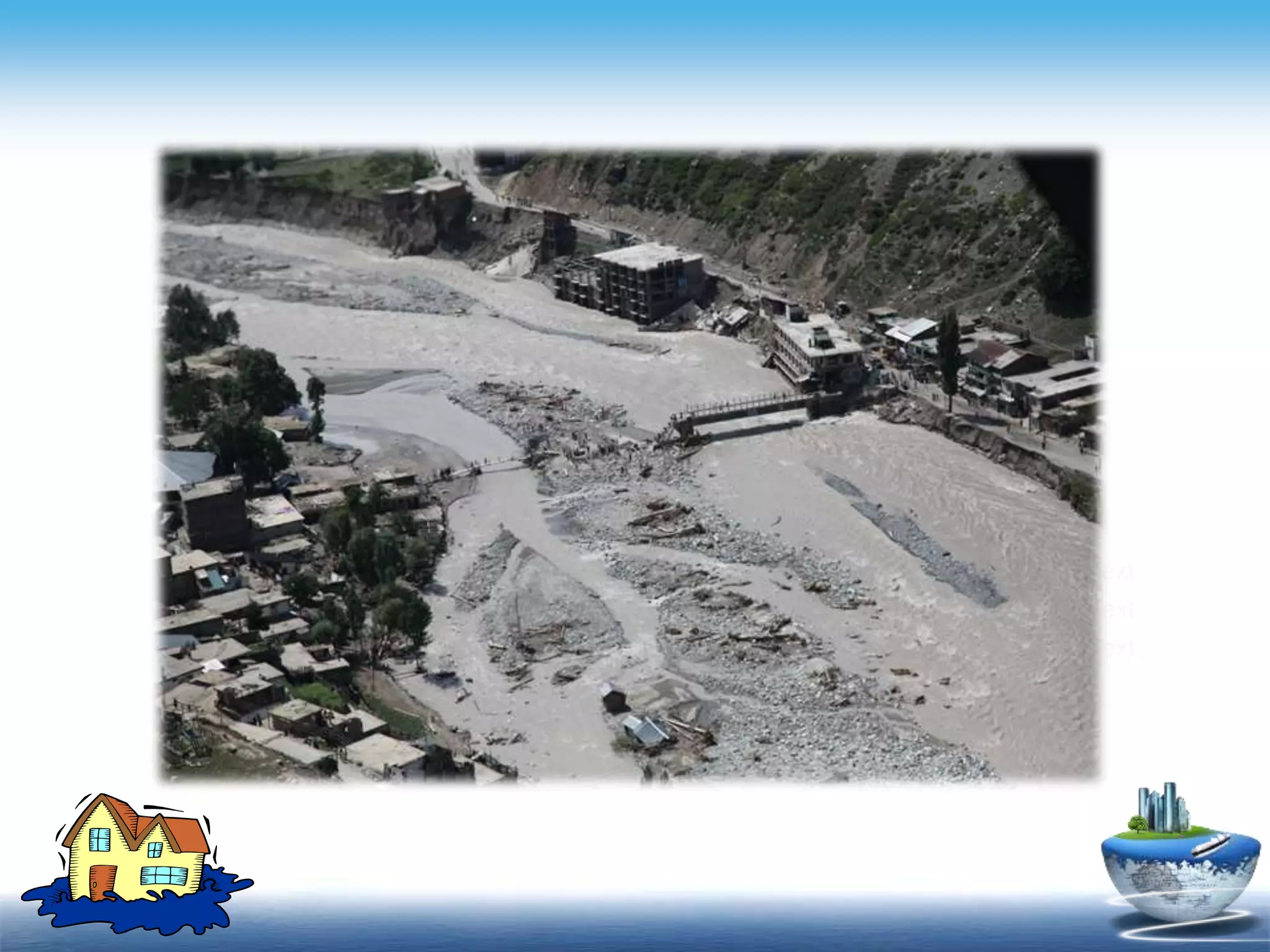
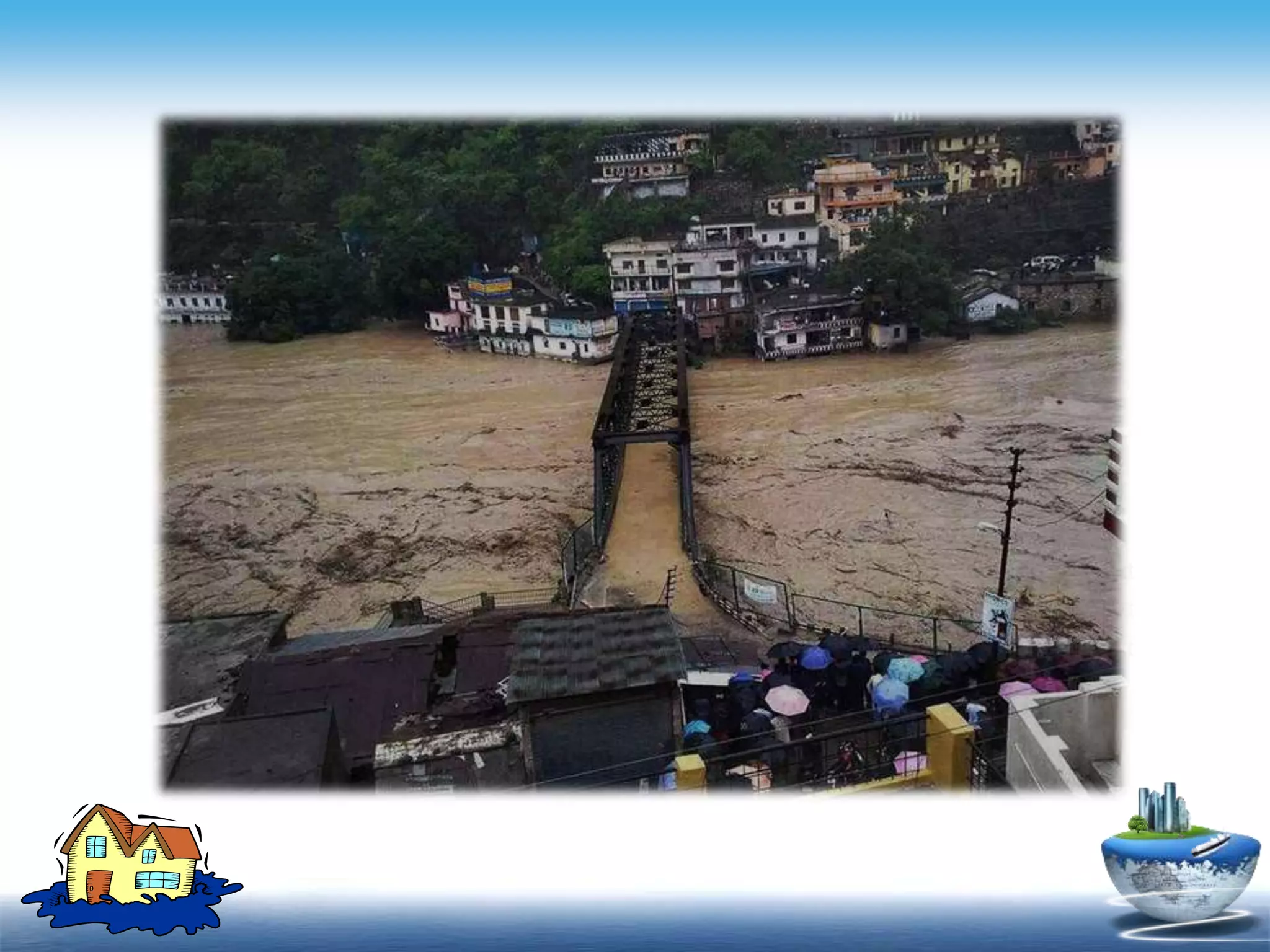
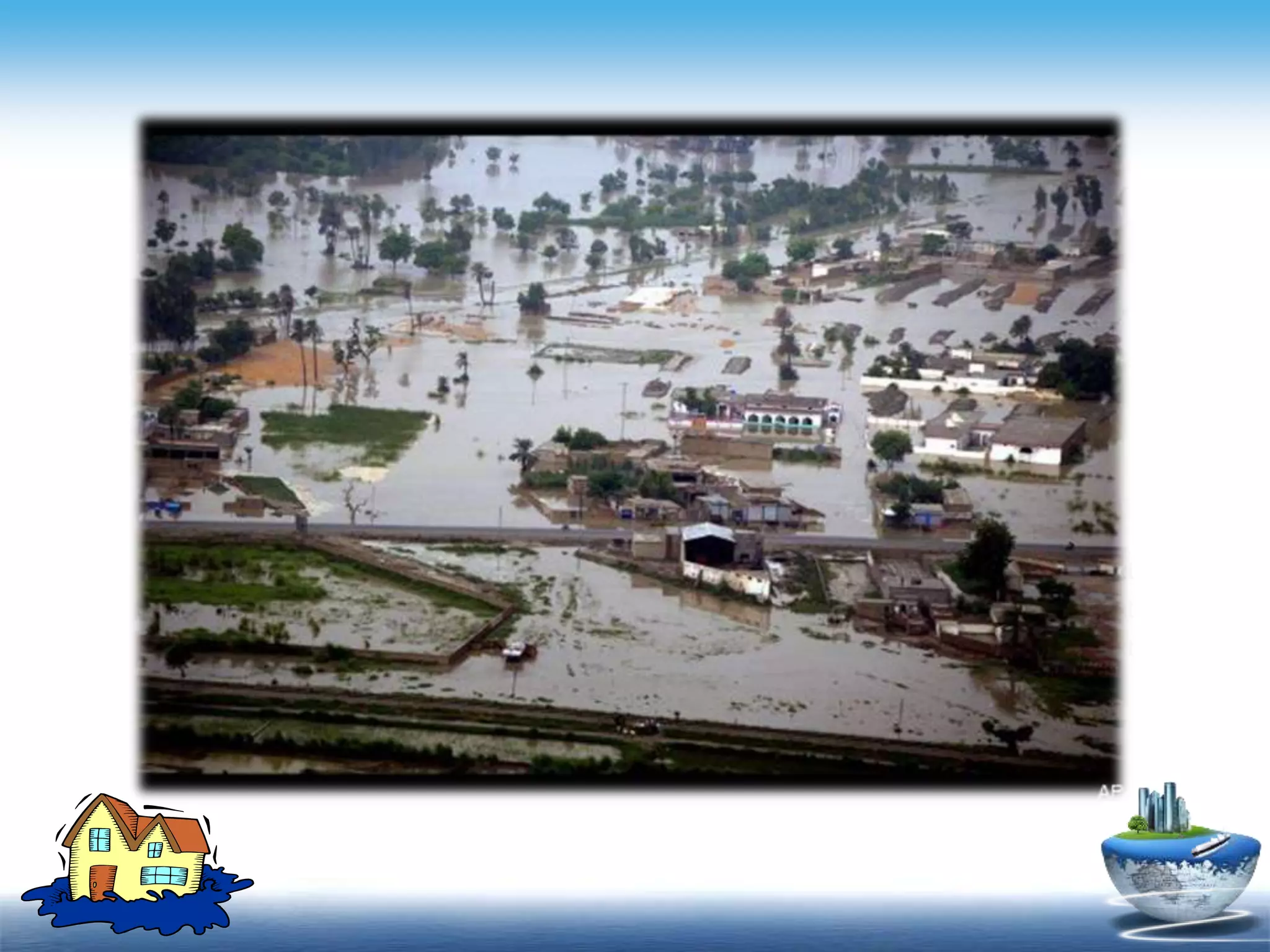
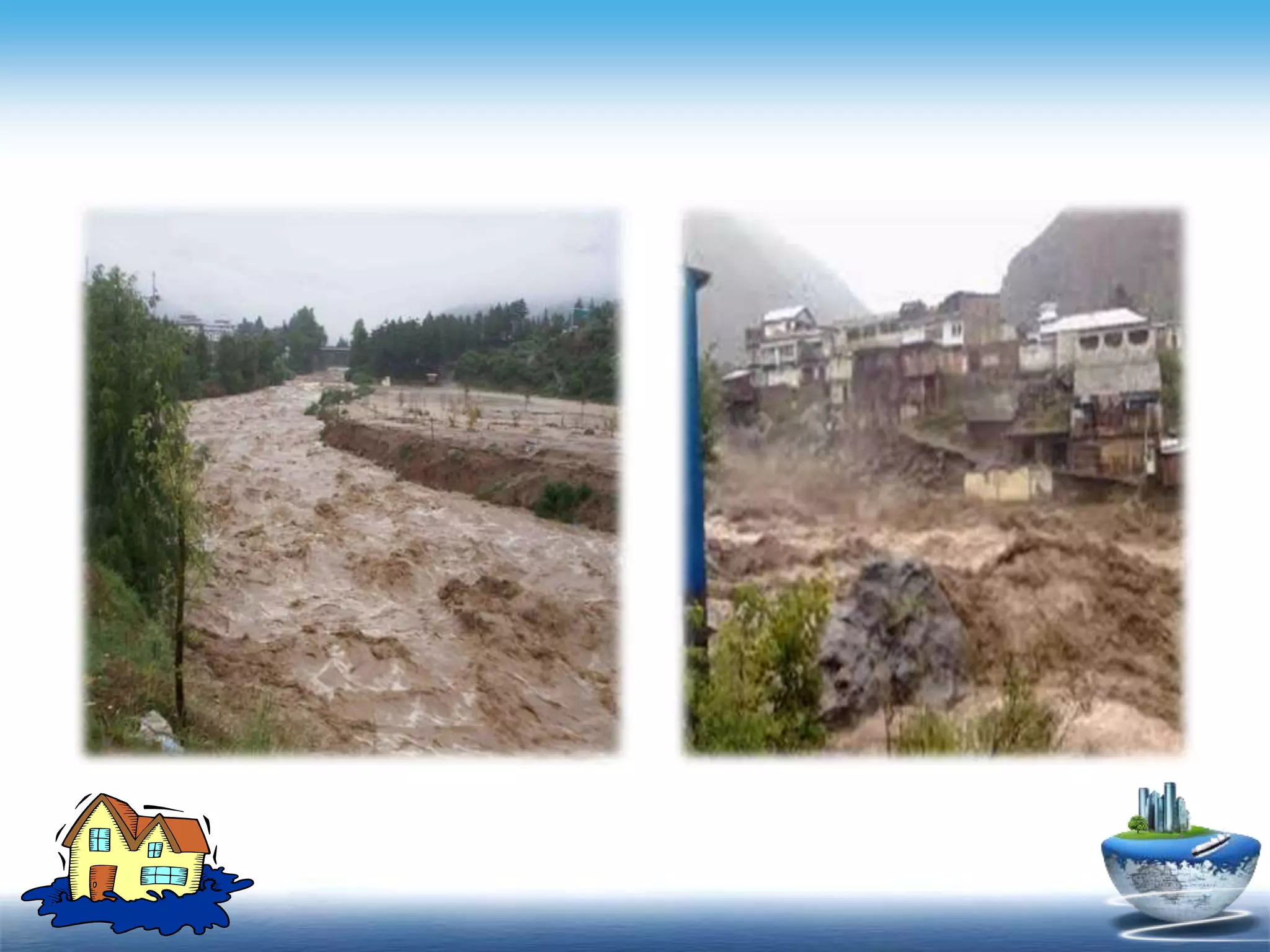
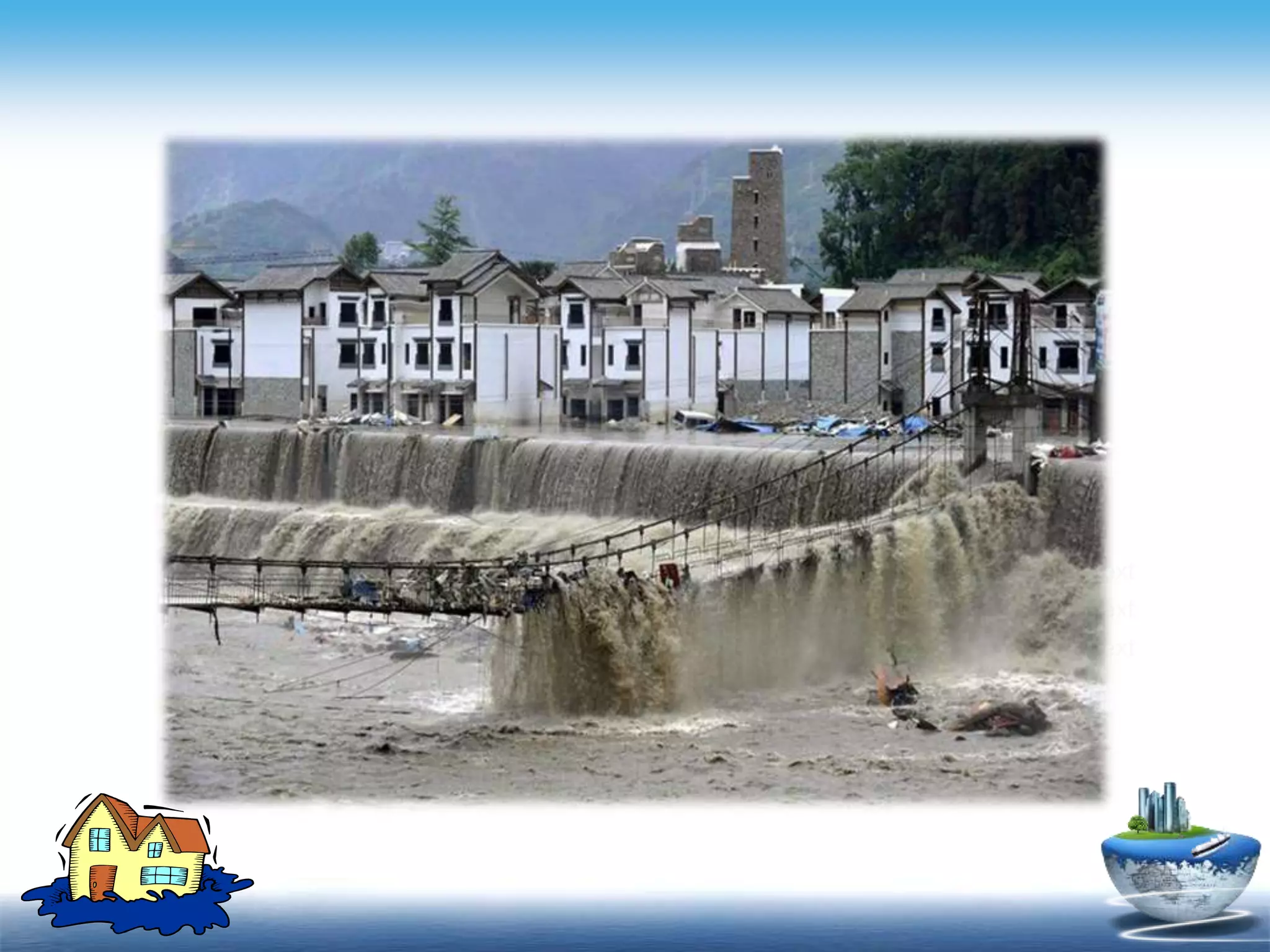
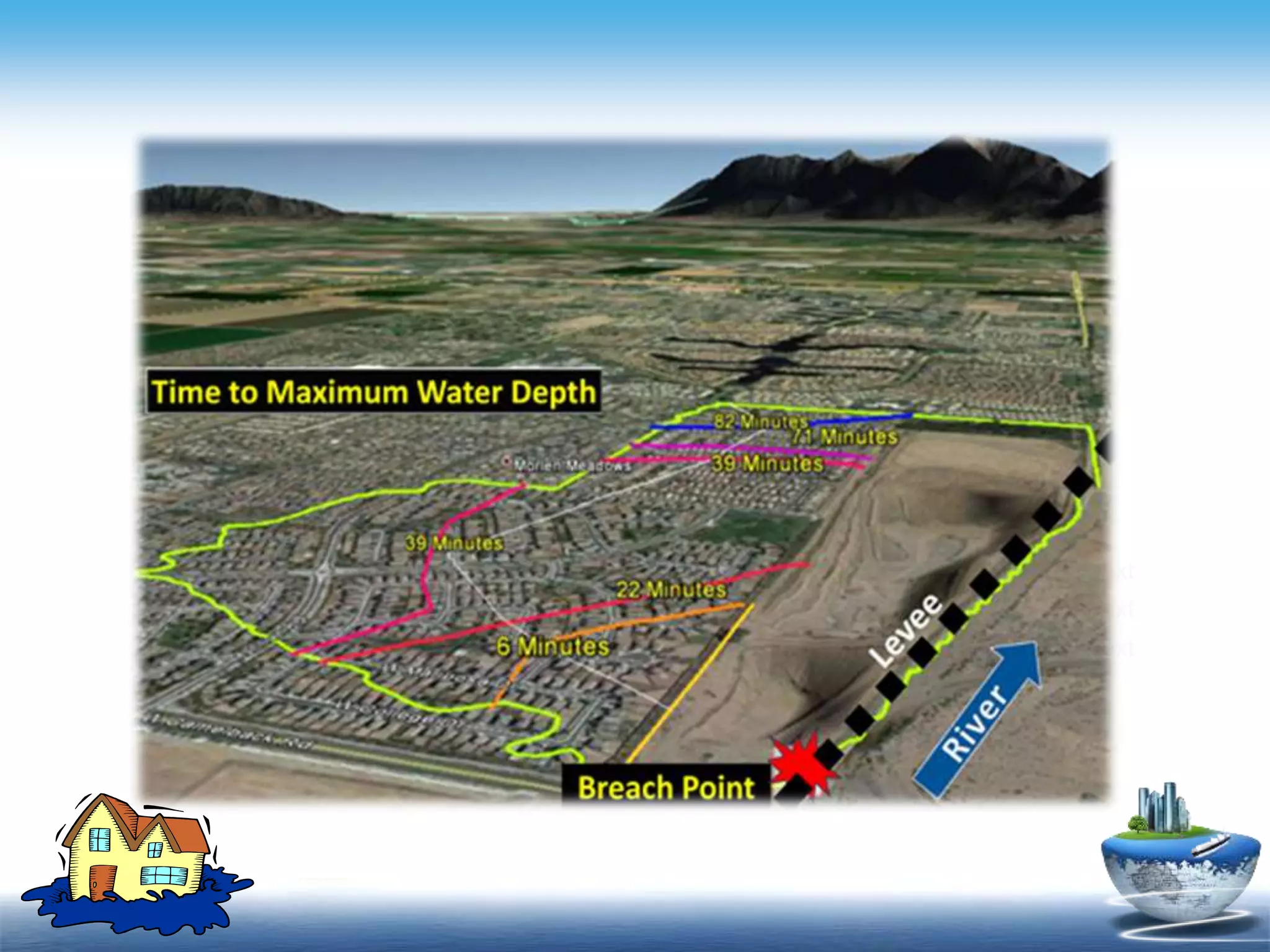
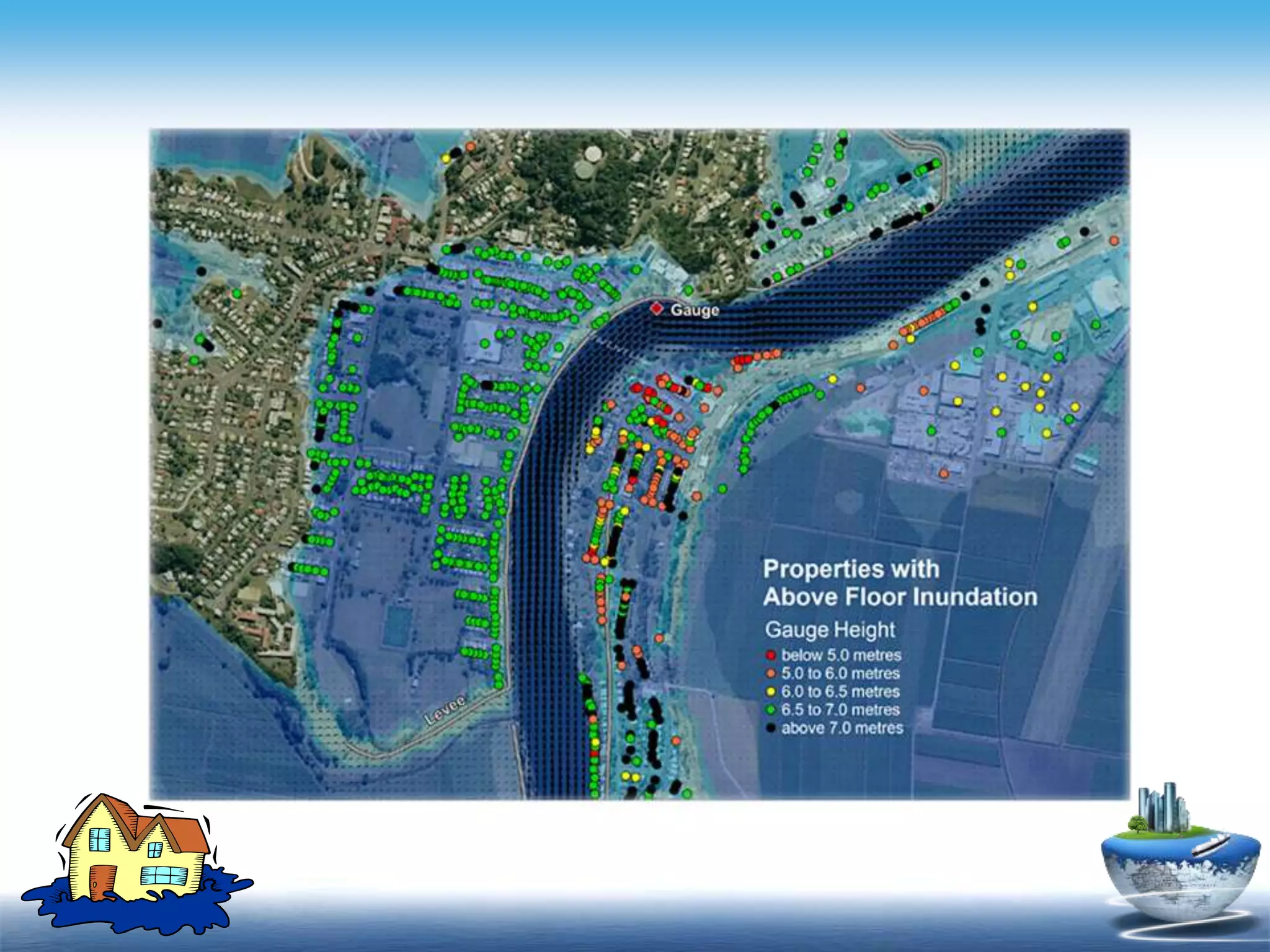
FLOOD PICTORIAL VIEWS
Contents
- Click to add Text
- Click to add Text
- Click to add Text
Contents
- Click to add Text
- Click to add Text
- Click to add Text
Contents
- Click to add Text
- Click to add Text
- Click to add Text
Contents
- Click to add Text
- Click to add Text
- Click to add Text
Contents
- Click to add Text
- Click to add Text
- Click to add Text
Contents
- Click to add Text
- Click to add Text
- Click to add Text
Contents
- Click to add Text
- Click to add Text
- Click to add Text
Contents
- Click to add Text
- Click to add Text
- Click to add Text
Contents
- Click to add Text
- Click to add Text
- Click to add Text
Contents
- Click to add Text
- Click to add Text
- Click to add Text
Contents
- Click to add Text
- Click to add Text
- Click to add Text
Contents
- Click to add Text
- Click to add Text
- Click to add Text
Contents
- Click to add Text
- Click to add Text
- Click to add Text
Contents
- Click to add Text
- Click to add Text
- Click to add Text
Contents
- Click to add Text
- Click to add Text
- Click to add Text
Contents
- Click to add Text
- Click to add Text
- Click to add Text
Contents
- Click to add Text
- Click to add Text
- Click to add Text
Contents
- Click to add Text
- Click to add Text
- Click to add Text
Contents
- Click to add Text
- Click to add Text
- Click to add Text
Contents
- Click to add Text
- Click to add Text
- Click to add Text
Contents
- Click to add Text
- Click to add Text
- Click to add Text
Contents
- Click to add Text
- Click to add Text
- Click to add Text
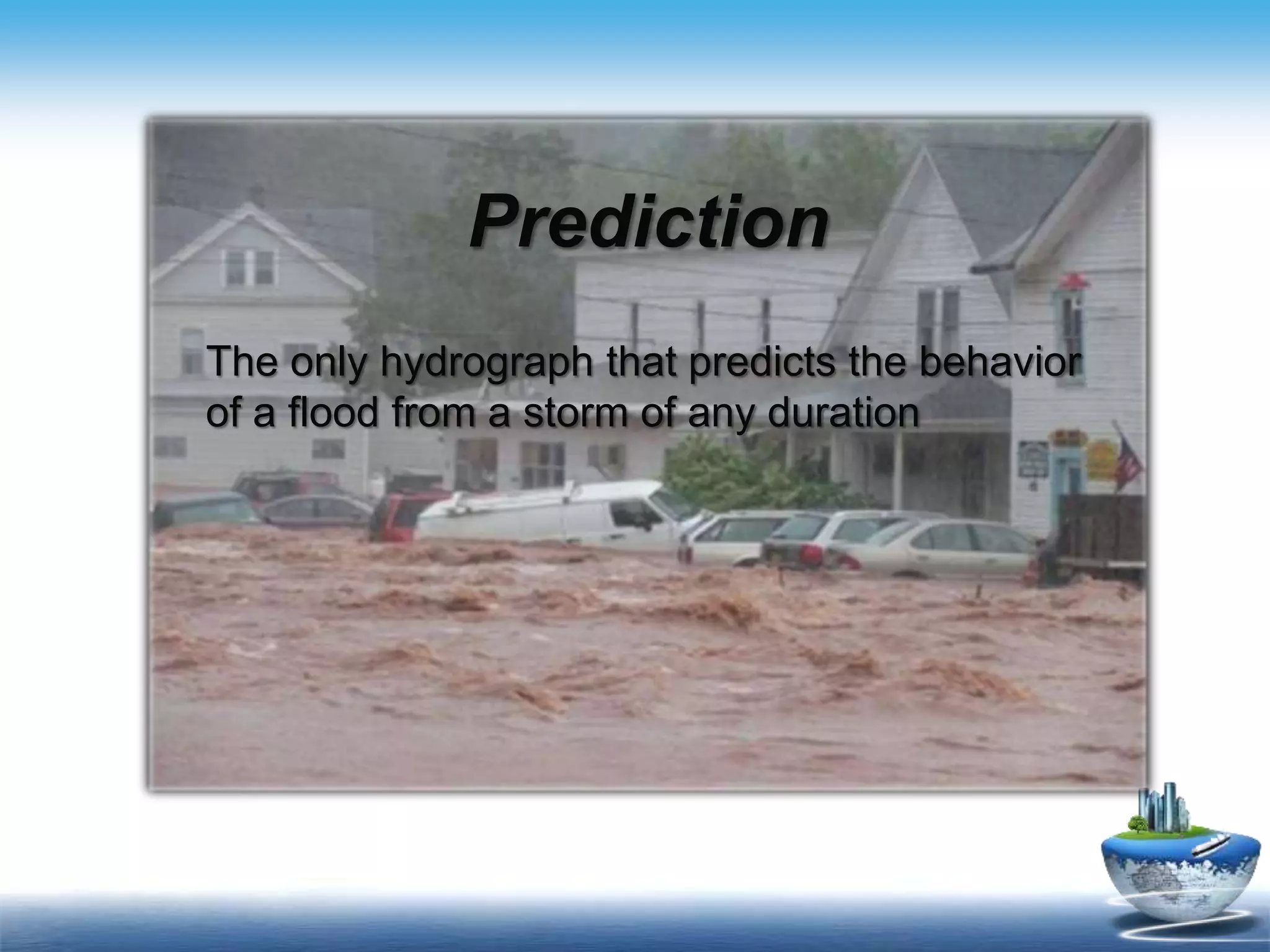
Prediction
The only hydrograph that predicts the behavior
of a flood from a storm of any duration
Why
Construct & Analyse
Hydrographs ?
To find out discharge patterns of
a particular drainage basin
Help predict flooding events,
therefore influence implementation
of flood prevention measures
28
Hydrograph Theory
Hydrograph
Graphical representation of time
(hours) versus discharge (cfs or
cms) at a particular point on a
stream or channel which drains
the watershed area
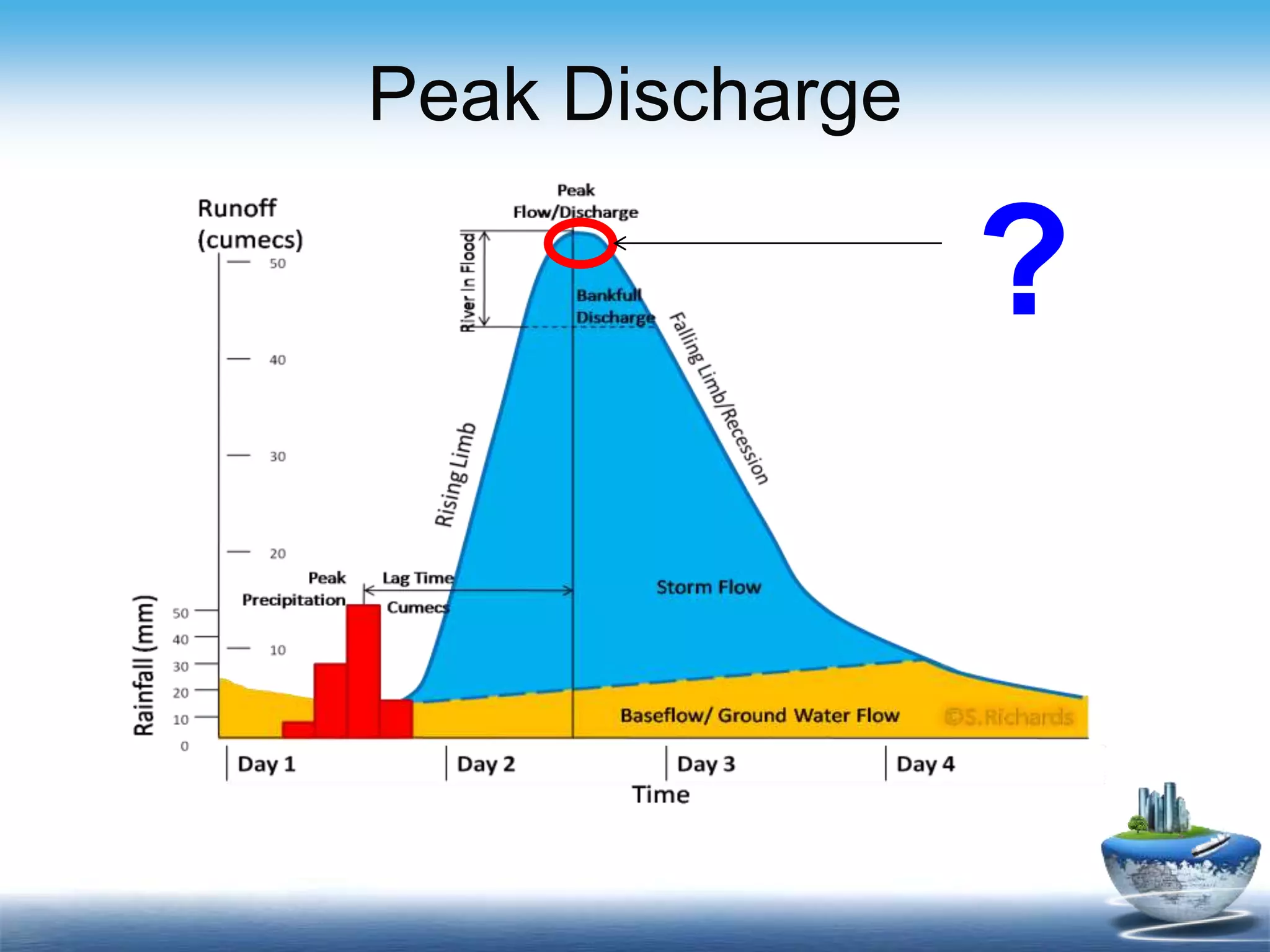
Peak Discharge
?
Text in
here
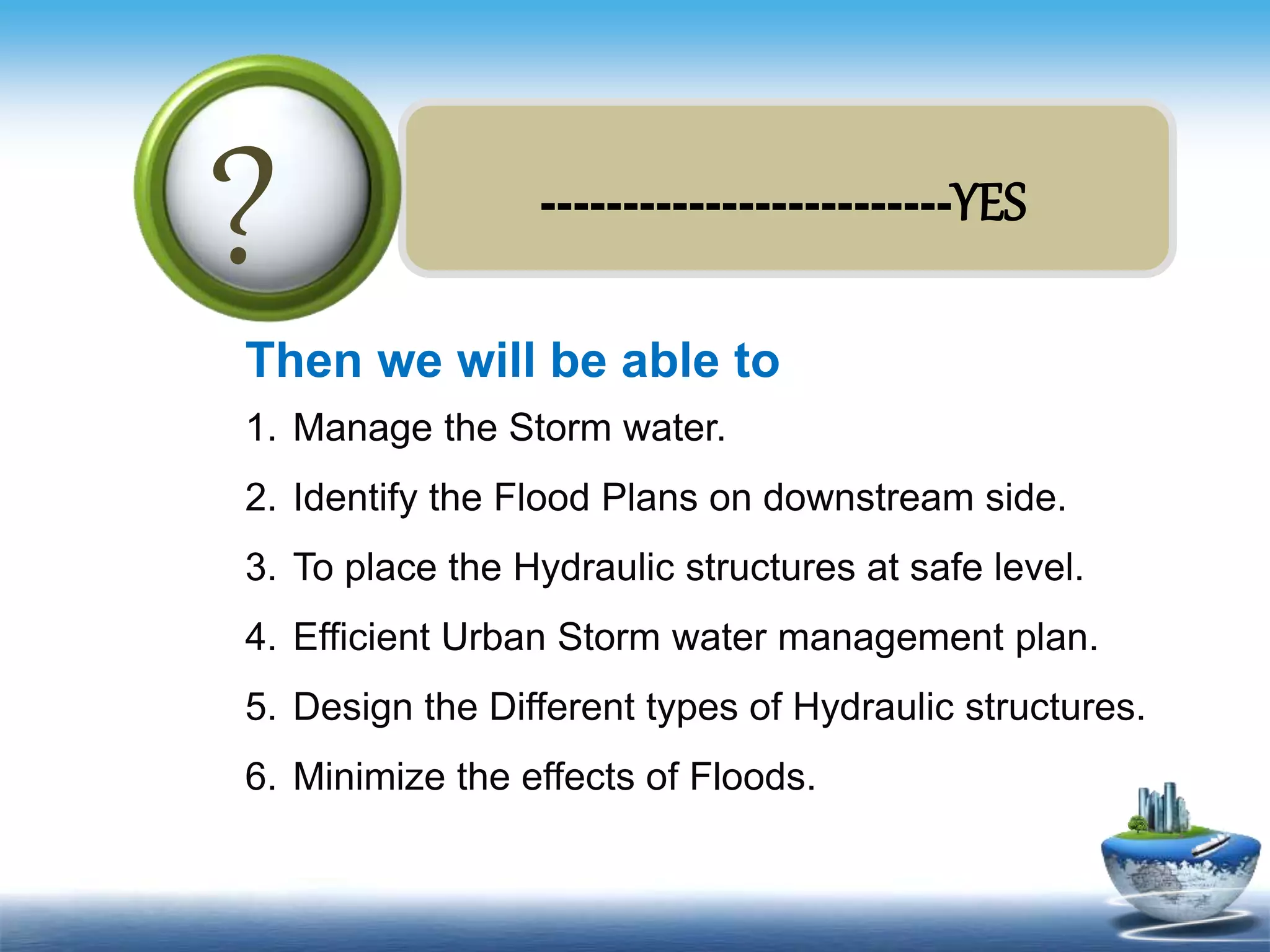
-------------------------YES
?
Then we will be able to
1. Manage the Storm water.
2. Identify the Flood Plans on downstream side.
3. To place the Hydraulic structures at safe level.
4. Efficient Urban Storm water management plan.
5. Design the Different types of Hydraulic structures.
6. Minimize the effects of Floods.
Text in
here
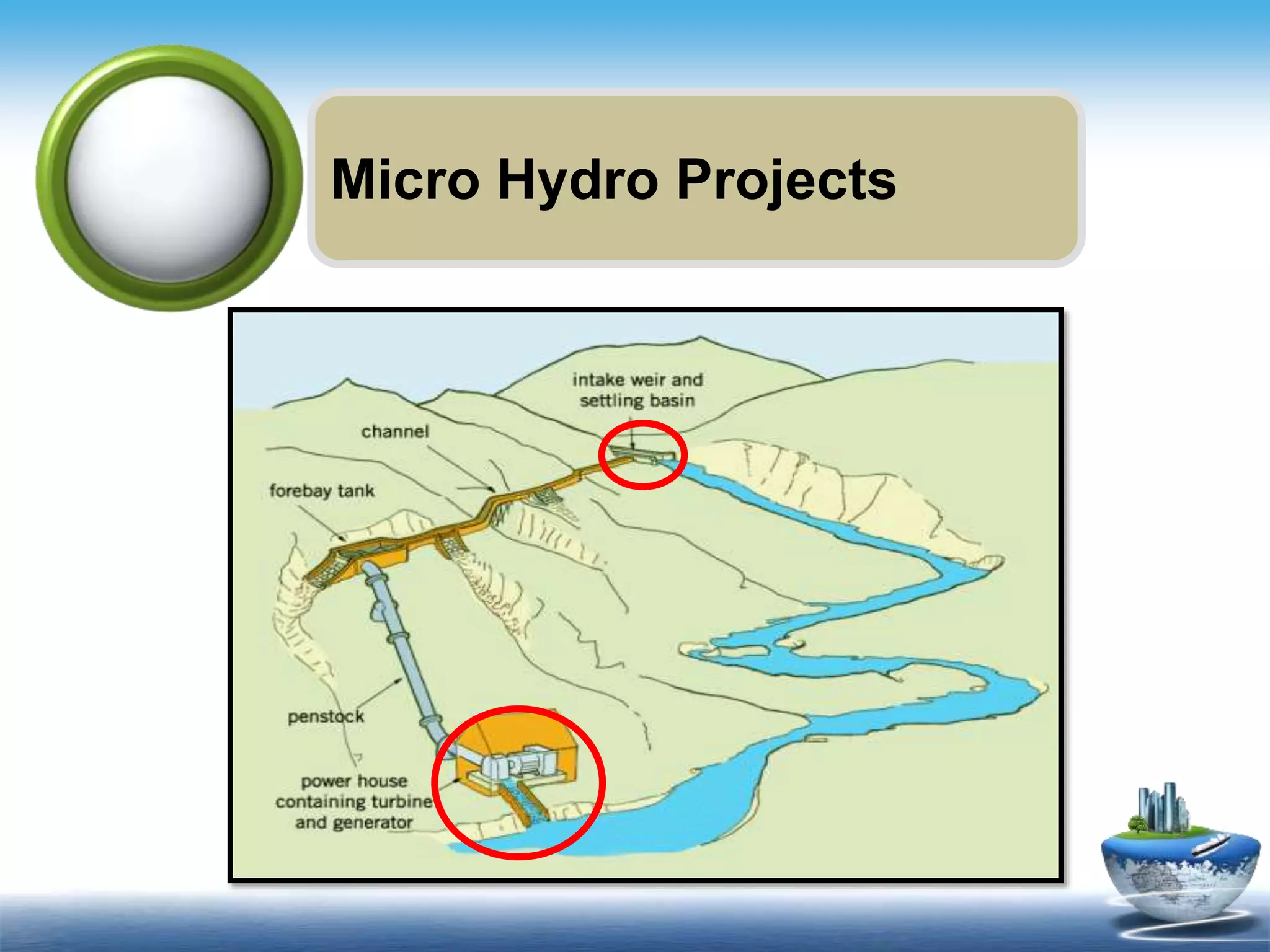
Micro Hydro Projects
Unit Hydrograph
A conceptual direct runoff
hydrograph resulting from a
rainfall excess of unit depth and
constant intensity for a particular
watershed is called a unit
hydrograph
Text in
here
 The unit hydrograph method is employed to
calculate the direct runoff hydrograph at the
watershed outlet given the rainfall excess
produced by a storm event.
 This method is categorized as a lumped model
in which the hydrologic characteristics of the
entire watershed are combined and typified by
one or more parameters, simple mathematical
expressions, or graphs.
Text in
here
 The Unit hydrograph is a useful tool in the process of
predicting the impact of precipitation on stream flow.
 The Unit depth is 1cm in the SI unit system and 1inch
in the U.S. system.
 It is usually abbreviate as a Uhc.
 The subscript “c” indicate the Duration of the rainfall
excess.
Text in
here
For instance, the direct runoff hydrograph
produced by a rainfall excess that has a
duration of 3 hr and constant intensity of 1/3
in./hr is denoted by UH3 and depth of the
rainfall excess is (1/3 in./hr)(3 hr) = 1 in
Text in
here
 We can develop a unit hydrograph for a gaged
watershed by analyzing the simultaneous
rainfall and runoff records.
 Unfortunately, most small, urban/rural
watersheds are ungaged. However, there are
several synthetic unit hydrograph methods
available to develop a unit hydrograph for
ungaged watersheds e.g. Espey Ten-Minute
Unit Hydrograph.
Text in
here
Text in
here
UNIT HYDROGRAPH—WHY ?
Simplifying our task / work / procedures.
Gives us a base line for a specified watershed.
Standardize the hydrograph for different watersheds.
Gives us information that how the flow of a stream will
be affected over time by the addition of one unit of
runoff.
Text in
here
Text in
here
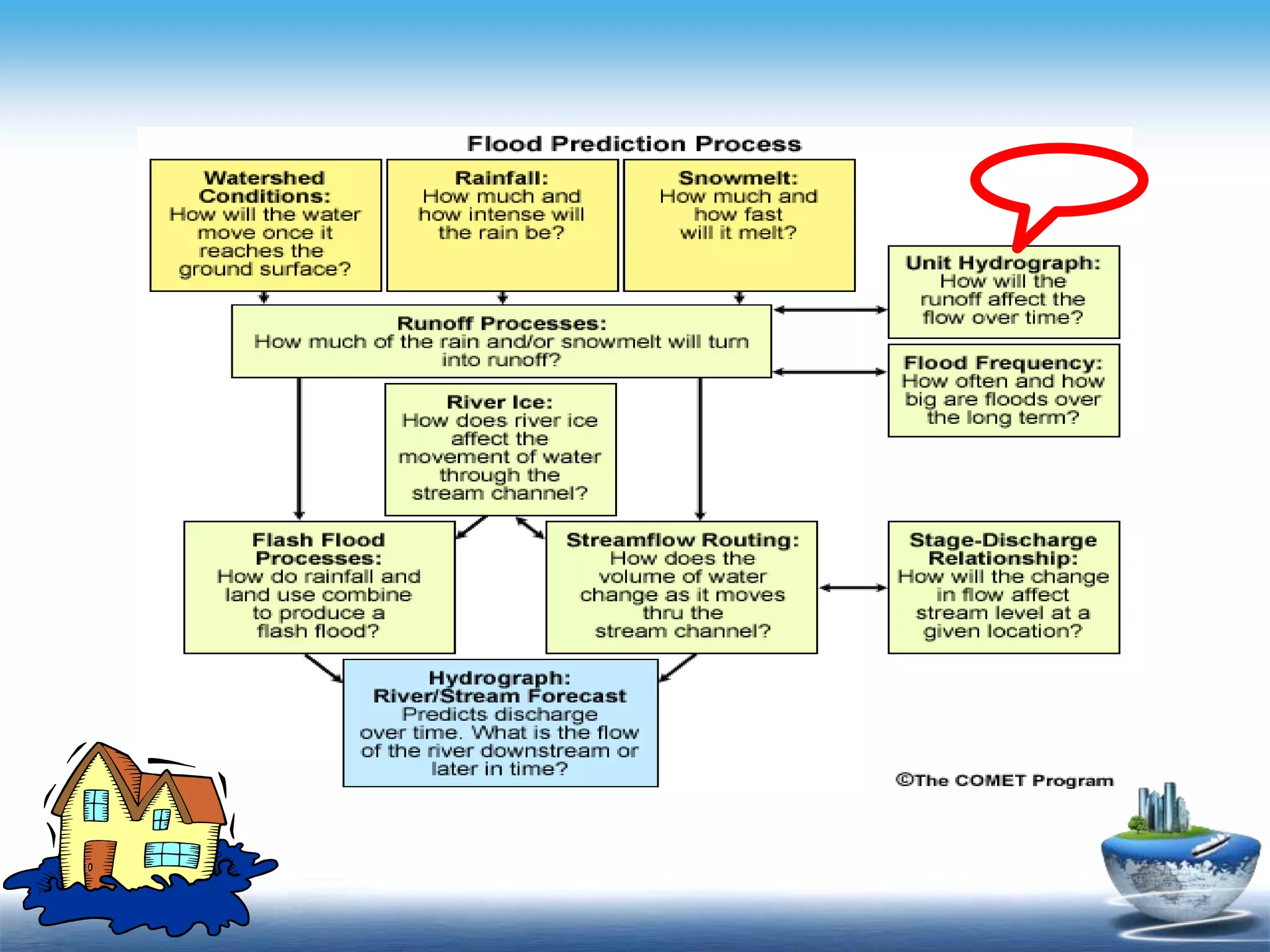
The role of Unit Hydrograph theory in the flood prediction
process is to provide an estimate of stream flow given
and amount precipitation.
Once we know how much rainfall or snowmelt has
occurred, or is likely to occur, and we have an idea of
how much of this will turn into runoff, we still need to
know how the flow of a stream will be affected over time
by that runoff. The unit hydrograph provide us with a way
to estimate this, and is an integral part of many
hydrological modeling systems.
Contents
- Click to add Text
- Click to add Text
- Click to add Text
Text in
here
Text in
here
ASSUMPTIONS
 The primary assumption of unit hydrograph theory is
that the rainfall has uniform distribution, both in space-
with minimal variations across the basin-and in time; in
other words, the rainfall rate did not vary much during
the event.
 In reality, precipitation events are rarely uniform in
space and time. Often, one portion of the basin
experiences higher intensity precipitation than another
portion.
Text in
here
Text in
here
 The base duration of direct runoff hydrograph due to an effective
rainfall of unit duration is constant.
 The ordinates of DRH are directly proportional to the total amount
of DR of each hydrograph (principles of linearity, superposition,
and proportionality)
 For a given basin, the runoff hydrograph due to a given period of
rainfall reflects all the combined physical characteristics of basin
(time-invariant)
Contents
- Click to add Text
- Click to add Text
- Click to add Text
Contents
- Click to add Text
- Click to add Text
- Click to add Text
Text in
here
Text in
here
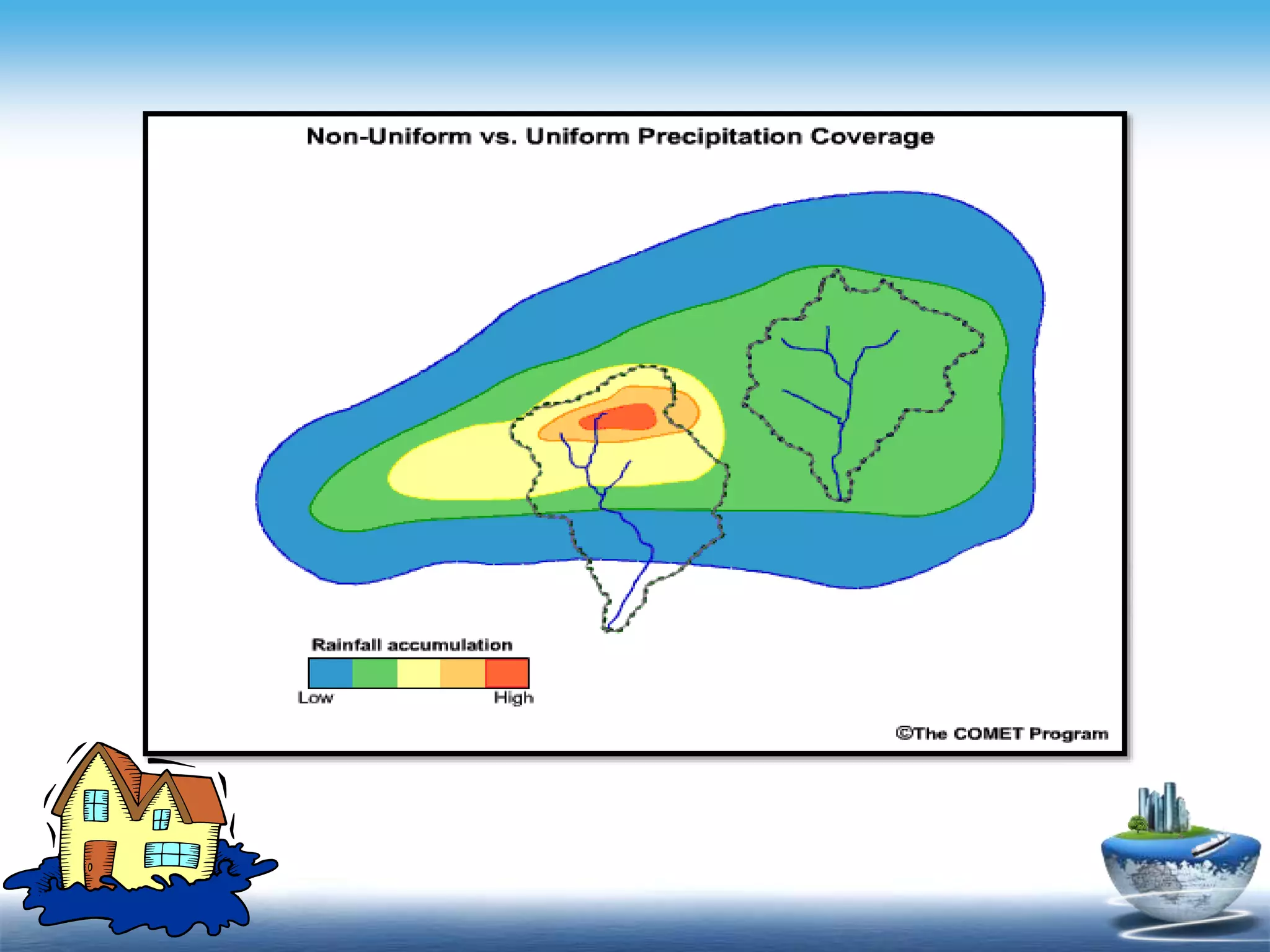
BASIN-AVERAGED RAINFALL
In typical non-snow situations, we begin the hydrologic process with
rainfall. In particular, we start with a basin-averaged rainfall. This simply
tells us how much rain fell, or is forecast to fall, on a given basin and
typically takes the form of a rainfall depth per time. In unit hydrograph
theory, we assume that this rainfall has fallen uniformly across the
basin
Contents
- Click to add Text
- Click to add Text
- Click to add Text
Text in
here
Text in
here
BASIN-AVERAGED EXCESS
RAINFALL
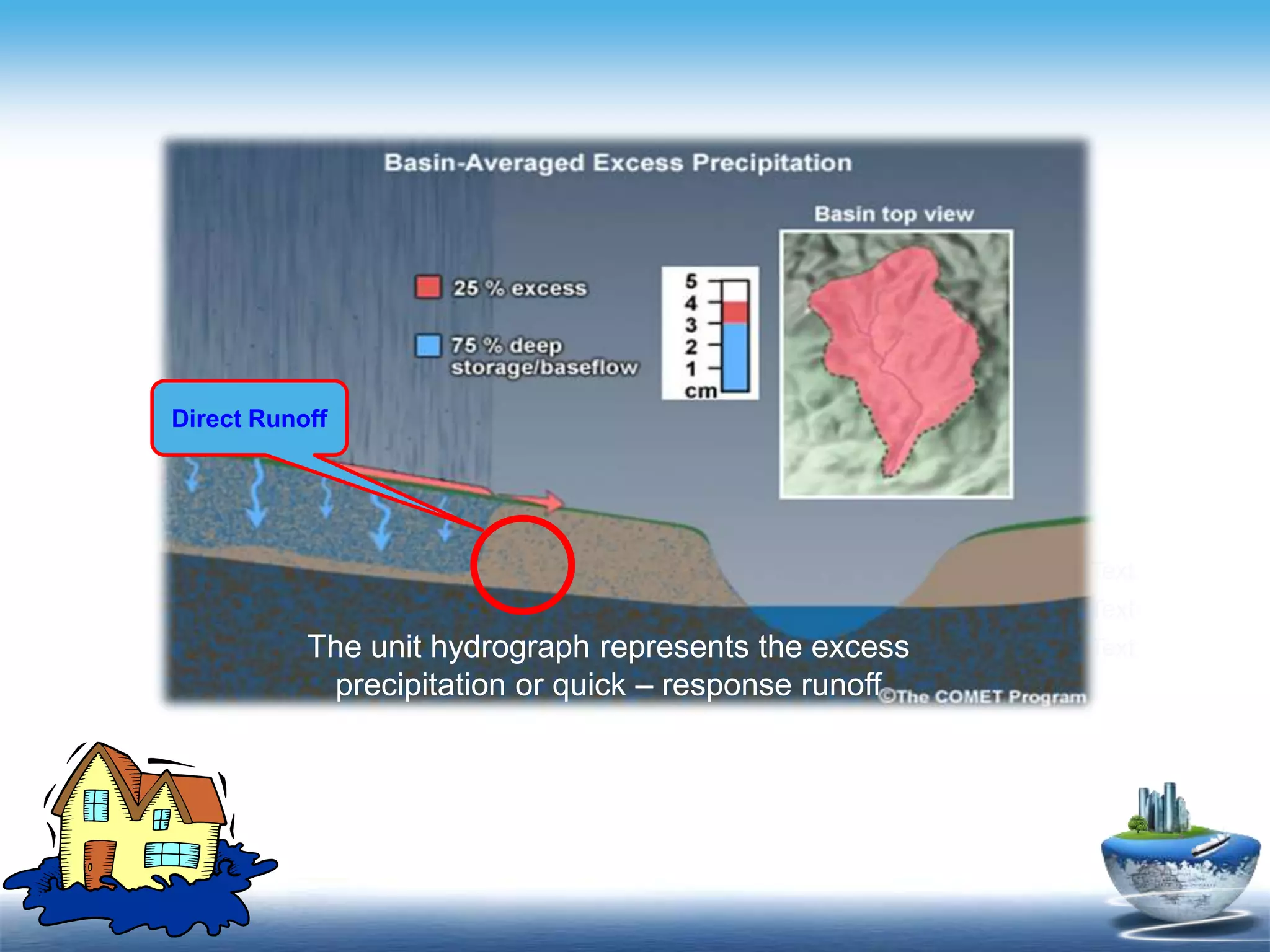
From averaged rainfall, we need to know how much of the basin-
averaged rainfall will become runoff. In unit hydrograph theory, runoff is
often referred to as “excess precipitation” or “excess rainfall.” Rainfall
runoff models will typically provide an estimate of what becomes
excess rainfall.
So, for example, if 25% of our 4.00 cm basin-averaged rainfall
becomes excess rainfall, then we have a basin averaged excess
rainfall of 1.00 cm
Contents
- Click to add Text
- Click to add Text
- Click to add Text
Direct Runoff
The unit hydrograph represents the excess
precipitation or quick – response runoff
Text in
here
Text in
here
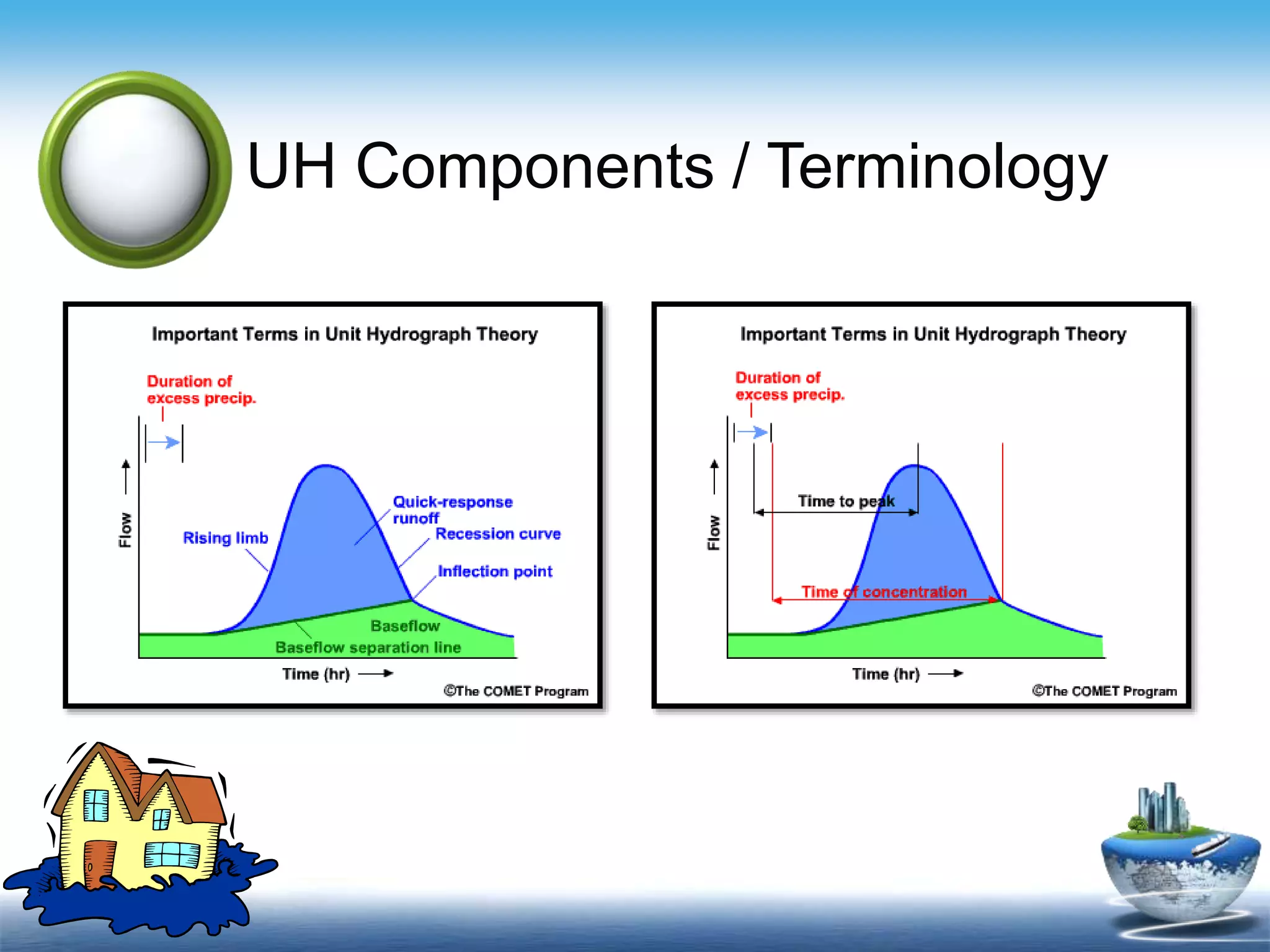
TERMINOLOGY - UH
 Duration
 Rising Limb
 Recession Limb (falling
limb)
 Peak Flow
 Time to Peak (rise time)
 Time of Concentration
 Recession Curve
 Base flow Separation line
 Base flow
 Quick Response Run off
 Point of inflection
UH Components / Terminology
Text in
here
Text in
here
CREATING U.HYDROGRAPH
 From Stream flow Data
 Synthetically
 Espey Ten-Minute Unit Hydrograph
 Snyder
 SCS Unit Hydrograph
 Time-Area Unit Hydrograph(Clark, 1945)
 Gamma Function Unit Hydrograph
 “Fitted” Distributions
 Geomorphologic
My Concern
Contents
- Click to add Text
- Click to add Text
- Click to add Text
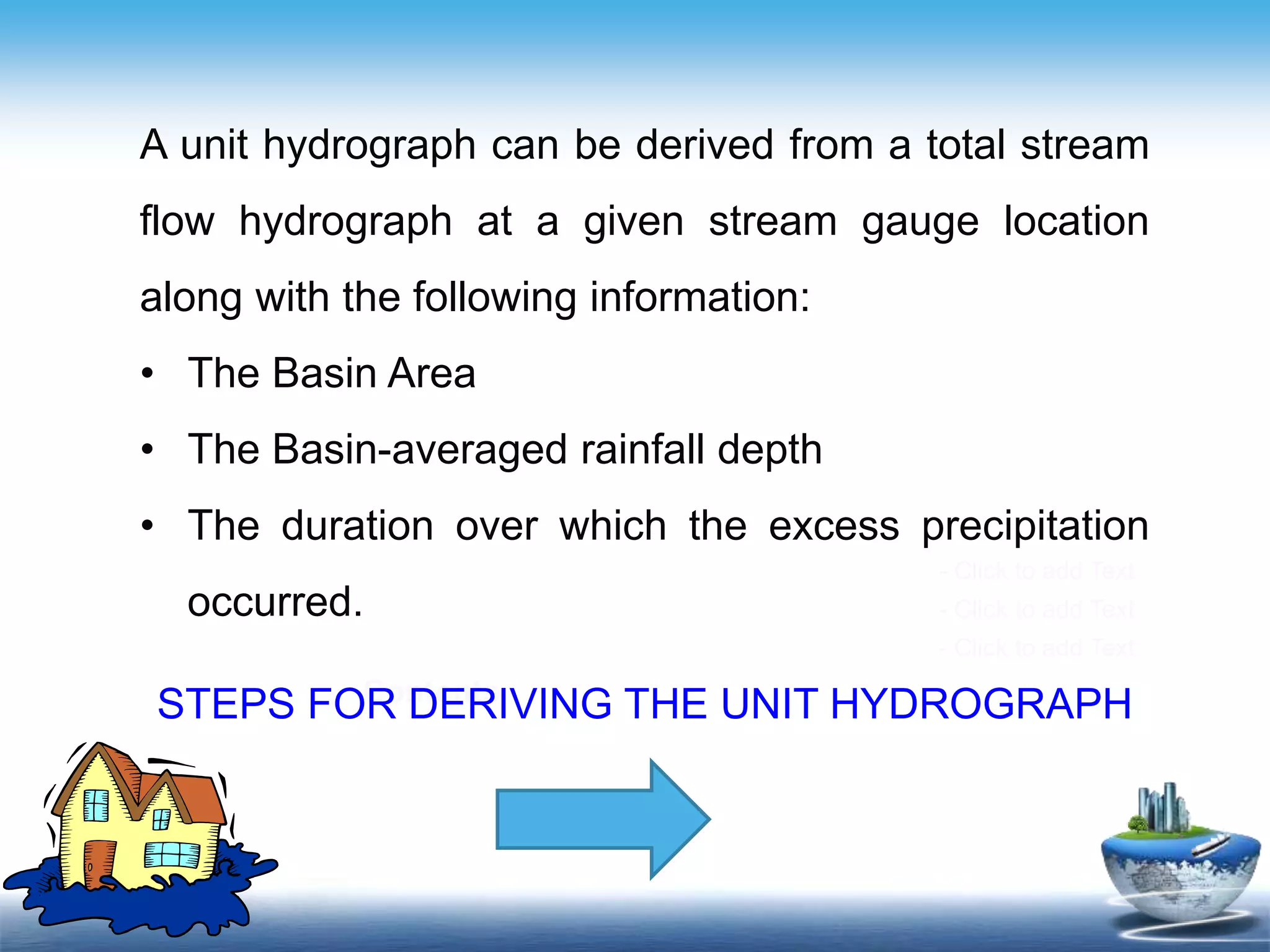
A unit hydrograph can be derived from a total stream
flow hydrograph at a given stream gauge location
along with the following information:
• The Basin Area
• The Basin-averaged rainfall depth
• The duration over which the excess precipitation
occurred.
STEPS FOR DERIVING THE UNIT HYDROGRAPH
Text in
here
Text in
here
Text in
here
When deriving a unit hydrograph it is important to
start with an archived hydrograph in which the
quick-response runoff portion is from one single
storm event. In addition, that storm should have
produced its excess precipitation with nearly
uniform coverage in space and time over the basin
Select Appropriate Precipitation EventStep-1
Text in
here
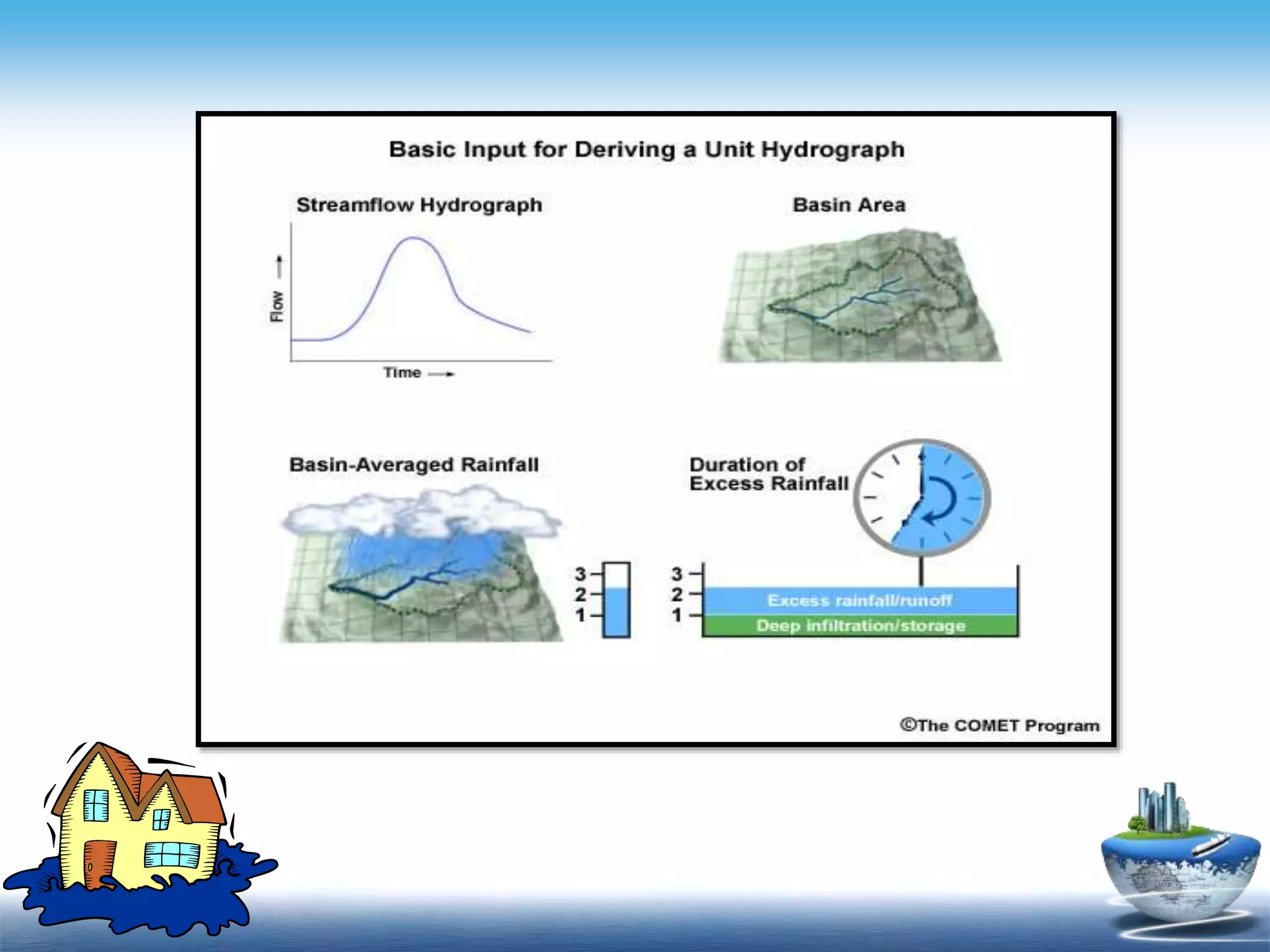
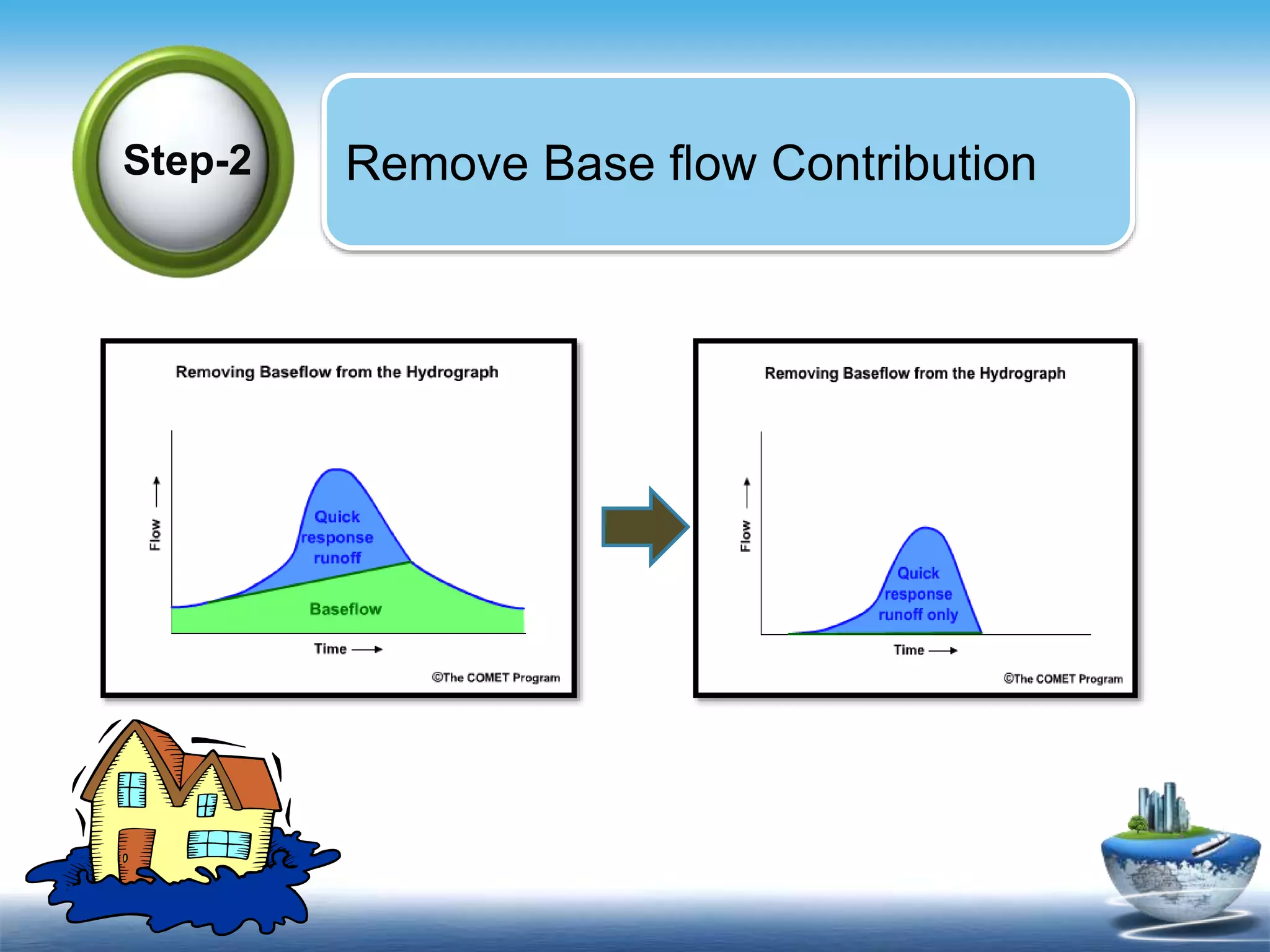
Remove Base flow ContributionStep-2
Text in
here
The total volume of water from the quick-response runoff needs
to be calculated. This is done by summing the areas under the
QRR Hydrograph for each time step, in this case, hourly.
Calculate Quick – Response VolumeStep-3
Text in
here
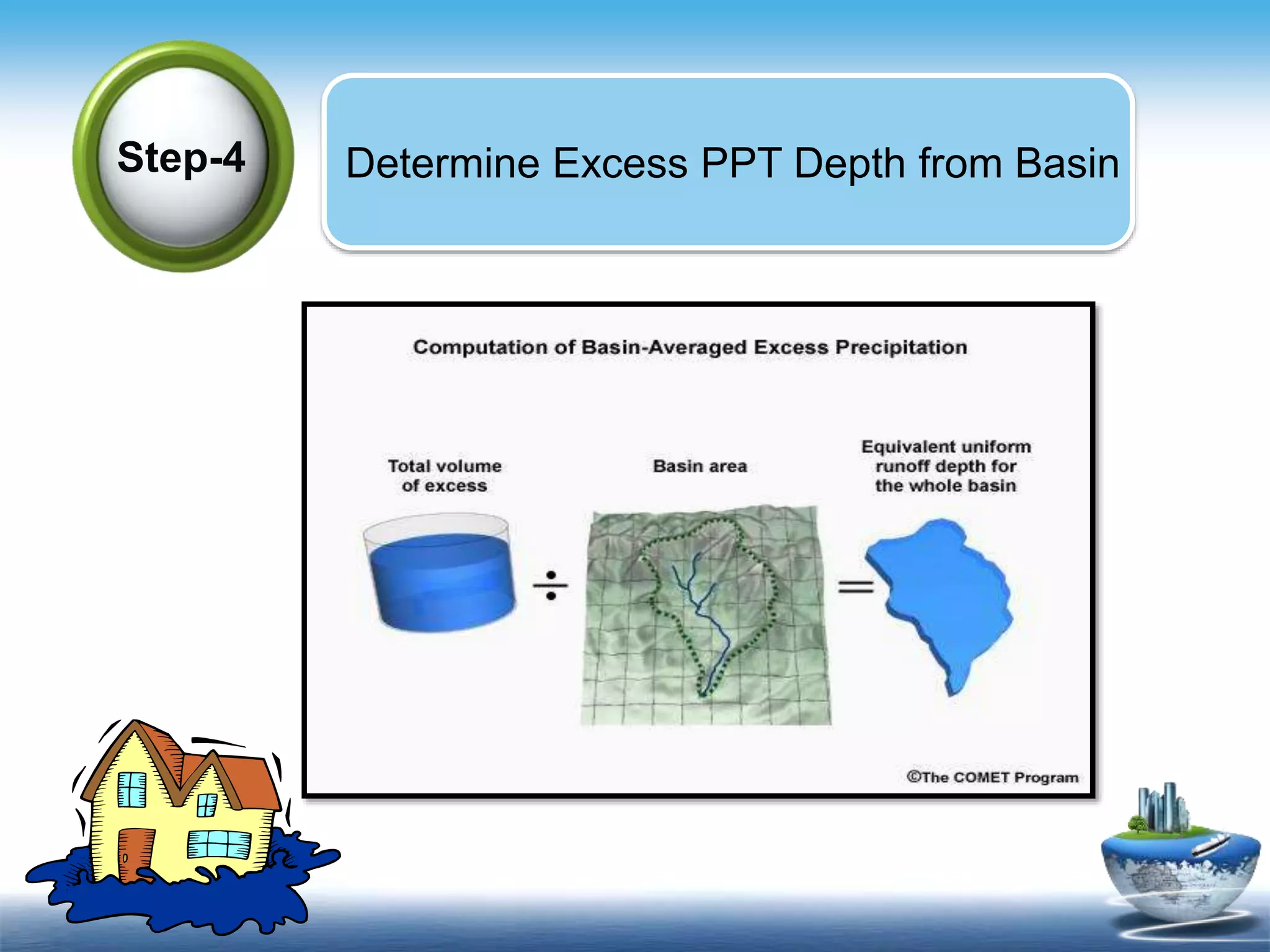
Determine Excess PPT Depth from BasinStep-4
Text in
here
Determine Excess PPT Depth from BasinStep-4
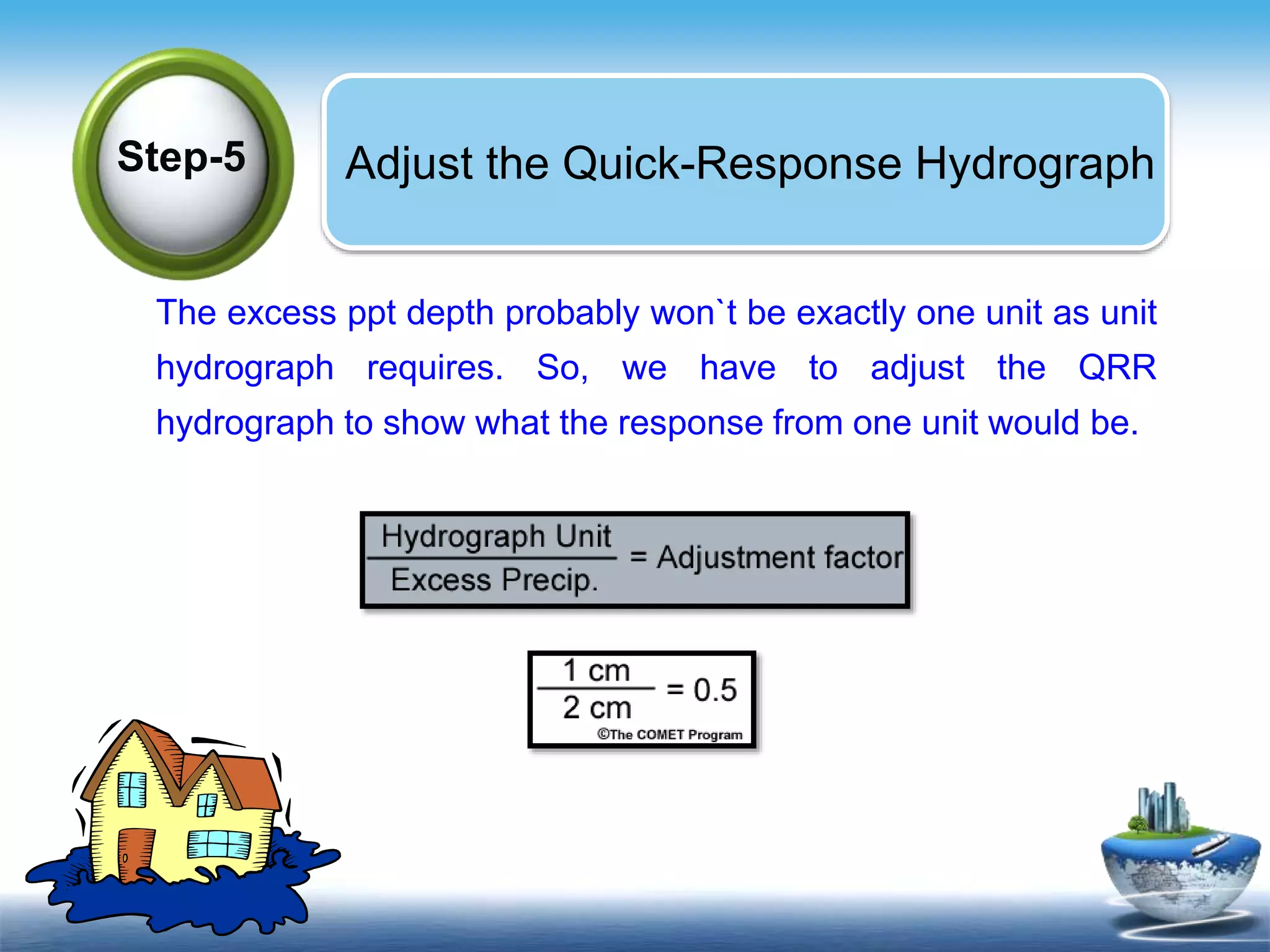
For example, assume we have a basin area of 100 square km,
which is 100,000,000 sq.m and calculated volume of quick-
response to be 2,000,000 cum-then the depth will be
Text in
here
Adjust the Quick-Response HydrographStep-5
The excess ppt depth probably won`t be exactly one unit as unit
hydrograph requires. So, we have to adjust the QRR
hydrograph to show what the response from one unit would be.
Text in
here
Adjust the Quick-Response HydrographStep-5
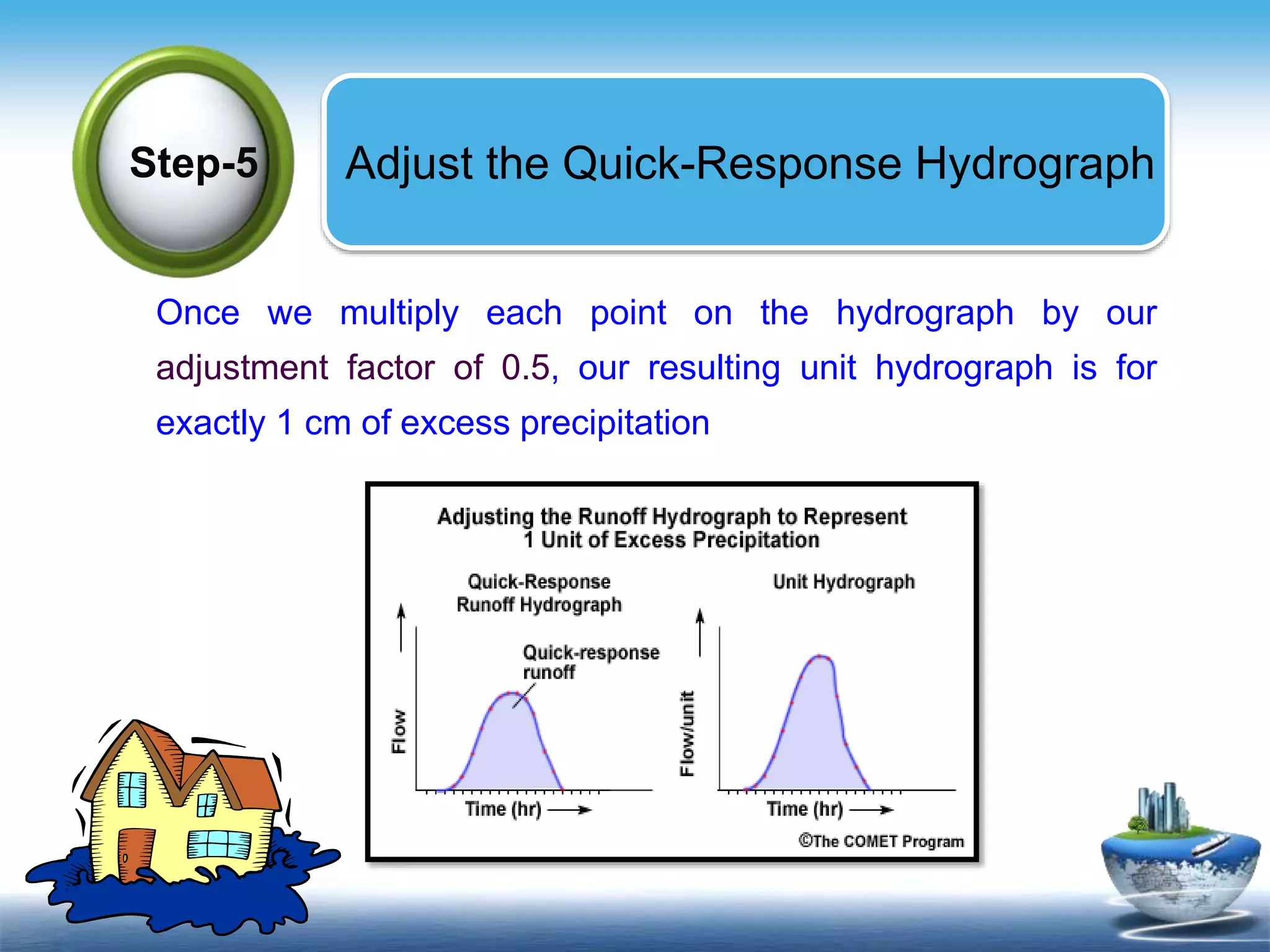
Once we multiply each point on the hydrograph by our
adjustment factor of 0.5, our resulting unit hydrograph is for
exactly 1 cm of excess precipitation
Text in
here
Determine Duration of UHStep-6
The duration of a unit hydrograph refers to a continuous
time period during which one unit of excess ppt occurred.
If it took 6 hours for the one unit of excess to occur, we
have a 6-hr unit hydrograph. Remember, the unit
hydrograph duration does not refer to the duration of the
stream flow response.
Text in
here
 The difficult part of determining the duration of a unit
hydrograph is estimating which portion of the entire
precipitation event actually contributes to excess ppt.
 Recall that the water that infiltrates & percolates into
deeper storage and base flow is not part of excess ppt.
 We can estimate this portion of the ppt. by applying a
constant loss function to the rainfall.
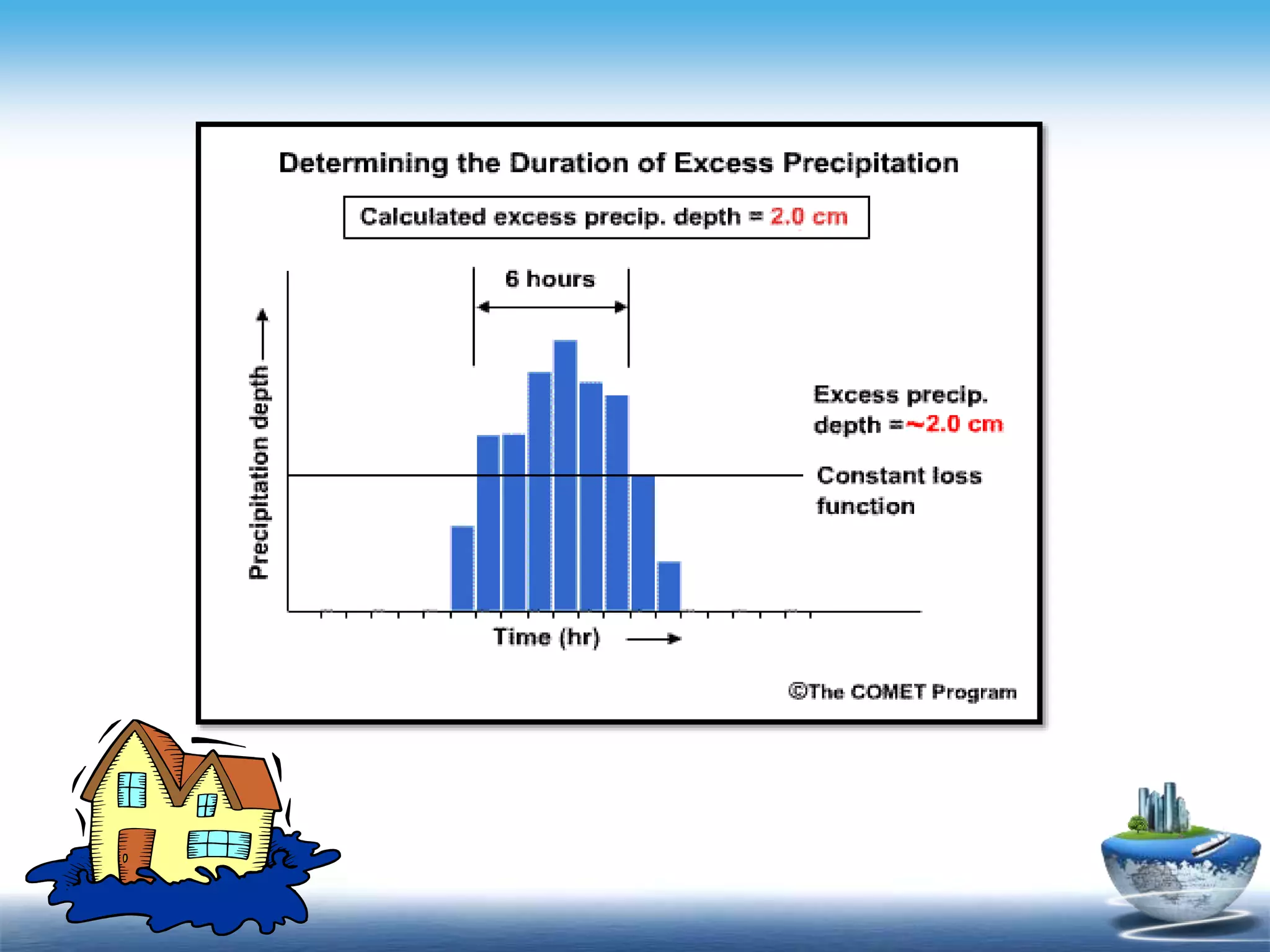
 Recall that we have already calculated the depth of the
excess ppt to be 2.0 cm. Now, we need to know how
long it took for that excess to occur.
Text in
here
 So we move this loss function line such that the
amount of ppt. above the line is equal to the depth
of excess ppt. that we already calculated for the
basin.
 Below that line the ppt. goes to long-term storage.
Above the line is the excess ppt.
Text in
here
Text in
here
Text in
here
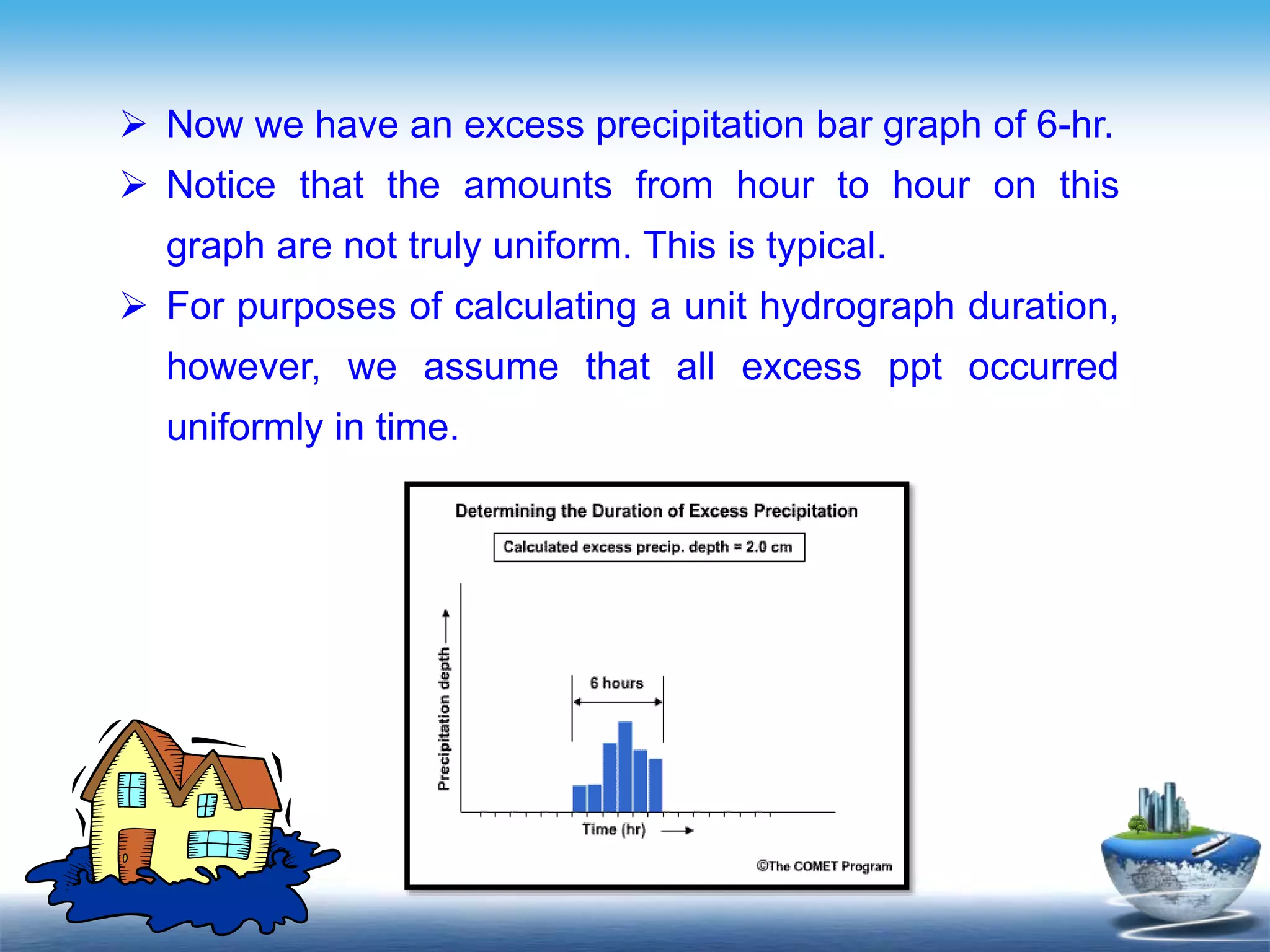
 Now we have an excess precipitation bar graph of 6-hr.
 Notice that the amounts from hour to hour on this
graph are not truly uniform. This is typical.
 For purposes of calculating a unit hydrograph duration,
however, we assume that all excess ppt occurred
uniformly in time.
Text in
here
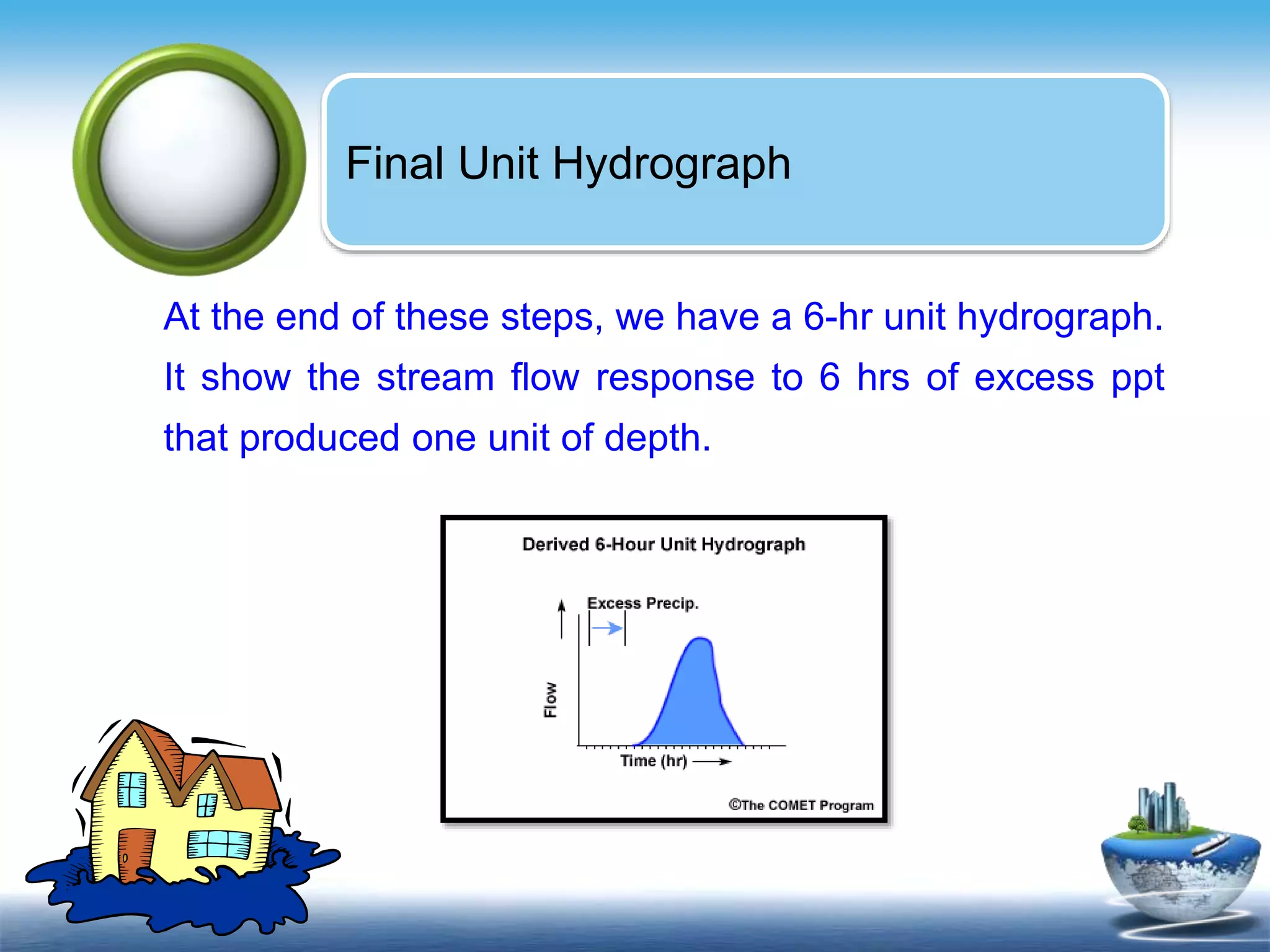
Final Unit Hydrograph
At the end of these steps, we have a 6-hr unit hydrograph.
It show the stream flow response to 6 hrs of excess ppt
that produced one unit of depth.
Text in
here
Application of Unit Hydrograph
Text in
here
 The UH method is based on the assumption of a linear
relationship between the rainfall excess and the DR
rates. More specifically, the method assumes that
 The base time of the DRH resulting from a rainfall
excess of a given duration is constant regardless of
the amount of the rainfall excess, and
 The ordinates of a DRH resulting from a rainfall
excess of a given duration are directly proportional
to the total amount of rainfall excess
Text in
here
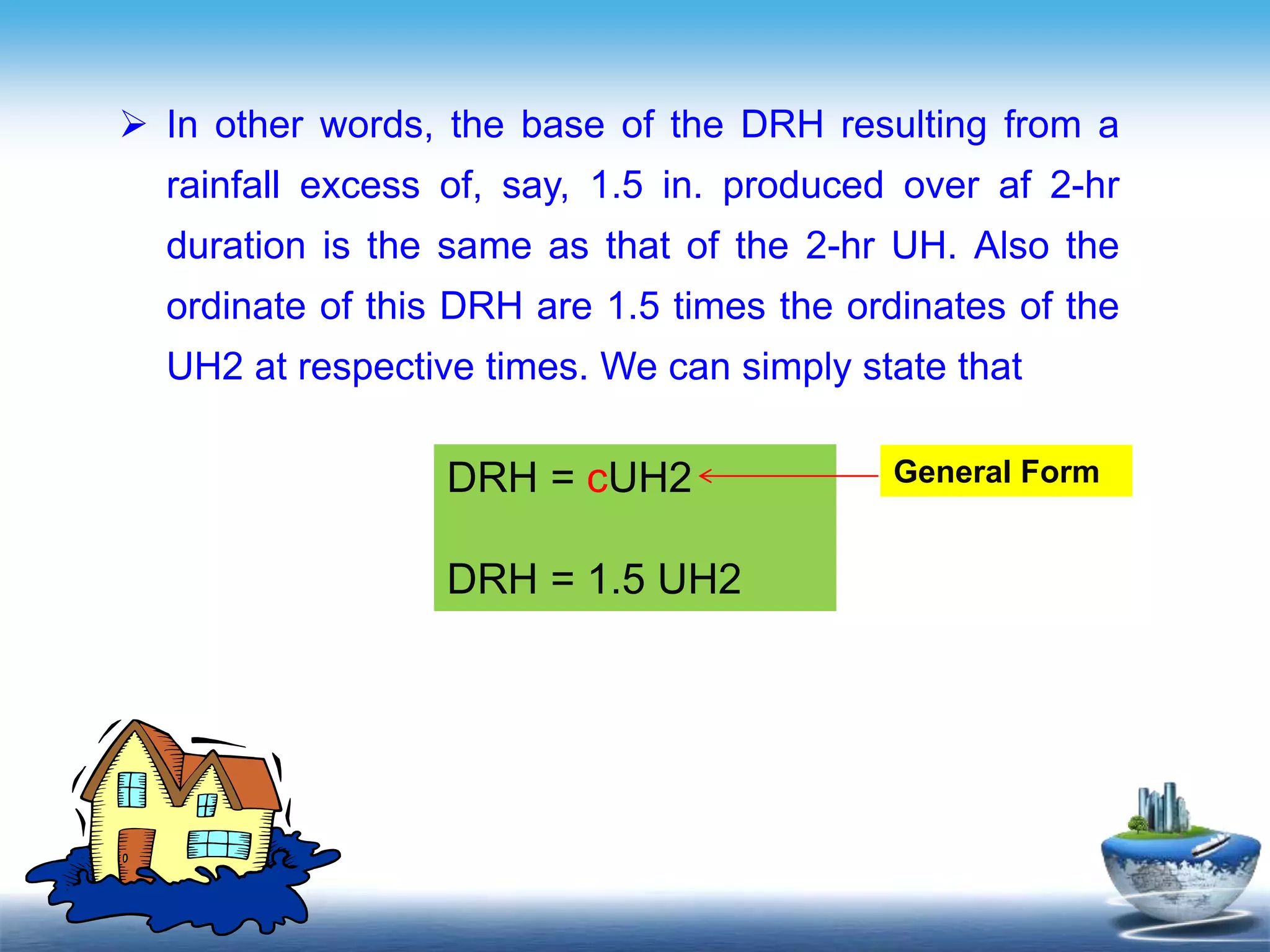
 In other words, the base of the DRH resulting from a
rainfall excess of, say, 1.5 in. produced over af 2-hr
duration is the same as that of the 2-hr UH. Also the
ordinate of this DRH are 1.5 times the ordinates of the
UH2 at respective times. We can simply state that
DRH = cUH2
DRH = 1.5 UH2
General Form
Contents
- Click to add Text
- Click to add Text
- Click to add Text
Contents
- Click to add Text
- Click to add Text
- Click to add Text
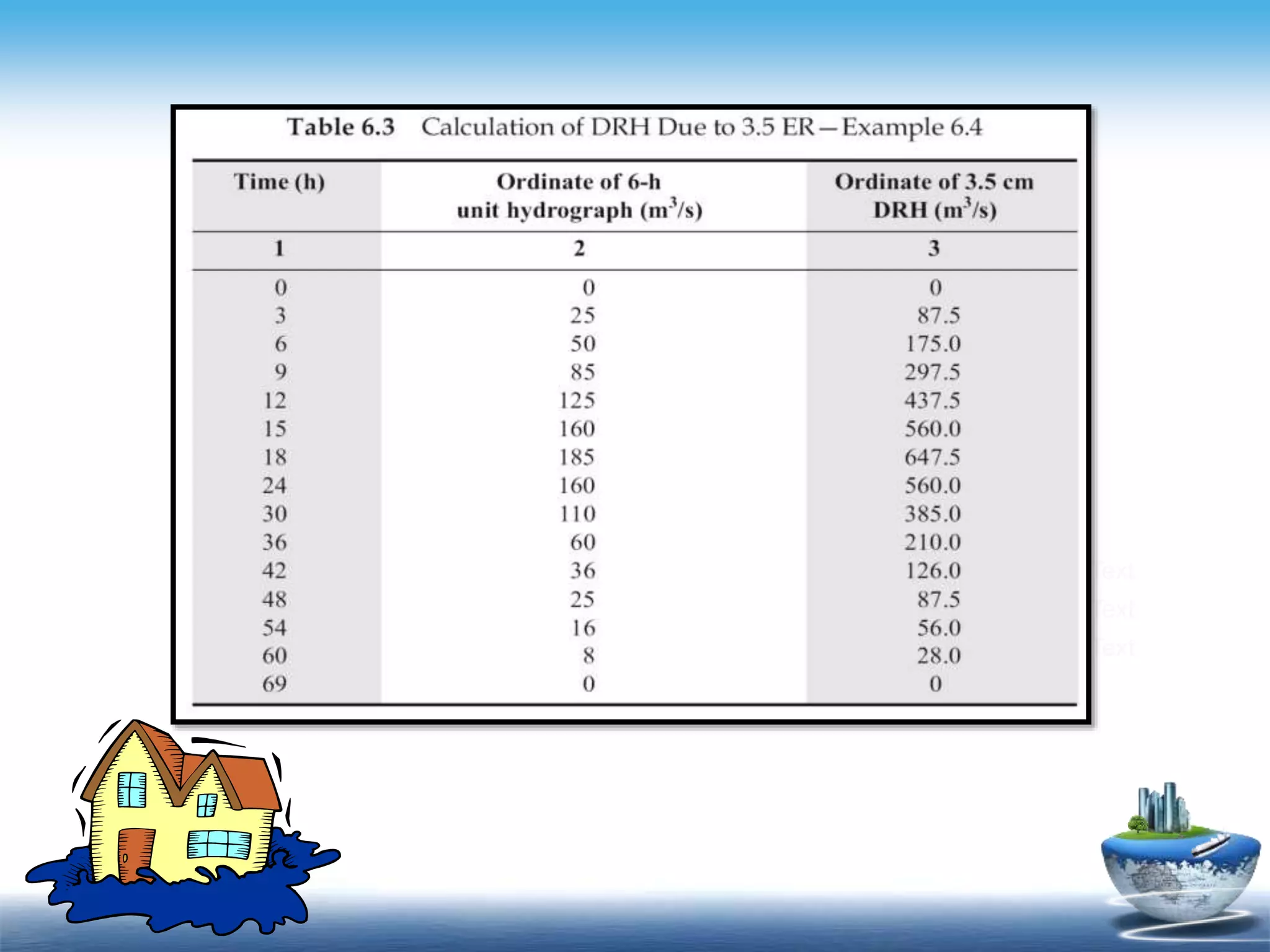
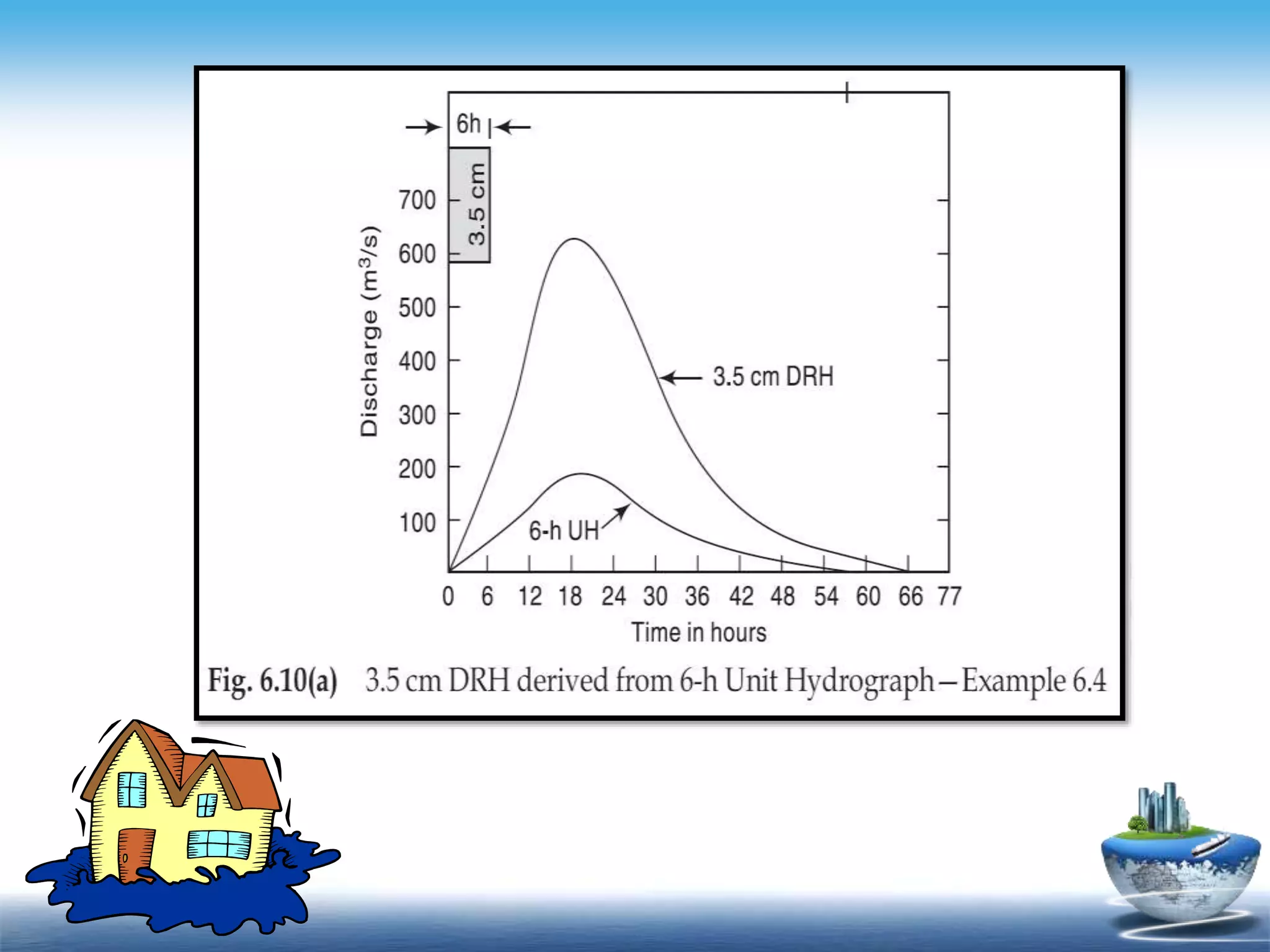
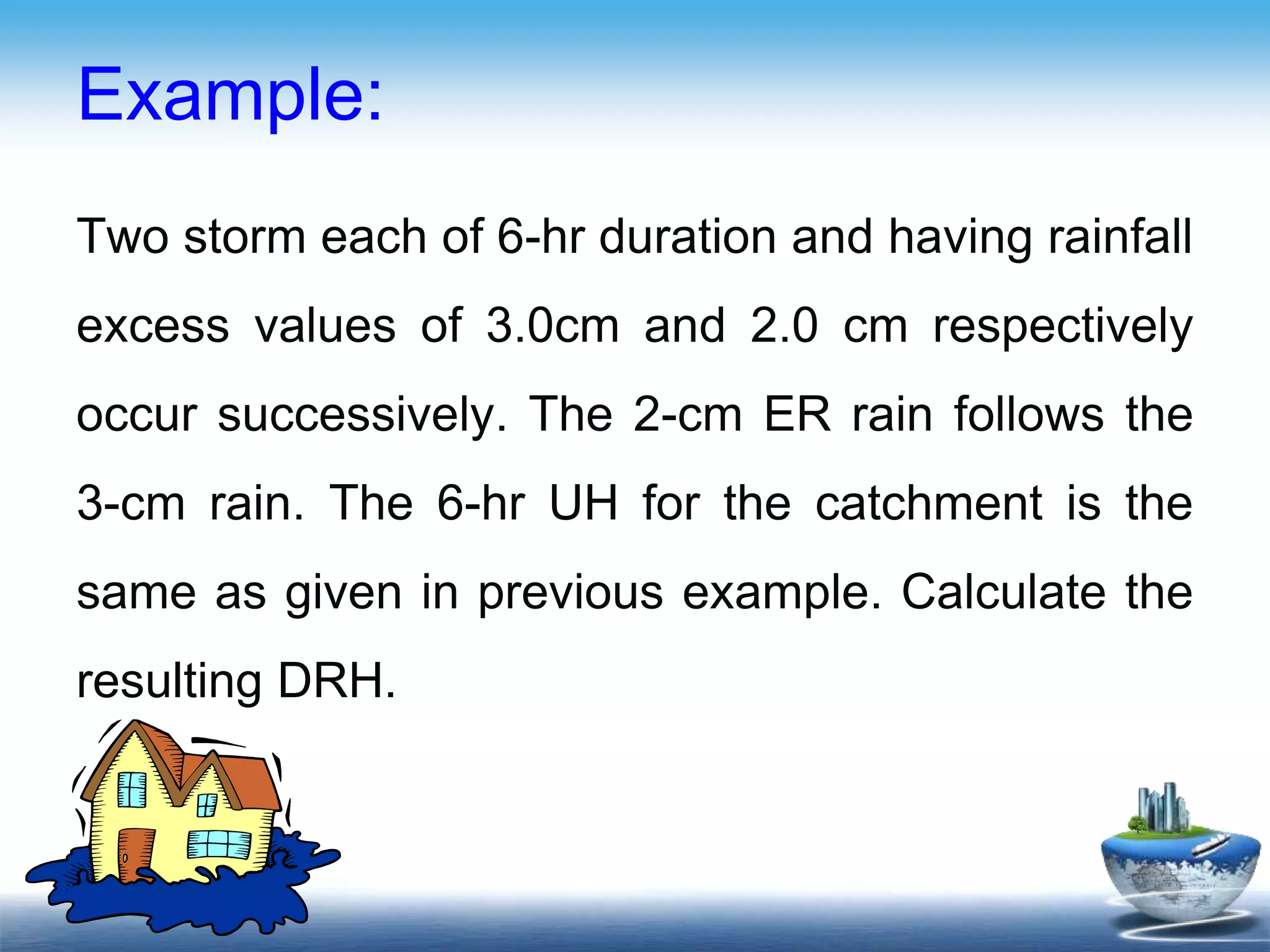
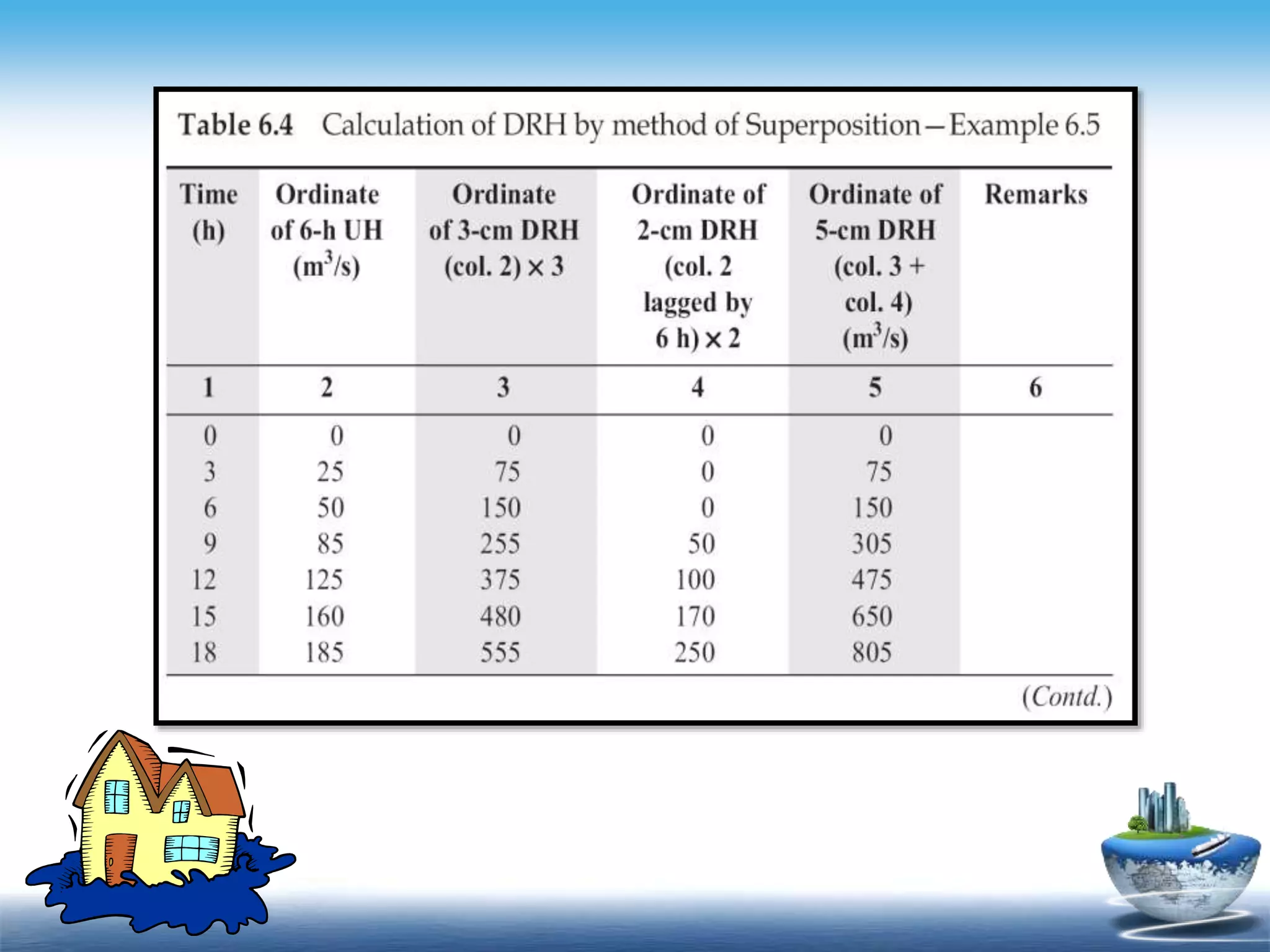
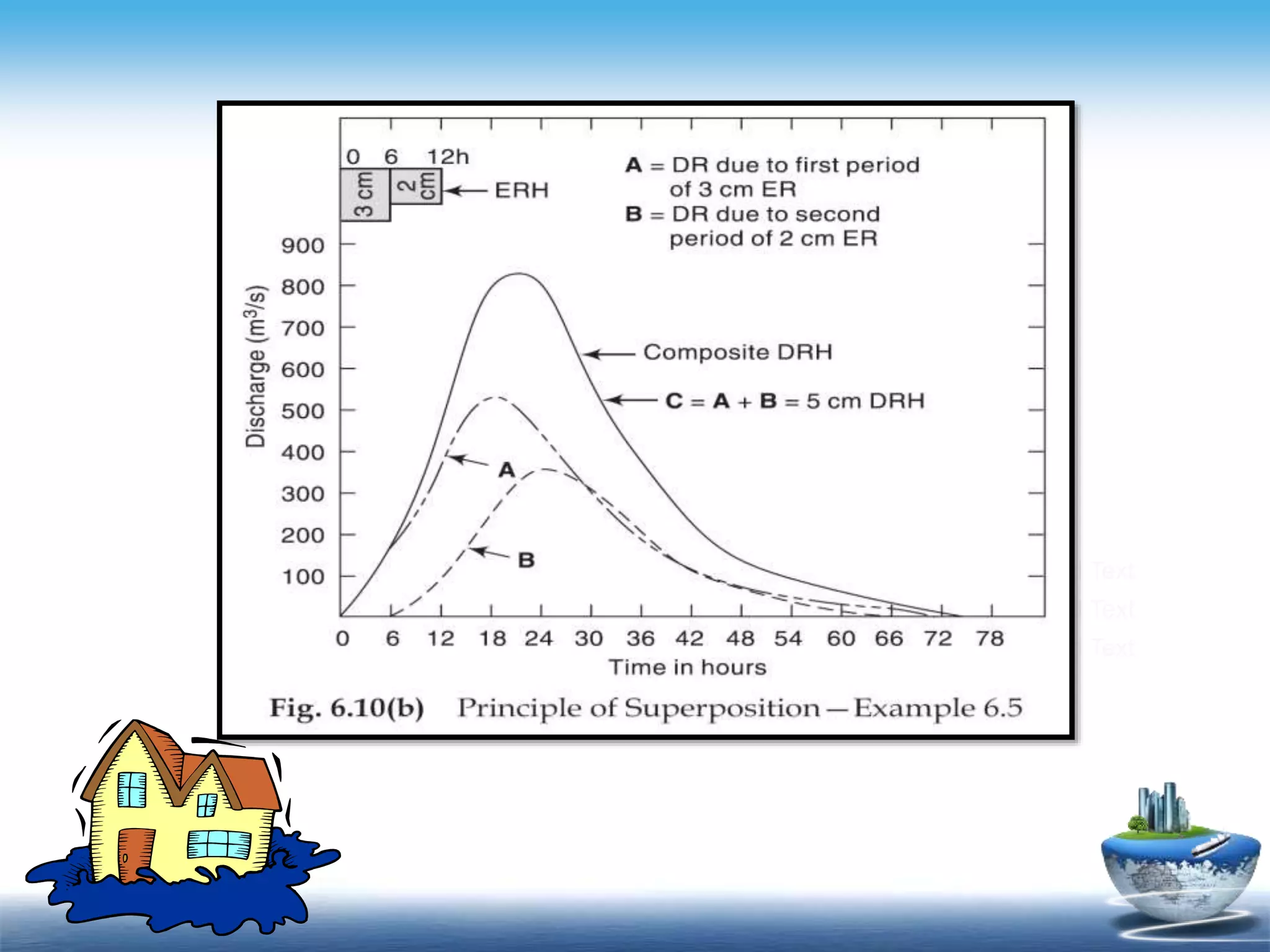
Example:
Two storm each of 6-hr duration and having rainfall
excess values of 3.0cm and 2.0 cm respectively
occur successively. The 2-cm ER rain follows the
3-cm rain. The 6-hr UH for the catchment is the
same as given in previous example. Calculate the
resulting DRH.
Contents
- Click to add Text
- Click to add Text
- Click to add Text
Contents
- Click to add Text
- Click to add Text
- Click to add Text
Contents
- Click to add Text
- Click to add Text
- Click to add Text
Unit Hydrograph of Different Durations
 Under condition where lack of adequate data in
developement of unit hydrograph
 D-hour unit hydrograph is used to develop unit
hydrographs of differing durations nD
 Two method available:
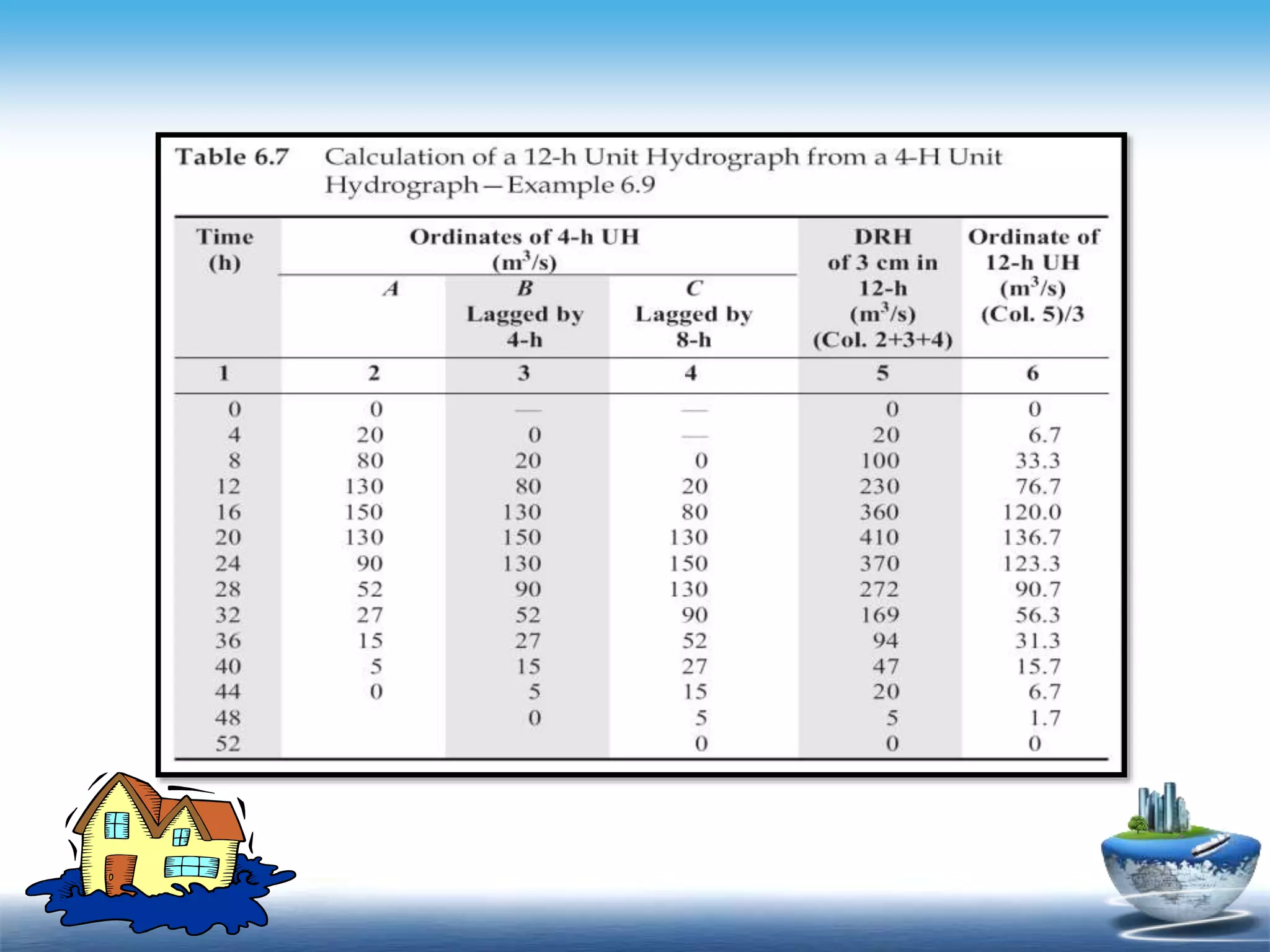
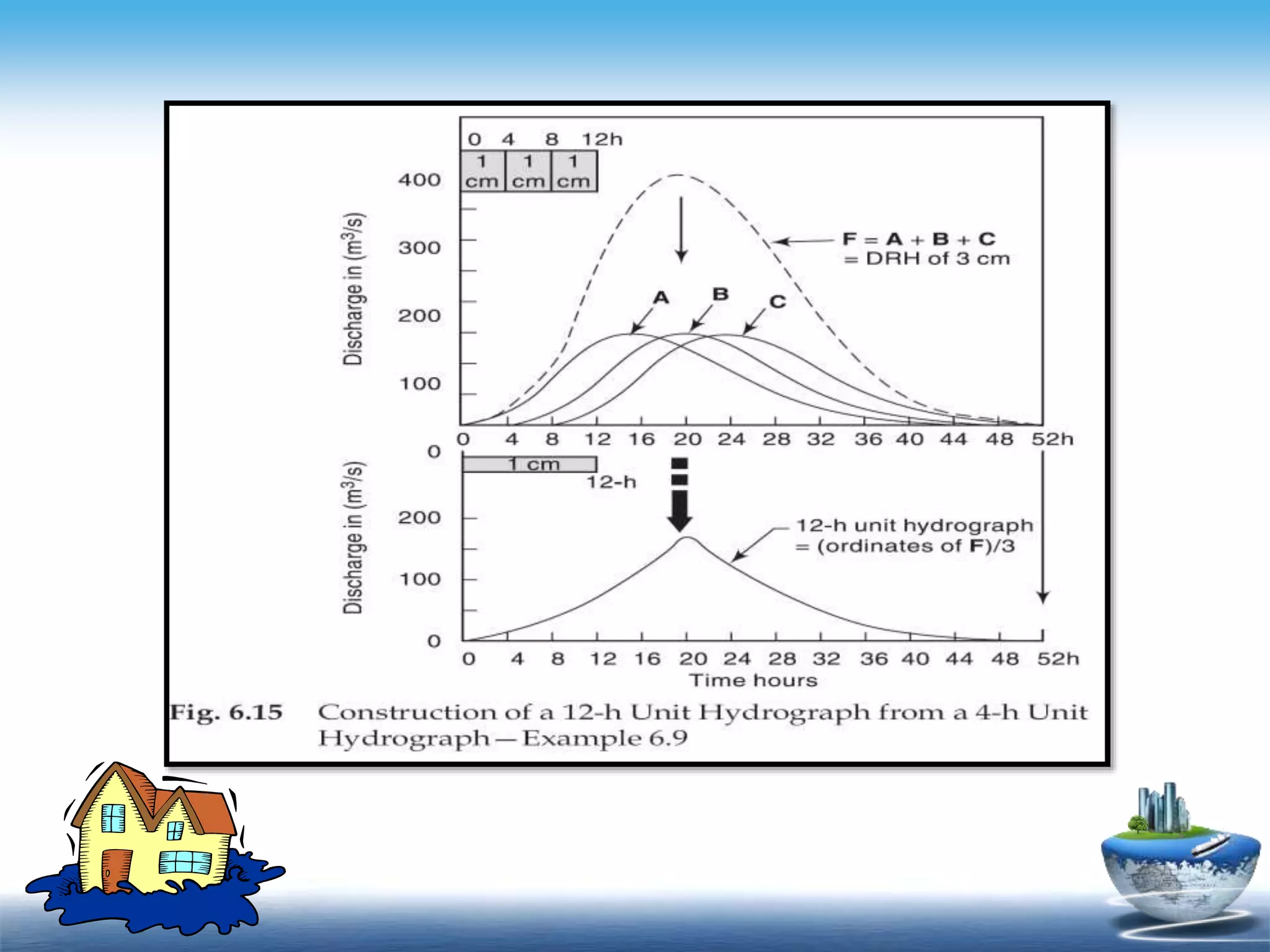
1. Method of superposition
2. The S-Curve
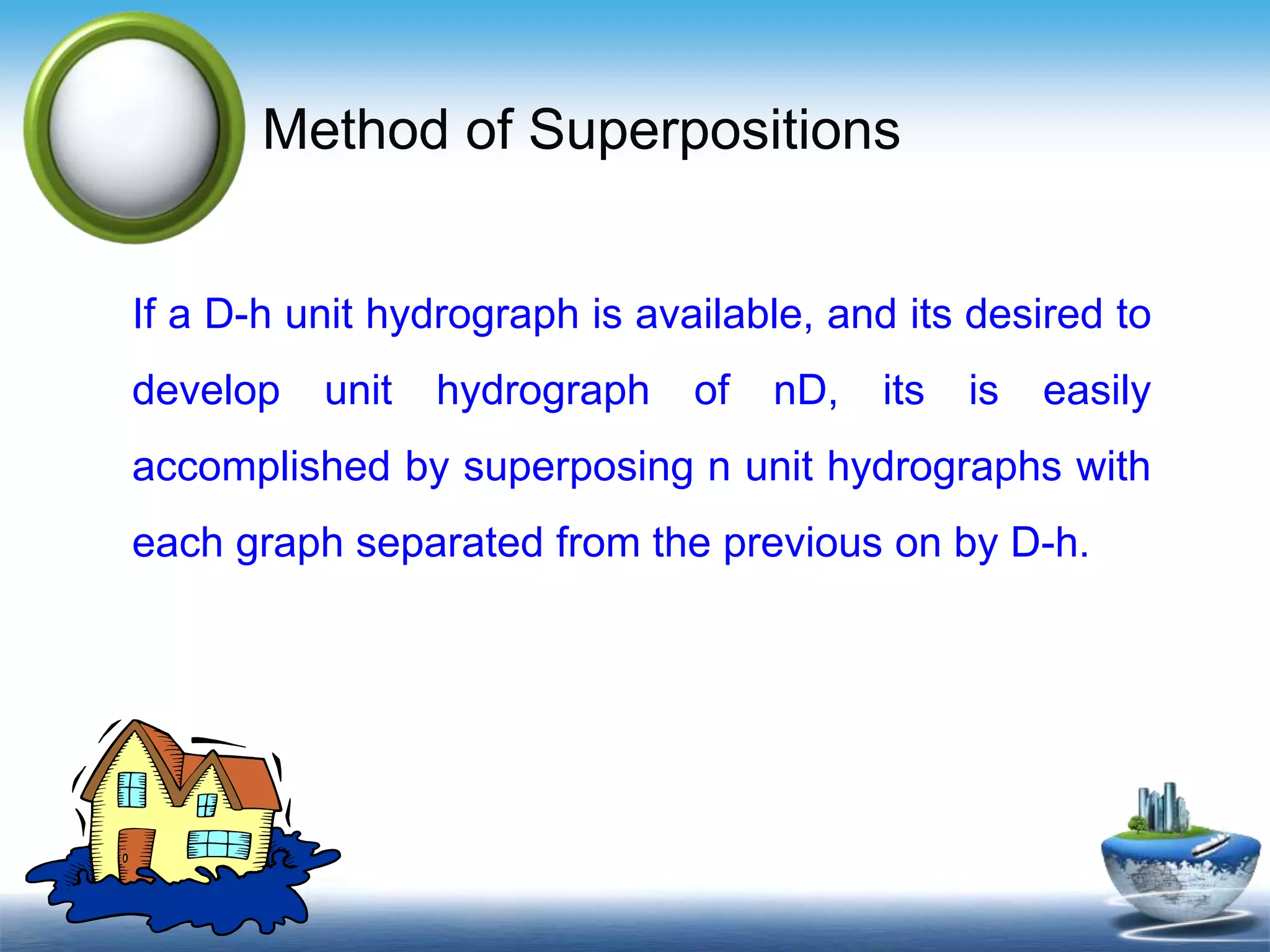
If a D-h unit hydrograph is available, and its desired to
develop unit hydrograph of nD, its is easily
accomplished by superposing n unit hydrographs with
each graph separated from the previous on by D-h.
Method of Superpositions
D = 2-Hr Unit Hydrograph
Adjusted Net Rainfall
one inch over basin
Qp
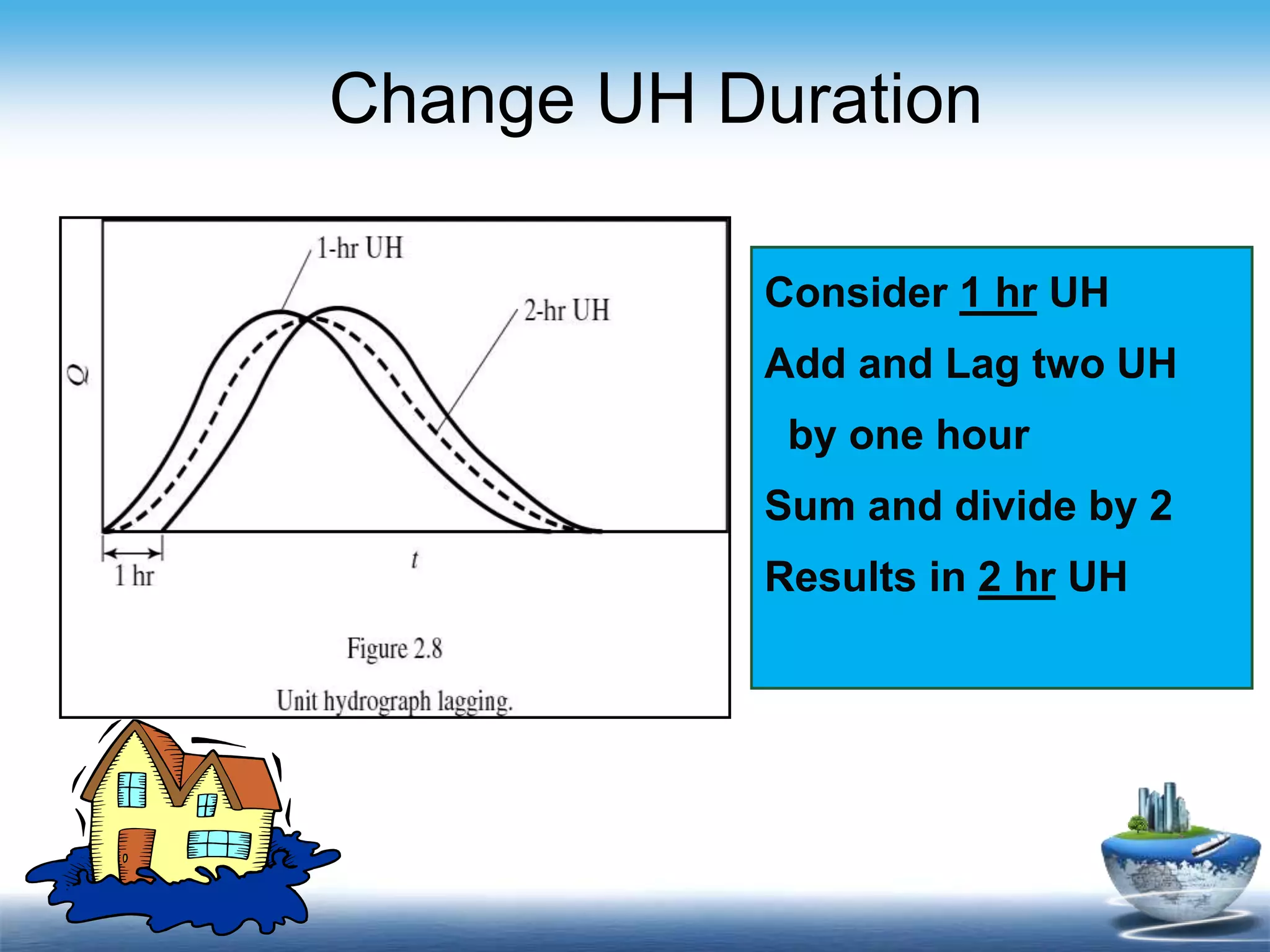
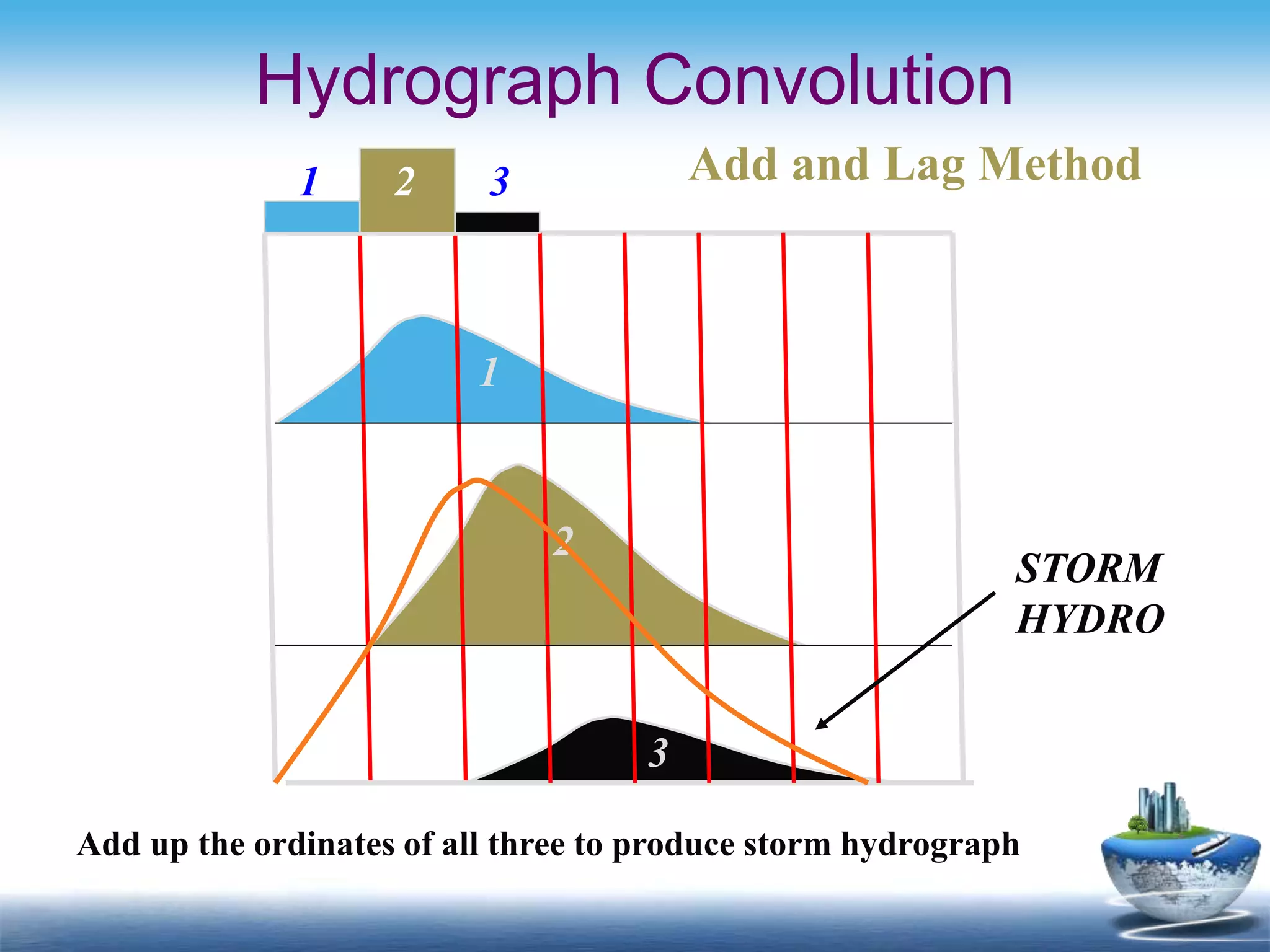
Change UH Duration
Consider 1 hr UH
Add and Lag two UH
by one hour
Sum and divide by 2
Results in 2 hr UH
Example
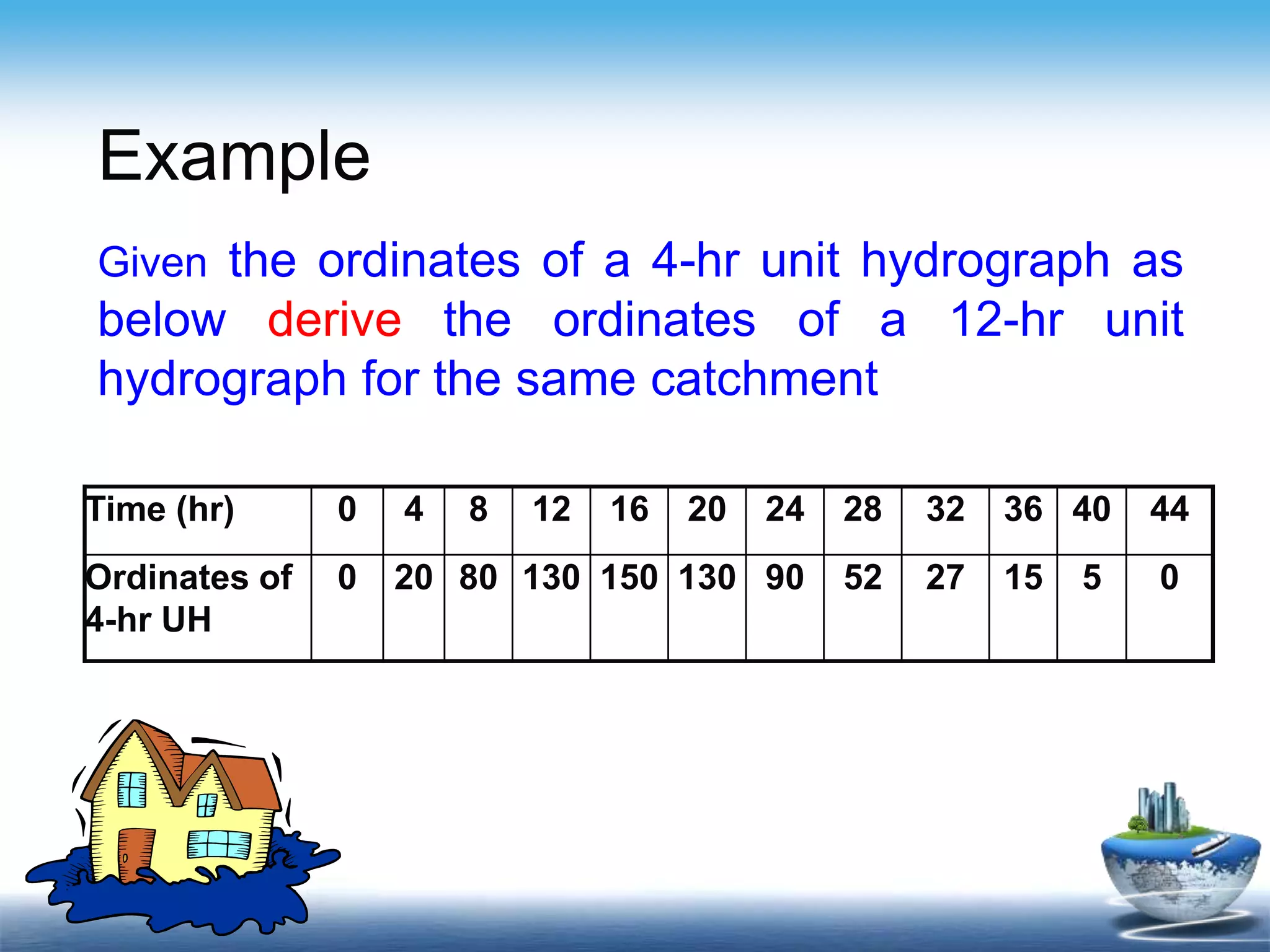
Given the ordinates of a 4-hr unit hydrograph as
below derive the ordinates of a 12-hr unit
hydrograph for the same catchment
Time (hr) 0 4 8 12 16 20 24 28 32 36 40 44
Ordinates of
4-hr UH
0 20 80 130 150 130 90 52 27 15 5 0
Contents
- Click to add Text
- Click to add Text
- Click to add Text
Text in
here
Text in
here
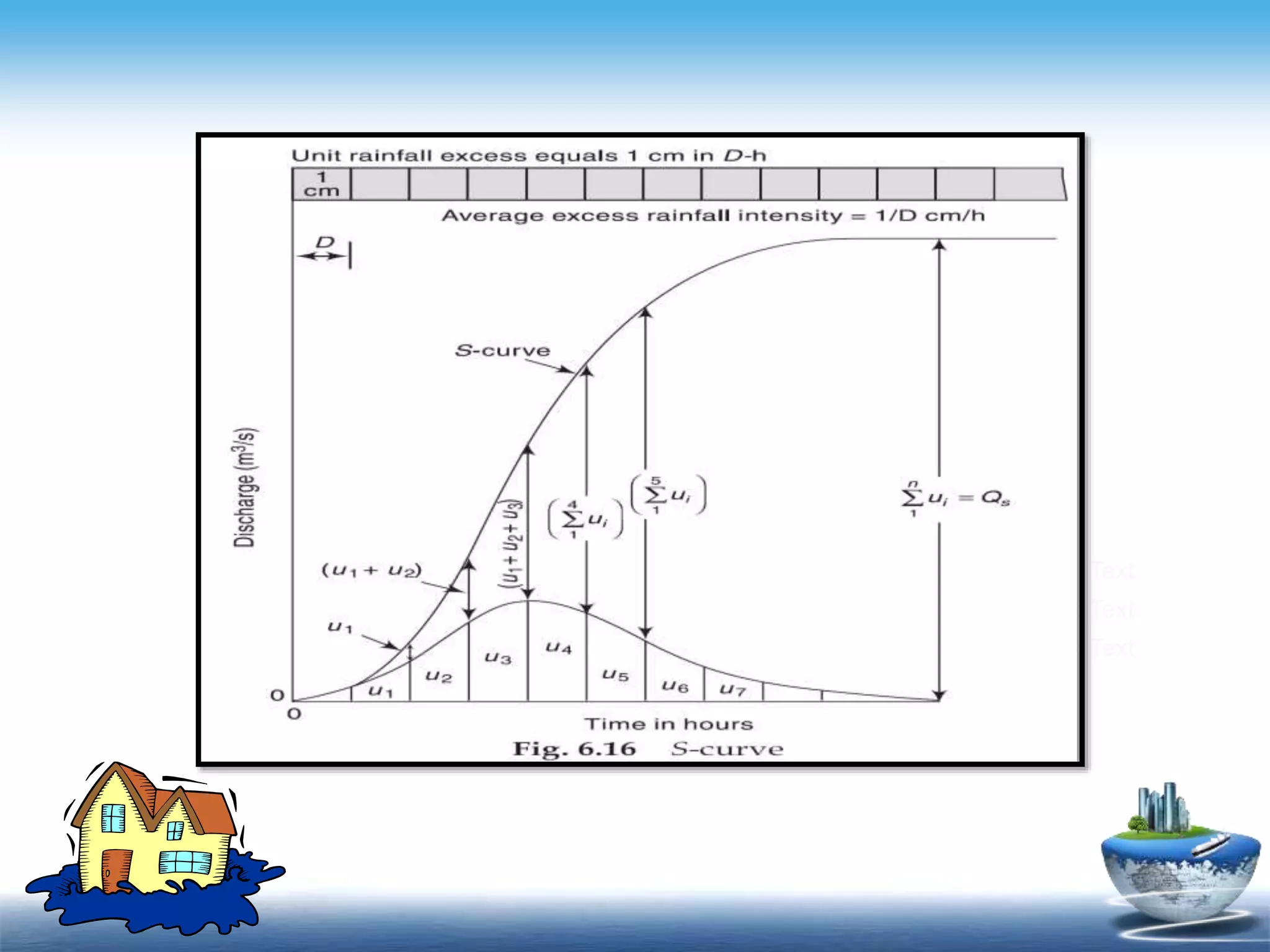
S-Curve
 Also known as S-hydrograph
 Hydrograph produced by continous effective
rainfall at a constant rate for infinite period.
 Curve obtained by summation of an infinite series
of D-h UH spaced D-h apart.
Contents
- Click to add Text
- Click to add Text
- Click to add Text
S-Curves for UH
S-Curves
• Convert 2 hr UH to 3-hr
• Lag each 2-hr UH by
Duration D
• Add to produce S-curve
S-curve
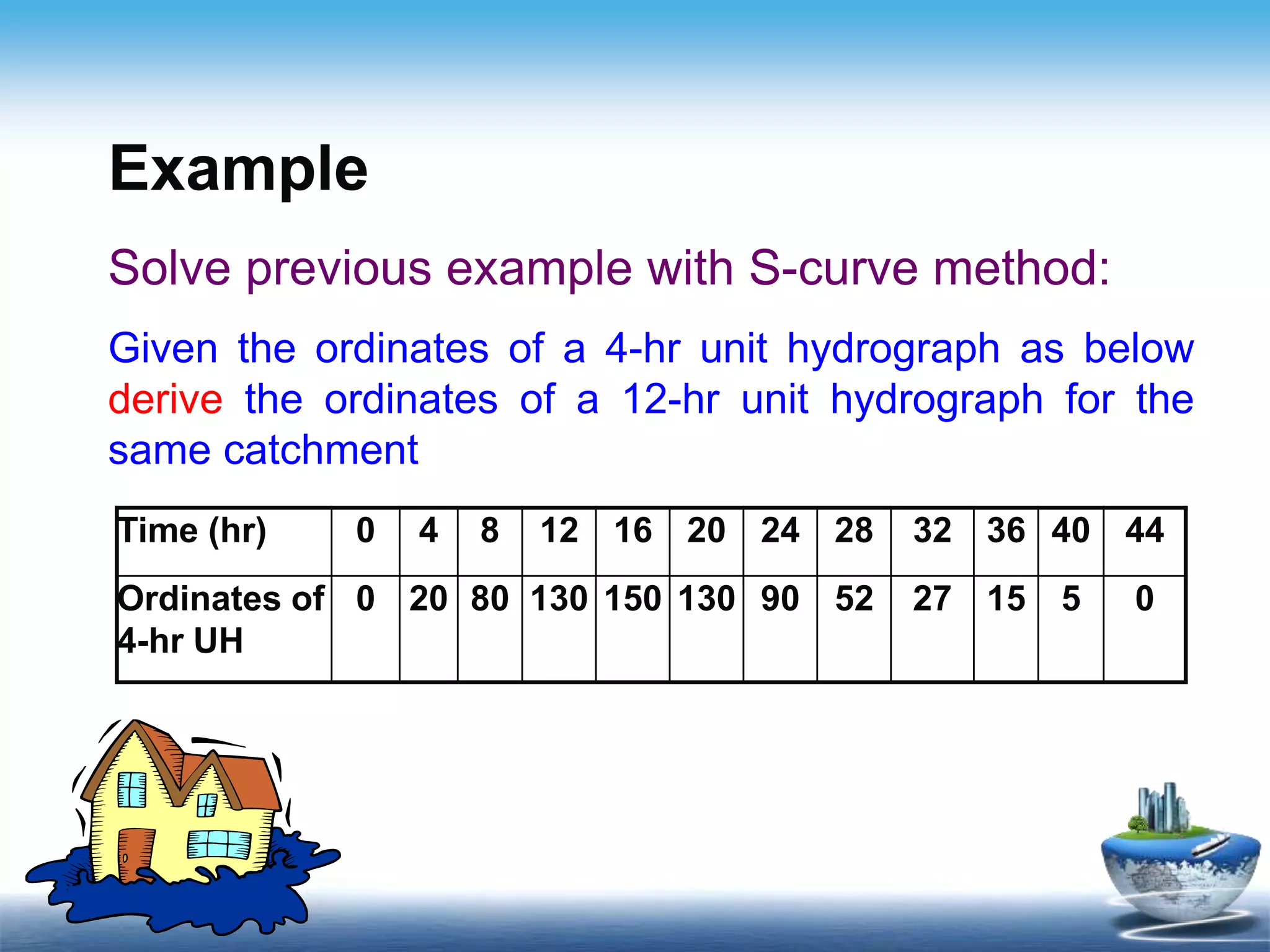
Example
Solve previous example with S-curve method:
Given the ordinates of a 4-hr unit hydrograph as below
derive the ordinates of a 12-hr unit hydrograph for the
same catchment
Time (hr) 0 4 8 12 16 20 24 28 32 36 40 44
Ordinates of
4-hr UH
0 20 80 130 150 130 90 52 27 15 5 0
Contents
Hydrograph Convolution
1
2
3
31 2
Add up the ordinates of all three to produce storm hydrograph
STORM
HYDRO
Add and Lag Method
LOGO
www.themegallery.com

Unit hydrograph by anwar

  • 1.
  • 2.
    Coverage Flood pictorial views Hydrograph- Review Unit Hydrograph Unit Hydrograph. Why ? Assumptions For UH Terminology for UH Creating Unit Hydrograph Applications of Unit H
  • 3.
  • 4.
    Contents - Click toadd Text - Click to add Text - Click to add Text
  • 5.
    Contents - Click toadd Text - Click to add Text - Click to add Text
  • 6.
    Contents - Click toadd Text - Click to add Text - Click to add Text
  • 7.
    Contents - Click toadd Text - Click to add Text - Click to add Text
  • 8.
    Contents - Click toadd Text - Click to add Text - Click to add Text
  • 9.
    Contents - Click toadd Text - Click to add Text - Click to add Text
  • 10.
    Contents - Click toadd Text - Click to add Text - Click to add Text
  • 11.
    Contents - Click toadd Text - Click to add Text - Click to add Text
  • 12.
    Contents - Click toadd Text - Click to add Text - Click to add Text
  • 13.
    Contents - Click toadd Text - Click to add Text - Click to add Text
  • 14.
    Contents - Click toadd Text - Click to add Text - Click to add Text
  • 15.
    Contents - Click toadd Text - Click to add Text - Click to add Text
  • 16.
    Contents - Click toadd Text - Click to add Text - Click to add Text
  • 17.
    Contents - Click toadd Text - Click to add Text - Click to add Text
  • 18.
    Contents - Click toadd Text - Click to add Text - Click to add Text
  • 19.
    Contents - Click toadd Text - Click to add Text - Click to add Text
  • 20.
    Contents - Click toadd Text - Click to add Text - Click to add Text
  • 21.
    Contents - Click toadd Text - Click to add Text - Click to add Text
  • 22.
    Contents - Click toadd Text - Click to add Text - Click to add Text
  • 23.
    Contents - Click toadd Text - Click to add Text - Click to add Text
  • 24.
    Contents - Click toadd Text - Click to add Text - Click to add Text
  • 25.
    Contents - Click toadd Text - Click to add Text - Click to add Text
  • 26.
    Prediction The only hydrographthat predicts the behavior of a flood from a storm of any duration
  • 27.
    Why Construct & Analyse Hydrographs? To find out discharge patterns of a particular drainage basin Help predict flooding events, therefore influence implementation of flood prevention measures
  • 28.
  • 29.
    Hydrograph Graphical representation oftime (hours) versus discharge (cfs or cms) at a particular point on a stream or channel which drains the watershed area
  • 30.
  • 31.
    Text in here -------------------------YES ? Then wewill be able to 1. Manage the Storm water. 2. Identify the Flood Plans on downstream side. 3. To place the Hydraulic structures at safe level. 4. Efficient Urban Storm water management plan. 5. Design the Different types of Hydraulic structures. 6. Minimize the effects of Floods.
  • 32.
  • 33.
    Unit Hydrograph A conceptualdirect runoff hydrograph resulting from a rainfall excess of unit depth and constant intensity for a particular watershed is called a unit hydrograph
  • 34.
    Text in here  Theunit hydrograph method is employed to calculate the direct runoff hydrograph at the watershed outlet given the rainfall excess produced by a storm event.  This method is categorized as a lumped model in which the hydrologic characteristics of the entire watershed are combined and typified by one or more parameters, simple mathematical expressions, or graphs.
  • 35.
    Text in here  TheUnit hydrograph is a useful tool in the process of predicting the impact of precipitation on stream flow.  The Unit depth is 1cm in the SI unit system and 1inch in the U.S. system.  It is usually abbreviate as a Uhc.  The subscript “c” indicate the Duration of the rainfall excess.
  • 36.
    Text in here For instance,the direct runoff hydrograph produced by a rainfall excess that has a duration of 3 hr and constant intensity of 1/3 in./hr is denoted by UH3 and depth of the rainfall excess is (1/3 in./hr)(3 hr) = 1 in
  • 37.
    Text in here  Wecan develop a unit hydrograph for a gaged watershed by analyzing the simultaneous rainfall and runoff records.  Unfortunately, most small, urban/rural watersheds are ungaged. However, there are several synthetic unit hydrograph methods available to develop a unit hydrograph for ungaged watersheds e.g. Espey Ten-Minute Unit Hydrograph.
  • 38.
    Text in here Text in here UNITHYDROGRAPH—WHY ? Simplifying our task / work / procedures. Gives us a base line for a specified watershed. Standardize the hydrograph for different watersheds. Gives us information that how the flow of a stream will be affected over time by the addition of one unit of runoff.
  • 39.
    Text in here Text in here Therole of Unit Hydrograph theory in the flood prediction process is to provide an estimate of stream flow given and amount precipitation. Once we know how much rainfall or snowmelt has occurred, or is likely to occur, and we have an idea of how much of this will turn into runoff, we still need to know how the flow of a stream will be affected over time by that runoff. The unit hydrograph provide us with a way to estimate this, and is an integral part of many hydrological modeling systems.
  • 40.
    Contents - Click toadd Text - Click to add Text - Click to add Text
  • 41.
    Text in here Text in here ASSUMPTIONS The primary assumption of unit hydrograph theory is that the rainfall has uniform distribution, both in space- with minimal variations across the basin-and in time; in other words, the rainfall rate did not vary much during the event.  In reality, precipitation events are rarely uniform in space and time. Often, one portion of the basin experiences higher intensity precipitation than another portion.
  • 42.
    Text in here Text in here The base duration of direct runoff hydrograph due to an effective rainfall of unit duration is constant.  The ordinates of DRH are directly proportional to the total amount of DR of each hydrograph (principles of linearity, superposition, and proportionality)  For a given basin, the runoff hydrograph due to a given period of rainfall reflects all the combined physical characteristics of basin (time-invariant)
  • 43.
    Contents - Click toadd Text - Click to add Text - Click to add Text
  • 44.
    Contents - Click toadd Text - Click to add Text - Click to add Text
  • 45.
    Text in here Text in here BASIN-AVERAGEDRAINFALL In typical non-snow situations, we begin the hydrologic process with rainfall. In particular, we start with a basin-averaged rainfall. This simply tells us how much rain fell, or is forecast to fall, on a given basin and typically takes the form of a rainfall depth per time. In unit hydrograph theory, we assume that this rainfall has fallen uniformly across the basin
  • 46.
    Contents - Click toadd Text - Click to add Text - Click to add Text
  • 47.
    Text in here Text in here BASIN-AVERAGEDEXCESS RAINFALL From averaged rainfall, we need to know how much of the basin- averaged rainfall will become runoff. In unit hydrograph theory, runoff is often referred to as “excess precipitation” or “excess rainfall.” Rainfall runoff models will typically provide an estimate of what becomes excess rainfall. So, for example, if 25% of our 4.00 cm basin-averaged rainfall becomes excess rainfall, then we have a basin averaged excess rainfall of 1.00 cm
  • 48.
    Contents - Click toadd Text - Click to add Text - Click to add Text Direct Runoff The unit hydrograph represents the excess precipitation or quick – response runoff
  • 49.
    Text in here Text in here TERMINOLOGY- UH  Duration  Rising Limb  Recession Limb (falling limb)  Peak Flow  Time to Peak (rise time)  Time of Concentration  Recession Curve  Base flow Separation line  Base flow  Quick Response Run off  Point of inflection
  • 50.
    UH Components /Terminology
  • 51.
    Text in here Text in here CREATINGU.HYDROGRAPH  From Stream flow Data  Synthetically  Espey Ten-Minute Unit Hydrograph  Snyder  SCS Unit Hydrograph  Time-Area Unit Hydrograph(Clark, 1945)  Gamma Function Unit Hydrograph  “Fitted” Distributions  Geomorphologic My Concern
  • 52.
    Contents - Click toadd Text - Click to add Text - Click to add Text A unit hydrograph can be derived from a total stream flow hydrograph at a given stream gauge location along with the following information: • The Basin Area • The Basin-averaged rainfall depth • The duration over which the excess precipitation occurred. STEPS FOR DERIVING THE UNIT HYDROGRAPH
  • 53.
  • 54.
    Text in here When derivinga unit hydrograph it is important to start with an archived hydrograph in which the quick-response runoff portion is from one single storm event. In addition, that storm should have produced its excess precipitation with nearly uniform coverage in space and time over the basin Select Appropriate Precipitation EventStep-1
  • 55.
    Text in here Remove Baseflow ContributionStep-2
  • 56.
    Text in here The totalvolume of water from the quick-response runoff needs to be calculated. This is done by summing the areas under the QRR Hydrograph for each time step, in this case, hourly. Calculate Quick – Response VolumeStep-3
  • 57.
    Text in here Determine ExcessPPT Depth from BasinStep-4
  • 58.
    Text in here Determine ExcessPPT Depth from BasinStep-4 For example, assume we have a basin area of 100 square km, which is 100,000,000 sq.m and calculated volume of quick- response to be 2,000,000 cum-then the depth will be
  • 59.
    Text in here Adjust theQuick-Response HydrographStep-5 The excess ppt depth probably won`t be exactly one unit as unit hydrograph requires. So, we have to adjust the QRR hydrograph to show what the response from one unit would be.
  • 60.
    Text in here Adjust theQuick-Response HydrographStep-5 Once we multiply each point on the hydrograph by our adjustment factor of 0.5, our resulting unit hydrograph is for exactly 1 cm of excess precipitation
  • 61.
    Text in here Determine Durationof UHStep-6 The duration of a unit hydrograph refers to a continuous time period during which one unit of excess ppt occurred. If it took 6 hours for the one unit of excess to occur, we have a 6-hr unit hydrograph. Remember, the unit hydrograph duration does not refer to the duration of the stream flow response.
  • 62.
    Text in here  Thedifficult part of determining the duration of a unit hydrograph is estimating which portion of the entire precipitation event actually contributes to excess ppt.  Recall that the water that infiltrates & percolates into deeper storage and base flow is not part of excess ppt.  We can estimate this portion of the ppt. by applying a constant loss function to the rainfall.  Recall that we have already calculated the depth of the excess ppt to be 2.0 cm. Now, we need to know how long it took for that excess to occur.
  • 63.
    Text in here  Sowe move this loss function line such that the amount of ppt. above the line is equal to the depth of excess ppt. that we already calculated for the basin.  Below that line the ppt. goes to long-term storage. Above the line is the excess ppt.
  • 64.
  • 65.
  • 66.
    Text in here  Nowwe have an excess precipitation bar graph of 6-hr.  Notice that the amounts from hour to hour on this graph are not truly uniform. This is typical.  For purposes of calculating a unit hydrograph duration, however, we assume that all excess ppt occurred uniformly in time.
  • 67.
    Text in here Final UnitHydrograph At the end of these steps, we have a 6-hr unit hydrograph. It show the stream flow response to 6 hrs of excess ppt that produced one unit of depth.
  • 68.
  • 69.
    Text in here  TheUH method is based on the assumption of a linear relationship between the rainfall excess and the DR rates. More specifically, the method assumes that  The base time of the DRH resulting from a rainfall excess of a given duration is constant regardless of the amount of the rainfall excess, and  The ordinates of a DRH resulting from a rainfall excess of a given duration are directly proportional to the total amount of rainfall excess
  • 70.
    Text in here  Inother words, the base of the DRH resulting from a rainfall excess of, say, 1.5 in. produced over af 2-hr duration is the same as that of the 2-hr UH. Also the ordinate of this DRH are 1.5 times the ordinates of the UH2 at respective times. We can simply state that DRH = cUH2 DRH = 1.5 UH2 General Form
  • 71.
    Contents - Click toadd Text - Click to add Text - Click to add Text
  • 72.
    Contents - Click toadd Text - Click to add Text - Click to add Text
  • 73.
    Example: Two storm eachof 6-hr duration and having rainfall excess values of 3.0cm and 2.0 cm respectively occur successively. The 2-cm ER rain follows the 3-cm rain. The 6-hr UH for the catchment is the same as given in previous example. Calculate the resulting DRH.
  • 74.
    Contents - Click toadd Text - Click to add Text - Click to add Text
  • 75.
    Contents - Click toadd Text - Click to add Text - Click to add Text
  • 76.
    Contents - Click toadd Text - Click to add Text - Click to add Text
  • 77.
    Unit Hydrograph ofDifferent Durations  Under condition where lack of adequate data in developement of unit hydrograph  D-hour unit hydrograph is used to develop unit hydrographs of differing durations nD  Two method available: 1. Method of superposition 2. The S-Curve
  • 78.
    If a D-hunit hydrograph is available, and its desired to develop unit hydrograph of nD, its is easily accomplished by superposing n unit hydrographs with each graph separated from the previous on by D-h. Method of Superpositions
  • 79.
    D = 2-HrUnit Hydrograph Adjusted Net Rainfall one inch over basin Qp
  • 80.
    Change UH Duration Consider1 hr UH Add and Lag two UH by one hour Sum and divide by 2 Results in 2 hr UH
  • 81.
    Example Given the ordinatesof a 4-hr unit hydrograph as below derive the ordinates of a 12-hr unit hydrograph for the same catchment Time (hr) 0 4 8 12 16 20 24 28 32 36 40 44 Ordinates of 4-hr UH 0 20 80 130 150 130 90 52 27 15 5 0
  • 82.
    Contents - Click toadd Text - Click to add Text - Click to add Text
  • 83.
  • 84.
    S-Curve  Also knownas S-hydrograph  Hydrograph produced by continous effective rainfall at a constant rate for infinite period.  Curve obtained by summation of an infinite series of D-h UH spaced D-h apart.
  • 85.
    Contents - Click toadd Text - Click to add Text - Click to add Text
  • 86.
  • 87.
    S-Curves • Convert 2hr UH to 3-hr • Lag each 2-hr UH by Duration D • Add to produce S-curve S-curve
  • 88.
    Example Solve previous examplewith S-curve method: Given the ordinates of a 4-hr unit hydrograph as below derive the ordinates of a 12-hr unit hydrograph for the same catchment Time (hr) 0 4 8 12 16 20 24 28 32 36 40 44 Ordinates of 4-hr UH 0 20 80 130 150 130 90 52 27 15 5 0
  • 89.
  • 90.
    Hydrograph Convolution 1 2 3 31 2 Addup the ordinates of all three to produce storm hydrograph STORM HYDRO Add and Lag Method
  • 91.