UNIT D: MECHANICAL
SYSTEMS

    Mr. Ilko
Where are Mechanical Systems
             Taking Us?
   There have been remarkable improvements to
    our ways of life primarily due to Mechanical
    Systems

   Some of the ways it has improved our lives
    are;
     Vehicleengines
     Medicine

     Resource gathering

   These are but a few of the contributions that
    this Unit will explore
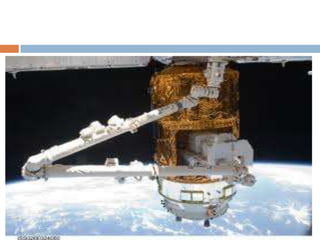
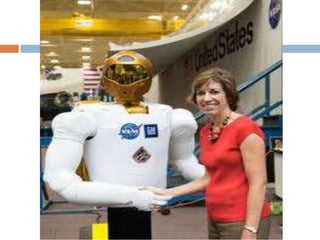
The Canadarm & Robonaut
   One of the greatest contributions Canada has
    made to the International Space Station was
    made possible by mechanical systems
   The Canadarm is a combination of several
    simple machines to create one complex one

   Robo-naut is the first robot astronaut that
    combines many different simple machines to
    create a human-like robot
Simple Machines
   The first machines were very simple devices,
    but each helped perform a task that made our
    lives even easier

   The first machines were all very different in
    design, but all had one common thing
     They   required humans as their source for energy
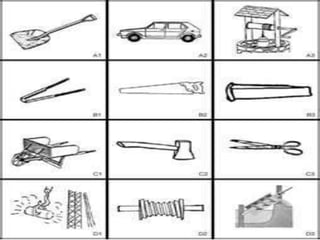
Listing Some Historic Tasks
Meeting the Same Need in
             Different Ways
   We use machines to perform tasks for us, we
    even use different machines to perform the
    same task,

   For example, in order to get water you just turn
    on your tap. You use a variety of systems to
    perform that.

   In the past it wasn’t so easy…
Cont…
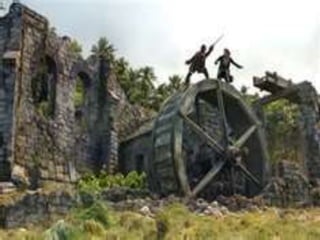
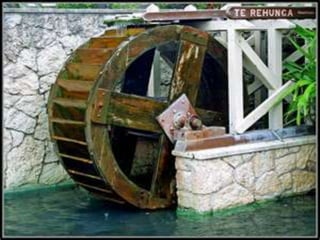
   People commonly used a water wheel or
    SAKIA to gather their water.
     This was a device that had buckets attached to a
     rotating wheel that turned when animals rotated
     another connected wheel
The Past Still Alive
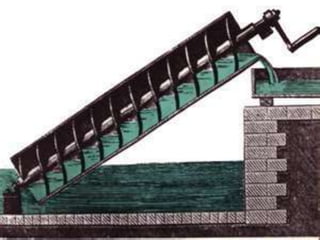
   The ARCHIMEDES SCREW was created by
    Archimedes to more efficiently lift water from
    its source for people to drink and use

   Leonardo Da Vinci used two of these screws
    to raise water up to a storage tank

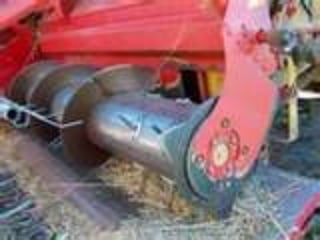
   Farmers use a modern day version of the
    Archimedes screw in their machines to move
    grain into trucks for transport
Simple Machines
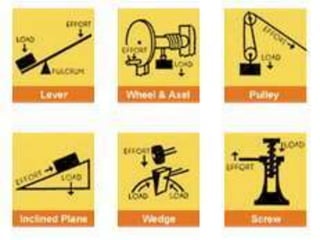
   There are 6 main simple machines that you
    must learn in this unit, and they are;
     Lever,
     Incline   plane
     Wedge
     Screw
     Pulley
     Wheel     and Axel

     Each have their own advantages and
      disadvantages
Lever
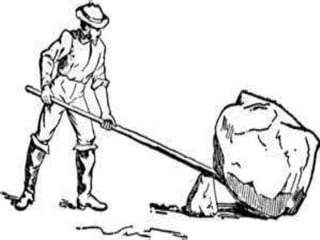
   Is a rigid bar or plank that can rotate around a
    pivot or fulcrum

   Levers are used to reduce the force needed to
    carry out tasks like pulling nails or opening
    bottles

   It can move larger loads than you could
    without using it
Three Types of Levers
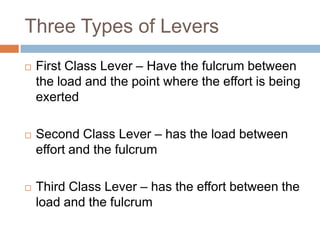
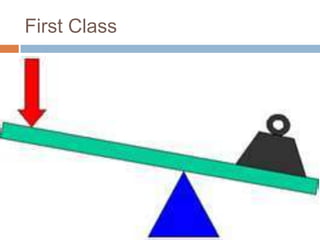
   First Class Lever – Have the fulcrum between
    the load and the point where the effort is being
    exerted

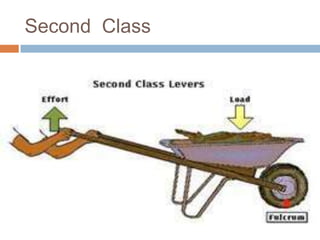
   Second Class Lever – has the load between
    effort and the fulcrum

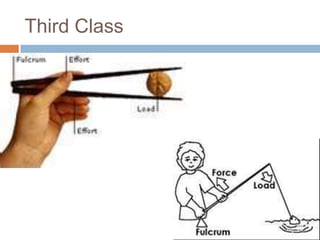
   Third Class Lever – has the effort between the
    load and the fulcrum
First Class
Second Class
Third Class
Incline Plane
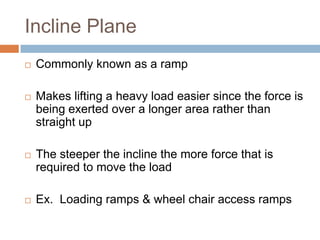
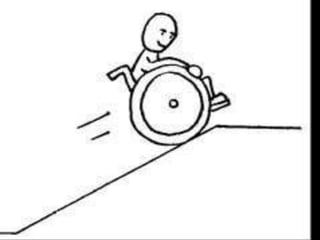
   Commonly known as a ramp

   Makes lifting a heavy load easier since the force is
    being exerted over a longer area rather than
    straight up

   The steeper the incline the more force that is
    required to move the load

   Ex. Loading ramps & wheel chair access ramps
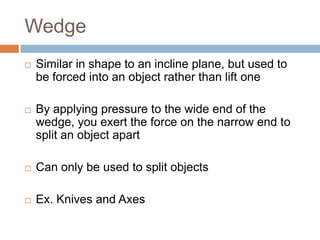
Wedge
   Similar in shape to an incline plane, but used to
    be forced into an object rather than lift one

   By applying pressure to the wide end of the
    wedge, you exert the force on the narrow end to
    split an object apart

   Can only be used to split objects

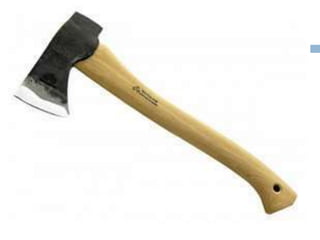
   Ex. Knives and Axes
Screw
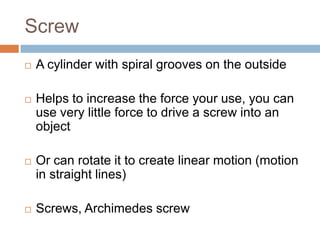
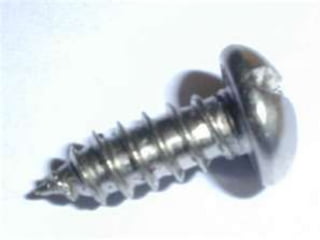
   A cylinder with spiral grooves on the outside

   Helps to increase the force your use, you can
    use very little force to drive a screw into an
    object

   Or can rotate it to create linear motion (motion
    in straight lines)

   Screws, Archimedes screw
Pulley
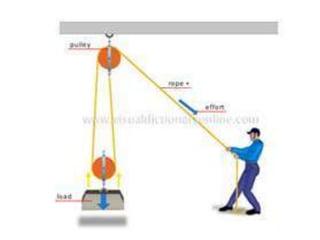
   Consists of wire, rope or cable moving on a
    grooved wheel

   Can be made up of one or many wheels, and can
    be fixed or movable

   Are commonly linked together to move and lift
    objects you normally could not lift

   Ex. Cranes and elevators
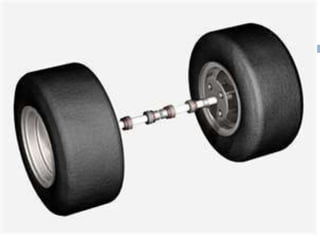
Wheel and Axel
   Combination of two different wheels of different
    diameters that turn together

   A longer motion on the wheel create a shorter but
    more powerful motion on the axel
       larger = wheel, Shorter = Axel

   You must turn a greater distance to apply a force

   Ex. Steering wheel and column in a car & a door
    knob
Unit d  - section 1.1

Unit d - section 1.1

  • 1.
  • 2.
    Where are MechanicalSystems Taking Us?  There have been remarkable improvements to our ways of life primarily due to Mechanical Systems  Some of the ways it has improved our lives are;  Vehicleengines  Medicine  Resource gathering  These are but a few of the contributions that this Unit will explore
  • 3.
    The Canadarm &Robonaut  One of the greatest contributions Canada has made to the International Space Station was made possible by mechanical systems  The Canadarm is a combination of several simple machines to create one complex one  Robo-naut is the first robot astronaut that combines many different simple machines to create a human-like robot
  • 6.
    Simple Machines  The first machines were very simple devices, but each helped perform a task that made our lives even easier  The first machines were all very different in design, but all had one common thing  They required humans as their source for energy
  • 8.
  • 9.
    Meeting the SameNeed in Different Ways  We use machines to perform tasks for us, we even use different machines to perform the same task,  For example, in order to get water you just turn on your tap. You use a variety of systems to perform that.  In the past it wasn’t so easy…
  • 10.
    Cont…  People commonly used a water wheel or SAKIA to gather their water.  This was a device that had buckets attached to a rotating wheel that turned when animals rotated another connected wheel
  • 13.
    The Past StillAlive  The ARCHIMEDES SCREW was created by Archimedes to more efficiently lift water from its source for people to drink and use  Leonardo Da Vinci used two of these screws to raise water up to a storage tank  Farmers use a modern day version of the Archimedes screw in their machines to move grain into trucks for transport
  • 16.
    Simple Machines  There are 6 main simple machines that you must learn in this unit, and they are;  Lever,  Incline plane  Wedge  Screw  Pulley  Wheel and Axel  Each have their own advantages and disadvantages
  • 18.
    Lever  Is a rigid bar or plank that can rotate around a pivot or fulcrum  Levers are used to reduce the force needed to carry out tasks like pulling nails or opening bottles  It can move larger loads than you could without using it
  • 20.
    Three Types ofLevers  First Class Lever – Have the fulcrum between the load and the point where the effort is being exerted  Second Class Lever – has the load between effort and the fulcrum  Third Class Lever – has the effort between the load and the fulcrum
  • 21.
  • 22.
  • 23.
  • 24.
    Incline Plane  Commonly known as a ramp  Makes lifting a heavy load easier since the force is being exerted over a longer area rather than straight up  The steeper the incline the more force that is required to move the load  Ex. Loading ramps & wheel chair access ramps
  • 26.
    Wedge  Similar in shape to an incline plane, but used to be forced into an object rather than lift one  By applying pressure to the wide end of the wedge, you exert the force on the narrow end to split an object apart  Can only be used to split objects  Ex. Knives and Axes
  • 28.
    Screw  A cylinder with spiral grooves on the outside  Helps to increase the force your use, you can use very little force to drive a screw into an object  Or can rotate it to create linear motion (motion in straight lines)  Screws, Archimedes screw
  • 30.
    Pulley  Consists of wire, rope or cable moving on a grooved wheel  Can be made up of one or many wheels, and can be fixed or movable  Are commonly linked together to move and lift objects you normally could not lift  Ex. Cranes and elevators
  • 32.
    Wheel and Axel  Combination of two different wheels of different diameters that turn together  A longer motion on the wheel create a shorter but more powerful motion on the axel  larger = wheel, Shorter = Axel  You must turn a greater distance to apply a force  Ex. Steering wheel and column in a car & a door knob