Chapter 8, Lesson 3
Objectives

  •   Describe the differences between liberal and
      conservative viewpoints.

  •   Analyze the reasons behind the rise of
      conservatism in the early 1980s.

  •   Explain why Ronald Reagan won the
      presidency in 1980.
Terms and People
•   liberal – a person who generally supports government
    intervention to help the needy and protect the rights of
    women and minorities
•   conservative – a person who generally supports limited
    government involvement in the economy and community
    help for the needy, and upholds traditional values
•   New Right – a resurgent political movement that was a
    coalition of several conservative groups
•   unfunded mandate – programs required but not paid for by
    the federal government
•   Moral Majority − a political organization founded by Jerry
    Falwell in 1979 to advance religious goals
What spurred the rise of conservatism in
the late 1970s and early 1980s?

After losing the 1964 election in a landslide,
conservatives built an organization that vigorously
promoted their goals and values.

In 1980, Ronald Reagan was elected president;
the modern conservative movement he
spearheaded deeply affected the nation’s policies
for decades.
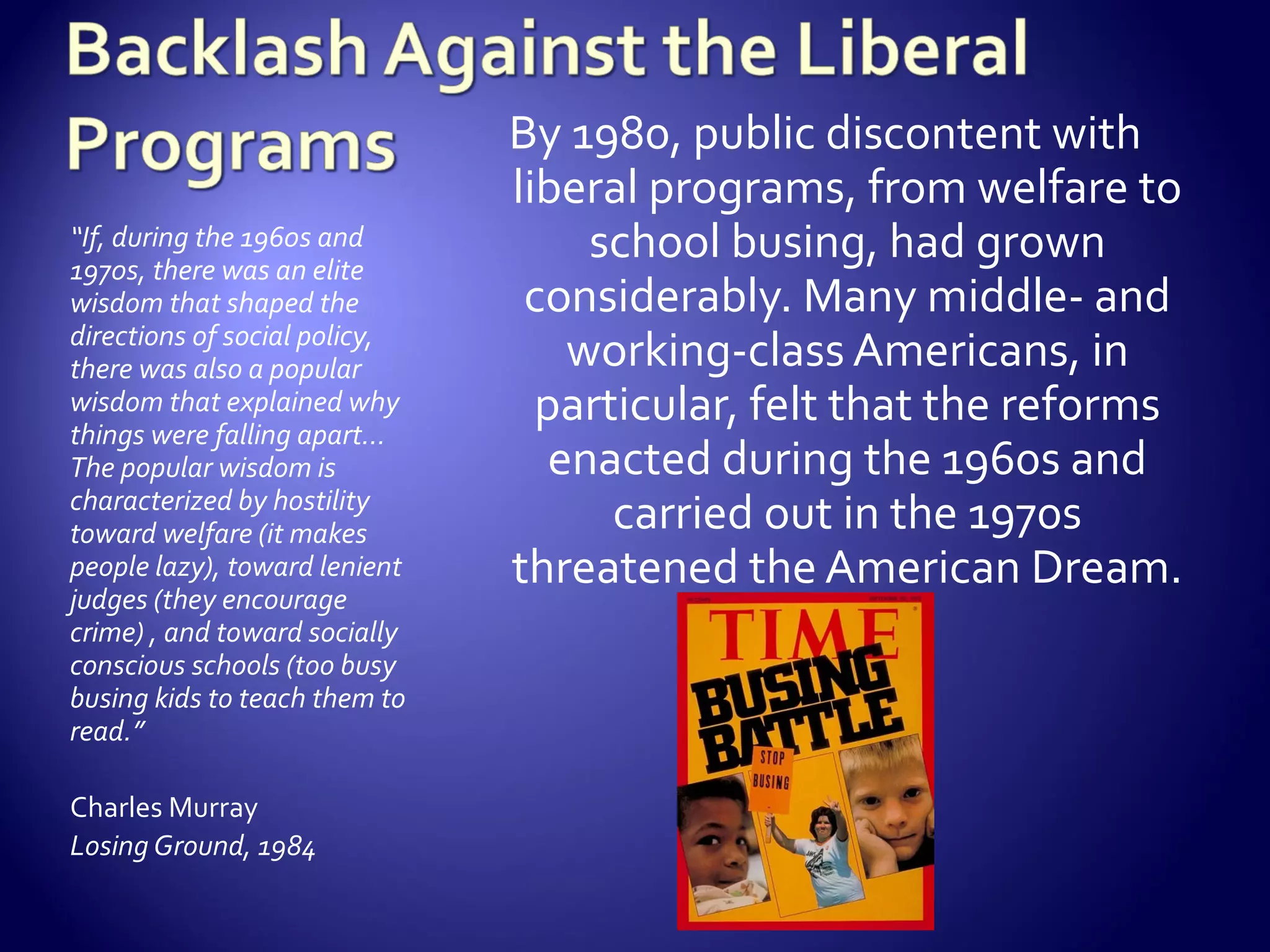
By 1980, public discontent with
                               liberal programs, from welfare to
“If, during the 1960s and
1970s, there was an elite
                                    school busing, had grown
wisdom that shaped the          considerably. Many middle- and
directions of social policy,
there was also a popular           working-class Americans, in
wisdom that explained why
things were falling apart…
                                 particular, felt that the reforms
The popular wisdom is             enacted during the 1960s and
characterized by hostility
toward welfare (it makes             carried out in the 1970s
people lazy), toward lenient   threatened the American Dream.
judges (they encourage
crime) , and toward socially
conscious schools (too busy
busing kids to teach them to
read.”

Charles Murray
Losing Ground, 1984
The major U.S. political parties in the
late 20th century were the Democrats
and Republicans.


 Democrats were often   Republicans were usually
 labeled liberals.      conservatives.
Liberals believed
government should:
• support social
  programs for the
  disadvantaged.
• protect the rights of
  minorities.
• regulate industry.
• rely on diplomacy to
  solve international
  problems.
Conservatives believed
government should:

• limit wasteful spending on
  social programs.
• reduce taxes.
• deregulate industry.
• rely on a strong national
  defense and actively fight
  communism in other
  countries.
• Some conservatives thought
                      that the new freedoms
                      exemplified by the
Liberals and          counterculture posed a
conservatives         danger to traditional society.
differed over
                    • Liberal programs, such as
social and
                      welfare and busing, were
political issues.
                      seen by some as threatening
                      the American dream.

                    • Conservatives thought that
                      taxes on citizens were too
                      high.
In the 1960s and 1970s, differences between
            the Republican and Democratic parties grew.
                   Liberal Democratic policies were
                           strongly criticized.


The Democratic            Public faith in        A resurgent
Party unraveled           the federal            conservative
in part because           government             movement called
of                        was weakened
                          by                     the New Right
•   the Vietnam                                  emerged, made
    War                  •   the Iran
                             hostage crisis.     up largely of
•   urban riots.
                                                 Republicans.
                         •   the oil crisis of
                             the 1970s.
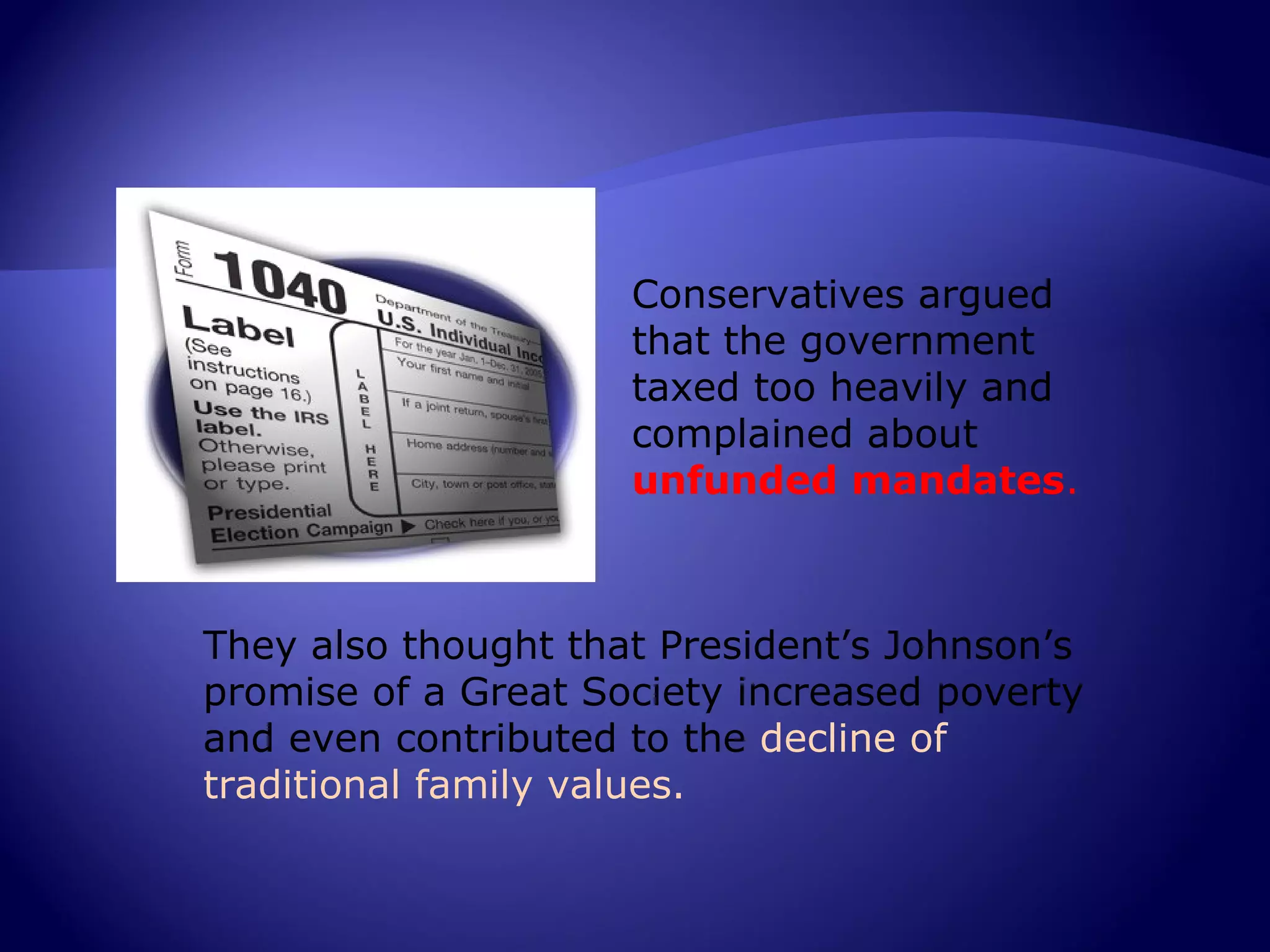
Conservatives argued
                     that the government
                     taxed too heavily and
                     complained about
                     unfunded mandates.


They also thought that President’s Johnson’s
promise of a Great Society increased poverty
and even contributed to the decline of
traditional family values.
Religious groups began to actively support the
conservative movement.


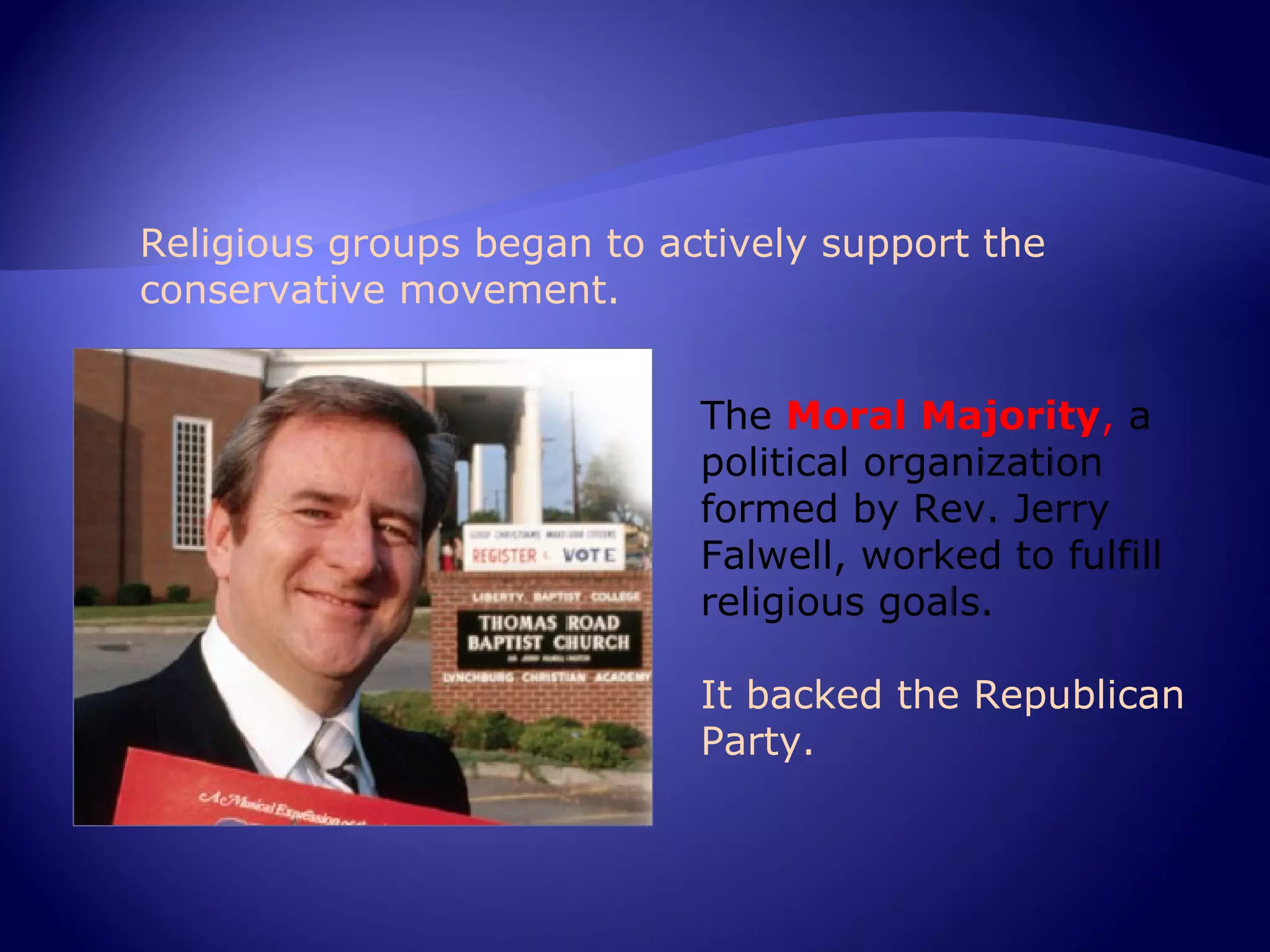
                            The Moral Majority, a
                            political organization
                            formed by Rev. Jerry
                            Falwell, worked to fulfill
                            religious goals.

                            It backed the Republican
                            Party.
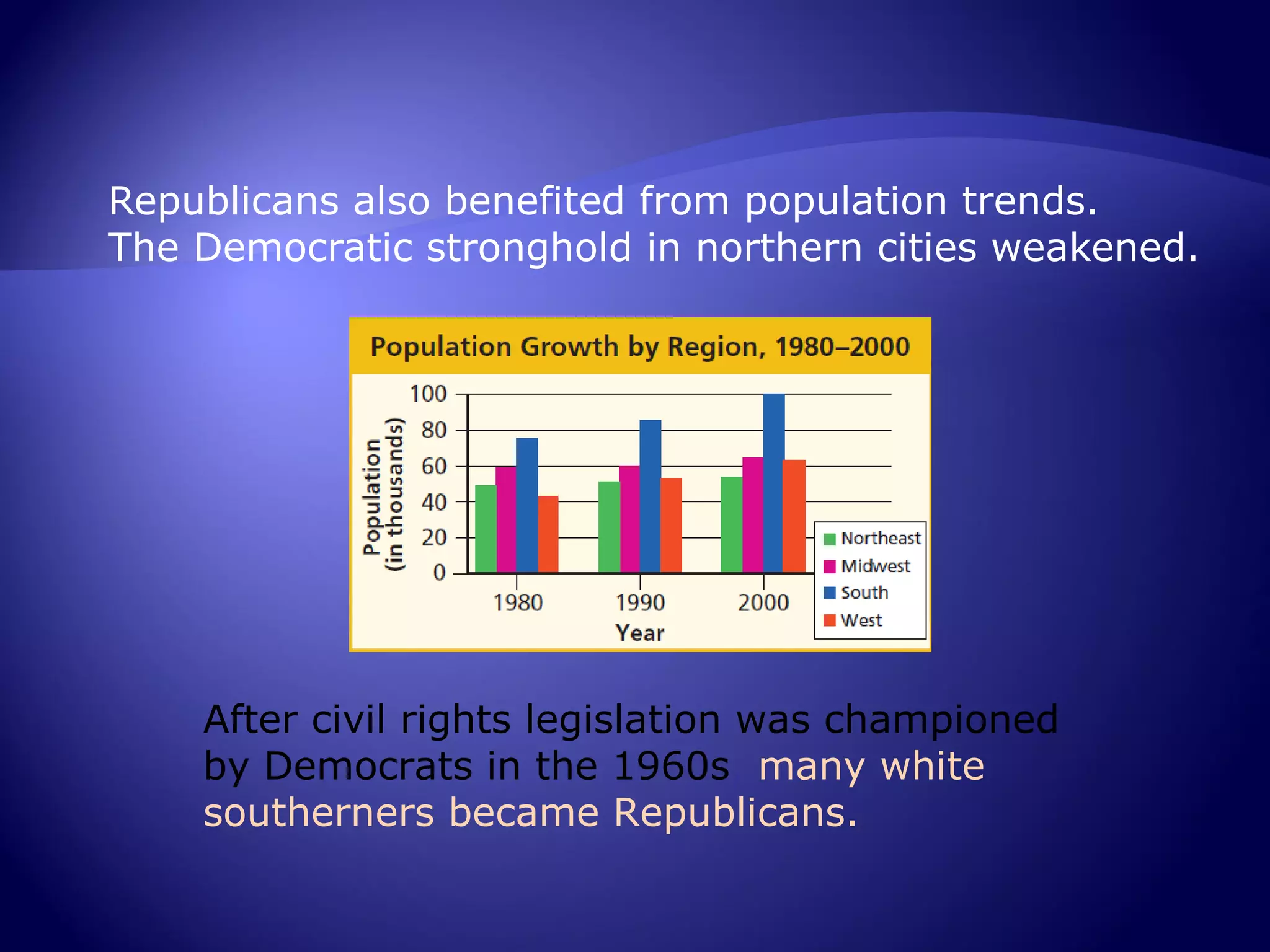
Republicans also benefited from population trends.
The Democratic stronghold in northern cities weakened.


    After civil rights legislation was championed
    by Democrats in the 1960s, many white
    southerners became Republicans.
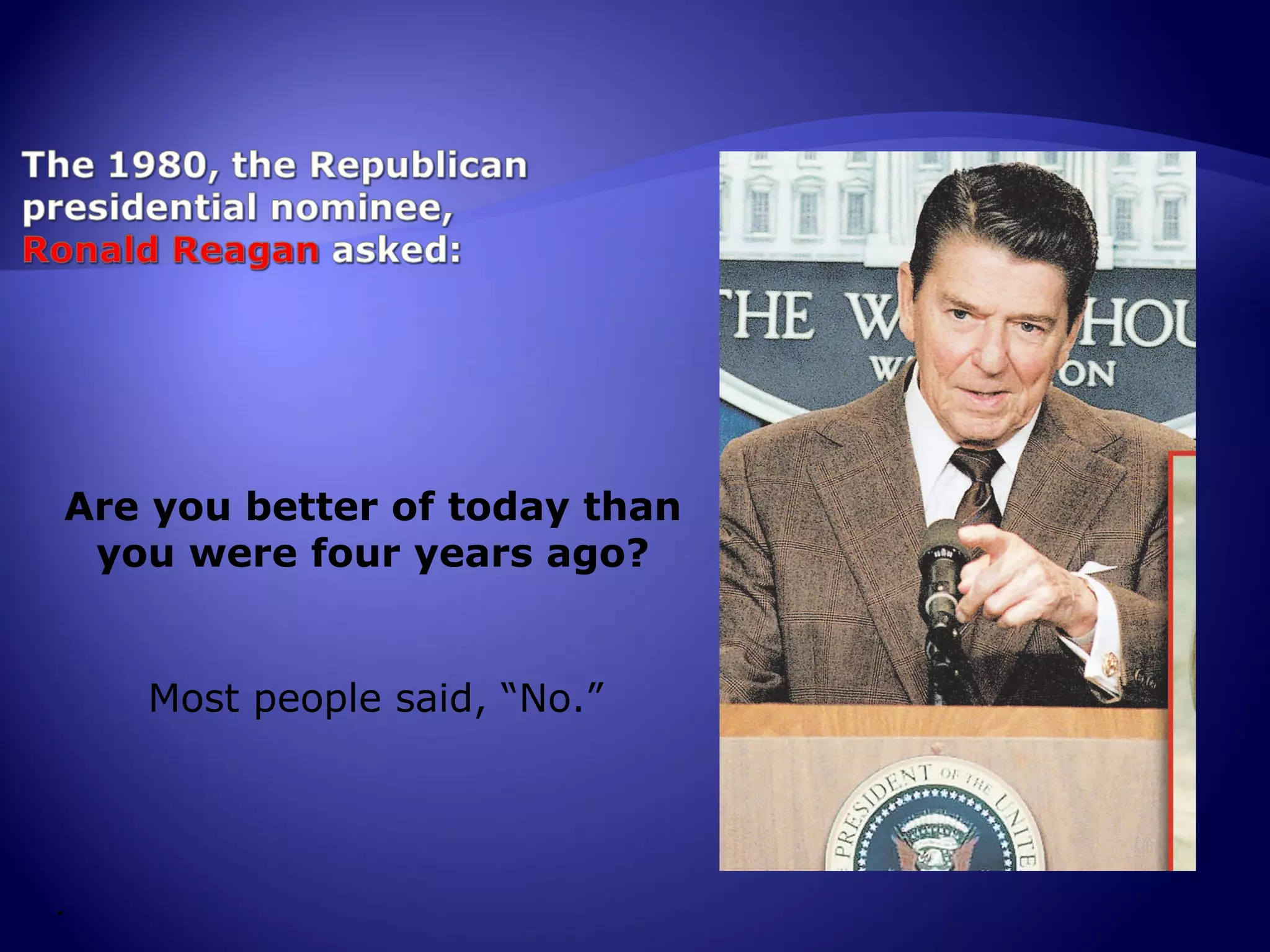
Are you better of today than
 you were four years ago?


    Most people said, “No.”


.
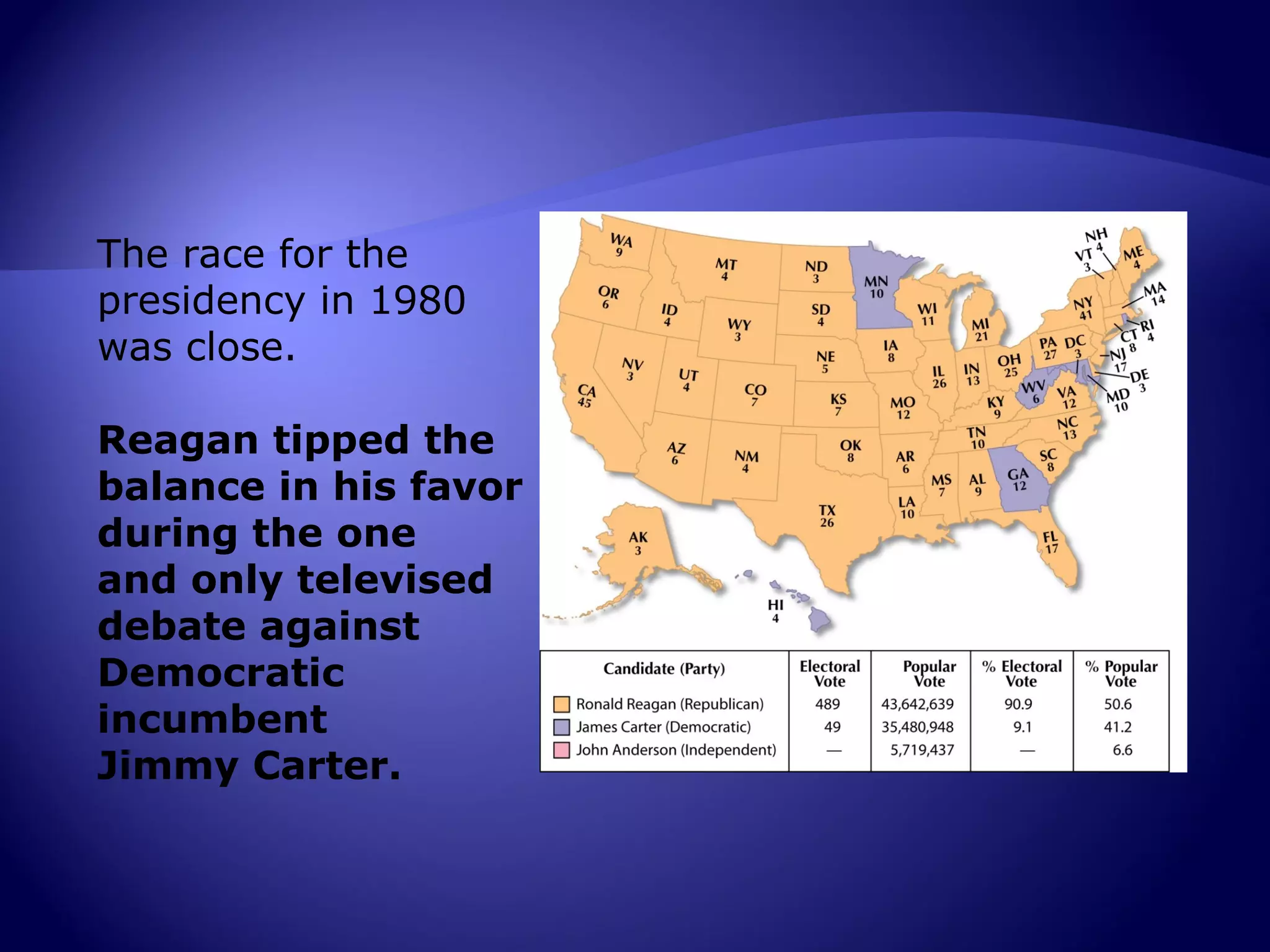
The race for the
presidency in 1980
was close.

Reagan tipped the
balance in his favor
during the one
and only televised
debate against
Democratic
incumbent
Jimmy Carter.
In 1980, the conservatives were back.


Ronald Reagan won the presidency with 50.6
percent of the popular vote.

The Republicans achieved the majority in the
Senate for the first time in 25 years.

Unit 8 lesson 3 the conservative movement grows

  • 1.
  • 2.
    Objectives • Describe the differences between liberal and conservative viewpoints. • Analyze the reasons behind the rise of conservatism in the early 1980s. • Explain why Ronald Reagan won the presidency in 1980.
  • 3.
    Terms and People • liberal – a person who generally supports government intervention to help the needy and protect the rights of women and minorities • conservative – a person who generally supports limited government involvement in the economy and community help for the needy, and upholds traditional values • New Right – a resurgent political movement that was a coalition of several conservative groups • unfunded mandate – programs required but not paid for by the federal government • Moral Majority − a political organization founded by Jerry Falwell in 1979 to advance religious goals
  • 4.
    What spurred therise of conservatism in the late 1970s and early 1980s? After losing the 1964 election in a landslide, conservatives built an organization that vigorously promoted their goals and values. In 1980, Ronald Reagan was elected president; the modern conservative movement he spearheaded deeply affected the nation’s policies for decades.
  • 5.
    By 1980, publicdiscontent with liberal programs, from welfare to “If, during the 1960s and 1970s, there was an elite school busing, had grown wisdom that shaped the considerably. Many middle- and directions of social policy, there was also a popular working-class Americans, in wisdom that explained why things were falling apart… particular, felt that the reforms The popular wisdom is enacted during the 1960s and characterized by hostility toward welfare (it makes carried out in the 1970s people lazy), toward lenient threatened the American Dream. judges (they encourage crime) , and toward socially conscious schools (too busy busing kids to teach them to read.” Charles Murray Losing Ground, 1984
  • 6.
    The major U.S.political parties in the late 20th century were the Democrats and Republicans. Democrats were often Republicans were usually labeled liberals. conservatives.
  • 7.
    Liberals believed government should: •support social programs for the disadvantaged. • protect the rights of minorities. • regulate industry. • rely on diplomacy to solve international problems.
  • 8.
    Conservatives believed government should: •limit wasteful spending on social programs. • reduce taxes. • deregulate industry. • rely on a strong national defense and actively fight communism in other countries.
  • 9.
    • Some conservativesthought that the new freedoms exemplified by the Liberals and counterculture posed a conservatives danger to traditional society. differed over • Liberal programs, such as social and welfare and busing, were political issues. seen by some as threatening the American dream. • Conservatives thought that taxes on citizens were too high.
  • 10.
    In the 1960sand 1970s, differences between the Republican and Democratic parties grew. Liberal Democratic policies were strongly criticized. The Democratic Public faith in A resurgent Party unraveled the federal conservative in part because government movement called of was weakened by the New Right • the Vietnam emerged, made War • the Iran hostage crisis. up largely of • urban riots. Republicans. • the oil crisis of the 1970s.
  • 11.
    Conservatives argued that the government taxed too heavily and complained about unfunded mandates. They also thought that President’s Johnson’s promise of a Great Society increased poverty and even contributed to the decline of traditional family values.
  • 12.
    Religious groups beganto actively support the conservative movement. The Moral Majority, a political organization formed by Rev. Jerry Falwell, worked to fulfill religious goals. It backed the Republican Party.
  • 13.
    Republicans also benefitedfrom population trends. The Democratic stronghold in northern cities weakened. After civil rights legislation was championed by Democrats in the 1960s, many white southerners became Republicans.
  • 14.
    Are you betterof today than you were four years ago? Most people said, “No.” .
  • 15.
    The race forthe presidency in 1980 was close. Reagan tipped the balance in his favor during the one and only televised debate against Democratic incumbent Jimmy Carter.
  • 16.
    In 1980, theconservatives were back. Ronald Reagan won the presidency with 50.6 percent of the popular vote. The Republicans achieved the majority in the Senate for the first time in 25 years.