U.S. Involvement
           Grows
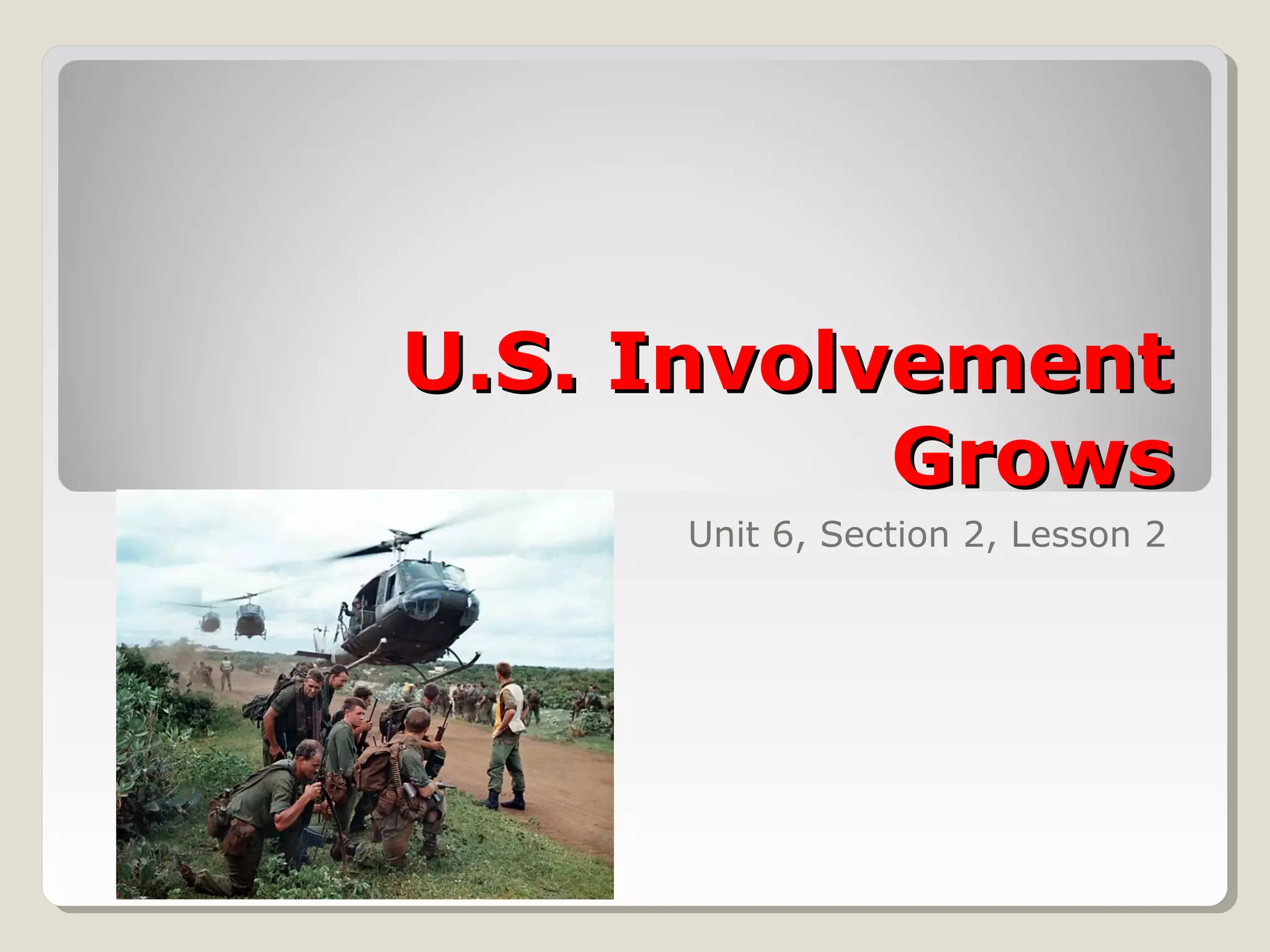
     Unit 6, Section 2, Lesson 2
Objectives

  •   Identify the factors that caused President
      Johnson to increase American troop strength
      in Vietnam.

  •   Assess the nature of the war in Vietnam and
      the difficulties faced by both sides.

  •   Evaluate the effects of low morale on
      American troops and on the home front.
Terms and People

  •   William Westmoreland − the American military
      commander in South Vietnam
  •   napalm − jellied gasoline that was dropped in
      canisters and exploded on impact, setting fire to
      large areas
  •   hawk − a supporter of Johnson’s war policies
  •   dove − an opponent Johnson’s war policies
What were the causes and effects of
America’s growing involvement in the
Vietnam War?

As the war escalated, America’s leaders and
soldiers found themselves in a quagmire.

Eventually the war weakened the American
economy, divided the people, and eroded the
nation’s morale.
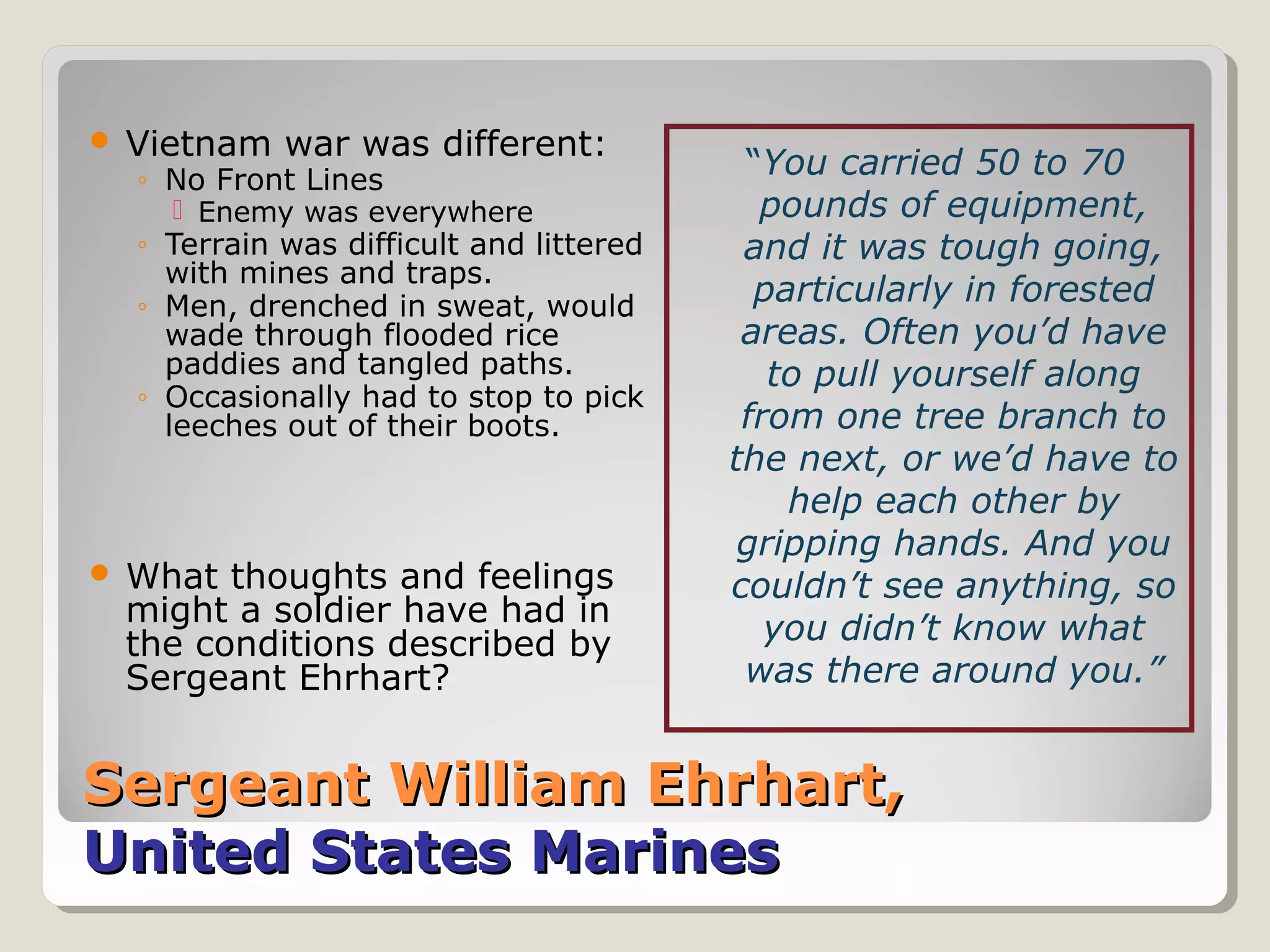
 Vietnam   war was different:
  ◦ No Front Lines
                                          “You carried 50 to 70
     Enemy was everywhere                 pounds of equipment,
  ◦ Terrain was difficult and littered    and it was tough going,
    with mines and traps.
  ◦ Men, drenched in sweat, would          particularly in forested
    wade through flooded rice             areas. Often you’d have
    paddies and tangled paths.              to pull yourself along
  ◦ Occasionally had to stop to pick
    leeches out of their boots.           from one tree branch to
                                         the next, or we’d have to
                                             help each other by
                                          gripping hands. And you
 What thoughts and feelings             couldn’t see anything, so
 might a soldier have had in
 the conditions described by                you didn’t know what
 Sergeant Ehrhart?                        was there around you.”


Sergeant William Ehrhart,
United States Marines
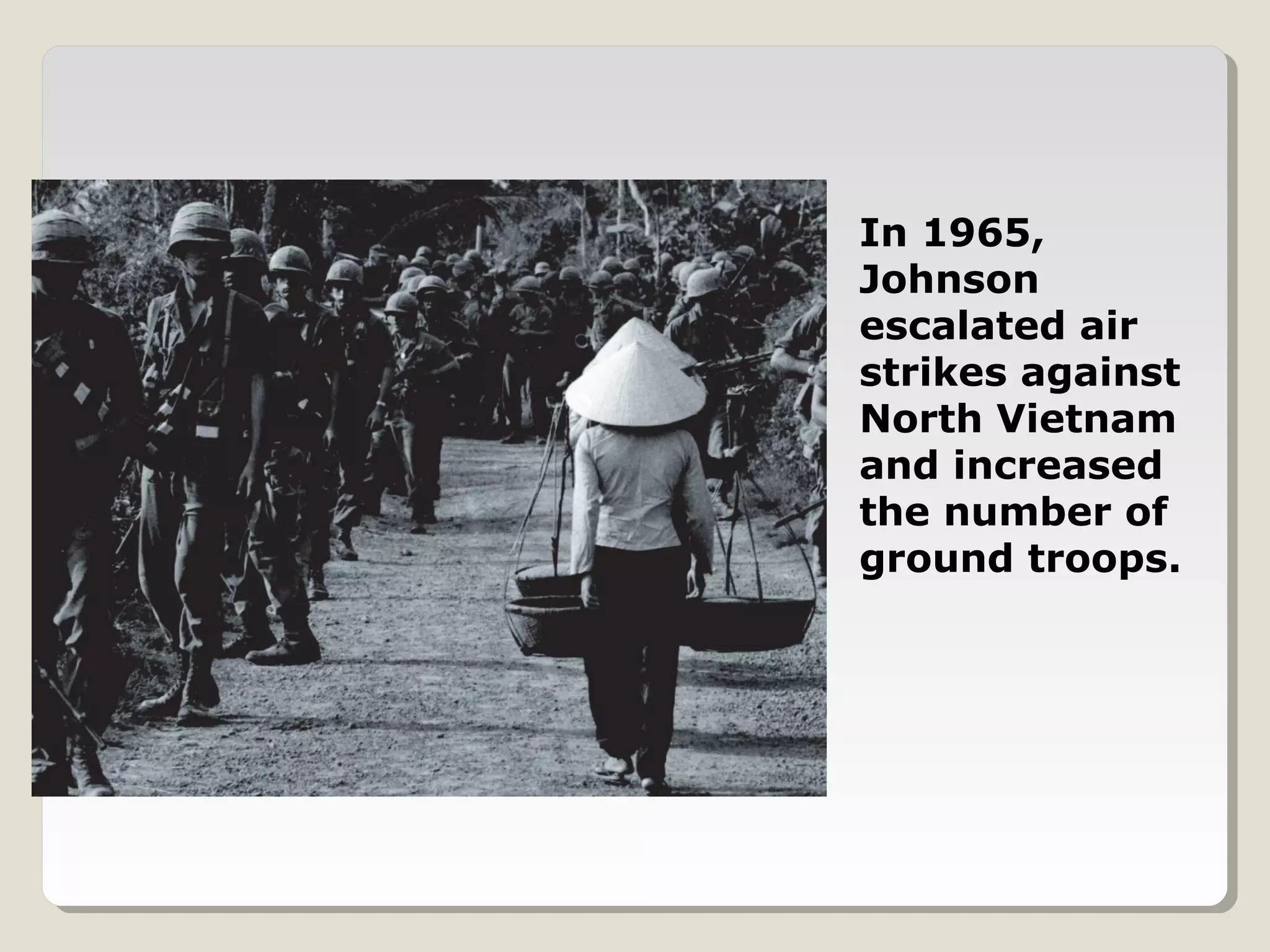
In 1965,
Johnson
escalated air
strikes against
North Vietnam
and increased
the number of
ground troops.
The U.S. plan, called Operation Rolling
Thunder, was to Americanize the war effort.


The U.S. would use its superior war technology to
win the conflict quickly.

Johnson’s advisers, including William
Westmoreland, the American commander in
Vietnam, supported the increased military
presence.
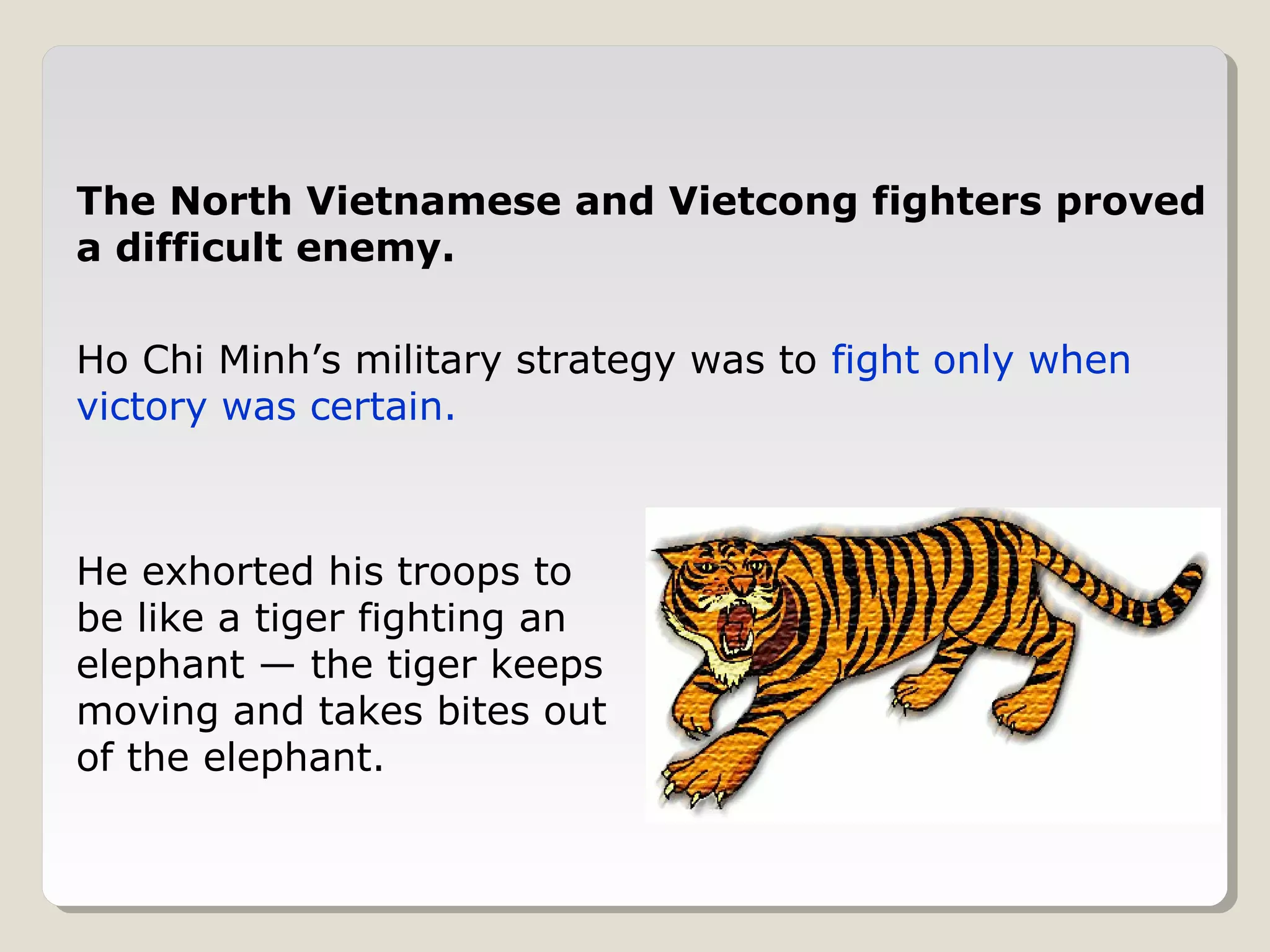
The North Vietnamese and Vietcong fighters proved
a difficult enemy.

Ho Chi Minh’s military strategy was to fight only when
victory was certain.


He exhorted his troops to
be like a tiger fighting an
elephant — the tiger keeps
moving and takes bites out
of the elephant.
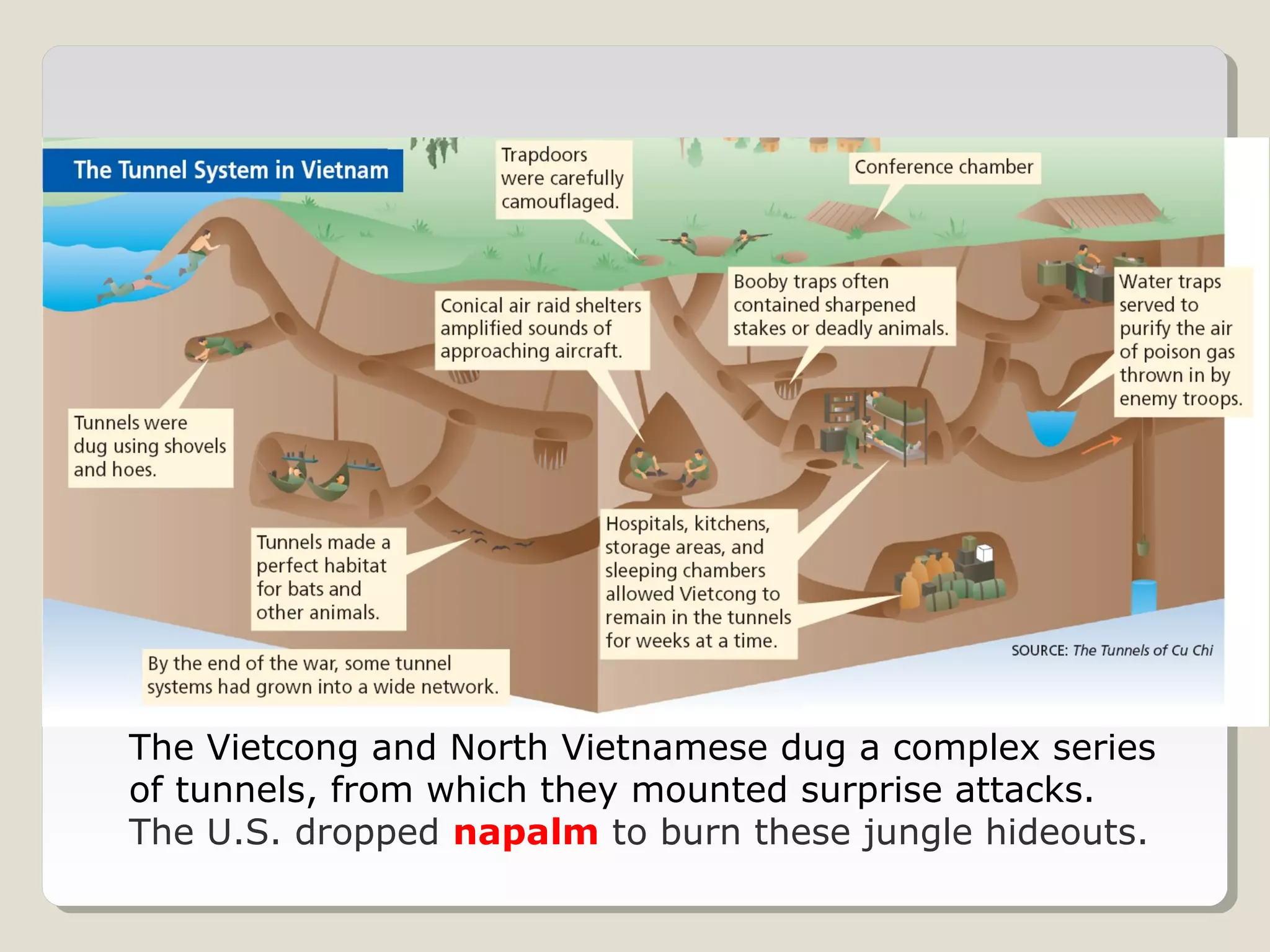
The Vietcong and North Vietnamese dug a complex series
of tunnels, from which they mounted surprise attacks.
The U.S. dropped napalm to burn these jungle hideouts.
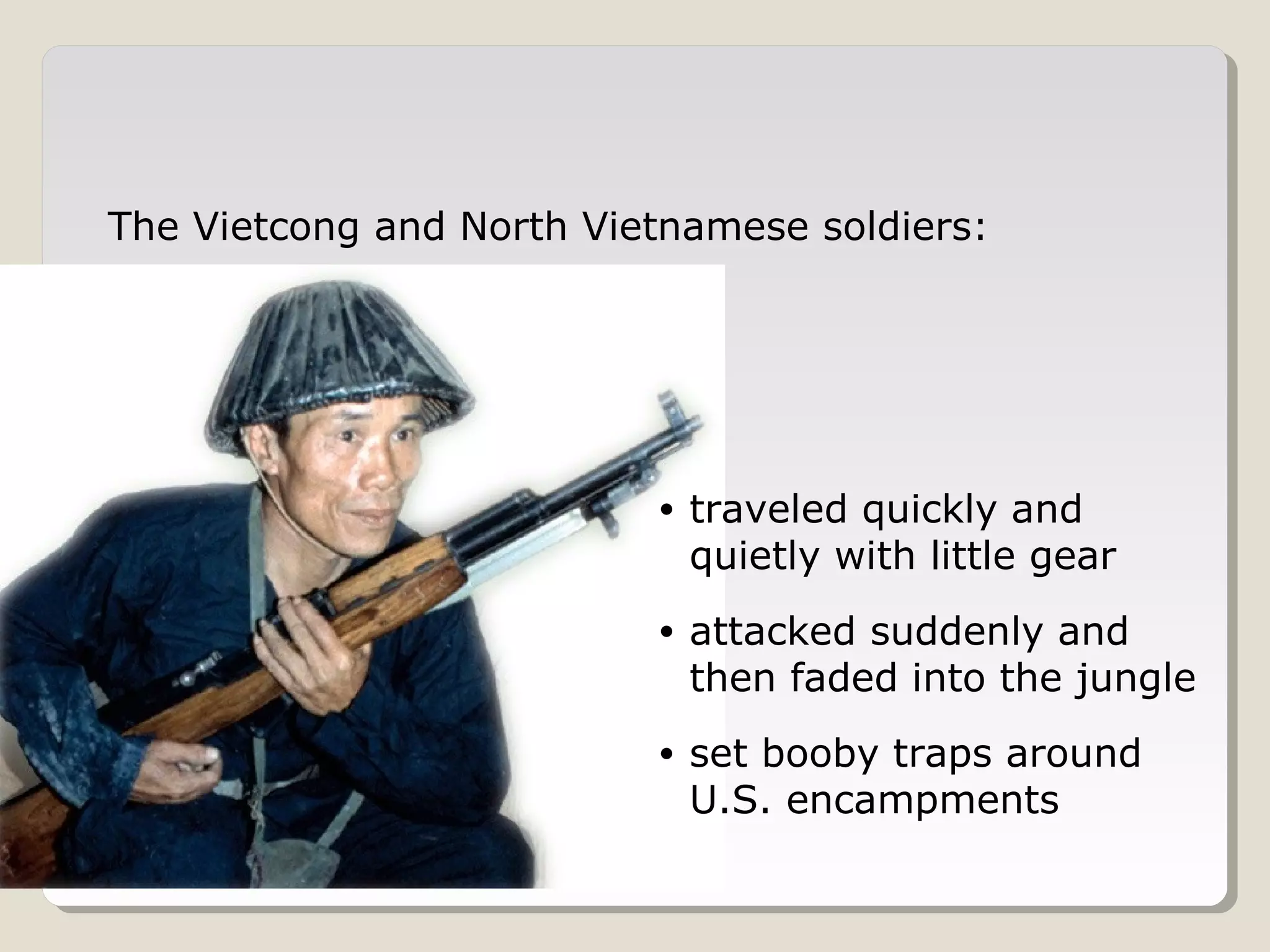
The Vietcong and North Vietnamese soldiers:


                          •   traveled quickly and
                              quietly with little gear
                          •   attacked suddenly and
                              then faded into the jungle
                          •   set booby traps around
                              U.S. encampments
The war grew increasingly
             difficult and frustrating.

•   Many American soldiers had been drafted and
    did not see how the war helped U.S. interests.

•   The lack of progress toward victory in Vietnam
    increased doubt about the war.

•   The war strained America’s economy.
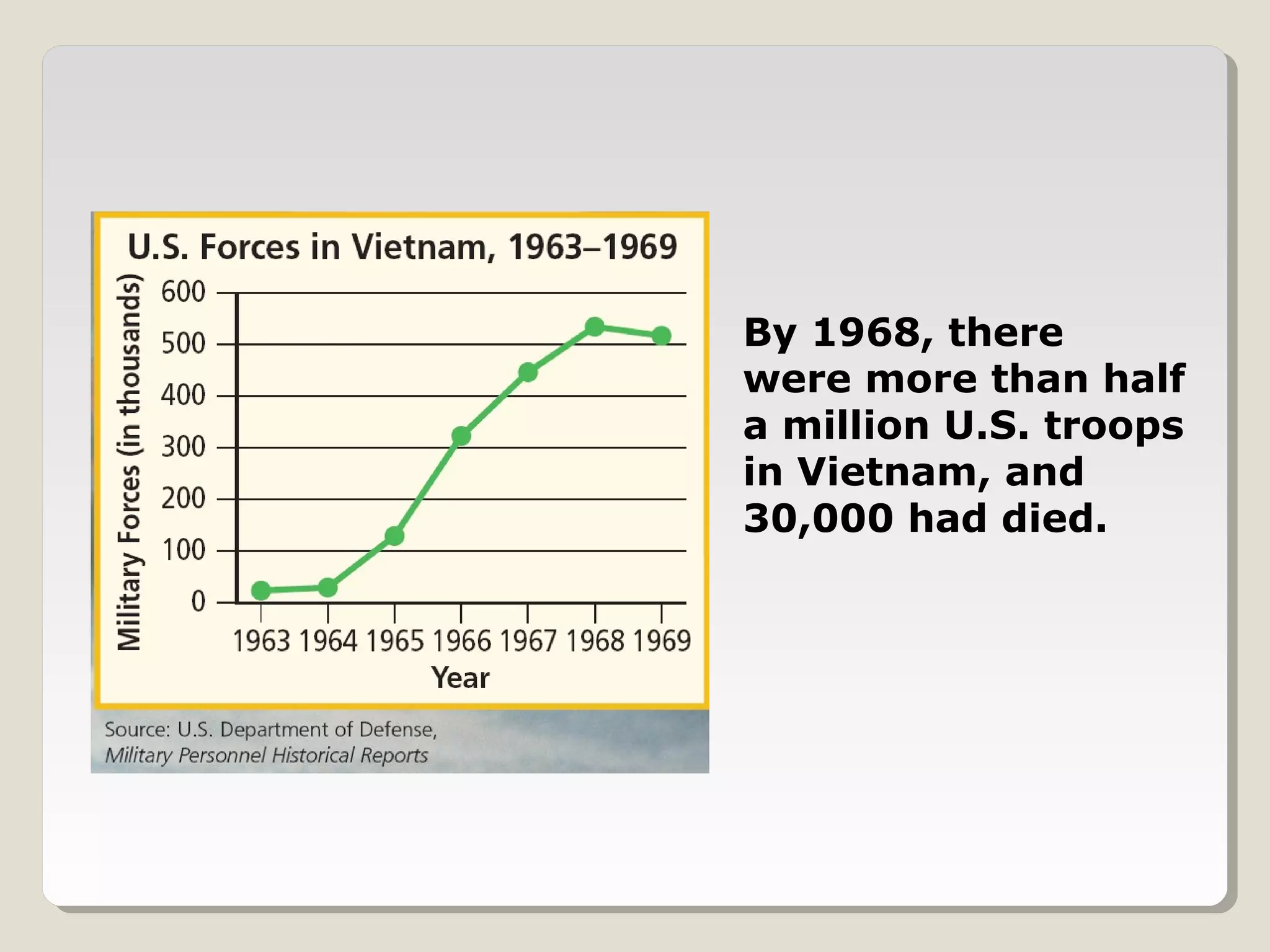
By 1968, there
were more than half
a million U.S. troops
in Vietnam, and
30,000 had died.
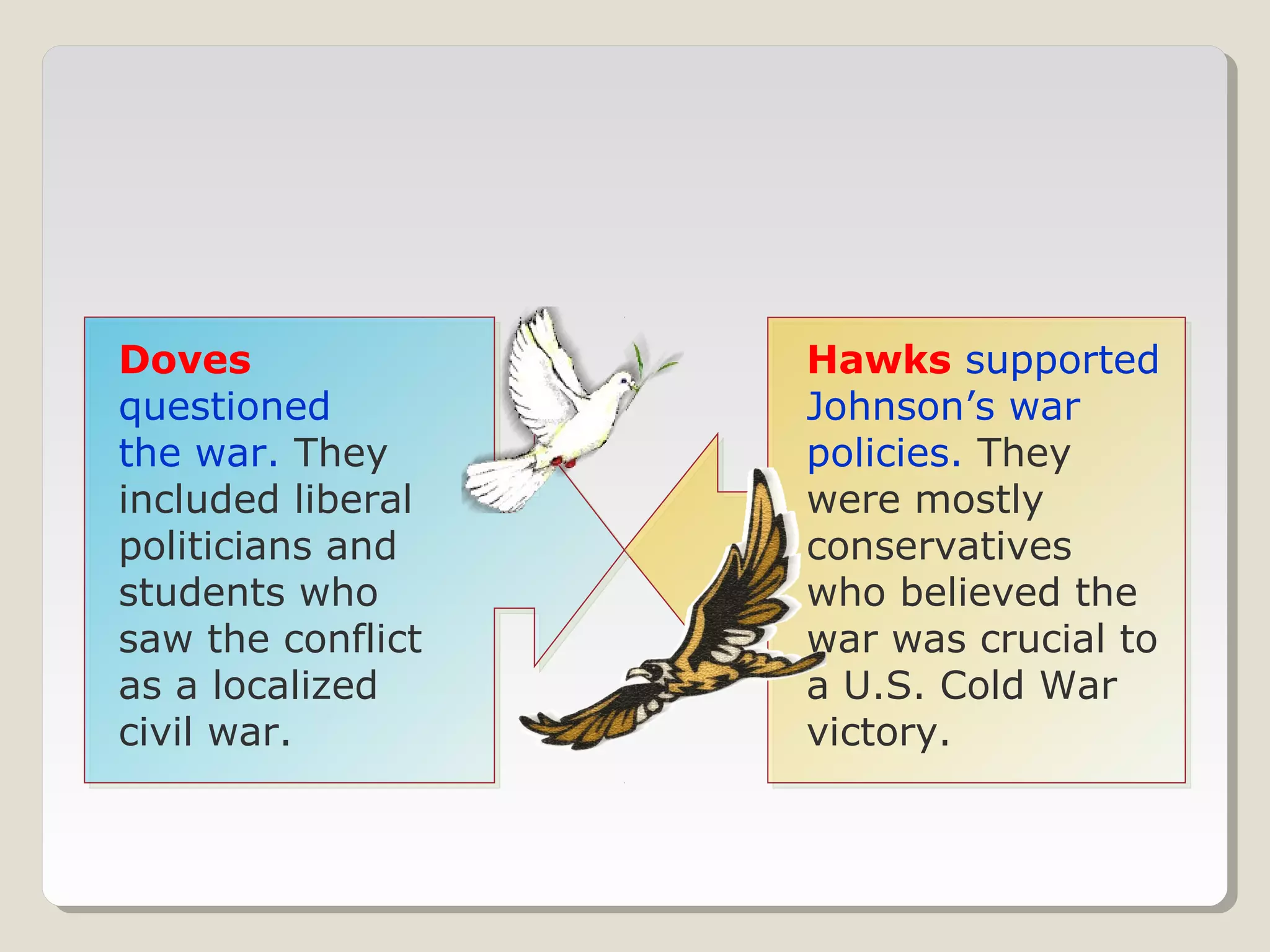
Doves              Hawks supported
questioned         Johnson’s war
the war. They      policies. They
included liberal   were mostly
politicians and    conservatives
students who       who believed the
saw the conflict   war was crucial to
as a localized     a U.S. Cold War
civil war.         victory.

Unit 6 section 2 lesson 2 us involvement grows

  • 1.
    U.S. Involvement Grows Unit 6, Section 2, Lesson 2
  • 2.
    Objectives • Identify the factors that caused President Johnson to increase American troop strength in Vietnam. • Assess the nature of the war in Vietnam and the difficulties faced by both sides. • Evaluate the effects of low morale on American troops and on the home front.
  • 3.
    Terms and People • William Westmoreland − the American military commander in South Vietnam • napalm − jellied gasoline that was dropped in canisters and exploded on impact, setting fire to large areas • hawk − a supporter of Johnson’s war policies • dove − an opponent Johnson’s war policies
  • 4.
    What were thecauses and effects of America’s growing involvement in the Vietnam War? As the war escalated, America’s leaders and soldiers found themselves in a quagmire. Eventually the war weakened the American economy, divided the people, and eroded the nation’s morale.
  • 5.
     Vietnam war was different: ◦ No Front Lines “You carried 50 to 70  Enemy was everywhere pounds of equipment, ◦ Terrain was difficult and littered and it was tough going, with mines and traps. ◦ Men, drenched in sweat, would particularly in forested wade through flooded rice areas. Often you’d have paddies and tangled paths. to pull yourself along ◦ Occasionally had to stop to pick leeches out of their boots. from one tree branch to the next, or we’d have to help each other by gripping hands. And you  What thoughts and feelings couldn’t see anything, so might a soldier have had in the conditions described by you didn’t know what Sergeant Ehrhart? was there around you.” Sergeant William Ehrhart, United States Marines
  • 6.
    In 1965, Johnson escalated air strikesagainst North Vietnam and increased the number of ground troops.
  • 7.
    The U.S. plan,called Operation Rolling Thunder, was to Americanize the war effort. The U.S. would use its superior war technology to win the conflict quickly. Johnson’s advisers, including William Westmoreland, the American commander in Vietnam, supported the increased military presence.
  • 8.
    The North Vietnameseand Vietcong fighters proved a difficult enemy. Ho Chi Minh’s military strategy was to fight only when victory was certain. He exhorted his troops to be like a tiger fighting an elephant — the tiger keeps moving and takes bites out of the elephant.
  • 9.
    The Vietcong andNorth Vietnamese dug a complex series of tunnels, from which they mounted surprise attacks. The U.S. dropped napalm to burn these jungle hideouts.
  • 10.
    The Vietcong andNorth Vietnamese soldiers: • traveled quickly and quietly with little gear • attacked suddenly and then faded into the jungle • set booby traps around U.S. encampments
  • 11.
    The war grewincreasingly difficult and frustrating. • Many American soldiers had been drafted and did not see how the war helped U.S. interests. • The lack of progress toward victory in Vietnam increased doubt about the war. • The war strained America’s economy.
  • 12.
    By 1968, there weremore than half a million U.S. troops in Vietnam, and 30,000 had died.
  • 13.
    Doves Hawks supported questioned Johnson’s war the war. They policies. They included liberal were mostly politicians and conservatives students who who believed the saw the conflict war was crucial to as a localized a U.S. Cold War civil war. victory.