Unit 6, Section 2, Lesson 4
Objectives

  •   Assess Nixon’s new approach to the war, and
      explain why protests continued.

  •   Explain what led to the Paris Peace Accords
      and why South Vietnam eventually fell to the
      communists.

  •   Evaluate the impact of the Vietnam War on
      the United States.
Terms and People

•   Vietnamization − Nixon’s plan for U.S. forces to withdraw and
    South Vietnam forces to assume more combat duties
•   Paris Peace Accords − a 1973 agreement between the United
    States, South Vietnam, North Vietnam, and the Vietcong for a
    cease-fire and U.S. troop withdrawal from South Vietnam
•   My Lai − a village in South Vietnam where U.S. soldiers killed
    unarmed civilians
•   Pentagon Papers − classified government history of U.S.
    involvement in Vietnam, published by The New York Times in 1971
•   War Powers Act − passed in 1973, this act restricted the
    President’s war-making powers
How did the Vietnam War end, and
what were its lasting effects?

Nixon withdrew American troops from South
Vietnam, but the impact of the war endured.

Americans reexamined the power of the
presidency, the struggle against communism,
and America’s overall role in the world.
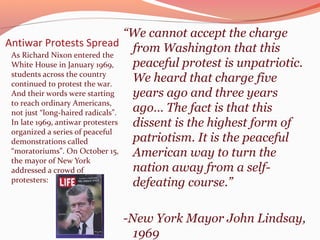
“We cannot accept the charge
Antiwar Protests Spread from Washington that this
 As Richard Nixon entered the
 White House in January 1969,      peaceful protest is unpatriotic.
 students across the country
 continued to protest the war.
                                   We heard that charge five
 And their words were starting     years ago and three years
 to reach ordinary Americans,
 not just “long-haired radicals”.  ago… The fact is that this
 In late 1969, antiwar protesters  dissent is the highest form of
 organized a series of peaceful
 demonstrations called             patriotism. It is the peaceful
 “moratoriums”. On October 15,     American way to turn the
 the mayor of New York
 addressed a crowd of              nation away from a self-
 protesters:                       defeating course.”

                          -New York Mayor John Lindsay,
                            1969
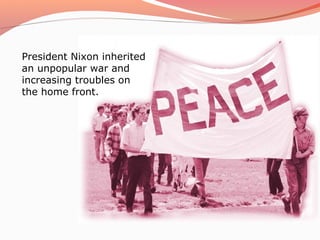
President Nixon inherited
an unpopular war and
increasing troubles on
the home front.
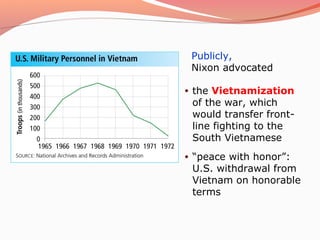
Publicly,
    Nixon advocated

•   the Vietnamization
    of the war, which
    would transfer front-
    line fighting to the
    South Vietnamese
•   “peace with honor”:
    U.S. withdrawal from
    Vietnam on honorable
    terms
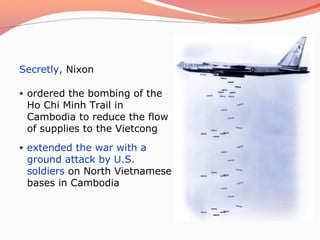
Secretly, Nixon

•   ordered the bombing of the
    Ho Chi Minh Trail in
    Cambodia to reduce the flow
    of supplies to the Vietcong
•   extended the war with a
    ground attack by U.S.
    soldiers on North Vietnamese
    bases in Cambodia
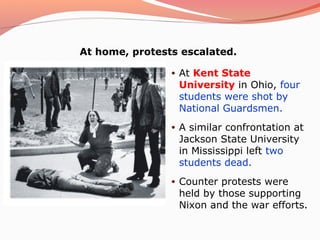
At home, protests escalated.

                •   At Kent State
                    University in Ohio, four
                    students were shot by
                    National Guardsmen.
                •   A similar confrontation at
                    Jackson State University
                    in Mississippi left two
                    students dead.
                •   Counter protests were
                    held by those supporting
                    Nixon and the war efforts.
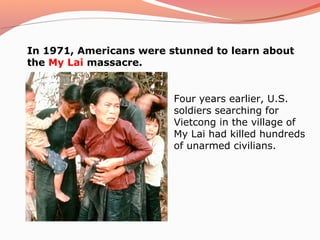
In 1971, Americans were stunned to learn about
the My Lai massacre.


                         Four years earlier, U.S.
                         soldiers searching for
                         Vietcong in the village of
                         My Lai had killed hundreds
                         of unarmed civilians.
The publication of the Pentagon Papers further
shocked the nation.


The report revealed that American leaders had
lied to Congress and failed to inform the public
fully about the American involvement in Vietnam.


Nixon tried to stop publication of the Pentagon
Papers, but The New York Times published the
report in 1971.
In January 1973, the war finally ended with
the signing of the Paris Peace Accords.

•   The United States, South Vietnam, North
    Vietnam, and the Vietcong would stop fighting.
•   U.S. troops would withdraw from South
    Vietnam.
•   North Vietnamese troops would remain in South
    Vietnam.
•   South Vietnam’s noncommunist government
    would remain in power.
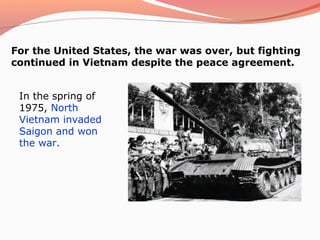
For the United States, the war was over, but fighting
continued in Vietnam despite the peace agreement.


 In the spring of
 1975, North
 Vietnam invaded
 Saigon and won
 the war.
The Vietnam War had a lasting effect
     on American life.

•   More than 58,000 Americans died in Vietnam.
•   It would be years before Vietnam veterans were
    acknowledged for their sacrifices.
•   The war undermined Americans’ trust in their
    leaders.
•   Americans became reluctant to intervene in
    other nations’ affairs.
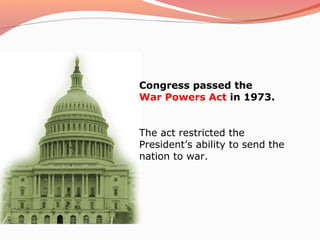
Congress passed the
War Powers Act in 1973.


The act restricted the
President’s ability to send the
nation to war.
On Feb. 27, 1968, CBS News anchor Walter Cronkite
– "the most trusted man in America" – ended a special
broadcast with a rare editorial. Having just returned
from a trip to South Vietnam, Cronkite told viewers that
the war could not be won:

“To say that we are mired in stalemate seems the only
    realistic, yet unsatisfactory, conclusion. … It is
increasingly clear to this reporter that the only rational
 way out, then, will be to negotiate, not as victors, but
as an honorable people who lived up to their pledge to
   defend democracy, and did the best they could.”

Unit 6 section 2 lesson 4 the wars end and impact-1

  • 1.
    Unit 6, Section2, Lesson 4
  • 2.
    Objectives • Assess Nixon’s new approach to the war, and explain why protests continued. • Explain what led to the Paris Peace Accords and why South Vietnam eventually fell to the communists. • Evaluate the impact of the Vietnam War on the United States.
  • 3.
    Terms and People • Vietnamization − Nixon’s plan for U.S. forces to withdraw and South Vietnam forces to assume more combat duties • Paris Peace Accords − a 1973 agreement between the United States, South Vietnam, North Vietnam, and the Vietcong for a cease-fire and U.S. troop withdrawal from South Vietnam • My Lai − a village in South Vietnam where U.S. soldiers killed unarmed civilians • Pentagon Papers − classified government history of U.S. involvement in Vietnam, published by The New York Times in 1971 • War Powers Act − passed in 1973, this act restricted the President’s war-making powers
  • 4.
    How did theVietnam War end, and what were its lasting effects? Nixon withdrew American troops from South Vietnam, but the impact of the war endured. Americans reexamined the power of the presidency, the struggle against communism, and America’s overall role in the world.
  • 5.
    “We cannot acceptthe charge Antiwar Protests Spread from Washington that this As Richard Nixon entered the White House in January 1969, peaceful protest is unpatriotic. students across the country continued to protest the war. We heard that charge five And their words were starting years ago and three years to reach ordinary Americans, not just “long-haired radicals”. ago… The fact is that this In late 1969, antiwar protesters dissent is the highest form of organized a series of peaceful demonstrations called patriotism. It is the peaceful “moratoriums”. On October 15, American way to turn the the mayor of New York addressed a crowd of nation away from a self- protesters: defeating course.” -New York Mayor John Lindsay, 1969
  • 6.
    President Nixon inherited anunpopular war and increasing troubles on the home front.
  • 7.
    Publicly, Nixon advocated • the Vietnamization of the war, which would transfer front- line fighting to the South Vietnamese • “peace with honor”: U.S. withdrawal from Vietnam on honorable terms
  • 8.
    Secretly, Nixon • ordered the bombing of the Ho Chi Minh Trail in Cambodia to reduce the flow of supplies to the Vietcong • extended the war with a ground attack by U.S. soldiers on North Vietnamese bases in Cambodia
  • 9.
    At home, protestsescalated. • At Kent State University in Ohio, four students were shot by National Guardsmen. • A similar confrontation at Jackson State University in Mississippi left two students dead. • Counter protests were held by those supporting Nixon and the war efforts.
  • 10.
    In 1971, Americanswere stunned to learn about the My Lai massacre. Four years earlier, U.S. soldiers searching for Vietcong in the village of My Lai had killed hundreds of unarmed civilians.
  • 11.
    The publication ofthe Pentagon Papers further shocked the nation. The report revealed that American leaders had lied to Congress and failed to inform the public fully about the American involvement in Vietnam. Nixon tried to stop publication of the Pentagon Papers, but The New York Times published the report in 1971.
  • 12.
    In January 1973,the war finally ended with the signing of the Paris Peace Accords. • The United States, South Vietnam, North Vietnam, and the Vietcong would stop fighting. • U.S. troops would withdraw from South Vietnam. • North Vietnamese troops would remain in South Vietnam. • South Vietnam’s noncommunist government would remain in power.
  • 13.
    For the UnitedStates, the war was over, but fighting continued in Vietnam despite the peace agreement. In the spring of 1975, North Vietnam invaded Saigon and won the war.
  • 14.
    The Vietnam Warhad a lasting effect on American life. • More than 58,000 Americans died in Vietnam. • It would be years before Vietnam veterans were acknowledged for their sacrifices. • The war undermined Americans’ trust in their leaders. • Americans became reluctant to intervene in other nations’ affairs.
  • 15.
    Congress passed the WarPowers Act in 1973. The act restricted the President’s ability to send the nation to war.
  • 16.
    On Feb. 27,1968, CBS News anchor Walter Cronkite – "the most trusted man in America" – ended a special broadcast with a rare editorial. Having just returned from a trip to South Vietnam, Cronkite told viewers that the war could not be won: “To say that we are mired in stalemate seems the only realistic, yet unsatisfactory, conclusion. … It is increasingly clear to this reporter that the only rational way out, then, will be to negotiate, not as victors, but as an honorable people who lived up to their pledge to defend democracy, and did the best they could.”