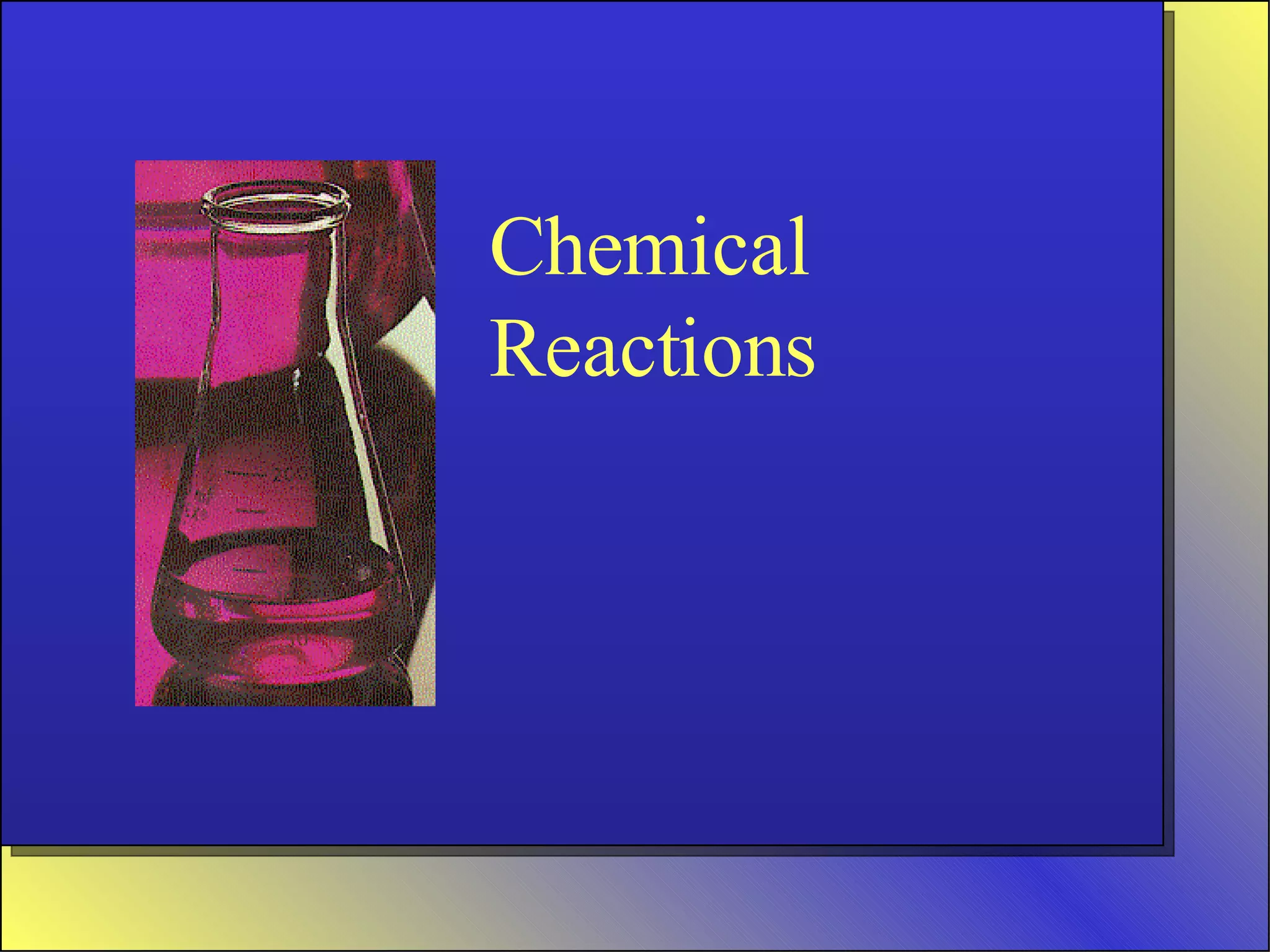
Chemical Reactions
Part 1 Chemistry and Change…
Review Chemists classify the changes that they observe in substance into two broad categories: Physical Chemical When water as a liquid changes to steam, is there a Chemical change?
Is there a chemical change here? Can you reverse the change made to the tomato?  Chemical Reaction A chemical change is also known as a chemical reaction Chemical reaction – is a process by which one or more substances undergo chemical changes into one or more different substances “ Process” – this means it takes time. “ one or more substances” “ new” – different from  what you started with.
Law of Conservation of Mass Law of Conservation of Mass “Mass is neither created  nor destroyed during a chemical reaction” I.e. If you started with 10kg of substances at the beginning of the reaction, you will end with 10kg of new substances at the end. A toms rarely, if ever, change into other elements during most chemical changes. Therefore the atoms of each element we started with will be present at the end of the reaction.
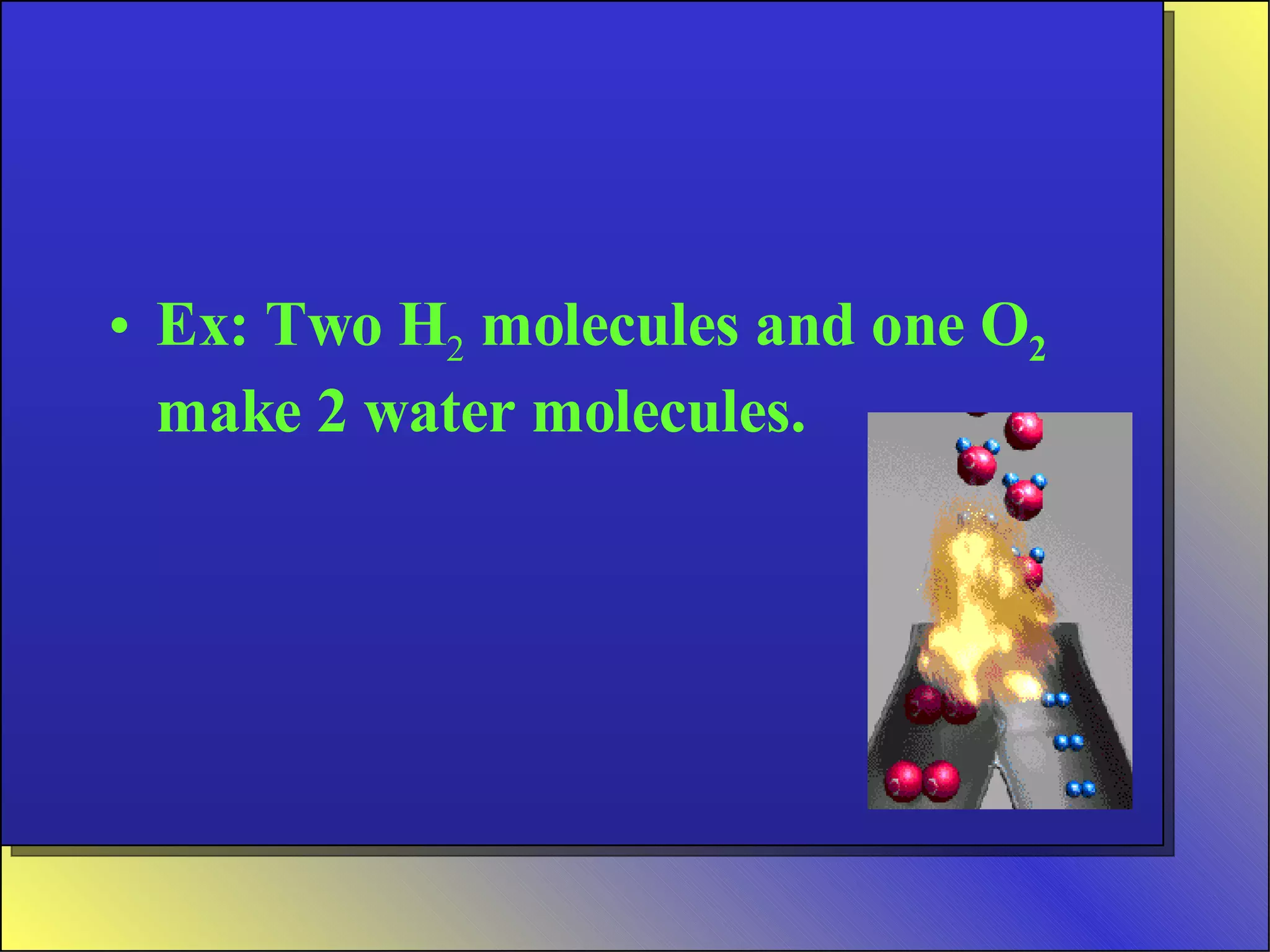
Ex: Two H 2  molecules and one O 2  make 2 water molecules.
Chemical Equations Chemical Equations are how chemists represent a chemical reaction. Chemical Equations: Indicate the substances “reacting” (changing) during the reaction. Indicate chemicals which affect the time for the reaction to occur (catalysts). Indicate the new substances formed following the reaction.
Writing Chemical Equations There are three ways to indicate chemical reactions. 1. Word Equation 2. Skeleton Equation 3. Balanced Chemical Equation (Preferred)
Things you will find in a chemical equation. Reactant(s) – the starting substances. Product(s) – the new substances formed by the reaction. Values – indicating the amount of substances (like a recipe). Symbols, to divide the reactants from the products and tell chemists the state of substances
Word Equations The least descriptive way to explain a chemical reaction. Iron(s) + Chlorine(g)    iron (III) chloride In sentence form it reads:  “solid iron when combined with gaseous chlorine produces iron (III) chloride.”
Writing Word Equations Write a word equation for the following chemical reactions: Water under electrolysis produces hydrogen gas and oxygen gas. Solid Sodium and chlorine gas will combine to yield sodium chloride. Word equations are too long to write and do not give enough information about the substances in the reaction. Typically they are not used.
Skeleton Equations Instead of writing words, skeleton equations use chemical formulas. Writing a Skeleton Equations Write skeleton equations for the two examples above.  Note: remember diatomic molecules? Skeleton equations are an improvement over word equations, but do not satisfy the law of conservation of mass.
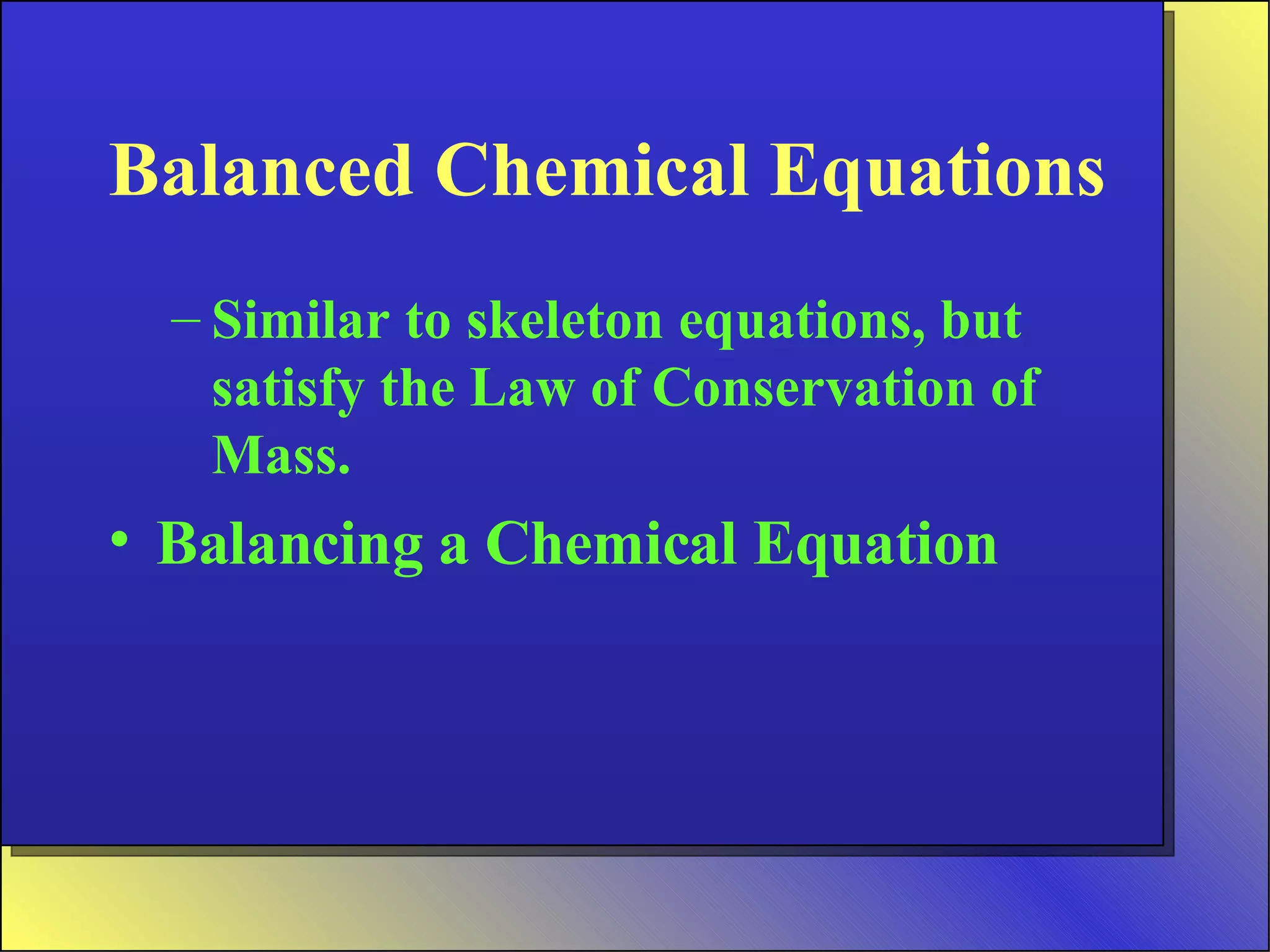
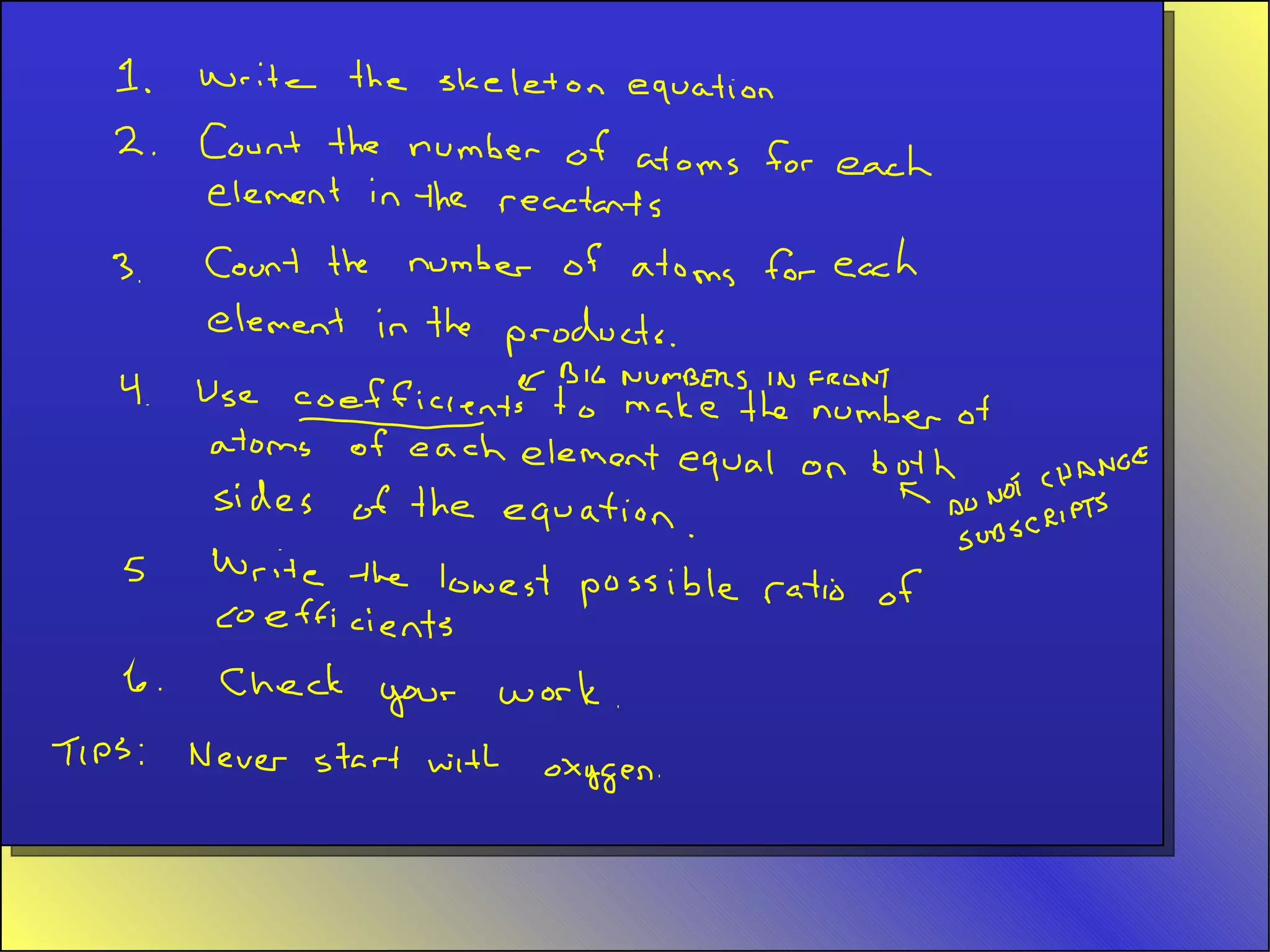
Balanced Chemical Equations Similar to skeleton equations, but satisfy the Law of Conservation of Mass. Balancing a Chemical Equation
 
Write Balanced Chemical equations for the skeleton equations above:

Unit 5 Part 1 - Chemical Change

  • 1.
  • 2.
    Part 1 Chemistryand Change…
  • 3.
    Review Chemists classifythe changes that they observe in substance into two broad categories: Physical Chemical When water as a liquid changes to steam, is there a Chemical change?
  • 4.
    Is there achemical change here? Can you reverse the change made to the tomato? Chemical Reaction A chemical change is also known as a chemical reaction Chemical reaction – is a process by which one or more substances undergo chemical changes into one or more different substances “ Process” – this means it takes time. “ one or more substances” “ new” – different from what you started with.
  • 5.
    Law of Conservationof Mass Law of Conservation of Mass “Mass is neither created nor destroyed during a chemical reaction” I.e. If you started with 10kg of substances at the beginning of the reaction, you will end with 10kg of new substances at the end. A toms rarely, if ever, change into other elements during most chemical changes. Therefore the atoms of each element we started with will be present at the end of the reaction.
  • 6.
    Ex: Two H2 molecules and one O 2 make 2 water molecules.
  • 7.
    Chemical Equations ChemicalEquations are how chemists represent a chemical reaction. Chemical Equations: Indicate the substances “reacting” (changing) during the reaction. Indicate chemicals which affect the time for the reaction to occur (catalysts). Indicate the new substances formed following the reaction.
  • 8.
    Writing Chemical EquationsThere are three ways to indicate chemical reactions. 1. Word Equation 2. Skeleton Equation 3. Balanced Chemical Equation (Preferred)
  • 9.
    Things you willfind in a chemical equation. Reactant(s) – the starting substances. Product(s) – the new substances formed by the reaction. Values – indicating the amount of substances (like a recipe). Symbols, to divide the reactants from the products and tell chemists the state of substances
  • 10.
    Word Equations Theleast descriptive way to explain a chemical reaction. Iron(s) + Chlorine(g)  iron (III) chloride In sentence form it reads: “solid iron when combined with gaseous chlorine produces iron (III) chloride.”
  • 11.
    Writing Word EquationsWrite a word equation for the following chemical reactions: Water under electrolysis produces hydrogen gas and oxygen gas. Solid Sodium and chlorine gas will combine to yield sodium chloride. Word equations are too long to write and do not give enough information about the substances in the reaction. Typically they are not used.
  • 12.
    Skeleton Equations Insteadof writing words, skeleton equations use chemical formulas. Writing a Skeleton Equations Write skeleton equations for the two examples above. Note: remember diatomic molecules? Skeleton equations are an improvement over word equations, but do not satisfy the law of conservation of mass.
  • 13.
    Balanced Chemical EquationsSimilar to skeleton equations, but satisfy the Law of Conservation of Mass. Balancing a Chemical Equation
  • 14.
  • 15.
    Write Balanced Chemicalequations for the skeleton equations above: