Cryptography and
Network Security
Authentication Applications
 will consider authentication functions
 developed to support application-level
authentication & digital signatures
 will consider Kerberos – a private-key
authentication service
 then X.509 - a public-key directory
authentication service
Kerberos
 trusted key server system from MIT
 provides centralised private-key third-party
authentication in a distributed network
 allows users access to services distributed
through network
 without needing to trust all workstations
 rather all trust a central authentication server
 two versions in use: 4 & 5
Kerberos Requirements
 its first report identified requirements as:
 secure
 reliable
 transparent
 scalable
 implemented using an authentication
protocol based on Needham-Schroeder
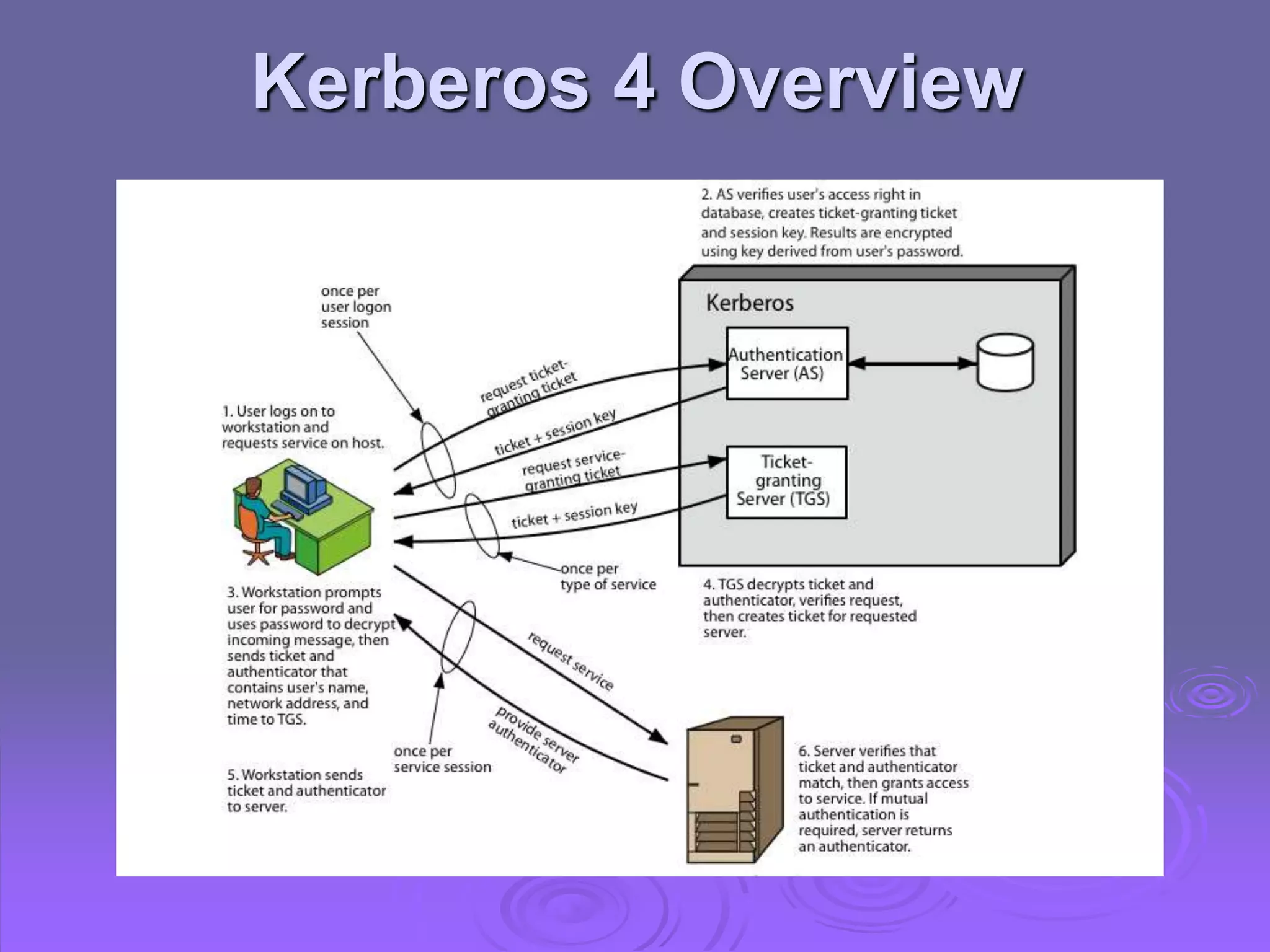
Kerberos v4 Overview
 a basic third-party authentication scheme
 have an Authentication Server (AS)
 users initially negotiate with AS to identify self
 AS provides a non-corruptible authentication
credential (ticket granting ticket TGT)
 have a Ticket Granting server (TGS)
 users subsequently request access to other
services from TGS on basis of users TGT
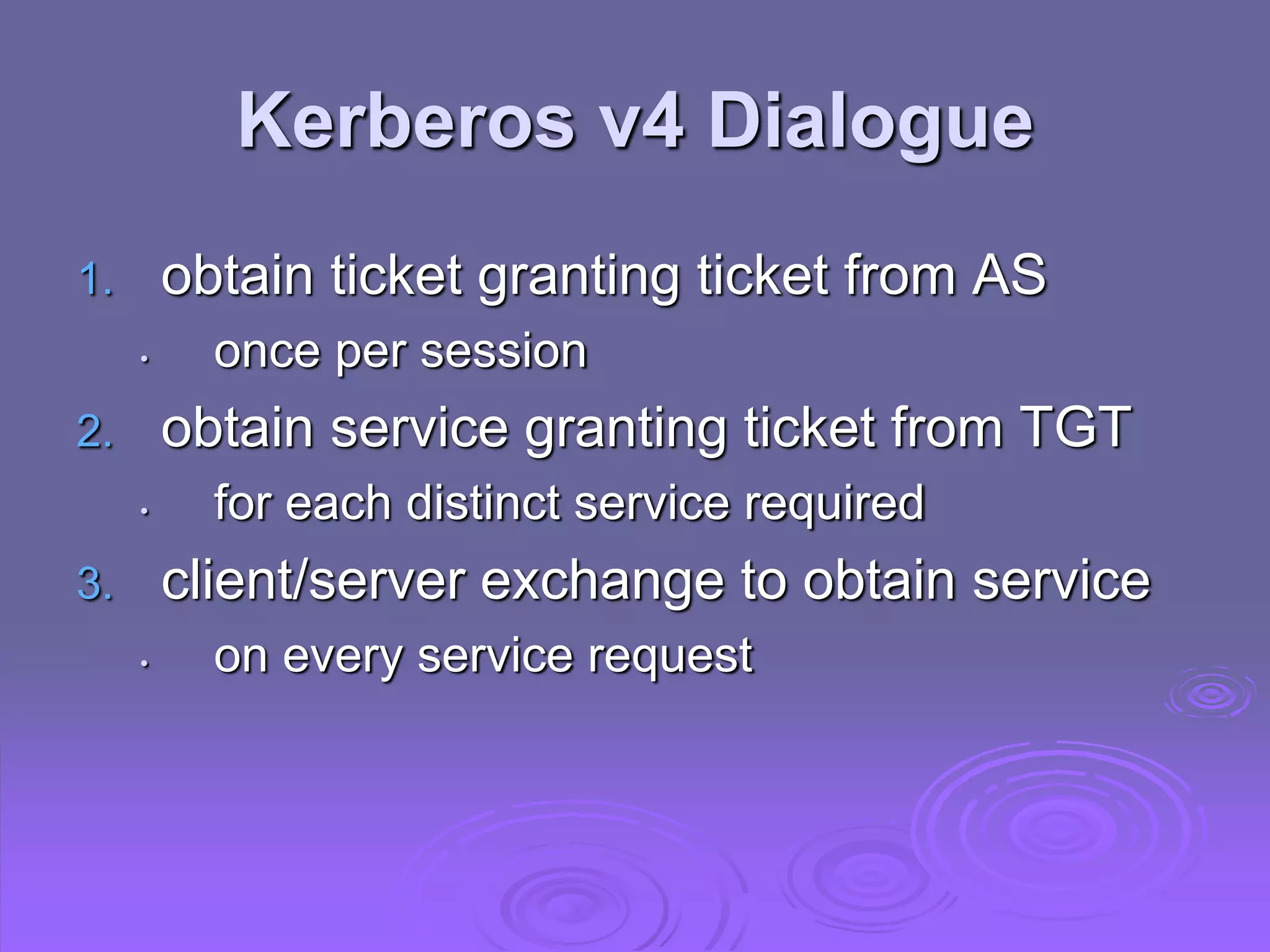
Kerberos v4 Dialogue
1. obtain ticket granting ticket from AS
• once per session
2. obtain service granting ticket from TGT
• for each distinct service required
3. client/server exchange to obtain service
• on every service request
Kerberos 4 Overview
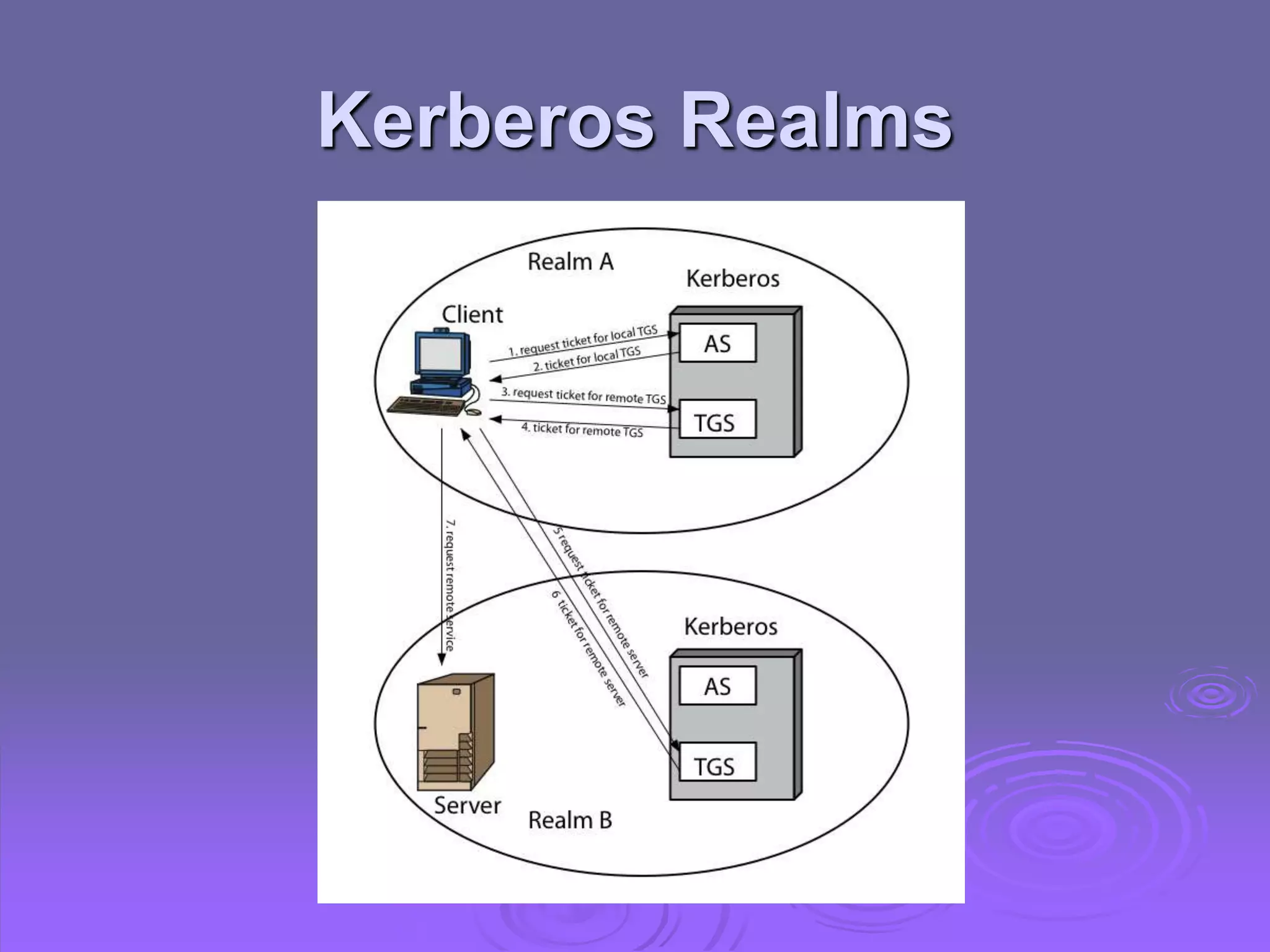
Kerberos Realms
 a Kerberos environment consists of:
 a Kerberos server
 a number of clients, all registered with server
 application servers, sharing keys with server
 this is termed a realm
 typically a single administrative domain
 if have multiple realms, their Kerberos
servers must share keys and trust
Kerberos Realms
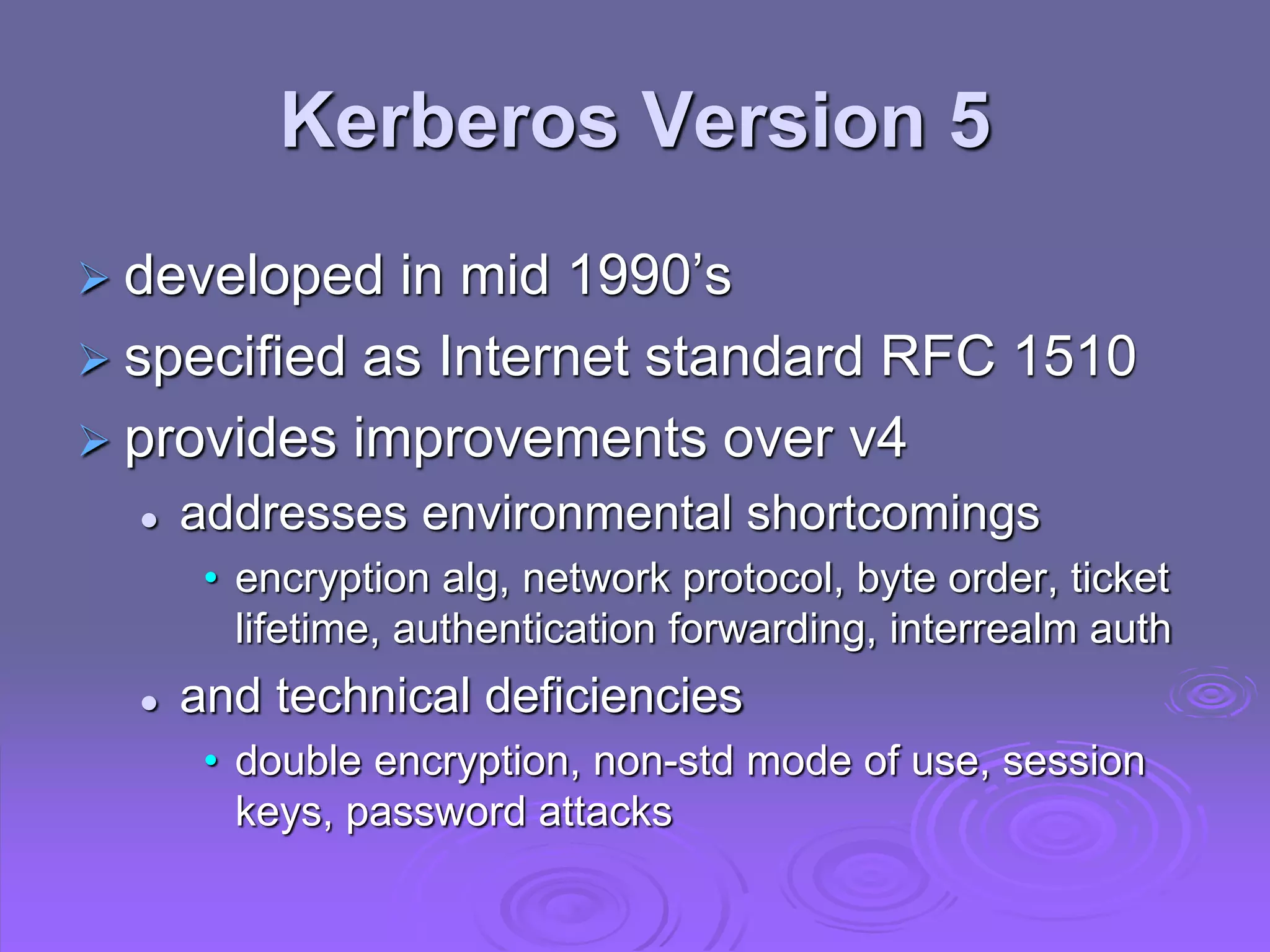
Kerberos Version 5
 developed in mid 1990’s
 specified as Internet standard RFC 1510
 provides improvements over v4
 addresses environmental shortcomings
• encryption alg, network protocol, byte order, ticket
lifetime, authentication forwarding, interrealm auth
 and technical deficiencies
• double encryption, non-std mode of use, session
keys, password attacks
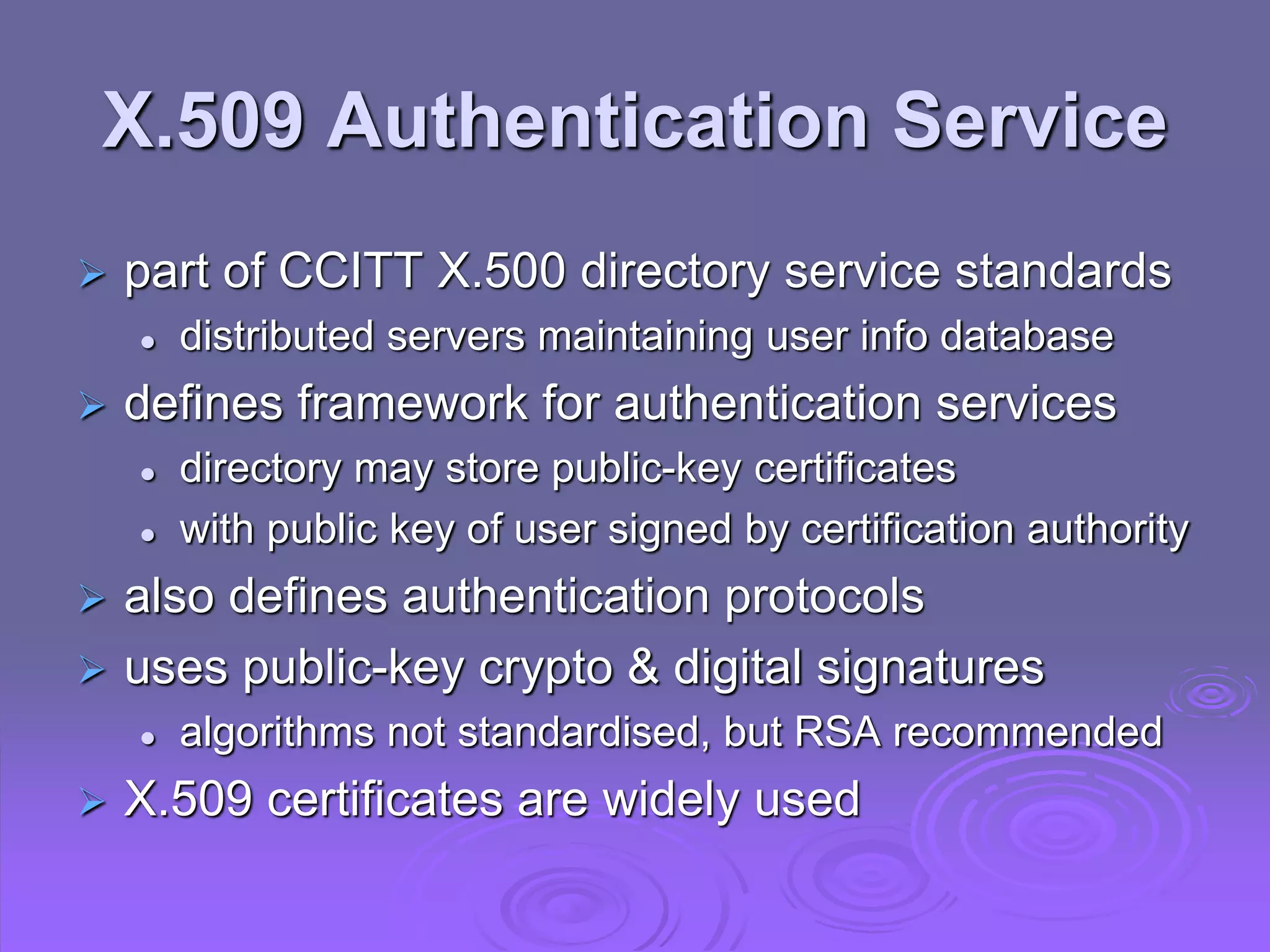
X.509 Authentication Service
 part of CCITT X.500 directory service standards
 distributed servers maintaining user info database
 defines framework for authentication services
 directory may store public-key certificates
 with public key of user signed by certification authority
 also defines authentication protocols
 uses public-key crypto & digital signatures
 algorithms not standardised, but RSA recommended
 X.509 certificates are widely used
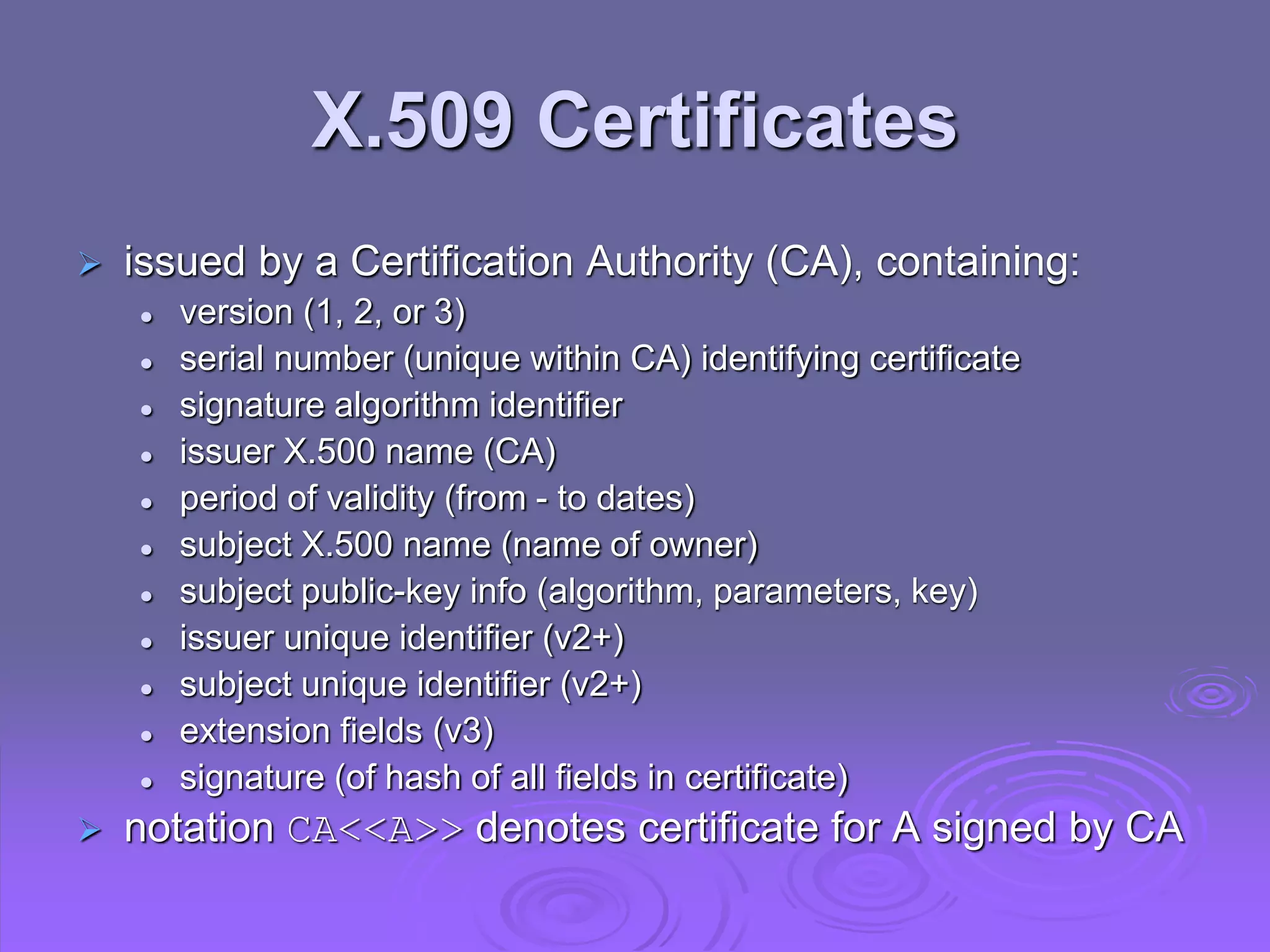
X.509 Certificates
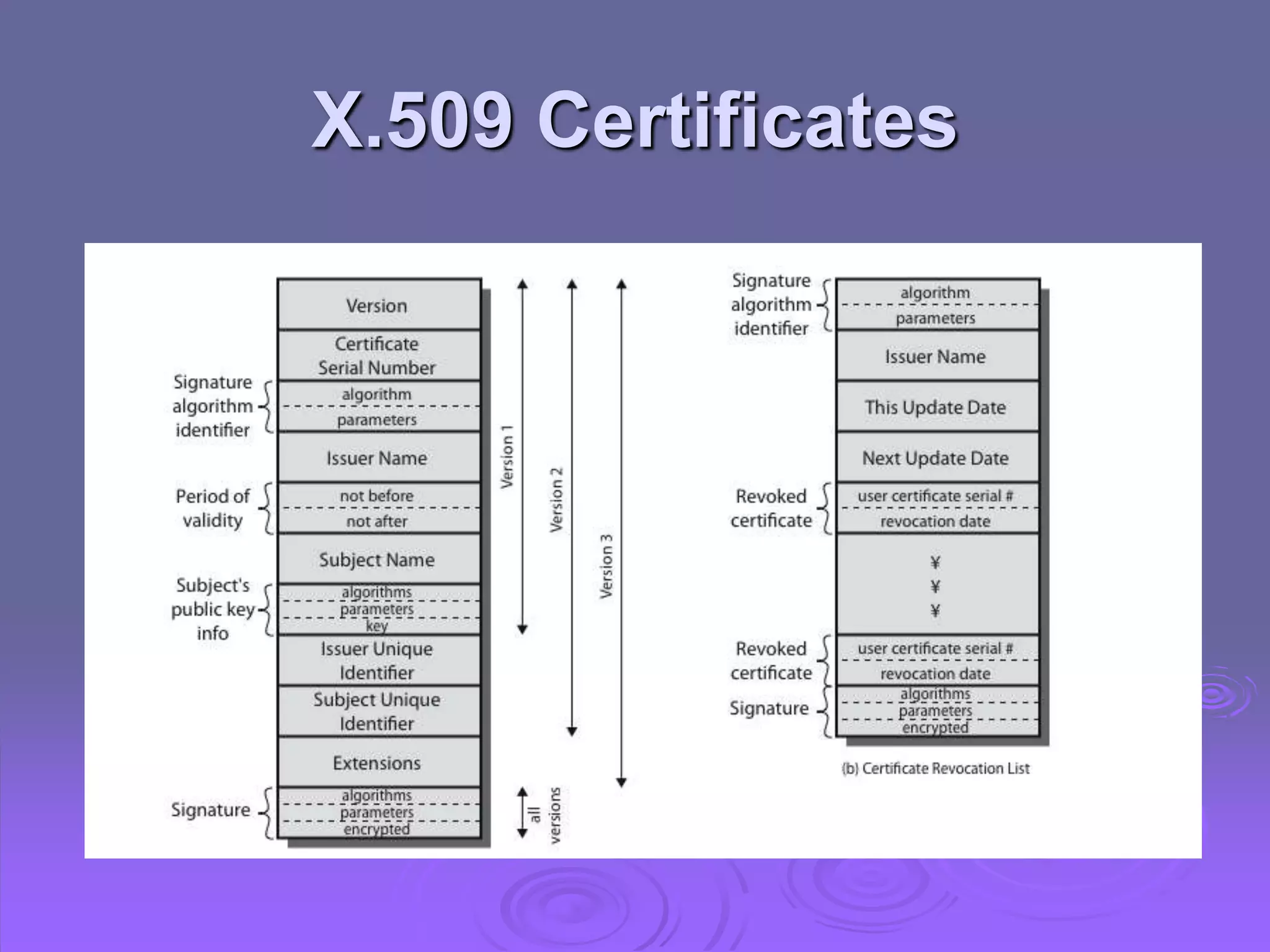
 issued by a Certification Authority (CA), containing:
 version (1, 2, or 3)
 serial number (unique within CA) identifying certificate
 signature algorithm identifier
 issuer X.500 name (CA)
 period of validity (from - to dates)
 subject X.500 name (name of owner)
 subject public-key info (algorithm, parameters, key)
 issuer unique identifier (v2+)
 subject unique identifier (v2+)
 extension fields (v3)
 signature (of hash of all fields in certificate)
 notation CA<<A>> denotes certificate for A signed by CA
X.509 Certificates
Obtaining a Certificate
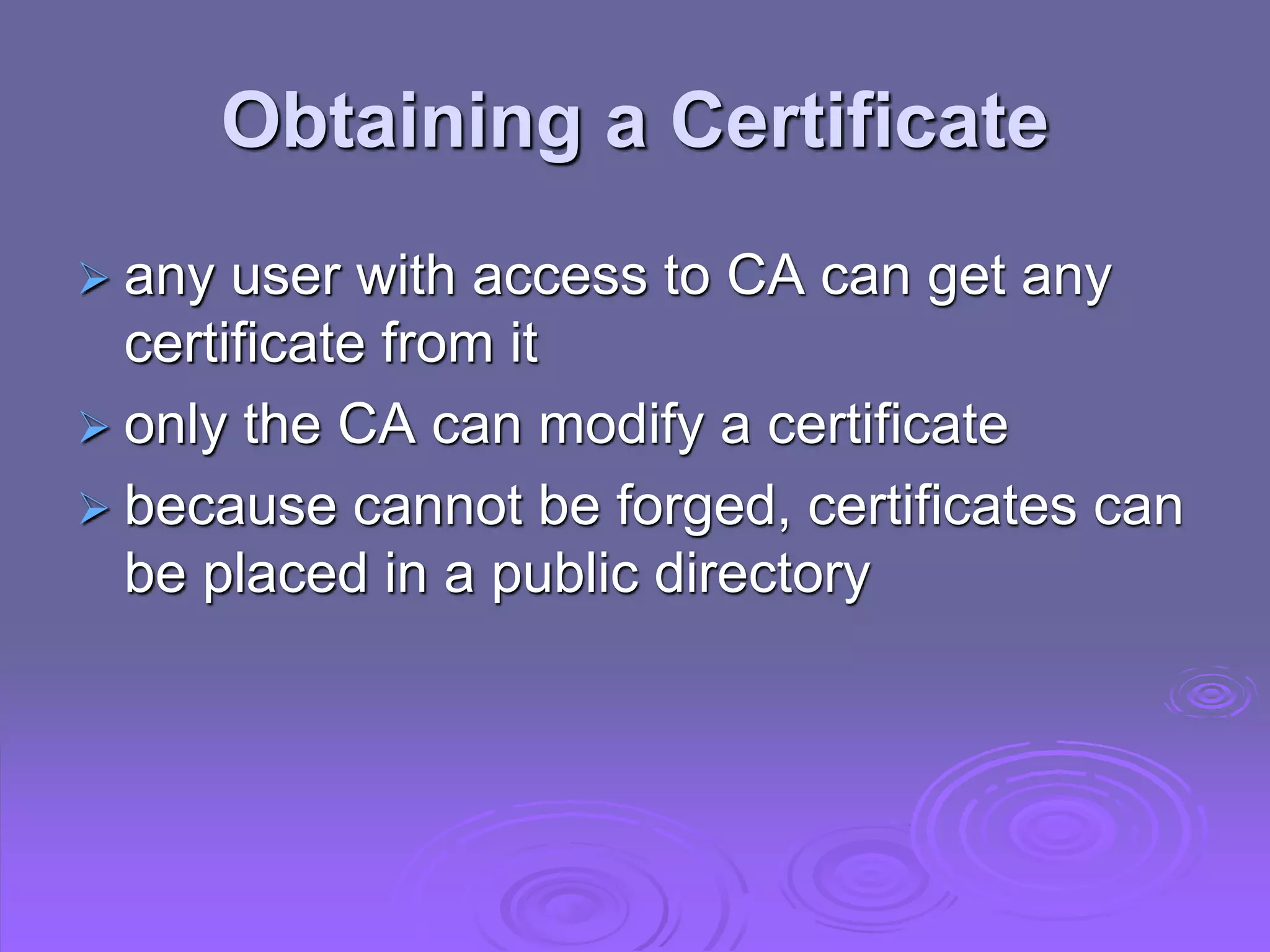
 any user with access to CA can get any
certificate from it
 only the CA can modify a certificate
 because cannot be forged, certificates can
be placed in a public directory
CA Hierarchy
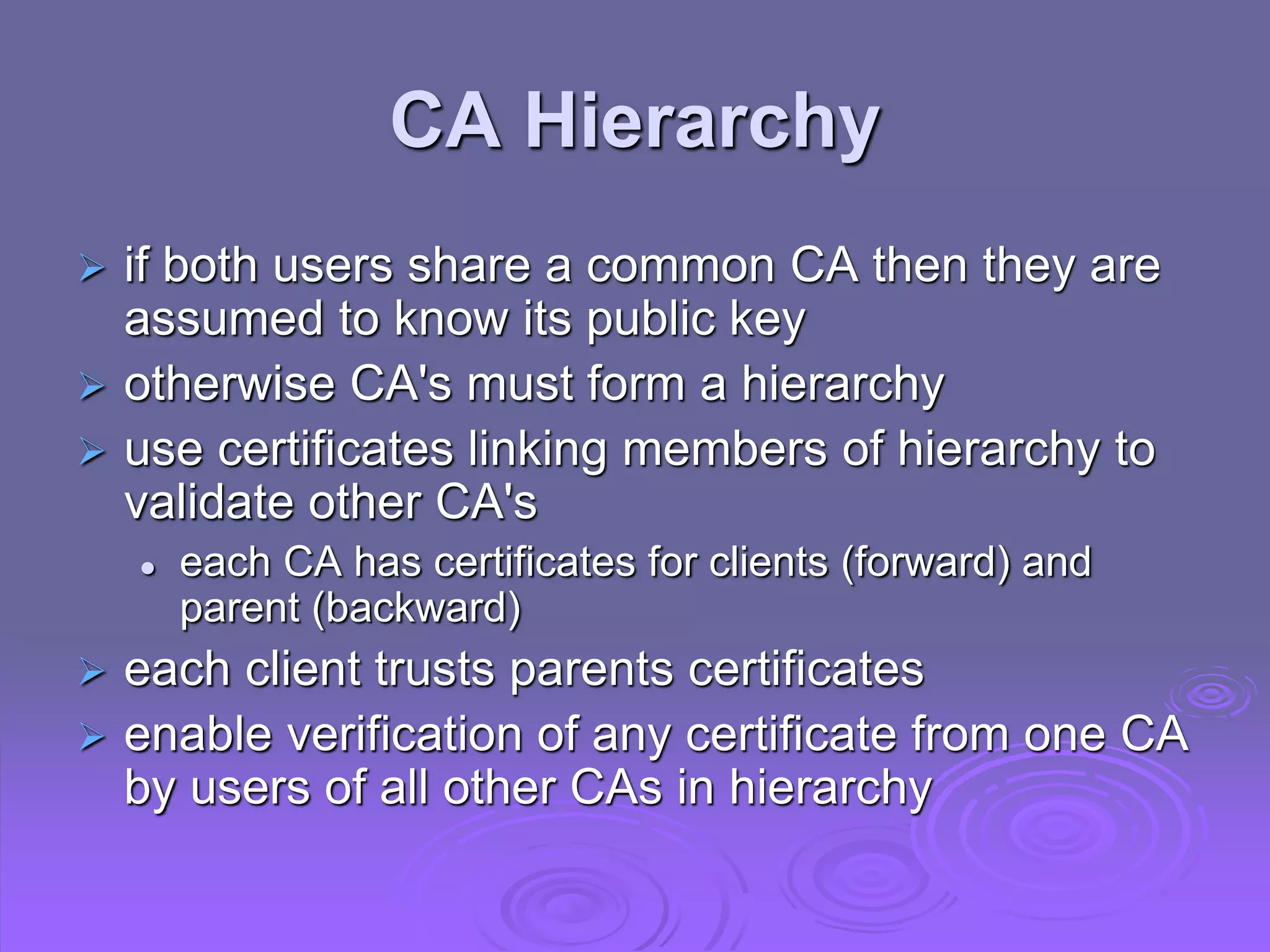
 if both users share a common CA then they are
assumed to know its public key
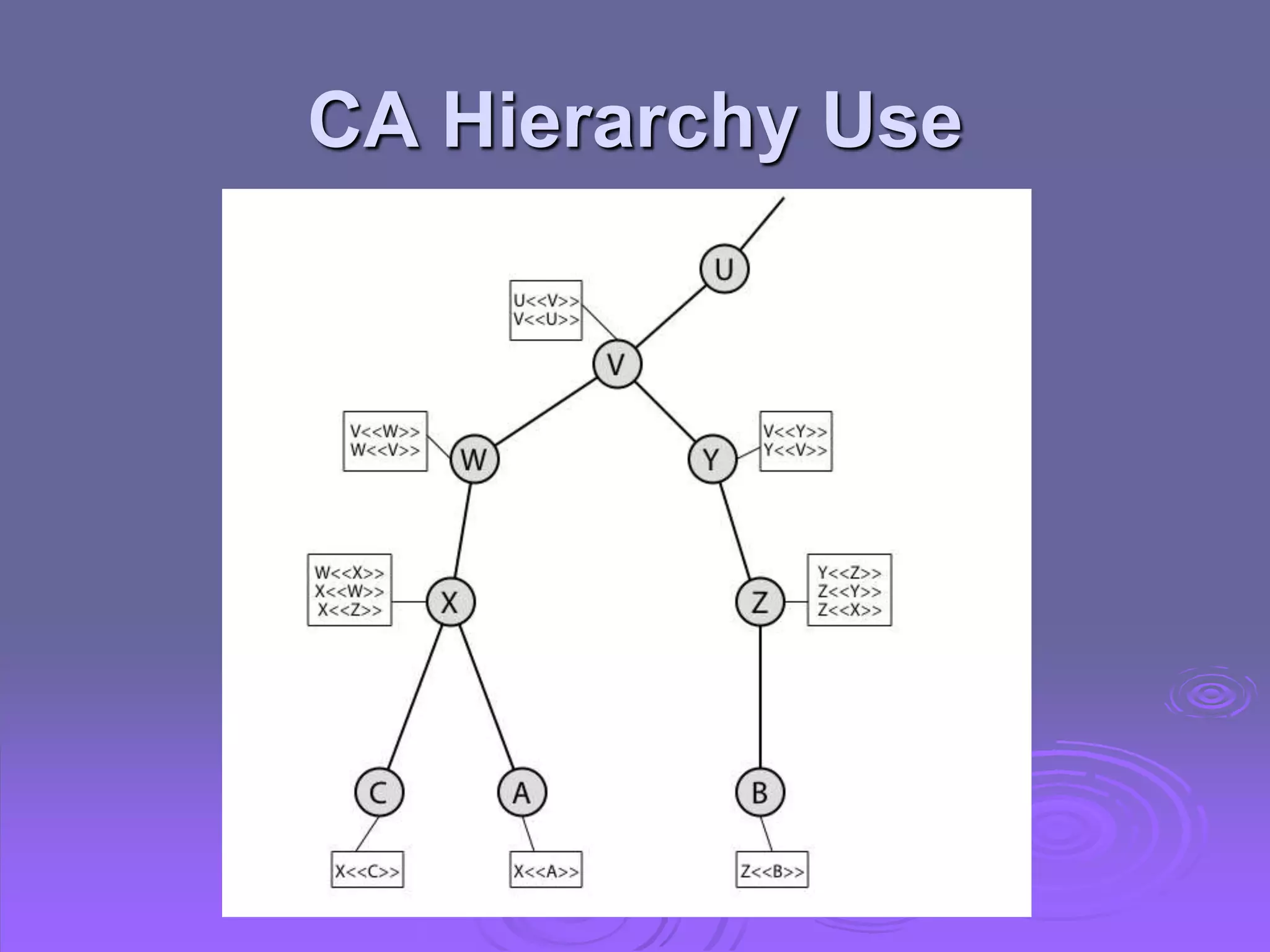
 otherwise CA's must form a hierarchy
 use certificates linking members of hierarchy to
validate other CA's
 each CA has certificates for clients (forward) and
parent (backward)
 each client trusts parents certificates
 enable verification of any certificate from one CA
by users of all other CAs in hierarchy
CA Hierarchy Use
Certificate Revocation
 certificates have a period of validity
 may need to revoke before expiry, eg:
1. user's private key is compromised
2. user is no longer certified by this CA
3. CA's certificate is compromised
 CA’s maintain list of revoked certificates
 the Certificate Revocation List (CRL)
 users should check certificates with CA’s CRL
Authentication Procedures
 X.509 includes three alternative
authentication procedures:
 One-Way Authentication
 Two-Way Authentication
 Three-Way Authentication
 all use public-key signatures
One-Way Authentication
 1 message ( A->B) used to establish
 the identity of A and that message is from A
 message was intended for B
 integrity & originality of message
 message must include timestamp, nonce,
B's identity and is signed by A
 may include additional info for B
 eg session key
Two-Way Authentication
 2 messages (A->B, B->A) which also
establishes in addition:
 the identity of B and that reply is from B
 that reply is intended for A
 integrity & originality of reply
 reply includes original nonce from A, also
timestamp and nonce from B
 may include additional info for A
Three-Way Authentication
 3 messages (A->B, B->A, A->B) which
enables above authentication without
synchronized clocks
 has reply from A back to B containing
signed copy of nonce from B
 means that timestamps need not be
checked or relied upon
X.509 Version 3
 has been recognised that additional
information is needed in a certificate
 email/URL, policy details, usage constraints
 rather than explicitly naming new fields
defined a general extension method
 extensions consist of:
 extension identifier
 criticality indicator
 extension value
Certificate Extensions
 key and policy information
 convey info about subject & issuer keys, plus
indicators of certificate policy
 certificate subject and issuer attributes
 support alternative names, in alternative
formats for certificate subject and/or issuer
 certificate path constraints
 allow constraints on use of certificates by
other CA’s
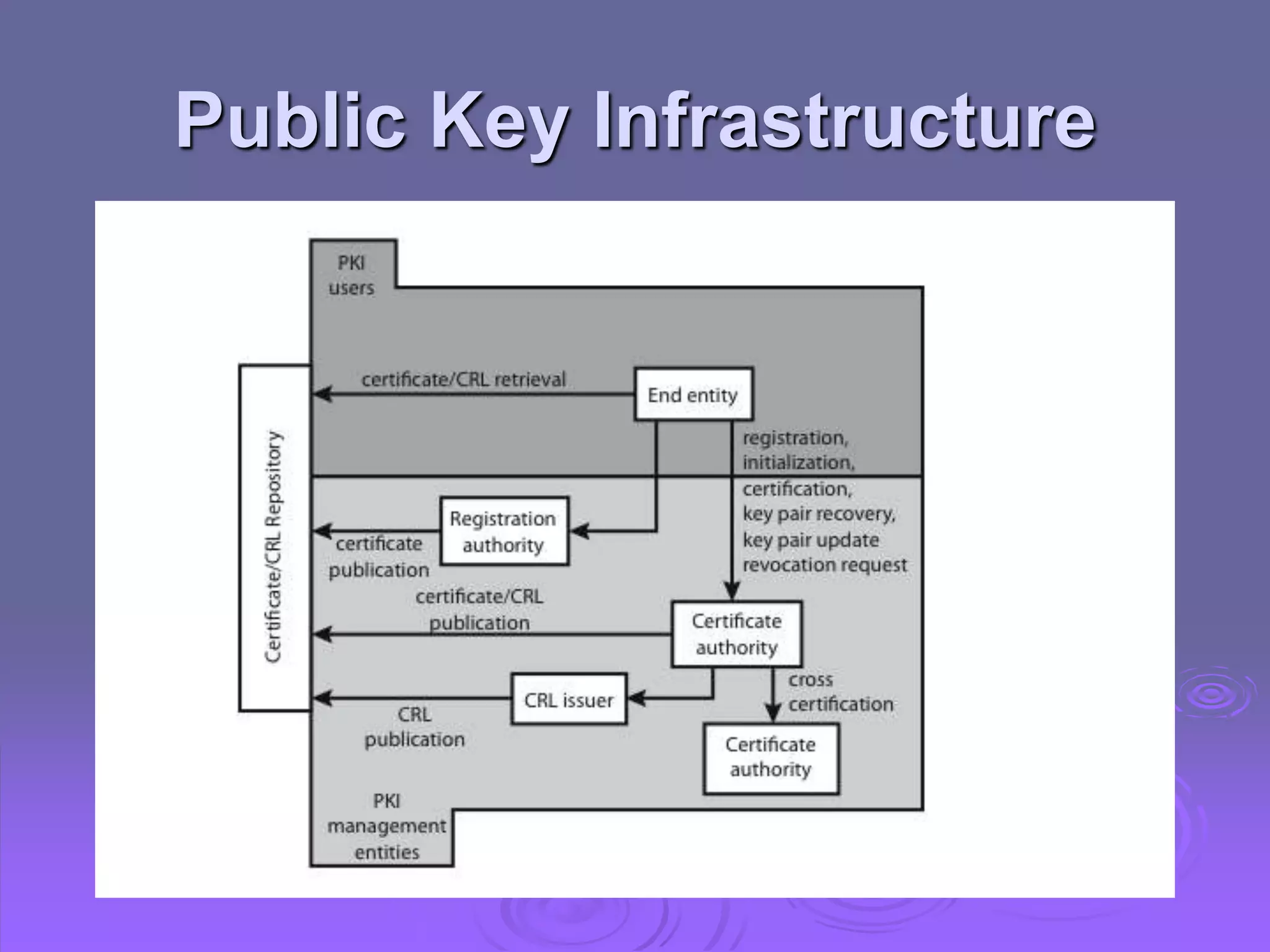
Public Key Infrastructure
Summary
 have considered:
 Kerberos trusted key server system
 X.509 authentication and certificates

Unit 4.ppt

  • 1.
  • 2.
    Authentication Applications  willconsider authentication functions  developed to support application-level authentication & digital signatures  will consider Kerberos – a private-key authentication service  then X.509 - a public-key directory authentication service
  • 3.
    Kerberos  trusted keyserver system from MIT  provides centralised private-key third-party authentication in a distributed network  allows users access to services distributed through network  without needing to trust all workstations  rather all trust a central authentication server  two versions in use: 4 & 5
  • 4.
    Kerberos Requirements  itsfirst report identified requirements as:  secure  reliable  transparent  scalable  implemented using an authentication protocol based on Needham-Schroeder
  • 5.
    Kerberos v4 Overview a basic third-party authentication scheme  have an Authentication Server (AS)  users initially negotiate with AS to identify self  AS provides a non-corruptible authentication credential (ticket granting ticket TGT)  have a Ticket Granting server (TGS)  users subsequently request access to other services from TGS on basis of users TGT
  • 6.
    Kerberos v4 Dialogue 1.obtain ticket granting ticket from AS • once per session 2. obtain service granting ticket from TGT • for each distinct service required 3. client/server exchange to obtain service • on every service request
  • 7.
  • 8.
    Kerberos Realms  aKerberos environment consists of:  a Kerberos server  a number of clients, all registered with server  application servers, sharing keys with server  this is termed a realm  typically a single administrative domain  if have multiple realms, their Kerberos servers must share keys and trust
  • 9.
  • 10.
    Kerberos Version 5 developed in mid 1990’s  specified as Internet standard RFC 1510  provides improvements over v4  addresses environmental shortcomings • encryption alg, network protocol, byte order, ticket lifetime, authentication forwarding, interrealm auth  and technical deficiencies • double encryption, non-std mode of use, session keys, password attacks
  • 11.
    X.509 Authentication Service part of CCITT X.500 directory service standards  distributed servers maintaining user info database  defines framework for authentication services  directory may store public-key certificates  with public key of user signed by certification authority  also defines authentication protocols  uses public-key crypto & digital signatures  algorithms not standardised, but RSA recommended  X.509 certificates are widely used
  • 12.
    X.509 Certificates  issuedby a Certification Authority (CA), containing:  version (1, 2, or 3)  serial number (unique within CA) identifying certificate  signature algorithm identifier  issuer X.500 name (CA)  period of validity (from - to dates)  subject X.500 name (name of owner)  subject public-key info (algorithm, parameters, key)  issuer unique identifier (v2+)  subject unique identifier (v2+)  extension fields (v3)  signature (of hash of all fields in certificate)  notation CA<<A>> denotes certificate for A signed by CA
  • 13.
  • 14.
    Obtaining a Certificate any user with access to CA can get any certificate from it  only the CA can modify a certificate  because cannot be forged, certificates can be placed in a public directory
  • 15.
    CA Hierarchy  ifboth users share a common CA then they are assumed to know its public key  otherwise CA's must form a hierarchy  use certificates linking members of hierarchy to validate other CA's  each CA has certificates for clients (forward) and parent (backward)  each client trusts parents certificates  enable verification of any certificate from one CA by users of all other CAs in hierarchy
  • 16.
  • 17.
    Certificate Revocation  certificateshave a period of validity  may need to revoke before expiry, eg: 1. user's private key is compromised 2. user is no longer certified by this CA 3. CA's certificate is compromised  CA’s maintain list of revoked certificates  the Certificate Revocation List (CRL)  users should check certificates with CA’s CRL
  • 18.
    Authentication Procedures  X.509includes three alternative authentication procedures:  One-Way Authentication  Two-Way Authentication  Three-Way Authentication  all use public-key signatures
  • 19.
    One-Way Authentication  1message ( A->B) used to establish  the identity of A and that message is from A  message was intended for B  integrity & originality of message  message must include timestamp, nonce, B's identity and is signed by A  may include additional info for B  eg session key
  • 20.
    Two-Way Authentication  2messages (A->B, B->A) which also establishes in addition:  the identity of B and that reply is from B  that reply is intended for A  integrity & originality of reply  reply includes original nonce from A, also timestamp and nonce from B  may include additional info for A
  • 21.
    Three-Way Authentication  3messages (A->B, B->A, A->B) which enables above authentication without synchronized clocks  has reply from A back to B containing signed copy of nonce from B  means that timestamps need not be checked or relied upon
  • 22.
    X.509 Version 3 has been recognised that additional information is needed in a certificate  email/URL, policy details, usage constraints  rather than explicitly naming new fields defined a general extension method  extensions consist of:  extension identifier  criticality indicator  extension value
  • 23.
    Certificate Extensions  keyand policy information  convey info about subject & issuer keys, plus indicators of certificate policy  certificate subject and issuer attributes  support alternative names, in alternative formats for certificate subject and/or issuer  certificate path constraints  allow constraints on use of certificates by other CA’s
  • 24.
  • 25.
    Summary  have considered: Kerberos trusted key server system  X.509 authentication and certificates