Unit 4 Overview AP World History
Big Picture 1750 - 1914 Western civilizations dominate Industrialization alters many areas of life Politically, the British parliamentary model spreads as empire grows Inequality among individuals and states becomes focus of reformers
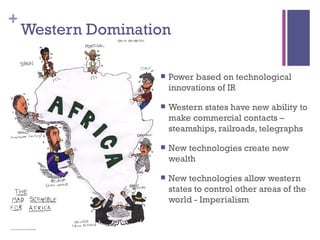
Western Domination Power based on technological innovations of IR Western states have new ability to make commercial contacts – steamships, railroads, telegraphs New technologies create new wealth New technologies allow western states to control other areas of the world - Imperialism
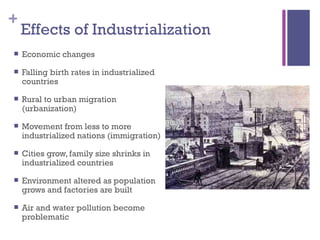
Effects of Industrialization Economic changes  Falling birth rates in industrialized countries Rural to urban migration (urbanization) Movement from less to more industrialized nations (immigration) Cities grow, family size shrinks in industrialized countries Environment altered as population grows and factories are built Air and water pollution become problematic
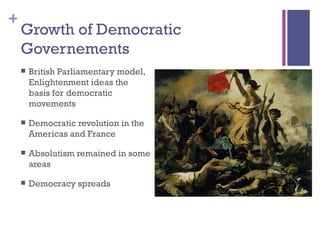
Growth of Democratic Governements British Parliamentary model, Enlightenment ideas the basis for democratic movements Democratic revolution in the Americas and France Absolutism remained in some areas Democracy spreads
Inequality and Reform Slave systems successfully dismantled Slavery abolished through abolitionist movements Movements for equality begin in industrialized societies Inequality among states grew as western countries gained power Western countries gain power and resources at the expense of most other areas of the world (Africa, Latin America, Middle East and China)
Be able to.. Analyze motives for revolution in various countries between 1750 – 1914 Analyze the political and social changes and continuities between 1750 and 1914 in Japan, Russia, Latin America, Europe and North America Compare and contrast the effects of industrialization in the different regions of the world. Explain the motives and effects of Imperialism  Compare the impact of imperialism on African and Asian societies

Unit 4 Overview

  • 1.
    Unit 4 OverviewAP World History
  • 2.
    Big Picture 1750- 1914 Western civilizations dominate Industrialization alters many areas of life Politically, the British parliamentary model spreads as empire grows Inequality among individuals and states becomes focus of reformers
  • 3.
    Western Domination Powerbased on technological innovations of IR Western states have new ability to make commercial contacts – steamships, railroads, telegraphs New technologies create new wealth New technologies allow western states to control other areas of the world - Imperialism
  • 4.
    Effects of IndustrializationEconomic changes Falling birth rates in industrialized countries Rural to urban migration (urbanization) Movement from less to more industrialized nations (immigration) Cities grow, family size shrinks in industrialized countries Environment altered as population grows and factories are built Air and water pollution become problematic
  • 5.
    Growth of DemocraticGovernements British Parliamentary model, Enlightenment ideas the basis for democratic movements Democratic revolution in the Americas and France Absolutism remained in some areas Democracy spreads
  • 6.
    Inequality and ReformSlave systems successfully dismantled Slavery abolished through abolitionist movements Movements for equality begin in industrialized societies Inequality among states grew as western countries gained power Western countries gain power and resources at the expense of most other areas of the world (Africa, Latin America, Middle East and China)
  • 7.
    Be able to..Analyze motives for revolution in various countries between 1750 – 1914 Analyze the political and social changes and continuities between 1750 and 1914 in Japan, Russia, Latin America, Europe and North America Compare and contrast the effects of industrialization in the different regions of the world. Explain the motives and effects of Imperialism Compare the impact of imperialism on African and Asian societies