Chapter 9 OverviewState, Society and the Quest for Salvation in India
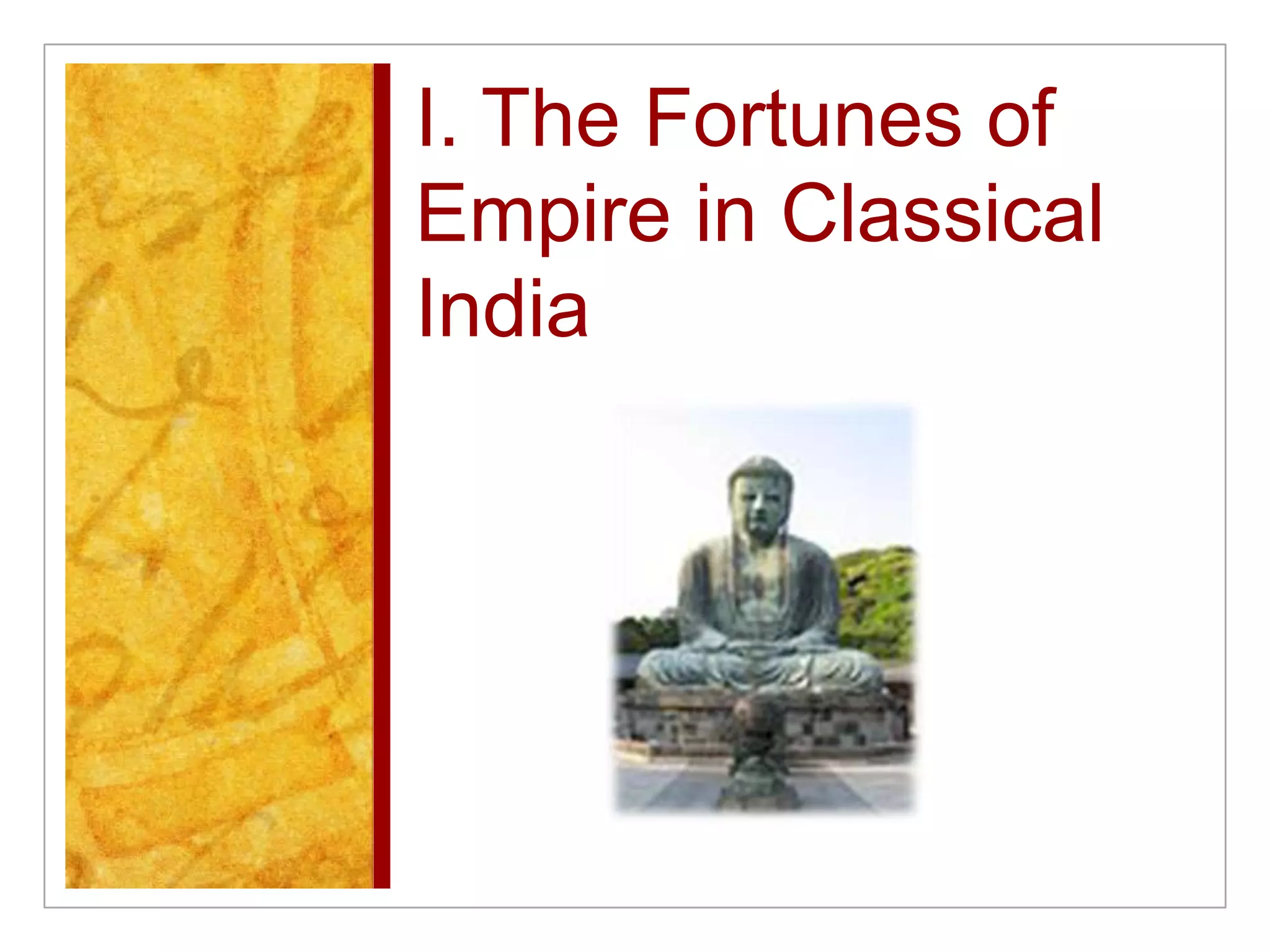
I. The Fortunes of Empire in Classical India
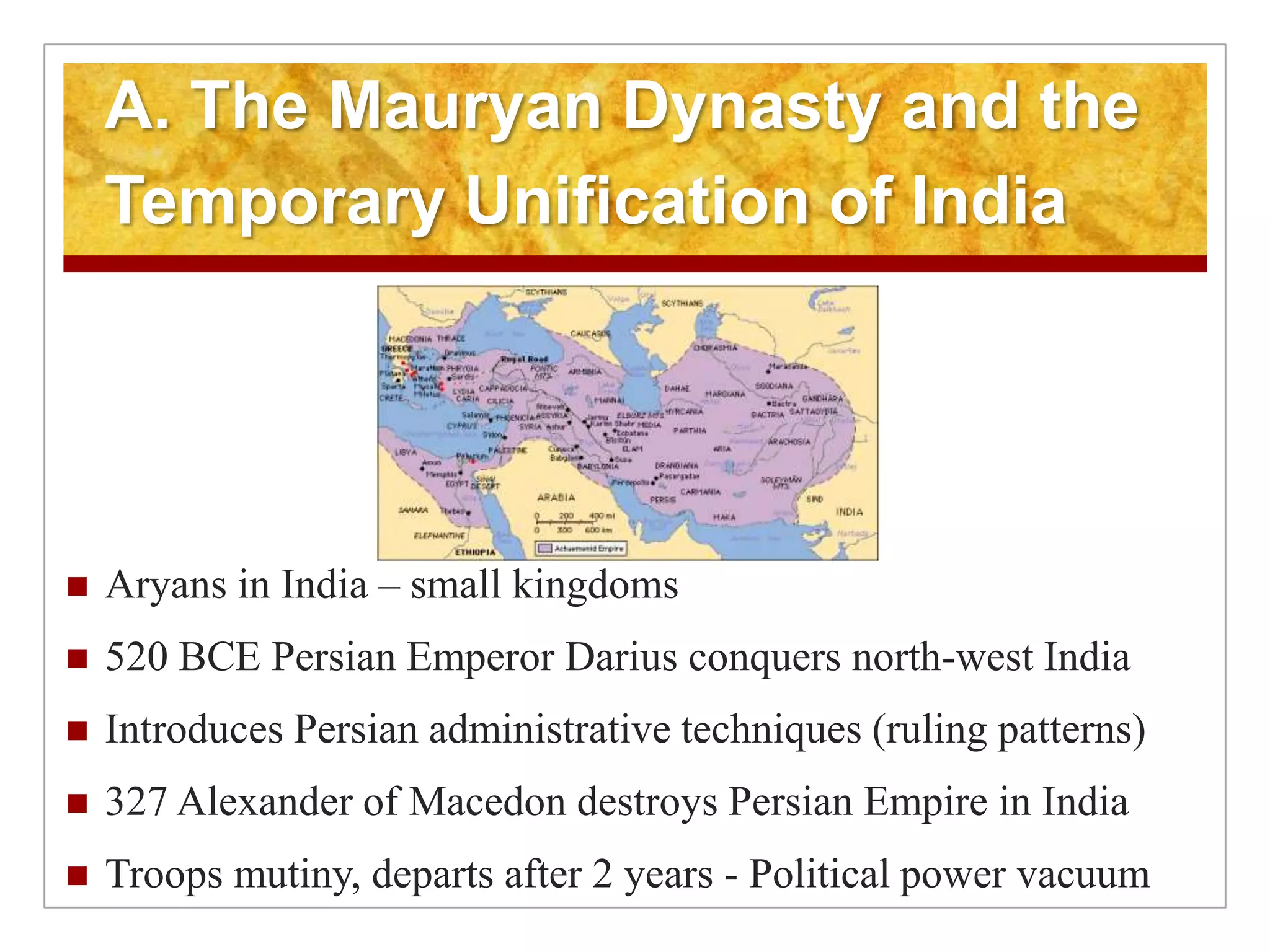
A. The Mauryan Dynasty and the Temporary Unification of India Aryans in India – small kingdoms520 BCE Persian Emperor Darius conquers north-west IndiaIntroduces Persian administrative techniques (ruling patterns)327 Alexander of Macedon destroys Persian Empire in IndiaTroops mutiny, departs after 2 years - Political power vacuum
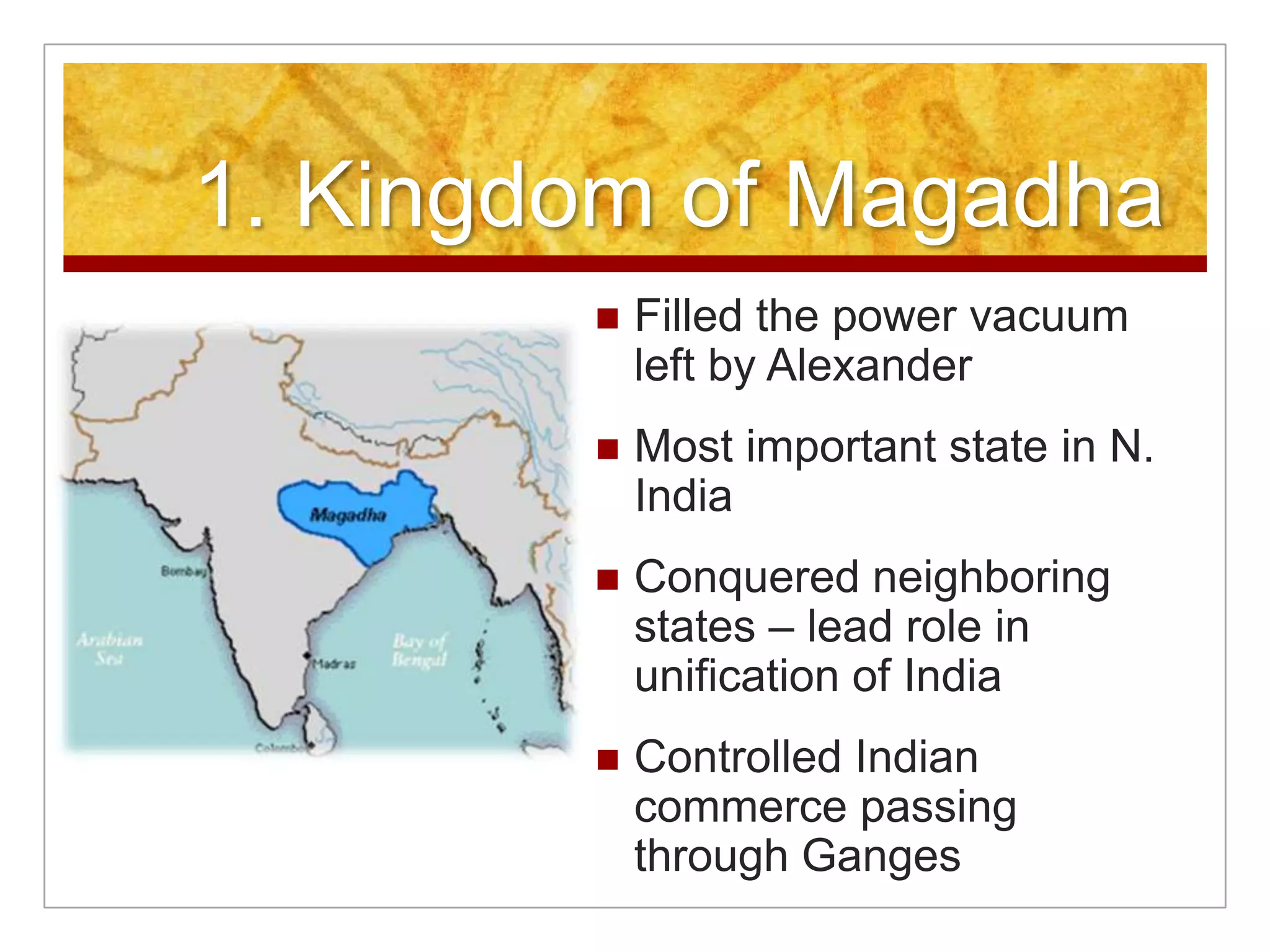
1. Kingdom of MagadhaFilled the power vacuum left by AlexanderMost important state in N. India Conquered neighboring states – lead role in unification of IndiaControlled Indian commerce passing through Ganges
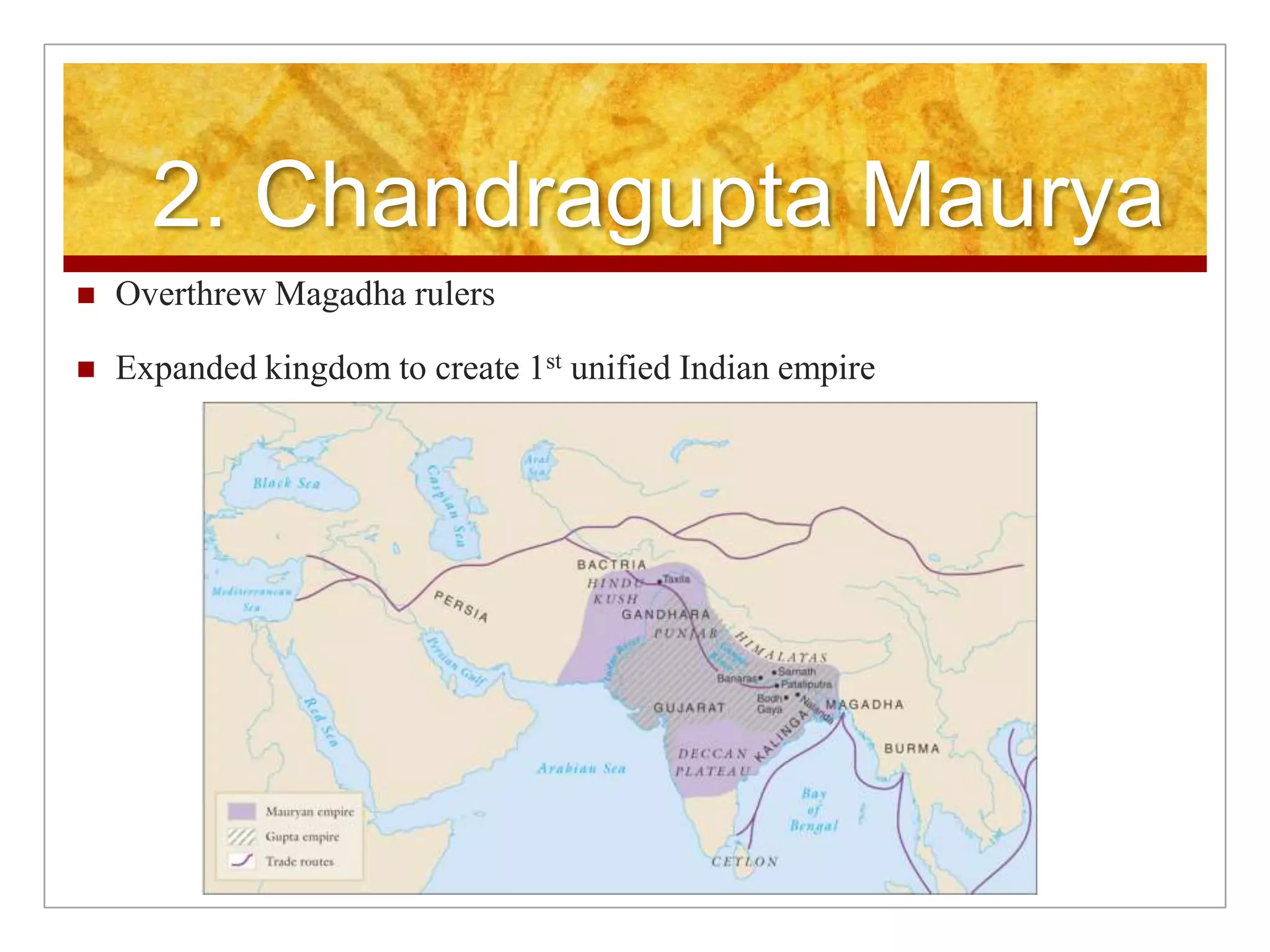
2. Chandragupta MauryaOverthrew Magadha rulersExpanded kingdom to create 1st unified Indian empire
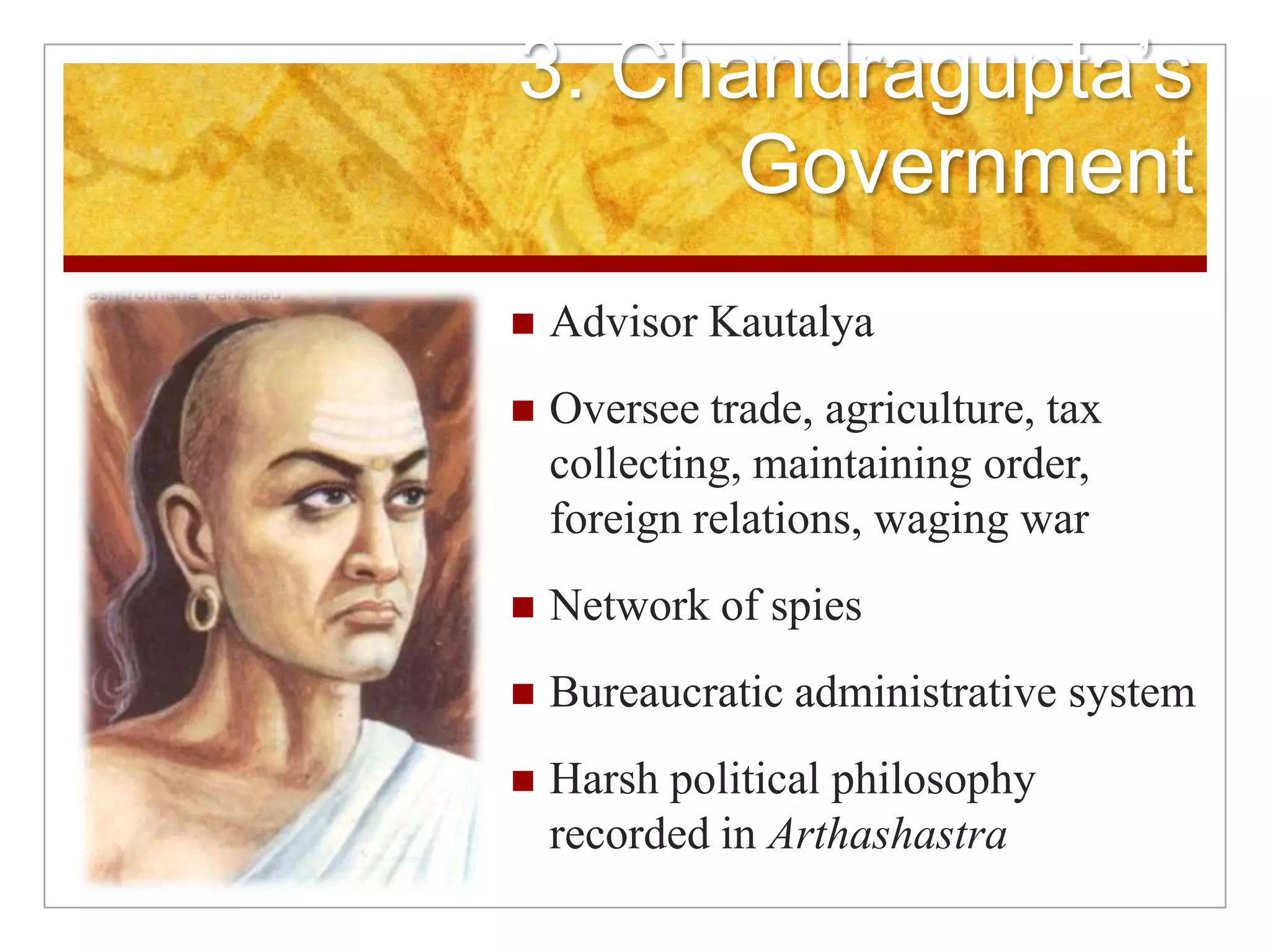
3. Chandragupta’s GovernmentAdvisor KautalyaOversee trade, agriculture, tax collecting, maintaining order, foreign relations, waging warNetwork of spiesBureaucratic administrative systemHarsh political philosophy recorded in Arthashastra
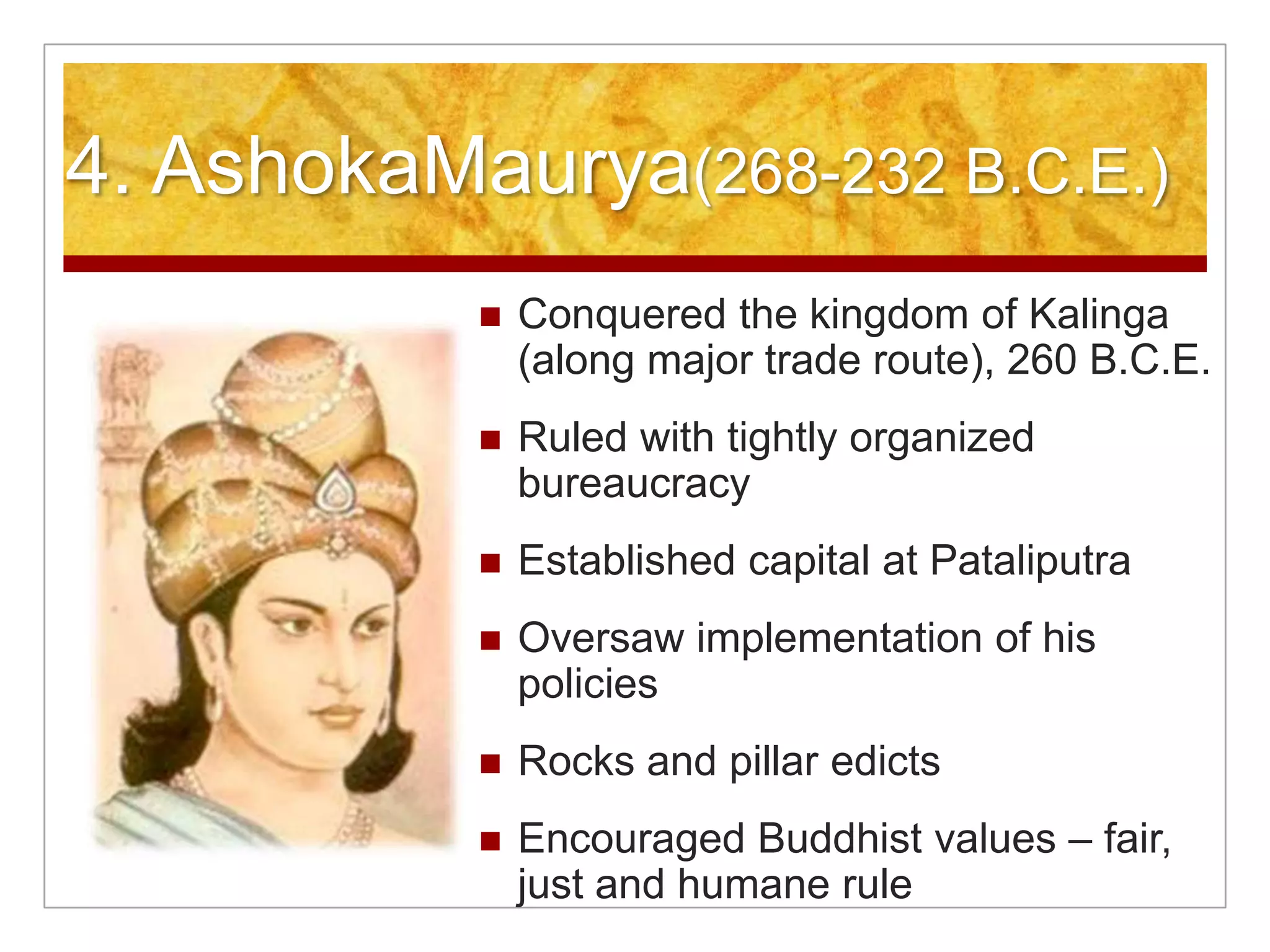
4. AshokaMaurya(268-232 B.C.E.)Conquered the kingdom of Kalinga (along major trade route), 260 B.C.E.Ruled with tightly organized bureaucracyEstablished capital at PataliputraOversaw implementation of his policiesRocks and pillar edictsEncouraged Buddhist values – fair, just and humane rule
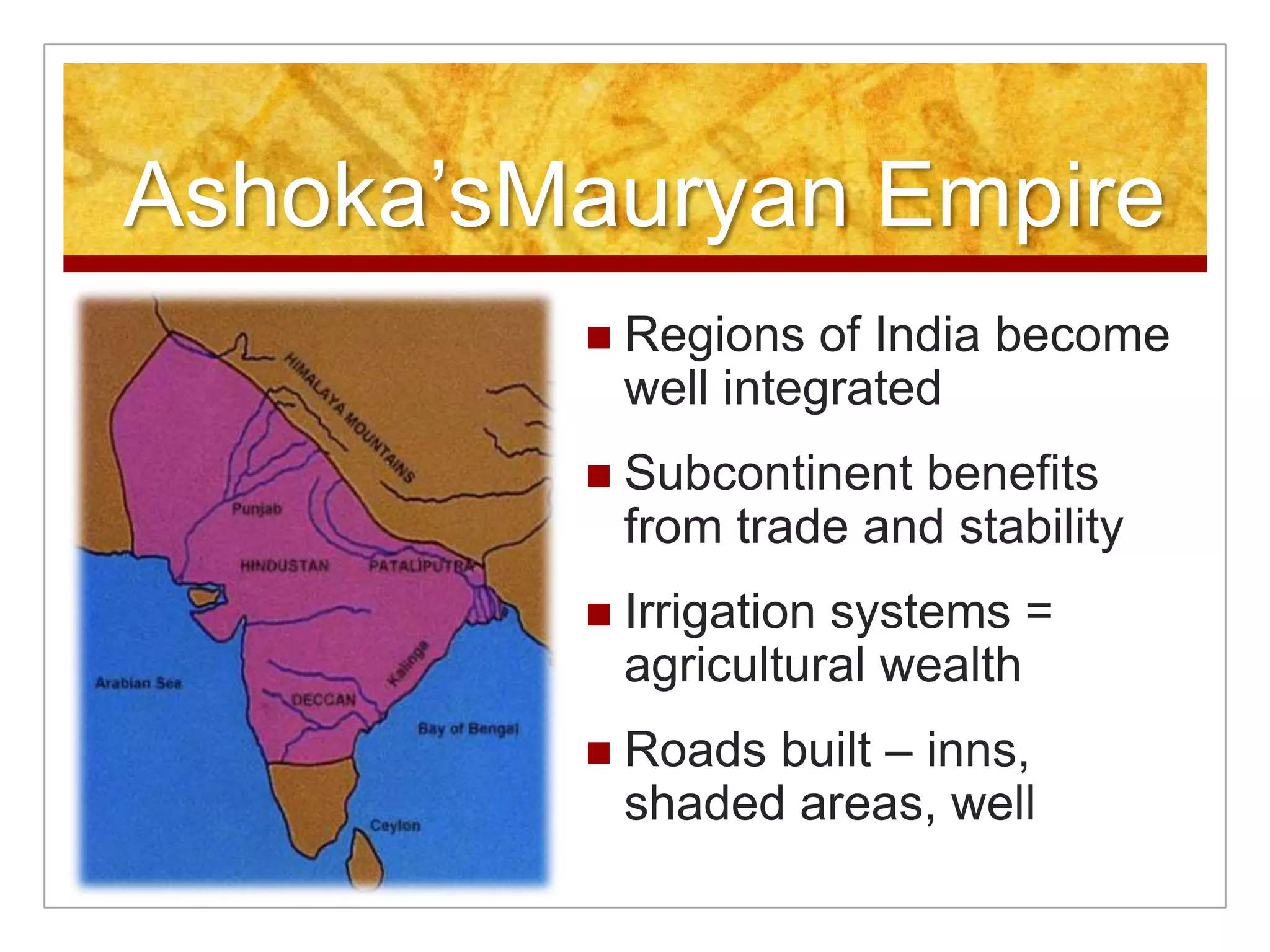
Ashoka’sMauryan EmpireRegions of India become well integratedSubcontinent benefits from trade and stabilityIrrigation systems = agricultural wealthRoads built – inns, shaded areas, well
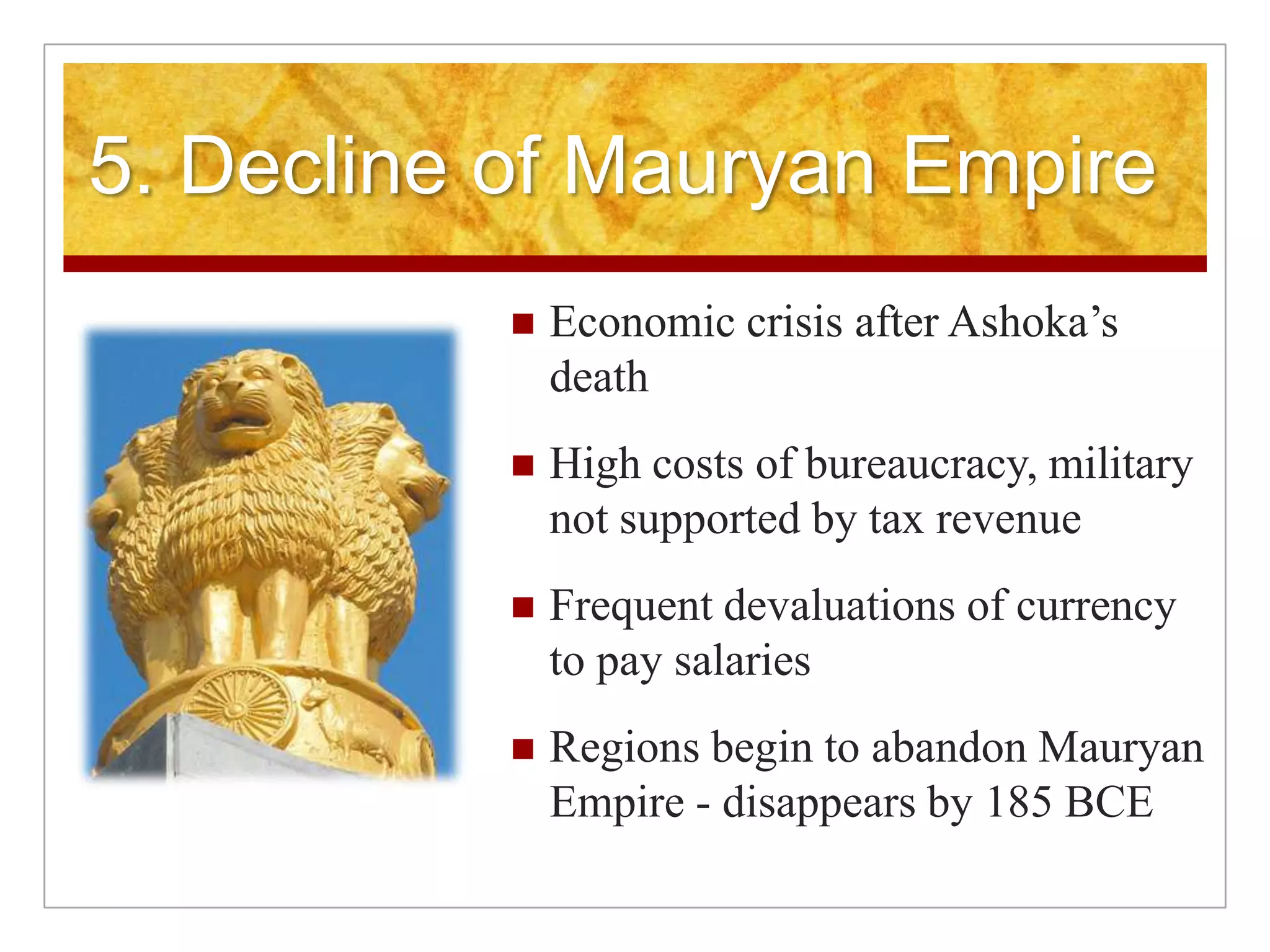
 5. Decline of Mauryan EmpireEconomic crisis after Ashoka’s deathHigh costs of bureaucracy, military not supported by tax revenueFrequent devaluations of currency to pay salariesRegions begin to abandon Mauryan Empire - disappears by 185 BCE
B. The Emergence of Regional Kingdoms and the Revival of EmpireMauryan collapse India did not crumble into anarchyLocal rulers form series of regional kingdoms
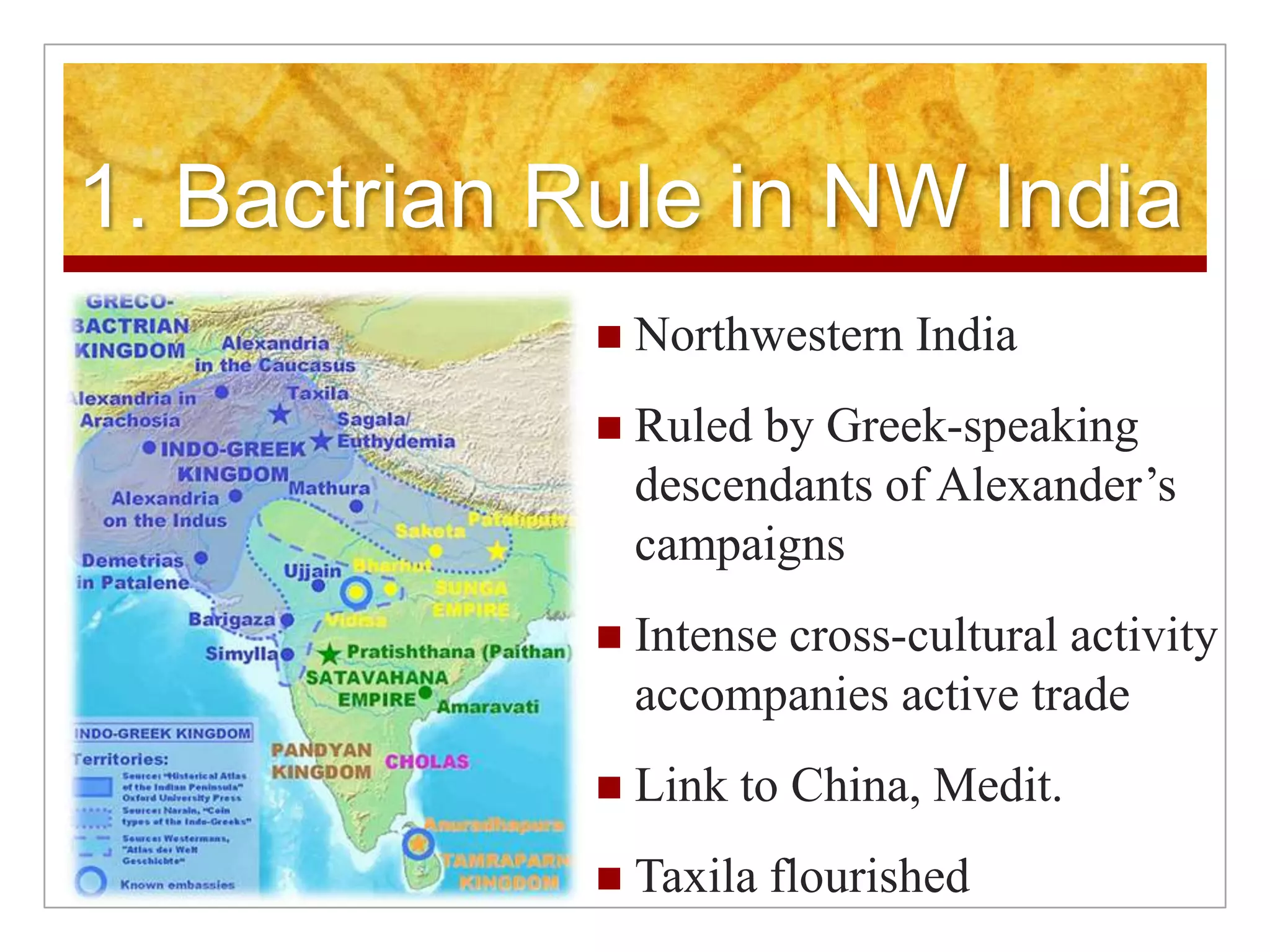
1. Bactrian Rule in NW IndiaNorthwestern IndiaRuled by Greek-speaking descendants of Alexander’s campaignsIntense cross-cultural activity accompanies active tradeLink to China, Medit. Taxila flourished
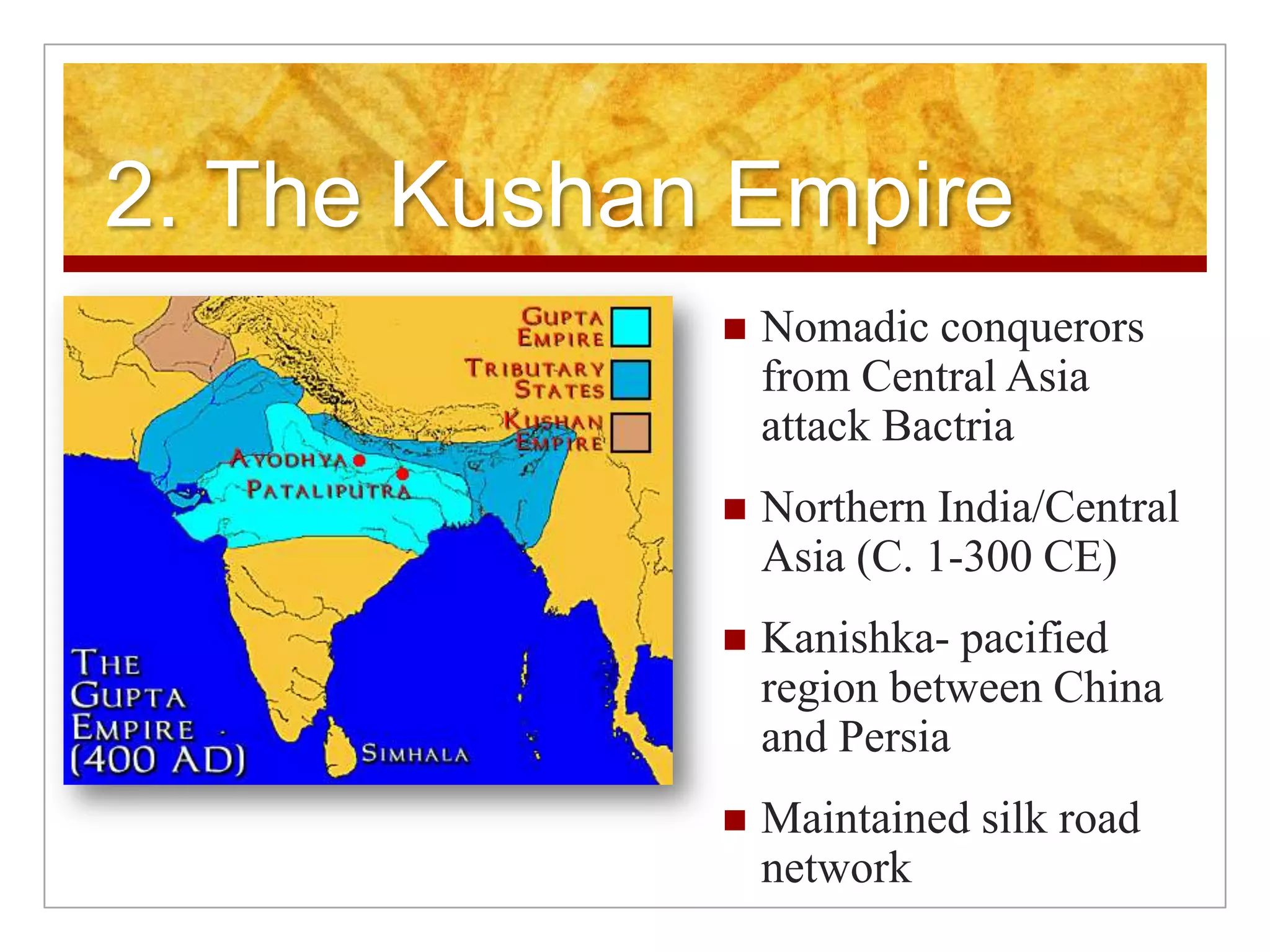
2. The Kushan EmpireNomadic conquerors from Central Asia attack BactriaNorthern India/Central Asia (C. 1-300 CE)Kanishka- pacified region between China and PersiaMaintained silk road network
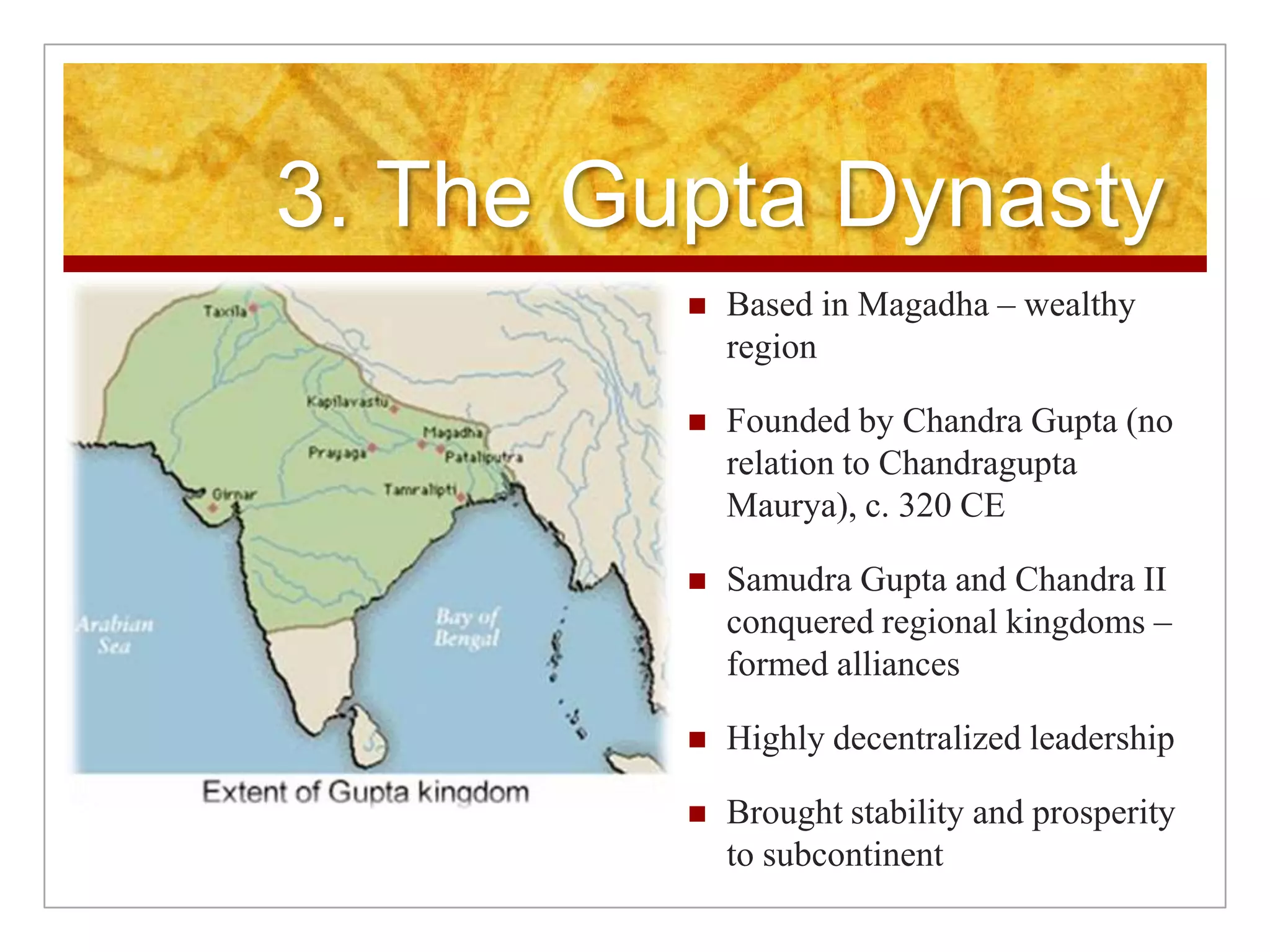
3. The Gupta DynastyBased in Magadha – wealthy regionFounded by Chandra Gupta (no relation to Chandragupta Maurya), c. 320 CESamudra Gupta and Chandra II conquered regional kingdoms – formed alliances Highly decentralized leadershipBrought stability and prosperity to subcontinent
4. Gupta DeclineFrequent invasions of White Huns, 5thc. CEHigh cost – resources depletedGupta Dynasty disintegrates along regional fault linesAfter the fifth century C.E., Gupta dynasty continued in name only Large regional kingdoms dominated political life in IndiaSmaller local kingdoms dominate until Mughal Empire founded in 16thc.
II. Economic and Social Distinctions
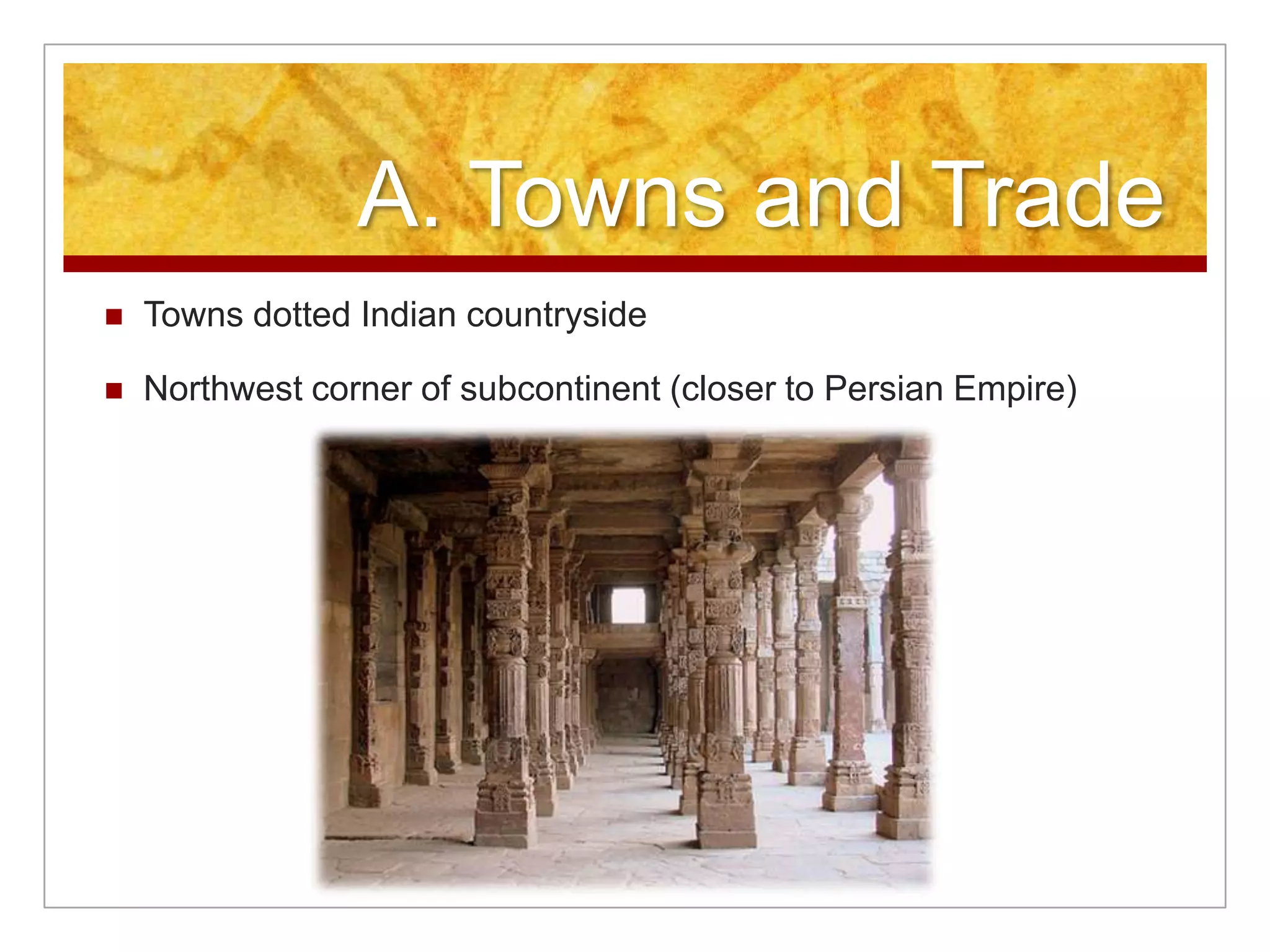
A. Towns and Trade Towns dotted Indian countrysideNorthwest corner of subcontinent (closer to Persian Empire)
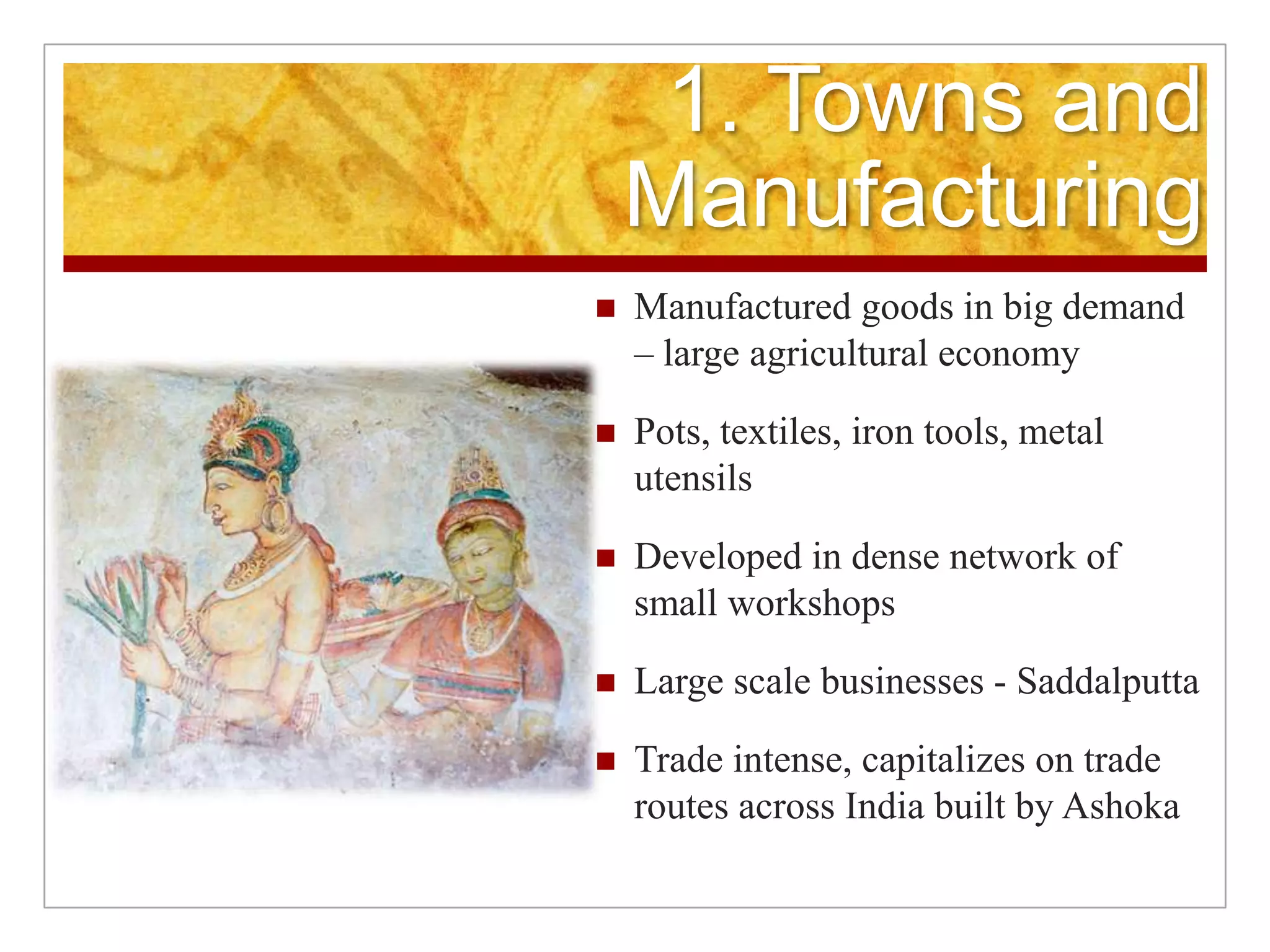
1. Towns and ManufacturingManufactured goods in big demand – large agricultural economyPots, textiles, iron tools, metal utensilsDeveloped in dense network of small workshopsLarge scale businesses - SaddalputtaTrade intense, capitalizes on trade routes across India built by Ashoka
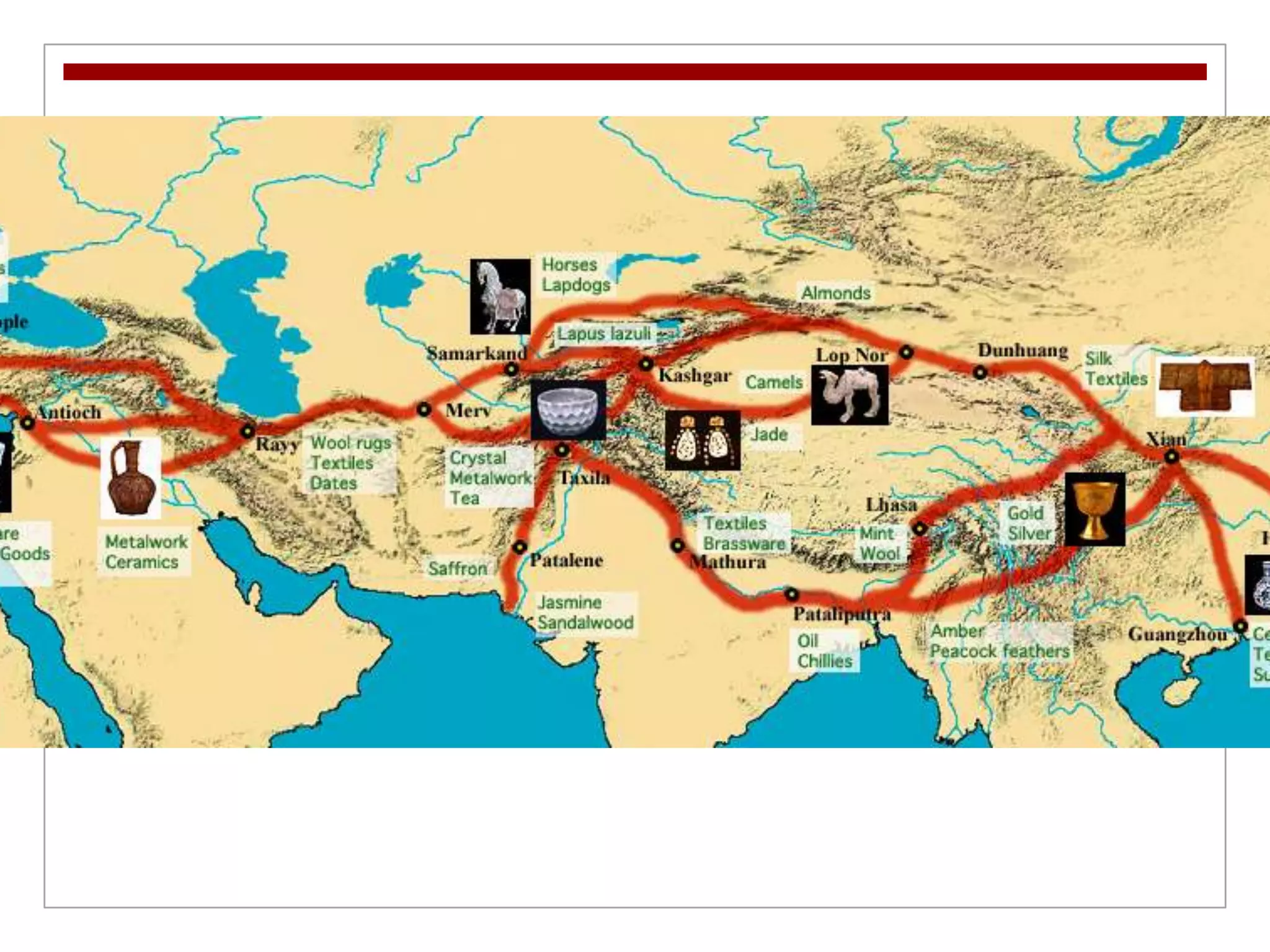
2. Long Distance TradePersian connection since Cyrus, DariusMassive road-building projects under Persian ruleAlexander extends trade west to MacedonTrade routes through Kush mountains, the silk roadsCotton, Aromatics, black pepper, pearls and gems
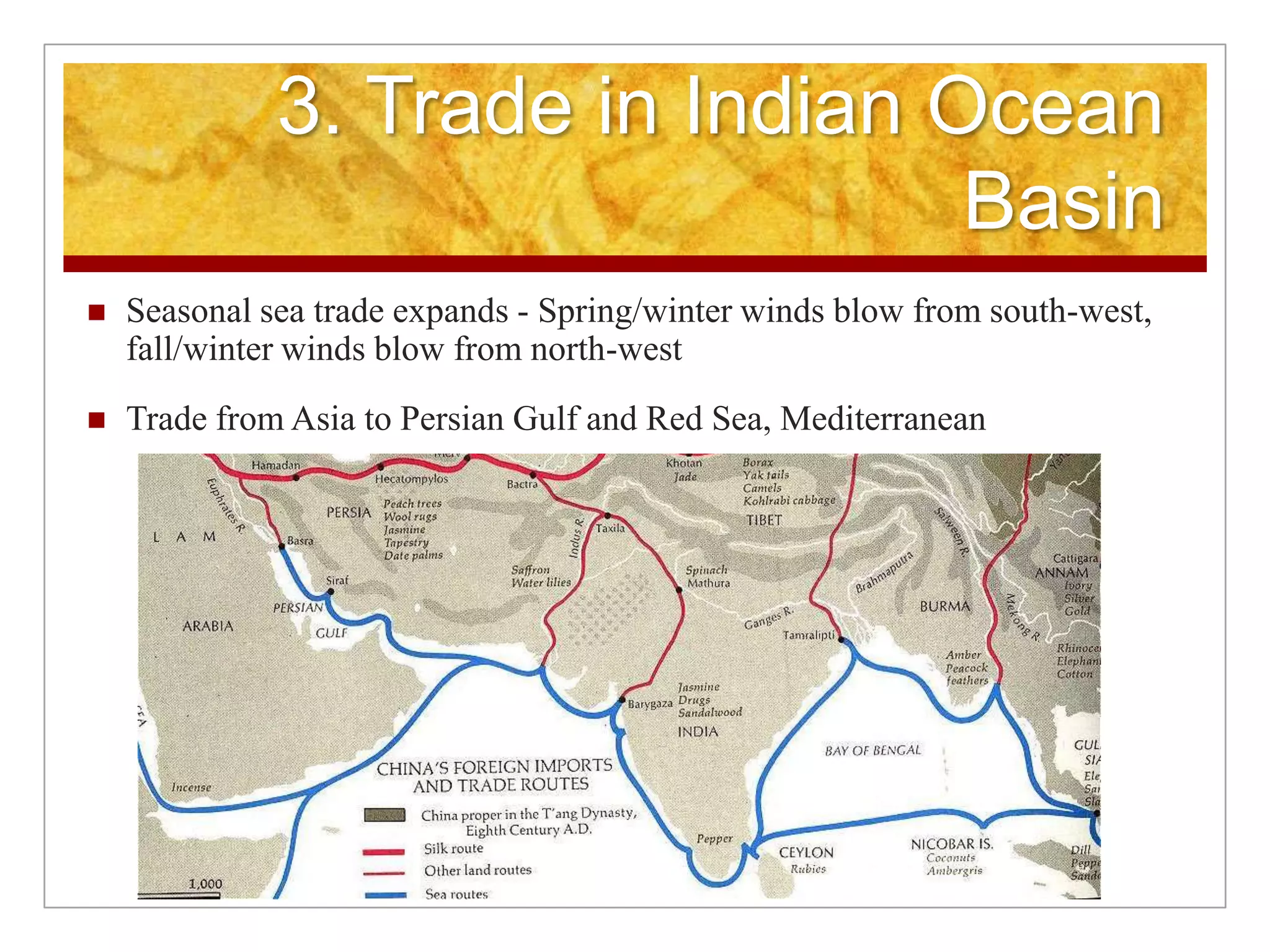
3. Trade in Indian Ocean BasinSeasonal sea trade expands - Spring/winter winds blow from south-west, fall/winter winds blow from north-west
Trade from Asia to Persian Gulf and Red Sea, MediterraneanB. Family Life and Caste SystemMoralist sought to promote stabilityEncouraged respect for patriarchal familiesPromote maintenance of social orderNuclear family
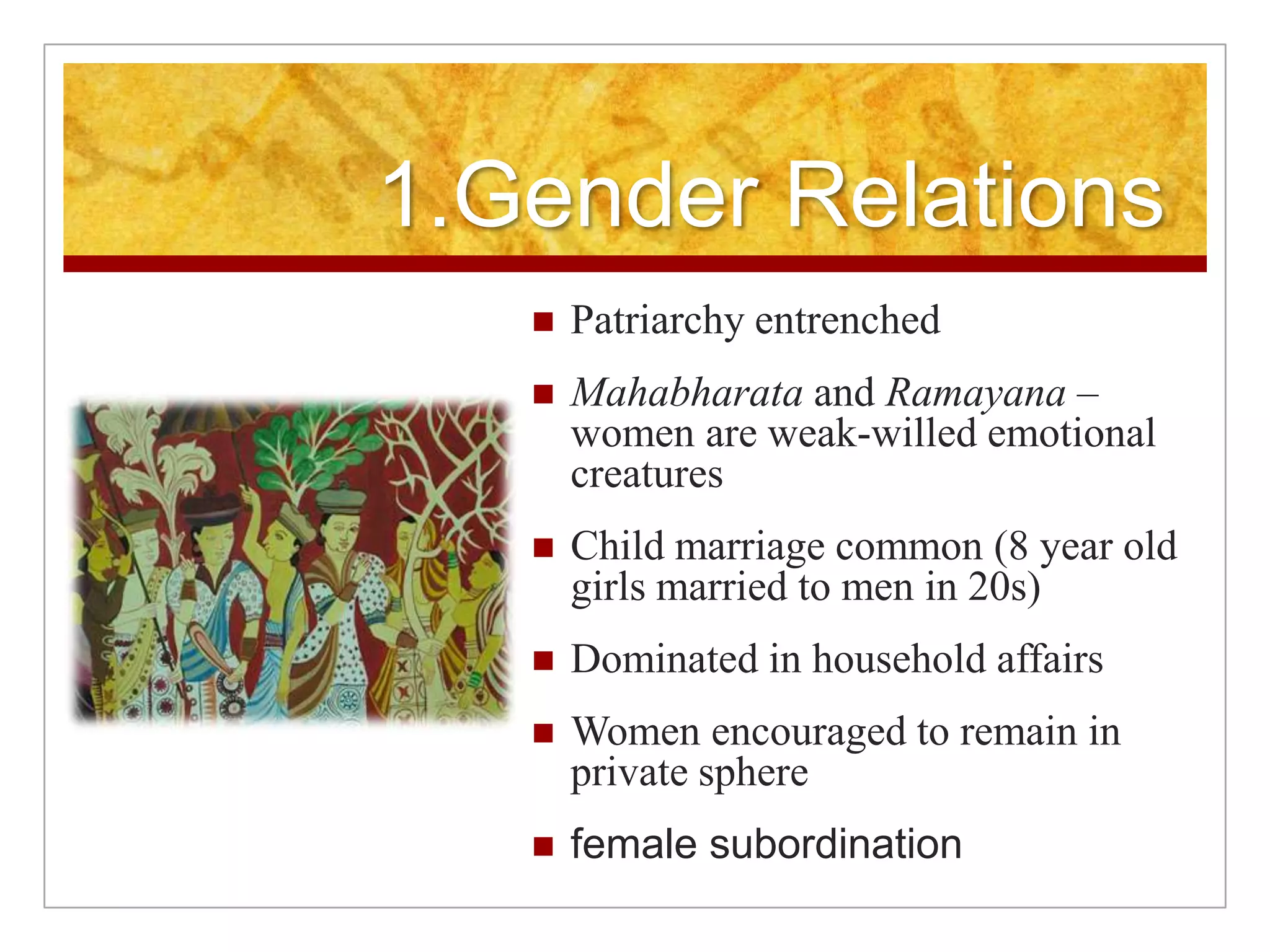
1.Gender Relations Patriarchy entrenchedMahabharata and Ramayana – women are weak-willed emotional creaturesChild marriage common (8 year old girls married to men in 20s)Dominated in household affairsWomen encouraged to remain in private spherefemale subordination
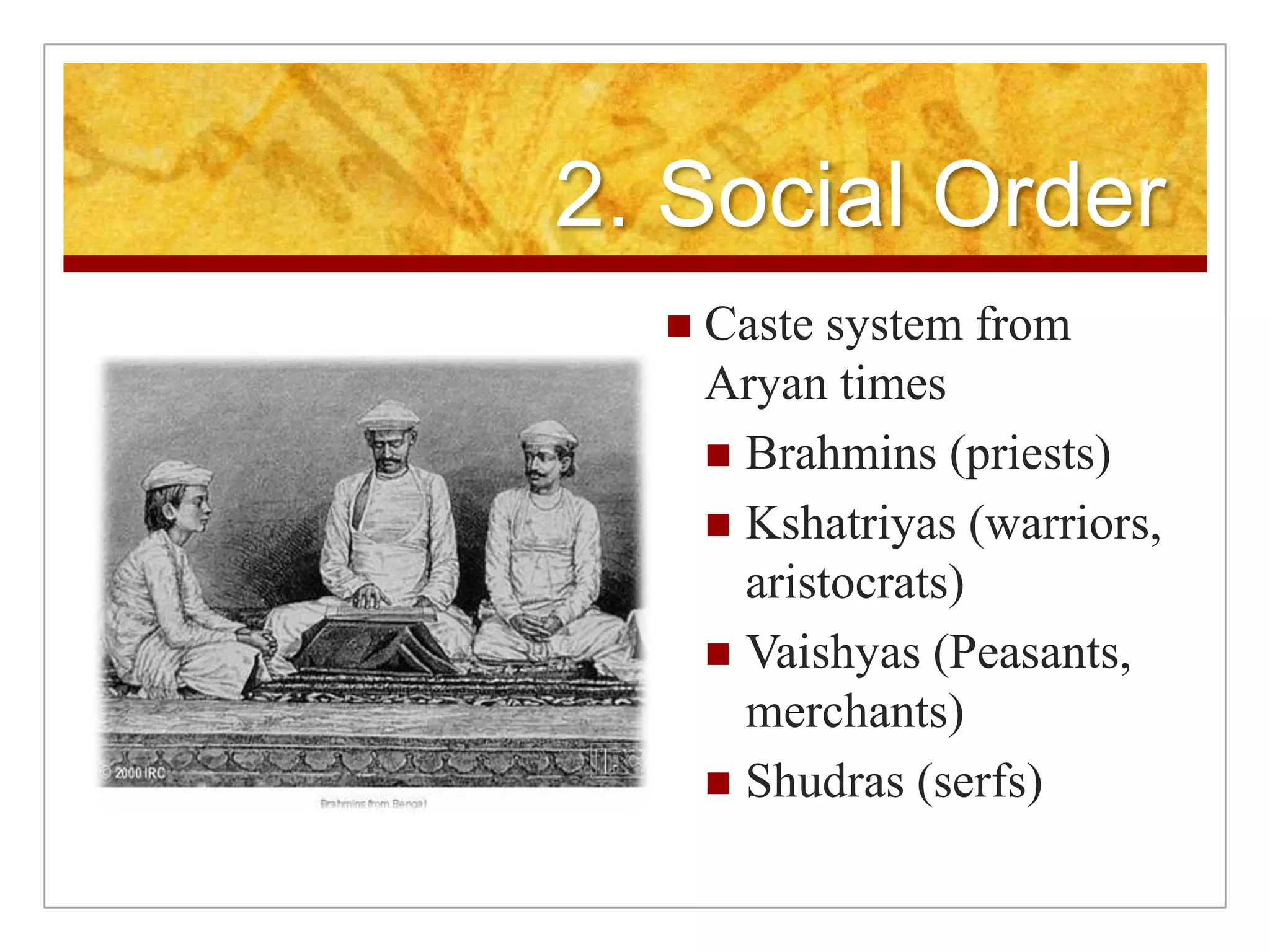
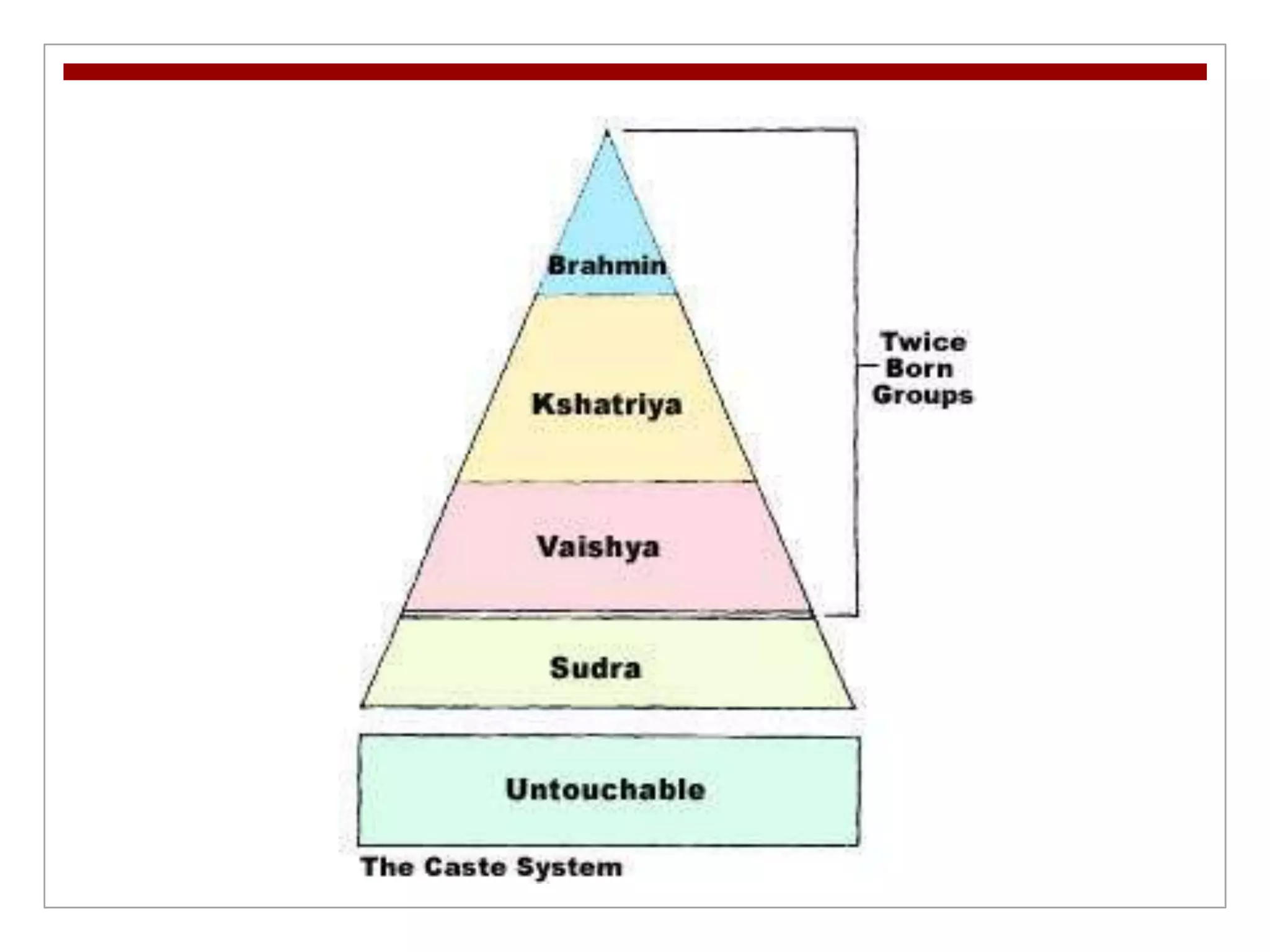
2. Social OrderCaste system from Aryan timesBrahmins (priests)Kshatriyas (warriors, aristocrats)Vaishyas (Peasants, merchants)Shudras (serfs)
3. Castes and GuildsIncreasing economic diversification challenges simplistic caste systemWith trade and commerce new social groups of artisans, craftsmen, and merchants appearedJatis formed: guilds that acted as sub-castesFamilies associate with others in like castesJatis enforced social order“outcastes” forced into low-status employment
4. Wealth and the Social OrderVaishyasand shudras saw unprecedented wealthUpward social mobility possible for Vaishyas, ShudrasWealth challengesvarnafor statusOld beliefs and values of early Aryan society became increasingly irrelevant
III. Religions of Salvation in Classical India
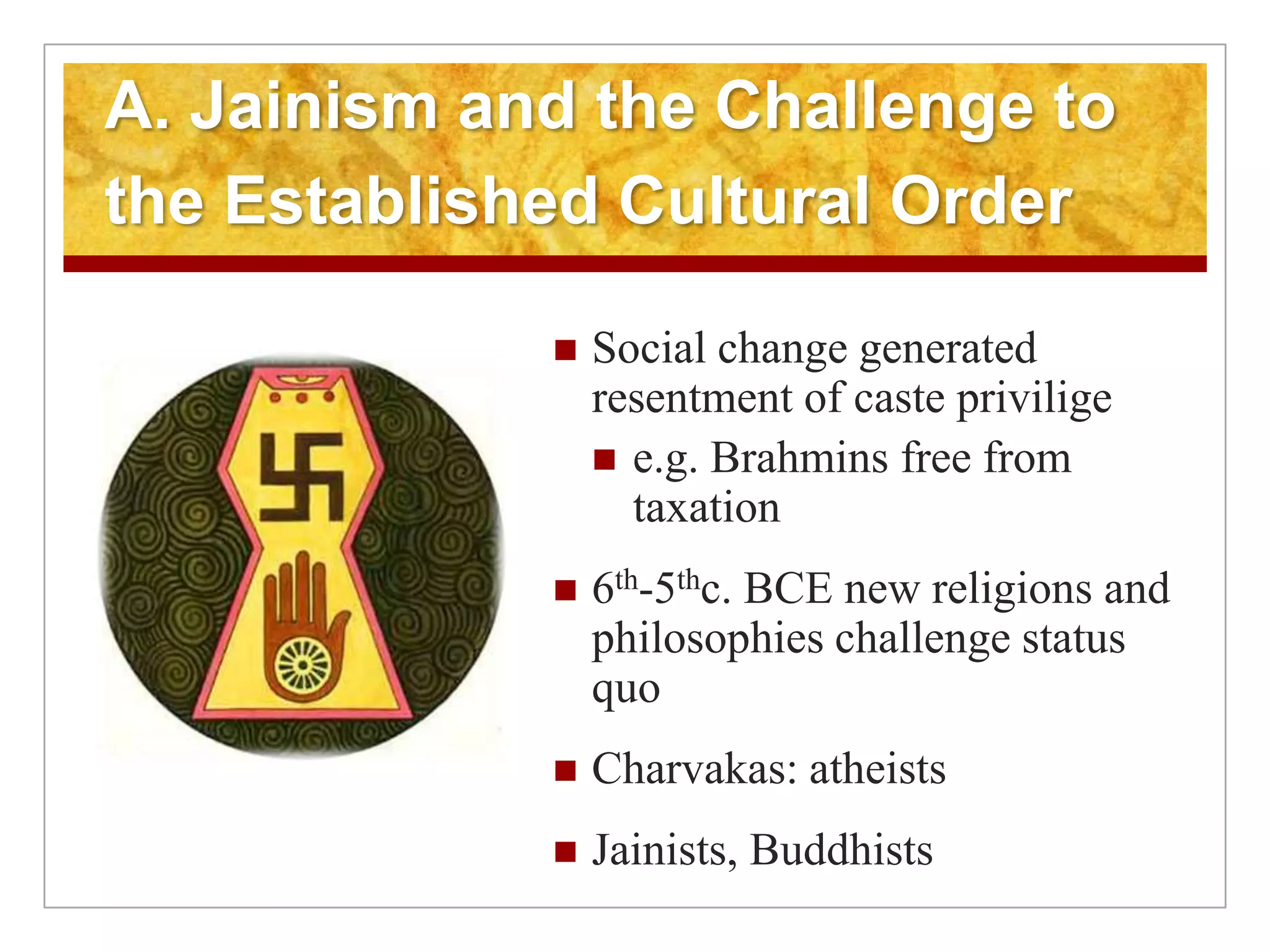
A. Jainism and the Challenge to the Established Cultural OrderSocial change generated resentment of caste priviligee.g. Brahmins free from taxation6th-5thc. BCE new religions and philosophies challenge status quoCharvakas: atheistsJainists, Buddhists
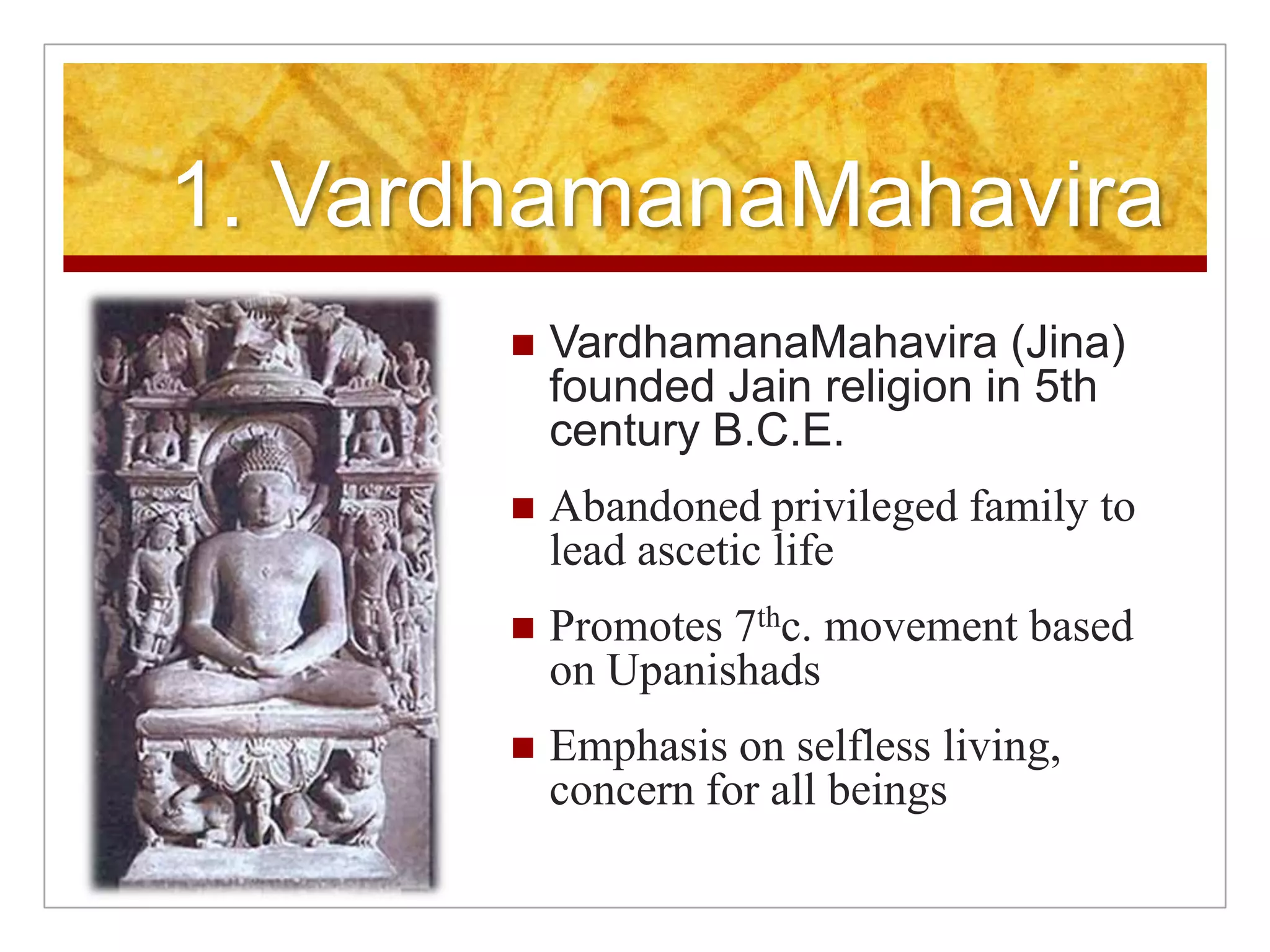
1. VardhamanaMahaviraVardhamanaMahavira (Jina) founded Jain religion in 5th century B.C.E. Abandoned privileged family to lead ascetic lifePromotes 7thc. movement based on UpanishadsEmphasis on selfless living, concern for all beings
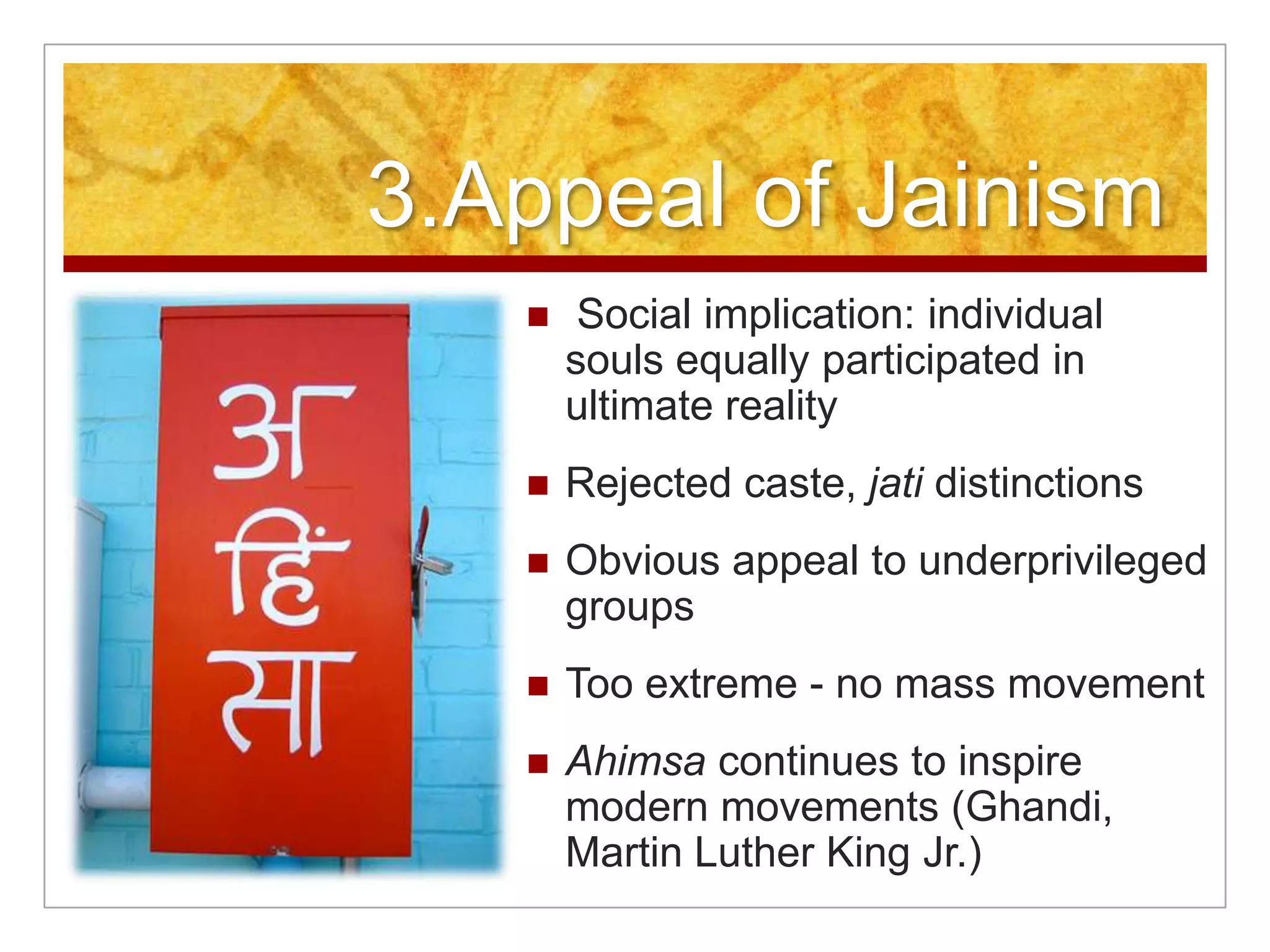
2.Jainist EthicsStriving to purify one's selfish behavior to attain a state of blissPrinciple of ahimsa, nonviolence toward all living thingsJainists sweep earth, strain water, use slow movements to avoid killing insectsToo demanding, not a practical alternative to the cult of the brahmans
3.Appeal of Jainism Social implication: individual souls equally participated in ultimate realityRejected caste, jati distinctionsObvious appeal to underprivileged groupsToo extreme - no mass movementAhimsa continues to inspire modern movements (Ghandi, Martin Luther King Jr.)
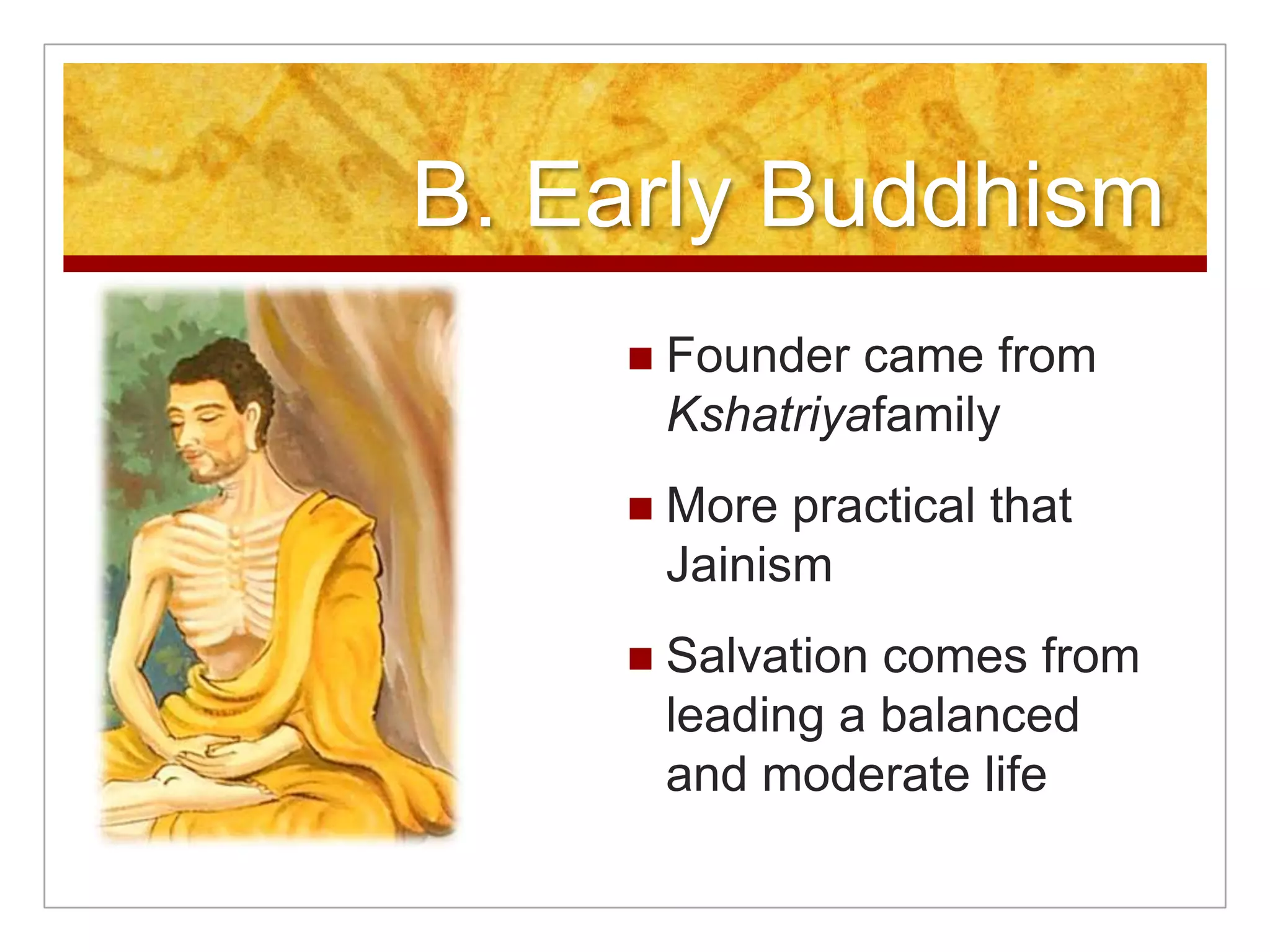
B. Early BuddhismFounder came from KshatriyafamilyMore practical that JainismSalvation comes from leading a balanced and moderate life
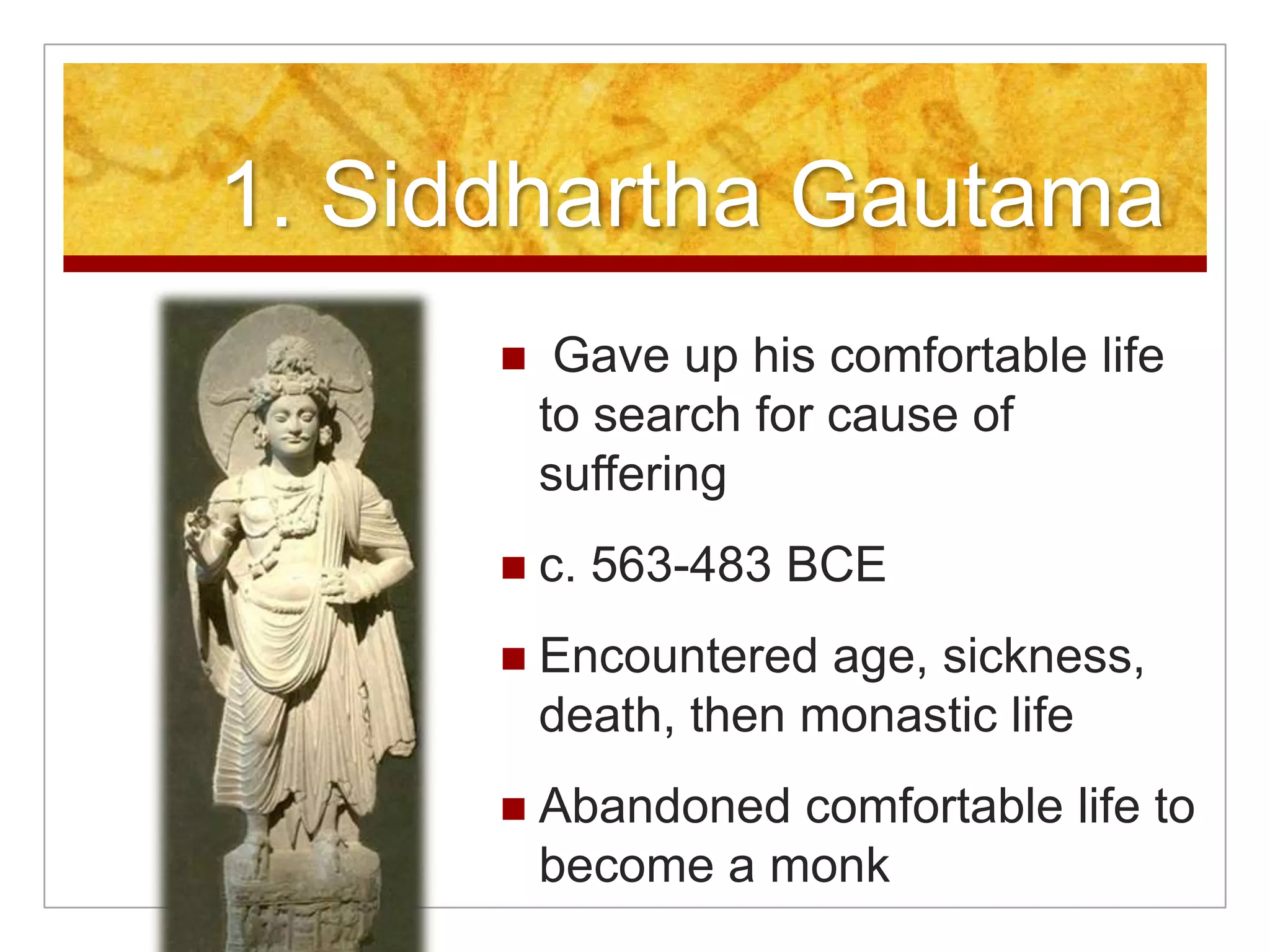
1. Siddhartha Gautama Gave up his comfortable life to search for cause of sufferingc. 563-483 BCEEncountered age, sickness, death, then monastic lifeAbandoned comfortable life to become a monk
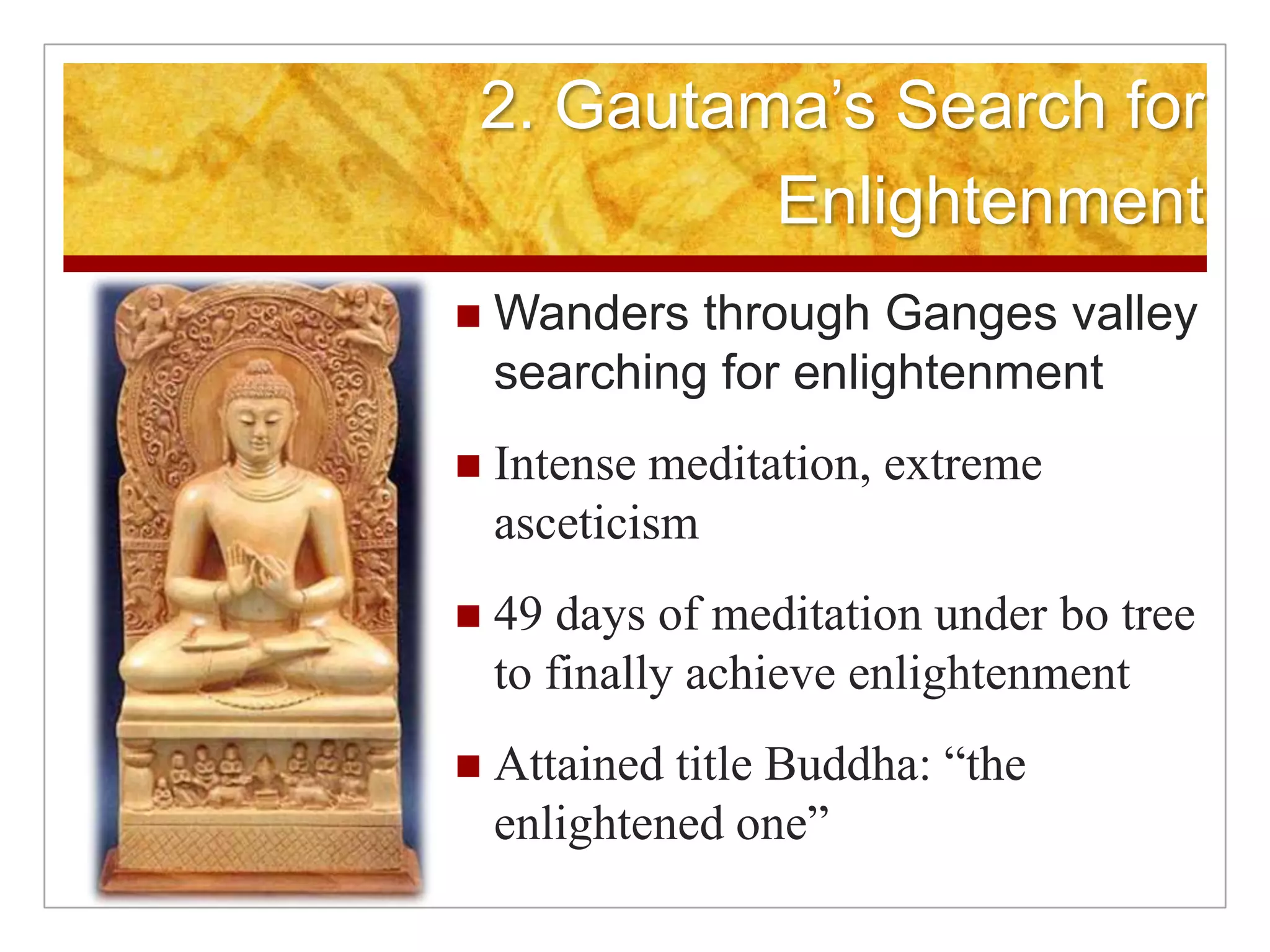
2. Gautama’s Search for EnlightenmentWanders through Ganges valley searching for enlightenmentIntense meditation, extreme asceticism49 days of meditation under bo tree to finally achieve enlightenmentAttained title Buddha: “the enlightened one”
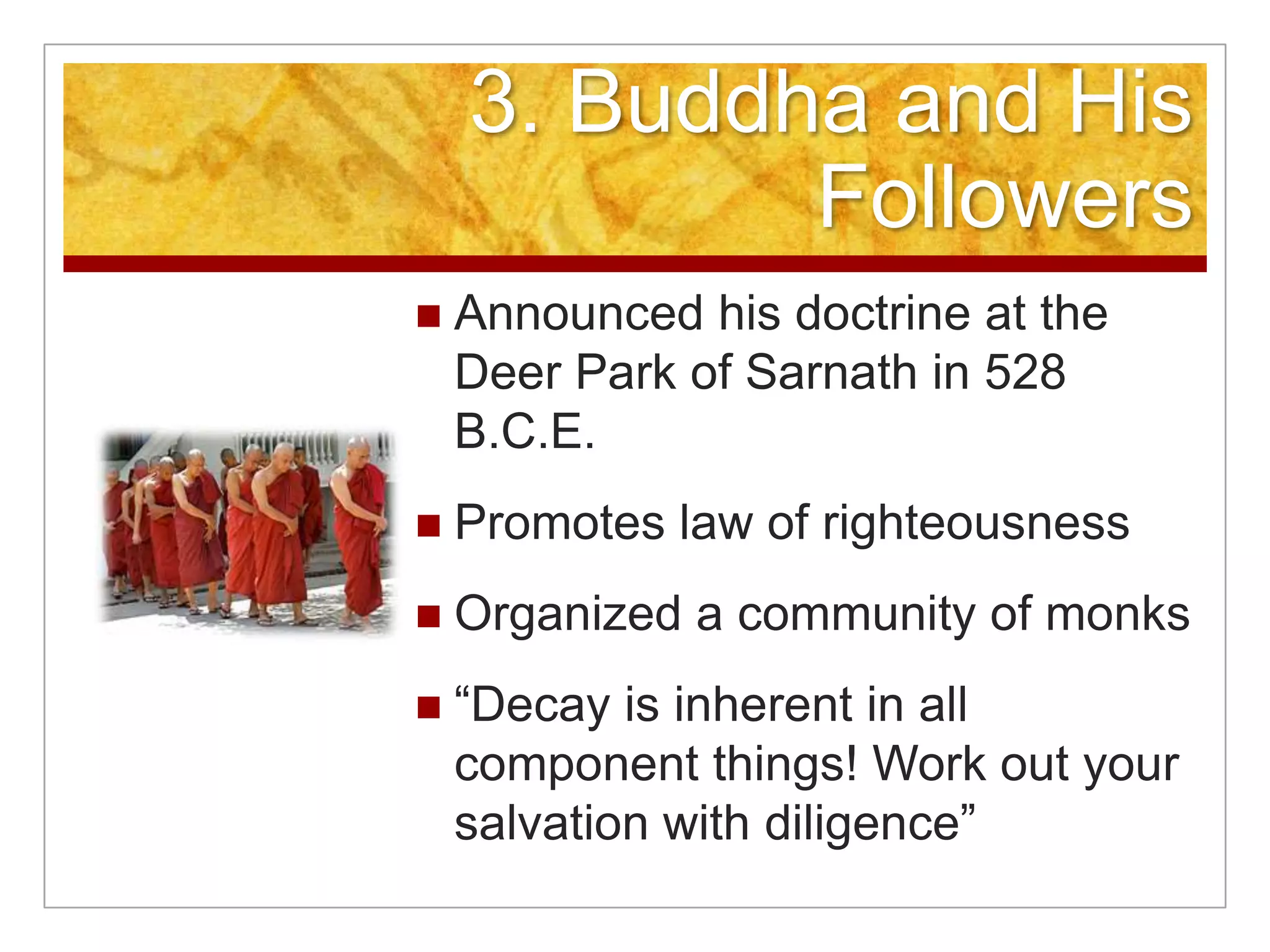
3. Buddha and His FollowersAnnounced his doctrine at the Deer Park of Sarnath in 528 B.C.E.Promotes law of righteousnessOrganized a community of monks“Decay is inherent in all component things! Work out your salvation with diligence”
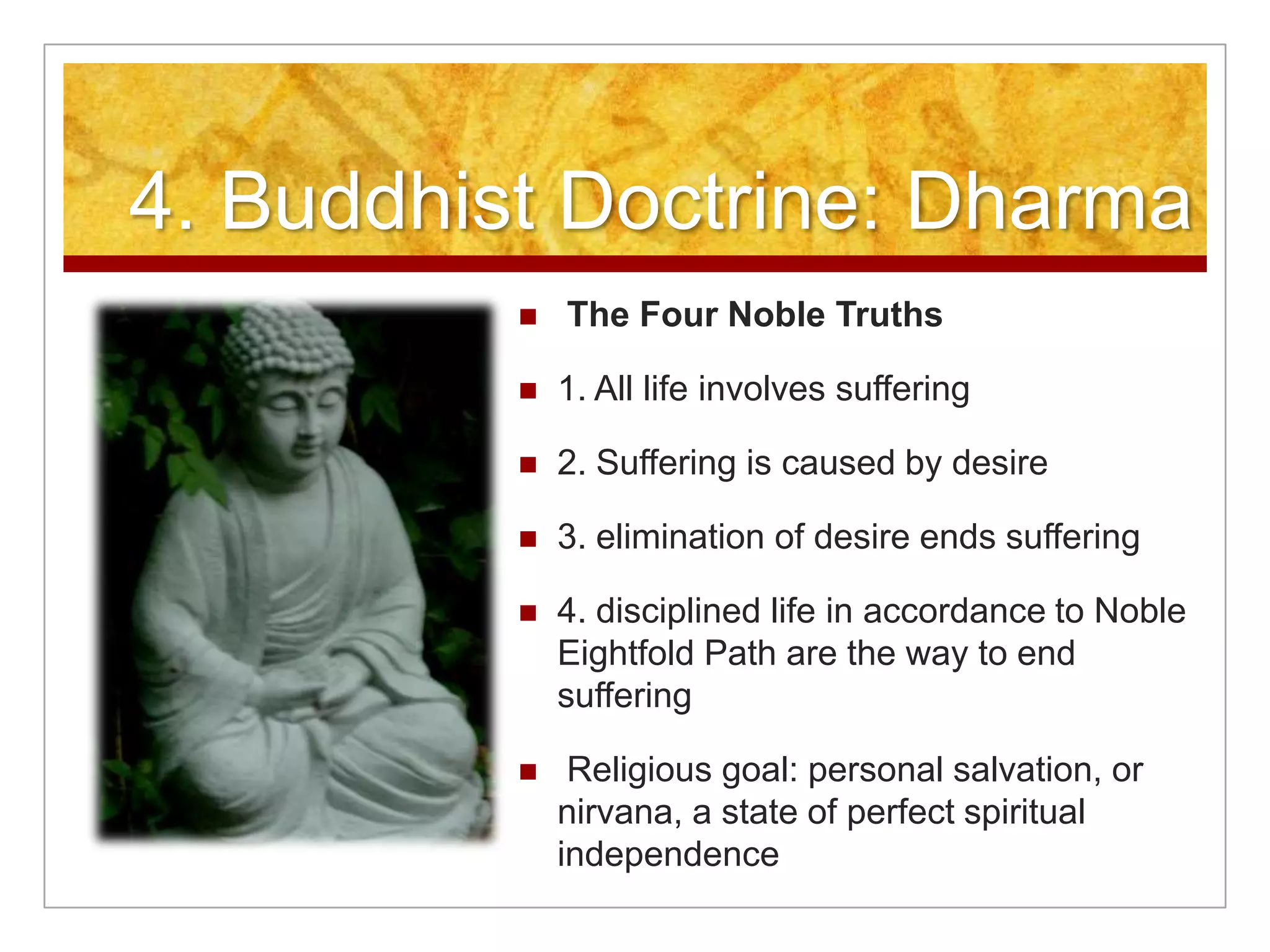
4. Buddhist Doctrine: Dharma The Four Noble Truths1. All life involves suffering 2. Suffering is caused by desire3. elimination of desire ends suffering4. disciplined life in accordance to Noble Eightfold Path are the way to end suffering Religious goal: personal salvation, or nirvana, a state of perfect spiritual independence
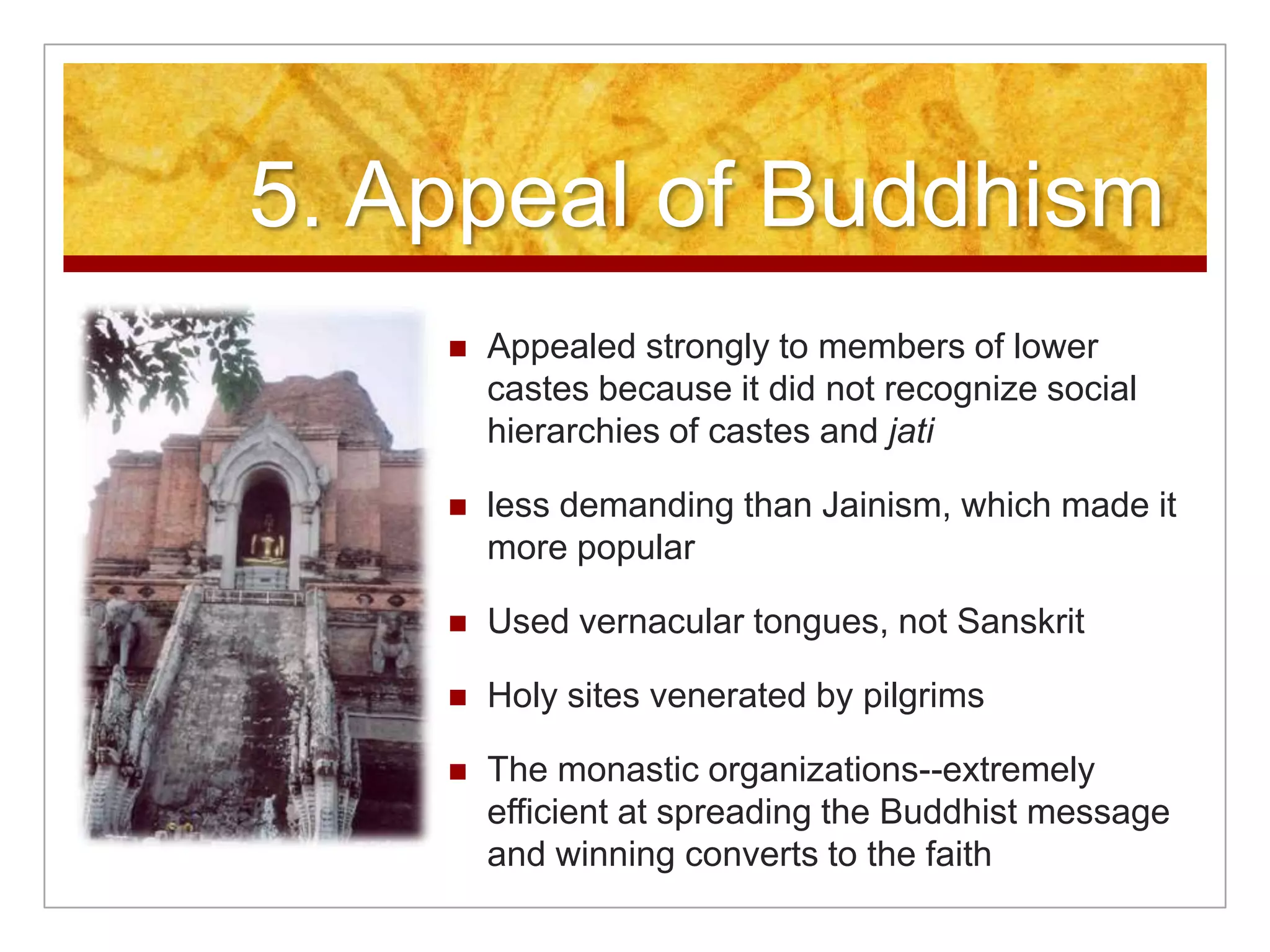
5. Appeal of BuddhismAppealed strongly to members of lower castes because it did not recognize social hierarchies of castes and jatiless demanding than Jainism, which made it more popularUsed vernacular tongues, not SanskritHoly sites venerated by pilgrimsThe monastic organizations--extremely efficient at spreading the Buddhist message and winning converts to the faith
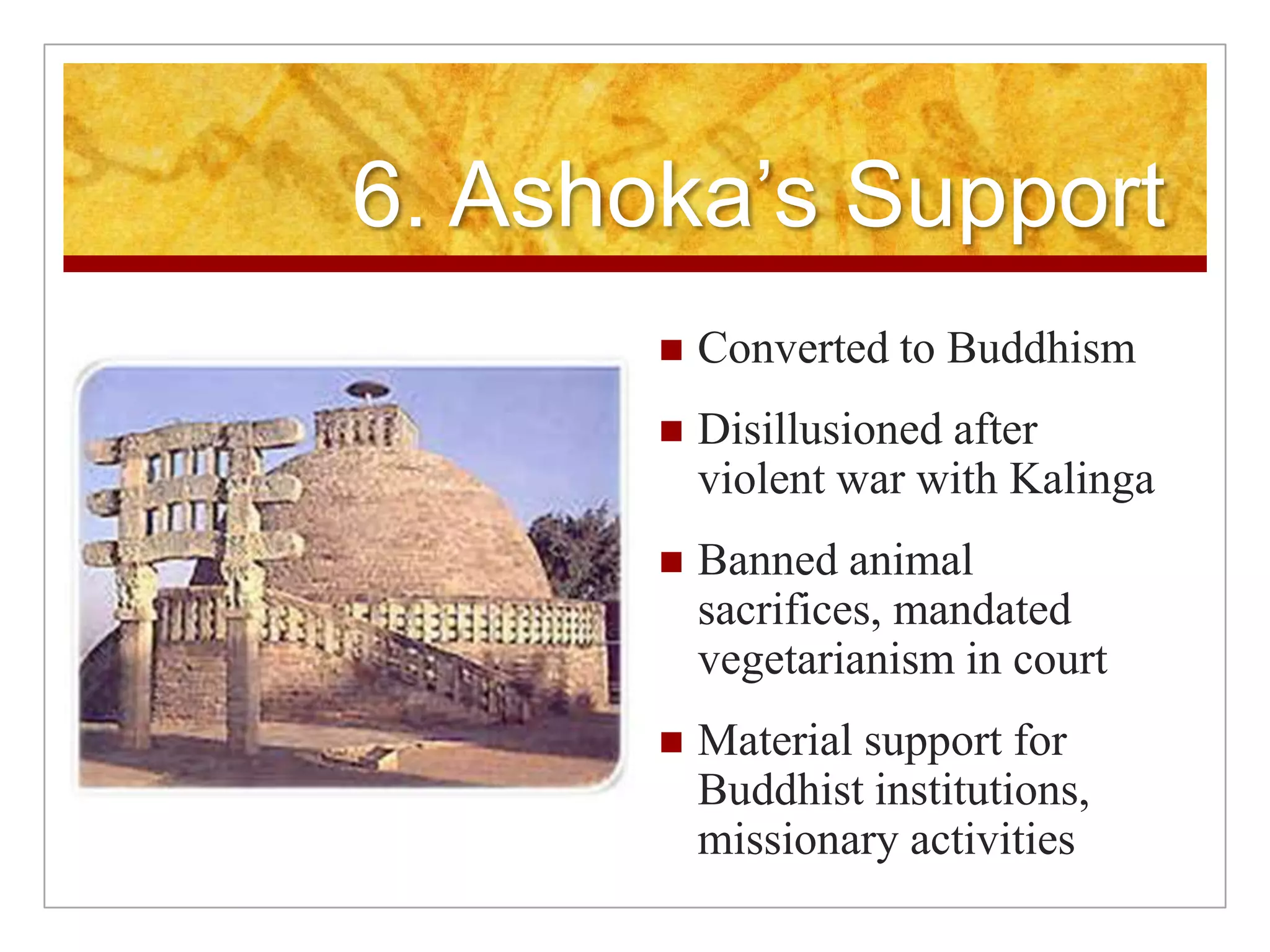
6. Ashoka’s SupportConverted to BuddhismDisillusioned after violent war with KalingaBanned animal sacrifices, mandated vegetarianism in courtMaterial support for Buddhist institutions, missionary activities
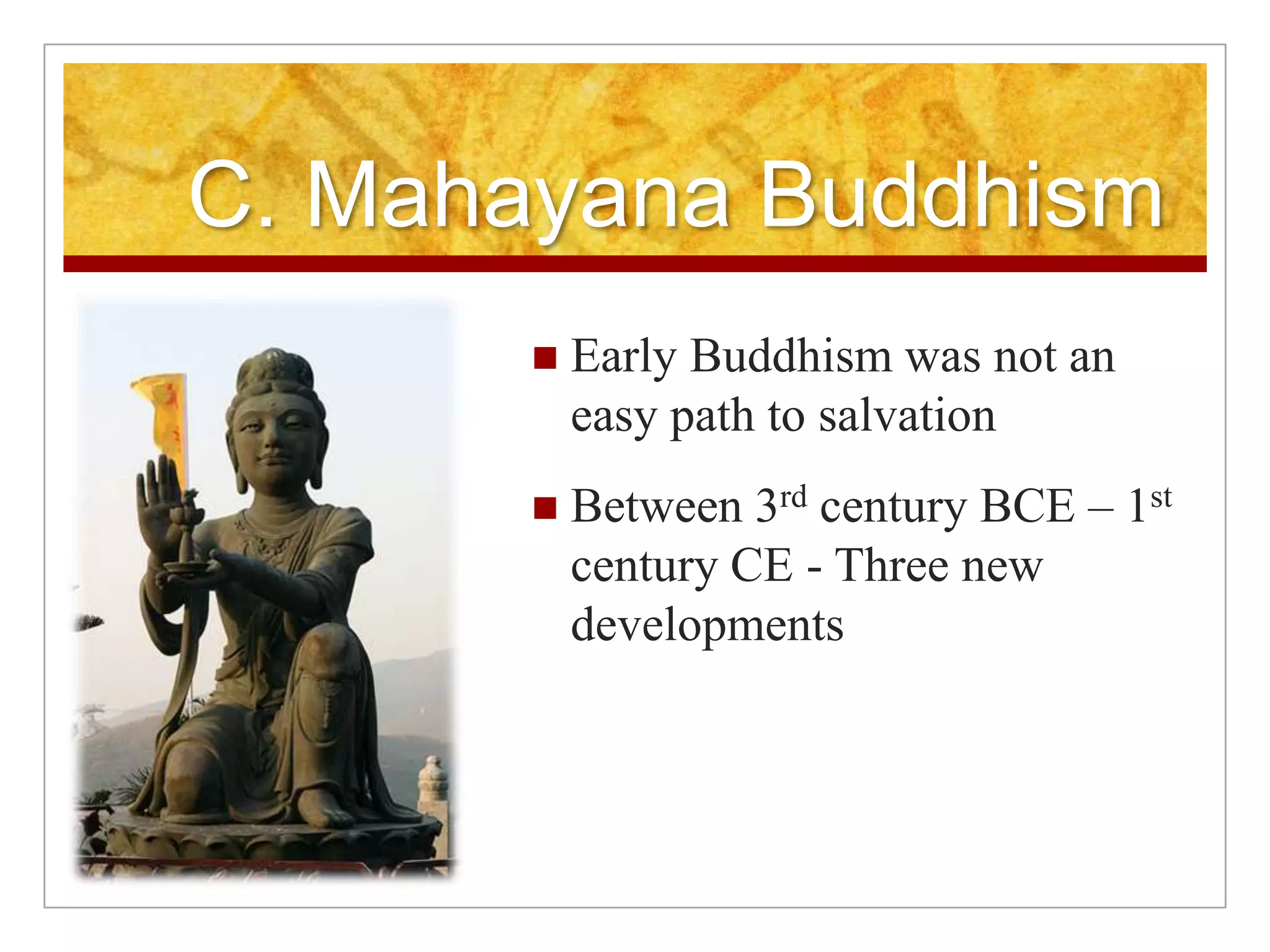
C. Mahayana BuddhismEarly Buddhism was not an easy path to salvationBetween 3rd century BCE – 1st century CE - Three new developments
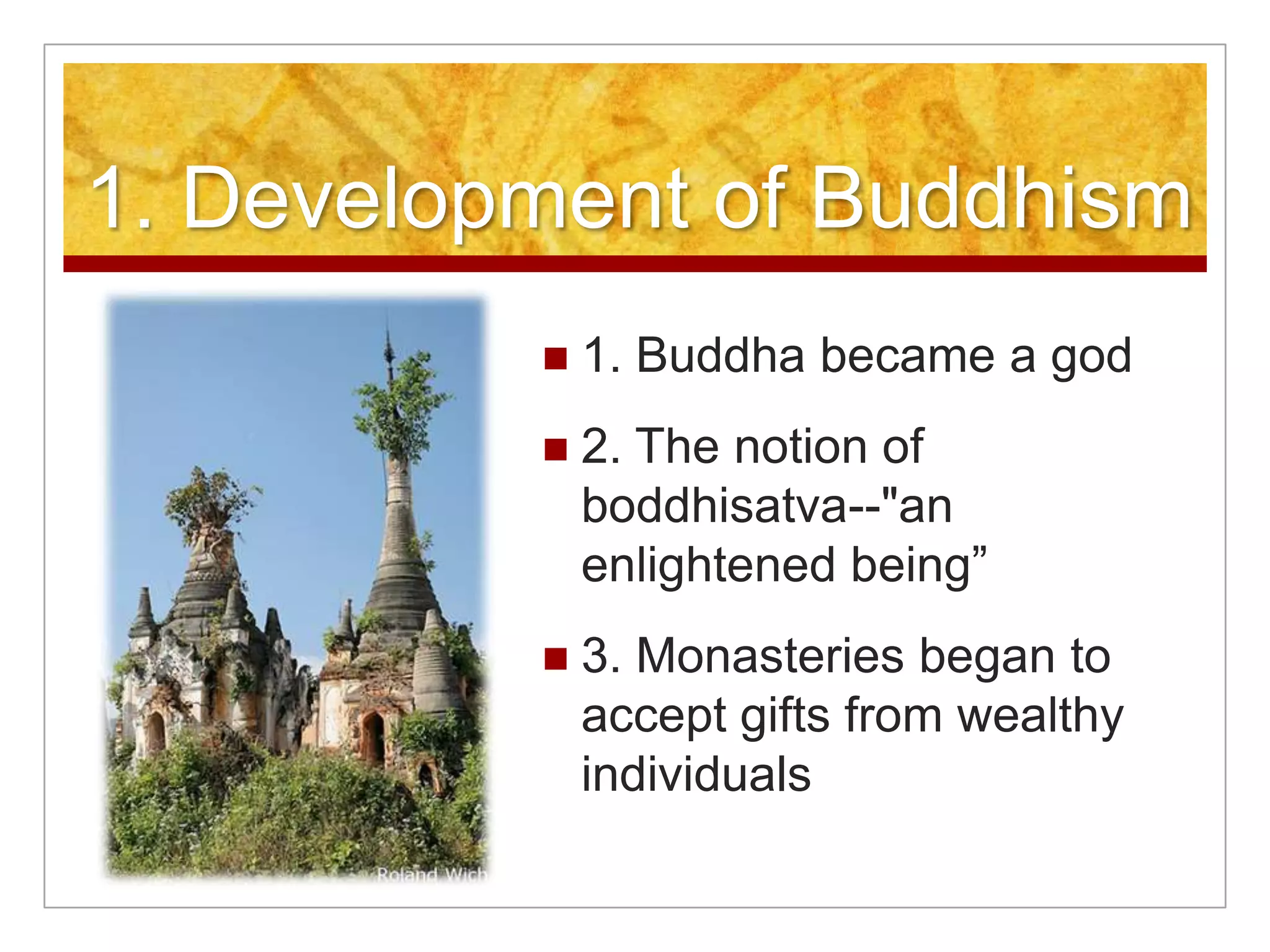
1. Development of Buddhism1. Buddha became a god2. The notion of boddhisatva--"an enlightened being”3. Monasteries began to accept gifts from wealthy individuals
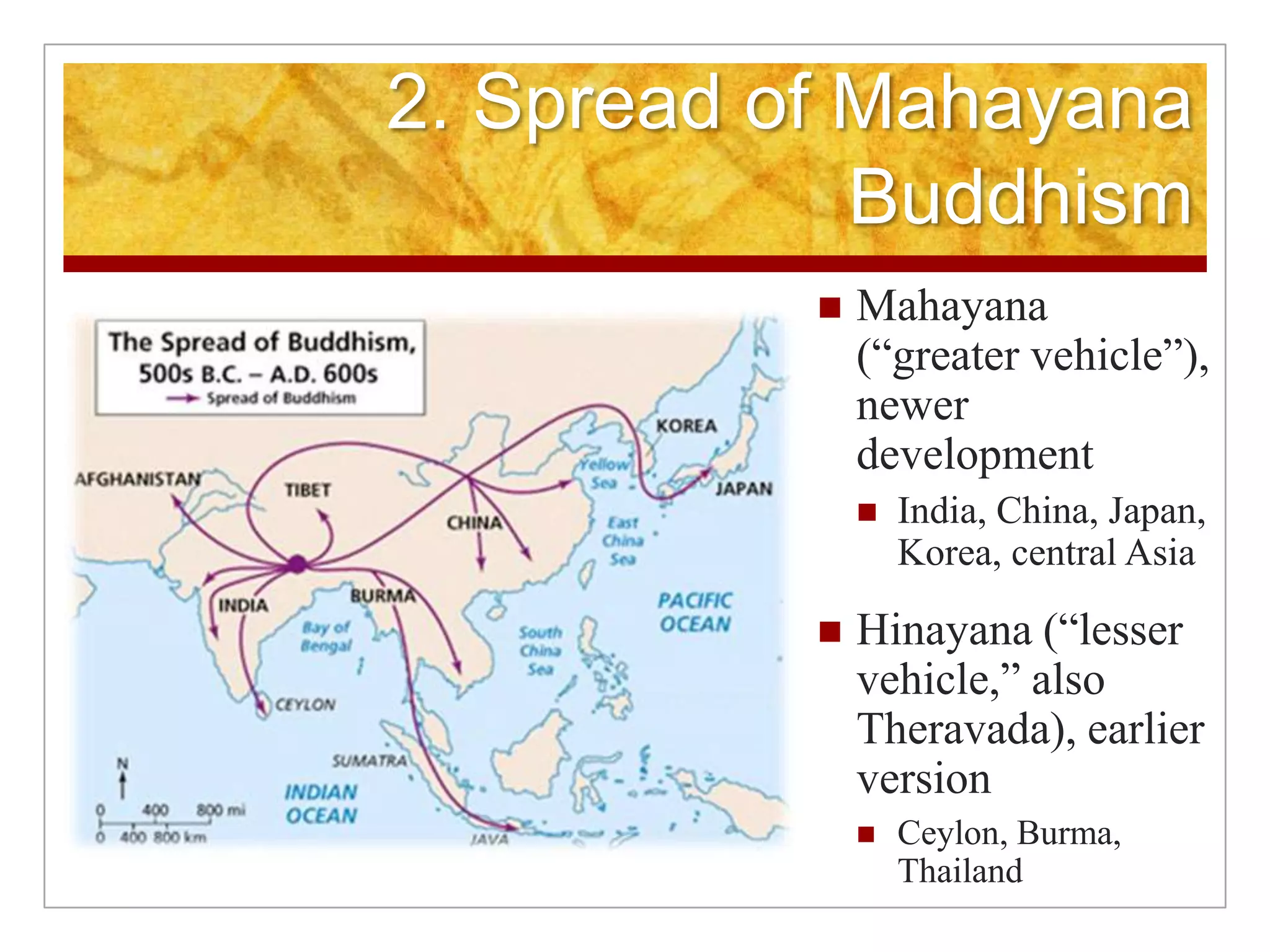
2. Spread of Mahayana BuddhismMahayana (“greater vehicle”), newer developmentIndia, China, Japan, Korea, central AsiaHinayana (“lesser vehicle,” also Theravada), earlier versionCeylon, Burma, Thailand
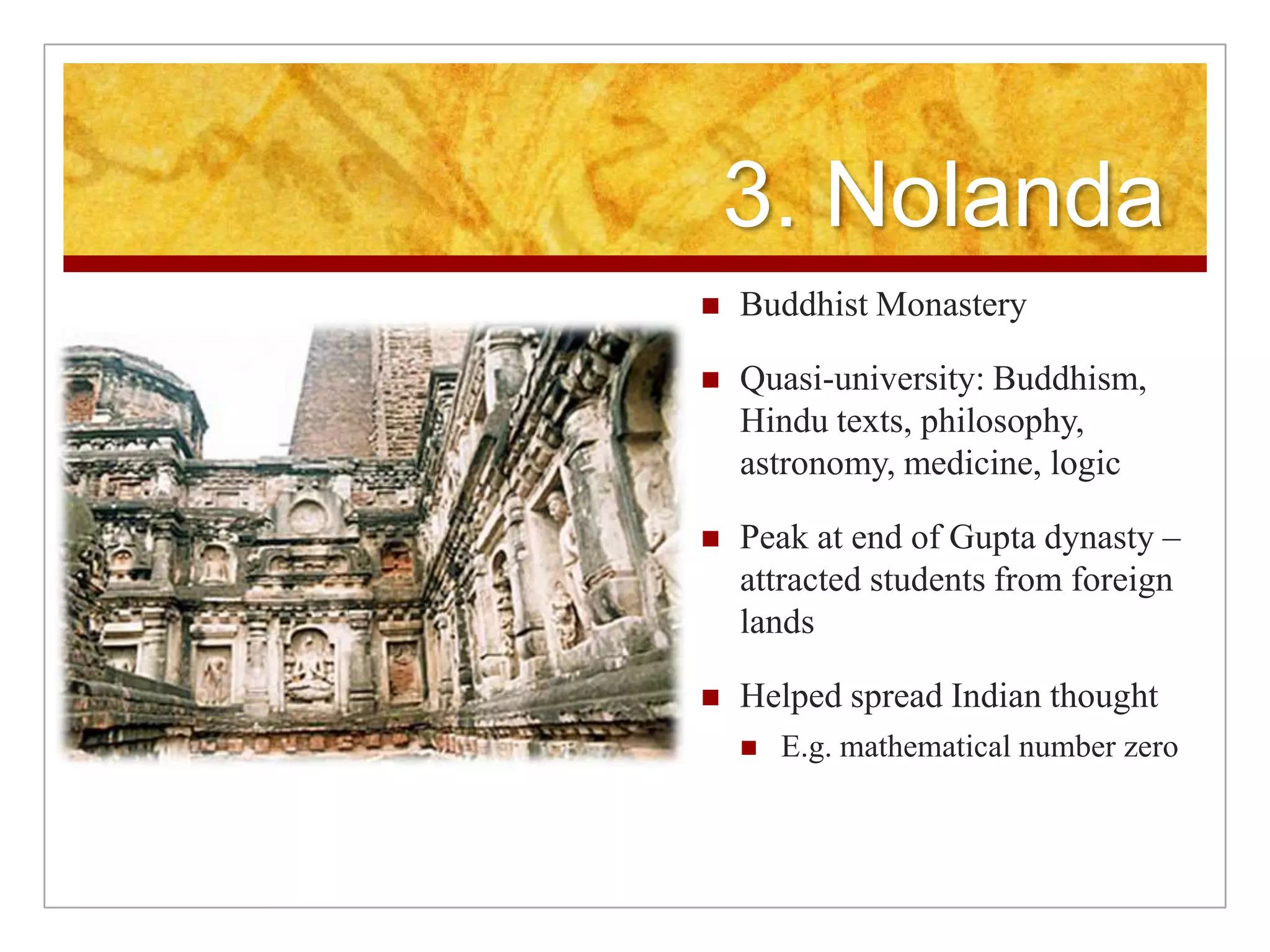
3. NolandaBuddhist MonasteryQuasi-university: Buddhism, Hindu texts, philosophy, astronomy, medicine, logicPeak at end of Gupta dynasty – attracted students from foreign landsHelped spread Indian thoughtE.g. mathematical number zero
D. The Emergence of Popular HinduismLike Buddhism, undergoes change to appeal to more peopleInspired by Upanishads and VedasDeparted from older traditions
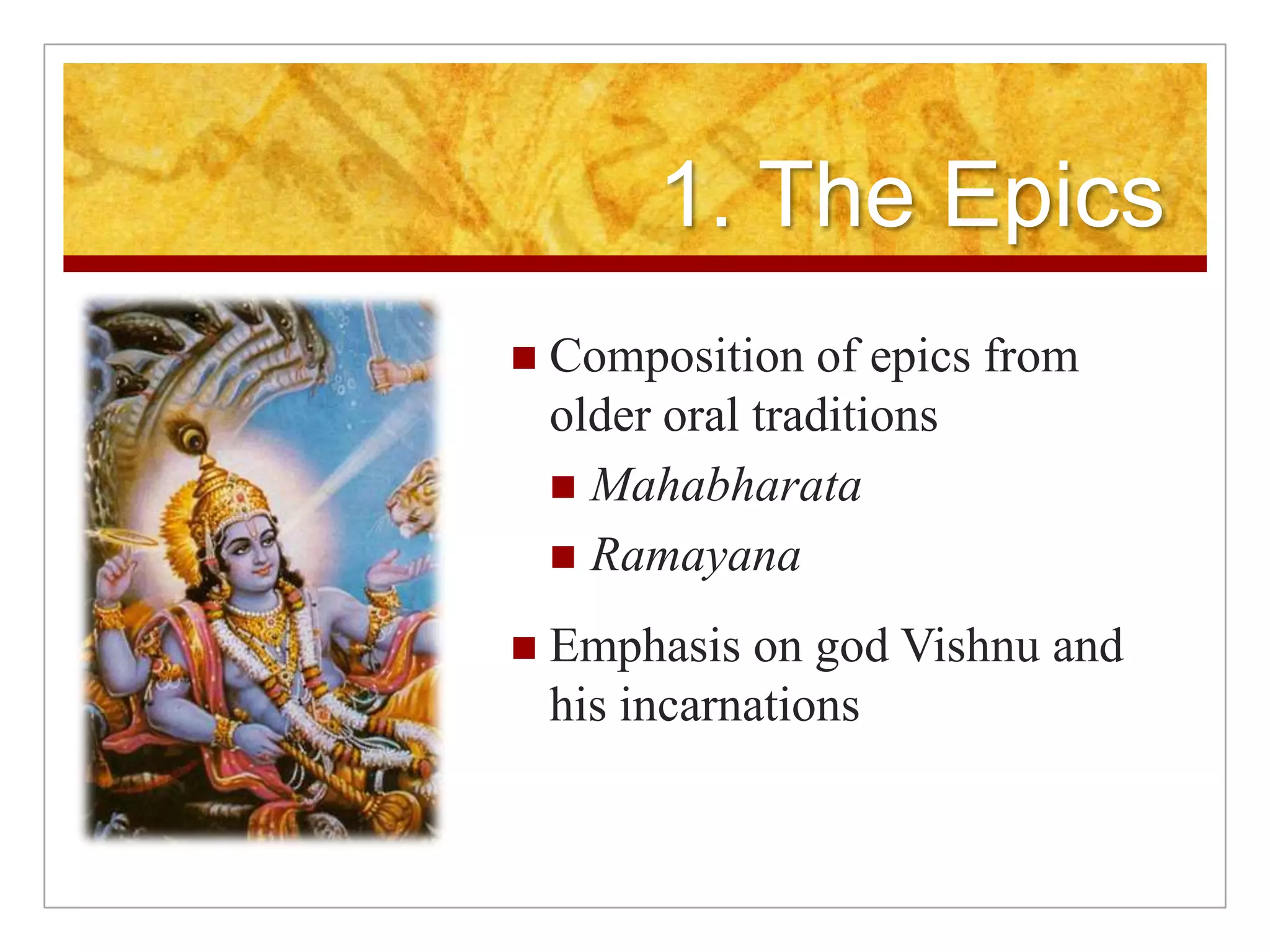
1. The EpicsComposition of epics from older oral traditionsMahabharataRamayanaEmphasis on god Vishnu and his incarnations
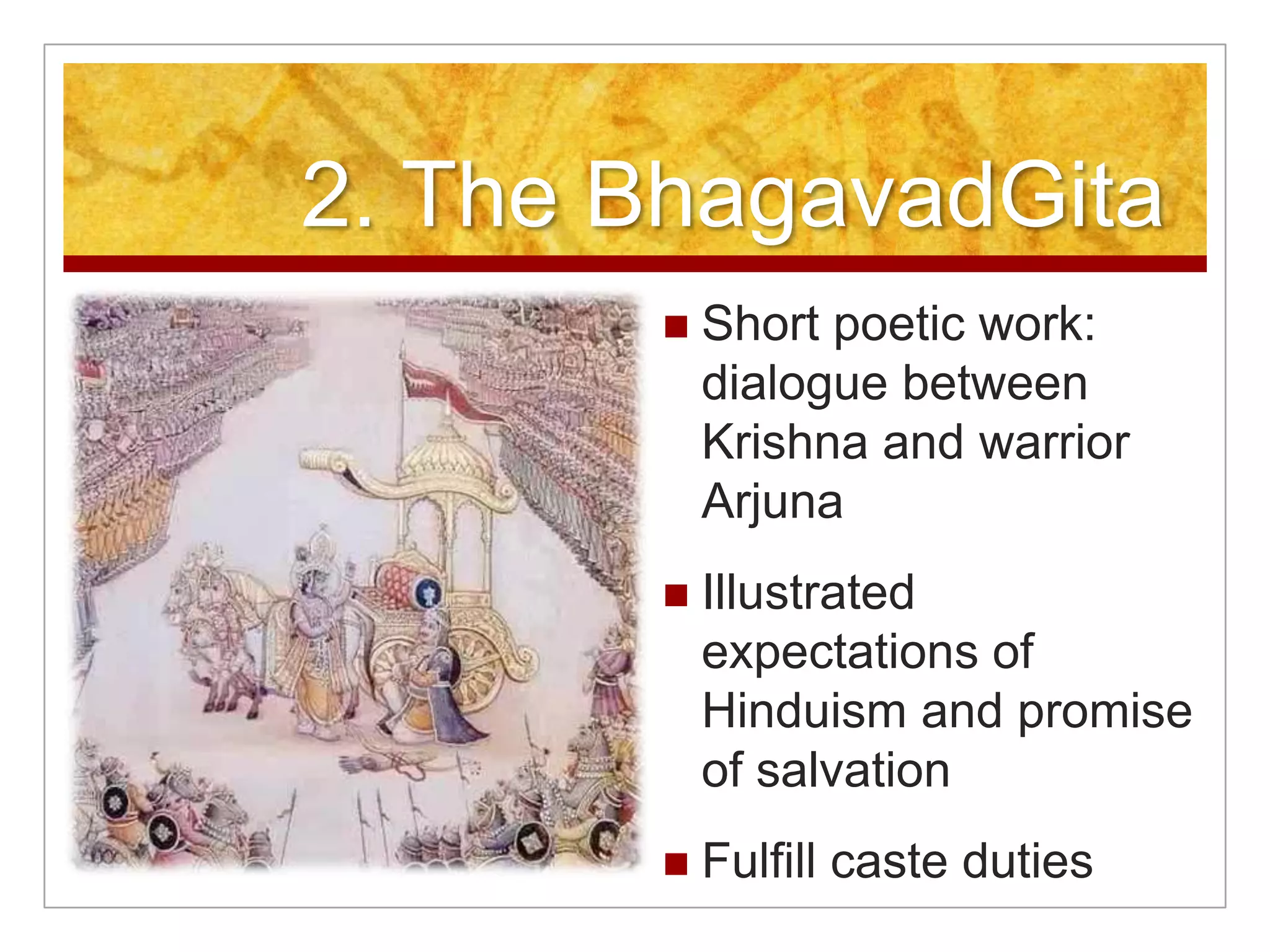
2. The BhagavadGitaShort poetic work: dialogue between Krishna and warrior ArjunaIllustrated expectations of Hinduism and promise of salvationFulfill caste duties
3. Hindu EthicsLead honorable life – 4 principal aimsAchieve salvation through meeting caste responsibilities (dharma)Pursuit of economic well-being and honesty (artha)Enjoyment of social, physical and sexual pleasure (kama)Salvation of the soul (moksha)
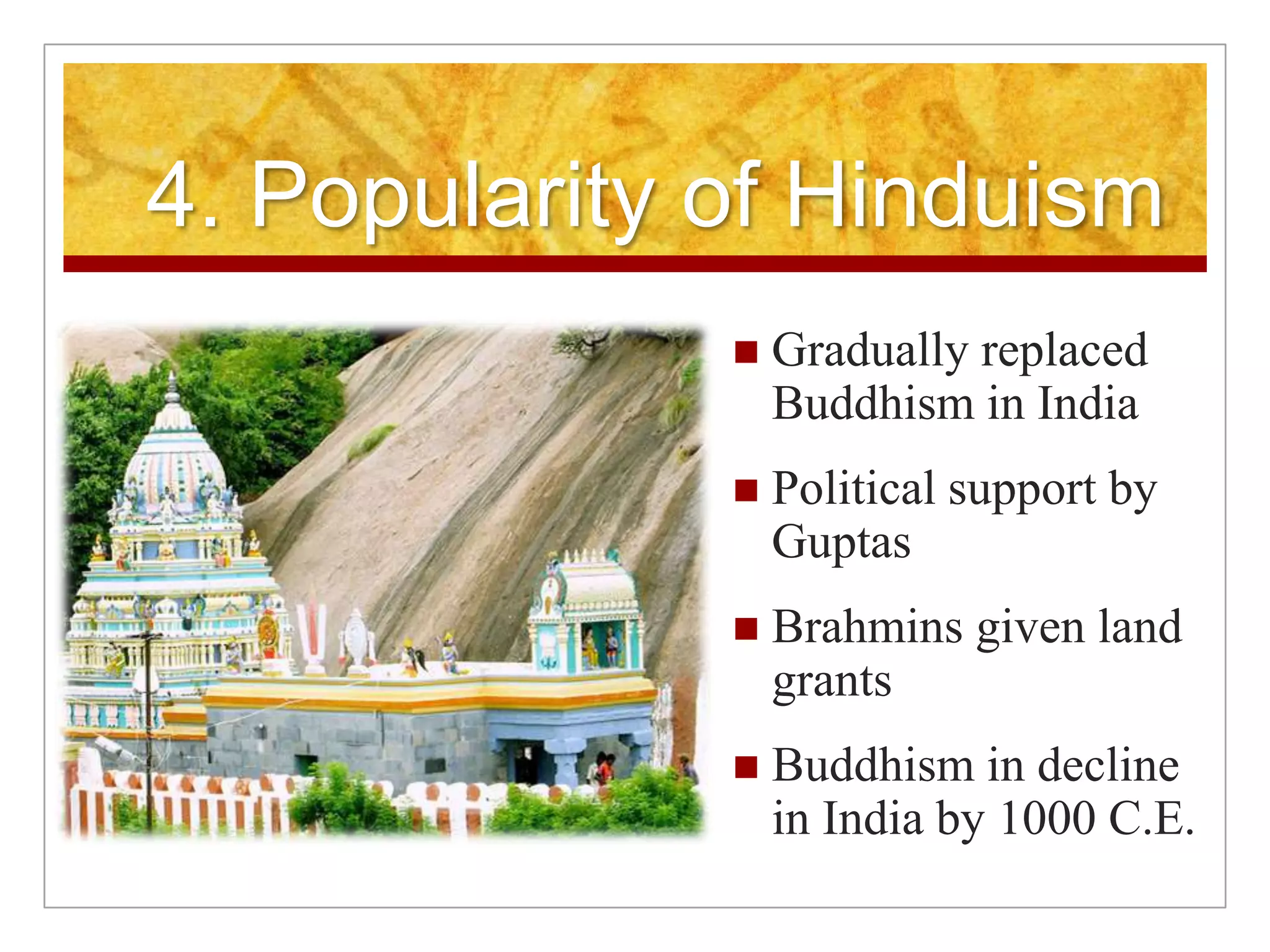
4. Popularity of HinduismGradually replaced Buddhism in IndiaPolitical support by GuptasBrahmins given land grantsBuddhism in decline in India by 1000 C.E.
SUMMARYRich agricultural economy leads to creation of large states Interregional trade networks developLarge empires not permanent, but social order maintained by caste systemReligious developments reflect social realitiesBuddhism and Hinduism adapt to needs of growing class of commonersReligion influence daily lives

Chapter 09

  • 1.
    Chapter 9 OverviewState,Society and the Quest for Salvation in India
  • 2.
    I. The Fortunesof Empire in Classical India
  • 3.
    A. The MauryanDynasty and the Temporary Unification of India Aryans in India – small kingdoms520 BCE Persian Emperor Darius conquers north-west IndiaIntroduces Persian administrative techniques (ruling patterns)327 Alexander of Macedon destroys Persian Empire in IndiaTroops mutiny, departs after 2 years - Political power vacuum
  • 4.
    1. Kingdom ofMagadhaFilled the power vacuum left by AlexanderMost important state in N. India Conquered neighboring states – lead role in unification of IndiaControlled Indian commerce passing through Ganges
  • 5.
    2. Chandragupta MauryaOverthrewMagadha rulersExpanded kingdom to create 1st unified Indian empire
  • 6.
    3. Chandragupta’s GovernmentAdvisorKautalyaOversee trade, agriculture, tax collecting, maintaining order, foreign relations, waging warNetwork of spiesBureaucratic administrative systemHarsh political philosophy recorded in Arthashastra
  • 7.
    4. AshokaMaurya(268-232 B.C.E.)Conqueredthe kingdom of Kalinga (along major trade route), 260 B.C.E.Ruled with tightly organized bureaucracyEstablished capital at PataliputraOversaw implementation of his policiesRocks and pillar edictsEncouraged Buddhist values – fair, just and humane rule
  • 8.
    Ashoka’sMauryan EmpireRegions ofIndia become well integratedSubcontinent benefits from trade and stabilityIrrigation systems = agricultural wealthRoads built – inns, shaded areas, well
  • 9.
    5. Declineof Mauryan EmpireEconomic crisis after Ashoka’s deathHigh costs of bureaucracy, military not supported by tax revenueFrequent devaluations of currency to pay salariesRegions begin to abandon Mauryan Empire - disappears by 185 BCE
  • 10.
    B. The Emergenceof Regional Kingdoms and the Revival of EmpireMauryan collapse India did not crumble into anarchyLocal rulers form series of regional kingdoms
  • 11.
    1. Bactrian Rulein NW IndiaNorthwestern IndiaRuled by Greek-speaking descendants of Alexander’s campaignsIntense cross-cultural activity accompanies active tradeLink to China, Medit. Taxila flourished
  • 12.
    2. The KushanEmpireNomadic conquerors from Central Asia attack BactriaNorthern India/Central Asia (C. 1-300 CE)Kanishka- pacified region between China and PersiaMaintained silk road network
  • 13.
    3. The GuptaDynastyBased in Magadha – wealthy regionFounded by Chandra Gupta (no relation to Chandragupta Maurya), c. 320 CESamudra Gupta and Chandra II conquered regional kingdoms – formed alliances Highly decentralized leadershipBrought stability and prosperity to subcontinent
  • 14.
    4. Gupta DeclineFrequentinvasions of White Huns, 5thc. CEHigh cost – resources depletedGupta Dynasty disintegrates along regional fault linesAfter the fifth century C.E., Gupta dynasty continued in name only Large regional kingdoms dominated political life in IndiaSmaller local kingdoms dominate until Mughal Empire founded in 16thc.
  • 15.
    II. Economic andSocial Distinctions
  • 16.
    A. Towns andTrade Towns dotted Indian countrysideNorthwest corner of subcontinent (closer to Persian Empire)
  • 17.
    1. Towns andManufacturingManufactured goods in big demand – large agricultural economyPots, textiles, iron tools, metal utensilsDeveloped in dense network of small workshopsLarge scale businesses - SaddalputtaTrade intense, capitalizes on trade routes across India built by Ashoka
  • 18.
    2. Long DistanceTradePersian connection since Cyrus, DariusMassive road-building projects under Persian ruleAlexander extends trade west to MacedonTrade routes through Kush mountains, the silk roadsCotton, Aromatics, black pepper, pearls and gems
  • 20.
    3. Trade inIndian Ocean BasinSeasonal sea trade expands - Spring/winter winds blow from south-west, fall/winter winds blow from north-west
  • 21.
    Trade from Asiato Persian Gulf and Red Sea, MediterraneanB. Family Life and Caste SystemMoralist sought to promote stabilityEncouraged respect for patriarchal familiesPromote maintenance of social orderNuclear family
  • 22.
    1.Gender Relations PatriarchyentrenchedMahabharata and Ramayana – women are weak-willed emotional creaturesChild marriage common (8 year old girls married to men in 20s)Dominated in household affairsWomen encouraged to remain in private spherefemale subordination
  • 23.
    2. Social OrderCastesystem from Aryan timesBrahmins (priests)Kshatriyas (warriors, aristocrats)Vaishyas (Peasants, merchants)Shudras (serfs)
  • 25.
    3. Castes andGuildsIncreasing economic diversification challenges simplistic caste systemWith trade and commerce new social groups of artisans, craftsmen, and merchants appearedJatis formed: guilds that acted as sub-castesFamilies associate with others in like castesJatis enforced social order“outcastes” forced into low-status employment
  • 26.
    4. Wealth andthe Social OrderVaishyasand shudras saw unprecedented wealthUpward social mobility possible for Vaishyas, ShudrasWealth challengesvarnafor statusOld beliefs and values of early Aryan society became increasingly irrelevant
  • 27.
    III. Religions ofSalvation in Classical India
  • 28.
    A. Jainism andthe Challenge to the Established Cultural OrderSocial change generated resentment of caste priviligee.g. Brahmins free from taxation6th-5thc. BCE new religions and philosophies challenge status quoCharvakas: atheistsJainists, Buddhists
  • 29.
    1. VardhamanaMahaviraVardhamanaMahavira (Jina)founded Jain religion in 5th century B.C.E. Abandoned privileged family to lead ascetic lifePromotes 7thc. movement based on UpanishadsEmphasis on selfless living, concern for all beings
  • 30.
    2.Jainist EthicsStriving topurify one's selfish behavior to attain a state of blissPrinciple of ahimsa, nonviolence toward all living thingsJainists sweep earth, strain water, use slow movements to avoid killing insectsToo demanding, not a practical alternative to the cult of the brahmans
  • 31.
    3.Appeal of JainismSocial implication: individual souls equally participated in ultimate realityRejected caste, jati distinctionsObvious appeal to underprivileged groupsToo extreme - no mass movementAhimsa continues to inspire modern movements (Ghandi, Martin Luther King Jr.)
  • 32.
    B. Early BuddhismFoundercame from KshatriyafamilyMore practical that JainismSalvation comes from leading a balanced and moderate life
  • 33.
    1. Siddhartha GautamaGave up his comfortable life to search for cause of sufferingc. 563-483 BCEEncountered age, sickness, death, then monastic lifeAbandoned comfortable life to become a monk
  • 34.
    2. Gautama’s Searchfor EnlightenmentWanders through Ganges valley searching for enlightenmentIntense meditation, extreme asceticism49 days of meditation under bo tree to finally achieve enlightenmentAttained title Buddha: “the enlightened one”
  • 35.
    3. Buddha andHis FollowersAnnounced his doctrine at the Deer Park of Sarnath in 528 B.C.E.Promotes law of righteousnessOrganized a community of monks“Decay is inherent in all component things! Work out your salvation with diligence”
  • 36.
    4. Buddhist Doctrine:Dharma The Four Noble Truths1. All life involves suffering 2. Suffering is caused by desire3. elimination of desire ends suffering4. disciplined life in accordance to Noble Eightfold Path are the way to end suffering Religious goal: personal salvation, or nirvana, a state of perfect spiritual independence
  • 37.
    5. Appeal ofBuddhismAppealed strongly to members of lower castes because it did not recognize social hierarchies of castes and jatiless demanding than Jainism, which made it more popularUsed vernacular tongues, not SanskritHoly sites venerated by pilgrimsThe monastic organizations--extremely efficient at spreading the Buddhist message and winning converts to the faith
  • 38.
    6. Ashoka’s SupportConvertedto BuddhismDisillusioned after violent war with KalingaBanned animal sacrifices, mandated vegetarianism in courtMaterial support for Buddhist institutions, missionary activities
  • 39.
    C. Mahayana BuddhismEarlyBuddhism was not an easy path to salvationBetween 3rd century BCE – 1st century CE - Three new developments
  • 40.
    1. Development ofBuddhism1. Buddha became a god2. The notion of boddhisatva--"an enlightened being”3. Monasteries began to accept gifts from wealthy individuals
  • 41.
    2. Spread ofMahayana BuddhismMahayana (“greater vehicle”), newer developmentIndia, China, Japan, Korea, central AsiaHinayana (“lesser vehicle,” also Theravada), earlier versionCeylon, Burma, Thailand
  • 42.
    3. NolandaBuddhist MonasteryQuasi-university:Buddhism, Hindu texts, philosophy, astronomy, medicine, logicPeak at end of Gupta dynasty – attracted students from foreign landsHelped spread Indian thoughtE.g. mathematical number zero
  • 43.
    D. The Emergenceof Popular HinduismLike Buddhism, undergoes change to appeal to more peopleInspired by Upanishads and VedasDeparted from older traditions
  • 44.
    1. The EpicsCompositionof epics from older oral traditionsMahabharataRamayanaEmphasis on god Vishnu and his incarnations
  • 45.
    2. The BhagavadGitaShortpoetic work: dialogue between Krishna and warrior ArjunaIllustrated expectations of Hinduism and promise of salvationFulfill caste duties
  • 46.
    3. Hindu EthicsLeadhonorable life – 4 principal aimsAchieve salvation through meeting caste responsibilities (dharma)Pursuit of economic well-being and honesty (artha)Enjoyment of social, physical and sexual pleasure (kama)Salvation of the soul (moksha)
  • 47.
    4. Popularity ofHinduismGradually replaced Buddhism in IndiaPolitical support by GuptasBrahmins given land grantsBuddhism in decline in India by 1000 C.E.
  • 48.
    SUMMARYRich agricultural economyleads to creation of large states Interregional trade networks developLarge empires not permanent, but social order maintained by caste systemReligious developments reflect social realitiesBuddhism and Hinduism adapt to needs of growing class of commonersReligion influence daily lives

Editor's Notes