Use legislation
relating to health and
safety of children
Unit 3
Session 1
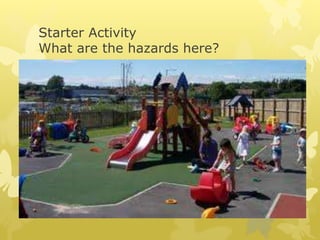
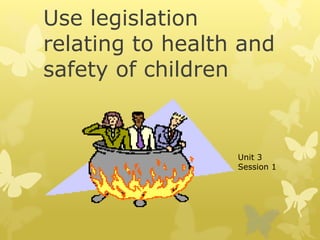
Starter Activity
What are the hazards here?
Learning outcomes
 List current guidelines relating to health and safety
of children.
 Identify policies and procedures relating to the
health and safety of children.
 Explain how legislation and guidelines for health
and safety inform day to day practice with children.
 Describe the roles and responsibilities when
keeping children safe.
 Identify the differences between hazard and risk
 Carry out a risk assessment .
 Describe how to keep children safe inside and
outside of the setting.
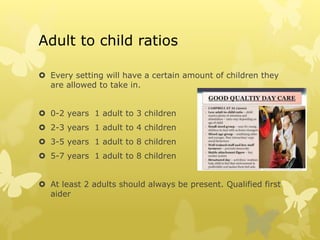
Adult to child ratios
 Every setting will have a certain amount of children they
are allowed to take in.
 0-2 years 1 adult to 3 children
 2-3 years 1 adult to 4 children
 3-5 years 1 adult to 8 children
 5-7 years 1 adult to 8 children
 At least 2 adults should always be present. Qualified first
aider
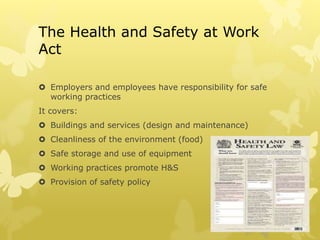
The Health and Safety at Work
Act
 Employers and employees have responsibility for safe
working practices
It covers:
 Buildings and services (design and maintenance)
 Cleanliness of the environment (food)
 Safe storage and use of equipment
 Working practices promote H&S
 Provision of safety policy
RIDDOR (reporting of injuries, diseases and
dangerous occurrences regulations)
 These HAVE to be reported to H&S Executive
These include:
 Deaths
 Major injuries
 Accidents resulting in over 3 days of injury
 Diseases such as food poisoning
 Dangerous occurrences such as chemical spills
 Gas
Access to premises
 Security is vital
 Controlled access by one door, may have an alert system
 A visitors book is required
 Checking ID of visitors
 Use of visitors pass
 Accompanied visitors
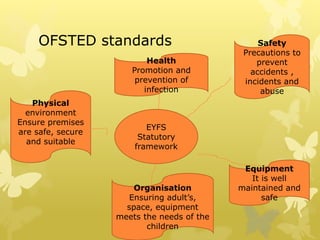
OFSTED standards Safety
Precautions to
prevent
accidents ,
incidents and
abuse
Equipment
It is well
maintained and
safe
Health
Promotion and
prevention of
infection
Organisation
Ensuring adult’s,
space, equipment
meets the needs of the
children
Physical
environment
Ensure premises
are safe, secure
and suitable
EYFS
Statutory
framework
COSHH Regulations (control of
substances hazardous to health)
 Lay down step by step approach to the precautions to
prevent injury or illness.
 Substances should have labels on
 Locked in suitable containers and storage areas
 Poisoning, cancer, infections
Food hygiene regulations
 Linked to food and drink
 Staff should have food hygiene certificate
 Awareness of food management
 Fours C’s
 Cleanliness
 Cooking
 Chilling
 Cross-contamination
Manual handling
You are required to have training in manual handling
Prevents risk of injury to yourself/child/others
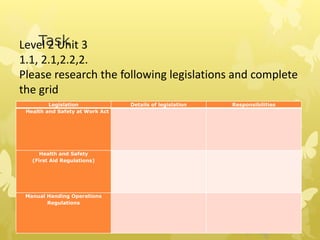
Task
Legislation Details of legislation Responsibilities
Health and Safety at Work Act
Health and Safety
(First Aid Regulations)
Manual Handing Operations
Regulations
Level 2 Unit 3
1.1, 2.1,2.2,2.
Please research the following legislations and complete
the grid
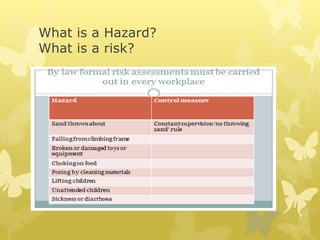
What is a Hazard?
What is a risk?
 Complete risk / hazard match up activity
Why do we put risk assessments in
place?
 Encourages staff to think about the environment in which they work
in
 The situation can be controlled before accidents or illness can occur
 Staff must be up to date with the relevant legal requirements
Task
 Complete a risk assessment of D104 ready for Teddy Tots
 In pairs think of an activity you will do with the children.
 Ensure you have risk assessed each activity.
In your settings how are risk
assessments monitored and
reviewed?
 Class discussion
 How do you support children to manage risk?
 Check be able to criteria
What do you need to consider when
taking children in to the garden?
 In pairs plan an indoor and outdoor area that is safe for
the children to use.
 Present your area back to the group giving clear
explanations as to why your outdoor is safe for the
children to use.
 Please ensure you have thought of all health and safety
aspects – Fire exits, First aid points locks on gates and
doors.
Use legislation
relating to health and
safety of children
Unit 3
Session 1
Starter Activity
Health and safety Pictionary
Learning outcomes
 List accidents and incidents which may occur in a setting
 Describe actions to take in the event of
 Accidents
 Incidents
 Emergencies
 Identify forms to complete in the event of Accidents
 Incidents
 Emergencies
Class pass
 List accidents which may occur in a setting
What information would record In an
accident book?
 Task
 Practice filling in accident book
 What are your procedures when dealing with accidents
in your placements?
Points to remember!
Accident and injury procedure checklist
 A trained first aider must be on duty at all
times (always be aware who this is)
 If you witness an accident inform a first
aider
Emergencies
 What emergencies may occur when working in a
childcare setting?
 Fire
 Missing child
 Accident in which a child may need to be taken to
hospital
 Child may have an allergic reaction to something
 What would you do in the event of an
emergency?
 What could you do to minimise the risks to
children staff students?
Task
Evacuation of the building
Stranger on the premises
Missing children
Baby fall forwards on to a radiator and
splits her head open.
Consider each statement and note
down what you would do if these
emergencies where to happen at
placement.
Task complete assignment tasks
to date 11/5/15
 Scan a copy of your legislation grid and upload to Oracle
ensure you have given examples from placement of how
you adhere to legislation policies and procedures. 1.1, 2.1,
2.2, 2.3
 List at least 4 accidents / incidents in which may occur in a
setting 5.1
 Describe at least 6 actions (2 for each) to take in the event
of accidents, incidents and emergencies. You may wish to
refer to portfolio to support you 5.2
 Outline the information needed to complete at least 3
forms, covering accidents, incidents and emergencies. You
may wish to refer to portfolio to support you 5.3

Laws governing safety

  • 1.
    Use legislation relating tohealth and safety of children Unit 3 Session 1
  • 2.
    Starter Activity What arethe hazards here?
  • 3.
    Learning outcomes  Listcurrent guidelines relating to health and safety of children.  Identify policies and procedures relating to the health and safety of children.  Explain how legislation and guidelines for health and safety inform day to day practice with children.  Describe the roles and responsibilities when keeping children safe.  Identify the differences between hazard and risk  Carry out a risk assessment .  Describe how to keep children safe inside and outside of the setting.
  • 4.
    Adult to childratios  Every setting will have a certain amount of children they are allowed to take in.  0-2 years 1 adult to 3 children  2-3 years 1 adult to 4 children  3-5 years 1 adult to 8 children  5-7 years 1 adult to 8 children  At least 2 adults should always be present. Qualified first aider
  • 5.
    The Health andSafety at Work Act  Employers and employees have responsibility for safe working practices It covers:  Buildings and services (design and maintenance)  Cleanliness of the environment (food)  Safe storage and use of equipment  Working practices promote H&S  Provision of safety policy
  • 6.
    RIDDOR (reporting ofinjuries, diseases and dangerous occurrences regulations)  These HAVE to be reported to H&S Executive These include:  Deaths  Major injuries  Accidents resulting in over 3 days of injury  Diseases such as food poisoning  Dangerous occurrences such as chemical spills  Gas
  • 7.
    Access to premises Security is vital  Controlled access by one door, may have an alert system  A visitors book is required  Checking ID of visitors  Use of visitors pass  Accompanied visitors
  • 8.
    OFSTED standards Safety Precautionsto prevent accidents , incidents and abuse Equipment It is well maintained and safe Health Promotion and prevention of infection Organisation Ensuring adult’s, space, equipment meets the needs of the children Physical environment Ensure premises are safe, secure and suitable EYFS Statutory framework
  • 9.
    COSHH Regulations (controlof substances hazardous to health)  Lay down step by step approach to the precautions to prevent injury or illness.  Substances should have labels on  Locked in suitable containers and storage areas  Poisoning, cancer, infections
  • 10.
    Food hygiene regulations Linked to food and drink  Staff should have food hygiene certificate  Awareness of food management  Fours C’s  Cleanliness  Cooking  Chilling  Cross-contamination
  • 11.
    Manual handling You arerequired to have training in manual handling Prevents risk of injury to yourself/child/others
  • 12.
    Task Legislation Details oflegislation Responsibilities Health and Safety at Work Act Health and Safety (First Aid Regulations) Manual Handing Operations Regulations Level 2 Unit 3 1.1, 2.1,2.2,2. Please research the following legislations and complete the grid
  • 13.
    What is aHazard? What is a risk?  Complete risk / hazard match up activity
  • 14.
    Why do weput risk assessments in place?  Encourages staff to think about the environment in which they work in  The situation can be controlled before accidents or illness can occur  Staff must be up to date with the relevant legal requirements
  • 15.
    Task  Complete arisk assessment of D104 ready for Teddy Tots  In pairs think of an activity you will do with the children.  Ensure you have risk assessed each activity.
  • 16.
    In your settingshow are risk assessments monitored and reviewed?  Class discussion  How do you support children to manage risk?  Check be able to criteria
  • 17.
    What do youneed to consider when taking children in to the garden?  In pairs plan an indoor and outdoor area that is safe for the children to use.  Present your area back to the group giving clear explanations as to why your outdoor is safe for the children to use.  Please ensure you have thought of all health and safety aspects – Fire exits, First aid points locks on gates and doors.
  • 18.
    Use legislation relating tohealth and safety of children Unit 3 Session 1
  • 19.
    Starter Activity Health andsafety Pictionary
  • 20.
    Learning outcomes  Listaccidents and incidents which may occur in a setting  Describe actions to take in the event of  Accidents  Incidents  Emergencies  Identify forms to complete in the event of Accidents  Incidents  Emergencies
  • 21.
    Class pass  Listaccidents which may occur in a setting
  • 22.
    What information wouldrecord In an accident book?  Task  Practice filling in accident book  What are your procedures when dealing with accidents in your placements?
  • 23.
    Points to remember! Accidentand injury procedure checklist  A trained first aider must be on duty at all times (always be aware who this is)  If you witness an accident inform a first aider
  • 24.
    Emergencies  What emergenciesmay occur when working in a childcare setting?  Fire  Missing child  Accident in which a child may need to be taken to hospital  Child may have an allergic reaction to something  What would you do in the event of an emergency?  What could you do to minimise the risks to children staff students?
  • 25.
    Task Evacuation of thebuilding Stranger on the premises Missing children Baby fall forwards on to a radiator and splits her head open. Consider each statement and note down what you would do if these emergencies where to happen at placement.
  • 26.
    Task complete assignmenttasks to date 11/5/15  Scan a copy of your legislation grid and upload to Oracle ensure you have given examples from placement of how you adhere to legislation policies and procedures. 1.1, 2.1, 2.2, 2.3  List at least 4 accidents / incidents in which may occur in a setting 5.1  Describe at least 6 actions (2 for each) to take in the event of accidents, incidents and emergencies. You may wish to refer to portfolio to support you 5.2  Outline the information needed to complete at least 3 forms, covering accidents, incidents and emergencies. You may wish to refer to portfolio to support you 5.3