Unit No. 2 - Design Fundamentals
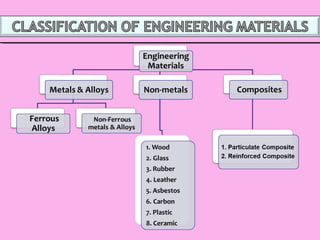
Engineering Materials
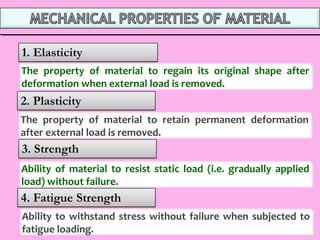
The property of material to retain permanent deformation
after external load is removed.
The property of material to regain its original shape after
deformation when external load is removed.
Ability to withstand stress without failure when subjected to
fatigue loading.
Ability of material to resist static load (i.e. gradually applied
load) without failure.
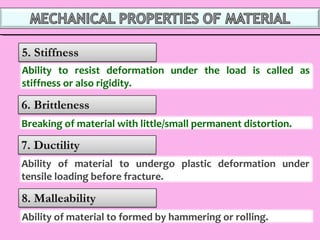
Ability of material to formed by hammering or rolling.
Breaking of material with little/small permanent distortion.
Ability of material to undergo plastic deformation under
tensile loading before fracture.
Ability to resist deformation under the load is called as
stiffness or also rigidity.
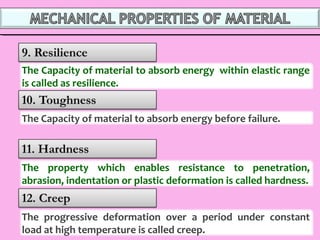
The progressive deformation over a period under constant
load at high temperature is called creep.
The property which enables resistance to penetration,
abrasion, indentation or plastic deformation is called hardness.
The Capacity of material to absorb energy before failure.
The Capacity of material to absorb energy within elastic range
is called as resilience.
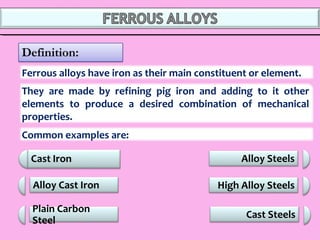
Ferrous alloys have iron as their main constituent or element.
They are made by refining pig iron and adding to it other
elements to produce a desired combination of mechanical
properties.
Common examples are:
Alloy Cast Iron
Plain Carbon
Steel
Cast Steels
High Alloy Steels
Alloy Steels
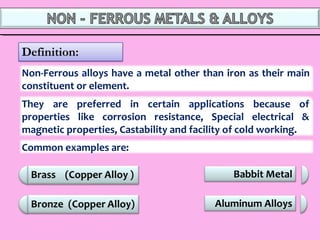
Non-Ferrous alloys have a metal other than iron as their main
constituent or element.
They are preferred in certain applications because of
properties like corrosion resistance, Special electrical &
magnetic properties, Castability and facility of cold working.
Common examples are:
Aluminum Alloys
Babbit Metal
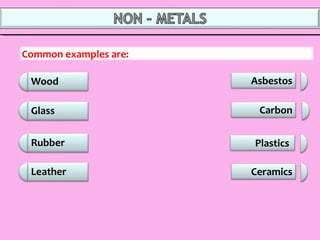
Common examples are:
Carbon
Asbestos
Plastics
Ceramics
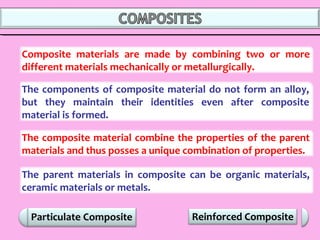
Composite materials are made by combining two or more
different materials mechanically or metallurgically.
Reinforced Composite
The components of composite material do not form an alloy,
but they maintain their identities even after composite
material is formed.
The composite material combine the properties of the parent
materials and thus posses a unique combination of properties.
The parent materials in composite can be organic materials,
ceramic materials or metals.
The materials should be selected such that the total cost
should be minimum. The total cost includes: the cost of
material and cost of processing the material.
The materials which are readily available in abundance in
market should be selected. Avoid selecting material which is
not easily available.
The material should be selected in such a way that its
properties are in accordance with the application of the
product or element.
The selected material should be suitable for the required
manufacturing processes. If the material is found suitable
from all other considerations the manufacturing process can
be changed if feasible.

Unit 2 1 engg materials

  • 1.
    Unit No. 2- Design Fundamentals Engineering Materials
  • 2.
    The property ofmaterial to retain permanent deformation after external load is removed. The property of material to regain its original shape after deformation when external load is removed. Ability to withstand stress without failure when subjected to fatigue loading. Ability of material to resist static load (i.e. gradually applied load) without failure.
  • 3.
    Ability of materialto formed by hammering or rolling. Breaking of material with little/small permanent distortion. Ability of material to undergo plastic deformation under tensile loading before fracture. Ability to resist deformation under the load is called as stiffness or also rigidity.
  • 4.
    The progressive deformationover a period under constant load at high temperature is called creep. The property which enables resistance to penetration, abrasion, indentation or plastic deformation is called hardness. The Capacity of material to absorb energy before failure. The Capacity of material to absorb energy within elastic range is called as resilience.
  • 6.
    Ferrous alloys haveiron as their main constituent or element. They are made by refining pig iron and adding to it other elements to produce a desired combination of mechanical properties. Common examples are: Alloy Cast Iron Plain Carbon Steel Cast Steels High Alloy Steels Alloy Steels
  • 7.
    Non-Ferrous alloys havea metal other than iron as their main constituent or element. They are preferred in certain applications because of properties like corrosion resistance, Special electrical & magnetic properties, Castability and facility of cold working. Common examples are: Aluminum Alloys Babbit Metal
  • 8.
  • 9.
    Composite materials aremade by combining two or more different materials mechanically or metallurgically. Reinforced Composite The components of composite material do not form an alloy, but they maintain their identities even after composite material is formed. The composite material combine the properties of the parent materials and thus posses a unique combination of properties. The parent materials in composite can be organic materials, ceramic materials or metals.
  • 10.
    The materials shouldbe selected such that the total cost should be minimum. The total cost includes: the cost of material and cost of processing the material. The materials which are readily available in abundance in market should be selected. Avoid selecting material which is not easily available.
  • 11.
    The material shouldbe selected in such a way that its properties are in accordance with the application of the product or element. The selected material should be suitable for the required manufacturing processes. If the material is found suitable from all other considerations the manufacturing process can be changed if feasible.