Grinding Operation
By: Parth Gajjar
116170319007
Submitted by:
Prof. G.R. Khunt
Prof. G.S. Patel
Institute
Govt. Polytechnic A’bad
INTRODUCTION TO GRINDING PROCESS
•
•
•

It is the only economical method of cutting hard
material like hardened steel.
It produces very smooth surface , suitable for
bearing surface.
Surface pressure is minimum in grinding. It is
suitable for light work,which will spring away from
the cutting tool in the other machining processes.
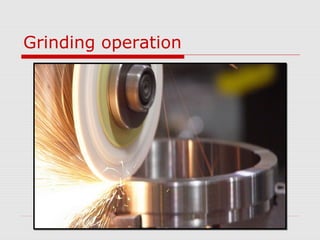
Grinding operation
Types of grinding operation
1. Ruff or precision Grinding
a) Snagging
b) Off-hand

2. Precision Grinding
a) Surface grinding
b) Cylindrical grinding
c) Center less grinding
d) Form and profile grinding
e) Plunge cut grinding
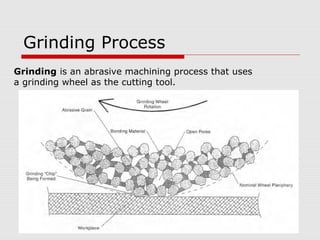
Grinding Process
Grinding is an abrasive machining process that uses
a grinding wheel as the cutting tool.
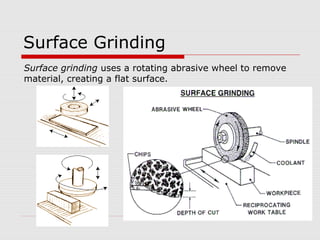
Surface Grinding
Surface grinding uses a rotating abrasive wheel to remove
material, creating a flat surface.
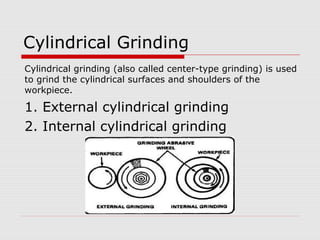
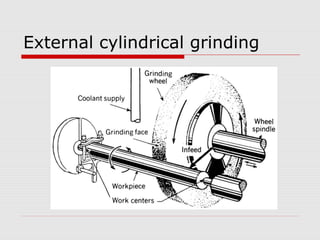
Cylindrical Grinding
Cylindrical grinding (also called center-type grinding) is used
to grind the cylindrical surfaces and shoulders of the
workpiece.

1. External cylindrical grinding
2. Internal cylindrical grinding
External cylindrical grinding
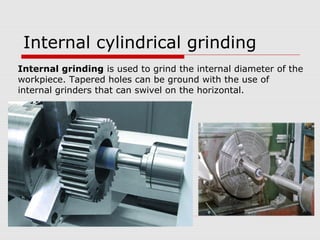
Internal cylindrical grinding
Internal grinding is used to grind the internal diameter of the
workpiece. Tapered holes can be ground with the use of
internal grinders that can swivel on the horizontal.
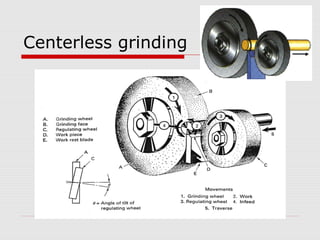
Centerless grinding
Form and profile grinding
Form grinding is a specialized type of cylindrical grinding
where the grinding wheel has the exact shape of the final
product. The grinding wheel does not traverse the workpiece.
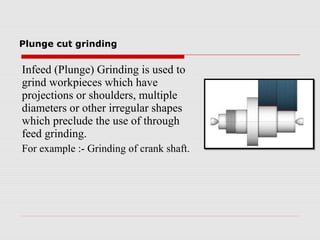
Plunge cut grinding

Infeed (Plunge) Grinding is used to
grind workpieces which have
projections or shoulders, multiple
diameters or other irregular shapes
which preclude the use of through
feed grinding.
For example :- Grinding of crank shaft.
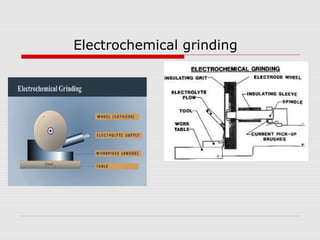
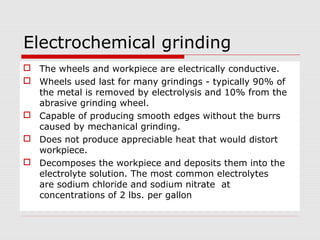
Electrochemical grinding
 The wheels and workpiece are electrically conductive.
 Wheels used last for many grindings - typically 90% of
the metal is removed by electrolysis and 10% from the
abrasive grinding wheel.
 Capable of producing smooth edges without the burrs
caused by mechanical grinding.
 Does not produce appreciable heat that would distort
workpiece.
 Decomposes the workpiece and deposits them into the
electrolyte solution. The most common electrolytes
are sodium chloride and sodium nitrate at
concentrations of 2 lbs. per gallon
Grinding operation

Grinding operation

  • 1.
    Grinding Operation By: ParthGajjar 116170319007 Submitted by: Prof. G.R. Khunt Prof. G.S. Patel Institute Govt. Polytechnic A’bad
  • 2.
    INTRODUCTION TO GRINDINGPROCESS • • • It is the only economical method of cutting hard material like hardened steel. It produces very smooth surface , suitable for bearing surface. Surface pressure is minimum in grinding. It is suitable for light work,which will spring away from the cutting tool in the other machining processes.
  • 3.
  • 4.
    Types of grindingoperation 1. Ruff or precision Grinding a) Snagging b) Off-hand 2. Precision Grinding a) Surface grinding b) Cylindrical grinding c) Center less grinding d) Form and profile grinding e) Plunge cut grinding
  • 5.
    Grinding Process Grinding isan abrasive machining process that uses a grinding wheel as the cutting tool.
  • 6.
    Surface Grinding Surface grindinguses a rotating abrasive wheel to remove material, creating a flat surface.
  • 7.
    Cylindrical Grinding Cylindrical grinding(also called center-type grinding) is used to grind the cylindrical surfaces and shoulders of the workpiece. 1. External cylindrical grinding 2. Internal cylindrical grinding
  • 8.
  • 9.
    Internal cylindrical grinding Internalgrinding is used to grind the internal diameter of the workpiece. Tapered holes can be ground with the use of internal grinders that can swivel on the horizontal.
  • 10.
  • 11.
    Form and profilegrinding Form grinding is a specialized type of cylindrical grinding where the grinding wheel has the exact shape of the final product. The grinding wheel does not traverse the workpiece.
  • 12.
    Plunge cut grinding Infeed(Plunge) Grinding is used to grind workpieces which have projections or shoulders, multiple diameters or other irregular shapes which preclude the use of through feed grinding. For example :- Grinding of crank shaft.
  • 13.
  • 14.
    Electrochemical grinding  Thewheels and workpiece are electrically conductive.  Wheels used last for many grindings - typically 90% of the metal is removed by electrolysis and 10% from the abrasive grinding wheel.  Capable of producing smooth edges without the burrs caused by mechanical grinding.  Does not produce appreciable heat that would distort workpiece.  Decomposes the workpiece and deposits them into the electrolyte solution. The most common electrolytes are sodium chloride and sodium nitrate at concentrations of 2 lbs. per gallon