ORIGINS OF THE
COLD WAR
MS. SAMM
LAKEWOOD HIGH SCHOOL
2018/2019 SCHOOL YEAR
The Fall
of the USSR
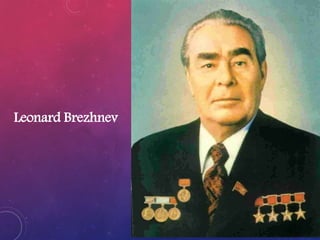
LEONARD BREZHNEV
1.He was the leader after
Khrushchev in 1964.
2.He enforced laws to limit
freedom of speech and worship.
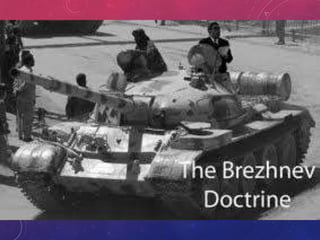
BREZHNEV DOCTRINE
1.This provided that the Soviet
Union is allowed to invade a
satellite country if it tries to reject
Communism.
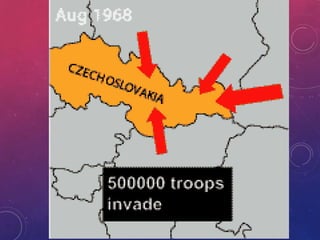
2.It was used to invade Hungary in
1965 and Czechoslovakia in
1968 when they tried to rise up
against oppressive laws.
Leonard Brezhnev
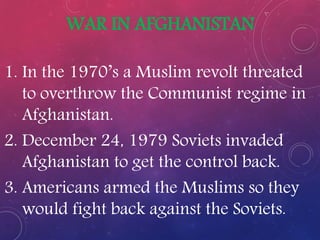
WAR IN AFGHANISTAN
1. In the 1970’s a Muslim revolt threated
to overthrow the Communist regime in
Afghanistan.
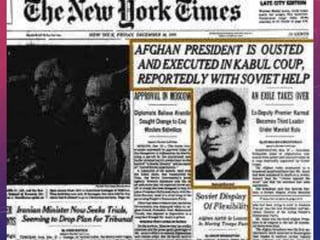
2. December 24, 1979 Soviets invaded
Afghanistan to get the control back.
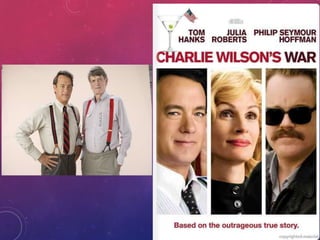
3. Americans armed the Muslims so they
would fight back against the Soviets.
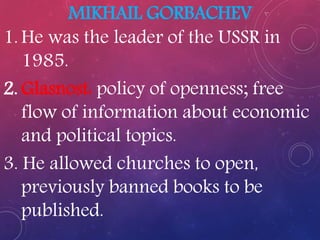
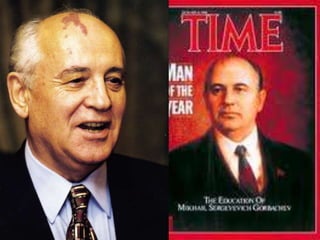
MIKHAIL GORBACHEV
1. He was the leader of the USSR in
1985.
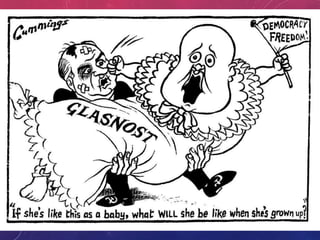
2. Glasnost: policy of openness; free
flow of information about economic
and political topics.
3. He allowed churches to open,
previously banned books to be
published.
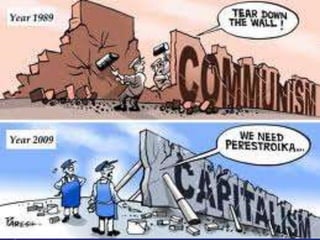
PERESTROIKA
1. Brought changes in the economy.
2. Let local managers have more
autonomy and influence over
products and wages; less central
control.
3. Did not want to get rid of
Communism, just make it more
efficient.
DEMOCRATIZATION
1. In 1987 there was election of a
new legislative body (like
Congress), where voters can pick
candidates for each office rather
than approve appointments.
EFFECTS OF SOVIET REFORMS
1. Given new freedoms and rights,
many countries demanded self-rule.
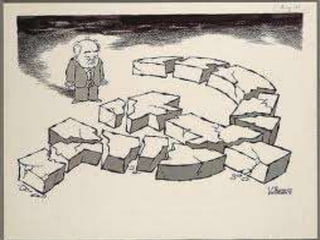
2. Gorbachev had to use the military
to bring Lithuania back when
economic blockade didn’t work.
BORIS YELTSIN
1. First directly elected President of
Russia.
2. Criticized Gorbachev for moving too
slowly with reforms.
3. Helped save Gorbachev when a
military coup (take over) tried to
force him out on August 18, 1991.
4. Military refused to attack;
people weren’t afraid anymore.
5. By December of 1991, all 15
Republics of the USSR had
declared independence.
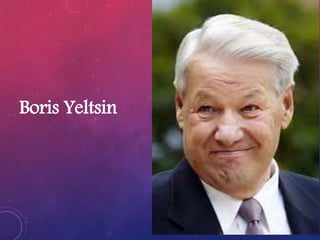
Boris Yeltsin
SHOCK THERAPY
1. Yeltsin’s plan to go straight to free-market.
2. Lowered trade barriers, removed price
controls, and made it easier to have a private
business.
3. Was not good; prices soared and many
people who depended on the gov’t were out
of work.
4. People stood in line for hours for a loaf of
bread.
• 6:48 cool song set to the tune of Tetris

Unit 15: The Cold War - Part 3

  • 1.
    ORIGINS OF THE COLDWAR MS. SAMM LAKEWOOD HIGH SCHOOL 2018/2019 SCHOOL YEAR
  • 2.
  • 3.
    LEONARD BREZHNEV 1.He wasthe leader after Khrushchev in 1964. 2.He enforced laws to limit freedom of speech and worship.
  • 4.
    BREZHNEV DOCTRINE 1.This providedthat the Soviet Union is allowed to invade a satellite country if it tries to reject Communism. 2.It was used to invade Hungary in 1965 and Czechoslovakia in 1968 when they tried to rise up against oppressive laws.
  • 7.
  • 9.
    WAR IN AFGHANISTAN 1.In the 1970’s a Muslim revolt threated to overthrow the Communist regime in Afghanistan. 2. December 24, 1979 Soviets invaded Afghanistan to get the control back. 3. Americans armed the Muslims so they would fight back against the Soviets.
  • 12.
    MIKHAIL GORBACHEV 1. Hewas the leader of the USSR in 1985. 2. Glasnost: policy of openness; free flow of information about economic and political topics. 3. He allowed churches to open, previously banned books to be published.
  • 15.
    PERESTROIKA 1. Brought changesin the economy. 2. Let local managers have more autonomy and influence over products and wages; less central control. 3. Did not want to get rid of Communism, just make it more efficient.
  • 17.
    DEMOCRATIZATION 1. In 1987there was election of a new legislative body (like Congress), where voters can pick candidates for each office rather than approve appointments.
  • 19.
    EFFECTS OF SOVIETREFORMS 1. Given new freedoms and rights, many countries demanded self-rule. 2. Gorbachev had to use the military to bring Lithuania back when economic blockade didn’t work.
  • 20.
    BORIS YELTSIN 1. Firstdirectly elected President of Russia. 2. Criticized Gorbachev for moving too slowly with reforms. 3. Helped save Gorbachev when a military coup (take over) tried to force him out on August 18, 1991.
  • 21.
    4. Military refusedto attack; people weren’t afraid anymore. 5. By December of 1991, all 15 Republics of the USSR had declared independence.
  • 22.
  • 23.
    SHOCK THERAPY 1. Yeltsin’splan to go straight to free-market. 2. Lowered trade barriers, removed price controls, and made it easier to have a private business. 3. Was not good; prices soared and many people who depended on the gov’t were out of work. 4. People stood in line for hours for a loaf of bread.
  • 24.
    • 6:48 coolsong set to the tune of Tetris