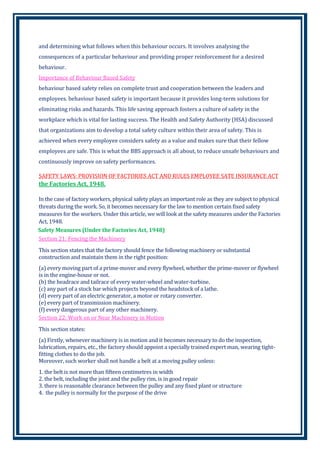
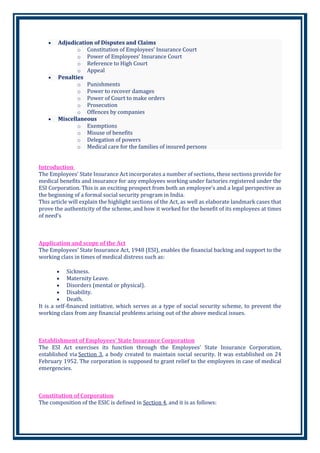
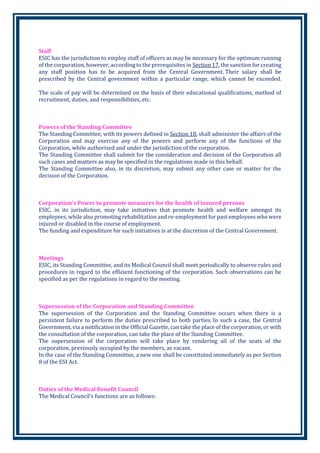
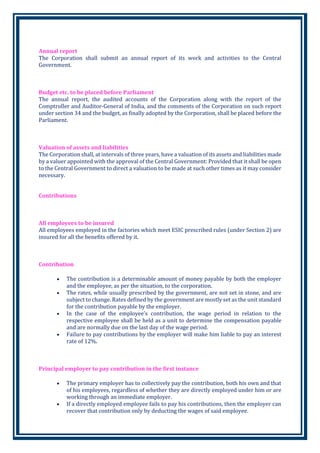
This document discusses various aspects of safety philosophy, including physical, physiological, and psychological factors. It covers topics like noise and vibration, radiation, workplace climate, safety training, legislation, employee participation, economics of safety, behavioral safety culture and motivation. Safety training is important for informing workers about hazards and controls. Education provides knowledge of hazards and how to identify, report and control them. Legislation like the Occupational Safety and Health Act establishes the employer's duty of care and requirements for analyzing risks and designing a safe working environment. Psychological and behavioral factors that impact safety culture are also addressed.