B.J.P.S Samiti’s
M.V.HERWADKAR ENGLISH MEDIUM HIGH SCHOOL
UNION GOVERNMENT
STD9th
Staff Name:Rashmi Pandit
The Union of India
Union Legislature
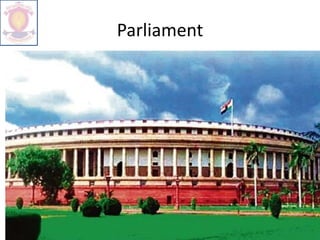
• The Union Legislature is called the
Parliament.
• The Parliament of India consists of the
President of India
• . The two Houses are the Lok Sabha and
the
• Rajya Sabha.
Parliament
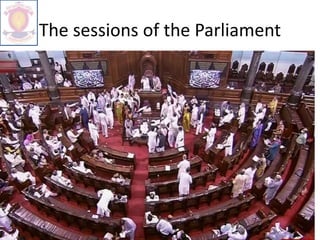
The sessions of the Parliament
Lok Sabha
• The Lok Sabha is the Lower House of the
• Parliament. The Members of the Lok
Sabha are directly
• elected by the citizens who are above
the age of 18. The
• maximum number of seats in the Lok
Sabha is 552.
Members of the Lok Sabha
• The Lok Sabha Members are elected for
a term of five years
• . A Member may contest election any
number of times.
• The Lok Sabha is dissolved on the expiry
of its full term of five years
Qualifications of Members of the
Lok Sabha
• (1) To becomea Member of the Lok
Sabha, one should be a citizen of
• (2) They must be at least 25 years of
age.
• (3) They should not have been
sentenced to imprisonment.
• (4) Theyshould not be insolvent
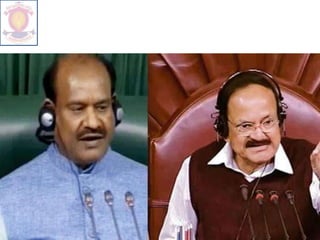
Lok Sabha Speaker
• The powers and functions of the
Speaker are:
• deciding the matters to be discussed in
the House;
• maintaining the discipline and dignity
of the House;
• and conducting the discussion in
aproper manner, and taking decisions.
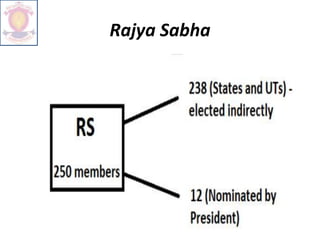
Rajya Sabha
Members of the Rajya Sabha
• To become a Member of the Rajya
Sabha,
• one must not be less than 30 years of
age.
• The term of the Rajya Sabha Members is
six years. The
• The Vice-President of India is the
Chairman of the Rajya Sabha.
ROLE OF OPPOSTION
• pointing out the lapses, if any, on the
part of the Government;
• reviewing the policies and programmes
of the Government;
• and giving timely advice to the
Government, Cabinet and administrators.
The powers and functions of the
Parliament
• Legislative powers
• Financial powers
• Administrative powers
• Authority to amend the Constitution
The Union Executive
• The Union Executive is composed of the
President, PrimeMinister and his Council of
Ministers
The Union Executive
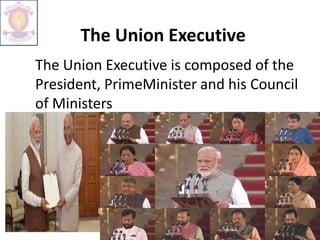
The Union Executive is composed of the
President, PrimeMinister and his Council
of Ministers
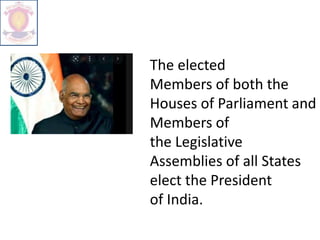
The elected
Members of both the
Houses of Parliament and
Members of
the Legislative
Assemblies of all States
elect the President
of India.
President
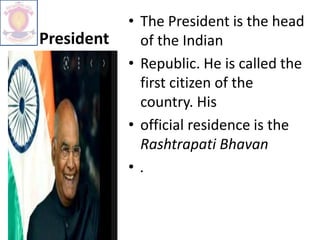
• The President is the head
of the Indian
• Republic. He is called the
first citizen of the
country. His
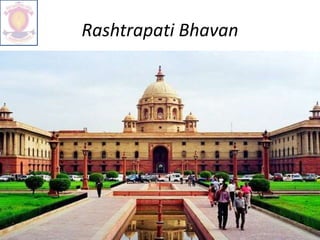
• official residence is the
Rashtrapati Bhavan
• .
Qualifications of President
• 1. He should be a citizen of India.
• 2. He should have completed the age of
35 years.
• 3. He should be qualified for election as
a Member of the Lok Sabha.
• 4. He should not hold any office of profit
under the Government.
Rashtrapati Bhavan
Powres of the President
• Executive Powers
• Legislative Powers
• Judicial Powers
• Financial Powers
• Military Powers
• Emergency Powers
• Discretionary Powers
Vice-President
• The Members of both the Houses of
Parliament elect the Vice-President.
• The Vice-Presidentmust be over 35
years of age and have all the
qualificationsrequired to become
President.
• He is the Chairman of the Rajya Sabha.
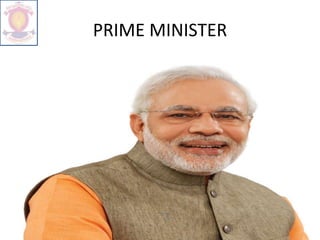
PRIME MINISTER
Importance of the Prime Minister
• The Prime Minister
• plays an important role in the
Parliamentary system of Government. His
responsibility is enormous in the matter
of national security.
powers and functions of the Prime
Minister
• 1 He is the Leader of the Lok Sabha.
• 2 He is the Head of the Government.
• 3 On the advice of the Prime Minister,
the Ministers are appointed by the
President.
• 4 He has the power to allot portfolios to
the Ministers.
• 5 He has the power to reshuffle the
Cabinet.
• 6 He recommends to the President the
removal of theMinisters.
Union Cabinet - Composition
• The President invites the
• Leader of the majority party elected by
the people to form the Government, and
appoints him as the Prime Minister.
• He appoints the remaining Ministers on
the advice ofthe Prime Minister.
• The Prime Minister and the Ministers
• form the Union Cabinet.
• The process of forming the Cabinet
• in this way is known as the Parliamentary
system or theCabinet system.
The Ministers are the political heads of
various departments.
Ministerial responsibility is the essence
of the Cabinet system. Each Minister will be
personally responsible for the proper
functioning of his Department.
The Prime Minister allocates Departments to
the Ministers.
On certain occasion he can demand the
resignation of any Minister.
When the Prime Minister resigns, the Cabinet
will dissolve. When a majority of the
Members of Lok Sabha supports a No-
Confidence motion,the Cabinet resigns.

UNION GOVERNMENT.pptx

  • 1.
    B.J.P.S Samiti’s M.V.HERWADKAR ENGLISHMEDIUM HIGH SCHOOL UNION GOVERNMENT STD9th Staff Name:Rashmi Pandit
  • 2.
  • 4.
    Union Legislature • TheUnion Legislature is called the Parliament. • The Parliament of India consists of the President of India • . The two Houses are the Lok Sabha and the • Rajya Sabha.
  • 5.
  • 6.
    The sessions ofthe Parliament
  • 7.
    Lok Sabha • TheLok Sabha is the Lower House of the • Parliament. The Members of the Lok Sabha are directly • elected by the citizens who are above the age of 18. The • maximum number of seats in the Lok Sabha is 552.
  • 8.
    Members of theLok Sabha • The Lok Sabha Members are elected for a term of five years • . A Member may contest election any number of times. • The Lok Sabha is dissolved on the expiry of its full term of five years
  • 9.
    Qualifications of Membersof the Lok Sabha • (1) To becomea Member of the Lok Sabha, one should be a citizen of • (2) They must be at least 25 years of age. • (3) They should not have been sentenced to imprisonment. • (4) Theyshould not be insolvent
  • 10.
    Lok Sabha Speaker •The powers and functions of the Speaker are: • deciding the matters to be discussed in the House; • maintaining the discipline and dignity of the House; • and conducting the discussion in aproper manner, and taking decisions.
  • 12.
  • 13.
    Members of theRajya Sabha • To become a Member of the Rajya Sabha, • one must not be less than 30 years of age. • The term of the Rajya Sabha Members is six years. The • The Vice-President of India is the Chairman of the Rajya Sabha.
  • 14.
    ROLE OF OPPOSTION •pointing out the lapses, if any, on the part of the Government; • reviewing the policies and programmes of the Government; • and giving timely advice to the Government, Cabinet and administrators.
  • 15.
    The powers andfunctions of the Parliament • Legislative powers • Financial powers • Administrative powers • Authority to amend the Constitution
  • 17.
    The Union Executive •The Union Executive is composed of the President, PrimeMinister and his Council of Ministers
  • 18.
    The Union Executive TheUnion Executive is composed of the President, PrimeMinister and his Council of Ministers
  • 19.
    The elected Members ofboth the Houses of Parliament and Members of the Legislative Assemblies of all States elect the President of India.
  • 20.
    President • The Presidentis the head of the Indian • Republic. He is called the first citizen of the country. His • official residence is the Rashtrapati Bhavan • .
  • 21.
    Qualifications of President •1. He should be a citizen of India. • 2. He should have completed the age of 35 years. • 3. He should be qualified for election as a Member of the Lok Sabha. • 4. He should not hold any office of profit under the Government.
  • 22.
  • 23.
    Powres of thePresident • Executive Powers • Legislative Powers • Judicial Powers • Financial Powers • Military Powers • Emergency Powers • Discretionary Powers
  • 24.
    Vice-President • The Membersof both the Houses of Parliament elect the Vice-President. • The Vice-Presidentmust be over 35 years of age and have all the qualificationsrequired to become President. • He is the Chairman of the Rajya Sabha.
  • 25.
  • 26.
    Importance of thePrime Minister • The Prime Minister • plays an important role in the Parliamentary system of Government. His responsibility is enormous in the matter of national security.
  • 27.
    powers and functionsof the Prime Minister • 1 He is the Leader of the Lok Sabha. • 2 He is the Head of the Government. • 3 On the advice of the Prime Minister, the Ministers are appointed by the President.
  • 28.
    • 4 Hehas the power to allot portfolios to the Ministers. • 5 He has the power to reshuffle the Cabinet. • 6 He recommends to the President the removal of theMinisters.
  • 29.
    Union Cabinet -Composition • The President invites the • Leader of the majority party elected by the people to form the Government, and appoints him as the Prime Minister.
  • 30.
    • He appointsthe remaining Ministers on the advice ofthe Prime Minister. • The Prime Minister and the Ministers • form the Union Cabinet. • The process of forming the Cabinet • in this way is known as the Parliamentary system or theCabinet system.
  • 31.
    The Ministers arethe political heads of various departments. Ministerial responsibility is the essence of the Cabinet system. Each Minister will be personally responsible for the proper functioning of his Department.
  • 32.
    The Prime Ministerallocates Departments to the Ministers. On certain occasion he can demand the resignation of any Minister. When the Prime Minister resigns, the Cabinet will dissolve. When a majority of the Members of Lok Sabha supports a No- Confidence motion,the Cabinet resigns.