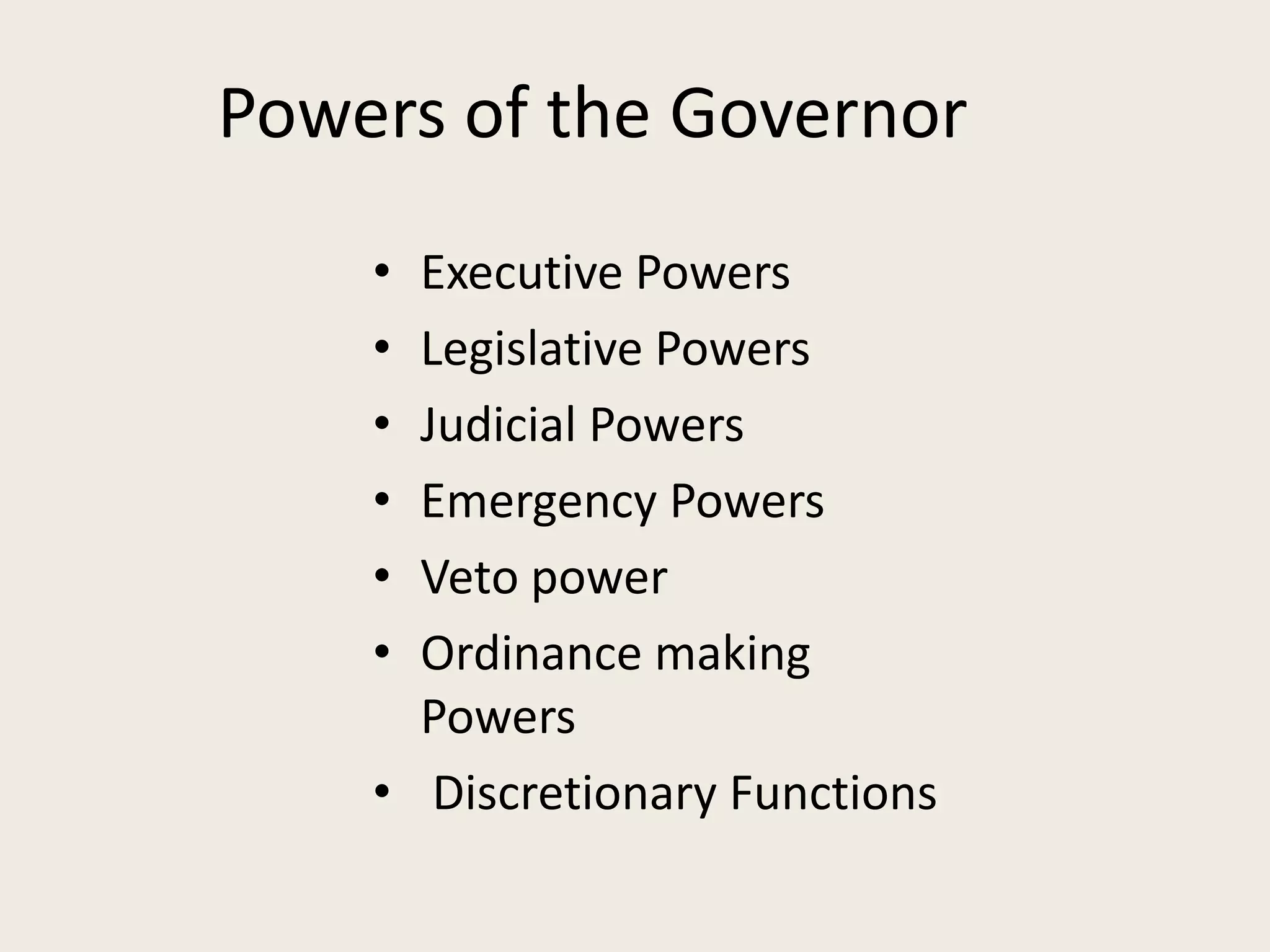
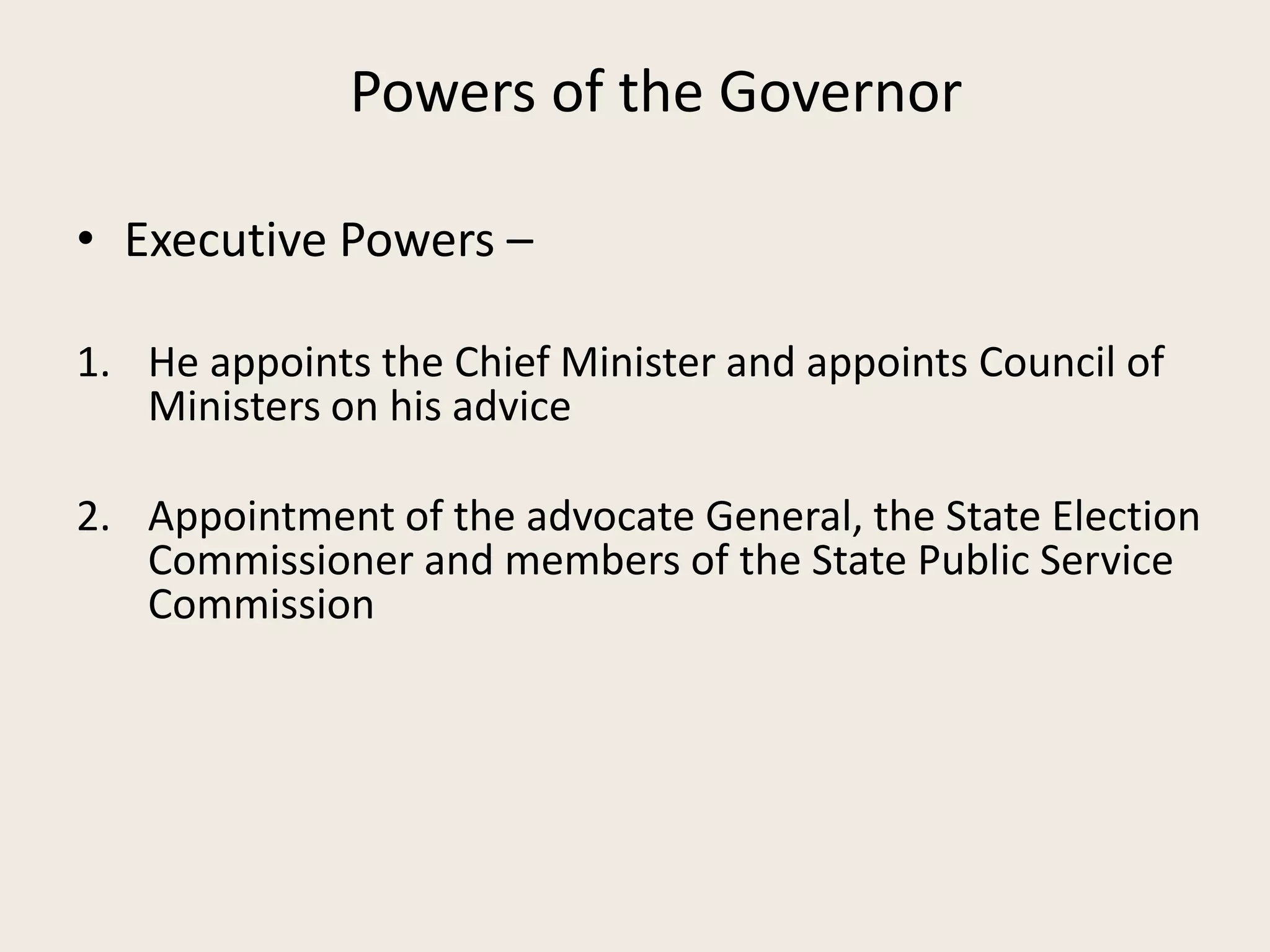
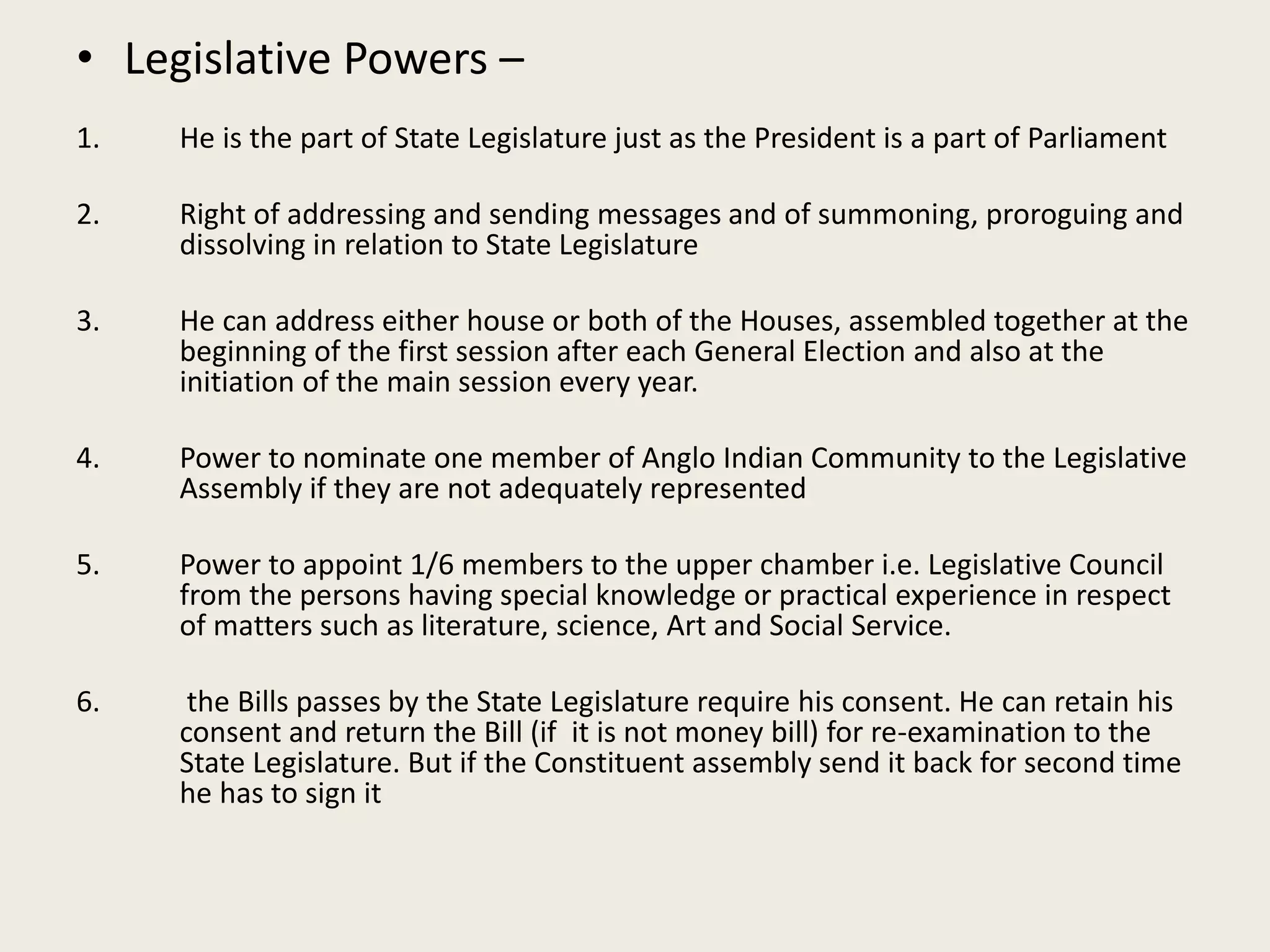
The governor is the nominal executive head of the state, while the chief minister and council of ministers are the real executive. The governor is appointed by the president and holds office at the president's pleasure. The governor has executive, legislative, financial, and emergency powers but acts on the advice of the council of ministers in routine matters. The governor also has discretionary powers in certain areas like ordinance making and has special responsibilities in some states. While constitutionally the head of the state, the governor in practice acts as an agent of the central government.