WELCOME TO OUR
PRESENTATION
PRESENTATION ON:
PRESENTED BY:
JOYDEB KARMAKAR
BTE00905501
RUBAYAT HOSSAIN
BTE00905450
MD. JAMSHEDUL ISLAM
BTE00605330
SHOHRAB HOSEN
BTE00905486
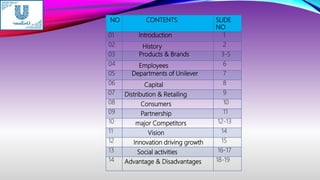
NO CONTENTS SLIDE
NO
01 Introduction 1
02 History 2
03 Products & Brands 3-5
04 Employees 6
05 Departments of Unilever 7
06 Capital 8
07 Distribution & Retailing 9
08 Consumers 10
09 Partnership 11
10 major Competitors 12-13
11 Vision 14
12 Innovation driving growth 15
13 Social activities 16-17
14 Advantage & Disadvantages 18-19
Unilever is an Anglo-Dutch multinational consumer
goods company headquartered in London,
England. Its products include food, beverages,
cleaning agents and personal care products. It is
the world’s third largest consumer goods company
measured by 2018 revenue, after Procter &
Gamble and Nestle. It is one of the oldest
multinational companies, its products are available
in more than 180 countries worldwide.
Introduction:
01
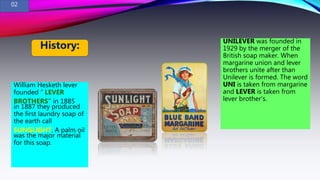
William Hesketh lever
founded “ LEVER
BROTHERS” in 1885
in 1887 they produced
the first laundry soap of
the earth call
SUNGLIGHT. A palm oil
was the major material
for this soap.
UNILEVER was founded in
1929 by the merger of the
British soap maker. When
margarine union and lever
brothers unite after than
Unilever is formed. The word
UNI is taken from margarine
and LEVER is taken from
lever brother’s.
History:
02
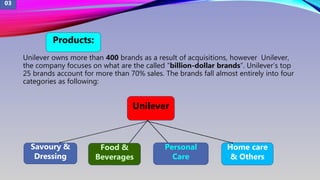
Unilever owns more than 400 brands as a result of acquisitions, however Unilever,
the company focuses on what are the called “billion-dollar brands”. Unilever’s top
25 brands account for more than 70% sales. The brands fall almost entirely into four
categories as following:
Products:
Unilever
Food &
Beverages
Personal
Care
03
Home care
& Others
Savoury &
Dressing
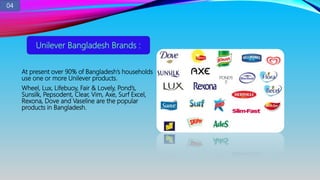
At present over 90% of Bangladesh’s households
use one or more Unilever products.
Wheel, Lux, Lifebuoy, Fair & Lovely, Pond’s,
Sunsilk, Pepsodent, Clear, Vim, Axe, Surf Excel,
Rexona, Dove and Vaseline are the popular
products in Bangladesh.
Unilever Bangladesh Brands :
04
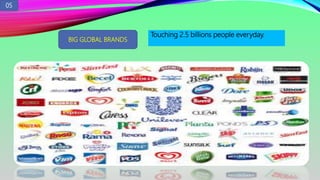
BIG GLOBAL BRANDS
Touching 2.5 billions people everyday.
05
Unilever products are sold in more than
190 countries and at the end of 2018
employed 2,34,000 people.
Unilever Bangladesh provides
employment to over 10,000 people
directly and indirectly through the
suppliers, distributors and service
providers. 99.8% employees are local
workers working in Unilever.
Employees :
06
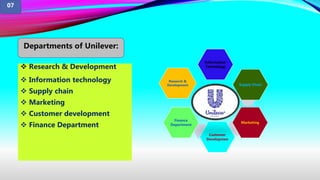
 Research & Development
 Information technology
 Supply chain
 Marketing
 Customer development
 Finance Department
Research &
Development
Information
Technology
Supply Chain
Marketing
Customer
Developmen
Finance
Department
Departments of Unilever:
07
Revenue : €50.982 billion (2018)
Operating income: €12.535 billion (2018)
Net income: €9.808 billion (2018)
Total assets: €59.456 billion (2018)
Total equity: €12.292 billion (2018)
Capital :
08
Around one-fifth of Unilever’s
sales are through the retail chains.
Its products are sold in over 10
million small shops in developing
and emerging markets.
50% of sales from developing and
emerging markets.
Distribution & Retailing :
09
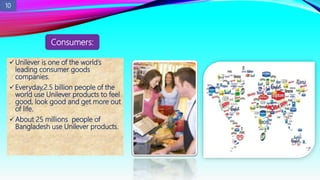
Unilever is one of the world’s
leading consumer goods
companies.
Everyday,2.5 billion people of the
world use Unilever products to feel
good, look good and get more out
of life.
About 25 millions people of
Bangladesh use Unilever products.
Consumers:
10
Unilever manages a number of organizations as their business
partner.
Partnership :
11
Unilever’s largest international competitors are Nestle and Procter & Gamble. It also
faces competition in local markets or specific products ranges from numerous
companies, including ConAgra, Danone, Henkel, Mars, Pepsico, Reckitt and S. C.
Johnson & Son.
Major Competitors:
12
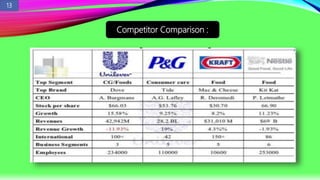
Competitor Comparison :
13
 Unilever works to create a better
future every day.
They work for the people to feel them
good and get more out of life with
brands that made their life easy and
simple.
To meets everyday needs for
nutrition, hygiene and personal care
with products that facilitate people in
their lives.
Developing the new ways that helps
them to double the size of their
company.
Vision :
14
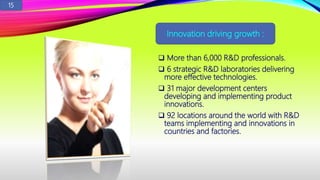
 More than 6,000 R&D professionals.
 6 strategic R&D laboratories delivering
more effective technologies.
 31 major development centers
developing and implementing product
innovations.
 92 locations around the world with R&D
teams implementing and innovations in
countries and factories.
Innovation driving growth :
15
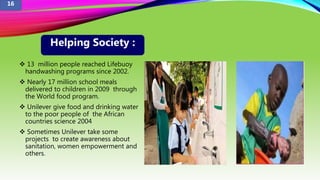
 13 million people reached Lifebuoy
handwashing programs since 2002.
 Nearly 17 million school meals
delivered to children in 2009 through
the World food program.
 Unilever give food and drinking water
to the poor people of the African
countries science 2004
 Sometimes Unilever take some
projects to create awareness about
sanitation, women empowerment and
others.
Helping Society :
16
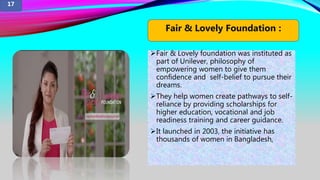
Fair & Lovely foundation was instituted as
part of Unilever, philosophy of
empowering women to give them
confidence and self-belief to pursue their
dreams.
They help women create pathways to self-
reliance by providing scholarships for
higher education, vocational and job
readiness training and career guidance.
It launched in 2003, the initiative has
thousands of women in Bangladesh,
Fair & Lovely Foundation :
17
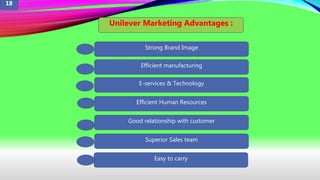
Efficient manufacturing
E-services & Technology
Efficient Human Resources
Good relationship with customer
Strong Brand Image
Superior Sales team
Easy to carry
Unilever Marketing Advantages :
18
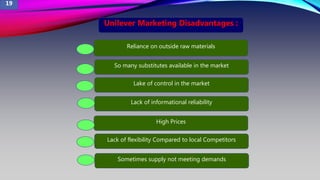
So many substitutes available in the market
Lake of control in the market
Lack of informational reliability
High Prices
Lack of flexibility Compared to local Competitors
Sometimes supply not meeting demands
Unilever Marketing Disadvantages :
19
Reliance on outside raw materials
By our analysis we have found that, UNILEVER is globally successful company. They
create brands for specific countries and regions. UNILEVER Bangladesh is the market
leader in home and personal care products. Their production and distribution
expanding rapidly. Unilever is starting to consider how they make Unilever’s
corporate commitments and activities more visible and relevant to their consumer.
Conclusion :
20
Unilever
Unilever

Unilever

  • 1.
  • 2.
  • 3.
    PRESENTED BY: JOYDEB KARMAKAR BTE00905501 RUBAYATHOSSAIN BTE00905450 MD. JAMSHEDUL ISLAM BTE00605330 SHOHRAB HOSEN BTE00905486
  • 4.
    NO CONTENTS SLIDE NO 01Introduction 1 02 History 2 03 Products & Brands 3-5 04 Employees 6 05 Departments of Unilever 7 06 Capital 8 07 Distribution & Retailing 9 08 Consumers 10 09 Partnership 11 10 major Competitors 12-13 11 Vision 14 12 Innovation driving growth 15 13 Social activities 16-17 14 Advantage & Disadvantages 18-19
  • 5.
    Unilever is anAnglo-Dutch multinational consumer goods company headquartered in London, England. Its products include food, beverages, cleaning agents and personal care products. It is the world’s third largest consumer goods company measured by 2018 revenue, after Procter & Gamble and Nestle. It is one of the oldest multinational companies, its products are available in more than 180 countries worldwide. Introduction: 01
  • 6.
    William Hesketh lever founded“ LEVER BROTHERS” in 1885 in 1887 they produced the first laundry soap of the earth call SUNGLIGHT. A palm oil was the major material for this soap. UNILEVER was founded in 1929 by the merger of the British soap maker. When margarine union and lever brothers unite after than Unilever is formed. The word UNI is taken from margarine and LEVER is taken from lever brother’s. History: 02
  • 7.
    Unilever owns morethan 400 brands as a result of acquisitions, however Unilever, the company focuses on what are the called “billion-dollar brands”. Unilever’s top 25 brands account for more than 70% sales. The brands fall almost entirely into four categories as following: Products: Unilever Food & Beverages Personal Care 03 Home care & Others Savoury & Dressing
  • 8.
    At present over90% of Bangladesh’s households use one or more Unilever products. Wheel, Lux, Lifebuoy, Fair & Lovely, Pond’s, Sunsilk, Pepsodent, Clear, Vim, Axe, Surf Excel, Rexona, Dove and Vaseline are the popular products in Bangladesh. Unilever Bangladesh Brands : 04
  • 9.
    BIG GLOBAL BRANDS Touching2.5 billions people everyday. 05
  • 10.
    Unilever products aresold in more than 190 countries and at the end of 2018 employed 2,34,000 people. Unilever Bangladesh provides employment to over 10,000 people directly and indirectly through the suppliers, distributors and service providers. 99.8% employees are local workers working in Unilever. Employees : 06
  • 11.
     Research &Development  Information technology  Supply chain  Marketing  Customer development  Finance Department Research & Development Information Technology Supply Chain Marketing Customer Developmen Finance Department Departments of Unilever: 07
  • 12.
    Revenue : €50.982billion (2018) Operating income: €12.535 billion (2018) Net income: €9.808 billion (2018) Total assets: €59.456 billion (2018) Total equity: €12.292 billion (2018) Capital : 08
  • 13.
    Around one-fifth ofUnilever’s sales are through the retail chains. Its products are sold in over 10 million small shops in developing and emerging markets. 50% of sales from developing and emerging markets. Distribution & Retailing : 09
  • 14.
    Unilever is oneof the world’s leading consumer goods companies. Everyday,2.5 billion people of the world use Unilever products to feel good, look good and get more out of life. About 25 millions people of Bangladesh use Unilever products. Consumers: 10
  • 15.
    Unilever manages anumber of organizations as their business partner. Partnership : 11
  • 16.
    Unilever’s largest internationalcompetitors are Nestle and Procter & Gamble. It also faces competition in local markets or specific products ranges from numerous companies, including ConAgra, Danone, Henkel, Mars, Pepsico, Reckitt and S. C. Johnson & Son. Major Competitors: 12
  • 17.
  • 18.
     Unilever worksto create a better future every day. They work for the people to feel them good and get more out of life with brands that made their life easy and simple. To meets everyday needs for nutrition, hygiene and personal care with products that facilitate people in their lives. Developing the new ways that helps them to double the size of their company. Vision : 14
  • 19.
     More than6,000 R&D professionals.  6 strategic R&D laboratories delivering more effective technologies.  31 major development centers developing and implementing product innovations.  92 locations around the world with R&D teams implementing and innovations in countries and factories. Innovation driving growth : 15
  • 20.
     13 millionpeople reached Lifebuoy handwashing programs since 2002.  Nearly 17 million school meals delivered to children in 2009 through the World food program.  Unilever give food and drinking water to the poor people of the African countries science 2004  Sometimes Unilever take some projects to create awareness about sanitation, women empowerment and others. Helping Society : 16
  • 21.
    Fair & Lovelyfoundation was instituted as part of Unilever, philosophy of empowering women to give them confidence and self-belief to pursue their dreams. They help women create pathways to self- reliance by providing scholarships for higher education, vocational and job readiness training and career guidance. It launched in 2003, the initiative has thousands of women in Bangladesh, Fair & Lovely Foundation : 17
  • 22.
    Efficient manufacturing E-services &Technology Efficient Human Resources Good relationship with customer Strong Brand Image Superior Sales team Easy to carry Unilever Marketing Advantages : 18
  • 23.
    So many substitutesavailable in the market Lake of control in the market Lack of informational reliability High Prices Lack of flexibility Compared to local Competitors Sometimes supply not meeting demands Unilever Marketing Disadvantages : 19 Reliance on outside raw materials
  • 24.
    By our analysiswe have found that, UNILEVER is globally successful company. They create brands for specific countries and regions. UNILEVER Bangladesh is the market leader in home and personal care products. Their production and distribution expanding rapidly. Unilever is starting to consider how they make Unilever’s corporate commitments and activities more visible and relevant to their consumer. Conclusion : 20