Understanding and Increasing Student MotivationRichard Ogle, PhDDepartment of Psychology
Definition of MotivationA student's willingness, need, desire and compulsion to participate in, and be successful in, the learning process" (Bomia et al., 1997, p. 1)Motivated students "select tasks at the border of their competencies, initiate action when given the opportunity, and exert intense effort and concentration in the implementation of learning tasks; they show generally positive emotions during ongoing action, including enthusiasm, optimism, curiosity, and interest" (p. 3). Less motivated or disengaged students, on the other hand, "are passive, do not try hard, and give up easily in the face of challenges" (Skinner & Belmont, 1991, p. 4).
The Nature of MotivationMotivation is not dichotomousLittle utility in thinking a student “is” or “is not” motivatedMotivation is dynamic and continuousIt is a probability that an individual will engage in and maintain a certain activity.Motivation is therefore subject to numerous factors Instructors have no effect on some factors but may have significant effects on other factors
Types of MotivationExtrinsicEngaging in behavior to attain a reward or to avoid a punishment from an external source. IntrinsicEngaging in behavior out of curiosity, sense challenge and an internal sense of gratification.
Influential FactorsStudent FactorsInterestPerceived usefulnessGeneral level of achievement motivationSelf-efficacy,Self-confidence, Perceived ControlPersistence Instructor FactorsThe same
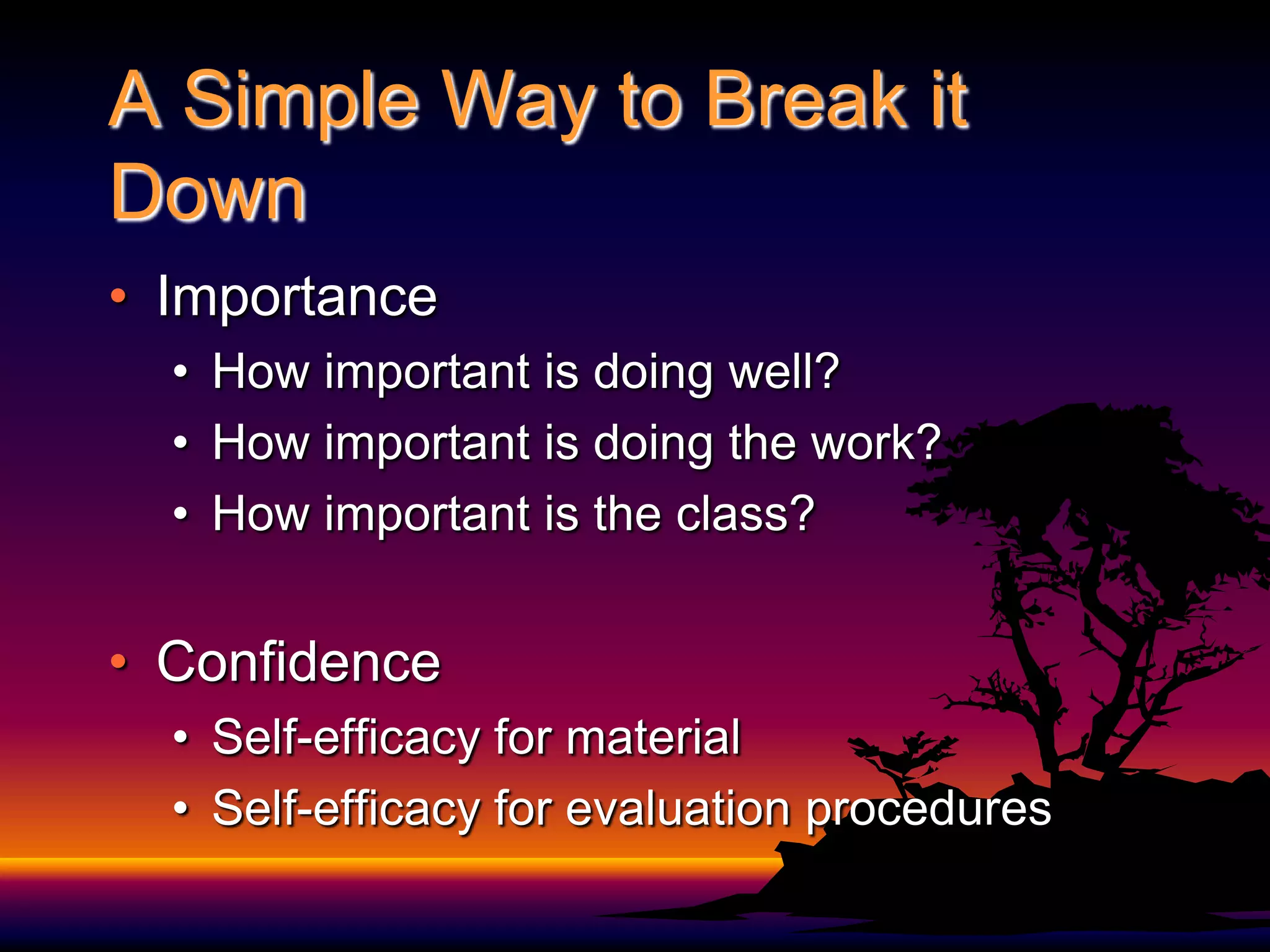
A Simple Way to Break it DownImportanceHow important is doing well?How important is doing the work?How important is the class?ConfidenceSelf-efficacy for materialSelf-efficacy for evaluation procedures
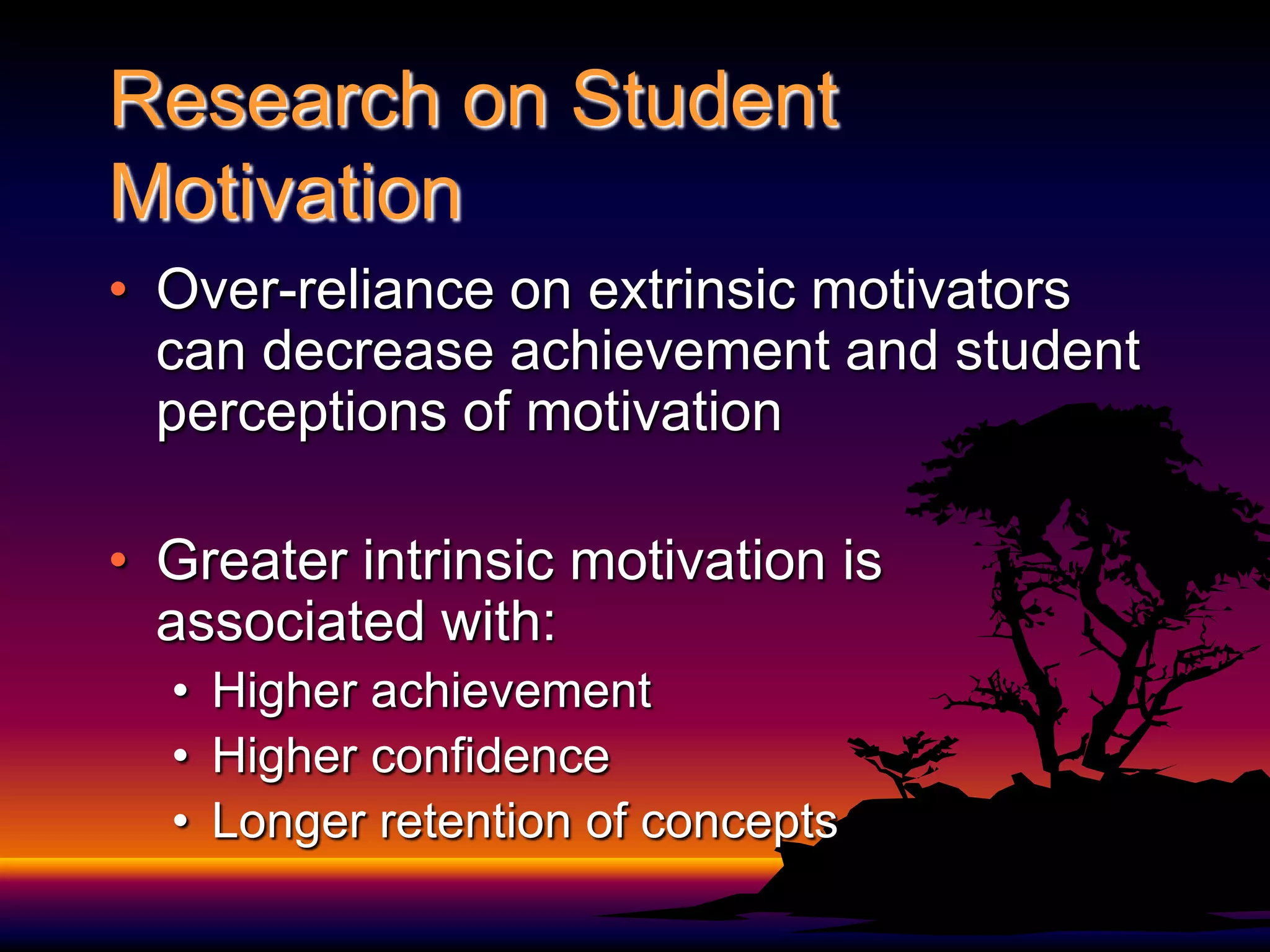
Research on Student MotivationOver-reliance on extrinsic motivators can decrease achievement and student perceptions of motivationGreater intrinsic motivation is associated with:Higher achievementHigher confidence Longer retention of concepts
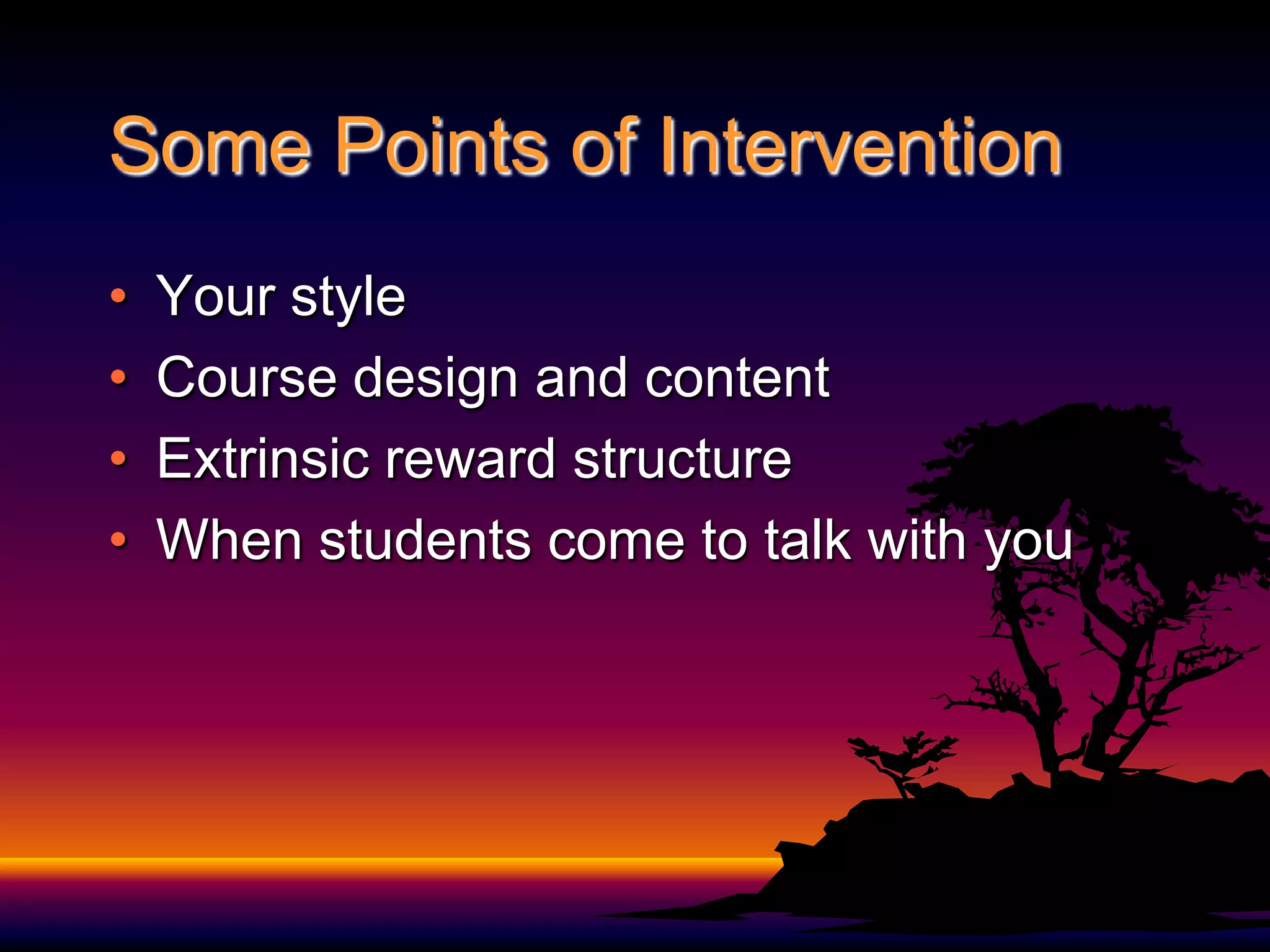
Some Points of InterventionYour styleCourse design and contentExtrinsic reward structureWhen students come to talk with you
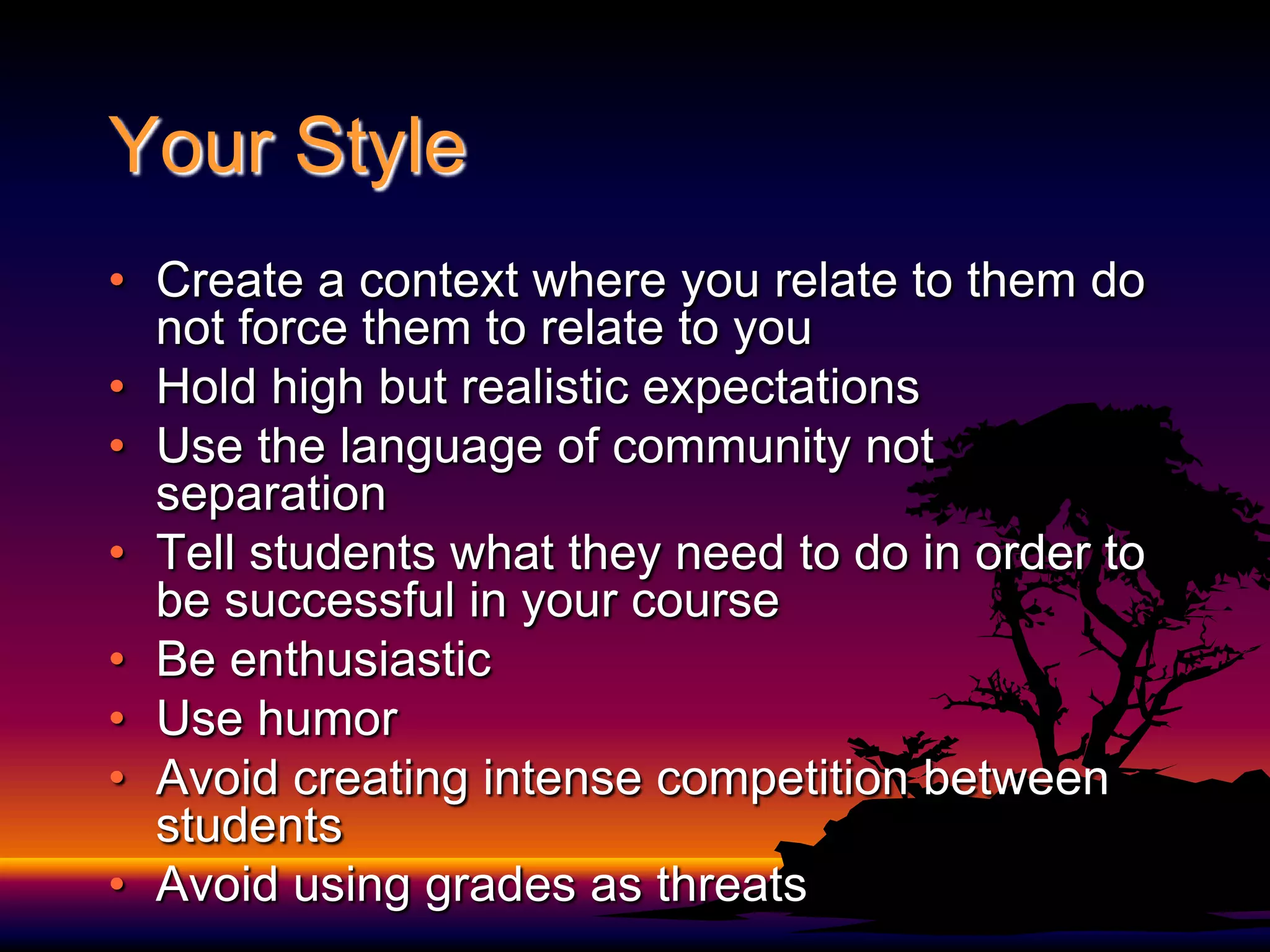
Your Style Create a context where you relate to them do not force them to relate to youHold high but realistic expectationsUse the language of community not separationTell students what they need to do in order to be successful in your courseBe enthusiasticUse humorAvoid creating intense competition between studentsAvoid using grades as threats
Example: Relating	Small writing assignments or discussionsUse a movie you have seen in the last 6 months to explain or describe a concept Use a TV show now and from your childhoodFind contemporary movies to show illustrative clipsFind areas of commonality around issues important to students.  Use these areas in your lectures
Course DesignFind out what drives them and adjust the course accordinglyUse their interests to devise examples and assignmentsLet students have some say in choosing what will be studiedSelect topics for deeper examinationPapers, projectsDe-emphasize grades and emphasize masteryDo oversVary your teaching methodsDebates, guest speakers, av, small group work Increase course difficulty as the semester progressesCreate opportunities to succeed early
Example: Importance/ConfidenceCan be done as part of getting student information1-10 scale of Importance1-10 scale confidenceWhy a X and not a YWhat can you do to increase X to YWhat can I do to increase X to YWhat barriers are in your way
Example: Student Generated SyllabusProvide an example with goals and objectivesSet up a smorgasbord of requirementsEssay TestsMultiple Choice TestsPapersThey turn it in for your feedbackWorks well for smaller classes
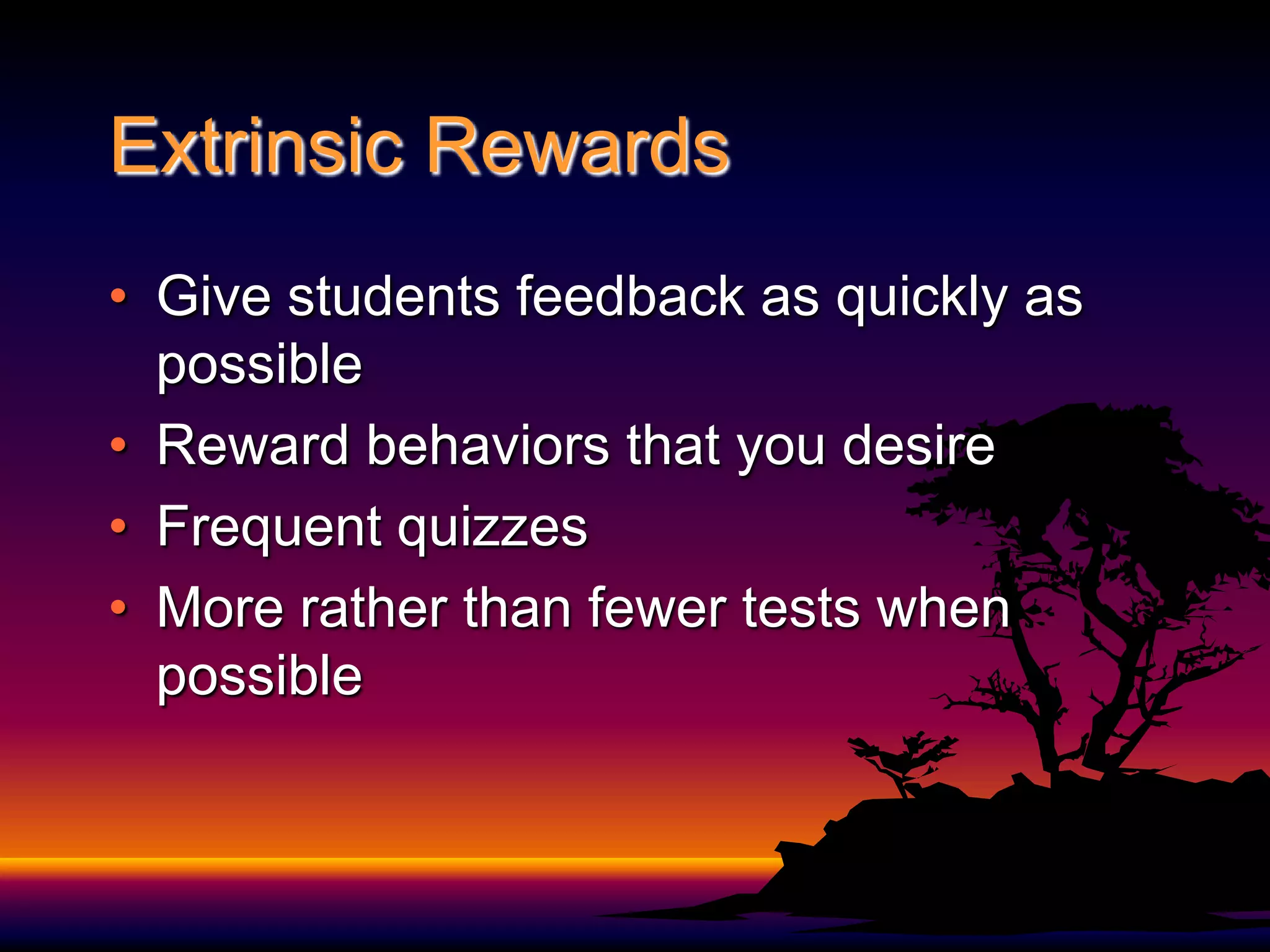
Extrinsic Rewards Give students feedback as quickly as possibleReward behaviors that you desireFrequent quizzesMore rather than fewer tests when possible
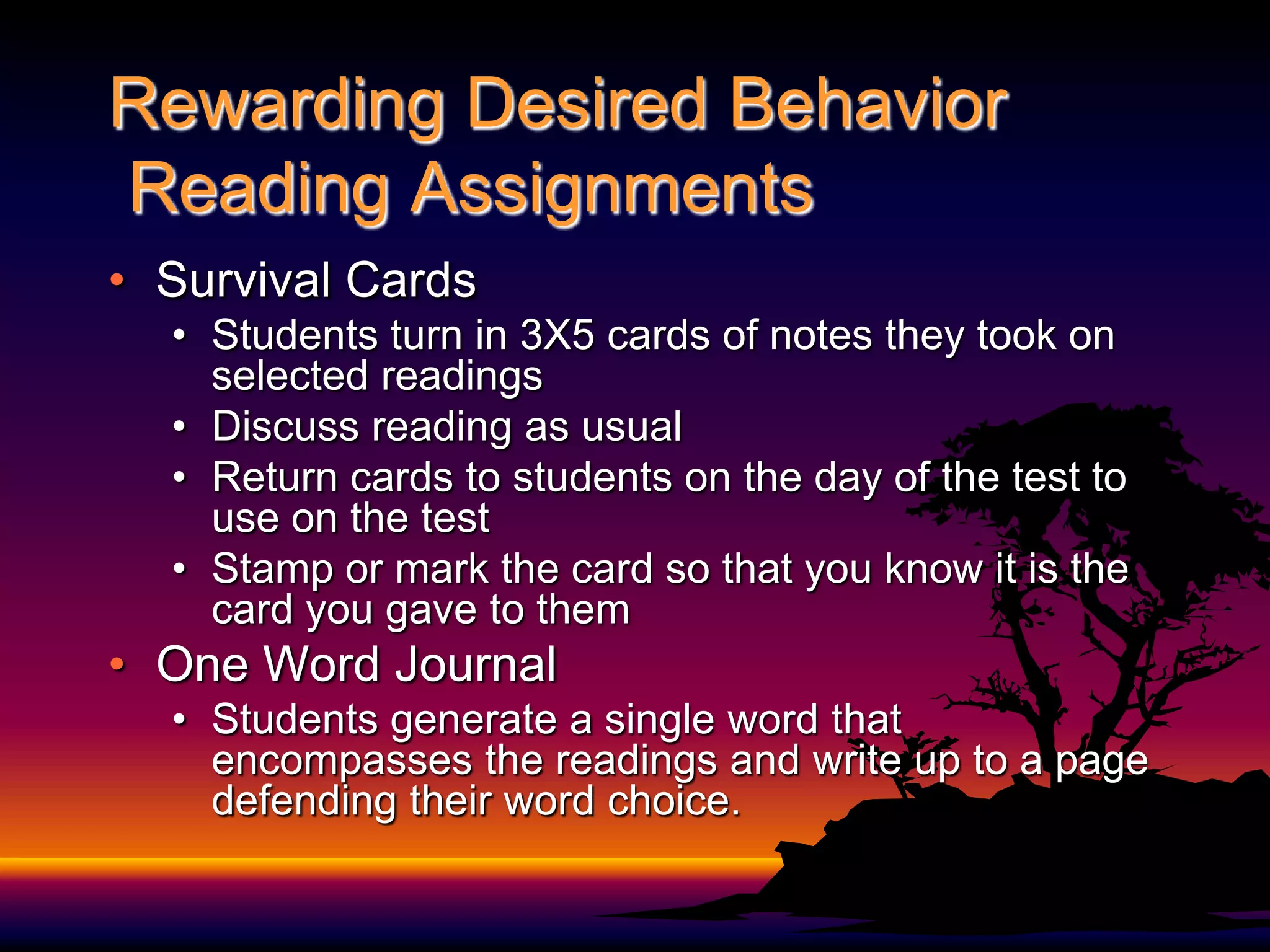
Rewarding Desired Behavior Reading AssignmentsSurvival CardsStudents turn in 3X5 cards of notes they took on selected readings Discuss reading as usualReturn cards to students on the day of the test to use on the testStamp or mark the card so that you know it is the card you gave to themOne Word JournalStudents generate a single word that encompasses the readings and write up to a page defending their word choice.
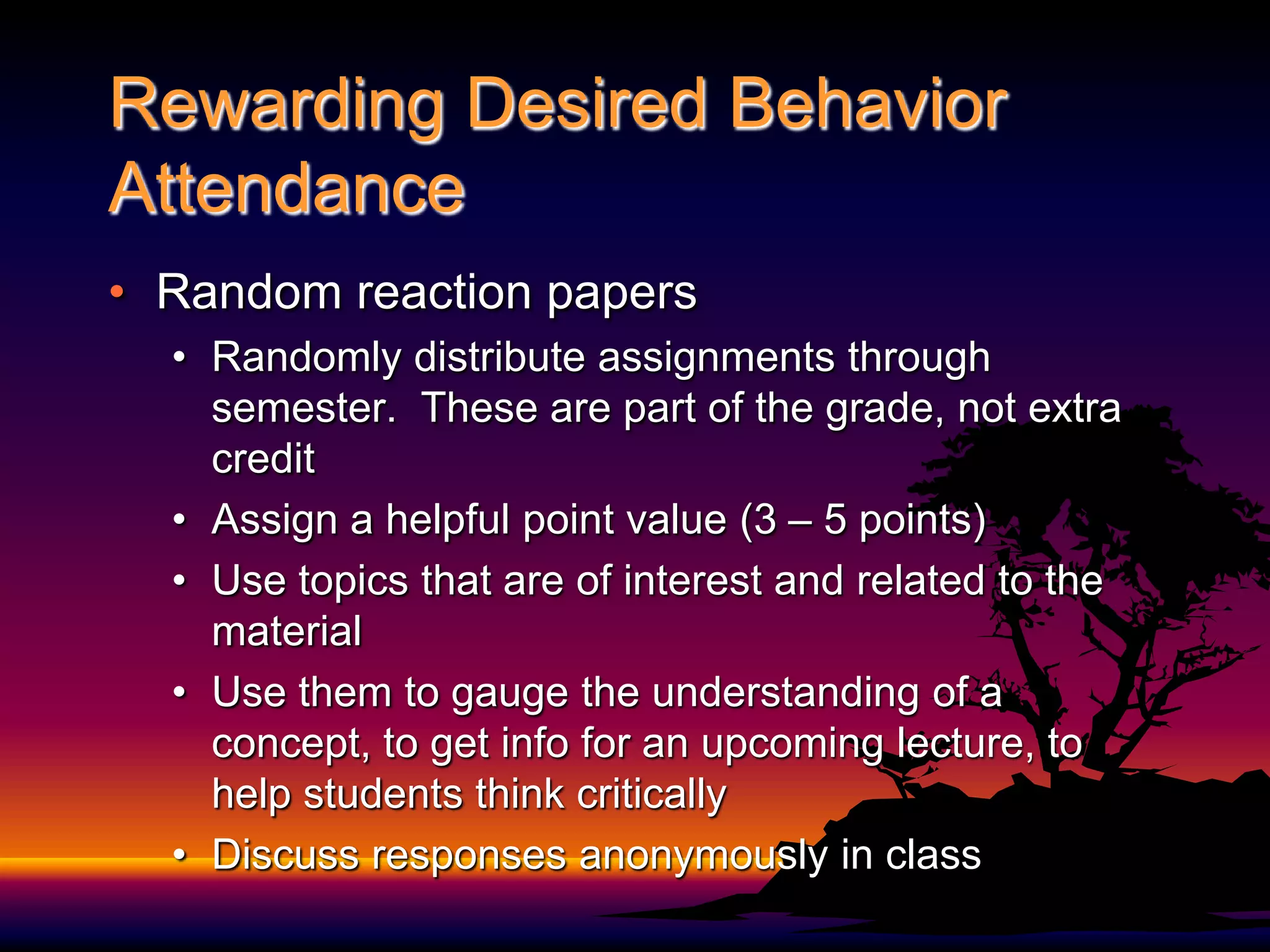
Rewarding Desired Behavior Attendance	Random reaction papersRandomly distribute assignments through semester.  These are part of the grade, not extra creditAssign a helpful point value (3 – 5 points)Use topics that are of interest and related to the materialUse them to gauge the understanding of a concept, to get info for an upcoming lecture, to help students think criticallyDiscuss responses anonymously in class
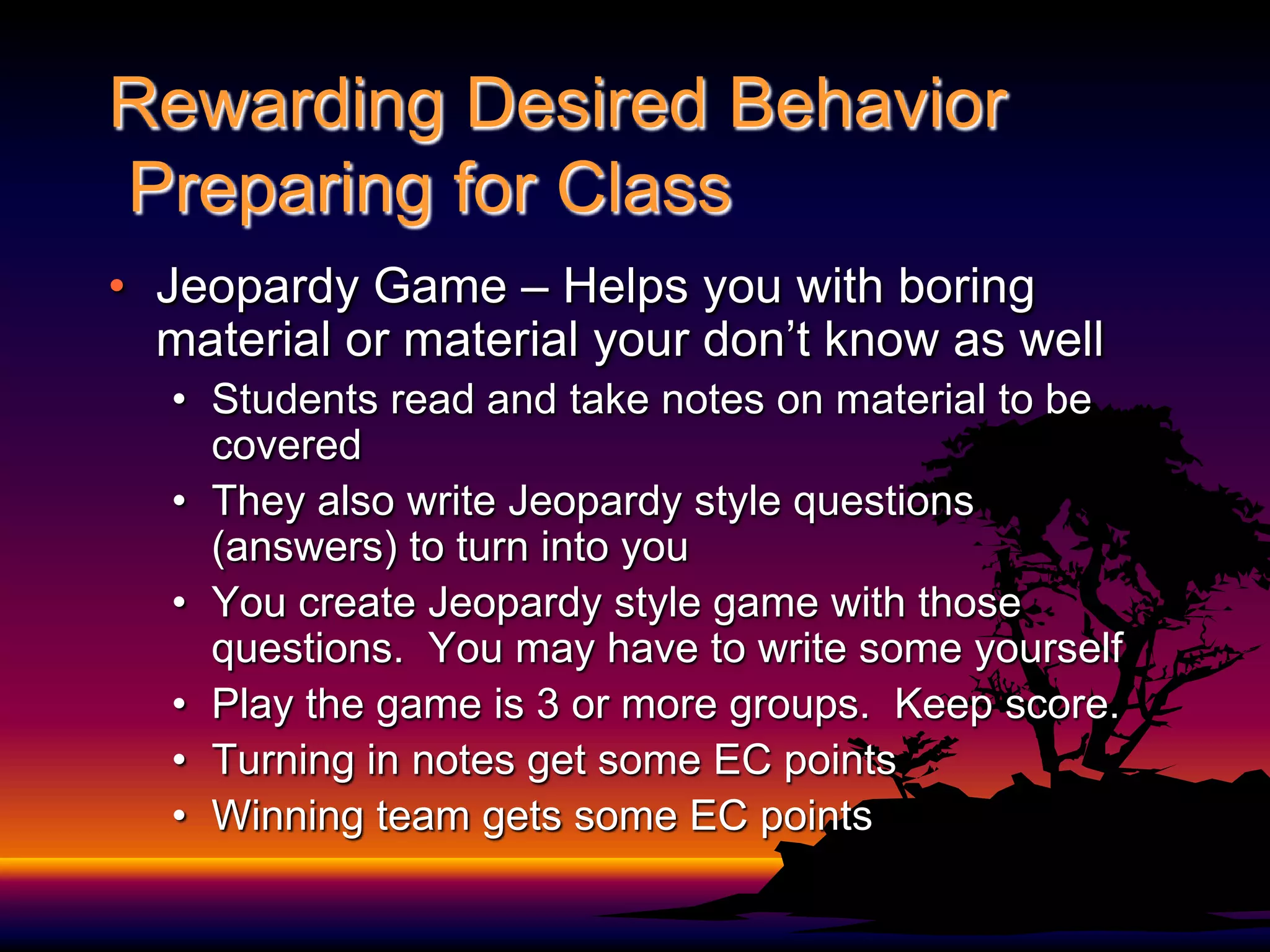
Rewarding Desired Behavior Preparing for Class Jeopardy Game – Helps you with boring material or material your don’t know as wellStudents read and take notes on material to be coveredThey also write Jeopardy style questions (answers) to turn into youYou create Jeopardy style game with those questions.  You may have to write some yourselfPlay the game is 3 or more groups.  Keep score.Turning in notes get some EC pointsWinning team gets some EC points
A Great ResourceGross-Davis, B. (1993). Tools for Teaching. San Francisco: Jossey-Bass.
Out of Class InteractionsStudents do not come to your office for you to talk to them.  They show up because they want you to listenTen minutes of active listening gets you more than 30 minutes of preaching or lecturingThe goal is for the student to articulate to reasons to succeed and for you to tie in their reason to the behaviors you desire
Active ListeningAs the listener, you are a mirror; a mirror with a twist.Use reflection and open-ended questions to understand what motivates and reinforces the student.Summarize what you hearTie the goals of the class with the students motivators and reinforcers
Active Listening FlowchartStart with open questionsListen and reflectSummarize what you hear or what you want them to hear againAsk key/evocative questionsSet a planMeet again to evaluate
Take Home MessageShow and share your interestThink in terms of importance and confidence for you and your studentsUse but do not over-use extrinsic rewardsIndividualize as much as possibleListen as much as possibleIt’s your agenda through their eyes

Understandingand Increasing Student Motivation I 1

  • 1.
    Understanding and IncreasingStudent MotivationRichard Ogle, PhDDepartment of Psychology
  • 2.
    Definition of MotivationAstudent's willingness, need, desire and compulsion to participate in, and be successful in, the learning process" (Bomia et al., 1997, p. 1)Motivated students "select tasks at the border of their competencies, initiate action when given the opportunity, and exert intense effort and concentration in the implementation of learning tasks; they show generally positive emotions during ongoing action, including enthusiasm, optimism, curiosity, and interest" (p. 3). Less motivated or disengaged students, on the other hand, "are passive, do not try hard, and give up easily in the face of challenges" (Skinner & Belmont, 1991, p. 4).
  • 3.
    The Nature ofMotivationMotivation is not dichotomousLittle utility in thinking a student “is” or “is not” motivatedMotivation is dynamic and continuousIt is a probability that an individual will engage in and maintain a certain activity.Motivation is therefore subject to numerous factors Instructors have no effect on some factors but may have significant effects on other factors
  • 4.
    Types of MotivationExtrinsicEngagingin behavior to attain a reward or to avoid a punishment from an external source. IntrinsicEngaging in behavior out of curiosity, sense challenge and an internal sense of gratification.
  • 5.
    Influential FactorsStudent FactorsInterestPerceivedusefulnessGeneral level of achievement motivationSelf-efficacy,Self-confidence, Perceived ControlPersistence Instructor FactorsThe same
  • 6.
    A Simple Wayto Break it DownImportanceHow important is doing well?How important is doing the work?How important is the class?ConfidenceSelf-efficacy for materialSelf-efficacy for evaluation procedures
  • 7.
    Research on StudentMotivationOver-reliance on extrinsic motivators can decrease achievement and student perceptions of motivationGreater intrinsic motivation is associated with:Higher achievementHigher confidence Longer retention of concepts
  • 8.
    Some Points ofInterventionYour styleCourse design and contentExtrinsic reward structureWhen students come to talk with you
  • 9.
    Your Style Createa context where you relate to them do not force them to relate to youHold high but realistic expectationsUse the language of community not separationTell students what they need to do in order to be successful in your courseBe enthusiasticUse humorAvoid creating intense competition between studentsAvoid using grades as threats
  • 10.
    Example: Relating Small writingassignments or discussionsUse a movie you have seen in the last 6 months to explain or describe a concept Use a TV show now and from your childhoodFind contemporary movies to show illustrative clipsFind areas of commonality around issues important to students. Use these areas in your lectures
  • 11.
    Course DesignFind outwhat drives them and adjust the course accordinglyUse their interests to devise examples and assignmentsLet students have some say in choosing what will be studiedSelect topics for deeper examinationPapers, projectsDe-emphasize grades and emphasize masteryDo oversVary your teaching methodsDebates, guest speakers, av, small group work Increase course difficulty as the semester progressesCreate opportunities to succeed early
  • 12.
    Example: Importance/ConfidenceCan bedone as part of getting student information1-10 scale of Importance1-10 scale confidenceWhy a X and not a YWhat can you do to increase X to YWhat can I do to increase X to YWhat barriers are in your way
  • 13.
    Example: Student GeneratedSyllabusProvide an example with goals and objectivesSet up a smorgasbord of requirementsEssay TestsMultiple Choice TestsPapersThey turn it in for your feedbackWorks well for smaller classes
  • 14.
    Extrinsic Rewards Givestudents feedback as quickly as possibleReward behaviors that you desireFrequent quizzesMore rather than fewer tests when possible
  • 15.
    Rewarding Desired BehaviorReading AssignmentsSurvival CardsStudents turn in 3X5 cards of notes they took on selected readings Discuss reading as usualReturn cards to students on the day of the test to use on the testStamp or mark the card so that you know it is the card you gave to themOne Word JournalStudents generate a single word that encompasses the readings and write up to a page defending their word choice.
  • 16.
    Rewarding Desired BehaviorAttendance Random reaction papersRandomly distribute assignments through semester. These are part of the grade, not extra creditAssign a helpful point value (3 – 5 points)Use topics that are of interest and related to the materialUse them to gauge the understanding of a concept, to get info for an upcoming lecture, to help students think criticallyDiscuss responses anonymously in class
  • 17.
    Rewarding Desired BehaviorPreparing for Class Jeopardy Game – Helps you with boring material or material your don’t know as wellStudents read and take notes on material to be coveredThey also write Jeopardy style questions (answers) to turn into youYou create Jeopardy style game with those questions. You may have to write some yourselfPlay the game is 3 or more groups. Keep score.Turning in notes get some EC pointsWinning team gets some EC points
  • 18.
    A Great ResourceGross-Davis,B. (1993). Tools for Teaching. San Francisco: Jossey-Bass.
  • 19.
    Out of ClassInteractionsStudents do not come to your office for you to talk to them. They show up because they want you to listenTen minutes of active listening gets you more than 30 minutes of preaching or lecturingThe goal is for the student to articulate to reasons to succeed and for you to tie in their reason to the behaviors you desire
  • 20.
    Active ListeningAs thelistener, you are a mirror; a mirror with a twist.Use reflection and open-ended questions to understand what motivates and reinforces the student.Summarize what you hearTie the goals of the class with the students motivators and reinforcers
  • 21.
    Active Listening FlowchartStartwith open questionsListen and reflectSummarize what you hear or what you want them to hear againAsk key/evocative questionsSet a planMeet again to evaluate
  • 22.
    Take Home MessageShowand share your interestThink in terms of importance and confidence for you and your studentsUse but do not over-use extrinsic rewardsIndividualize as much as possibleListen as much as possibleIt’s your agenda through their eyes