What is Motivation?Motivation is the internaldriveto accomplish a particular goal.  In a work setting, motivation is what makes people wantto work.
Ten Morale-Building Factors	Interesting WorkFull appreciation of work doneInvolvementGood payJob securityPromotion and growthGood working conditionsLoyalty to employeesHelp with personal problemsTactful discipline
Other Morale-Building FactorsPERKSAutonomyStatusResponsibilityFlexible SchedulingBenefitsOthers?
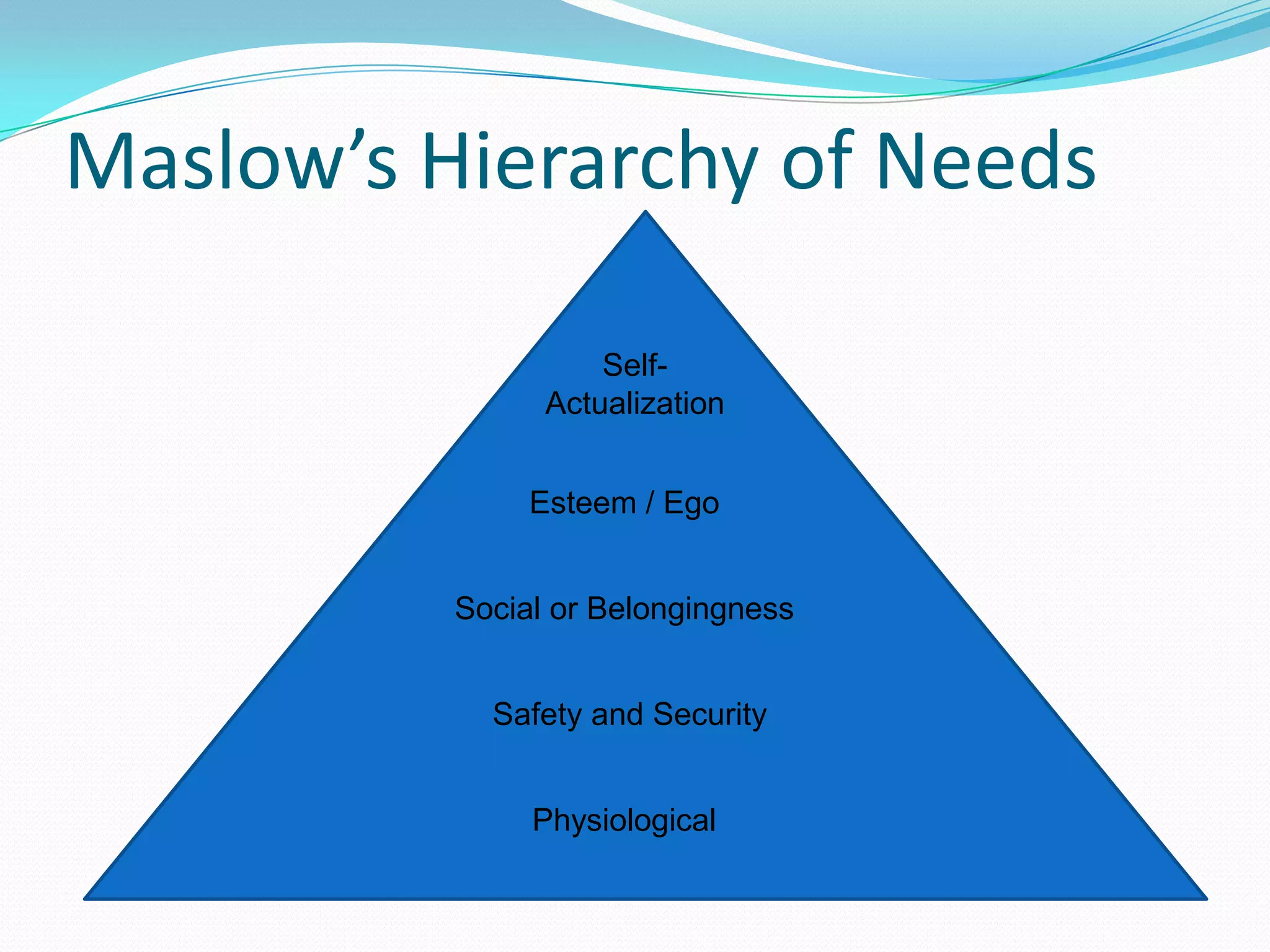
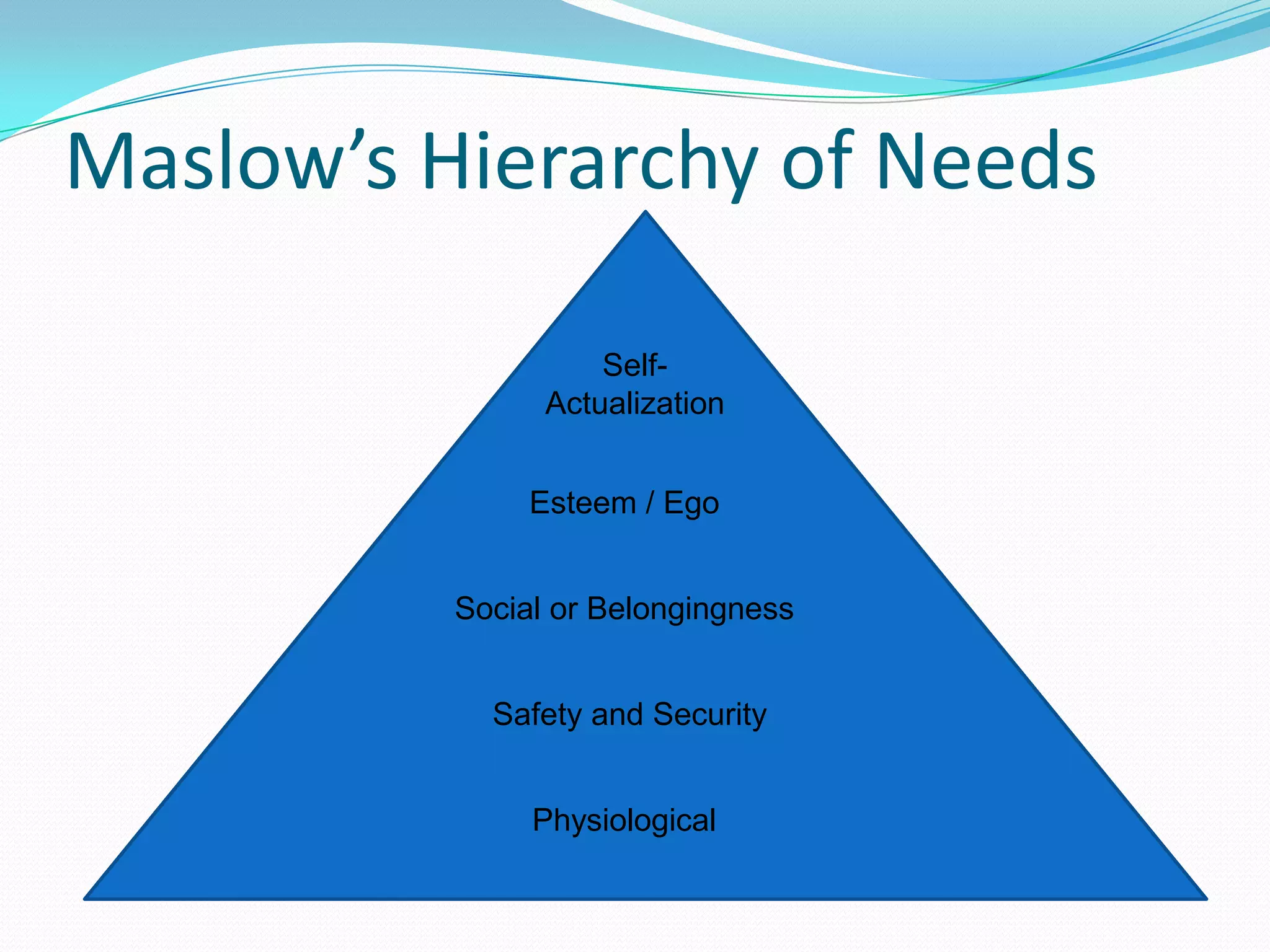
Maslow’s Hierarchy of NeedsSelf-ActualizationEsteem / EgoSocial or BelongingnessSafety and SecurityPhysiological
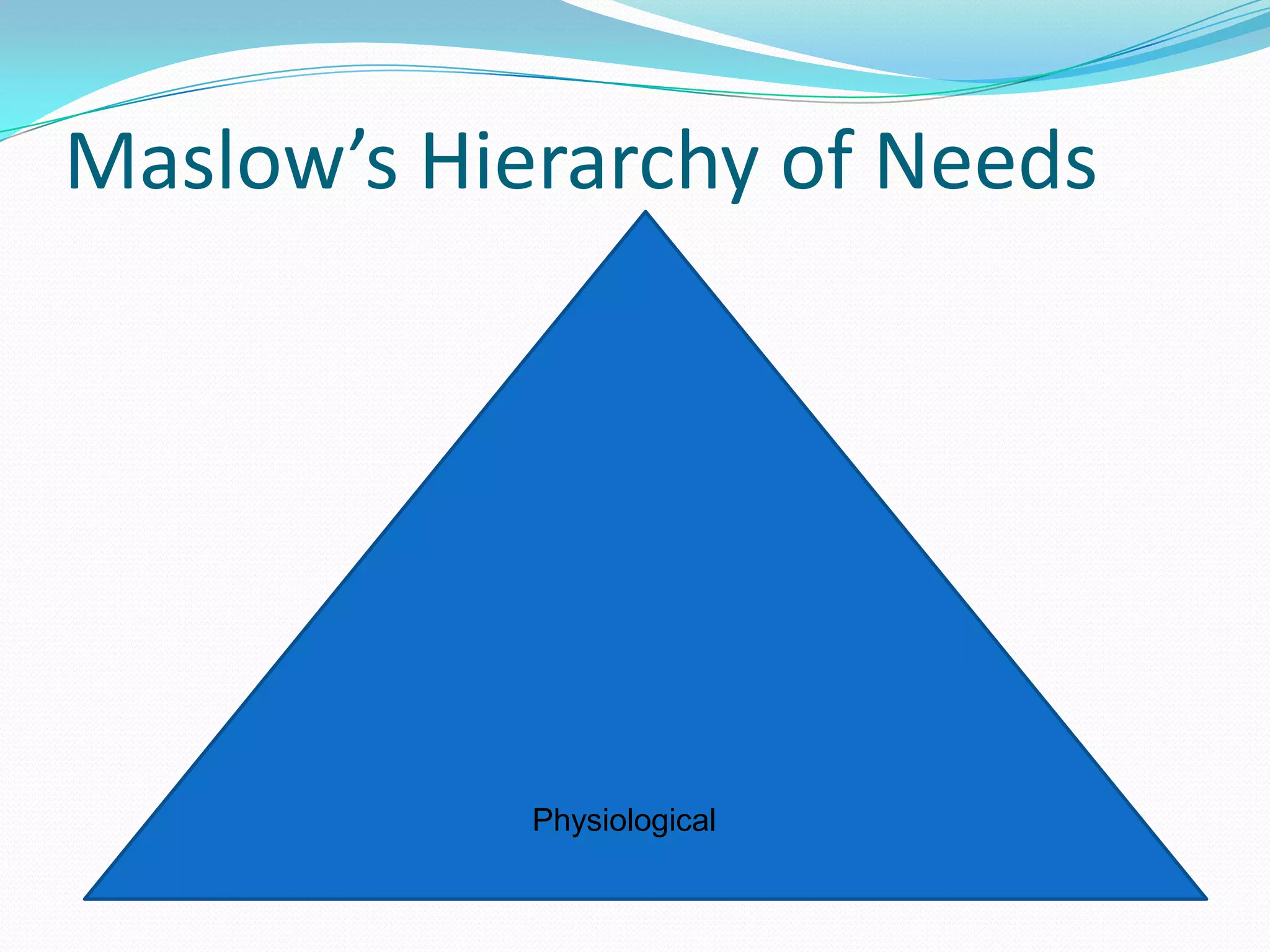
Maslow’s Hierarchy of NeedsPhysiological
Factors in the Workplace Meeting Physiological NeedsPhysical ComfortTemperatureWorking ConditionsInside/OutsideLunch and Rest BreaksBathroom FacilitiesErgonomics
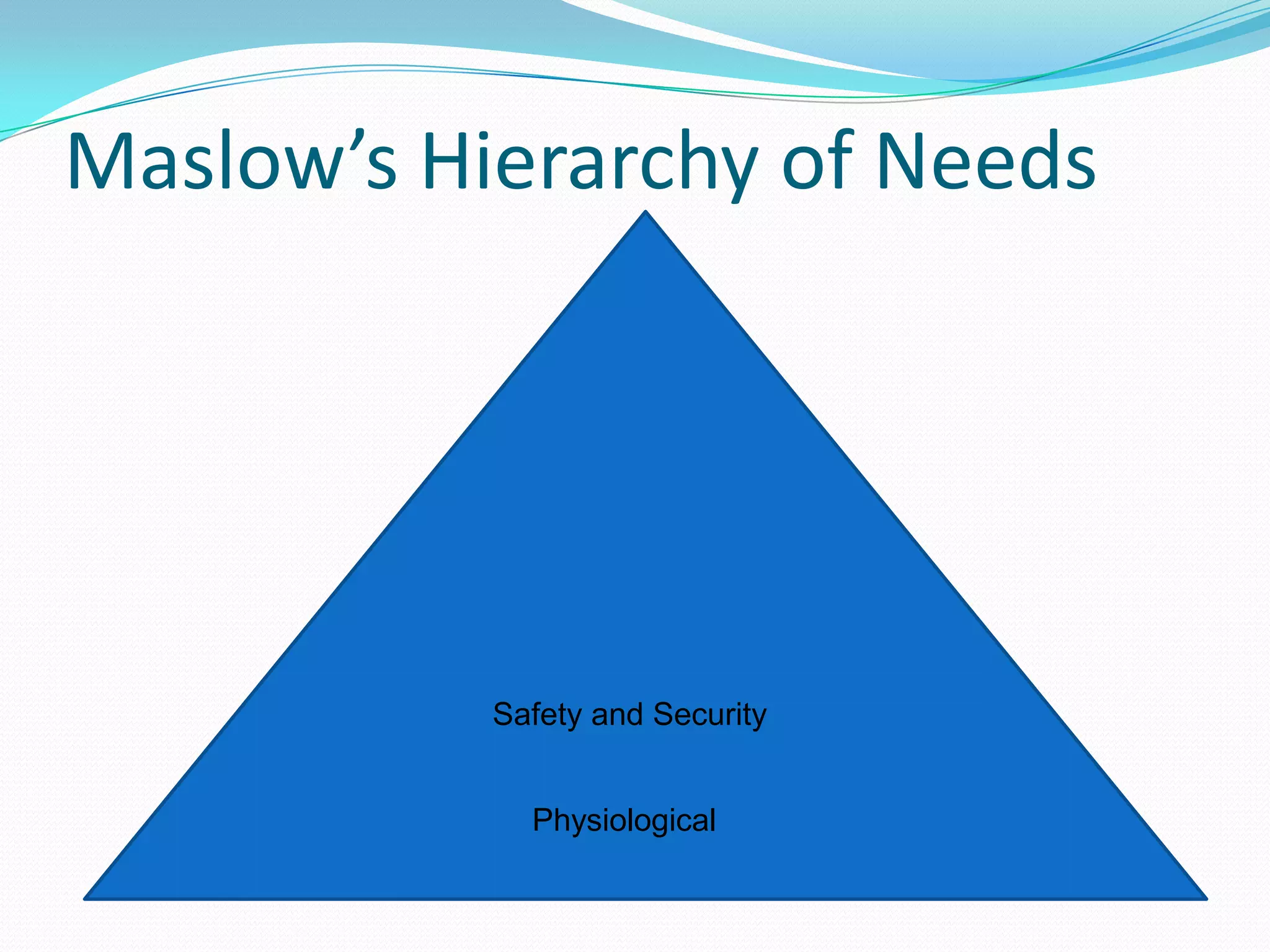
Maslow’s Hierarchy of NeedsSafety and SecurityPhysiological
Factors in the Workplace Meeting Safety and Security NeedsSafetyJob SecuritySeniorityBenefitsMONEYRetirement Plans
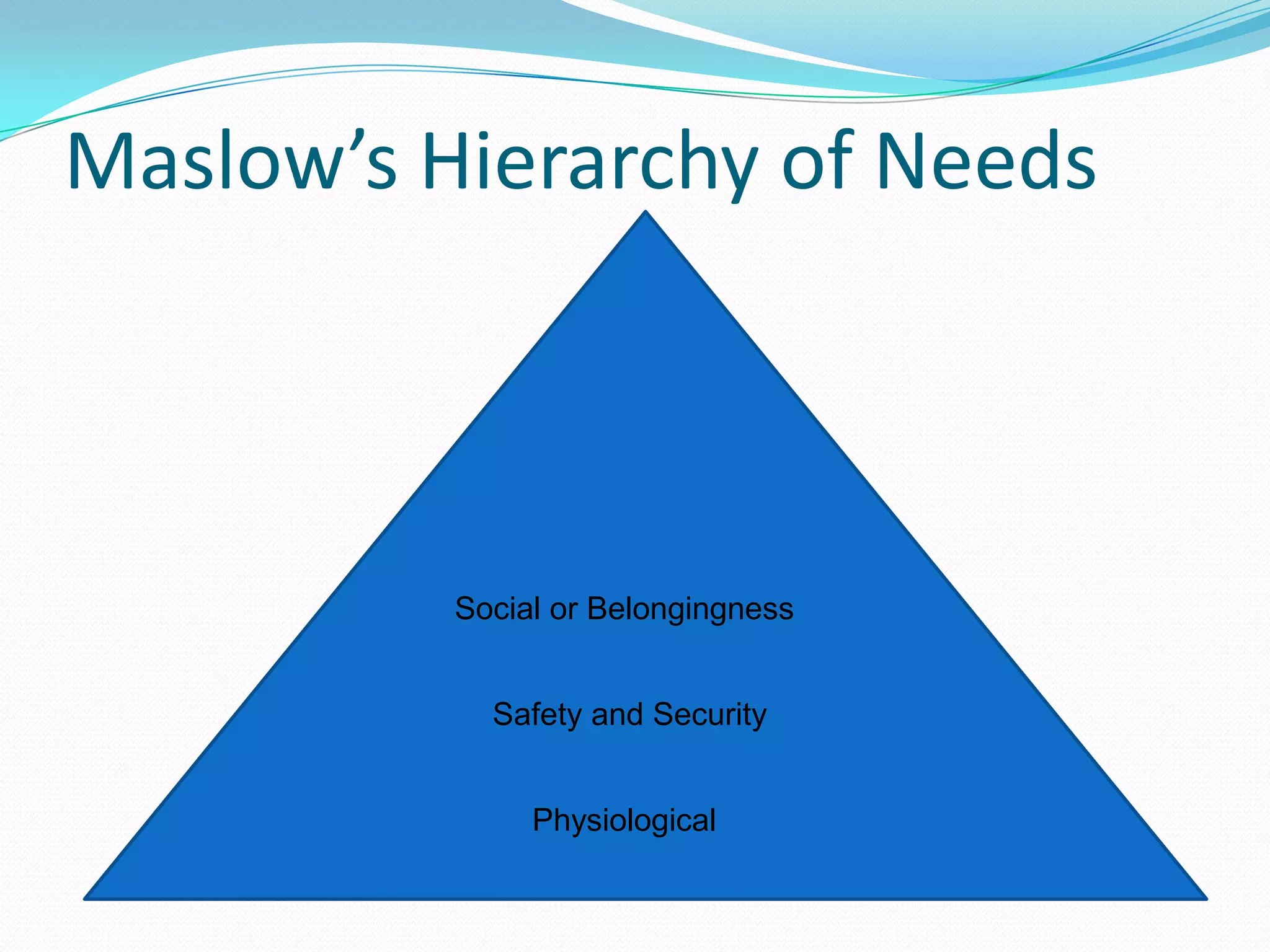
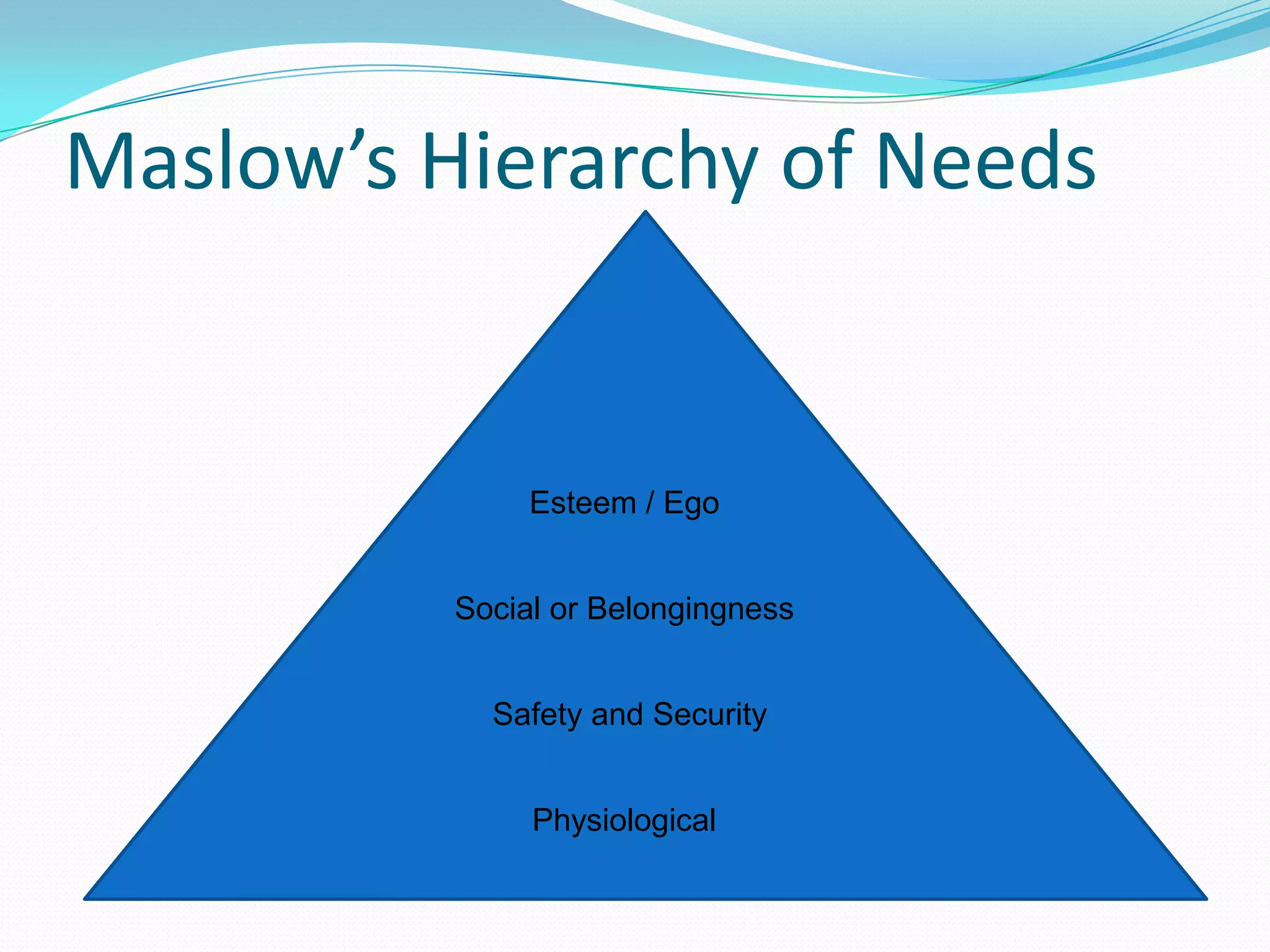
Maslow’s Hierarchy of NeedsSocial or BelongingnessSafety and SecurityPhysiological
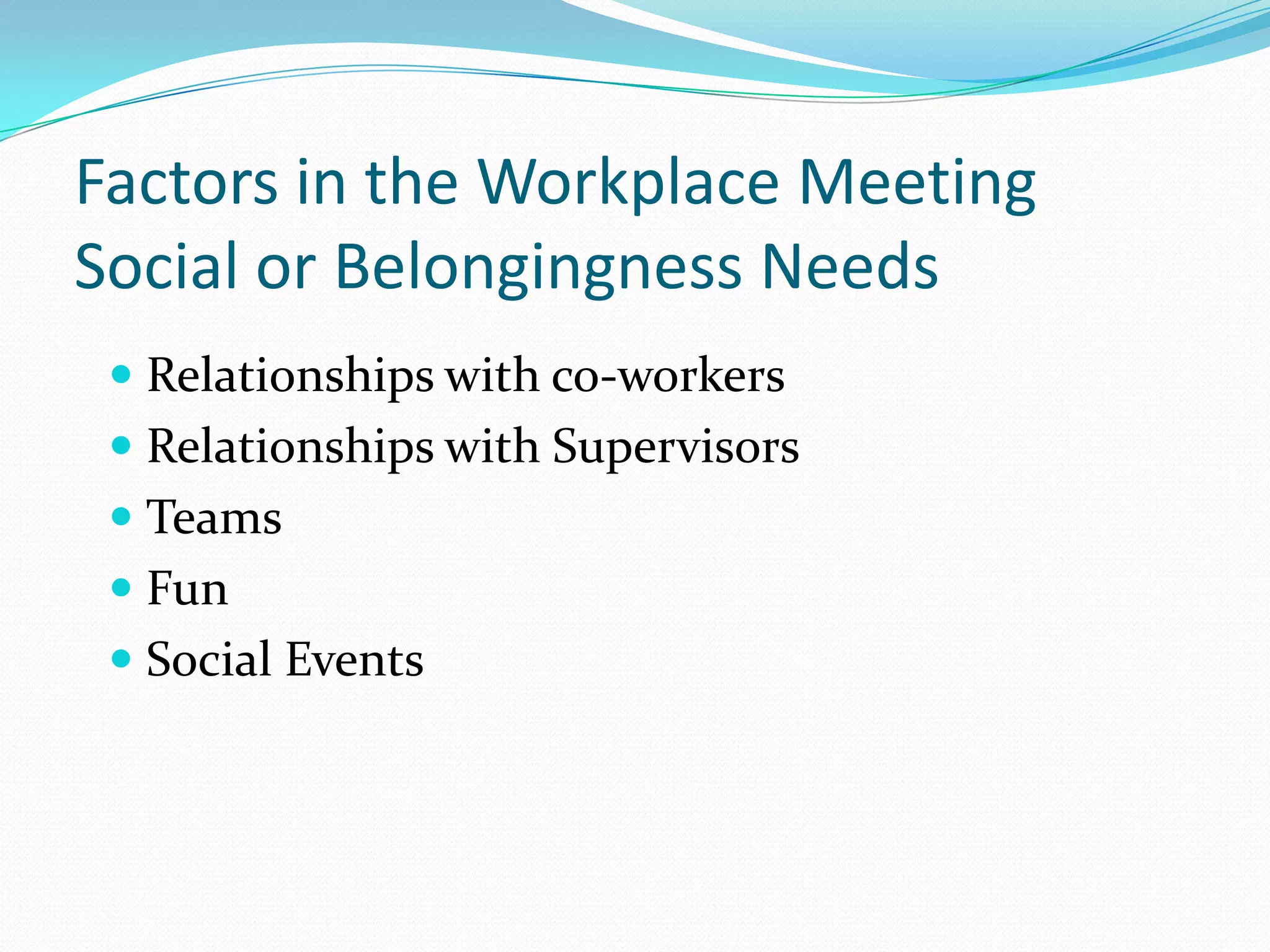
Factors in the Workplace Meeting Social or Belongingness NeedsRelationships with co-workersRelationships with SupervisorsTeamsFunSocial Events
Maslow’s Hierarchy of NeedsEsteem / EgoSocial or BelongingnessSafety and SecurityPhysiological
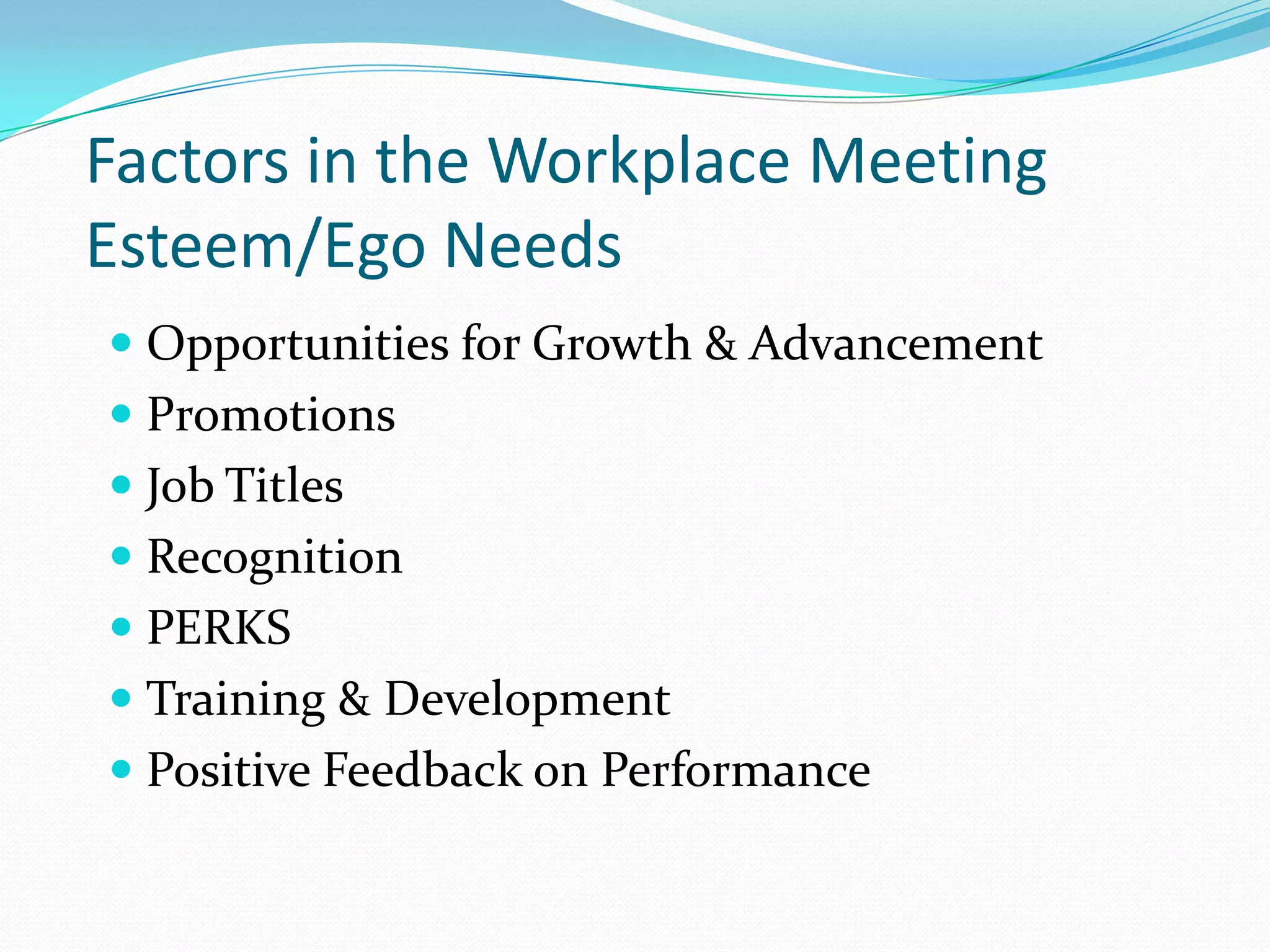
Factors in the Workplace Meeting Esteem/Ego NeedsOpportunities for Growth & AdvancementPromotionsJob TitlesRecognitionPERKSTraining & DevelopmentPositive Feedback on Performance
Maslow’s Hierarchy of NeedsSelf-ActualizationEsteem / EgoSocial or BelongingnessSafety and SecurityPhysiological
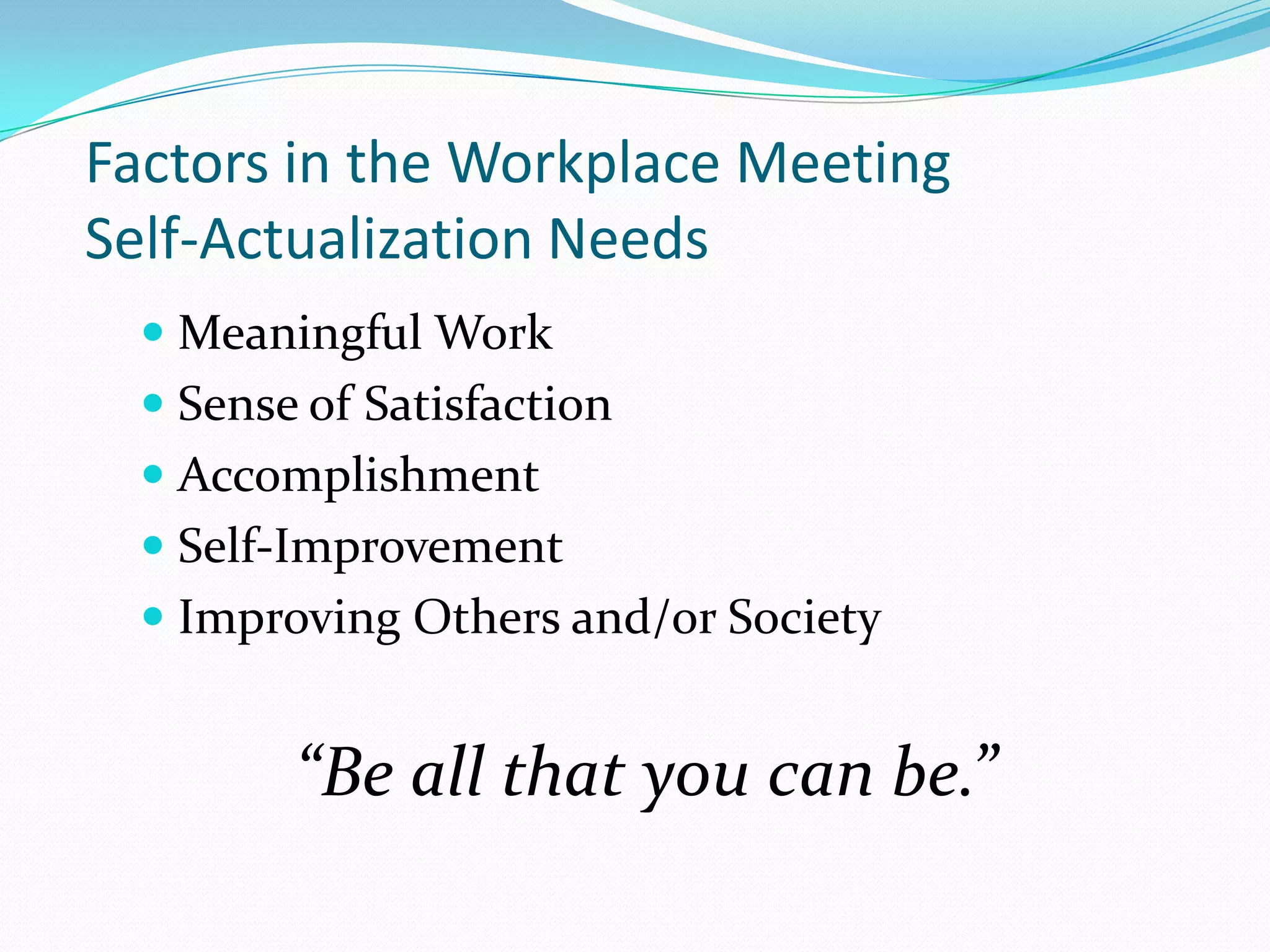
Factors in the Workplace Meeting Self-Actualization NeedsMeaningful WorkSense of SatisfactionAccomplishmentSelf-ImprovementImproving Others and/or Society“Be all that you can be.”
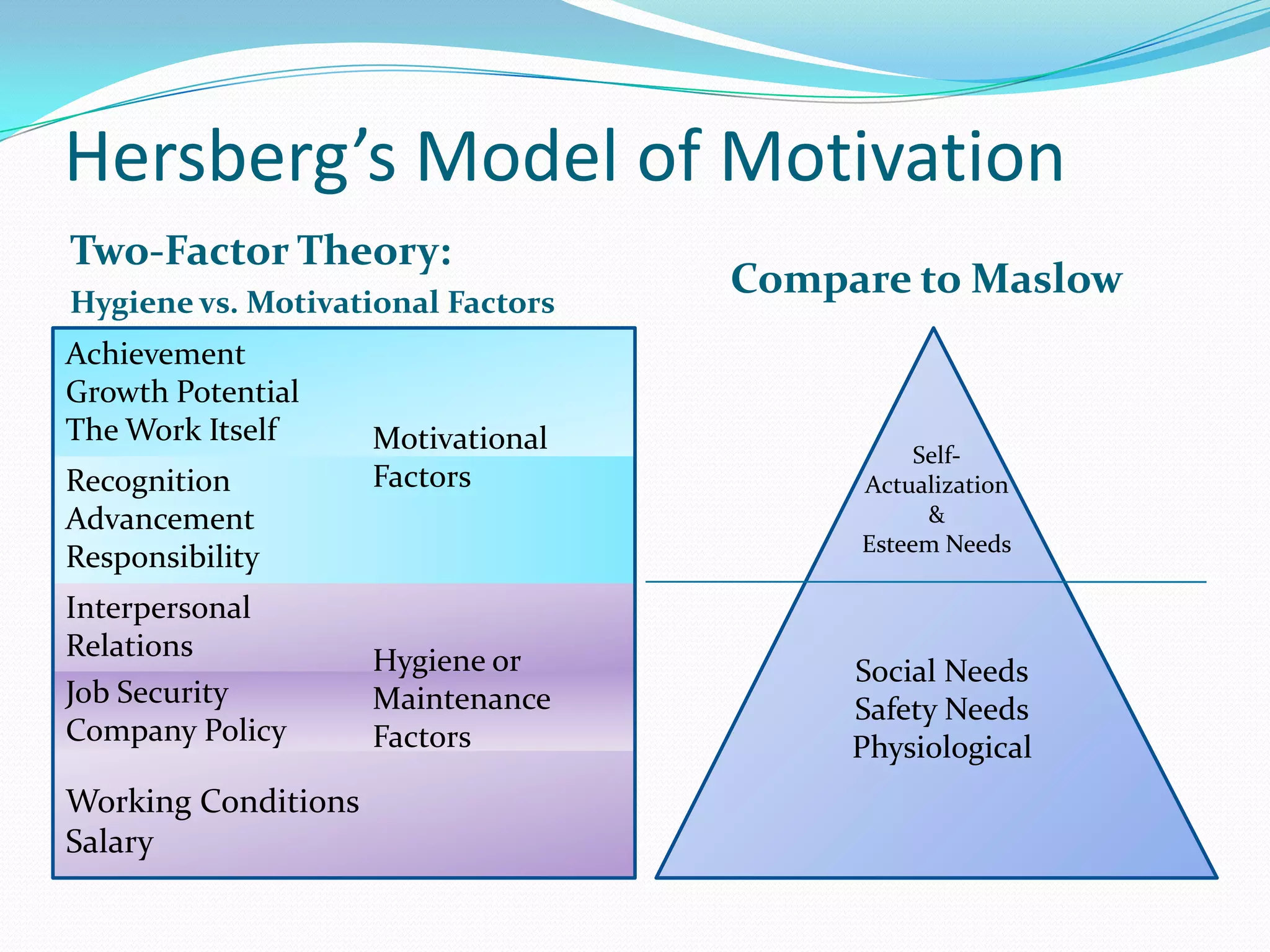
Hersberg’s Model of MotivationTwo-Factor Theory:Hygiene vs. Motivational FactorsCompare to MaslowAchievementGrowth PotentialThe Work ItselfMotivational FactorsSelf-Actualization &Esteem NeedsRecognitionAdvancementResponsibilityInterpersonal RelationsHygiene or Maintenance FactorsSocial NeedsSafety NeedsPhysiologicalJob SecurityCompany PolicyWorking ConditionsSalary
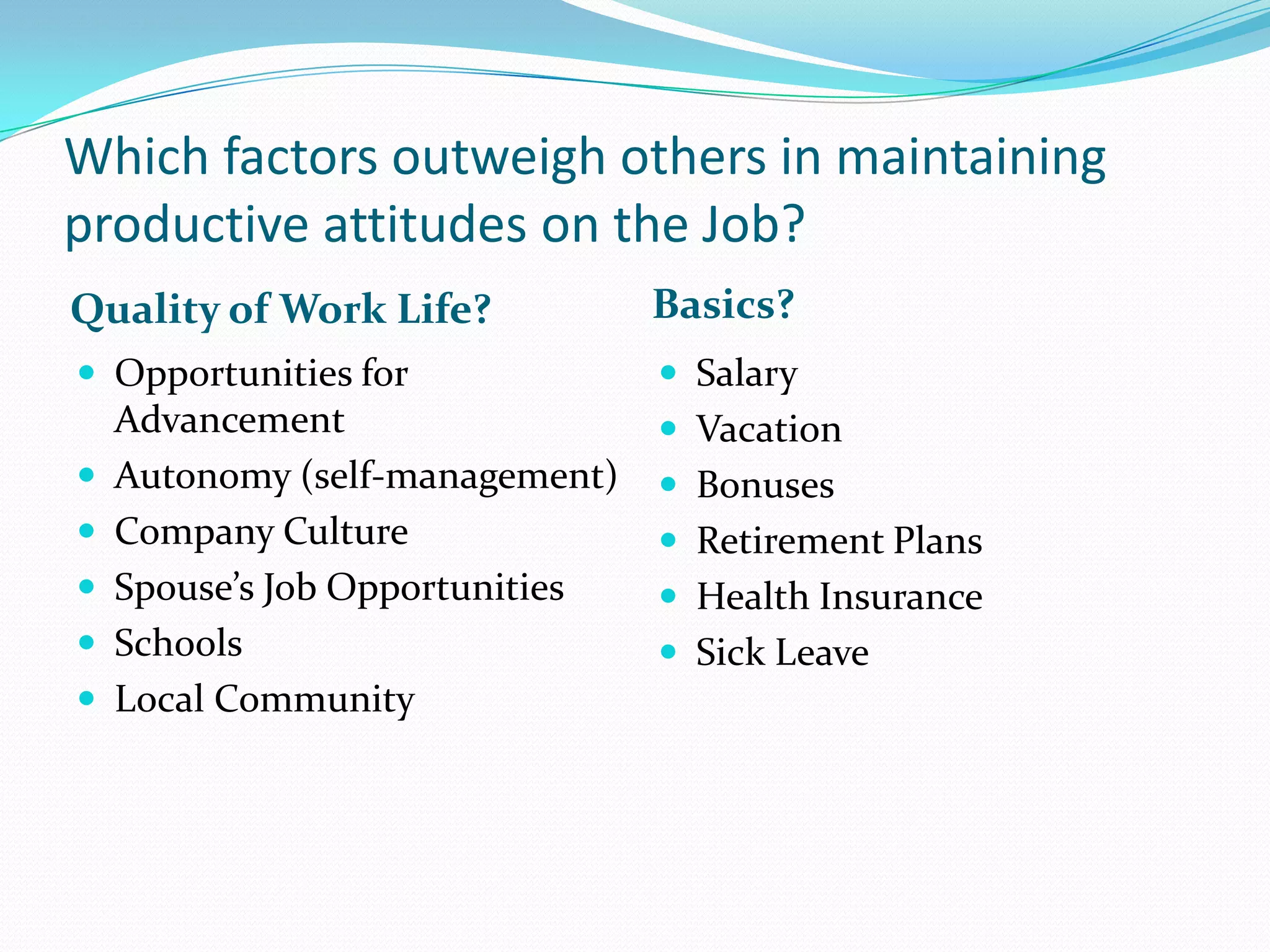
Which factors outweigh others in maintaining productive attitudes on the Job?Quality of Work Life?Basics?Opportunities for AdvancementAutonomy (self-management)Company CultureSpouse’s Job OpportunitiesSchoolsLocal CommunitySalaryVacationBonusesRetirement PlansHealth InsuranceSick Leave
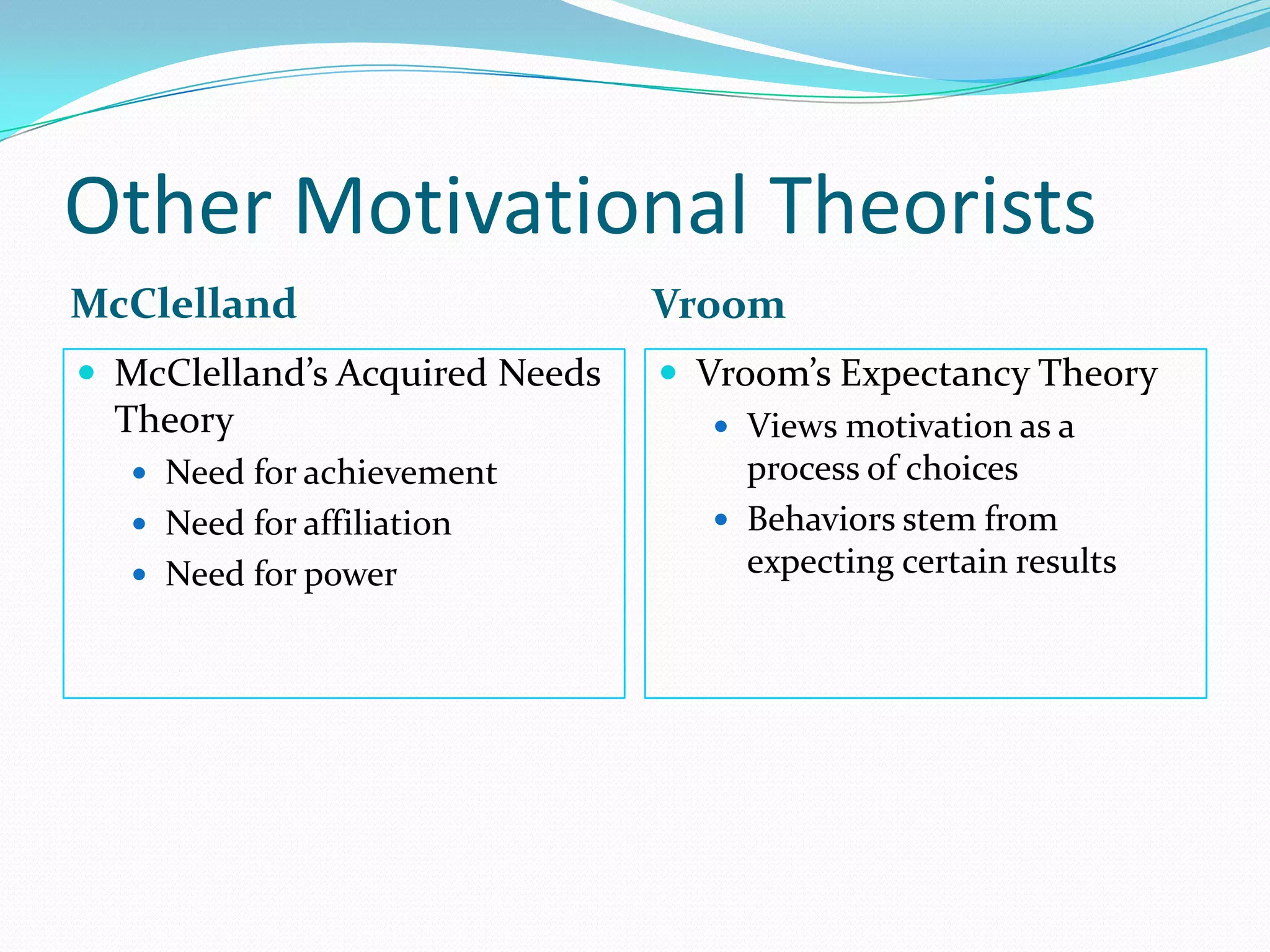
Other Motivational TheoristsMcClellandVroomMcClelland’s Acquired Needs TheoryNeed for achievementNeed for affiliationNeed for powerVroom’s Expectancy TheoryViews motivation as a process of choicesBehaviors stem from expecting certain results
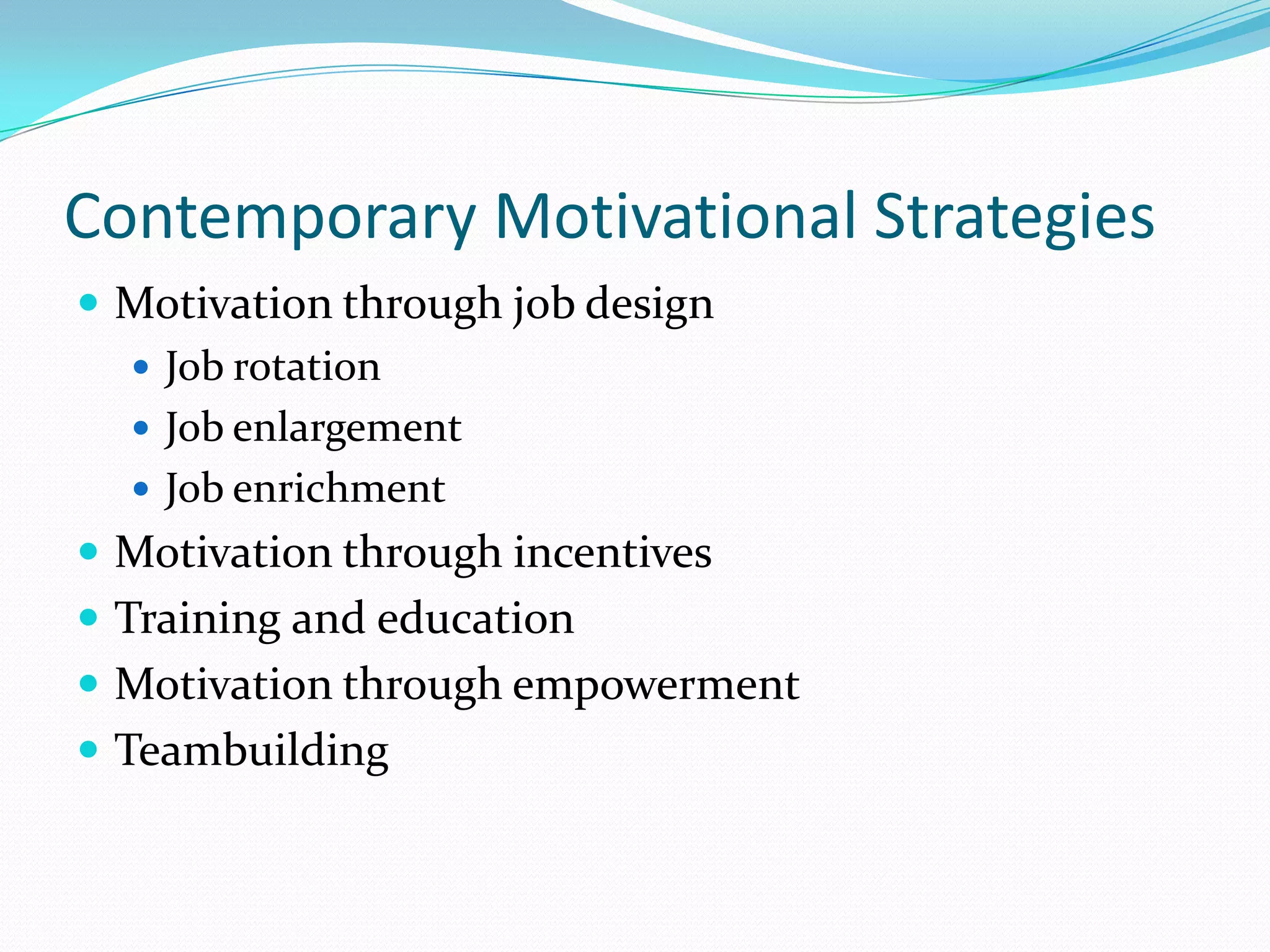
Contemporary Motivational StrategiesMotivation through job designJob rotationJob enlargementJob enrichmentMotivation through incentivesTraining and educationMotivation through empowermentTeambuilding
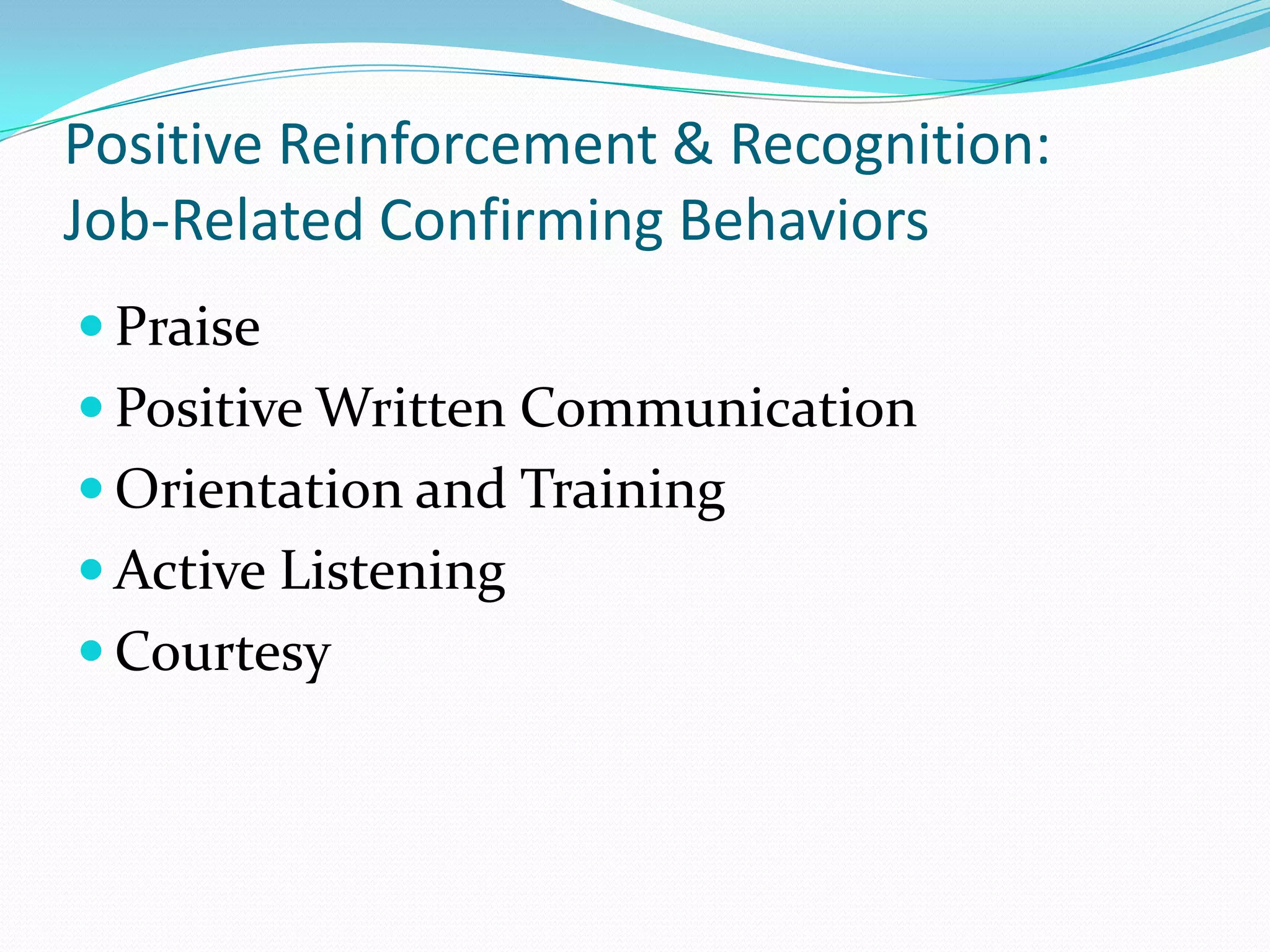
Positive Reinforcement & Recognition:Job-Related Confirming BehaviorsPraisePositive Written CommunicationOrientation and TrainingActive Listening Courtesy
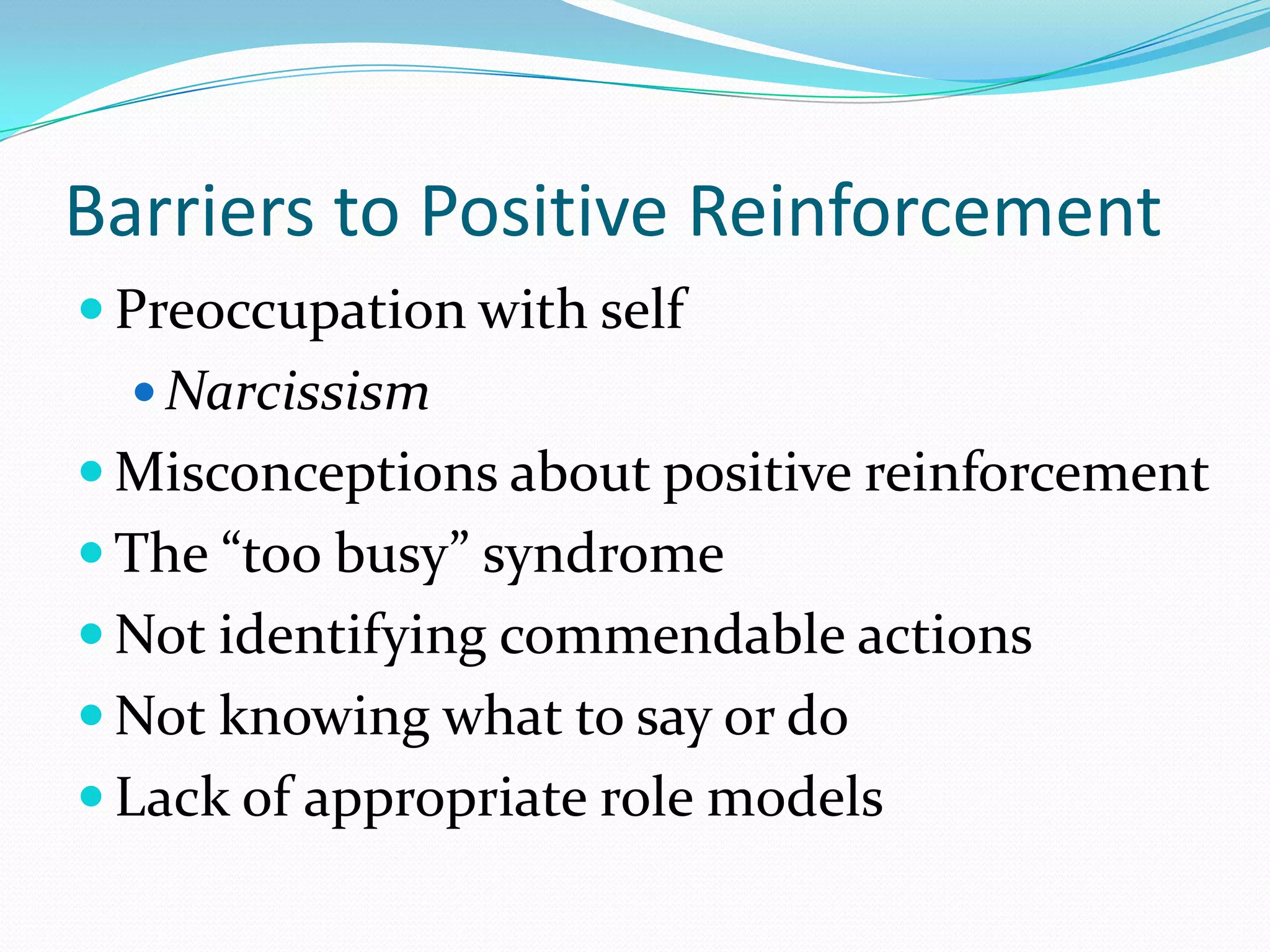
Barriers to Positive Reinforcement	Preoccupation with selfNarcissismMisconceptions about positive reinforcementThe “too busy” syndromeNot identifying commendable actionsNot knowing what to say or doLack of appropriate role models
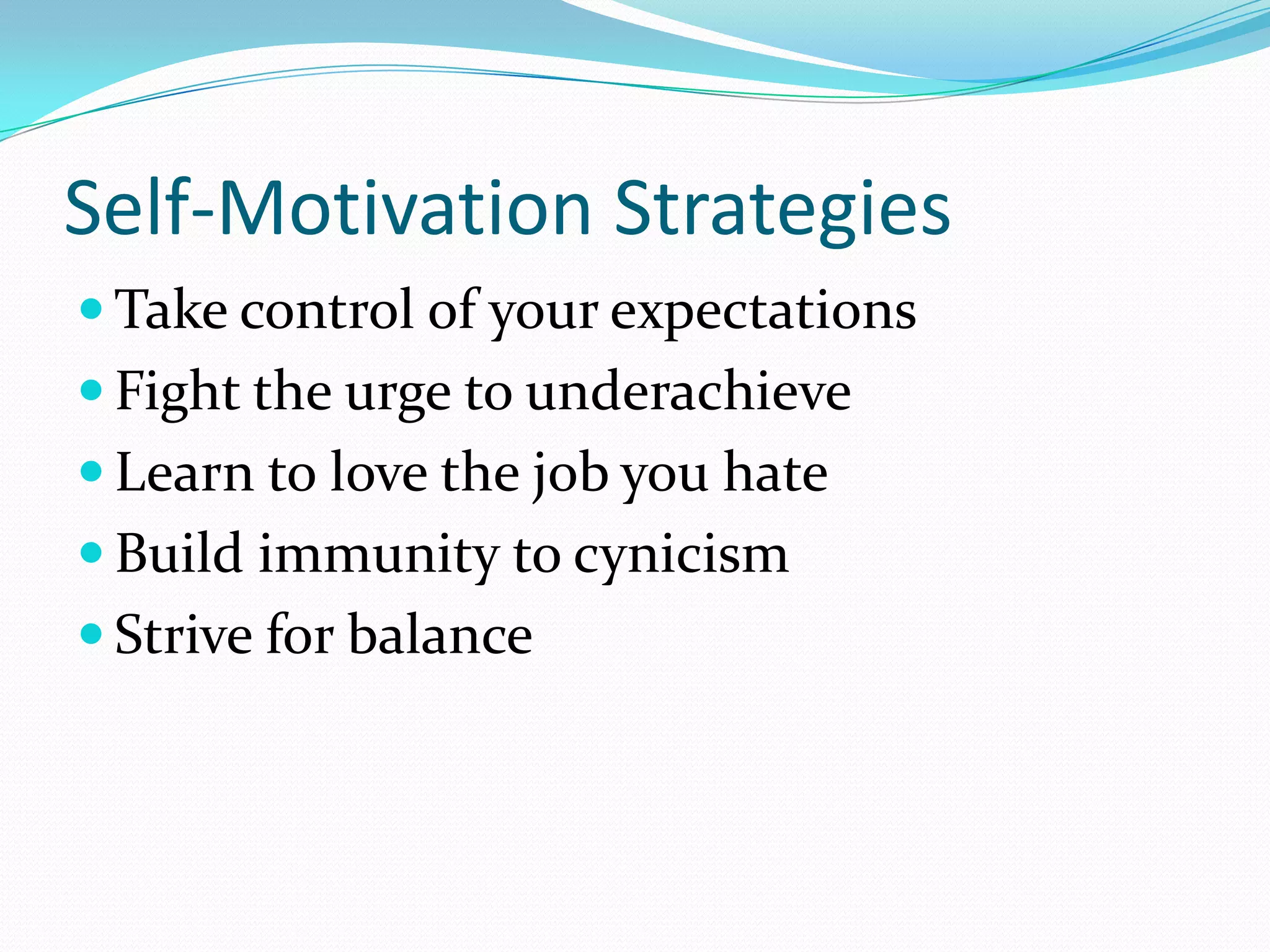
Self-Motivation StrategiesTake control of your expectationsFight the urge to underachieveLearn to love the job you hateBuild immunity to cynicismStrive for balance

Motivation : Perfect Learning place is Indian Army

  • 1.
    What is Motivation?Motivationis the internaldriveto accomplish a particular goal. In a work setting, motivation is what makes people wantto work.
  • 2.
    Ten Morale-Building Factors InterestingWorkFull appreciation of work doneInvolvementGood payJob securityPromotion and growthGood working conditionsLoyalty to employeesHelp with personal problemsTactful discipline
  • 3.
  • 4.
    Maslow’s Hierarchy ofNeedsSelf-ActualizationEsteem / EgoSocial or BelongingnessSafety and SecurityPhysiological
  • 5.
    Maslow’s Hierarchy ofNeedsPhysiological
  • 6.
    Factors in theWorkplace Meeting Physiological NeedsPhysical ComfortTemperatureWorking ConditionsInside/OutsideLunch and Rest BreaksBathroom FacilitiesErgonomics
  • 7.
    Maslow’s Hierarchy ofNeedsSafety and SecurityPhysiological
  • 8.
    Factors in theWorkplace Meeting Safety and Security NeedsSafetyJob SecuritySeniorityBenefitsMONEYRetirement Plans
  • 9.
    Maslow’s Hierarchy ofNeedsSocial or BelongingnessSafety and SecurityPhysiological
  • 10.
    Factors in theWorkplace Meeting Social or Belongingness NeedsRelationships with co-workersRelationships with SupervisorsTeamsFunSocial Events
  • 11.
    Maslow’s Hierarchy ofNeedsEsteem / EgoSocial or BelongingnessSafety and SecurityPhysiological
  • 12.
    Factors in theWorkplace Meeting Esteem/Ego NeedsOpportunities for Growth & AdvancementPromotionsJob TitlesRecognitionPERKSTraining & DevelopmentPositive Feedback on Performance
  • 13.
    Maslow’s Hierarchy ofNeedsSelf-ActualizationEsteem / EgoSocial or BelongingnessSafety and SecurityPhysiological
  • 14.
    Factors in theWorkplace Meeting Self-Actualization NeedsMeaningful WorkSense of SatisfactionAccomplishmentSelf-ImprovementImproving Others and/or Society“Be all that you can be.”
  • 15.
    Hersberg’s Model ofMotivationTwo-Factor Theory:Hygiene vs. Motivational FactorsCompare to MaslowAchievementGrowth PotentialThe Work ItselfMotivational FactorsSelf-Actualization &Esteem NeedsRecognitionAdvancementResponsibilityInterpersonal RelationsHygiene or Maintenance FactorsSocial NeedsSafety NeedsPhysiologicalJob SecurityCompany PolicyWorking ConditionsSalary
  • 16.
    Which factors outweighothers in maintaining productive attitudes on the Job?Quality of Work Life?Basics?Opportunities for AdvancementAutonomy (self-management)Company CultureSpouse’s Job OpportunitiesSchoolsLocal CommunitySalaryVacationBonusesRetirement PlansHealth InsuranceSick Leave
  • 17.
    Other Motivational TheoristsMcClellandVroomMcClelland’sAcquired Needs TheoryNeed for achievementNeed for affiliationNeed for powerVroom’s Expectancy TheoryViews motivation as a process of choicesBehaviors stem from expecting certain results
  • 18.
    Contemporary Motivational StrategiesMotivationthrough job designJob rotationJob enlargementJob enrichmentMotivation through incentivesTraining and educationMotivation through empowermentTeambuilding
  • 19.
    Positive Reinforcement &Recognition:Job-Related Confirming BehaviorsPraisePositive Written CommunicationOrientation and TrainingActive Listening Courtesy
  • 20.
    Barriers to PositiveReinforcement Preoccupation with selfNarcissismMisconceptions about positive reinforcementThe “too busy” syndromeNot identifying commendable actionsNot knowing what to say or doLack of appropriate role models
  • 21.
    Self-Motivation StrategiesTake controlof your expectationsFight the urge to underachieveLearn to love the job you hateBuild immunity to cynicismStrive for balance