Introduction
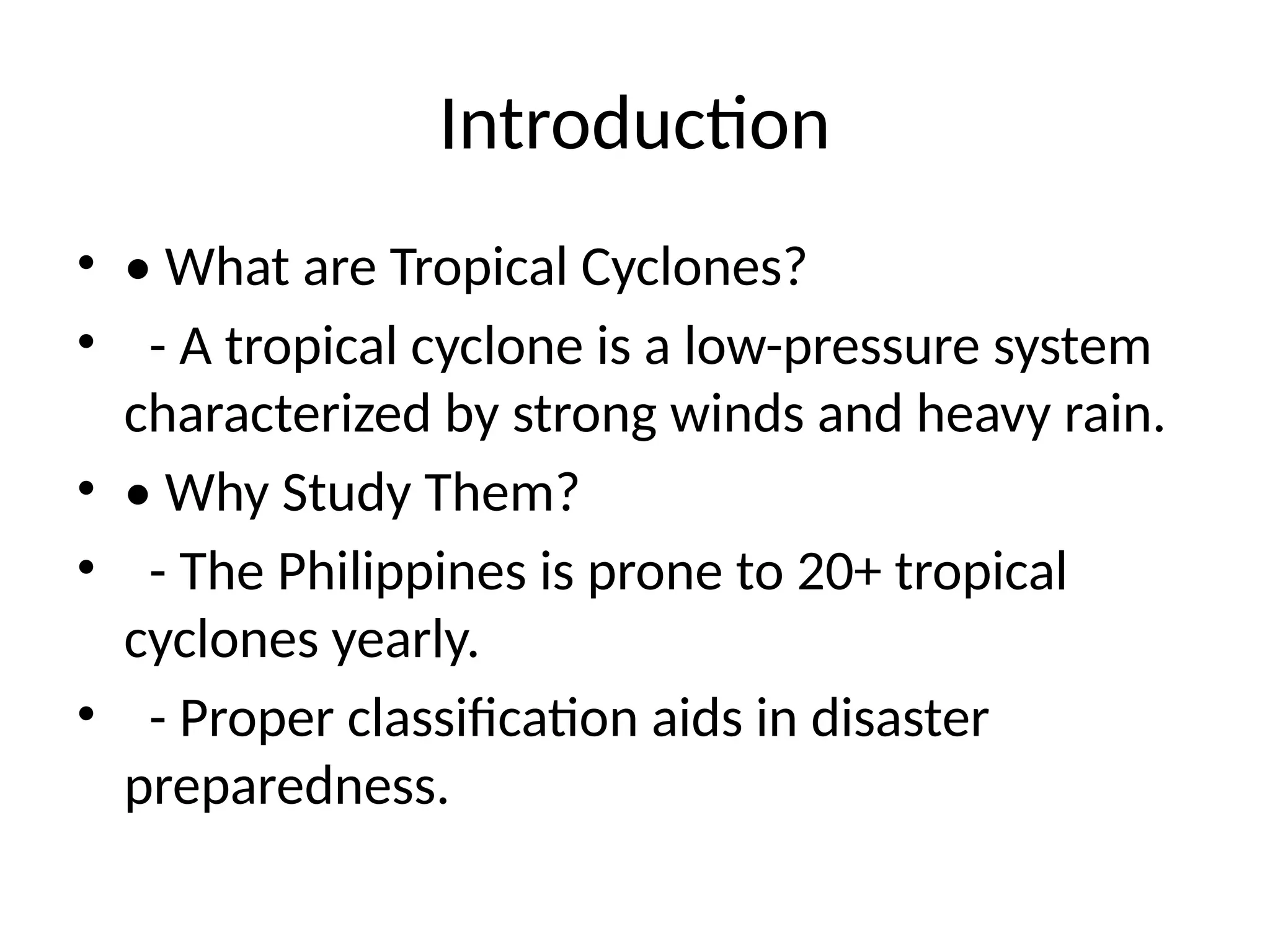
• • Whatare Tropical Cyclones?
• - A tropical cyclone is a low-pressure system
characterized by strong winds and heavy rain.
• • Why Study Them?
• - The Philippines is prone to 20+ tropical
cyclones yearly.
• - Proper classification aids in disaster
preparedness.
3.
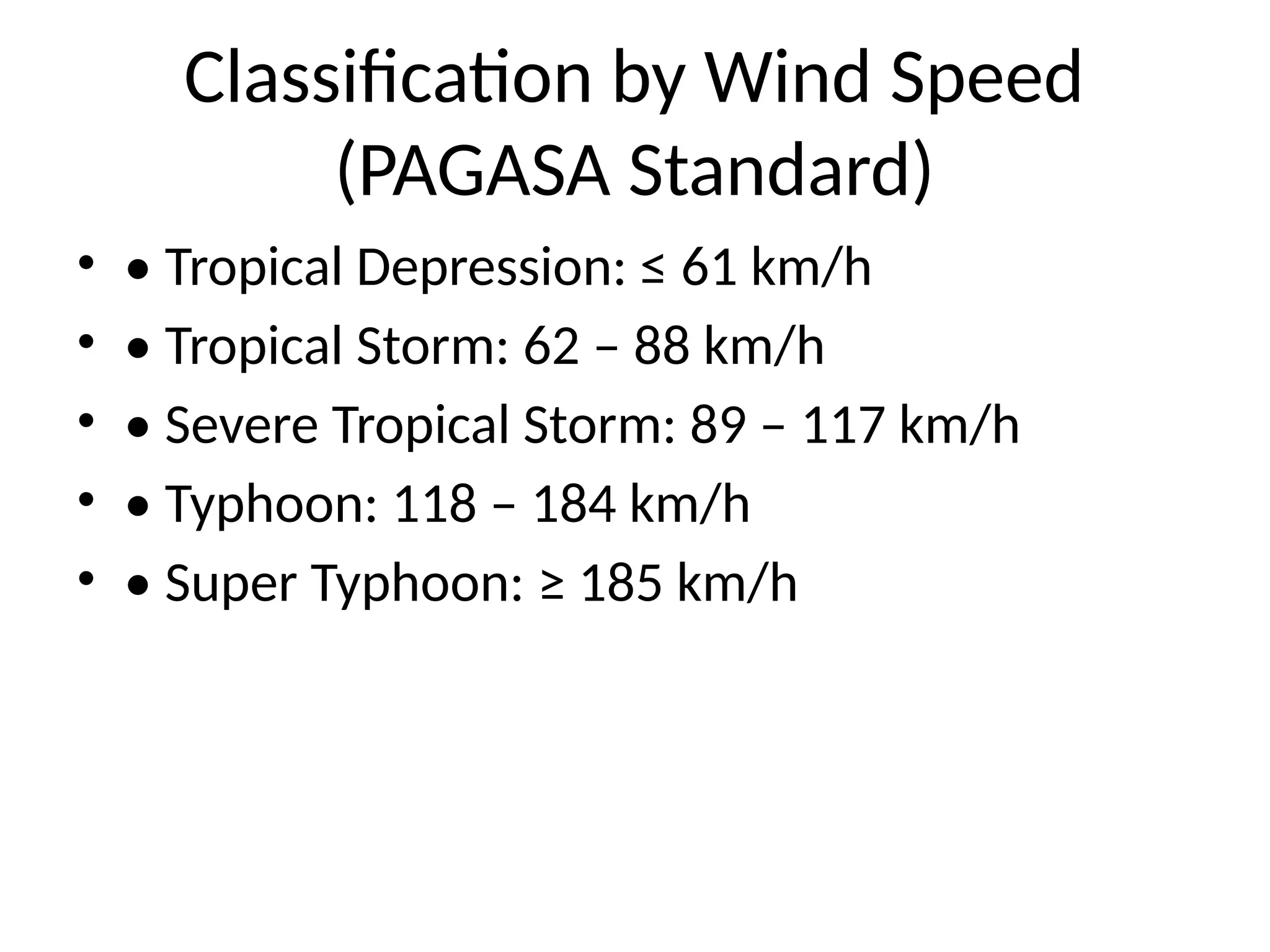
Classification by WindSpeed
(PAGASA Standard)
• • Tropical Depression: ≤ 61 km/h
• • Tropical Storm: 62 – 88 km/h
• • Severe Tropical Storm: 89 – 117 km/h
• • Typhoon: 118 – 184 km/h
• • Super Typhoon: ≥ 185 km/h
4.
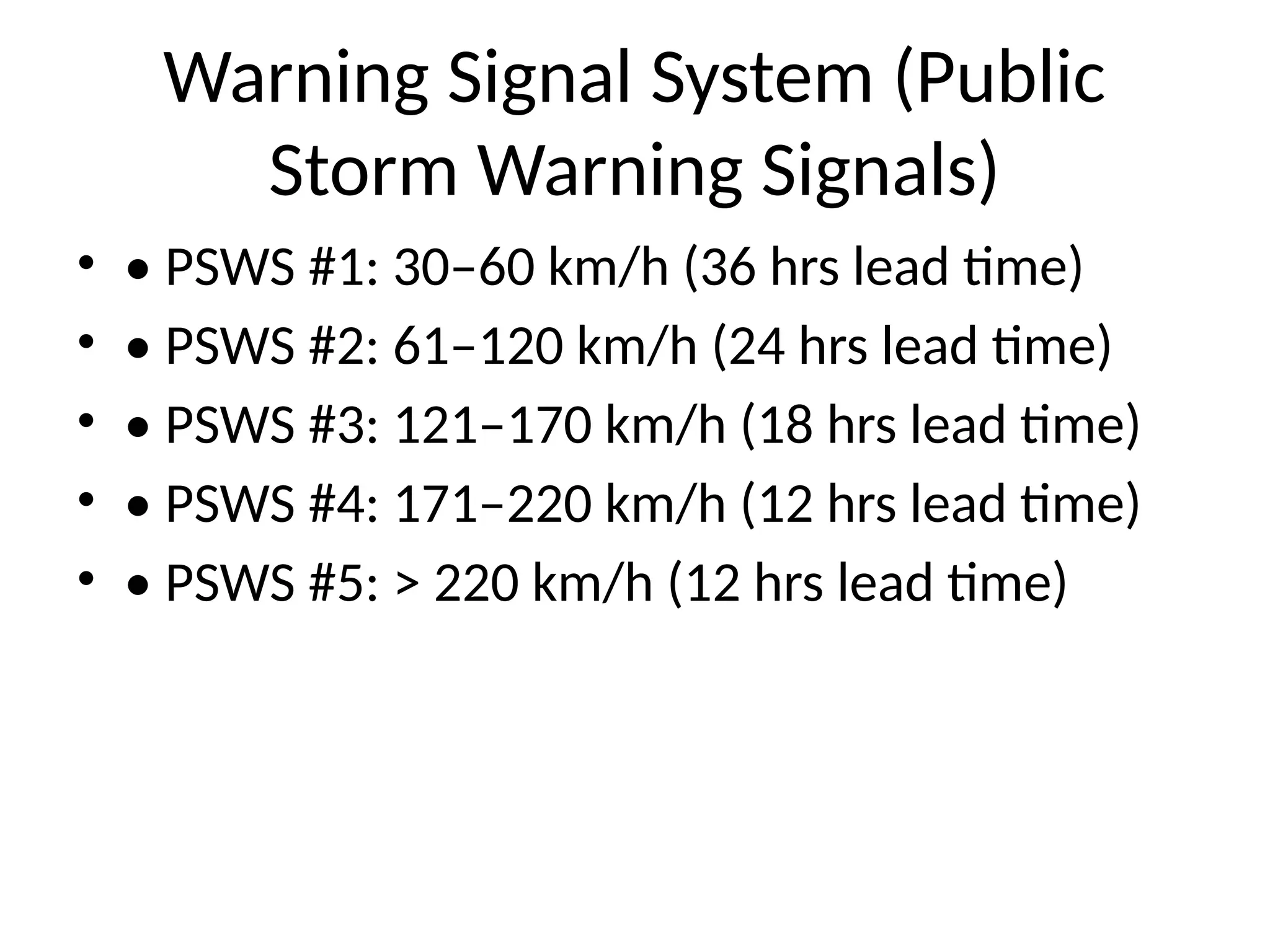
Warning Signal System(Public
Storm Warning Signals)
• • PSWS #1: 30–60 km/h (36 hrs lead time)
• • PSWS #2: 61–120 km/h (24 hrs lead time)
• • PSWS #3: 121–170 km/h (18 hrs lead time)
• • PSWS #4: 171–220 km/h (12 hrs lead time)
• • PSWS #5: > 220 km/h (12 hrs lead time)
5.
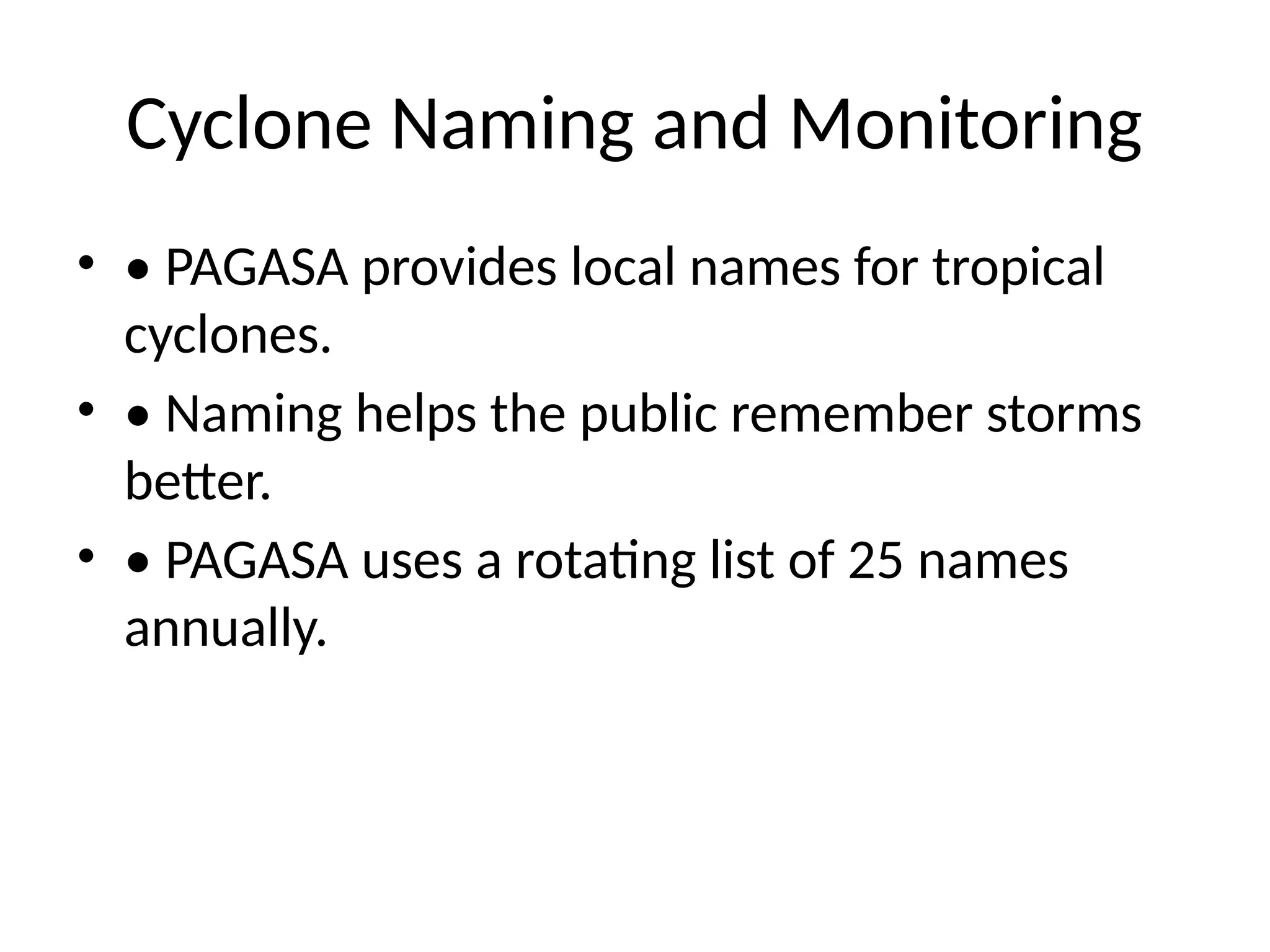
Cyclone Naming andMonitoring
• • PAGASA provides local names for tropical
cyclones.
• • Naming helps the public remember storms
better.
• • PAGASA uses a rotating list of 25 names
annually.
6.
Effects of TropicalCyclones
• • Strong winds
• • Heavy rainfall and flooding
• • Landslides
• • Storm surges
7.
Preparedness and SafetyTips
• • Stay updated via PAGASA alerts.
• • Prepare emergency kits.
• • Evacuate when advised.
• • Secure homes and valuables.
8.
Summary
• • Fivecyclone classifications based on wind
speed.
• • Warning systems are in place to save lives.
• • Awareness and preparedness are key.
9.
Q&A
• • Anyquestions?
• • Thank you for your attention!
10.
References
• • PAGASAOfficial Website:
https://www.pagasa.dost.gov.ph
• • NDRRMC Reports
• • Department of Science and Technology
(DOST)
![Cyclone Classification in the
Philippines
Understanding Tropical Cyclones
through PAGASA Guidelines
Presented by: [Your Name]
Date: [Insert Date]](https://image.slidesharecdn.com/cycloneclassificationphilippines-250728095306-0c4744f1/75/Cyclone_Classification_Philippines-pptx-1-2048.jpg)