Chapter 2
   Restaurants- the most familiar segment of
    the foodservice industry
    ◦ Full-service restaurants
      Employ servers to take the customer’s order and bring
       the meals out
      Can span a range of fine dining to casual
      Fine dining has elegantly prepared food, linen napkins
       and tablecloths, fine china, highly trained wait staff
        Fine dining has the highest quality of food
        Popular with special occasions, most expensive
      Casual dining offers simple foods in less formal
       surroundings, serve a wide variety of
       cuisines, moderate menu prices
   Restaurants continued
    ◦ Quick-Service restaurants
      Quick service is also known as Fast Food
      Offers speed, convenience, reasonable prices
      Customers typically place orders at counter and serve
       themselves
      Before the 1950’s the quick-service industry was very
       small, it now accounts for 38% of all dollars spent on
       dining out
      Offer limited menus, efficiency is the key to success
      McDonald’s, Subway, KFC
   Hotels
    ◦ Travelers need lodging as well as food to eat
    ◦ Small motels offer vending machines, continental
      breakfasts
    ◦ Larger hotels offer a wide variety of dining options
      Restaurants, room service, banquet facilities and
       ballrooms for catering
   Clubs-
    ◦ Clubs often provide their members with activities as
      well as food.
    ◦ Country clubs offer golfing, tennis, etc plus fine
      cuisine and excellent service for their member’s
      membership fees
   Catering- provides food and service for
    groups, often at another facility that normally
    does not serve foods
    ◦ Catering at those locations is called off-premise
      catering
    ◦ Chefs of catering companies must be extremely
      organized
    ◦ Demand for catering has risen in recent years
      Weddings, anniversaries, reunions, proms, etc.
   Institutional Foodservice- supplies meals for
    businesses and organizations
   Employers want to provide food to eat so
    employees do not have to leave the premises
    ◦ Corporations
      (google), schools, universities, hospitals, stadiums,
      prisons, travel, military, nursing homes
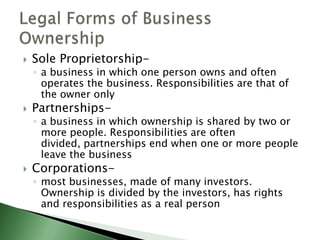
   Sole Proprietorship-
    ◦ a business in which one person owns and often
      operates the business. Responsibilities are that of
      the owner only
   Partnerships-
    ◦ a business in which ownership is shared by two or
      more people. Responsibilities are often
      divided, partnerships end when one or more people
      leave the business
   Corporations-
    ◦ most businesses, made of many investors.
      Ownership is divided by the investors, has rights
      and responsibilities as a real person
   An entrepreneur is someone who organizes a
    business and assumes the risk for it
    ◦ Chef-entrepreneurs are chefs who own their own
      restaurants

Understanding foodservice operations

  • 1.
  • 2.
    Restaurants- the most familiar segment of the foodservice industry ◦ Full-service restaurants  Employ servers to take the customer’s order and bring the meals out  Can span a range of fine dining to casual  Fine dining has elegantly prepared food, linen napkins and tablecloths, fine china, highly trained wait staff  Fine dining has the highest quality of food  Popular with special occasions, most expensive  Casual dining offers simple foods in less formal surroundings, serve a wide variety of cuisines, moderate menu prices
  • 3.
    Restaurants continued ◦ Quick-Service restaurants  Quick service is also known as Fast Food  Offers speed, convenience, reasonable prices  Customers typically place orders at counter and serve themselves  Before the 1950’s the quick-service industry was very small, it now accounts for 38% of all dollars spent on dining out  Offer limited menus, efficiency is the key to success  McDonald’s, Subway, KFC
  • 4.
    Hotels ◦ Travelers need lodging as well as food to eat ◦ Small motels offer vending machines, continental breakfasts ◦ Larger hotels offer a wide variety of dining options  Restaurants, room service, banquet facilities and ballrooms for catering
  • 5.
    Clubs- ◦ Clubs often provide their members with activities as well as food. ◦ Country clubs offer golfing, tennis, etc plus fine cuisine and excellent service for their member’s membership fees
  • 6.
    Catering- provides food and service for groups, often at another facility that normally does not serve foods ◦ Catering at those locations is called off-premise catering ◦ Chefs of catering companies must be extremely organized ◦ Demand for catering has risen in recent years  Weddings, anniversaries, reunions, proms, etc.
  • 7.
    Institutional Foodservice- supplies meals for businesses and organizations  Employers want to provide food to eat so employees do not have to leave the premises ◦ Corporations (google), schools, universities, hospitals, stadiums, prisons, travel, military, nursing homes
  • 8.
    Sole Proprietorship- ◦ a business in which one person owns and often operates the business. Responsibilities are that of the owner only  Partnerships- ◦ a business in which ownership is shared by two or more people. Responsibilities are often divided, partnerships end when one or more people leave the business  Corporations- ◦ most businesses, made of many investors. Ownership is divided by the investors, has rights and responsibilities as a real person
  • 9.
    An entrepreneur is someone who organizes a business and assumes the risk for it ◦ Chef-entrepreneurs are chefs who own their own restaurants