Prof. Ashraf Talaat ,MD.
Internal Medicine Departement
Endocrinology,Diabetes&Metabolism Unit
Chief of Nephrology&Renal Dialysis Units
Banha Faculty of Medicine
Banha University
Egypt
Diabetes & The Liver
from old concepts to new evidence
UEDA,2016 ,Aswan
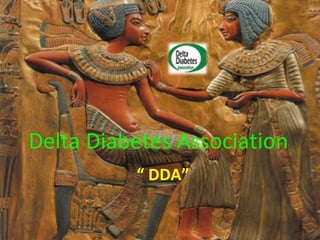
“ DDA”
Delta Diabetes Association
Pharos civilization in Ancient Egypt … on The
Nile River...made the first lesson to the whole
world …which is….!!!???
2/17/2016
Agenda
 Magnitude of the problem.

 Effect of CLD on diabetes.
 Effect of diabetes on CLD.
 Anti-diabetic agents and the normal liver.
 Management of hyperglycemia in CLD:
o In patients with compensated CLD.
o In patients with decompensated CLD.
Agenda
 Magnitude of the problem.
Prevalence of diabetes in adults
(20-79 years)
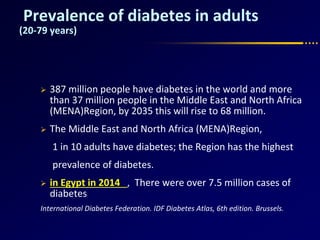
 387 million people have diabetes in the world and more
than 37 million people in the Middle East and North Africa
(MENA)Region, by 2035 this will rise to 68 million.
 The Middle East and North Africa (MENA)Region,
1 in 10 adults have diabetes; the Region has the highest
prevalence of diabetes.
 in Egypt in 2014 , There were over 7.5 million cases of
diabetes
International Diabetes Federation. IDF Diabetes Atlas, 6th edition. Brussels.
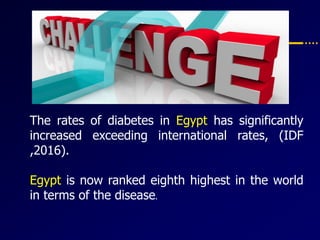
The rates of diabetes in Egypt has significantly
increased exceeding international rates, (IDF
,2016).
Egypt is now ranked eighth highest in the world
in terms of the disease.
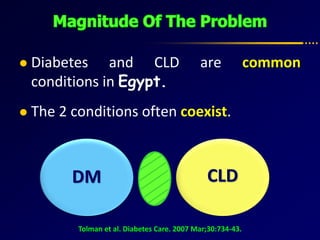
 Diabetes and CLD are common
conditions in Egypt.
 The 2 conditions often coexist.
DM CLD
Tolman et al. Diabetes Care. 2007 Mar;30:734-43.
Agenda
 Magnitude of the problem.
 Effect of CLD on diabetes.
Fix the Defect
Diabetes & Liver diseases
Both problems have an important interaction
considering etiology & the presence of any
problem of each affect the management of the
other.
Liver is the main organ concerned with glucose
homeostasis through:
1)Glycogenesis :
In the postprandial state (under effect of insulin)
2) Glycogenolysis & Gluconeogenesis :
In the fasting state (mainly under effect of glucagon)
??????????
What is the relationship
between liver diseases &
abnormalities of glucose
homeostasis
???????
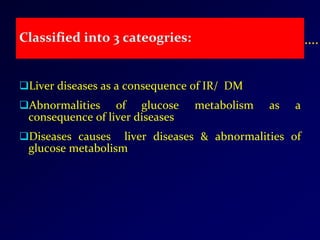
Classified into 3 cateogries:
Liver diseases as a consequence of IR/ DM
Abnormalities of glucose metabolism as a
consequence of liver diseases
Diseases causes liver diseases & abnormalities of
glucose metabolism
Facing the
Problem..
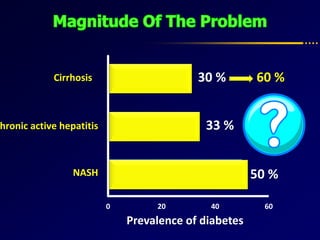
0 20 40 60
NASH
hronic active hepatitis
50 %
33 %
30 %Cirrhosis 60 %
Prevalence of diabetes
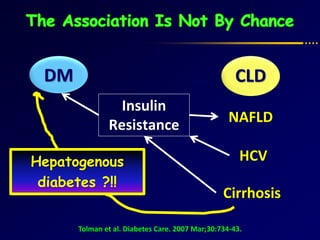
DM CLD
Tolman et al. Diabetes Care. 2007 Mar;30:734-43.
NAFLD
Insulin
Resistance
HCV
Cirrhosis
Hepatogenous
diabetes ?!!
Abnormalities of glucose metabolism as a
consequence of liver diseases :
I) Hypoglycemia : Is rare in liver diseases, however it may occur in:
-Acute liver cell failure and terminal cirrhosis
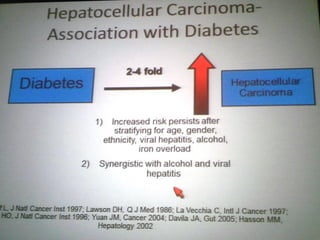
-Hepatocellular carcinoma
II) Impaired glucose tolerance & DM:
-Hepatogenous DM
-Post-Liver Transplantation
-HCC
Hepatogenous DM
(Association of cirrhosis with impaired glucose metabolism)
 60% of cirrhotic patients have IGT
 20% of cirrhotic patients have DM
This is different from T2DM because it occurs in absence of risk factors e.g. age,
BMI or family history.
The mechanism underlying hepatogenous DM is:
“ insulin resistance”,
may be due to:
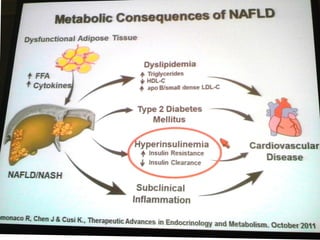
1. Hyperinsulinemia
2. Elevated level of FFA.
3. Chronic inflammation (through effect of inflammatory cytokines e.g. IL1,IL6 and
TNF-alpha).
Diseases causes liver diseases & abnormalities of
glucose metabolism
Metabolic diseases causing hypoglycemia
 Glycogen storage (type I, III).
 Hereditary fructose intolerance
 Tyrosinemia
Diseases causing DM
 Hemochromatosis
 Chronic hepatitis C
 Autoimmune liver diseases
 Cystic Fibrosis
Mechanisms of IGT/DM in CHC infection
A) Insulin Resistance .
B) Defective Insulin Secrection:
-Direct autoimmune damage of B-cells by the virus.
- Interferon
The incidence of new onset DM in CHC patients who achieved
SVR after IFN therapy is lower than the incidence in who failed
therapy.
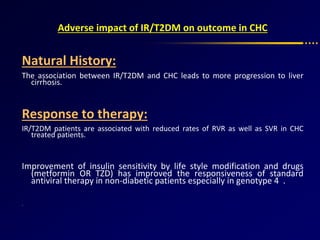
Adverse impact of IR/T2DM on outcome in CHC
Natural History:
The association between IR/T2DM and CHC leads to more progression to liver
cirrhosis.
Response to therapy:
IR/T2DM patients are associated with reduced rates of RVR as well as SVR in CHC
treated patients.
Improvement of insulin sensitivity by life style modification and drugs
(metformin OR TZD) has improved the responsiveness of standard
antiviral therapy in non-diabetic patients especially in genotype 4 .
.
Be Positive…..always..!!!!!!!
Agenda
 Magnitude of the problem.
 Effect of CLD on diabetes.
 Effect of diabetes on CLD.
 Anti-diabetic agents and the normal liver.
 Management of hyperglycemia in CLD:
o In patients with compensated CLD.
o In patients with decompensated CLD.
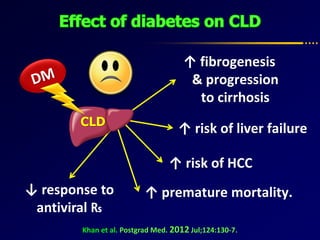
Khan et al. Postgrad Med. 2012 Jul;124:130-7.
↑ fibrogenesis
& progression
to cirrhosis
↑ risk of liver failure
↑ risk of HCC
↑ premature mortality.↓ response to
antiviral ₨
CLD
Agenda
 Magnitude of the problem.
 Effect of CLD on diabetes.
 Effect of diabetes on CLD.
 Anti-diabetic agents and the normal liver.
 Management of hyperglycemia in CLD:
o In patients with compensated CLD.
o In patients with decompensated CLD.
Kindly think
When start, start
right
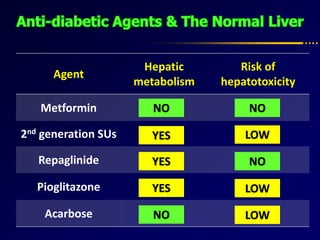
Agent
Hepatic
metabolism
Risk of
hepatotoxicity
Metformin
2nd generation SUs
Repaglinide
Pioglitazone
Acarbose
NO
YES
NO
NO
YES
YES
LOW
LOW
NO
LOW
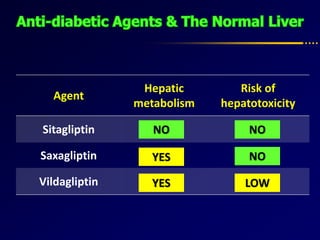
Agent
Hepatic
metabolism
Risk of
hepatotoxicity
Sitagliptin
Saxagliptin
Vildagliptin
NO
YES
NO
YES LOW
NO
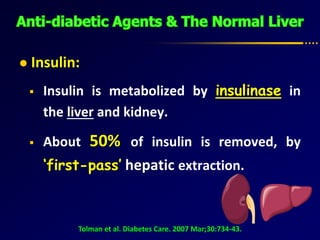
 Insulin:
 Insulin is metabolized by insulinase in
the liver and kidney.
 About 50% of insulin is removed, by
‘first-pass’ hepatic extraction.
Tolman et al. Diabetes Care. 2007 Mar;30:734-43.
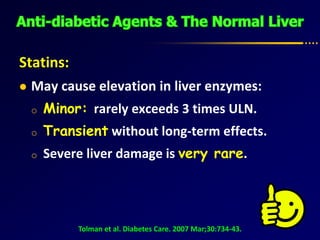
Statins:
 May cause elevation in liver enzymes:
o Minor: rarely exceeds 3 times ULN.
o Transient without long-term effects.
o Severe liver damage is very rare.
Tolman et al. Diabetes Care. 2007 Mar;30:734-43.
Agenda
 Magnitude of the problem.
 Effect of CLD on Diabetes.
 Effect of diabetes on CLD.
 Anti-diabetic agents and the normal liver.
 Management of diabetes in CLD:
o In patients with compensated CLD.
o In patients with decompensated CLD.
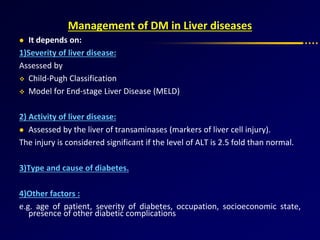
Management of DM in Liver diseases
 It depends on:
1)Severity of liver disease:
Assessed by
 Child-Pugh Classification
 Model for End-stage Liver Disease (MELD)
2) Activity of liver disease:
 Assessed by the liver of transaminases (markers of liver cell injury).
The injury is considered significant if the level of ALT is 2.5 fold than normal.
3)Type and cause of diabetes.
4)Other factors :
e.g. age of patient, severity of diabetes, occupation, socioeconomic state,
presence of other diabetic complications
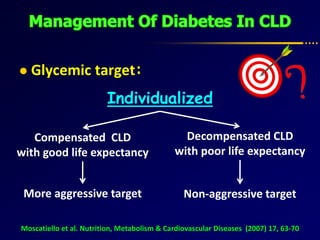
 Glycemic target:
Individualized
Moscatiello et al. Nutrition, Metabolism & Cardiovascular Diseases (2007) 17, 63-70
Compensated CLD
with good life expectancy
Decompensated CLD
with poor life expectancy
More aggressive target Non-aggressive target
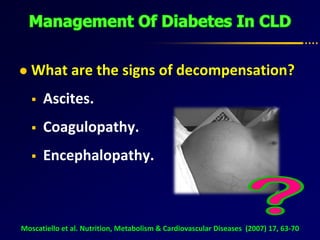
 What are the signs of decompensation?
 Ascites.
 Coagulopathy.
 Encephalopathy.
Moscatiello et al. Nutrition, Metabolism & Cardiovascular Diseases (2007) 17, 63-70
Agenda
 Magnitude of the problem.
 Effect of CLD on diabetes.
 Effect of diabetes on CLD.
 Anti-diabetic agents and the normal liver.
 Management of diabetes in CLD:
o In patients with compensated CLD.
o In patients with decompensated CLD.
In patients with compensated CLD:
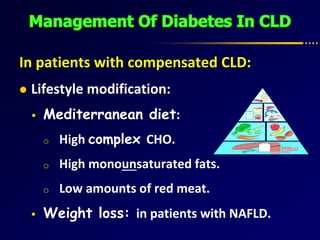
 Lifestyle modification:
 Mediterranean diet:
o High complex CHO.
o High monounsaturated fats.
o Low amounts of red meat.
 Weight loss: in patients with NAFLD.
In patients with compensated CLD:
 Pharmacologic therapy:
 The same as that without CLD … Why?
o Drug metabolism is altered (only
altered in patients with liver failure).
at higher risk for hepatotoxicity.
Tolman et al. Diabetes Care. 2007 Mar;30:734-43.
In patients with compensated CLD:
 Metformin:
 First-line therapy in most patients.
 Stop:
o If liver or renal functions deteriorated.
o In the setting of acute illness.
Tolman et al. Diabetes Care. 2007 Mar;30:734-43.
 Can we use metformin in
compensated patients with HCV?
Nkontchou et al. J Clin Endocrinol Metab, August 2011, 96(8):2601–2608
?Conclusions: use of metformin was associated
with reduced incidence of HCC & mortality.
In another study adding metformin to
interferon & ribavirin was associated with a
better response to anti-viral therapy.
 Can we use metformin in
compensated patients with NAFLD?
 Yes.
 It is safe and may be even beneficial.
Romero-Gómez et al. Hepatology 2009; 50: 1702-1708.
In patients with compensated CLD:
 Sulfonylureas:
 Safe to use.
 The main side effect is hypoglycemia.
 SUs with a short half-life such as glipizide
are preferred.
Tolman et al. Diabetes Care. 2007 Mar;30:734-43.
In patients with compensated CLD:
 Repaglinide:
 Safe to use.
 Less hypoglycemia than SUs.
Tolman et al. Diabetes Care. 2007 Mar;30:734-43.
In patients with compensated CLD:
 Pioglitazone:
 In patients with NAFLD may lead to
improvement in ALT and liver histology.
 Do Not use if ALT ≥ 3 times ULN.
Tolman et al. Diabetes Care. 2007 Mar;30:734-43.
In patients with compensated CLD:
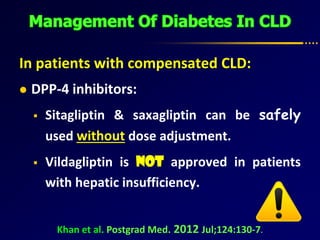
 DPP-4 inhibitors:
 Sitagliptin & saxagliptin can be safely
used without dose adjustment.
 Vildagliptin is not approved in patients
with hepatic insufficiency.
Khan et al. Postgrad Med. 2012 Jul;124:130-7.
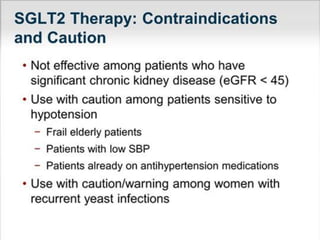
Sodium-glucose transporter 2
inhibitors (sglt2i)
(GLIFLOZINS)
Sglt2 i
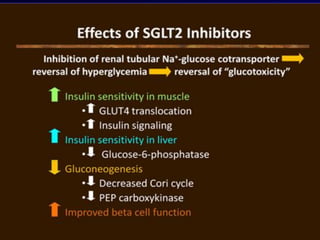
• Sodium-glucose co-transporter 2 (SGLT2)
• inhibitors work by blocking the reabsorption
of filtered glucose in the kidneys.
.This leads to glucosuria and improved
glycemic control.
Sodium-glucose co-transporter 2 (SGLT2) inhibitors
 Clinical trials showed an in incidence of liver damage and
breast and bladder cancers amongst those taking the drug but
not to a high enough degree to indicate a clear increase in risk.
 Sodium/glucose co-transporter 2 inhibitors as highly suitable
for the inhibition of progression of non-alcoholic fatty liver
disease (NAFLD), non-alcoholic steatohepatitis (NASH),
alcoholic fatty liver disease, diabetic fatty liver .
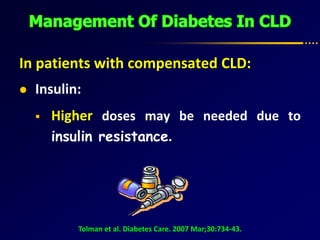
In patients with compensated CLD:
 Insulin:
 Higher doses may be needed due to
insulin resistance.
Tolman et al. Diabetes Care. 2007 Mar;30:734-43.
In patients with compensated CLD:
 Statins:
 Safe in patients with compensated CLD.
 Especially helpful in patients with NAFLD.
 May be hepato-protective in patients
with HCV.
Tolman et al. Diabetes Care. 2007 Mar;30:734-43.
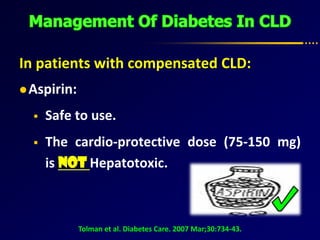
In patients with compensated CLD:
Aspirin:
 Safe to use.
 The cardio-protective dose (75-150 mg)
is not Hepatotoxic.
Tolman et al. Diabetes Care. 2007 Mar;30:734-43.
Agenda
 Magnitude of the problem.
 Effect of CLD on diabetes.
 Effect of diabetes on CLD.
 Anti-diabetic agents and the normal liver.
 Management of hyperglycemia in CLD:
o In patients with compensated CLD.
o In patients with decompensated CLD.
 Glycemic target in decompensated CLD:
 The objective is just to ↓ the osmotic
symptoms related to diabetes .. Why?
• Prognosis depends on the complications
of the primary hepatic disease, rather
than diabetes complications.
Moscatiello et al. Nutrition, Metabolism & Cardiovascular Diseases (2007) 17, 63-70
In patients with decompensated CLD:
 Lifestyle modification:
 >50% of patients are malnourished.
 Avoid dietary restriction as it may result in:
o Hypo-albuminemia.
o Coagulopathy due to ↓ vitamin K intake.
o Worsen overall prognosis.
In patients with decompensated CLD:
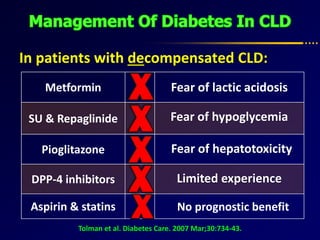
Tolman et al. Diabetes Care. 2007 Mar;30:734-43.
Metformin
SU & Repaglinide
Pioglitazone
DPP-4 inhibitors
Aspirin & statins
Fear of lactic acidosis
Fear of hypoglycemia
Fear of hepatotoxicity
Limited experience
No prognostic benefit
Insulin
In patients with decompensated CLD:
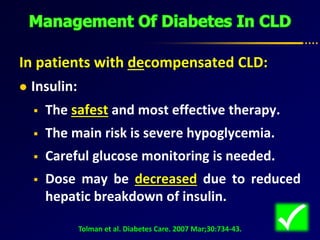
 Insulin:
 The safest and most effective therapy.
 The main risk is severe hypoglycemia.
 Careful glucose monitoring is needed.
 Dose may be decreased due to reduced
hepatic breakdown of insulin.
Tolman et al. Diabetes Care. 2007 Mar;30:734-43.
In patients with decompensated CLD:
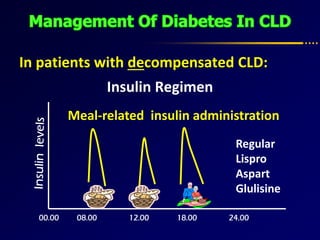
Insulin Regimen
Meal-related insulin administration
00.00 08.00 12.00 18.00 24.00
Regular
Lispro
Aspart
Glulisine
 Why we don’t usually need basal insulin
in patients with decompensated CLD?
Tolman et al. Diabetes Care. 2007 Mar;30:734-43.
 Glycemic profile is characterized by
low fasting plasma glucose due to
↓ hepatic glucose production.
In patients with decompensated CLD:
 Follow up of glycemic control:
o SMBG is preferred over HbA1c …. WHY?
 Cirrhosis (± hypersplenism) reduces
RCSs life-span  false low HbA1c.
Summary
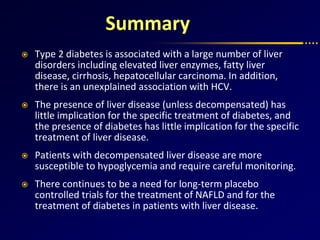
 Type 2 diabetes is associated with a large number of liver
disorders including elevated liver enzymes, fatty liver
disease, cirrhosis, hepatocellular carcinoma. In addition,
there is an unexplained association with HCV.
 The presence of liver disease (unless decompensated) has
little implication for the specific treatment of diabetes, and
the presence of diabetes has little implication for the specific
treatment of liver disease.
 Patients with decompensated liver disease are more
susceptible to hypoglycemia and require careful monitoring.
 There continues to be a need for long-term placebo
controlled trials for the treatment of NAFLD and for the
treatment of diabetes in patients with liver disease.
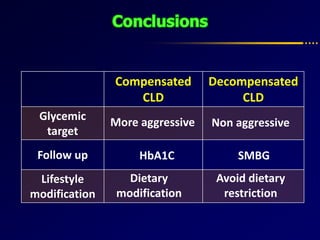
CONCLUSIONS
Compensated
CLD
Decompensated
CLD
Glycemic
target
Follow up
Lifestyle
modification
More aggressive Non aggressive
Dietary
modification
Avoid dietary
restriction
HbA1C SMBG
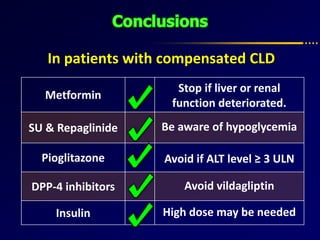
Metformin
SU & Repaglinide
Pioglitazone
DPP-4 inhibitors
Insulin
In patients with compensated CLD
Stop if liver or renal
function deteriorated.
Be aware of hypoglycemia
Avoid if ALT level ≥ 3 ULN
Avoid vildagliptin
High dose may be needed
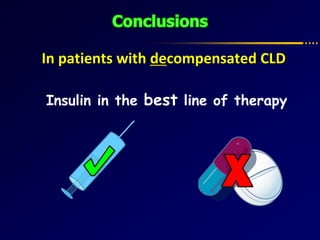
In patients with decompensated CLD
Insulin in the best line of therapy
2/17/2016
,
.DCDC I7th,6-8 April,2016,Ras Elbarr,Domyat
2/17/20
16
Doctor
PHARMACYDISPENSE
patientsFamily
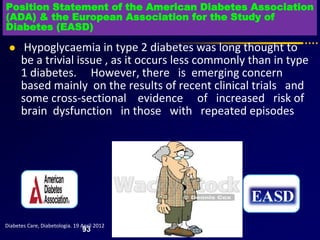
Position Statement of the American Diabetes Association
(ADA) & the European Association for the Study of
Diabetes (EASD)
 Hypoglycaemia in type 2 diabetes was long thought to
be a trivial issue , as it occurs less commonly than in type
1 diabetes. However, there is emerging concern
based mainly on the results of recent clinical trials and
some cross-sectional evidence of increased risk of
brain dysfunction in those with repeated episodes
93
Diabetes Care, Diabetologia. 19 April 2012
Ueda2016 diabetes&liver - ashraf talaat

Ueda2016 diabetes&liver - ashraf talaat

  • 1.
    Prof. Ashraf Talaat,MD. Internal Medicine Departement Endocrinology,Diabetes&Metabolism Unit Chief of Nephrology&Renal Dialysis Units Banha Faculty of Medicine Banha University Egypt Diabetes & The Liver from old concepts to new evidence UEDA,2016 ,Aswan
  • 2.
  • 3.
    Pharos civilization inAncient Egypt … on The Nile River...made the first lesson to the whole world …which is….!!!???
  • 5.
  • 6.
    Agenda  Magnitude ofthe problem.  Effect of CLD on diabetes.  Effect of diabetes on CLD.  Anti-diabetic agents and the normal liver.  Management of hyperglycemia in CLD: o In patients with compensated CLD. o In patients with decompensated CLD.
  • 7.
  • 8.
    Prevalence of diabetesin adults (20-79 years)  387 million people have diabetes in the world and more than 37 million people in the Middle East and North Africa (MENA)Region, by 2035 this will rise to 68 million.  The Middle East and North Africa (MENA)Region, 1 in 10 adults have diabetes; the Region has the highest prevalence of diabetes.  in Egypt in 2014 , There were over 7.5 million cases of diabetes International Diabetes Federation. IDF Diabetes Atlas, 6th edition. Brussels.
  • 9.
    The rates ofdiabetes in Egypt has significantly increased exceeding international rates, (IDF ,2016). Egypt is now ranked eighth highest in the world in terms of the disease.
  • 10.
     Diabetes andCLD are common conditions in Egypt.  The 2 conditions often coexist. DM CLD Tolman et al. Diabetes Care. 2007 Mar;30:734-43.
  • 11.
    Agenda  Magnitude ofthe problem.  Effect of CLD on diabetes.
  • 12.
  • 13.
    Diabetes & Liverdiseases Both problems have an important interaction considering etiology & the presence of any problem of each affect the management of the other.
  • 14.
    Liver is themain organ concerned with glucose homeostasis through: 1)Glycogenesis : In the postprandial state (under effect of insulin) 2) Glycogenolysis & Gluconeogenesis : In the fasting state (mainly under effect of glucagon)
  • 15.
    ?????????? What is therelationship between liver diseases & abnormalities of glucose homeostasis ???????
  • 16.
    Classified into 3cateogries: Liver diseases as a consequence of IR/ DM Abnormalities of glucose metabolism as a consequence of liver diseases Diseases causes liver diseases & abnormalities of glucose metabolism
  • 17.
  • 18.
    0 20 4060 NASH hronic active hepatitis 50 % 33 % 30 %Cirrhosis 60 % Prevalence of diabetes
  • 19.
    DM CLD Tolman etal. Diabetes Care. 2007 Mar;30:734-43. NAFLD Insulin Resistance HCV Cirrhosis Hepatogenous diabetes ?!!
  • 27.
    Abnormalities of glucosemetabolism as a consequence of liver diseases : I) Hypoglycemia : Is rare in liver diseases, however it may occur in: -Acute liver cell failure and terminal cirrhosis -Hepatocellular carcinoma II) Impaired glucose tolerance & DM: -Hepatogenous DM -Post-Liver Transplantation -HCC
  • 28.
    Hepatogenous DM (Association ofcirrhosis with impaired glucose metabolism)  60% of cirrhotic patients have IGT  20% of cirrhotic patients have DM This is different from T2DM because it occurs in absence of risk factors e.g. age, BMI or family history. The mechanism underlying hepatogenous DM is: “ insulin resistance”, may be due to: 1. Hyperinsulinemia 2. Elevated level of FFA. 3. Chronic inflammation (through effect of inflammatory cytokines e.g. IL1,IL6 and TNF-alpha).
  • 29.
    Diseases causes liverdiseases & abnormalities of glucose metabolism Metabolic diseases causing hypoglycemia  Glycogen storage (type I, III).  Hereditary fructose intolerance  Tyrosinemia Diseases causing DM  Hemochromatosis  Chronic hepatitis C  Autoimmune liver diseases  Cystic Fibrosis
  • 30.
    Mechanisms of IGT/DMin CHC infection A) Insulin Resistance . B) Defective Insulin Secrection: -Direct autoimmune damage of B-cells by the virus. - Interferon The incidence of new onset DM in CHC patients who achieved SVR after IFN therapy is lower than the incidence in who failed therapy.
  • 31.
    Adverse impact ofIR/T2DM on outcome in CHC Natural History: The association between IR/T2DM and CHC leads to more progression to liver cirrhosis. Response to therapy: IR/T2DM patients are associated with reduced rates of RVR as well as SVR in CHC treated patients. Improvement of insulin sensitivity by life style modification and drugs (metformin OR TZD) has improved the responsiveness of standard antiviral therapy in non-diabetic patients especially in genotype 4 . .
  • 32.
  • 33.
    Agenda  Magnitude ofthe problem.  Effect of CLD on diabetes.  Effect of diabetes on CLD.  Anti-diabetic agents and the normal liver.  Management of hyperglycemia in CLD: o In patients with compensated CLD. o In patients with decompensated CLD.
  • 34.
    Khan et al.Postgrad Med. 2012 Jul;124:130-7. ↑ fibrogenesis & progression to cirrhosis ↑ risk of liver failure ↑ risk of HCC ↑ premature mortality.↓ response to antiviral ₨ CLD
  • 35.
    Agenda  Magnitude ofthe problem.  Effect of CLD on diabetes.  Effect of diabetes on CLD.  Anti-diabetic agents and the normal liver.  Management of hyperglycemia in CLD: o In patients with compensated CLD. o In patients with decompensated CLD.
  • 36.
  • 37.
  • 38.
    Agent Hepatic metabolism Risk of hepatotoxicity Metformin 2nd generationSUs Repaglinide Pioglitazone Acarbose NO YES NO NO YES YES LOW LOW NO LOW
  • 39.
  • 40.
     Insulin:  Insulinis metabolized by insulinase in the liver and kidney.  About 50% of insulin is removed, by ‘first-pass’ hepatic extraction. Tolman et al. Diabetes Care. 2007 Mar;30:734-43.
  • 41.
    Statins:  May causeelevation in liver enzymes: o Minor: rarely exceeds 3 times ULN. o Transient without long-term effects. o Severe liver damage is very rare. Tolman et al. Diabetes Care. 2007 Mar;30:734-43.
  • 42.
    Agenda  Magnitude ofthe problem.  Effect of CLD on Diabetes.  Effect of diabetes on CLD.  Anti-diabetic agents and the normal liver.  Management of diabetes in CLD: o In patients with compensated CLD. o In patients with decompensated CLD.
  • 43.
    Management of DMin Liver diseases  It depends on: 1)Severity of liver disease: Assessed by  Child-Pugh Classification  Model for End-stage Liver Disease (MELD) 2) Activity of liver disease:  Assessed by the liver of transaminases (markers of liver cell injury). The injury is considered significant if the level of ALT is 2.5 fold than normal. 3)Type and cause of diabetes. 4)Other factors : e.g. age of patient, severity of diabetes, occupation, socioeconomic state, presence of other diabetic complications
  • 44.
     Glycemic target: Individualized Moscatielloet al. Nutrition, Metabolism & Cardiovascular Diseases (2007) 17, 63-70 Compensated CLD with good life expectancy Decompensated CLD with poor life expectancy More aggressive target Non-aggressive target
  • 45.
     What arethe signs of decompensation?  Ascites.  Coagulopathy.  Encephalopathy. Moscatiello et al. Nutrition, Metabolism & Cardiovascular Diseases (2007) 17, 63-70
  • 46.
    Agenda  Magnitude ofthe problem.  Effect of CLD on diabetes.  Effect of diabetes on CLD.  Anti-diabetic agents and the normal liver.  Management of diabetes in CLD: o In patients with compensated CLD. o In patients with decompensated CLD.
  • 47.
    In patients withcompensated CLD:  Lifestyle modification:  Mediterranean diet: o High complex CHO. o High monounsaturated fats. o Low amounts of red meat.  Weight loss: in patients with NAFLD.
  • 48.
    In patients withcompensated CLD:  Pharmacologic therapy:  The same as that without CLD … Why? o Drug metabolism is altered (only altered in patients with liver failure). at higher risk for hepatotoxicity. Tolman et al. Diabetes Care. 2007 Mar;30:734-43.
  • 49.
    In patients withcompensated CLD:  Metformin:  First-line therapy in most patients.  Stop: o If liver or renal functions deteriorated. o In the setting of acute illness. Tolman et al. Diabetes Care. 2007 Mar;30:734-43.
  • 50.
     Can weuse metformin in compensated patients with HCV? Nkontchou et al. J Clin Endocrinol Metab, August 2011, 96(8):2601–2608 ?Conclusions: use of metformin was associated with reduced incidence of HCC & mortality. In another study adding metformin to interferon & ribavirin was associated with a better response to anti-viral therapy.
  • 51.
     Can weuse metformin in compensated patients with NAFLD?  Yes.  It is safe and may be even beneficial. Romero-Gómez et al. Hepatology 2009; 50: 1702-1708.
  • 52.
    In patients withcompensated CLD:  Sulfonylureas:  Safe to use.  The main side effect is hypoglycemia.  SUs with a short half-life such as glipizide are preferred. Tolman et al. Diabetes Care. 2007 Mar;30:734-43.
  • 53.
    In patients withcompensated CLD:  Repaglinide:  Safe to use.  Less hypoglycemia than SUs. Tolman et al. Diabetes Care. 2007 Mar;30:734-43.
  • 54.
    In patients withcompensated CLD:  Pioglitazone:  In patients with NAFLD may lead to improvement in ALT and liver histology.  Do Not use if ALT ≥ 3 times ULN. Tolman et al. Diabetes Care. 2007 Mar;30:734-43.
  • 55.
    In patients withcompensated CLD:  DPP-4 inhibitors:  Sitagliptin & saxagliptin can be safely used without dose adjustment.  Vildagliptin is not approved in patients with hepatic insufficiency. Khan et al. Postgrad Med. 2012 Jul;124:130-7.
  • 56.
  • 57.
    Sglt2 i • Sodium-glucoseco-transporter 2 (SGLT2) • inhibitors work by blocking the reabsorption of filtered glucose in the kidneys. .This leads to glucosuria and improved glycemic control.
  • 58.
    Sodium-glucose co-transporter 2(SGLT2) inhibitors  Clinical trials showed an in incidence of liver damage and breast and bladder cancers amongst those taking the drug but not to a high enough degree to indicate a clear increase in risk.  Sodium/glucose co-transporter 2 inhibitors as highly suitable for the inhibition of progression of non-alcoholic fatty liver disease (NAFLD), non-alcoholic steatohepatitis (NASH), alcoholic fatty liver disease, diabetic fatty liver .
  • 61.
    In patients withcompensated CLD:  Insulin:  Higher doses may be needed due to insulin resistance. Tolman et al. Diabetes Care. 2007 Mar;30:734-43.
  • 62.
    In patients withcompensated CLD:  Statins:  Safe in patients with compensated CLD.  Especially helpful in patients with NAFLD.  May be hepato-protective in patients with HCV. Tolman et al. Diabetes Care. 2007 Mar;30:734-43.
  • 63.
    In patients withcompensated CLD: Aspirin:  Safe to use.  The cardio-protective dose (75-150 mg) is not Hepatotoxic. Tolman et al. Diabetes Care. 2007 Mar;30:734-43.
  • 64.
    Agenda  Magnitude ofthe problem.  Effect of CLD on diabetes.  Effect of diabetes on CLD.  Anti-diabetic agents and the normal liver.  Management of hyperglycemia in CLD: o In patients with compensated CLD. o In patients with decompensated CLD.
  • 65.
     Glycemic targetin decompensated CLD:  The objective is just to ↓ the osmotic symptoms related to diabetes .. Why? • Prognosis depends on the complications of the primary hepatic disease, rather than diabetes complications. Moscatiello et al. Nutrition, Metabolism & Cardiovascular Diseases (2007) 17, 63-70
  • 66.
    In patients withdecompensated CLD:  Lifestyle modification:  >50% of patients are malnourished.  Avoid dietary restriction as it may result in: o Hypo-albuminemia. o Coagulopathy due to ↓ vitamin K intake. o Worsen overall prognosis.
  • 67.
    In patients withdecompensated CLD: Tolman et al. Diabetes Care. 2007 Mar;30:734-43. Metformin SU & Repaglinide Pioglitazone DPP-4 inhibitors Aspirin & statins Fear of lactic acidosis Fear of hypoglycemia Fear of hepatotoxicity Limited experience No prognostic benefit
  • 68.
  • 69.
    In patients withdecompensated CLD:  Insulin:  The safest and most effective therapy.  The main risk is severe hypoglycemia.  Careful glucose monitoring is needed.  Dose may be decreased due to reduced hepatic breakdown of insulin. Tolman et al. Diabetes Care. 2007 Mar;30:734-43.
  • 70.
    In patients withdecompensated CLD: Insulin Regimen Meal-related insulin administration 00.00 08.00 12.00 18.00 24.00 Regular Lispro Aspart Glulisine
  • 71.
     Why wedon’t usually need basal insulin in patients with decompensated CLD? Tolman et al. Diabetes Care. 2007 Mar;30:734-43.  Glycemic profile is characterized by low fasting plasma glucose due to ↓ hepatic glucose production.
  • 72.
    In patients withdecompensated CLD:  Follow up of glycemic control: o SMBG is preferred over HbA1c …. WHY?  Cirrhosis (± hypersplenism) reduces RCSs life-span  false low HbA1c.
  • 73.
    Summary  Type 2diabetes is associated with a large number of liver disorders including elevated liver enzymes, fatty liver disease, cirrhosis, hepatocellular carcinoma. In addition, there is an unexplained association with HCV.  The presence of liver disease (unless decompensated) has little implication for the specific treatment of diabetes, and the presence of diabetes has little implication for the specific treatment of liver disease.  Patients with decompensated liver disease are more susceptible to hypoglycemia and require careful monitoring.  There continues to be a need for long-term placebo controlled trials for the treatment of NAFLD and for the treatment of diabetes in patients with liver disease.
  • 74.
  • 75.
    Compensated CLD Decompensated CLD Glycemic target Follow up Lifestyle modification More aggressiveNon aggressive Dietary modification Avoid dietary restriction HbA1C SMBG
  • 76.
    Metformin SU & Repaglinide Pioglitazone DPP-4inhibitors Insulin In patients with compensated CLD Stop if liver or renal function deteriorated. Be aware of hypoglycemia Avoid if ALT level ≥ 3 ULN Avoid vildagliptin High dose may be needed
  • 77.
    In patients withdecompensated CLD Insulin in the best line of therapy
  • 80.
  • 81.
  • 92.
  • 93.
    Position Statement ofthe American Diabetes Association (ADA) & the European Association for the Study of Diabetes (EASD)  Hypoglycaemia in type 2 diabetes was long thought to be a trivial issue , as it occurs less commonly than in type 1 diabetes. However, there is emerging concern based mainly on the results of recent clinical trials and some cross-sectional evidence of increased risk of brain dysfunction in those with repeated episodes 93 Diabetes Care, Diabetologia. 19 April 2012