“Quantifying the Time Progression of
a Human Autoimmune Disease
using Genome Sequencing and Supercomputers”
University of California, San Francisco
San Francisco, CA
December 3, 2013

Dr. Larry Smarr
Director, California Institute for Telecommunications and Information Technology
Harry E. Gruber Professor,
Dept. of Computer Science and Engineering
Jacobs School of Engineering, UCSD
1
http://lsmarr.calit2.net
Abstract
The human body contains ten times the number of microbe cells as human cells
and these microbes contain 100 times the number of DNA genes that our
human DNA does. The microbial component of this "superorganism" is
comprised of hundreds of species spread over many taxonomic phyla. The
human immune system is tightly coupled with this microbial ecology and in
cases of autoimmune disease, both the host immune system and the microbial
ecology can have excursions far from normal. I will review some of the known
163 SNPs in the human genome which pre-dispose the host to develop
autoimmune IBD. Motivated by a diagnosis that I have Crohn’s disease, I have
been collecting massive amounts of data on my own body over the last five
years. Analysis and graphing of this data demonstrates the episodic evolution
of this coupled immune-microbial system. I have also evaluated the relative
abundances of Fusobacteria species and E. coli strains that have been
hypothesized to be related to colon cancer. To decode the details of the
microbial ecology required high resolution metagenomics sequencing at the
Venter Institute, several CPU-decades of supercomputer time, coupled to
scalable visualization systems. The complexities of my time-varying microbial
ecology will be compared to the NIH Human Microbiome Program data on
people in states of health and IBD.
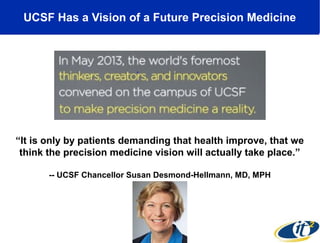
UCSF Has a Vision of a Future Precision Medicine

“It is only by patients demanding that health improve, that we
think the precision medicine vision will actually take place.”
-- UCSF Chancellor Susan Desmond-Hellmann, MD, MPH
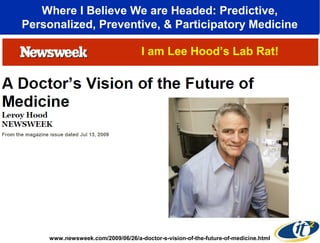
Where I Believe We are Headed: Predictive,
Personalized, Preventive, & Participatory Medicine
I am Lee Hood’s Lab Rat!

www.newsweek.com/2009/06/26/a-doctor-s-vision-of-the-future-of-medicine.html
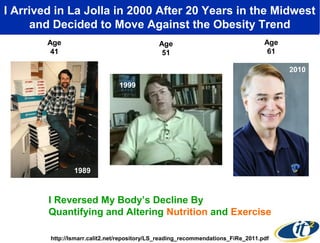
I Arrived in La Jolla in 2000of My Body andin the Midwest
By Measuring the State After 20 Years “Tuning” It
Using Nutrition and Exercise, Ithe Obesity Trend
and Decided to Move Against Became Healthier
Age
41

Age
51

Age
61

1999
2000
1999

1989

I Reversed My Body’s Decline By
Quantifying and Altering Nutrition and Exercise
http://lsmarr.calit2.net/repository/LS_reading_recommendations_FiRe_2011.pdf

2010
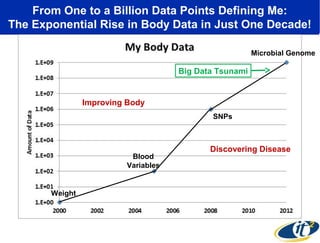
From One to a Billion Data Points Defining Me:
The Exponential Rise in Body Data in Just One Decade!
Billion:Microbial Genome
My Full DNA,
MRI/CT Images

Big Data Tsunami

Improving Body
SNPs
Million: My DNA SNPs,
Zeo, FitBit
Blood
Variables
One:
My
Weight Weight

Discovering Disease

Hundred: My Blood Variables
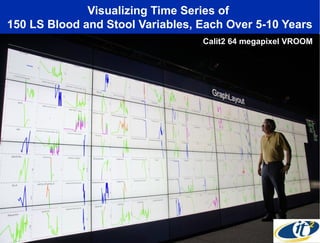
Visualizing Time Series of
150 LS Blood and Stool Variables, Each Over 5-10 Years
Calit2 64 megapixel VROOM
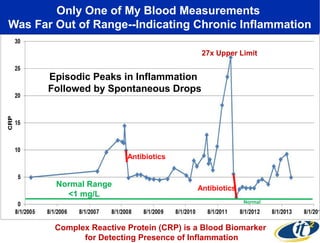
Only One of My Blood Measurements
Was Far Out of Range--Indicating Chronic Inflammation
27x Upper Limit

Episodic Peaks in Inflammation
Followed by Spontaneous Drops

Antibiotics

Normal Range
<1 mg/L

Antibiotics
Normal

Complex Reactive Protein (CRP) is a Blood Biomarker
for Detecting Presence of Inflammation
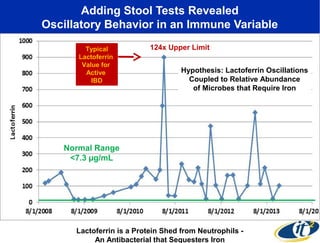
Adding Stool Tests Revealed
Oscillatory Behavior in an Immune Variable
Typical
Lactoferrin
Value for
Active
IBD

124x Upper Limit
Hypothesis: Lactoferrin Oscillations
Coupled to Relative Abundance
of Microbes that Require Iron

Normal Range
<7.3 µg/mL

Lactoferrin is a Protein Shed from Neutrophils An Antibacterial that Sequesters Iron
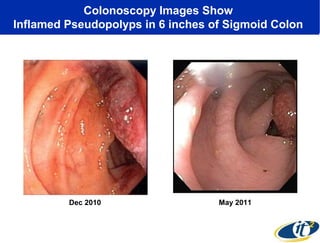
Colonoscopy Images Show
Inflamed Pseudopolyps in 6 inches of Sigmoid Colon

Dec 2010

May 2011
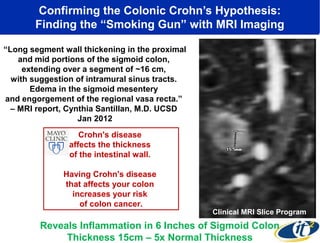
Confirming the Colonic Crohn’s Hypothesis:
Finding the “Smoking Gun” with MRI Imaging
“Long segment wall thickening in the proximal
and mid portions of the sigmoid colon,
extending over a segment of ~16 cm,
with suggestion of intramural sinus tracts.
Edema in the sigmoid mesentery
and engorgement of the regional vasa recta.”
– MRI report, Cynthia Santillan, M.D. UCSD
Jan 2012
Crohn's disease
affects the thickness
of the intestinal wall.
Having Crohn's disease
that affects your colon
increases your risk
of colon cancer.

Clinical MRI Slice Program

Reveals Inflammation in 6 Inches of Sigmoid Colon
Thickness 15cm – 5x Normal Thickness
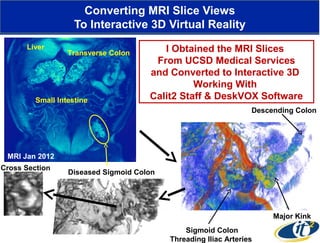
Converting MRI Slice Views
To Interactive 3D Virtual Reality
Liver

Transverse Colon

Small Intestine

I Obtained the MRI Slices
From UCSD Medical Services
and Converted to Interactive 3D
Working With
Calit2 Staff & DeskVOX Software
Descending Colon

MRI Jan 2012
Cross Section

Diseased Sigmoid Colon

Major Kink
Sigmoid Colon
Threading Iliac Arteries
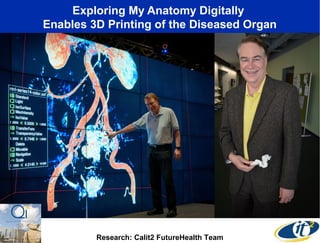
Exploring My Anatomy Digitally
Enables 3D Printing of the Diseased Organ

Research: Calit2 FutureHealth Team
Why Did I Have an Autoimmune Disease like IBD?

Despite decades of research,
the etiology of Crohn's disease
remains unknown.
Its pathogenesis may involve
a complex interplay between
host genetics,
immune dysfunction,
and microbial or environmental factors.
--The Role of Microbes in Crohn's Disease

So I Set Out to Quantify All Three!
Paul B. Eckburg & David A. Relman
Clin Infect Dis. 44:256-262 (2007) 
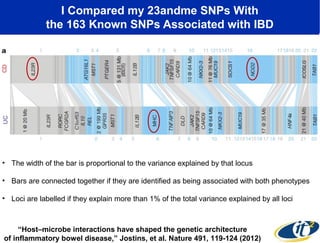
I Compared my 23andme SNPs With
the 163 Known SNPs Associated with IBD

• The width of the bar is proportional to the variance explained by that locus 
• Bars are connected together if they are identified as being associated with both phenotypes
• Loci are labelled if they explain more than 1% of the total variance explained by all loci

“Host–microbe interactions have shaped the genetic architecture
of inflammatory bowel disease,” Jostins, et al. Nature 491, 119-124 (2012)
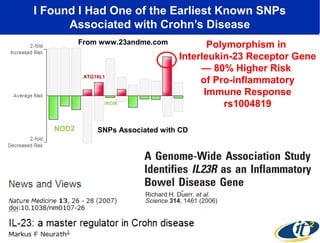
I Found I Had One of the Earliest Known SNPs
Associated with Crohn’s Disease
From www.23andme.com

ATG16L1

IRGM

NOD2

Polymorphism in
Interleukin-23 Receptor Gene
— 80% Higher Risk
of Pro-inflammatory
Immune Response
rs1004819

SNPs Associated with CD
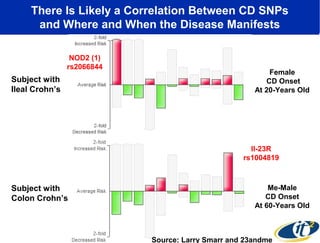
There Is Likely a Correlation Between CD SNPs
and Where and When the Disease Manifests
NOD2 (1)
rs2066844

Subject with
Ileal Crohn’s

Female
CD Onset
At 20-Years Old

Il-23R
rs1004819

Subject with
Colon Crohn’s

Me-Male
CD Onset
At 60-Years Old

Source: Larry Smarr and 23andme
I Also Had an Increased Risk for Ulcerative Colitis,
But a SNP that is Also Associated with Colonic CD

I Have a
33% Increased Risk
for Ulcerative Colitis
HLA-DRA (rs2395185)

I Have the Same Level
of HLA-DRA Increased Risk
as Another Male Who Has Had
Ulcerative Colitis for 20 Years

“Our results suggest that at least for the SNPs investigated
[including HLA-DRA],
colonic CD and UC have common genetic basis.”
-Waterman, et al., IBD 17, 1936-42 (2011)
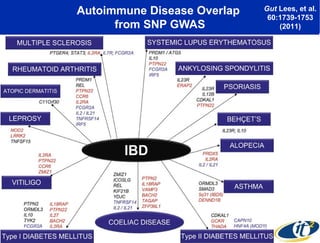
Autoimmune Disease Overlap
from SNP GWAS

Gut Lees, et al.
60:1739-1753
(2011)
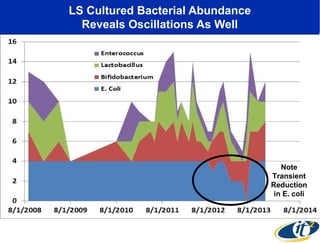
LS Cultured Bacterial Abundance
Reveals Oscillations As Well

Note
Transient
Reduction
in E. coli
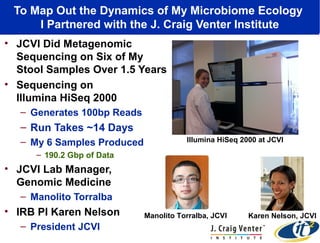
To Map Out the Dynamics of My Microbiome Ecology
I Partnered with the J. Craig Venter Institute
• JCVI Did Metagenomic
Sequencing on Six of My
Stool Samples Over 1.5 Years
• Sequencing on
Illumina HiSeq 2000
– Generates 100bp Reads

– Run Takes ~14 Days
– My 6 Samples Produced

Illumina HiSeq 2000 at JCVI

– 190.2 Gbp of Data

• JCVI Lab Manager,
Genomic Medicine
– Manolito Torralba

• IRB PI Karen Nelson
– President JCVI

Manolito Torralba, JCVI

Karen Nelson, JCVI
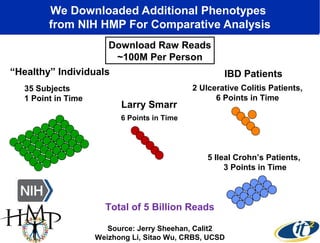
We Downloaded Additional Phenotypes
from NIH HMP For Comparative Analysis
Download Raw Reads
~100M Per Person
“Healthy” Individuals
35 Subjects
1 Point in Time

Larry Smarr

IBD Patients

2 Ulcerative Colitis Patients,
6 Points in Time

6 Points in Time

5 Ileal Crohn’s Patients,
3 Points in Time

Total of 5 Billion Reads
Source: Jerry Sheehan, Calit2
Weizhong Li, Sitao Wu, CRBS, UCSD
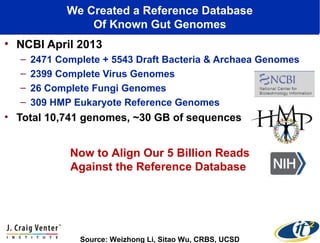
We Created a Reference Database
Of Known Gut Genomes
• NCBI April 2013
–
–
–
–

2471 Complete + 5543 Draft Bacteria & Archaea Genomes
2399 Complete Virus Genomes
26 Complete Fungi Genomes
309 HMP Eukaryote Reference Genomes

• Total 10,741 genomes, ~30 GB of sequences

Now to Align Our 5 Billion Reads
Against the Reference Database

Source: Weizhong Li, Sitao Wu, CRBS, UCSD
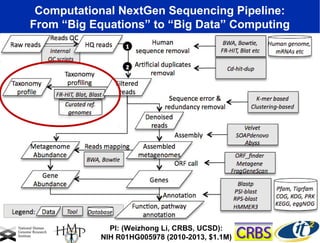
Computational NextGen Sequencing Pipeline:
From “Big Equations” to “Big Data” Computing

PI: (Weizhong Li, CRBS, UCSD):
NIH R01HG005978 (2010-2013, $1.1M)
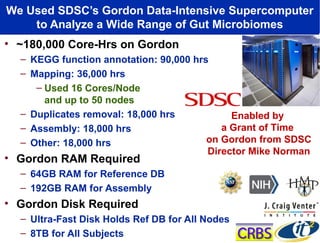
We Used SDSC’s Gordon Data-Intensive Supercomputer
to Analyze a Wide Range of Gut Microbiomes
• ~180,000 Core-Hrs on Gordon
– KEGG function annotation: 90,000 hrs
– Mapping: 36,000 hrs
– Used 16 Cores/Node
and up to 50 nodes
– Duplicates removal: 18,000 hrs
Enabled by
a Grant of Time
– Assembly: 18,000 hrs
on Gordon from SDSC
– Other: 18,000 hrs
Director Mike Norman

• Gordon RAM Required

– 64GB RAM for Reference DB
– 192GB RAM for Assembly

• Gordon Disk Required
– Ultra-Fast Disk Holds Ref DB for All Nodes
– 8TB for All Subjects
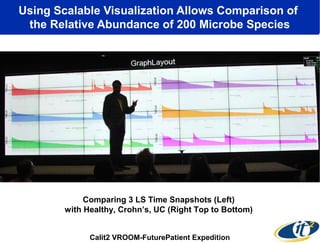
Using Scalable Visualization Allows Comparison of
the Relative Abundance of 200 Microbe Species

Comparing 3 LS Time Snapshots (Left)
with Healthy, Crohn’s, UC (Right Top to Bottom)
Calit2 VROOM-FuturePatient Expedition
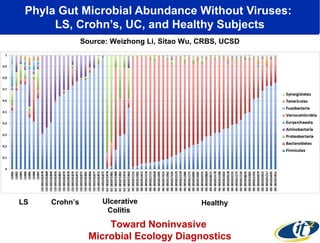
Phyla Gut Microbial Abundance Without Viruses:
LS, Crohn’s, UC, and Healthy Subjects
Source: Weizhong Li, Sitao Wu, CRBS, UCSD

LS

Crohn’s

Ulcerative
Colitis

Healthy

Toward Noninvasive
Microbial Ecology Diagnostics
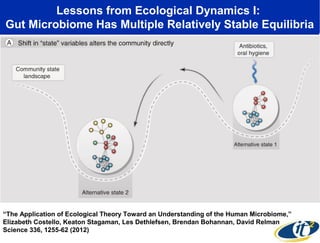
Lessons from Ecological Dynamics I:
Gut Microbiome Has Multiple Relatively Stable Equilibria

“The Application of Ecological Theory Toward an Understanding of the Human Microbiome,”
Elizabeth Costello, Keaton Stagaman, Les Dethlefsen, Brendan Bohannan, David Relman
Science 336, 1255-62 (2012)
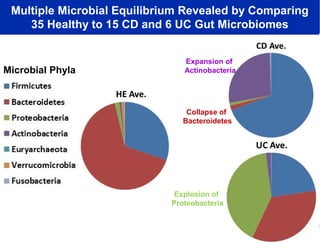
Multiple Microbial Equilibrium Revealed by Comparing
35 Healthy to 15 CD and 6 UC Gut Microbiomes

Microbial Phyla

Expansion of
Actinobacteria

Collapse of
Bacteroidetes

Explosion of
Proteobacteria
Lessons From Ecological Dynamics II:
Invasive Species Dominate After Major Species Destroyed

 ”In many areas following these burns 
invasive species are able to establish themselves, 
crowding out native species.”
Source: Ponderosa Pine Fire Ecology
http://cpluhna.nau.edu/Biota/ponderosafire.htm
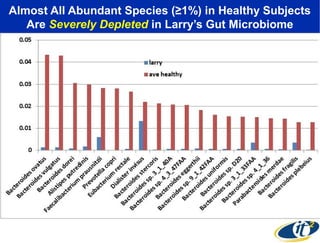
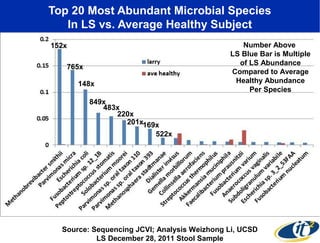
Almost All Abundant Species (≥1%) in Healthy Subjects
Are Severely Depleted in Larry’s Gut Microbiome
Top 20 Most Abundant Microbial Species
In LS vs. Average Healthy Subject
152x
765x
148x

Number Above
LS Blue Bar is Multiple
of LS Abundance
Compared to Average
Healthy Abundance
Per Species

849x
483x
220x
201x169x
522x

Source: Sequencing JCVI; Analysis Weizhong Li, UCSD
LS December 28, 2011 Stool Sample
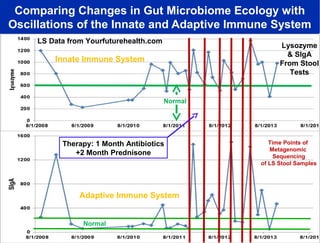
Comparing Changes in Gut Microbiome Ecology with
Oscillations of the Innate and Adaptive Immune System
LS Data from Yourfuturehealth.com

Lysozyme
& SIgA
From Stool
Tests

Innate Immune System

Normal

Therapy: 1 Month Antibiotics
+2 Month Prednisone

Adaptive Immune System
Normal

Time Points of
Metagenomic
Sequencing
of LS Stool Samples
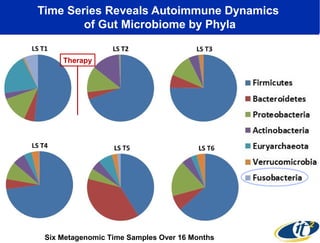
Time Series Reveals Autoimmune Dynamics
of Gut Microbiome by Phyla
Therapy

Six Metagenomic Time Samples Over 16 Months
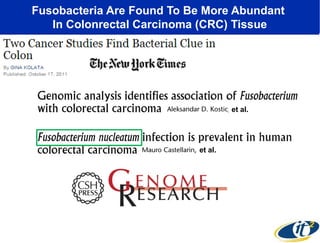
Fusobacteria Are Found To Be More Abundant
In Colonrectal Carcinoma (CRC) Tissue

et al.

et al.
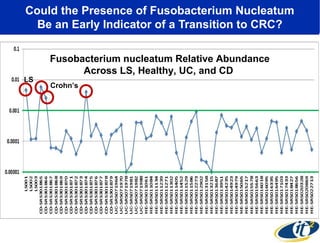
Could the Presence of Fusobacterium Nucleatum
Be an Early Indicator of a Transition to CRC?

LS

Fusobacterium nucleatum Relative Abundance
Across LS, Healthy, UC, and CD
Crohn’s
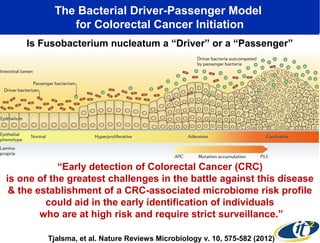
The Bacterial Driver-Passenger Model
for Colorectal Cancer Initiation
Is Fusobacterium nucleatum a “Driver” or a “Passenger”

“Early detection of Colorectal Cancer (CRC)
is one of the greatest challenges in the battle against this disease
& the establishment of a CRC-associated microbiome risk profile
could aid in the early identification of individuals
who are at high risk and require strict surveillance.”
Tjalsma, et al. Nature Reviews Microbiology v. 10, 575-582 (2012)
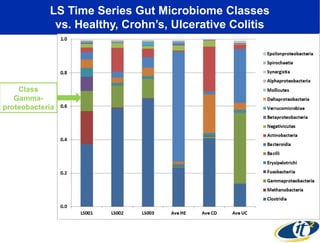
LS Time Series Gut Microbiome Classes
vs. Healthy, Crohn’s, Ulcerative Colitis

Class
Gammaproteobacteria
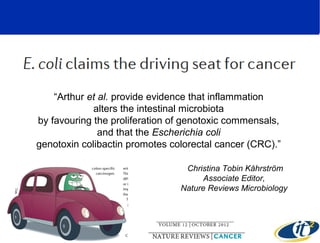
“Arthur et al. provide evidence that inflammation 
alters the intestinal microbiota 
by favouring the proliferation of genotoxic commensals, 
and that the Escherichia coli
genotoxin colibactin promotes colorectal cancer (CRC).” 
 Christina Tobin Kåhrström
Associate Editor,
Nature Reviews Microbiology
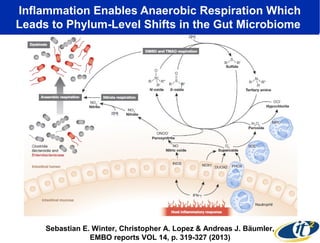
Inflammation Enables Anaerobic Respiration Which
Leads to Phylum-Level Shifts in the Gut Microbiome

Sebastian E. Winter, Christopher A. Lopez & Andreas J. Bäumler,
EMBO reports VOL 14, p. 319-327 (2013)
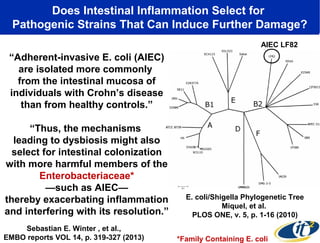
Does Intestinal Inflammation Select for
Pathogenic Strains That Can Induce Further Damage?
AIEC LF82

“Adherent-invasive E. coli (AIEC)
are isolated more commonly
from the intestinal mucosa of
individuals with Crohn’s disease
than from healthy controls.”
“Thus, the mechanisms
leading to dysbiosis might also
select for intestinal colonization
with more harmful members of the
Enterobacteriaceae*
—such as AIEC—
thereby exacerbating inflammation
and interfering with its resolution.”
Sebastian E. Winter , et al.,
EMBO reports VOL 14, p. 319-327 (2013)

E. coli/Shigella Phylogenetic Tree
Miquel, et al.
PLOS ONE, v. 5, p. 1-16 (2010)
*Family Containing E. coli
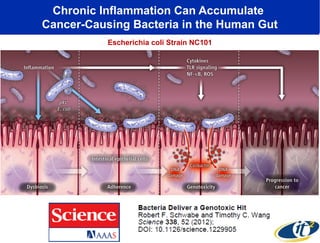
Chronic Inflammation Can Accumulate
Cancer-Causing Bacteria in the Human Gut
Escherichia coli Strain NC101
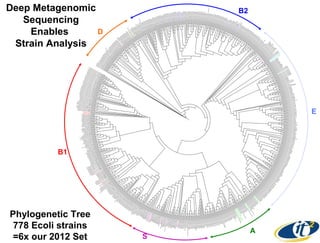
Deep Metagenomic
Sequencing
D
Enables
Strain Analysis

B2

E

B1

Phylogenetic Tree
778 Ecoli strains
=6x our 2012 Set

S

A
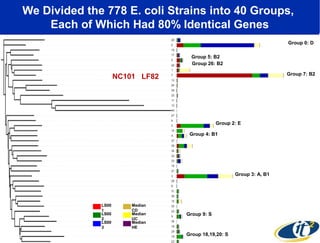
We Divided the 778 E. coli Strains into 40 Groups,
Each of Which Had 80% Identical Genes
Group 0: D
Group 5: B2
Group 26: B2
Group 7: B2

NC101 LF82

Group 2: E
Group 4: B1

Group 3: A, B1

LS00
1
LS00
2
LS00
3

Median
CD
Median
UC
Median
HE

Group 9: S

Group 18,19,20: S
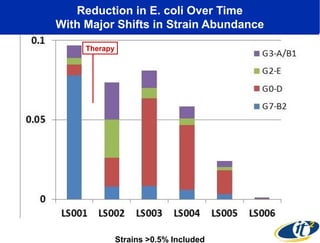
Reduction in E. coli Over Time
With Major Shifts in Strain Abundance
Therapy

Strains >0.5% Included
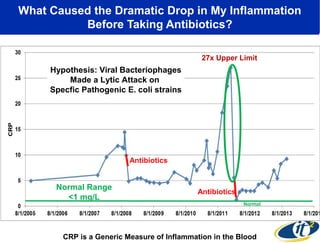
What Caused the Dramatic Drop in My Inflammation
Before Taking Antibiotics?
27x Upper Limit

Hypothesis: Viral Bacteriophages
Made a Lytic Attack on
Specfic Pathogenic E. coli strains

Antibiotics

Normal Range
<1 mg/L

Antibiotics
Normal

CRP is a Generic Measure of Inflammation in the Blood
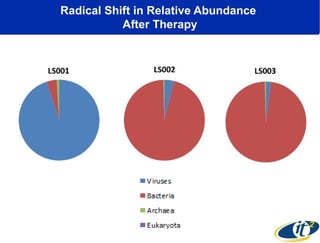
Radical Shift in Relative Abundance
After Therapy
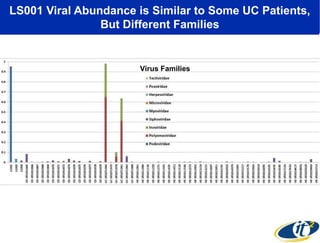
LS001 Viral Abundance is Similar to Some UC Patients,
But Different Families

Virus Families
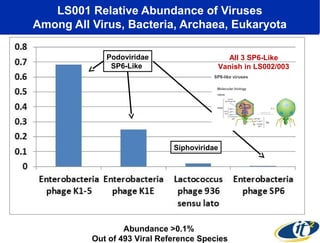
LS001 Relative Abundance of Viruses
Among All Virus, Bacteria, Archaea, Eukaryota
Podoviridae
SP6-Like

All 3 SP6-Like
Vanish in LS002/003

Siphoviridae

Abundance >0.1%
Out of 493 Viral Reference Species
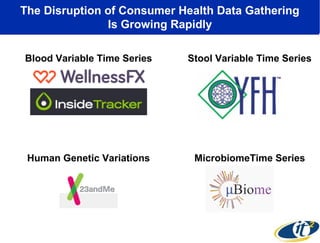
The Disruption of Consumer Health Data Gathering
Is Growing Rapidly
Blood Variable Time Series

Stool Variable Time Series

Human Genetic Variations

MicrobiomeTime Series
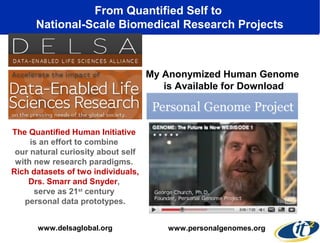
From Quantified Self to
National-Scale Biomedical Research Projects

My Anonymized Human Genome
is Available for Download

The Quantified Human Initiative
is an effort to combine
our natural curiosity about self
with new research paradigms.
Rich datasets of two individuals,
Drs. Smarr and Snyder,
serve as 21st century
personal data prototypes.
www.delsaglobal.org

www.personalgenomes.org
Thanks to Our Great Team!
UCSD Metagenomics Team

JCVI Team

Weizhong Li
Sitao Wu

Karen Nelson
Shibu Yooseph
Manolito Torralba

SDSC Team
Calit2@UCSD
Future Patient Team
Jerry Sheehan
Tom DeFanti
Kevin Patrick
Jurgen Schulze
Andrew Prudhomme
Philip Weber
Fred Raab
Joe Keefe
Ernesto Ramirez

Michael Norman
Mahidhar Tatineni
Robert Sinkovits

UCSD Health Sciences Team
William J. Sandborn
Elisabeth Evans
John Chang
Brigid Boland
David Brenner

Quantifying the Time Progression of a Human Autoimmune Disease using Genome Sequencing and Supercomputers

  • 1.
    “Quantifying the TimeProgression of a Human Autoimmune Disease using Genome Sequencing and Supercomputers” University of California, San Francisco San Francisco, CA December 3, 2013 Dr. Larry Smarr Director, California Institute for Telecommunications and Information Technology Harry E. Gruber Professor, Dept. of Computer Science and Engineering Jacobs School of Engineering, UCSD 1 http://lsmarr.calit2.net
  • 2.
    Abstract The human bodycontains ten times the number of microbe cells as human cells and these microbes contain 100 times the number of DNA genes that our human DNA does. The microbial component of this "superorganism" is comprised of hundreds of species spread over many taxonomic phyla. The human immune system is tightly coupled with this microbial ecology and in cases of autoimmune disease, both the host immune system and the microbial ecology can have excursions far from normal. I will review some of the known 163 SNPs in the human genome which pre-dispose the host to develop autoimmune IBD. Motivated by a diagnosis that I have Crohn’s disease, I have been collecting massive amounts of data on my own body over the last five years. Analysis and graphing of this data demonstrates the episodic evolution of this coupled immune-microbial system. I have also evaluated the relative abundances of Fusobacteria species and E. coli strains that have been hypothesized to be related to colon cancer. To decode the details of the microbial ecology required high resolution metagenomics sequencing at the Venter Institute, several CPU-decades of supercomputer time, coupled to scalable visualization systems. The complexities of my time-varying microbial ecology will be compared to the NIH Human Microbiome Program data on people in states of health and IBD.
  • 3.
    UCSF Has aVision of a Future Precision Medicine “It is only by patients demanding that health improve, that we think the precision medicine vision will actually take place.” -- UCSF Chancellor Susan Desmond-Hellmann, MD, MPH
  • 4.
    Where I BelieveWe are Headed: Predictive, Personalized, Preventive, & Participatory Medicine I am Lee Hood’s Lab Rat! www.newsweek.com/2009/06/26/a-doctor-s-vision-of-the-future-of-medicine.html
  • 5.
    I Arrived inLa Jolla in 2000of My Body andin the Midwest By Measuring the State After 20 Years “Tuning” It Using Nutrition and Exercise, Ithe Obesity Trend and Decided to Move Against Became Healthier Age 41 Age 51 Age 61 1999 2000 1999 1989 I Reversed My Body’s Decline By Quantifying and Altering Nutrition and Exercise http://lsmarr.calit2.net/repository/LS_reading_recommendations_FiRe_2011.pdf 2010
  • 6.
    From One toa Billion Data Points Defining Me: The Exponential Rise in Body Data in Just One Decade! Billion:Microbial Genome My Full DNA, MRI/CT Images Big Data Tsunami Improving Body SNPs Million: My DNA SNPs, Zeo, FitBit Blood Variables One: My Weight Weight Discovering Disease Hundred: My Blood Variables
  • 7.
    Visualizing Time Seriesof 150 LS Blood and Stool Variables, Each Over 5-10 Years Calit2 64 megapixel VROOM
  • 8.
    Only One ofMy Blood Measurements Was Far Out of Range--Indicating Chronic Inflammation 27x Upper Limit Episodic Peaks in Inflammation Followed by Spontaneous Drops Antibiotics Normal Range <1 mg/L Antibiotics Normal Complex Reactive Protein (CRP) is a Blood Biomarker for Detecting Presence of Inflammation
  • 9.
    Adding Stool TestsRevealed Oscillatory Behavior in an Immune Variable Typical Lactoferrin Value for Active IBD 124x Upper Limit Hypothesis: Lactoferrin Oscillations Coupled to Relative Abundance of Microbes that Require Iron Normal Range <7.3 µg/mL Lactoferrin is a Protein Shed from Neutrophils An Antibacterial that Sequesters Iron
  • 10.
    Colonoscopy Images Show InflamedPseudopolyps in 6 inches of Sigmoid Colon Dec 2010 May 2011
  • 11.
    Confirming the ColonicCrohn’s Hypothesis: Finding the “Smoking Gun” with MRI Imaging “Long segment wall thickening in the proximal and mid portions of the sigmoid colon, extending over a segment of ~16 cm, with suggestion of intramural sinus tracts. Edema in the sigmoid mesentery and engorgement of the regional vasa recta.” – MRI report, Cynthia Santillan, M.D. UCSD Jan 2012 Crohn's disease affects the thickness of the intestinal wall. Having Crohn's disease that affects your colon increases your risk of colon cancer. Clinical MRI Slice Program Reveals Inflammation in 6 Inches of Sigmoid Colon Thickness 15cm – 5x Normal Thickness
  • 12.
    Converting MRI SliceViews To Interactive 3D Virtual Reality Liver Transverse Colon Small Intestine I Obtained the MRI Slices From UCSD Medical Services and Converted to Interactive 3D Working With Calit2 Staff & DeskVOX Software Descending Colon MRI Jan 2012 Cross Section Diseased Sigmoid Colon Major Kink Sigmoid Colon Threading Iliac Arteries
  • 13.
    Exploring My AnatomyDigitally Enables 3D Printing of the Diseased Organ Research: Calit2 FutureHealth Team
  • 14.
    Why Did IHave an Autoimmune Disease like IBD? Despite decades of research, the etiology of Crohn's disease remains unknown. Its pathogenesis may involve a complex interplay between host genetics, immune dysfunction, and microbial or environmental factors. --The Role of Microbes in Crohn's Disease So I Set Out to Quantify All Three! Paul B. Eckburg & David A. Relman Clin Infect Dis. 44:256-262 (2007) 
  • 15.
    I Compared my23andme SNPs With the 163 Known SNPs Associated with IBD • The width of the bar is proportional to the variance explained by that locus  • Bars are connected together if they are identified as being associated with both phenotypes • Loci are labelled if they explain more than 1% of the total variance explained by all loci “Host–microbe interactions have shaped the genetic architecture of inflammatory bowel disease,” Jostins, et al. Nature 491, 119-124 (2012)
  • 16.
    I Found IHad One of the Earliest Known SNPs Associated with Crohn’s Disease From www.23andme.com ATG16L1 IRGM NOD2 Polymorphism in Interleukin-23 Receptor Gene — 80% Higher Risk of Pro-inflammatory Immune Response rs1004819 SNPs Associated with CD
  • 17.
    There Is Likelya Correlation Between CD SNPs and Where and When the Disease Manifests NOD2 (1) rs2066844 Subject with Ileal Crohn’s Female CD Onset At 20-Years Old Il-23R rs1004819 Subject with Colon Crohn’s Me-Male CD Onset At 60-Years Old Source: Larry Smarr and 23andme
  • 18.
    I Also Hadan Increased Risk for Ulcerative Colitis, But a SNP that is Also Associated with Colonic CD I Have a 33% Increased Risk for Ulcerative Colitis HLA-DRA (rs2395185) I Have the Same Level of HLA-DRA Increased Risk as Another Male Who Has Had Ulcerative Colitis for 20 Years “Our results suggest that at least for the SNPs investigated [including HLA-DRA], colonic CD and UC have common genetic basis.” -Waterman, et al., IBD 17, 1936-42 (2011)
  • 19.
    Autoimmune Disease Overlap fromSNP GWAS Gut Lees, et al. 60:1739-1753 (2011)
  • 20.
    LS Cultured BacterialAbundance Reveals Oscillations As Well Note Transient Reduction in E. coli
  • 21.
    To Map Outthe Dynamics of My Microbiome Ecology I Partnered with the J. Craig Venter Institute • JCVI Did Metagenomic Sequencing on Six of My Stool Samples Over 1.5 Years • Sequencing on Illumina HiSeq 2000 – Generates 100bp Reads – Run Takes ~14 Days – My 6 Samples Produced Illumina HiSeq 2000 at JCVI – 190.2 Gbp of Data • JCVI Lab Manager, Genomic Medicine – Manolito Torralba • IRB PI Karen Nelson – President JCVI Manolito Torralba, JCVI Karen Nelson, JCVI
  • 22.
    We Downloaded AdditionalPhenotypes from NIH HMP For Comparative Analysis Download Raw Reads ~100M Per Person “Healthy” Individuals 35 Subjects 1 Point in Time Larry Smarr IBD Patients 2 Ulcerative Colitis Patients, 6 Points in Time 6 Points in Time 5 Ileal Crohn’s Patients, 3 Points in Time Total of 5 Billion Reads Source: Jerry Sheehan, Calit2 Weizhong Li, Sitao Wu, CRBS, UCSD
  • 23.
    We Created aReference Database Of Known Gut Genomes • NCBI April 2013 – – – – 2471 Complete + 5543 Draft Bacteria & Archaea Genomes 2399 Complete Virus Genomes 26 Complete Fungi Genomes 309 HMP Eukaryote Reference Genomes • Total 10,741 genomes, ~30 GB of sequences Now to Align Our 5 Billion Reads Against the Reference Database Source: Weizhong Li, Sitao Wu, CRBS, UCSD
  • 24.
    Computational NextGen SequencingPipeline: From “Big Equations” to “Big Data” Computing PI: (Weizhong Li, CRBS, UCSD): NIH R01HG005978 (2010-2013, $1.1M)
  • 25.
    We Used SDSC’sGordon Data-Intensive Supercomputer to Analyze a Wide Range of Gut Microbiomes • ~180,000 Core-Hrs on Gordon – KEGG function annotation: 90,000 hrs – Mapping: 36,000 hrs – Used 16 Cores/Node and up to 50 nodes – Duplicates removal: 18,000 hrs Enabled by a Grant of Time – Assembly: 18,000 hrs on Gordon from SDSC – Other: 18,000 hrs Director Mike Norman • Gordon RAM Required – 64GB RAM for Reference DB – 192GB RAM for Assembly • Gordon Disk Required – Ultra-Fast Disk Holds Ref DB for All Nodes – 8TB for All Subjects
  • 26.
    Using Scalable VisualizationAllows Comparison of the Relative Abundance of 200 Microbe Species Comparing 3 LS Time Snapshots (Left) with Healthy, Crohn’s, UC (Right Top to Bottom) Calit2 VROOM-FuturePatient Expedition
  • 27.
    Phyla Gut MicrobialAbundance Without Viruses: LS, Crohn’s, UC, and Healthy Subjects Source: Weizhong Li, Sitao Wu, CRBS, UCSD LS Crohn’s Ulcerative Colitis Healthy Toward Noninvasive Microbial Ecology Diagnostics
  • 28.
    Lessons from EcologicalDynamics I: Gut Microbiome Has Multiple Relatively Stable Equilibria “The Application of Ecological Theory Toward an Understanding of the Human Microbiome,” Elizabeth Costello, Keaton Stagaman, Les Dethlefsen, Brendan Bohannan, David Relman Science 336, 1255-62 (2012)
  • 29.
    Multiple Microbial EquilibriumRevealed by Comparing 35 Healthy to 15 CD and 6 UC Gut Microbiomes Microbial Phyla Expansion of Actinobacteria Collapse of Bacteroidetes Explosion of Proteobacteria
  • 30.
    Lessons From EcologicalDynamics II: Invasive Species Dominate After Major Species Destroyed  ”In many areas following these burns  invasive species are able to establish themselves,  crowding out native species.” Source: Ponderosa Pine Fire Ecology http://cpluhna.nau.edu/Biota/ponderosafire.htm
  • 31.
    Almost All AbundantSpecies (≥1%) in Healthy Subjects Are Severely Depleted in Larry’s Gut Microbiome
  • 32.
    Top 20 MostAbundant Microbial Species In LS vs. Average Healthy Subject 152x 765x 148x Number Above LS Blue Bar is Multiple of LS Abundance Compared to Average Healthy Abundance Per Species 849x 483x 220x 201x169x 522x Source: Sequencing JCVI; Analysis Weizhong Li, UCSD LS December 28, 2011 Stool Sample
  • 33.
    Comparing Changes inGut Microbiome Ecology with Oscillations of the Innate and Adaptive Immune System LS Data from Yourfuturehealth.com Lysozyme & SIgA From Stool Tests Innate Immune System Normal Therapy: 1 Month Antibiotics +2 Month Prednisone Adaptive Immune System Normal Time Points of Metagenomic Sequencing of LS Stool Samples
  • 34.
    Time Series RevealsAutoimmune Dynamics of Gut Microbiome by Phyla Therapy Six Metagenomic Time Samples Over 16 Months
  • 35.
    Fusobacteria Are FoundTo Be More Abundant In Colonrectal Carcinoma (CRC) Tissue et al. et al.
  • 36.
    Could the Presenceof Fusobacterium Nucleatum Be an Early Indicator of a Transition to CRC? LS Fusobacterium nucleatum Relative Abundance Across LS, Healthy, UC, and CD Crohn’s
  • 37.
    The Bacterial Driver-PassengerModel for Colorectal Cancer Initiation Is Fusobacterium nucleatum a “Driver” or a “Passenger” “Early detection of Colorectal Cancer (CRC) is one of the greatest challenges in the battle against this disease & the establishment of a CRC-associated microbiome risk profile could aid in the early identification of individuals who are at high risk and require strict surveillance.” Tjalsma, et al. Nature Reviews Microbiology v. 10, 575-582 (2012)
  • 38.
    LS Time SeriesGut Microbiome Classes vs. Healthy, Crohn’s, Ulcerative Colitis Class Gammaproteobacteria
  • 39.
    “Arthur et al. provide evidence that inflammation  alters the intestinal microbiota  by favouring the proliferation of genotoxic commensals,  and that the Escherichiacoli genotoxin colibactin promotes colorectal cancer (CRC).”   Christina Tobin Kåhrström Associate Editor, Nature Reviews Microbiology
  • 40.
    Inflammation Enables AnaerobicRespiration Which Leads to Phylum-Level Shifts in the Gut Microbiome Sebastian E. Winter, Christopher A. Lopez & Andreas J. Bäumler, EMBO reports VOL 14, p. 319-327 (2013)
  • 41.
    Does Intestinal InflammationSelect for Pathogenic Strains That Can Induce Further Damage? AIEC LF82 “Adherent-invasive E. coli (AIEC) are isolated more commonly from the intestinal mucosa of individuals with Crohn’s disease than from healthy controls.” “Thus, the mechanisms leading to dysbiosis might also select for intestinal colonization with more harmful members of the Enterobacteriaceae* —such as AIEC— thereby exacerbating inflammation and interfering with its resolution.” Sebastian E. Winter , et al., EMBO reports VOL 14, p. 319-327 (2013) E. coli/Shigella Phylogenetic Tree Miquel, et al. PLOS ONE, v. 5, p. 1-16 (2010) *Family Containing E. coli
  • 42.
    Chronic Inflammation CanAccumulate Cancer-Causing Bacteria in the Human Gut Escherichia coli Strain NC101
  • 43.
  • 44.
    We Divided the778 E. coli Strains into 40 Groups, Each of Which Had 80% Identical Genes Group 0: D Group 5: B2 Group 26: B2 Group 7: B2 NC101 LF82 Group 2: E Group 4: B1 Group 3: A, B1 LS00 1 LS00 2 LS00 3 Median CD Median UC Median HE Group 9: S Group 18,19,20: S
  • 45.
    Reduction in E.coli Over Time With Major Shifts in Strain Abundance Therapy Strains >0.5% Included
  • 46.
    What Caused theDramatic Drop in My Inflammation Before Taking Antibiotics? 27x Upper Limit Hypothesis: Viral Bacteriophages Made a Lytic Attack on Specfic Pathogenic E. coli strains Antibiotics Normal Range <1 mg/L Antibiotics Normal CRP is a Generic Measure of Inflammation in the Blood
  • 47.
    Radical Shift inRelative Abundance After Therapy
  • 48.
    LS001 Viral Abundanceis Similar to Some UC Patients, But Different Families Virus Families
  • 49.
    LS001 Relative Abundanceof Viruses Among All Virus, Bacteria, Archaea, Eukaryota Podoviridae SP6-Like All 3 SP6-Like Vanish in LS002/003 Siphoviridae Abundance >0.1% Out of 493 Viral Reference Species
  • 50.
    The Disruption ofConsumer Health Data Gathering Is Growing Rapidly Blood Variable Time Series Stool Variable Time Series Human Genetic Variations MicrobiomeTime Series
  • 51.
    From Quantified Selfto National-Scale Biomedical Research Projects My Anonymized Human Genome is Available for Download The Quantified Human Initiative is an effort to combine our natural curiosity about self with new research paradigms. Rich datasets of two individuals, Drs. Smarr and Snyder, serve as 21st century personal data prototypes. www.delsaglobal.org www.personalgenomes.org
  • 52.
    Thanks to OurGreat Team! UCSD Metagenomics Team JCVI Team Weizhong Li Sitao Wu Karen Nelson Shibu Yooseph Manolito Torralba SDSC Team Calit2@UCSD Future Patient Team Jerry Sheehan Tom DeFanti Kevin Patrick Jurgen Schulze Andrew Prudhomme Philip Weber Fred Raab Joe Keefe Ernesto Ramirez Michael Norman Mahidhar Tatineni Robert Sinkovits UCSD Health Sciences Team William J. Sandborn Elisabeth Evans John Chang Brigid Boland David Brenner