UberEATS
Digital Analytics & Big Data
Abhinav Koranne | Alisha Singhal | Ayushi Mona | Bagmishree | Praptee Sharma | Sahil Bhatia
Introduction
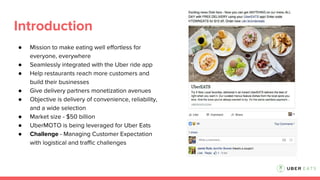
● Mission to make eating well effortless for
everyone, everywhere
● Seamlessly integrated with the Uber ride app
● Help restaurants reach more customers and
build their businesses
● Give delivery partners monetization avenues
● Objective is delivery of convenience, reliability,
and a wide selection
● Market size - $50 billion
● UberMOTO is being leveraged for Uber Eats
● Challenge - Managing Customer Expectation
with logistical and traffic challenges
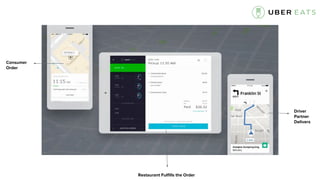
Consumer
Order
Restaurant Fulfills the Order
Driver
Partner
Delivers
Business Objectives
Why does this business exist?
To capitalize and leverage expertise in moving people &
products from Point A to B in an optimum & effective manner
for restaurants.
To plug the gap in food ordering & delivery industry by
providing customers reliable choices and freedom to order
from anywhere, anytime.
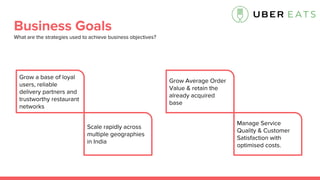
Business Goals
What are the strategies used to achieve business objectives?
Grow a base of loyal
users, reliable
delivery partners and
trustworthy restaurant
networks
Scale rapidly across
multiple geographies
in India
Grow Average Order
Value & retain the
already acquired
base
Manage Service
Quality & Customer
Satisfaction with
optimised costs.
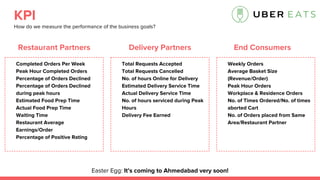
KPI
How do we measure the performance of the business goals?
Easter Egg: It’s coming to Ahmedabad very soon!
Restaurant Partners
Completed Orders Per Week
Peak Hour Completed Orders
Percentage of Orders Declined
during peak hours
Estimated Food Prep Time
Actual Food Prep Time
Waiting Time
Restaurant Average
Earnings/Order
Percentage of Positive Rating
Delivery Partners
Total Requests Accepted
Total Requests Cancelled
No. of hours Online for Delivery
Estimated Delivery Service Time
Actual Delivery Service Time
No. of hours serviced during Peak
Hours
Delivery Fee Earned
End Consumers
Weekly Orders
Average Basket Size
(Revenue/Order)
Peak Hour Orders
Workplace & Residence Orders
No. of Times Ordered/No. of times
aborted Cart
No. of Orders placed from Same
Area/Restaurant Partner
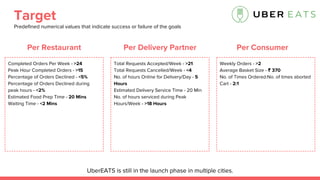
Target
Predefined numerical values that indicate success or failure of the goals
UberEATS is still in the launch phase in multiple cities.
Per Restaurant
Completed Orders Per Week - >24
Peak Hour Completed Orders - >15
Percentage of Orders Declined - <5%
Percentage of Orders Declined during
peak hours - <2%
Estimated Food Prep Time - 20 Mins
Waiting Time - <2 Mins
Per Delivery Partner
Total Requests Accepted/Week - >21
Total Requests Cancelled/Week - <4
No. of hours Online for Delivery/Day - 5
Hours
Estimated Delivery Service Time - 20 Min
No. of hours serviced during Peak
Hours/Week - >18 Hours
Per Consumer
Weekly Orders - >2
Average Basket Size - ₹ 370
No. of Times Ordered:No. of times aborted
Cart - 2:1
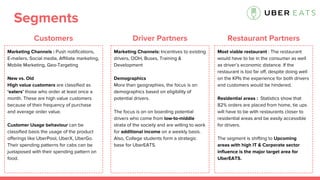
Segments
Marketing Channels : Push notifications,
E-mailers, Social media, Affiliate marketing,
Mobile Marketing, Geo-Targeting
New vs. Old
High value customers are classified as
‘eaters’ those who order at least once a
month. These are high value customers
because of their frequency of purchase
and average order value.
Customer Usage behaviour can be
classified basis the usage of the product
offerings like UberPool, UberX, UberGo.
Their spending patterns for cabs can be
juxtaposed with their spending pattern on
food.
Most viable restaurant : The restaurant
would have to be in the consumer as well
as driver’s economic distance. If the
restaurant is too far off, despite doing well
on the KPIs the experience for both drivers
and customers would be hindered.
Residential areas : Statistics show that
82% orders are placed from home, tie ups
will have to be with restaurants closer to
residential areas and be easily accessible
for drivers.
The segment is shifting to Upcoming
areas with high IT & Corporate sector
influence is the major target area for
UberEATS.
Marketing Channels: Incentives to existing
drivers, OOH, Buses, Training &
Development
Demographics
More than geographies, the focus is on
demographics based on eligibility of
potential drivers.
The focus is on on boarding potential
drivers who come from low-to-middle
strata of the society and are willing to work
for additional income on a weekly basis.
Also, College students form a strategic
base for UberEATS.
Customers Restaurant PartnersDriver Partners
“Eating Out” is out,
“Ordering In” is in.
Khao Piyo Aish Karo!

Uber Eats - Digital Metrics

  • 1.
    UberEATS Digital Analytics &Big Data Abhinav Koranne | Alisha Singhal | Ayushi Mona | Bagmishree | Praptee Sharma | Sahil Bhatia
  • 2.
    Introduction ● Mission tomake eating well effortless for everyone, everywhere ● Seamlessly integrated with the Uber ride app ● Help restaurants reach more customers and build their businesses ● Give delivery partners monetization avenues ● Objective is delivery of convenience, reliability, and a wide selection ● Market size - $50 billion ● UberMOTO is being leveraged for Uber Eats ● Challenge - Managing Customer Expectation with logistical and traffic challenges
  • 3.
    Consumer Order Restaurant Fulfills theOrder Driver Partner Delivers
  • 4.
    Business Objectives Why doesthis business exist? To capitalize and leverage expertise in moving people & products from Point A to B in an optimum & effective manner for restaurants. To plug the gap in food ordering & delivery industry by providing customers reliable choices and freedom to order from anywhere, anytime.
  • 5.
    Business Goals What arethe strategies used to achieve business objectives? Grow a base of loyal users, reliable delivery partners and trustworthy restaurant networks Scale rapidly across multiple geographies in India Grow Average Order Value & retain the already acquired base Manage Service Quality & Customer Satisfaction with optimised costs.
  • 6.
    KPI How do wemeasure the performance of the business goals? Easter Egg: It’s coming to Ahmedabad very soon! Restaurant Partners Completed Orders Per Week Peak Hour Completed Orders Percentage of Orders Declined Percentage of Orders Declined during peak hours Estimated Food Prep Time Actual Food Prep Time Waiting Time Restaurant Average Earnings/Order Percentage of Positive Rating Delivery Partners Total Requests Accepted Total Requests Cancelled No. of hours Online for Delivery Estimated Delivery Service Time Actual Delivery Service Time No. of hours serviced during Peak Hours Delivery Fee Earned End Consumers Weekly Orders Average Basket Size (Revenue/Order) Peak Hour Orders Workplace & Residence Orders No. of Times Ordered/No. of times aborted Cart No. of Orders placed from Same Area/Restaurant Partner
  • 7.
    Target Predefined numerical valuesthat indicate success or failure of the goals UberEATS is still in the launch phase in multiple cities. Per Restaurant Completed Orders Per Week - >24 Peak Hour Completed Orders - >15 Percentage of Orders Declined - <5% Percentage of Orders Declined during peak hours - <2% Estimated Food Prep Time - 20 Mins Waiting Time - <2 Mins Per Delivery Partner Total Requests Accepted/Week - >21 Total Requests Cancelled/Week - <4 No. of hours Online for Delivery/Day - 5 Hours Estimated Delivery Service Time - 20 Min No. of hours serviced during Peak Hours/Week - >18 Hours Per Consumer Weekly Orders - >2 Average Basket Size - ₹ 370 No. of Times Ordered:No. of times aborted Cart - 2:1
  • 8.
    Segments Marketing Channels :Push notifications, E-mailers, Social media, Affiliate marketing, Mobile Marketing, Geo-Targeting New vs. Old High value customers are classified as ‘eaters’ those who order at least once a month. These are high value customers because of their frequency of purchase and average order value. Customer Usage behaviour can be classified basis the usage of the product offerings like UberPool, UberX, UberGo. Their spending patterns for cabs can be juxtaposed with their spending pattern on food. Most viable restaurant : The restaurant would have to be in the consumer as well as driver’s economic distance. If the restaurant is too far off, despite doing well on the KPIs the experience for both drivers and customers would be hindered. Residential areas : Statistics show that 82% orders are placed from home, tie ups will have to be with restaurants closer to residential areas and be easily accessible for drivers. The segment is shifting to Upcoming areas with high IT & Corporate sector influence is the major target area for UberEATS. Marketing Channels: Incentives to existing drivers, OOH, Buses, Training & Development Demographics More than geographies, the focus is on demographics based on eligibility of potential drivers. The focus is on on boarding potential drivers who come from low-to-middle strata of the society and are willing to work for additional income on a weekly basis. Also, College students form a strategic base for UberEATS. Customers Restaurant PartnersDriver Partners
  • 9.
    “Eating Out” isout, “Ordering In” is in. Khao Piyo Aish Karo!