Position vs Time Graphs Unit 2 Lesson 2 E. Alexander Burt Potomac School
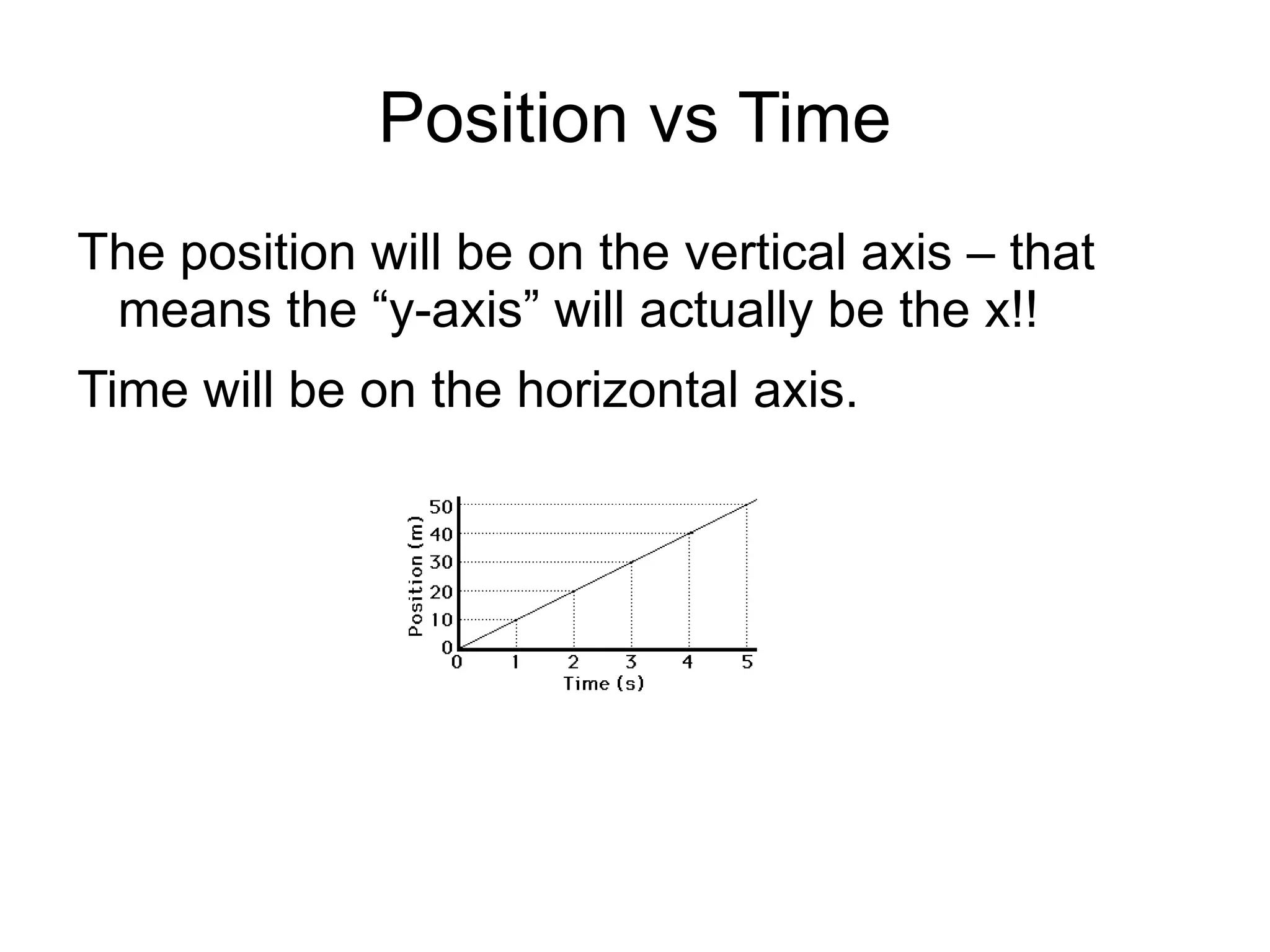
Position vs Time The position will be on the vertical axis – that means the “y-axis” will actually be the x!!
Time will be on the horizontal axis.
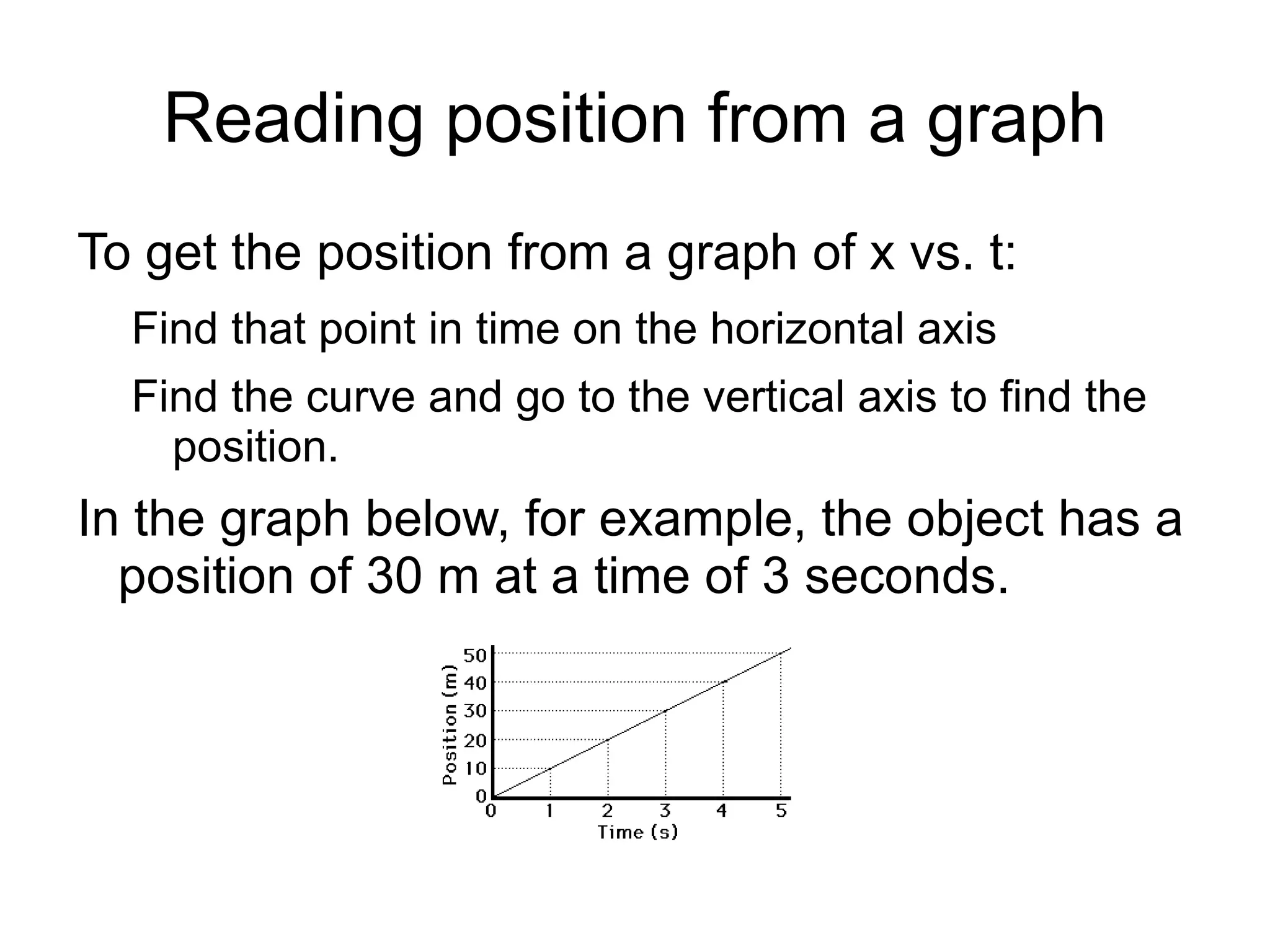
Reading position from a graph To get the position from a graph of x vs. t: Find that point in time on the horizontal axis
Find the curve and go to the vertical axis to find the position. In the graph below, for example, the object has a position of 30 m at a time of 3 seconds.
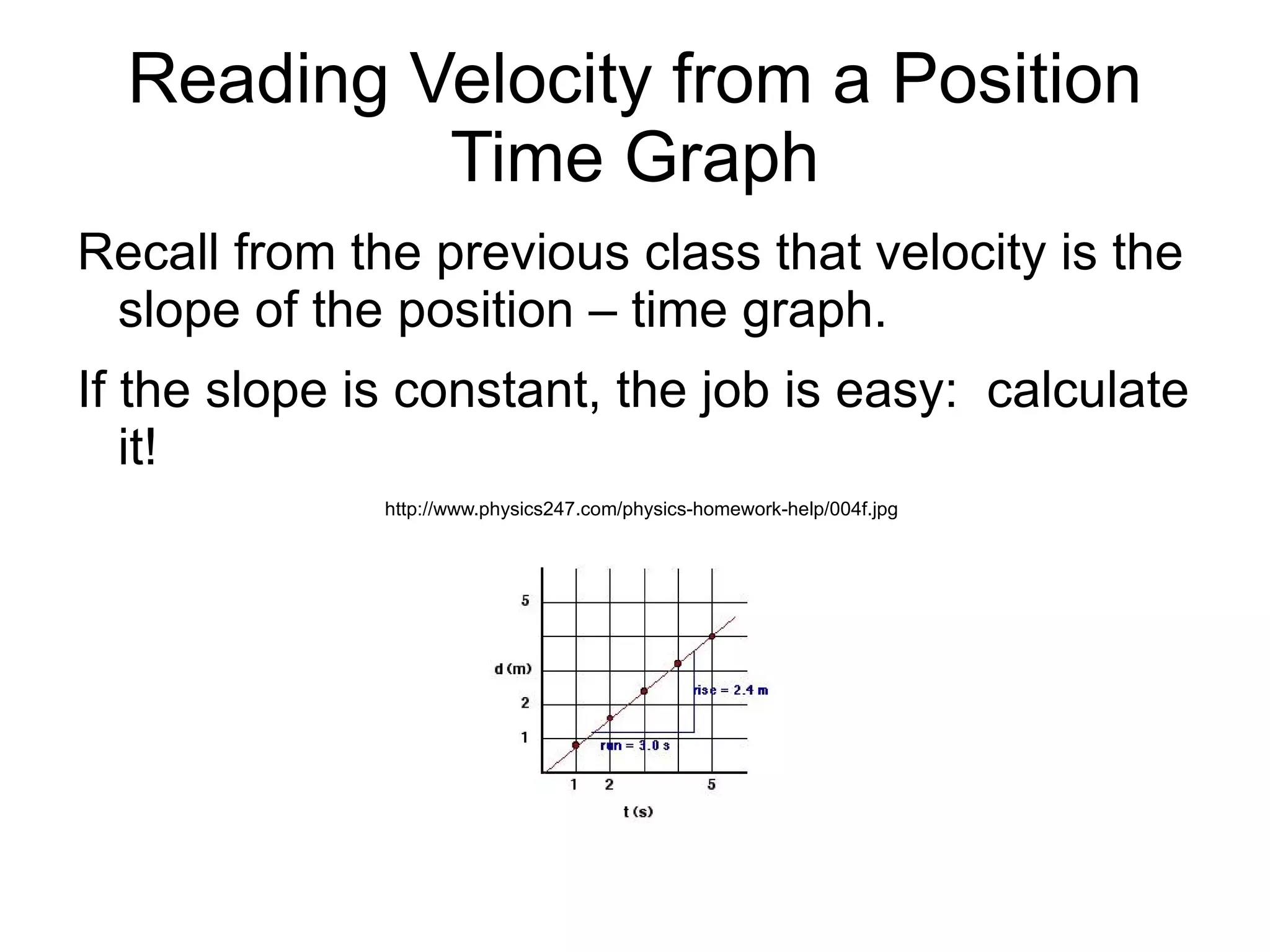
Reading Velocity from a Position Time Graph Recall from the previous class that velocity is the slope of the position – time graph.
If the slope is constant, the job is easy:  calculate it!

U2 Cn2 Graphing Position And Velocity

  • 1.
    Position vs TimeGraphs Unit 2 Lesson 2 E. Alexander Burt Potomac School
  • 2.
    Position vs TimeThe position will be on the vertical axis – that means the “y-axis” will actually be the x!!
  • 3.
    Time will beon the horizontal axis.
  • 4.
    Reading position froma graph To get the position from a graph of x vs. t: Find that point in time on the horizontal axis
  • 5.
    Find the curveand go to the vertical axis to find the position. In the graph below, for example, the object has a position of 30 m at a time of 3 seconds.
  • 6.
    Reading Velocity froma Position Time Graph Recall from the previous class that velocity is the slope of the position – time graph.
  • 7.
    If the slopeis constant, the job is easy: calculate it!
  • 8.
  • 9.
    If the slopechanges... To compute the average velocity between two positions, draw a straight line between the two points Compute the slope of that line and you're done! To compute the instantaneous velocity at a point, draw a tangent line to the graph at that point Now compute the slope of that tangent line
  • 10.
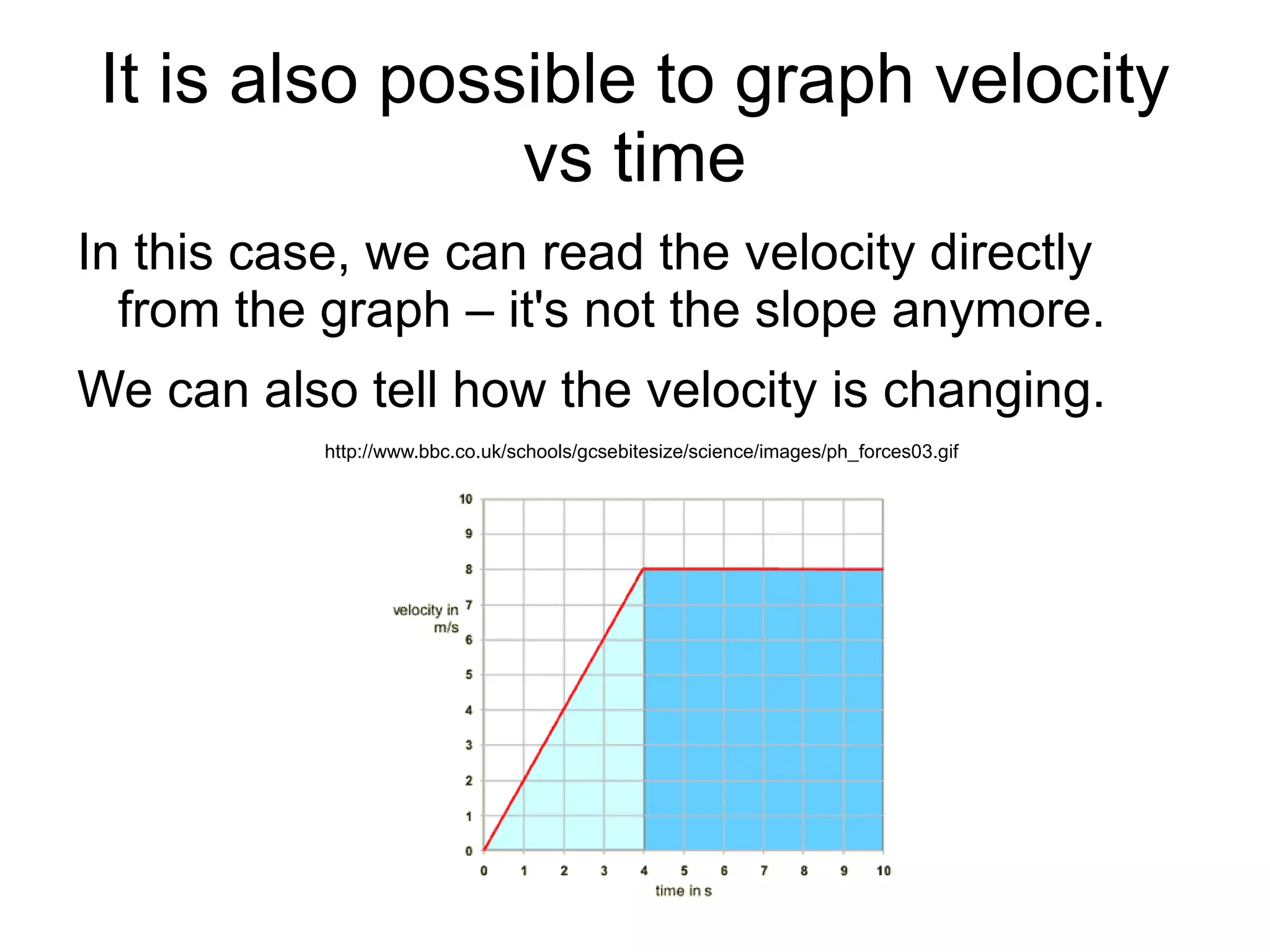
    It is alsopossible to graph velocity vs time In this case, we can read the velocity directly from the graph – it's not the slope anymore.
  • 11.
    We can alsotell how the velocity is changing.
  • 12.
  • 13.
    V vs tencore In a position time graph: steeper slope = faster
  • 14.
    In a velocitytime graph: farther from the axis = faster.
  • 15.
    In a positiontime graph: crossing the t axis means object passes the origin
  • 16.
    In a velocitytime graph, crossing the t-axis means object stops on its way from positive to negative velocity. (or vice versa)