Digging Deeper into
Different Perspective
of Community
- The varying viewpoints come as a result of the
distinct perspectives of the different academic
disciplines and sectors.
- The need to appreciate why certain things were
seen and done differently when it comes to
community interventions.
- What people say and do depends mainly on their
perceptions.
Social Science Perspective
- congregation of people unified by at
least one common characteristics.
- Generally there is a common pattern
of behavior
- Socialization – embracing of
behavior pattern of a certain community
In 1887, German sociologist, Ferdinan
Tonnies noted two types of human
association:
1. Gemeinschaft – “community” – tighter
and more cohesive entity bought about
by “unity of will”
2. Gesellschaft – “society” / “association” –
group where individuals participate as
members driven solely by self-interest.
Community-Based Perspective
(As established in the studies
reviewed by Merzel and D’Afflitti
(2003))
- Community is seen as a setting for an
intervention, target for change,
resource, and agent.
Classifications:
• As a setting for an intervention
• As a target for change
• As a resource
• As an agent
Ecological Perspective
- Community is a congregation of species that
occur together in time and space and have high
probability of interaction.
Sectoral Perspective
- Individuals with diverse characteristics and
interrelationship.
Civil Society Perspective
CLASSIFICATION OF
COMMUNITY
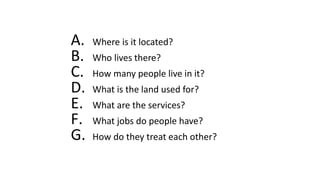
A. Where is it located?
B. Who lives there?
C. How many people live in it?
D. What is the land used for?
E. What are the services?
F. What jobs do people have?
G. How do they treat each other?
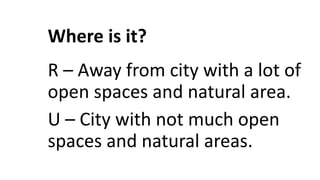
Where is it?
R – Away from city with a lot of
open spaces and natural area.
U – City with not much open
spaces and natural areas.
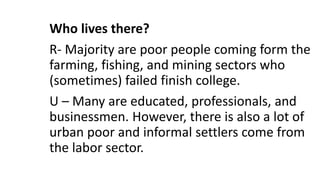
Who lives there?
R- Majority are poor people coming form the
farming, fishing, and mining sectors who
(sometimes) failed finish college.
U – Many are educated, professionals, and
businessmen. However, there is also a lot of
urban poor and informal settlers come from
the labor sector.
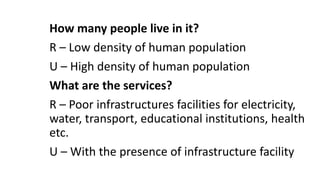
How many people live in it?
R – Low density of human population
U – High density of human population
What are the services?
R – Poor infrastructures facilities for electricity,
water, transport, educational institutions, health
etc.
U – With the presence of infrastructure facility
What is the land used for?
R – Land is for agriculture and farming
U – Land is for buildings of government,
educational institutions, corporations, business;
infrastructure
What jobs do people have?
R – Farming, fishing…
U – Information technology, professional, corporate
works, informal street.
How do people treat each other? What
is their dynamics?
R – Sense of unity and belongingness.
Less social mobility and social
differentiation
U – People are a bit of indifferent with
each other. Distrust. Night life.
Local-Global
“Think globally, act locally”
Challenge: To be cognizant of social realities
and regard local culture in the advent of
globalization.
Physical Space-Virtual Social Space
Virtual Community
Physical Space
Four types of Community
1. Geographic Community – physical boundaries
2. Community of Identity – common identifiable
characteristics
3. Community of Interest or Solidarity – incorporates
social movements
4. Intentional Community – individuals that come
voluntarily

Community Engagement.pptx

  • 2.
    Digging Deeper into DifferentPerspective of Community
  • 3.
    - The varyingviewpoints come as a result of the distinct perspectives of the different academic disciplines and sectors. - The need to appreciate why certain things were seen and done differently when it comes to community interventions. - What people say and do depends mainly on their perceptions.
  • 4.
    Social Science Perspective -congregation of people unified by at least one common characteristics. - Generally there is a common pattern of behavior - Socialization – embracing of behavior pattern of a certain community
  • 5.
    In 1887, Germansociologist, Ferdinan Tonnies noted two types of human association: 1. Gemeinschaft – “community” – tighter and more cohesive entity bought about by “unity of will” 2. Gesellschaft – “society” / “association” – group where individuals participate as members driven solely by self-interest.
  • 6.
    Community-Based Perspective (As establishedin the studies reviewed by Merzel and D’Afflitti (2003)) - Community is seen as a setting for an intervention, target for change, resource, and agent.
  • 7.
    Classifications: • As asetting for an intervention • As a target for change • As a resource • As an agent
  • 8.
    Ecological Perspective - Communityis a congregation of species that occur together in time and space and have high probability of interaction. Sectoral Perspective - Individuals with diverse characteristics and interrelationship. Civil Society Perspective
  • 9.
  • 10.
    A. Where isit located? B. Who lives there? C. How many people live in it? D. What is the land used for? E. What are the services? F. What jobs do people have? G. How do they treat each other?
  • 12.
    Where is it? R– Away from city with a lot of open spaces and natural area. U – City with not much open spaces and natural areas.
  • 13.
    Who lives there? R-Majority are poor people coming form the farming, fishing, and mining sectors who (sometimes) failed finish college. U – Many are educated, professionals, and businessmen. However, there is also a lot of urban poor and informal settlers come from the labor sector.
  • 14.
    How many peoplelive in it? R – Low density of human population U – High density of human population What are the services? R – Poor infrastructures facilities for electricity, water, transport, educational institutions, health etc. U – With the presence of infrastructure facility
  • 15.
    What is theland used for? R – Land is for agriculture and farming U – Land is for buildings of government, educational institutions, corporations, business; infrastructure What jobs do people have? R – Farming, fishing… U – Information technology, professional, corporate works, informal street.
  • 16.
    How do peopletreat each other? What is their dynamics? R – Sense of unity and belongingness. Less social mobility and social differentiation U – People are a bit of indifferent with each other. Distrust. Night life.
  • 17.
    Local-Global “Think globally, actlocally” Challenge: To be cognizant of social realities and regard local culture in the advent of globalization. Physical Space-Virtual Social Space Virtual Community Physical Space
  • 18.
    Four types ofCommunity 1. Geographic Community – physical boundaries 2. Community of Identity – common identifiable characteristics 3. Community of Interest or Solidarity – incorporates social movements 4. Intentional Community – individuals that come voluntarily