TYPHOID FEVER
KISMAT GURUNG
TYPHOID
Ancient Greek Typhos, smoke or cloud that was believed to cause
disease or madness
What is typhoid fever?
• Result of systemic infection caused by Salmonella typhi
• Clinically characterised by typical continuous fever for 3-4 weeks,
relative bradycardia with involvement of intestinal lymphoid tissues,
reticuloendothelial system and gall bladder.
• Enteric fever includes both typhoid and paratyphoid fever.
• May occur sporadically, epidemically or endemically.
• Found only in humans.
Agent
Host
EPIDEMIOLOGY
Environmental
Factors
Agent
• Salmonella typhi (family Enterobacteria)
• S. paratyphi A and B are relatively infrequent
• Gram –ve (pink)
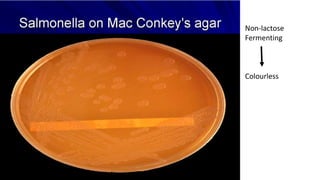
• Non-lactose fermenting
• Non-spore forming
• Facultative aerobic
• Motile due to peritricus flagella
• Bacteria grows best at 37 degree centigrate
Host
• Age: occurs at any age (5-19)
• Sex: cases M>F carriers F>M
• Immunity: Antibody may be stimulated by infection or immunisation
Reservoir
Human is only reservoir
Cases: A case is infectious as long as bacilli appears in stool or urine
Case may be missed, mild or severe.
Carriers: Temparory incubatory-excrete bacilli for 6-8 weeks
Chronic->1 year, organisms persist in gallbladder, biliary tract
Environment
• Typhoid fever is regarded as index of general sanitation in any Country.
• Incidence increases in July-September
• Outside the human body bacilli are found in;
• water : found for upto 2-7 days but do not multiply.
• Soil irrigated with savage : up to 35 to 70 days.
• Ice and icream: bacilli can survive up to a month.
• Food-multiply and survive for sometime.
• milk- grows rapidly without altering its taste.
• Pollution of drinking water supplies
• Open defecation and urination area
• Low personal hygiene
• Health ignorance
Pathogenesis
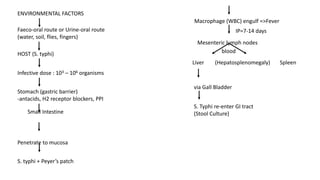
Infective dose : 103 – 106 organisms
Faeco-oral route or Urine-oral route
(water, soil, flies, fingers)
ENVIRONMENTAL FACTORS
HOST (S. typhi)
Stomach (gastric barrier)
-antacids, H2 receptor blockers, PPI
S. typhi + Peyer’s patch
Small Intestine
Penetrate to mucosa
IP=7-14 days
Macrophage (WBC) engulf =>Fever
blood
Liver (Hepatosplenomegaly) Spleen
S. Typhi re-enter GI tract
(Stool Culture)
via Gall Bladder
Mesenteric lymph nodes
C/F & COMPLICATIONS (HISTORY &
EXAMINATION
• 1st week : The disease classically present with stepladder pattern of rise in
temperature( 40°c -41°c ) over 4-5 days accompanied by headache, vague
abdominal pain and constipation or pea soup Diarrhoea. Malaise, cough,
sore throat.
• 2nd week : (7 to 10th day) mild hepatosplenomegaly occur in majority of the
patient. Relative bradycardia and rose spot might be seen.
• 3rd week : the patient will appear in typhoid state which is a state of
prolonged apathy, delirium, toxaemia, disorientation and or coma.
Diarrhoea will then became apparent. If left untreated by this time there is
a high risk (5-10%) of intestinal haemorrhage and perforation
• Rare Complications: Hepatitis ,Pneumonia, Thrombophlebitis, Myocarditis,
Cholecystitis, Nephritis, Osteomyelitis, psychosis, 2-5% people may become
Gall-bladder carrier
INVESTIGATIONS
BASU
Blood Culture
(1st week)
Agglutination
(2nd week)
Stool Culture
(3rd week)
Urine Culture
(4th week)
Blood Cultures
• Bacteraemia occurs early in the disease
• Blood cultures are positive in
1st week 90%
2nd week 75%
3rd week 60%
4th week and later 25%
Non-lactose
Fermenting
Colourless
Agglutination
• Somatic (O) antigen: contain long polysaccharides (LPS) comprises of
heat stable polysaccharide commonly.
• Flagellar (H) antigen are strongly immunogenic and induces antibody
formation rapidly.
• WIDAL TEST O>1 in 160 H>1 in 320, false positive in other infectious
causes.
• Typhidot: IgM IgG detects in one hour (sensitivity>95%, specificity
75%)
D/D
• Paratyphoid fever-similar to typhoid fever but usually less severe.
• Paraenteric fever-a typhoid like fever but not caused by Salmonella.
• Gastroenteritis-mild case of typhoid fever may be mistaken for
gastroenteritis
• Tuberculosis
• Brucellosis
• Infective endocarditis
• Acute diarrhoea
• Viral hepatitis
• Malaria
MANAGEMENT
1. Cases and carriers management
2. Control of sanitation
3. Immunisation
Management of Cases
• Fluoroquinolone
Tab CIPROFLOXACIN/OFLOXACIN 15mg/kg P/O X 5-7 days
• 3rd generation cephalosporin
Tab CEFEXIME 20mg/kg P/O x 7-14 days
Inj. CEFTRIAXONE 100mg/kg IV X 10-14 days
• Macrolides
Tab. AZITHROMYCIN 8-10mg/kg P/O OD X 7 days
PLUS
Adequate hydration, Antipyretics, Appropriate Nutrition
Management of Carriers
• Identification by cultures and serological examination.
• Treatment by intensive course of ampicillin/amoxicillin with
probenecid for 6 weeks.
• Surgery like cholecystectomy if needed.
• Kept under surveillance.
• Health education.
Control of Sanitation
• Protection and purification of drinking water supplies.
• Improvement of basic sanitation.
• Promotion of food hygiene.
Immunisation
Vaccination recommended to:
1. Those live in endemic area
2. Household contacts
3. Group at risk like school children and hospital staff etc.
4. Those attending melas and yatras
Types of vaccines(3)
1. Injectable typhoid vaccine (Vi polysaccharide)
2. Live oral vaccine (TYPHORAL)
3. TAB vaccine
Injectable typhim – Vi Vaccine
• This single dose injectable typhoid vaccine, from the bacterial
capsule of S. typhi stain of Ty21a.
• This vaccine is recommended for use in children over 2 years of age.
• Sub-cutaneous or intramusculat injection.
• Efficacy: 64-72%
Typhoral Vaccine
• This is a live attenuated bacterial vaccine manufactured from the
Ty21a stain of S. typhi.
• Efficacy: 50-80%
• Not recommended for use in children younger than 6 years of age.
• Course: 1 capsule P/O on 1st day, 3rd day and 5th day, taken an hour
before food with a glass of water or milk.
• Immunity starts 2-3 weeks after administration and lasts for 3 years
• A booster dose after 3 years.
Thank You
Have a good day.

Typhoid fever (Paediatrics)

  • 1.
  • 2.
    TYPHOID Ancient Greek Typhos,smoke or cloud that was believed to cause disease or madness
  • 3.
    What is typhoidfever? • Result of systemic infection caused by Salmonella typhi • Clinically characterised by typical continuous fever for 3-4 weeks, relative bradycardia with involvement of intestinal lymphoid tissues, reticuloendothelial system and gall bladder. • Enteric fever includes both typhoid and paratyphoid fever. • May occur sporadically, epidemically or endemically. • Found only in humans.
  • 5.
  • 6.
    Agent • Salmonella typhi(family Enterobacteria) • S. paratyphi A and B are relatively infrequent • Gram –ve (pink) • Non-lactose fermenting • Non-spore forming • Facultative aerobic • Motile due to peritricus flagella • Bacteria grows best at 37 degree centigrate
  • 7.
    Host • Age: occursat any age (5-19) • Sex: cases M>F carriers F>M • Immunity: Antibody may be stimulated by infection or immunisation Reservoir Human is only reservoir Cases: A case is infectious as long as bacilli appears in stool or urine Case may be missed, mild or severe. Carriers: Temparory incubatory-excrete bacilli for 6-8 weeks Chronic->1 year, organisms persist in gallbladder, biliary tract
  • 8.
    Environment • Typhoid feveris regarded as index of general sanitation in any Country. • Incidence increases in July-September • Outside the human body bacilli are found in; • water : found for upto 2-7 days but do not multiply. • Soil irrigated with savage : up to 35 to 70 days. • Ice and icream: bacilli can survive up to a month. • Food-multiply and survive for sometime. • milk- grows rapidly without altering its taste. • Pollution of drinking water supplies • Open defecation and urination area • Low personal hygiene • Health ignorance
  • 9.
  • 10.
    Infective dose :103 – 106 organisms Faeco-oral route or Urine-oral route (water, soil, flies, fingers) ENVIRONMENTAL FACTORS HOST (S. typhi) Stomach (gastric barrier) -antacids, H2 receptor blockers, PPI S. typhi + Peyer’s patch Small Intestine Penetrate to mucosa IP=7-14 days Macrophage (WBC) engulf =>Fever blood Liver (Hepatosplenomegaly) Spleen S. Typhi re-enter GI tract (Stool Culture) via Gall Bladder Mesenteric lymph nodes
  • 11.
    C/F & COMPLICATIONS(HISTORY & EXAMINATION • 1st week : The disease classically present with stepladder pattern of rise in temperature( 40°c -41°c ) over 4-5 days accompanied by headache, vague abdominal pain and constipation or pea soup Diarrhoea. Malaise, cough, sore throat. • 2nd week : (7 to 10th day) mild hepatosplenomegaly occur in majority of the patient. Relative bradycardia and rose spot might be seen. • 3rd week : the patient will appear in typhoid state which is a state of prolonged apathy, delirium, toxaemia, disorientation and or coma. Diarrhoea will then became apparent. If left untreated by this time there is a high risk (5-10%) of intestinal haemorrhage and perforation • Rare Complications: Hepatitis ,Pneumonia, Thrombophlebitis, Myocarditis, Cholecystitis, Nephritis, Osteomyelitis, psychosis, 2-5% people may become Gall-bladder carrier
  • 12.
    INVESTIGATIONS BASU Blood Culture (1st week) Agglutination (2ndweek) Stool Culture (3rd week) Urine Culture (4th week)
  • 13.
    Blood Cultures • Bacteraemiaoccurs early in the disease • Blood cultures are positive in 1st week 90% 2nd week 75% 3rd week 60% 4th week and later 25%
  • 14.
  • 16.
    Agglutination • Somatic (O)antigen: contain long polysaccharides (LPS) comprises of heat stable polysaccharide commonly. • Flagellar (H) antigen are strongly immunogenic and induces antibody formation rapidly. • WIDAL TEST O>1 in 160 H>1 in 320, false positive in other infectious causes. • Typhidot: IgM IgG detects in one hour (sensitivity>95%, specificity 75%)
  • 17.
    D/D • Paratyphoid fever-similarto typhoid fever but usually less severe. • Paraenteric fever-a typhoid like fever but not caused by Salmonella. • Gastroenteritis-mild case of typhoid fever may be mistaken for gastroenteritis • Tuberculosis • Brucellosis • Infective endocarditis • Acute diarrhoea • Viral hepatitis • Malaria
  • 18.
    MANAGEMENT 1. Cases andcarriers management 2. Control of sanitation 3. Immunisation
  • 19.
    Management of Cases •Fluoroquinolone Tab CIPROFLOXACIN/OFLOXACIN 15mg/kg P/O X 5-7 days • 3rd generation cephalosporin Tab CEFEXIME 20mg/kg P/O x 7-14 days Inj. CEFTRIAXONE 100mg/kg IV X 10-14 days • Macrolides Tab. AZITHROMYCIN 8-10mg/kg P/O OD X 7 days PLUS Adequate hydration, Antipyretics, Appropriate Nutrition
  • 20.
    Management of Carriers •Identification by cultures and serological examination. • Treatment by intensive course of ampicillin/amoxicillin with probenecid for 6 weeks. • Surgery like cholecystectomy if needed. • Kept under surveillance. • Health education.
  • 21.
    Control of Sanitation •Protection and purification of drinking water supplies. • Improvement of basic sanitation. • Promotion of food hygiene.
  • 22.
    Immunisation Vaccination recommended to: 1.Those live in endemic area 2. Household contacts 3. Group at risk like school children and hospital staff etc. 4. Those attending melas and yatras Types of vaccines(3) 1. Injectable typhoid vaccine (Vi polysaccharide) 2. Live oral vaccine (TYPHORAL) 3. TAB vaccine
  • 23.
    Injectable typhim –Vi Vaccine • This single dose injectable typhoid vaccine, from the bacterial capsule of S. typhi stain of Ty21a. • This vaccine is recommended for use in children over 2 years of age. • Sub-cutaneous or intramusculat injection. • Efficacy: 64-72%
  • 24.
    Typhoral Vaccine • Thisis a live attenuated bacterial vaccine manufactured from the Ty21a stain of S. typhi. • Efficacy: 50-80% • Not recommended for use in children younger than 6 years of age. • Course: 1 capsule P/O on 1st day, 3rd day and 5th day, taken an hour before food with a glass of water or milk. • Immunity starts 2-3 weeks after administration and lasts for 3 years • A booster dose after 3 years.
  • 25.