Types of Verbs
A verb is a word that shows action or links a subject to
another word in a sentence.
Types of Verbs
• There are three types of verbs
• Action
• Linking
• Helping
Action Verbs
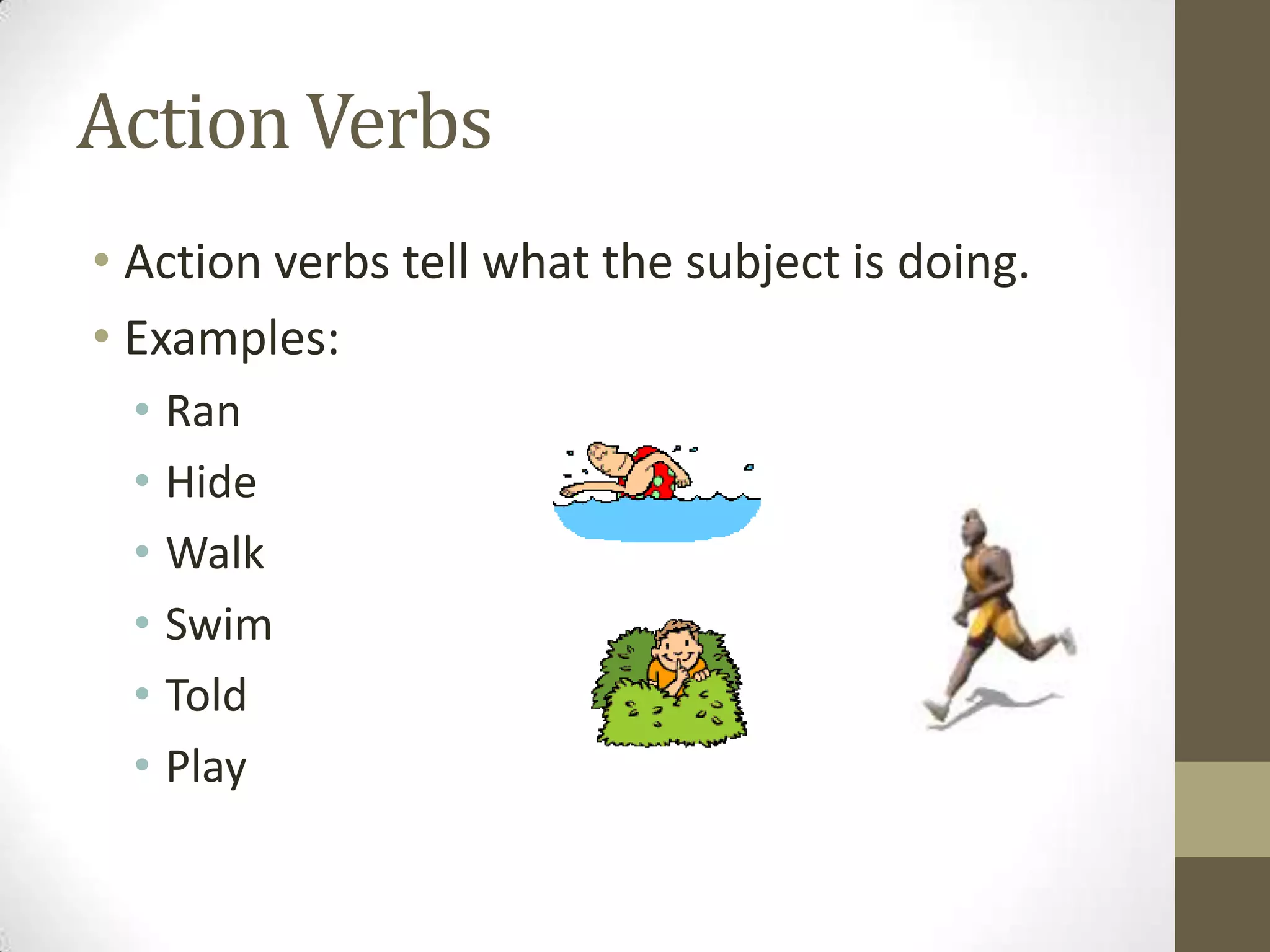
• Action verbs tell what the subject is doing.
• Examples:
• Ran
• Hide
• Walk
• Swim
• Told
• Play
Linking Verbs
• Linking verbs connect or link a subject to a
noun or an adjective in the predicate.
• Common Linking verbs:
• Is
• Were
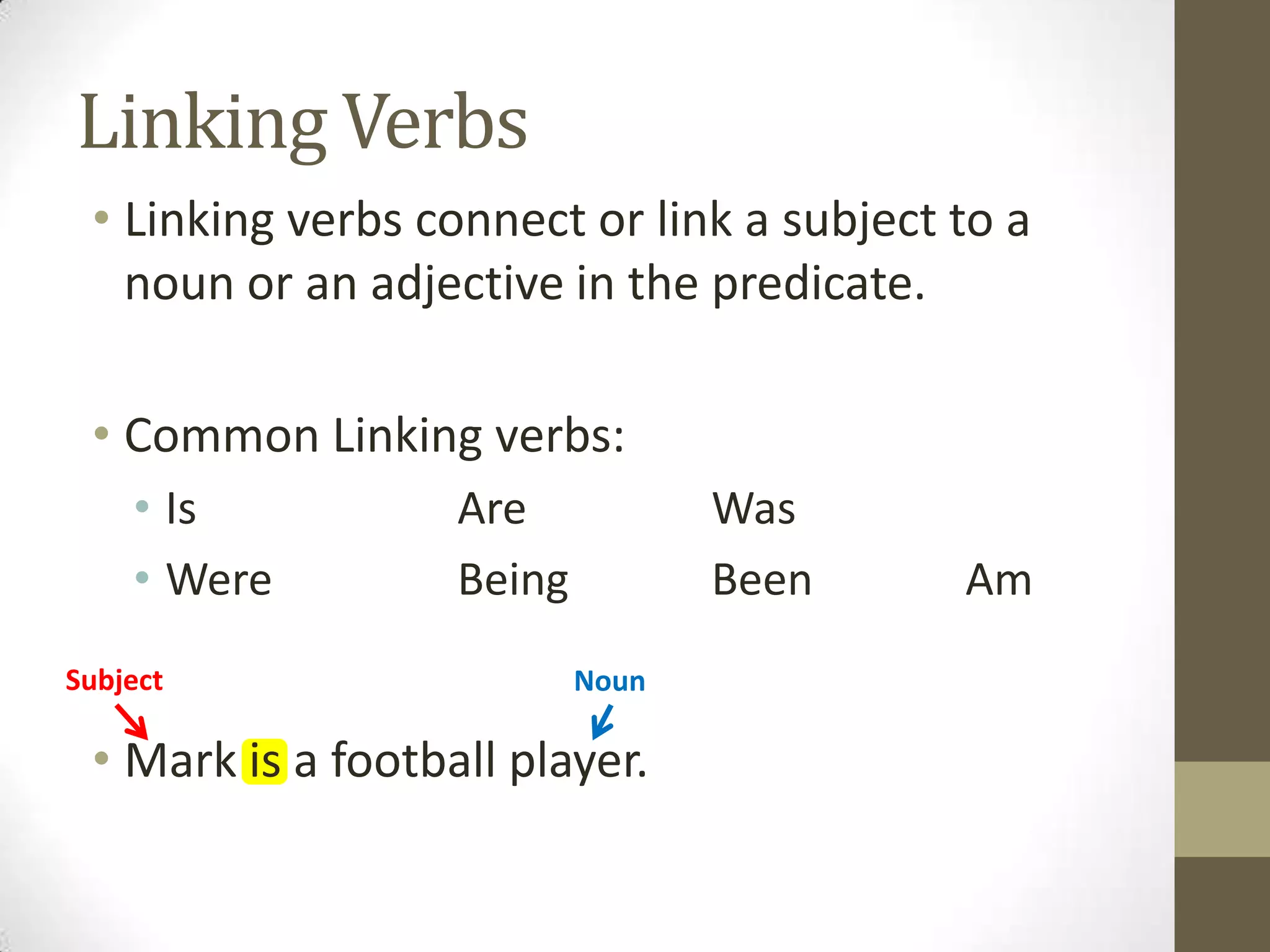
Subject

Are
Being

Was
Been
Noun

• Mark is a football player.

Am
Linking Verbs
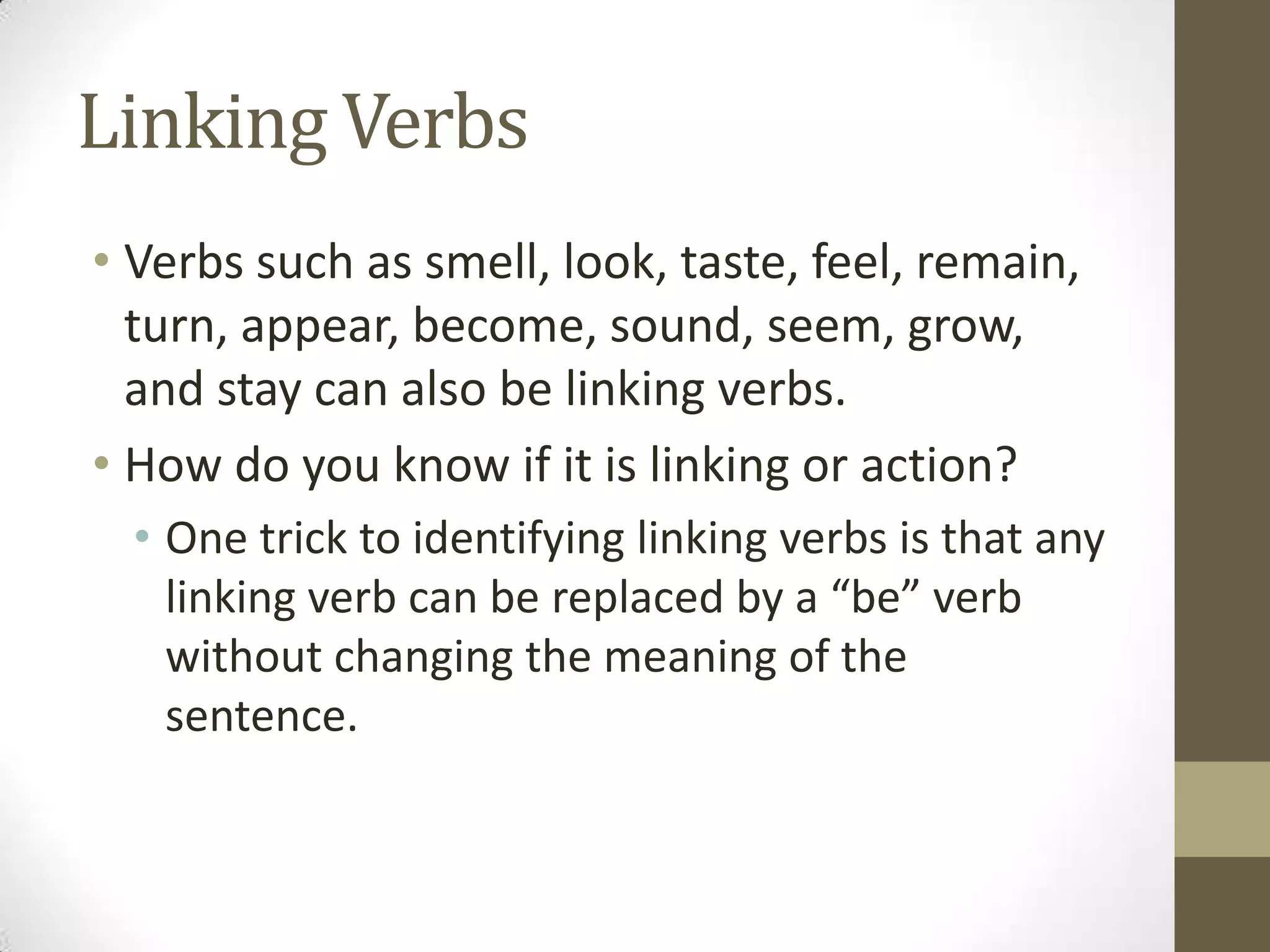
• Verbs such as smell, look, taste, feel, remain,
turn, appear, become, sound, seem, grow,
and stay can also be linking verbs.
• How do you know if it is linking or action?
• One trick to identifying linking verbs is that any
linking verb can be replaced by a “be” verb
without changing the meaning of the
sentence.
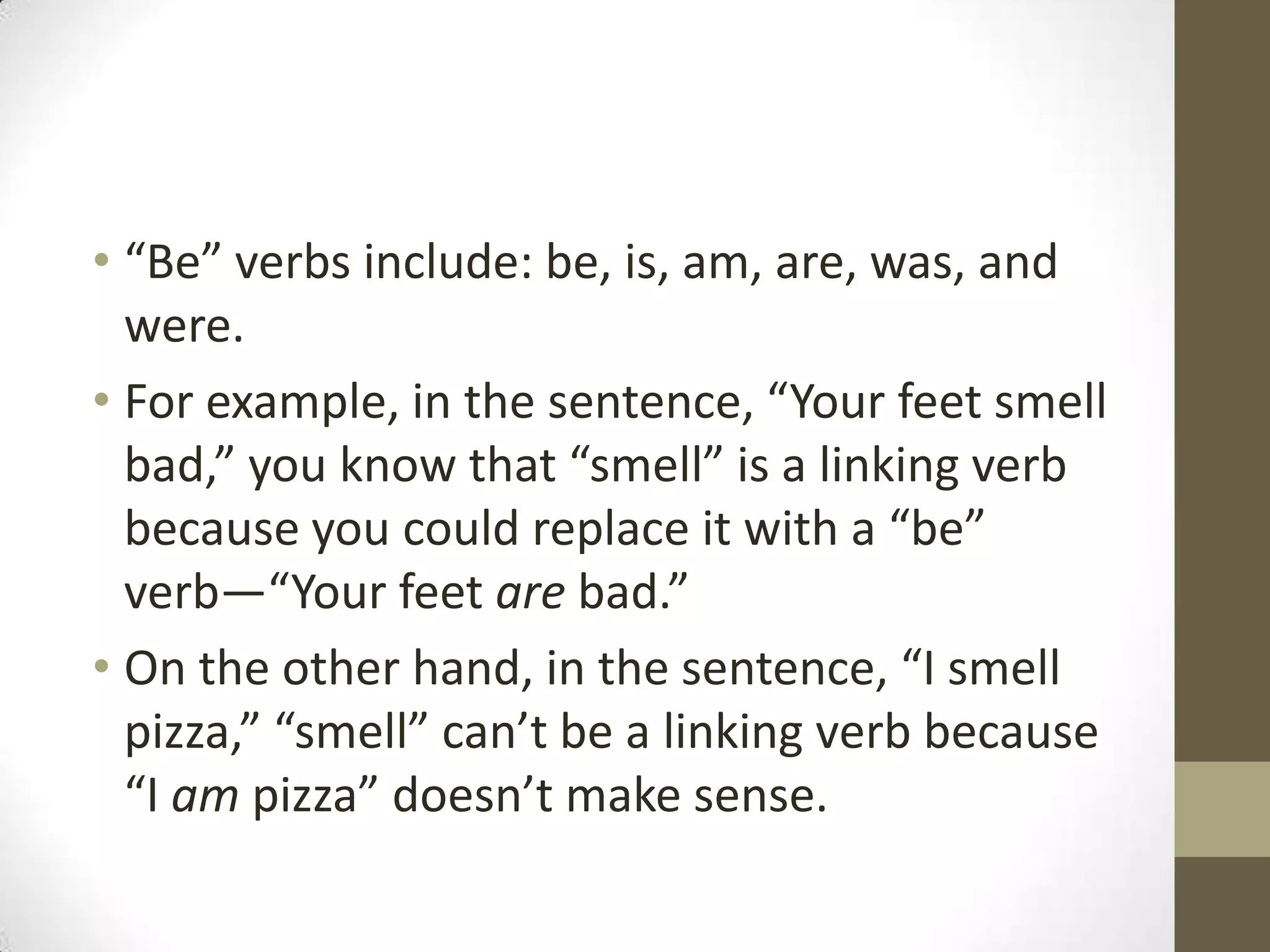
• “Be” verbs include: be, is, am, are, was, and
were.
• For example, in the sentence, “Your feet smell
bad,” you know that “smell” is a linking verb
because you could replace it with a “be”
verb—“Your feet are bad.”
• On the other hand, in the sentence, “I smell
pizza,” “smell” can’t be a linking verb because
“I am pizza” doesn’t make sense.
Helping Verbs
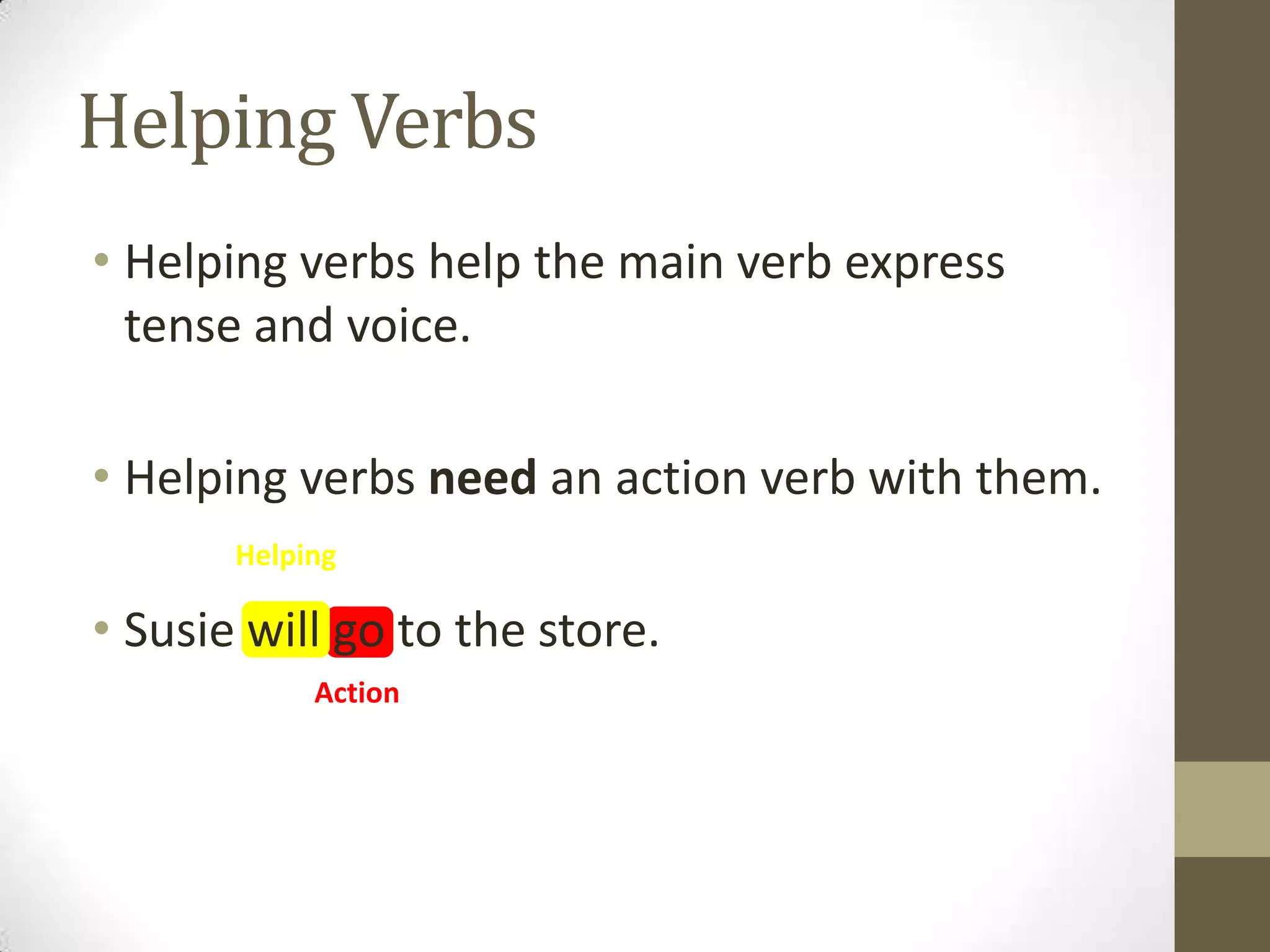
• Helping verbs help the main verb express
tense and voice.
• Helping verbs need an action verb with them.
Helping

• Susie will go to the store.
Action
Helping Verbs
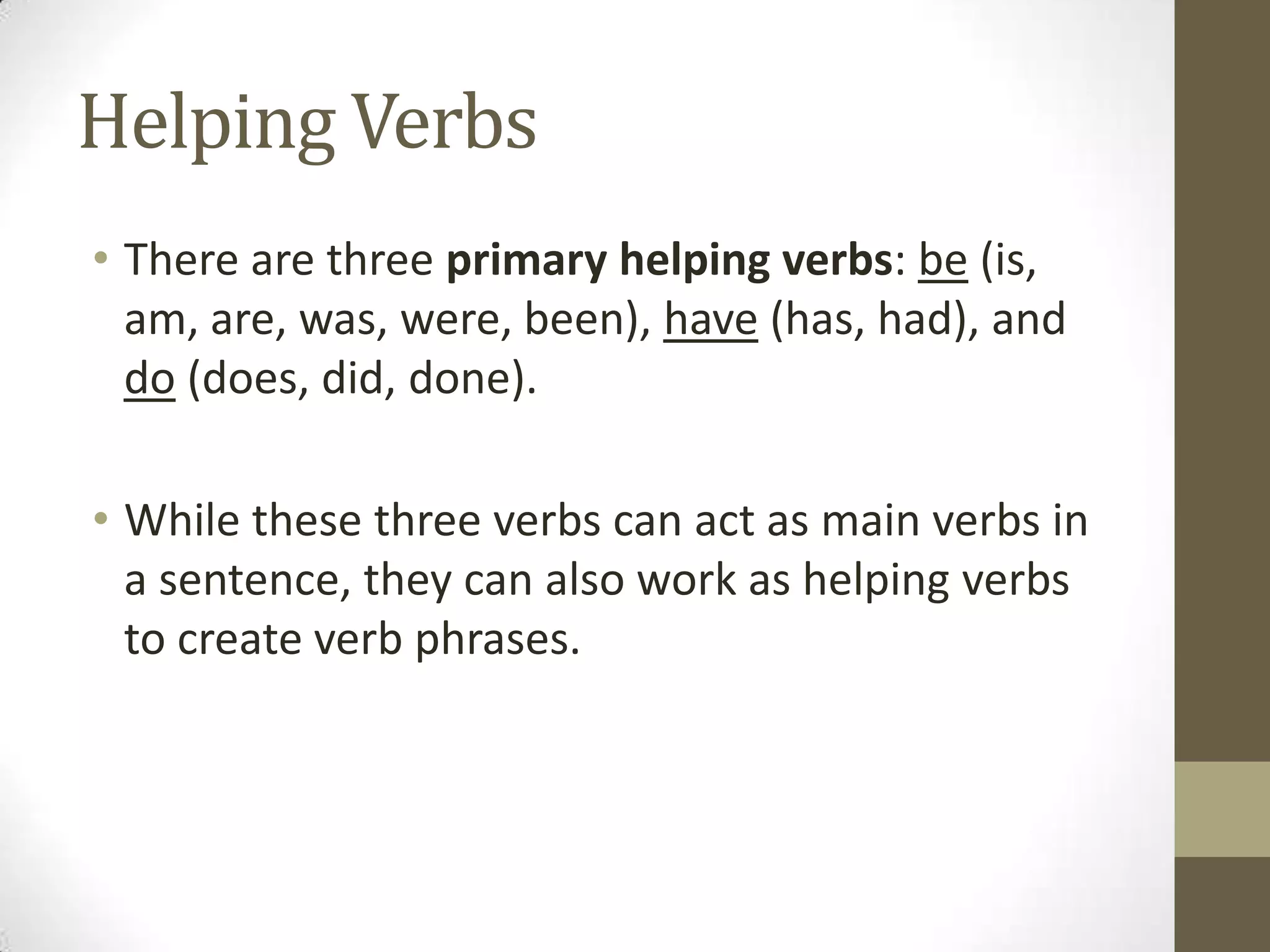
• There are three primary helping verbs: be (is,
am, are, was, were, been), have (has, had), and
do (does, did, done).
• While these three verbs can act as main verbs in
a sentence, they can also work as helping verbs
to create verb phrases.
Helping Verbs
• The other type of helping verbs are called modal
helping verbs.
• We use them to modify or specify the meaning or
attitude of the main verb in some way.
• These are the modal verbs:
• Can, Could, Might, Will, Would, Shall, Should, Must,
Ought to

• Examples:
• You should read this book. The book might change your
life.
• They must have been watching the movie without you.
Types of Verbs

Types of Verbs

  • 1.
    Types of Verbs Averb is a word that shows action or links a subject to another word in a sentence.
  • 2.
    Types of Verbs •There are three types of verbs • Action • Linking • Helping
  • 3.
    Action Verbs • Actionverbs tell what the subject is doing. • Examples: • Ran • Hide • Walk • Swim • Told • Play
  • 4.
    Linking Verbs • Linkingverbs connect or link a subject to a noun or an adjective in the predicate. • Common Linking verbs: • Is • Were Subject Are Being Was Been Noun • Mark is a football player. Am
  • 5.
    Linking Verbs • Verbssuch as smell, look, taste, feel, remain, turn, appear, become, sound, seem, grow, and stay can also be linking verbs. • How do you know if it is linking or action? • One trick to identifying linking verbs is that any linking verb can be replaced by a “be” verb without changing the meaning of the sentence.
  • 6.
    • “Be” verbsinclude: be, is, am, are, was, and were. • For example, in the sentence, “Your feet smell bad,” you know that “smell” is a linking verb because you could replace it with a “be” verb—“Your feet are bad.” • On the other hand, in the sentence, “I smell pizza,” “smell” can’t be a linking verb because “I am pizza” doesn’t make sense.
  • 7.
    Helping Verbs • Helpingverbs help the main verb express tense and voice. • Helping verbs need an action verb with them. Helping • Susie will go to the store. Action
  • 8.
    Helping Verbs • Thereare three primary helping verbs: be (is, am, are, was, were, been), have (has, had), and do (does, did, done). • While these three verbs can act as main verbs in a sentence, they can also work as helping verbs to create verb phrases.
  • 9.
    Helping Verbs • Theother type of helping verbs are called modal helping verbs. • We use them to modify or specify the meaning or attitude of the main verb in some way. • These are the modal verbs: • Can, Could, Might, Will, Would, Shall, Should, Must, Ought to • Examples: • You should read this book. The book might change your life. • They must have been watching the movie without you.