Syllabication Rules
1. Every syllable has
one vowel sound.
2. The number of vowel
sounds in a word equals the
number
home=1
sub* ject=2
pub* lish* ing =3
3 A one syllable word is
never divided.
stop
feet
bell
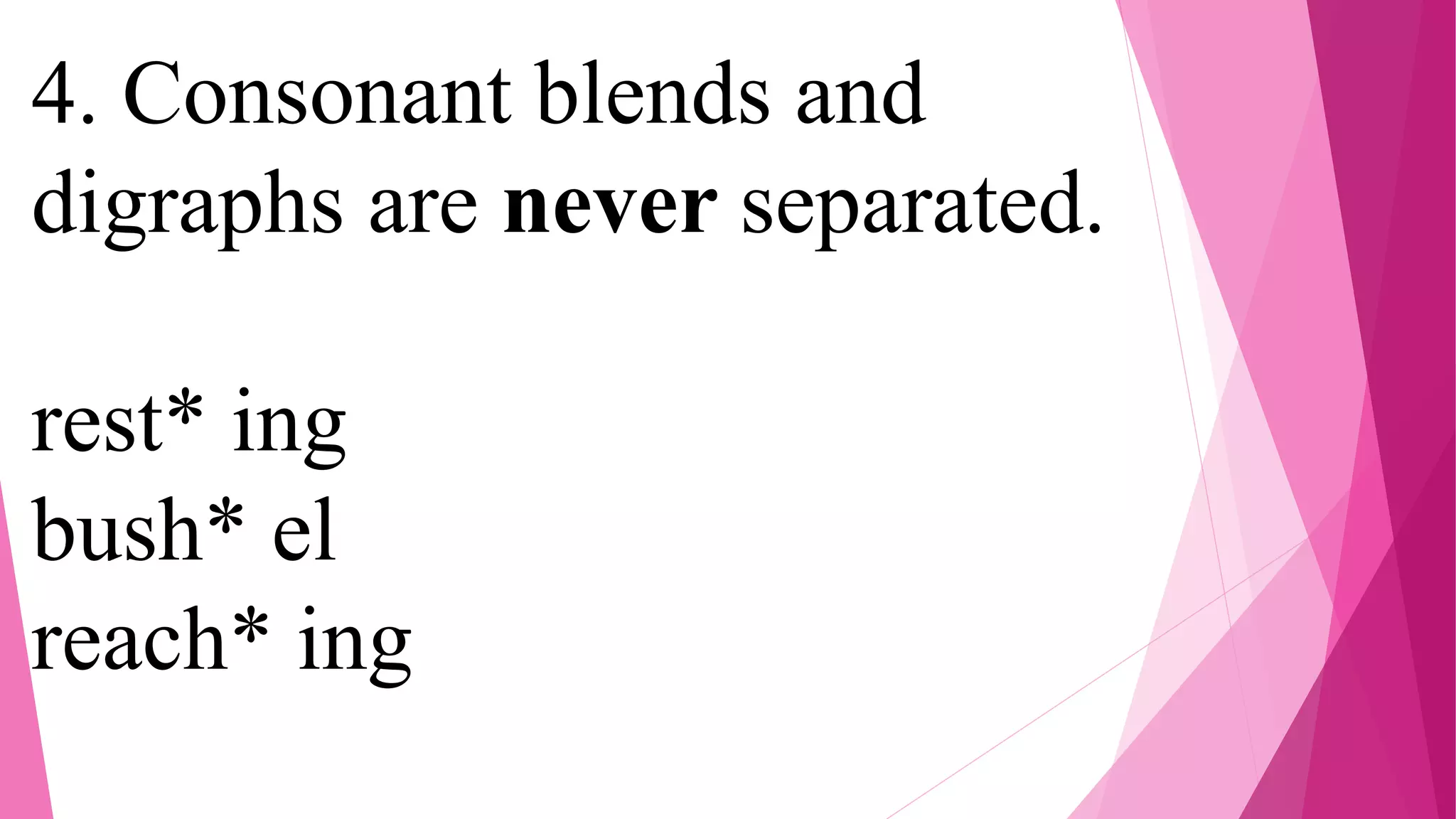
4. Consonant blends and
digraphs are never separated.
rest* ing
bush* el
reach* ing
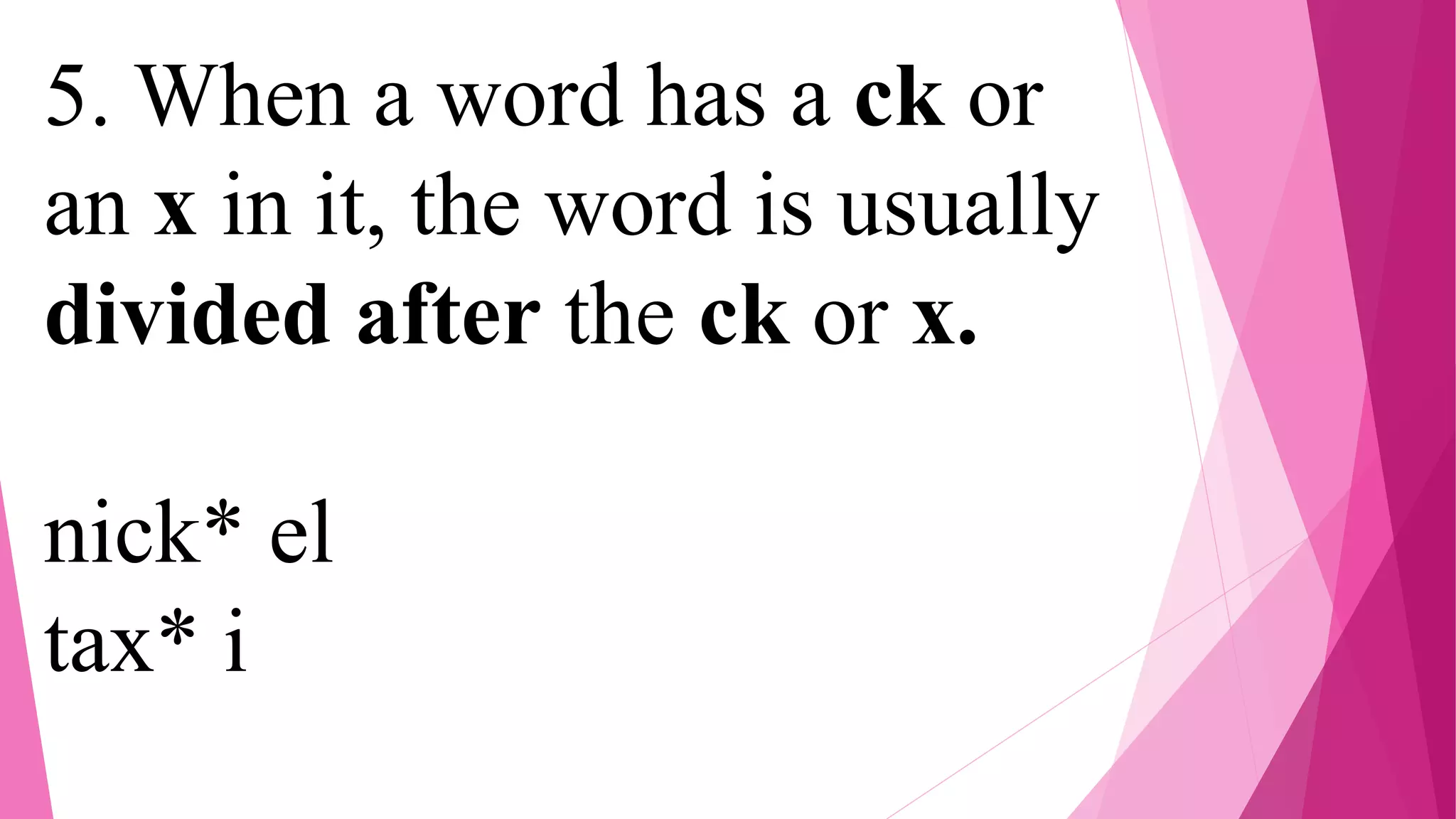
5. When a word has a ck or
an x in it, the word is usually
divided after the ck or x.
nick* el
tax* i
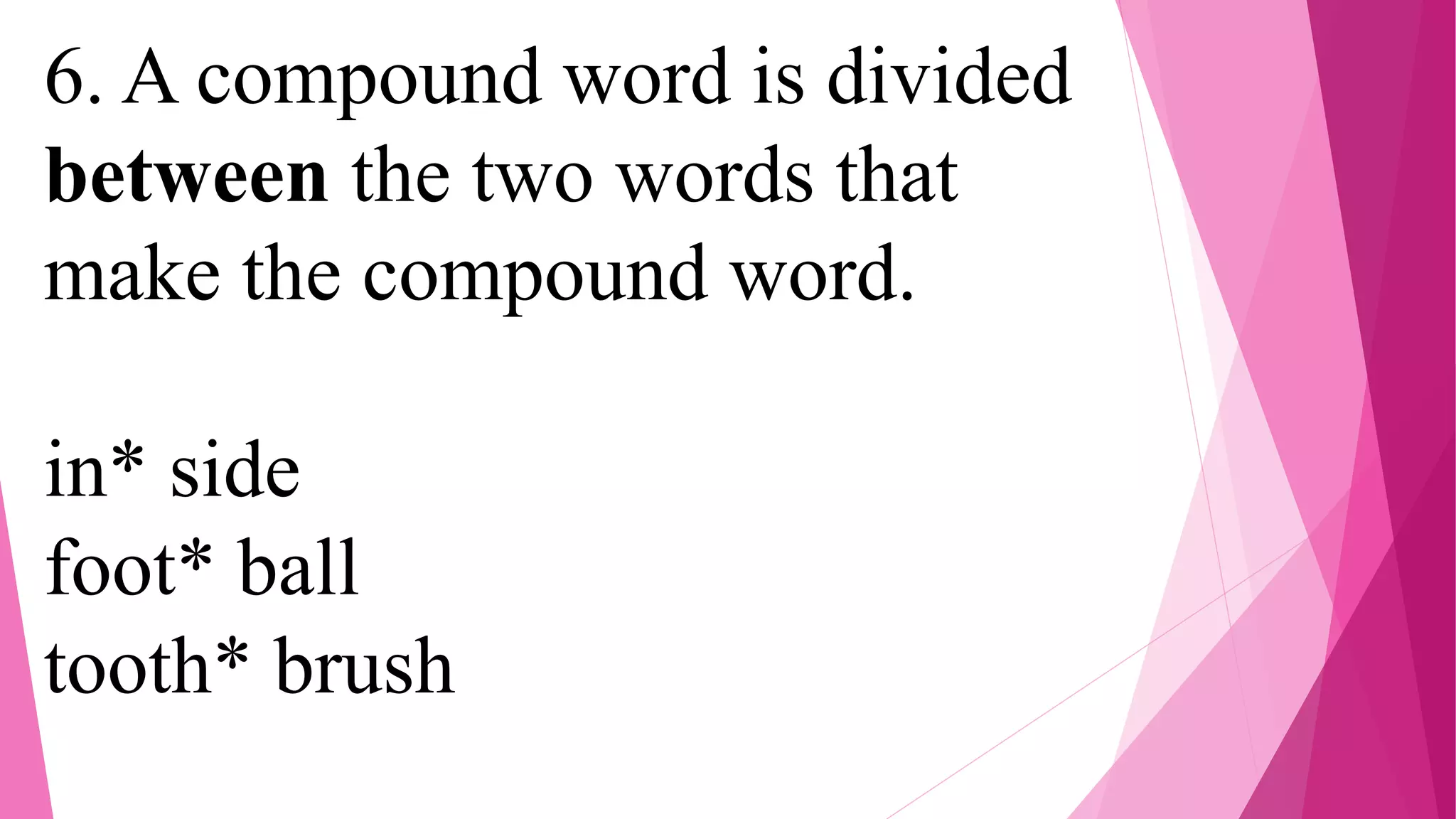
6. A compound word is divided
between the two words that
make the compound word.
in* side
foot* ball
tooth* brush
7. When two or more consonants
come between two vowels in a
word, it is usually divided between
the first two consonants.
sis* ter
but* ter
hun* gry
8 When a single consonant comes
between two vowels in a word,
it is usually divided after the
consonant if the vowel is short.
lev* er
cab* in
hab* it
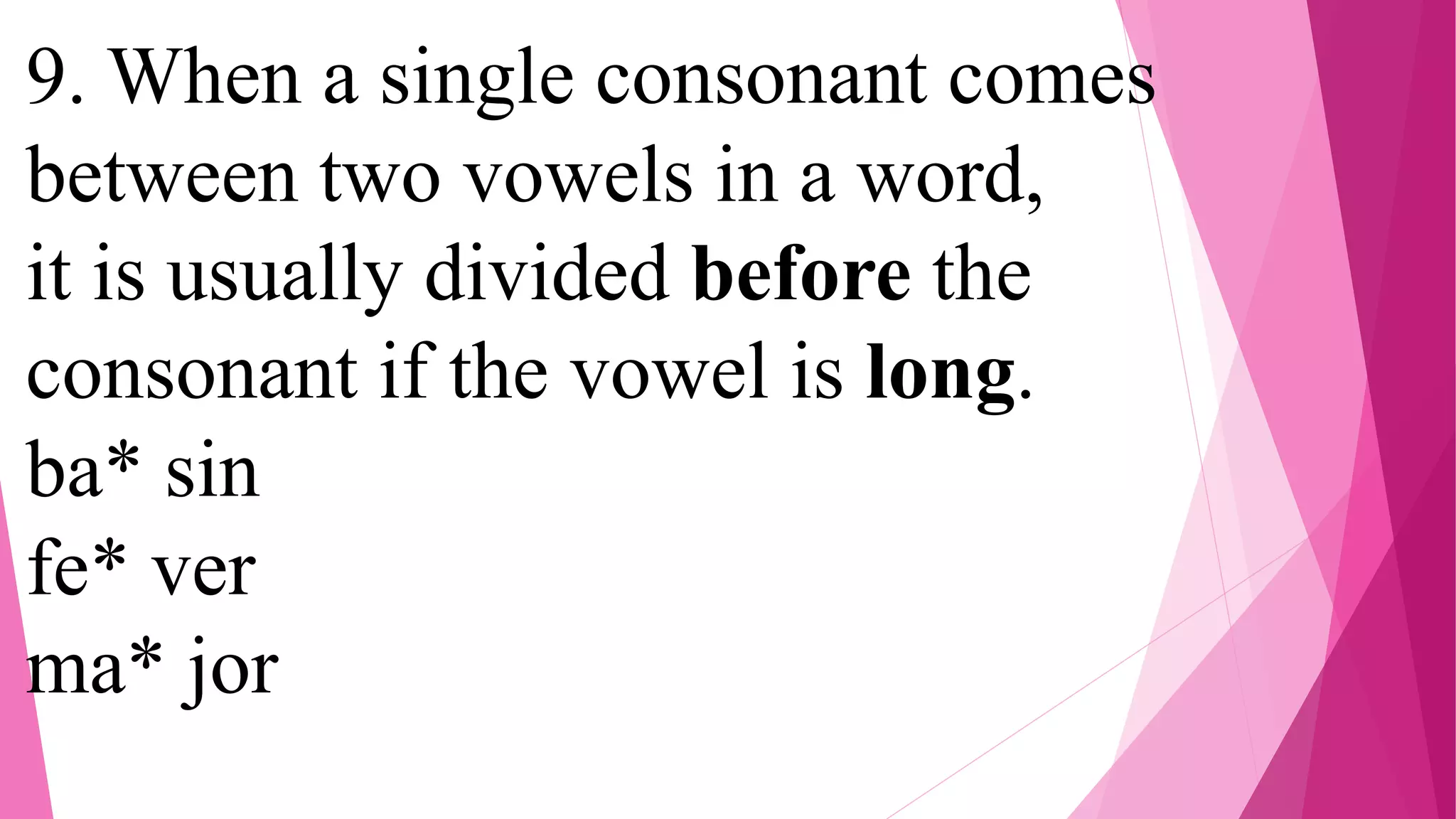
9. When a single consonant comes
between two vowels in a word,
it is usually divided before the
consonant if the vowel is long.
ba* sin
fe* ver
ma* jor
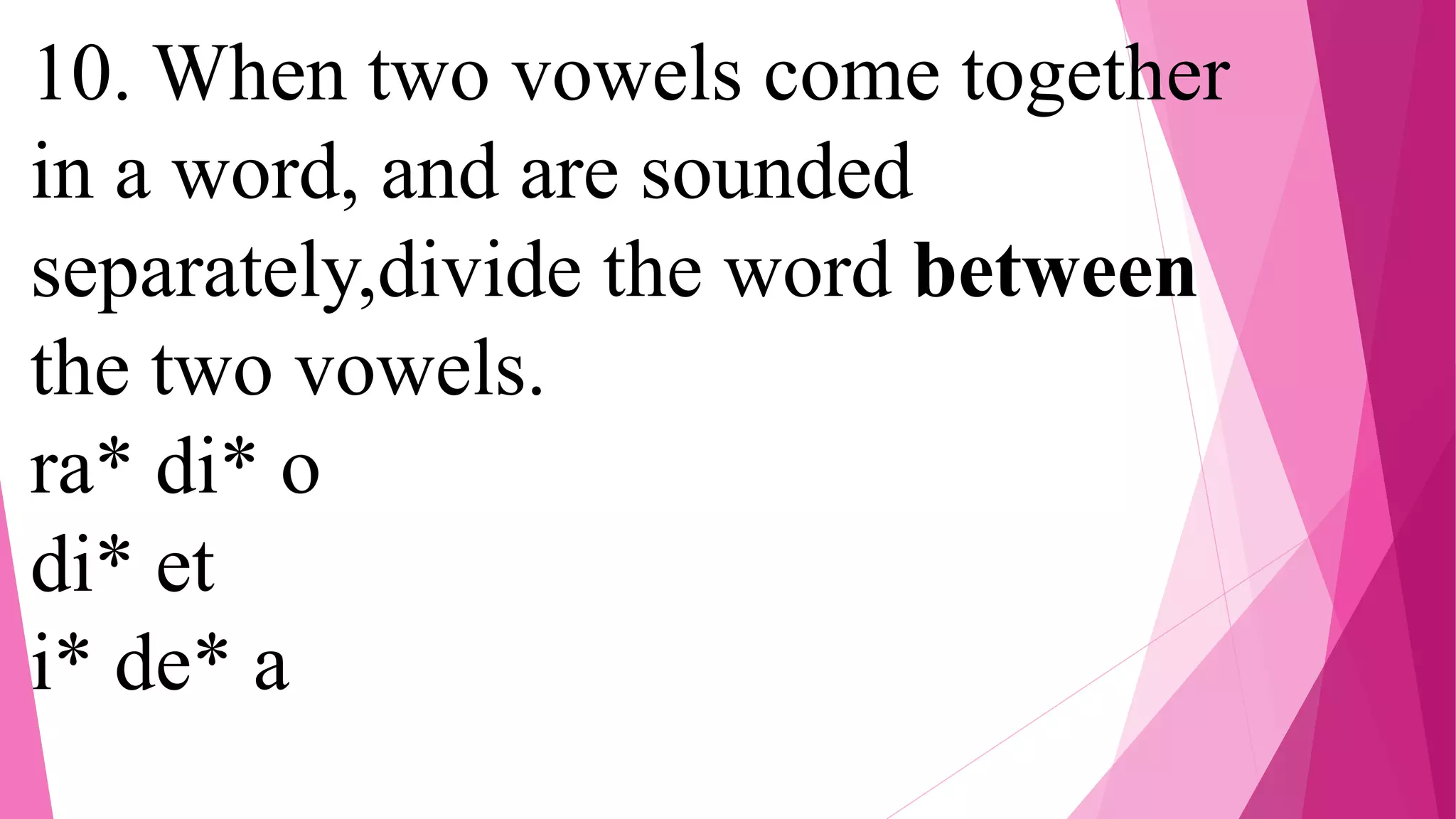
10. When two vowels come together
in a word, and are sounded
separately,divide the word between
the two vowels.
ra* di* o
di* et
i* de* a
11. When a vowel is sounded alone in
a word, it forms a syllable
itself.
grad* u* ate
a* pron
u* nit
12. A word that has a prefix is divided
between the root word and the prefix.
dis* count
mis* fit
un* tie
13. When be, de, ex and re are at
the beginning of a word, they
make a syllable of their own.
be* came
de* fend
ex* hale
re* main
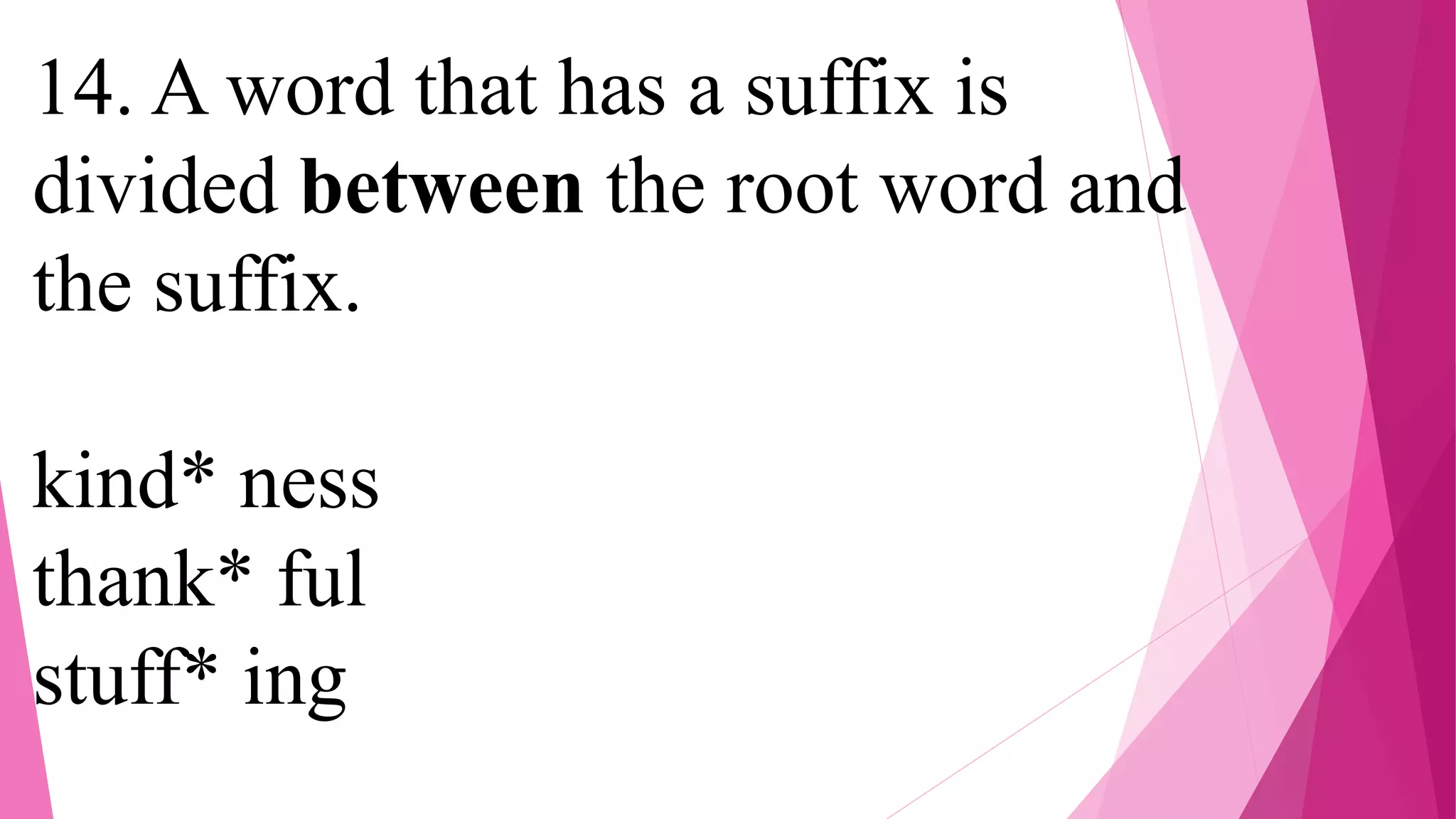
14. A word that has a suffix is
divided between the root word and
the suffix.
kind* ness
thank* ful
stuff* ing
15. When a word ends in le,
preceeded by a consonant, the
word is divided before that
consonant.
pur* ple
fum* ble
mid* dle
16. When -ed comes at the end of a
word, it forms a syllable
only when preceeded by d or t.
start* ed
fund* ed
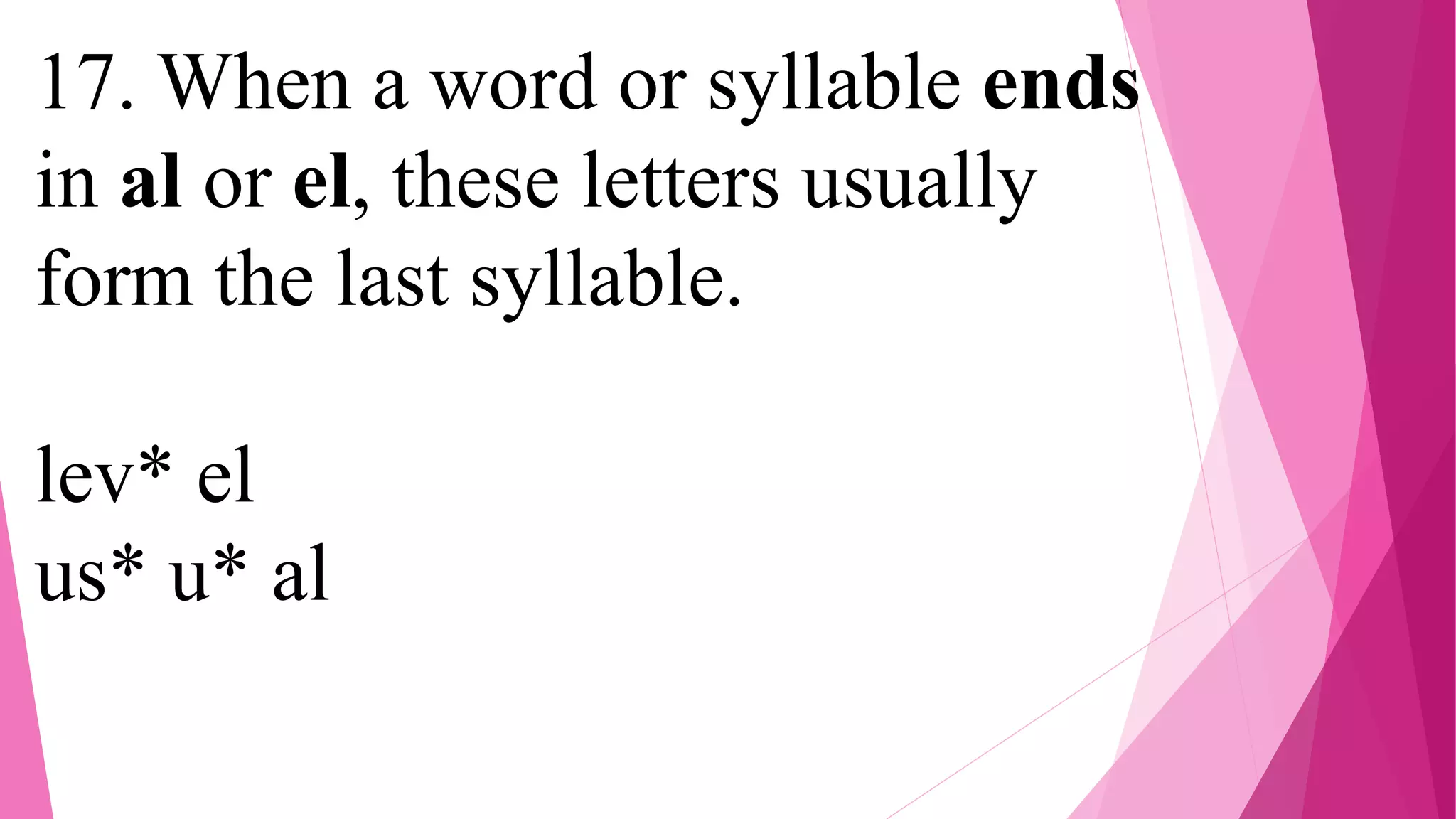
17. When a word or syllable ends
in al or el, these letters usually
form the last syllable.
lev* el
us* u* al
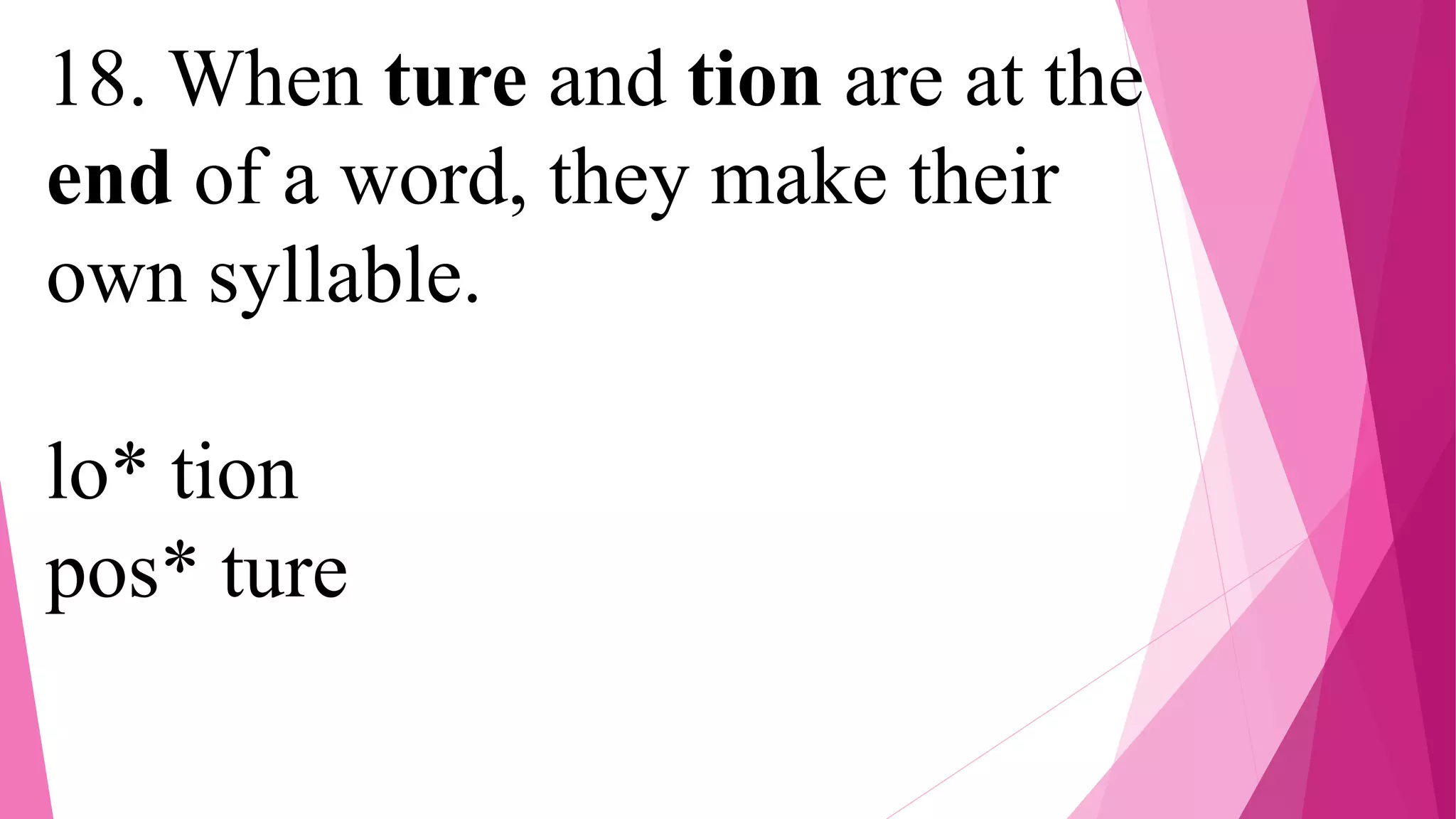
18. When ture and tion are at the
end of a word, they make their
own syllable.
lo* tion
pos* ture

Syllabication Rules PPT.pptx

  • 1.
  • 2.
    1. Every syllablehas one vowel sound.
  • 3.
    2. The numberof vowel sounds in a word equals the number home=1 sub* ject=2 pub* lish* ing =3
  • 4.
    3 A onesyllable word is never divided. stop feet bell
  • 5.
    4. Consonant blendsand digraphs are never separated. rest* ing bush* el reach* ing
  • 6.
    5. When aword has a ck or an x in it, the word is usually divided after the ck or x. nick* el tax* i
  • 7.
    6. A compoundword is divided between the two words that make the compound word. in* side foot* ball tooth* brush
  • 8.
    7. When twoor more consonants come between two vowels in a word, it is usually divided between the first two consonants. sis* ter but* ter hun* gry
  • 9.
    8 When asingle consonant comes between two vowels in a word, it is usually divided after the consonant if the vowel is short. lev* er cab* in hab* it
  • 10.
    9. When asingle consonant comes between two vowels in a word, it is usually divided before the consonant if the vowel is long. ba* sin fe* ver ma* jor
  • 11.
    10. When twovowels come together in a word, and are sounded separately,divide the word between the two vowels. ra* di* o di* et i* de* a
  • 12.
    11. When avowel is sounded alone in a word, it forms a syllable itself. grad* u* ate a* pron u* nit
  • 13.
    12. A wordthat has a prefix is divided between the root word and the prefix. dis* count mis* fit un* tie
  • 14.
    13. When be,de, ex and re are at the beginning of a word, they make a syllable of their own. be* came de* fend ex* hale re* main
  • 15.
    14. A wordthat has a suffix is divided between the root word and the suffix. kind* ness thank* ful stuff* ing
  • 16.
    15. When aword ends in le, preceeded by a consonant, the word is divided before that consonant. pur* ple fum* ble mid* dle
  • 17.
    16. When -edcomes at the end of a word, it forms a syllable only when preceeded by d or t. start* ed fund* ed
  • 18.
    17. When aword or syllable ends in al or el, these letters usually form the last syllable. lev* el us* u* al
  • 19.
    18. When tureand tion are at the end of a word, they make their own syllable. lo* tion pos* ture