Types of Pathogens
Anna Beth Reardon

KINS 2041
Pathogens
Pathogen – A microorganism that causes disease.

Reservoir – A natural environment in which a pathogen
typically lives.
- A human
- An animal
-An environmental component like soil or water
How do pathogens spread?
Pathogens must leave the reservoir through some portal of
exit.
Pathogens
Human Portals of exit:
-Saliva for mumps
-Mucous membranes for sexually transmitted diseases
-Blood for HIV and hepatitis
-Feces for intestinal infections
-Nose and throat discharges for colds and influenza
Pathogens can be transmitted directly or indirectly.
Directly transmitted – pathogens are passed from one person to another
without an intermediary.
-Sneezing
-Coughing
-Sexual contact
-Blood
-Mosquitoes
Types of Pathogens
Indirectly transmitted – animals or insects serve as vectors carrying the
pathogens from one host to the next.
-Ticks
-Mosquitoes
Different types of pathogens may include:
-Bacteria
-Viruses
-Fungi
-Protozoa
-Parasitic worms
-Prions
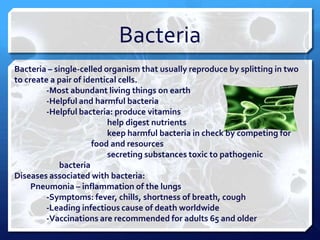
Bacteria
Bacteria – single-celled organism that usually reproduce by splitting in two
to create a pair of identical cells.
-Most abundant living things on earth
-Helpful and harmful bacteria
-Helpful bacteria: produce vitamins
help digest nutrients
keep harmful bacteria in check by competing for
food and resources
secreting substances toxic to pathogenic
bacteria
Diseases associated with bacteria:
Pneumonia – inflammation of the lungs
-Symptoms: fever, chills, shortness of breath, cough
-Leading infectious cause of death worldwide
-Vaccinations are recommended for adults 65 and older
.

Bacteria cont.

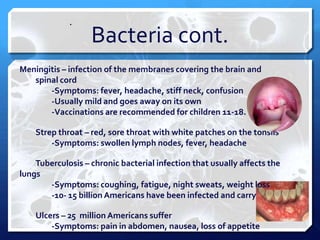
Meningitis – infection of the membranes covering the brain and
spinal cord
-Symptoms: fever, headache, stiff neck, confusion
-Usually mild and goes away on its own
-Vaccinations are recommended for children 11-18.
Strep throat – red, sore throat with white patches on the tonsils
-Symptoms: swollen lymph nodes, fever, headache
Tuberculosis – chronic bacterial infection that usually affects the
lungs
-Symptoms: coughing, fatigue, night sweats, weight loss
-10- 15 billion Americans have been infected and carry
Ulcers – 25 million Americans suffer
-Symptoms: pain in abdomen, nausea, loss of appetite
Virus
Virus – a very small infectious agent composed of nucleic acid
surrounded by a protein coat; lacks an independent metabolism and
reproduces only within a host cell.
-Inside the host cell, it sheds its protein covering,
and its genetic material takes control of the cell
and creates more viruses.
-Most common form of contagious disease
Diseases associated with viruses:
Common cold – lasts 1-2 weeks
-Almost always transmitted by hand-to-hand contact
-Reduce risks by washing hands frequently and avoid
touching face
-Avoid multi-symptom cold remedies
Virus cont.
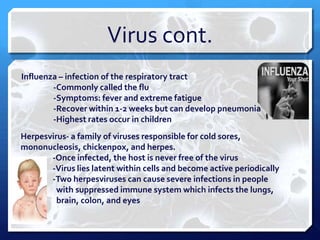
Influenza – infection of the respiratory tract
-Commonly called the flu
-Symptoms: fever and extreme fatigue
-Recover within 1-2 weeks but can develop pneumonia
-Highest rates occur in children
Herpesvirus- a family of viruses responsible for cold sores,
mononucleosis, chickenpox, and herpes.
-Once infected, the host is never free of the virus
-Virus lies latent within cells and become active periodically
-Two herpesviruses can cause severe infections in people
with suppressed immune system which infects the lungs,
brain, colon, and eyes
Virus cont.
Viral Hepatitis- inflammation of the liver
-Caused by Hepatitis A, B, or C
-Symptoms: fatigue, jaundice, abdominal pain, loss of
appetite, and nausea
-Recover in one month
-5-10% of people infected with Hepatitis B and 85-90% of
Hepatitis C become chronic carriers of the virus
-500 million people worldwide may be carriers
-People who should get checked are people who had injected
drugs, received blood transfusion, have tattoos or piercings
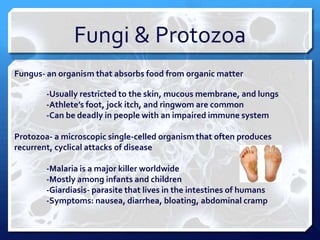
Fungi & Protozoa
Fungus- an organism that absorbs food from organic matter
-Usually restricted to the skin, mucous membrane, and lungs
-Athlete’s foot, jock itch, and ringwom are common
-Can be deadly in people with an impaired immune system
Protozoa- a microscopic single-celled organism that often produces
recurrent, cyclical attacks of disease
-Malaria is a major killer worldwide
-Mostly among infants and children
-Giardiasis- parasite that lives in the intestines of humans
-Symptoms: nausea, diarrhea, bloating, abdominal cramp
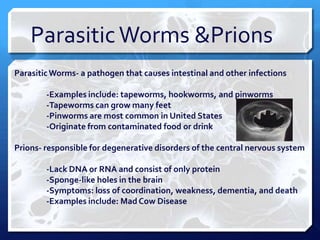
Parasitic Worms &Prions
Parasitic Worms- a pathogen that causes intestinal and other infections
-Examples include: tapeworms, hookworms, and pinworms
-Tapeworms can grow many feet
-Pinworms are most common in United States
-Originate from contaminated food or drink
Prions- responsible for degenerative disorders of the central nervous system

-Lack DNA or RNA and consist of only protein
-Sponge-like holes in the brain
-Symptoms: loss of coordination, weakness, dementia, and death
-Examples include: Mad Cow Disease
Reference
Insel, Paul M., and Walton T. Roth. "Immunity And Infection." Connect Core
Concepts in Health. New York: McGraw-Hill, 2010. Print.
"Bacteria." American Museum of Natural History. Web. 03 Apr. 2011.
<http://
www.amnh.org/nationalcenter/youngnaturalistawards/1998/bacteria.h
tml>
"Viruses and Bacteria." NetDoctor.co.uk -The UK's Leading Independent
Health Website. Web. 03 Apr. 2011. <http://www.netdoctor.co.uk/
health_advice/facts/virusbacteria.htm>.

Types of Pathogens

  • 1.
    Types of Pathogens AnnaBeth Reardon KINS 2041
  • 2.
    Pathogens Pathogen – Amicroorganism that causes disease. Reservoir – A natural environment in which a pathogen typically lives. - A human - An animal -An environmental component like soil or water How do pathogens spread? Pathogens must leave the reservoir through some portal of exit.
  • 3.
    Pathogens Human Portals ofexit: -Saliva for mumps -Mucous membranes for sexually transmitted diseases -Blood for HIV and hepatitis -Feces for intestinal infections -Nose and throat discharges for colds and influenza Pathogens can be transmitted directly or indirectly. Directly transmitted – pathogens are passed from one person to another without an intermediary. -Sneezing -Coughing -Sexual contact -Blood -Mosquitoes
  • 4.
    Types of Pathogens Indirectlytransmitted – animals or insects serve as vectors carrying the pathogens from one host to the next. -Ticks -Mosquitoes Different types of pathogens may include: -Bacteria -Viruses -Fungi -Protozoa -Parasitic worms -Prions
  • 5.
    Bacteria Bacteria – single-celledorganism that usually reproduce by splitting in two to create a pair of identical cells. -Most abundant living things on earth -Helpful and harmful bacteria -Helpful bacteria: produce vitamins help digest nutrients keep harmful bacteria in check by competing for food and resources secreting substances toxic to pathogenic bacteria Diseases associated with bacteria: Pneumonia – inflammation of the lungs -Symptoms: fever, chills, shortness of breath, cough -Leading infectious cause of death worldwide -Vaccinations are recommended for adults 65 and older
  • 6.
    . Bacteria cont. Meningitis –infection of the membranes covering the brain and spinal cord -Symptoms: fever, headache, stiff neck, confusion -Usually mild and goes away on its own -Vaccinations are recommended for children 11-18. Strep throat – red, sore throat with white patches on the tonsils -Symptoms: swollen lymph nodes, fever, headache Tuberculosis – chronic bacterial infection that usually affects the lungs -Symptoms: coughing, fatigue, night sweats, weight loss -10- 15 billion Americans have been infected and carry Ulcers – 25 million Americans suffer -Symptoms: pain in abdomen, nausea, loss of appetite
  • 7.
    Virus Virus – avery small infectious agent composed of nucleic acid surrounded by a protein coat; lacks an independent metabolism and reproduces only within a host cell. -Inside the host cell, it sheds its protein covering, and its genetic material takes control of the cell and creates more viruses. -Most common form of contagious disease Diseases associated with viruses: Common cold – lasts 1-2 weeks -Almost always transmitted by hand-to-hand contact -Reduce risks by washing hands frequently and avoid touching face -Avoid multi-symptom cold remedies
  • 8.
    Virus cont. Influenza –infection of the respiratory tract -Commonly called the flu -Symptoms: fever and extreme fatigue -Recover within 1-2 weeks but can develop pneumonia -Highest rates occur in children Herpesvirus- a family of viruses responsible for cold sores, mononucleosis, chickenpox, and herpes. -Once infected, the host is never free of the virus -Virus lies latent within cells and become active periodically -Two herpesviruses can cause severe infections in people with suppressed immune system which infects the lungs, brain, colon, and eyes
  • 9.
    Virus cont. Viral Hepatitis-inflammation of the liver -Caused by Hepatitis A, B, or C -Symptoms: fatigue, jaundice, abdominal pain, loss of appetite, and nausea -Recover in one month -5-10% of people infected with Hepatitis B and 85-90% of Hepatitis C become chronic carriers of the virus -500 million people worldwide may be carriers -People who should get checked are people who had injected drugs, received blood transfusion, have tattoos or piercings
  • 10.
    Fungi & Protozoa Fungus-an organism that absorbs food from organic matter -Usually restricted to the skin, mucous membrane, and lungs -Athlete’s foot, jock itch, and ringwom are common -Can be deadly in people with an impaired immune system Protozoa- a microscopic single-celled organism that often produces recurrent, cyclical attacks of disease -Malaria is a major killer worldwide -Mostly among infants and children -Giardiasis- parasite that lives in the intestines of humans -Symptoms: nausea, diarrhea, bloating, abdominal cramp
  • 11.
    Parasitic Worms &Prions ParasiticWorms- a pathogen that causes intestinal and other infections -Examples include: tapeworms, hookworms, and pinworms -Tapeworms can grow many feet -Pinworms are most common in United States -Originate from contaminated food or drink Prions- responsible for degenerative disorders of the central nervous system -Lack DNA or RNA and consist of only protein -Sponge-like holes in the brain -Symptoms: loss of coordination, weakness, dementia, and death -Examples include: Mad Cow Disease
  • 12.
    Reference Insel, Paul M.,and Walton T. Roth. "Immunity And Infection." Connect Core Concepts in Health. New York: McGraw-Hill, 2010. Print. "Bacteria." American Museum of Natural History. Web. 03 Apr. 2011. <http:// www.amnh.org/nationalcenter/youngnaturalistawards/1998/bacteria.h tml> "Viruses and Bacteria." NetDoctor.co.uk -The UK's Leading Independent Health Website. Web. 03 Apr. 2011. <http://www.netdoctor.co.uk/ health_advice/facts/virusbacteria.htm>.