TYPES OF FUNCTION
Constant function- function that has
the same output value no matter what
your input value is.
-form f(x) = b , where b is a constant
example: y= 7
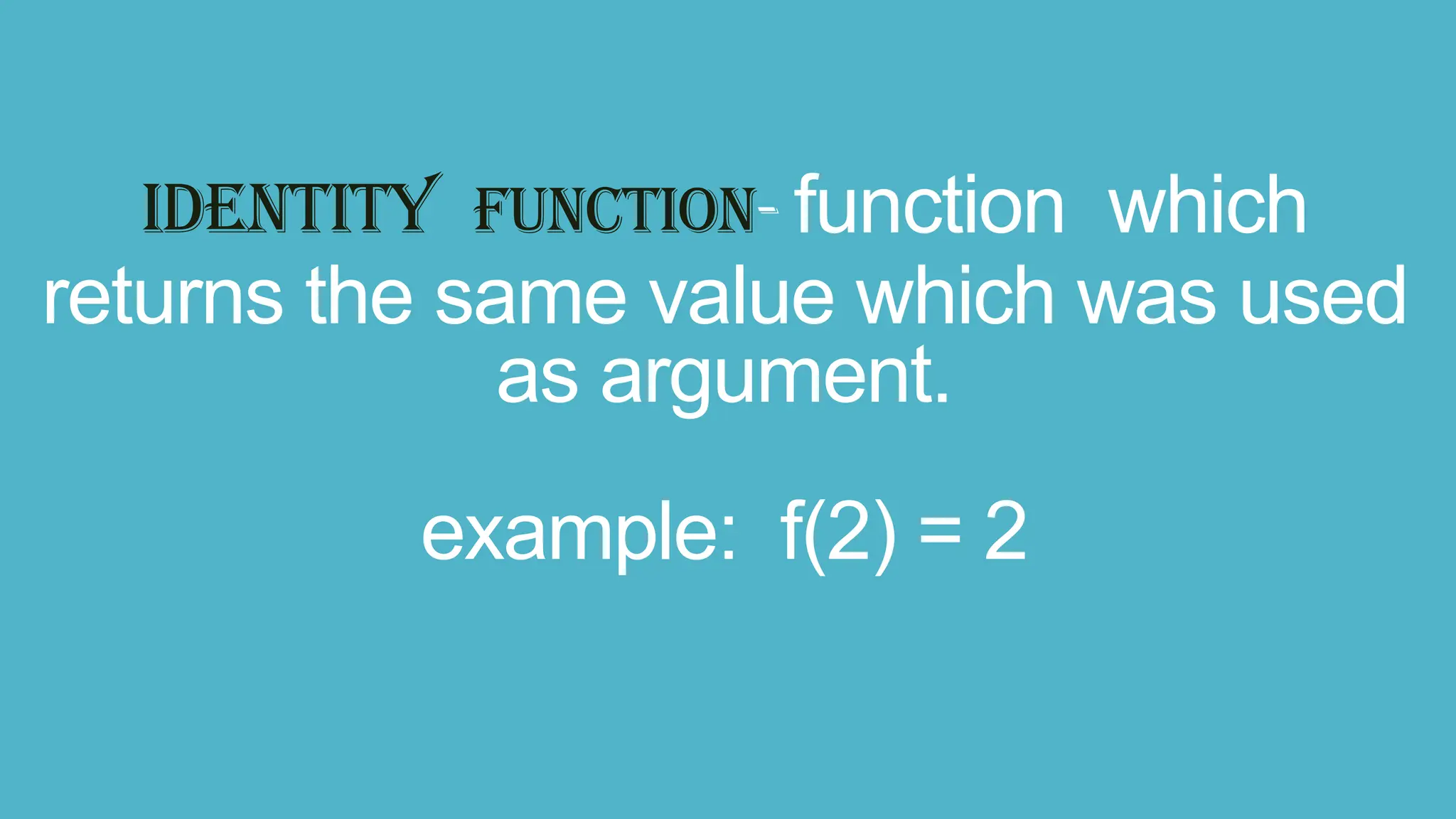
identity function- function which
returns the same value which was used
as argument.
example: f(2) = 2
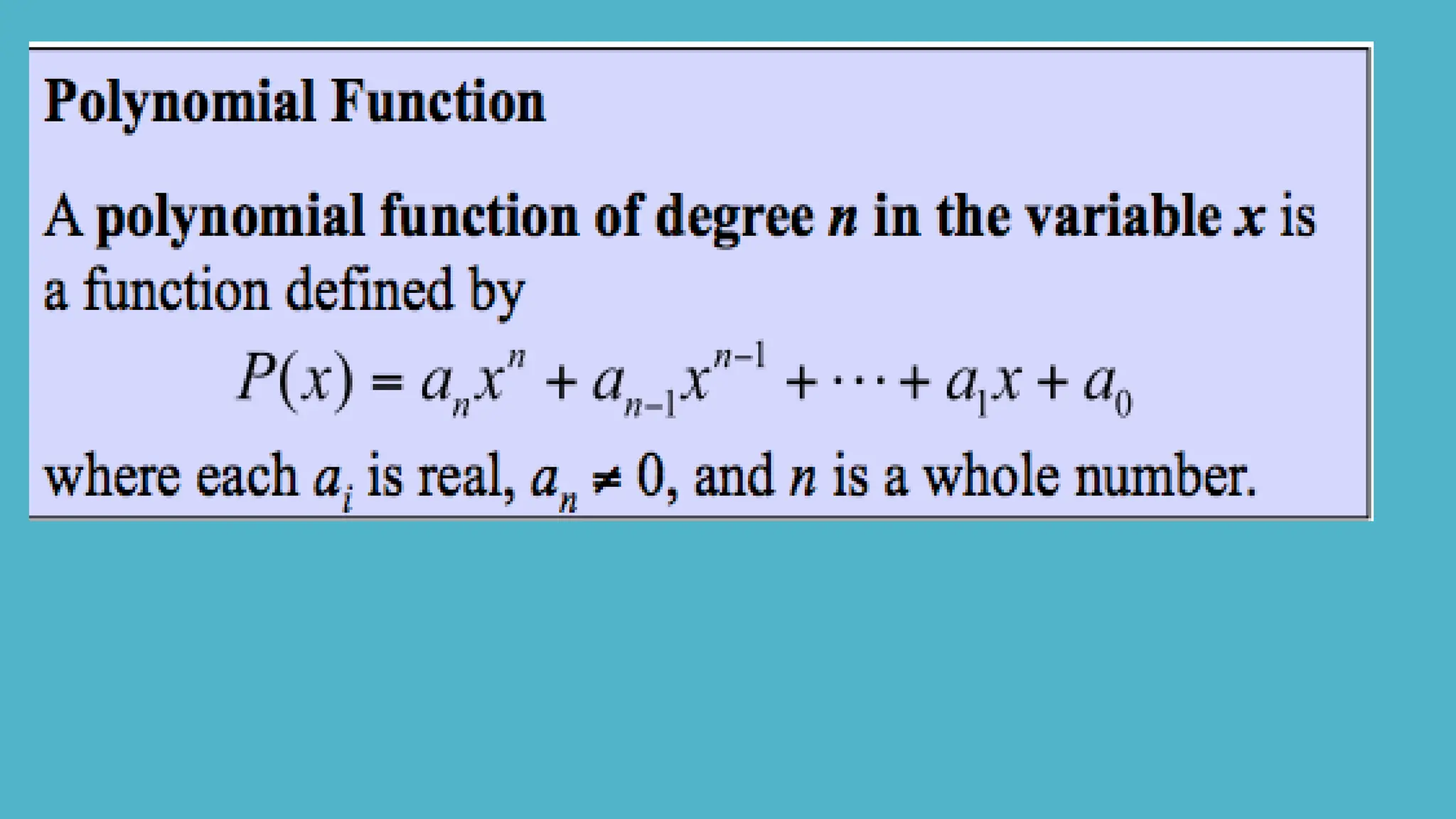
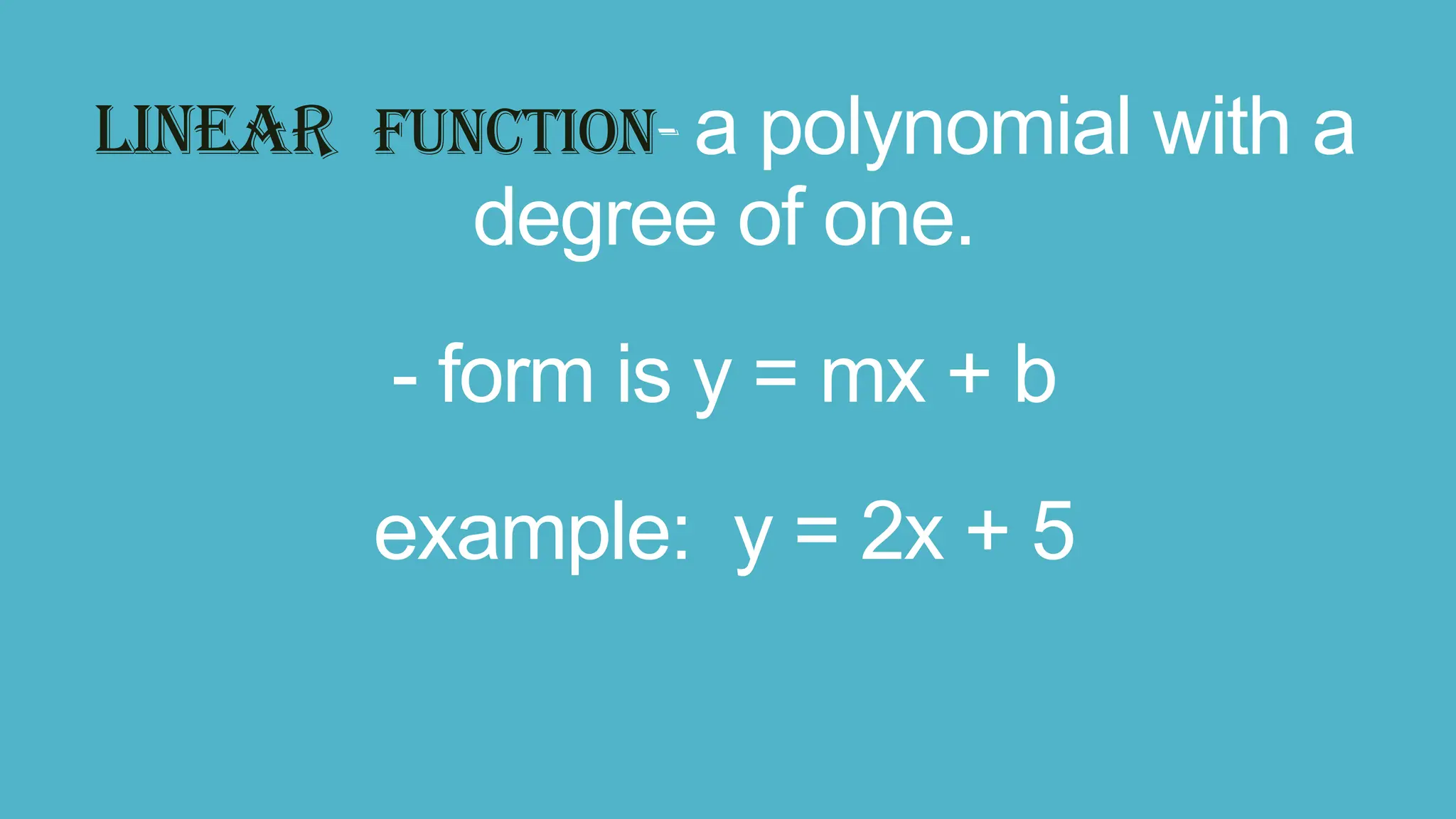
Linear function- a polynomial with a
degree of one.
- form is y = mx + b
example: y = 2x + 5
quadratic function- a polynomial with
a degree of two.
y= a + bx + c, where a, b and c are
constant, a ≠ 0 and x is a variable.
example: y= 4x – 10
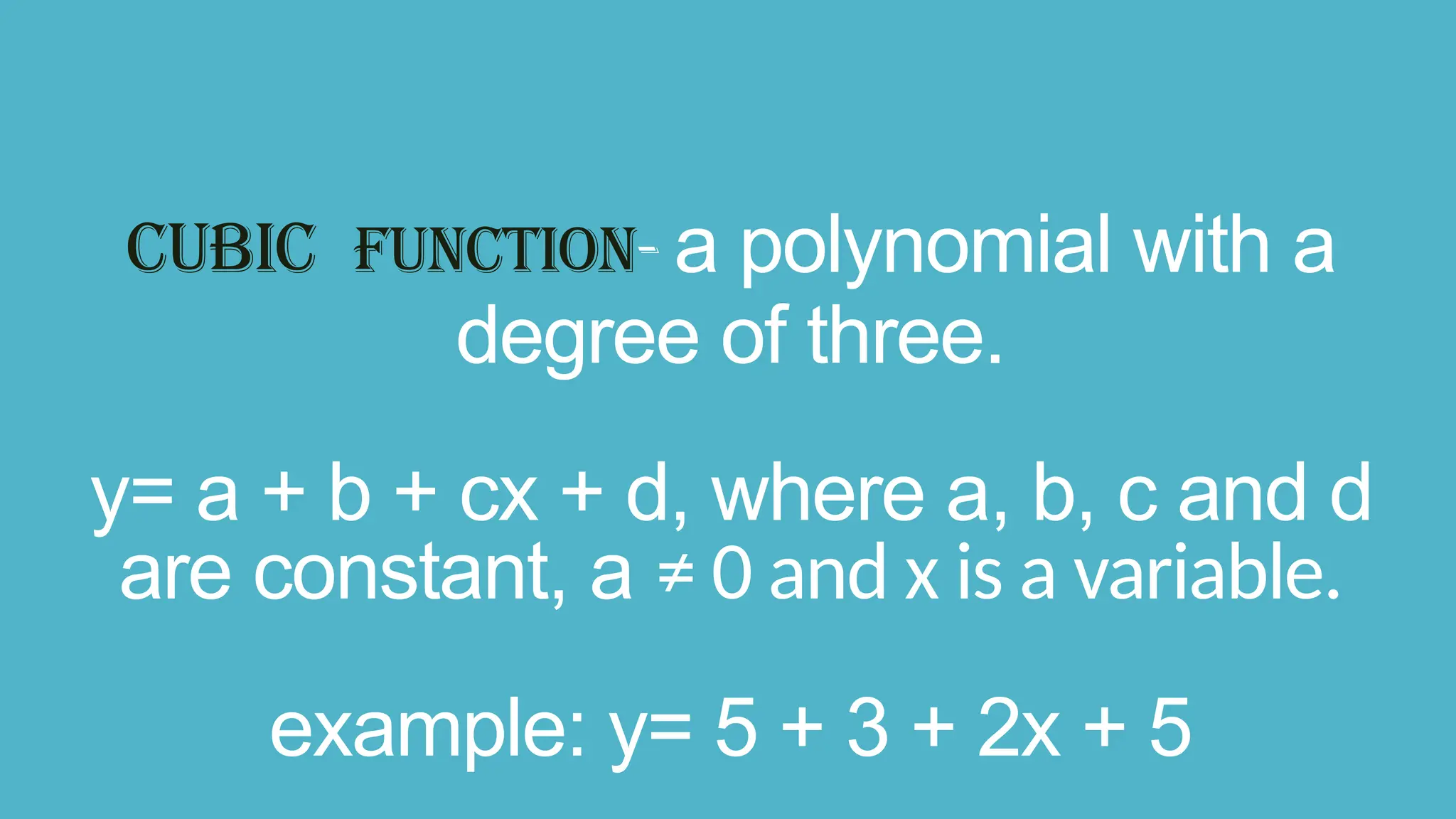
cubic function- a polynomial with a
degree of three.
y= a + b + cx + d, where a, b, c and d
are constant, a ≠ 0 and x is a variable.
example: y= 5 + 3 + 2x + 5
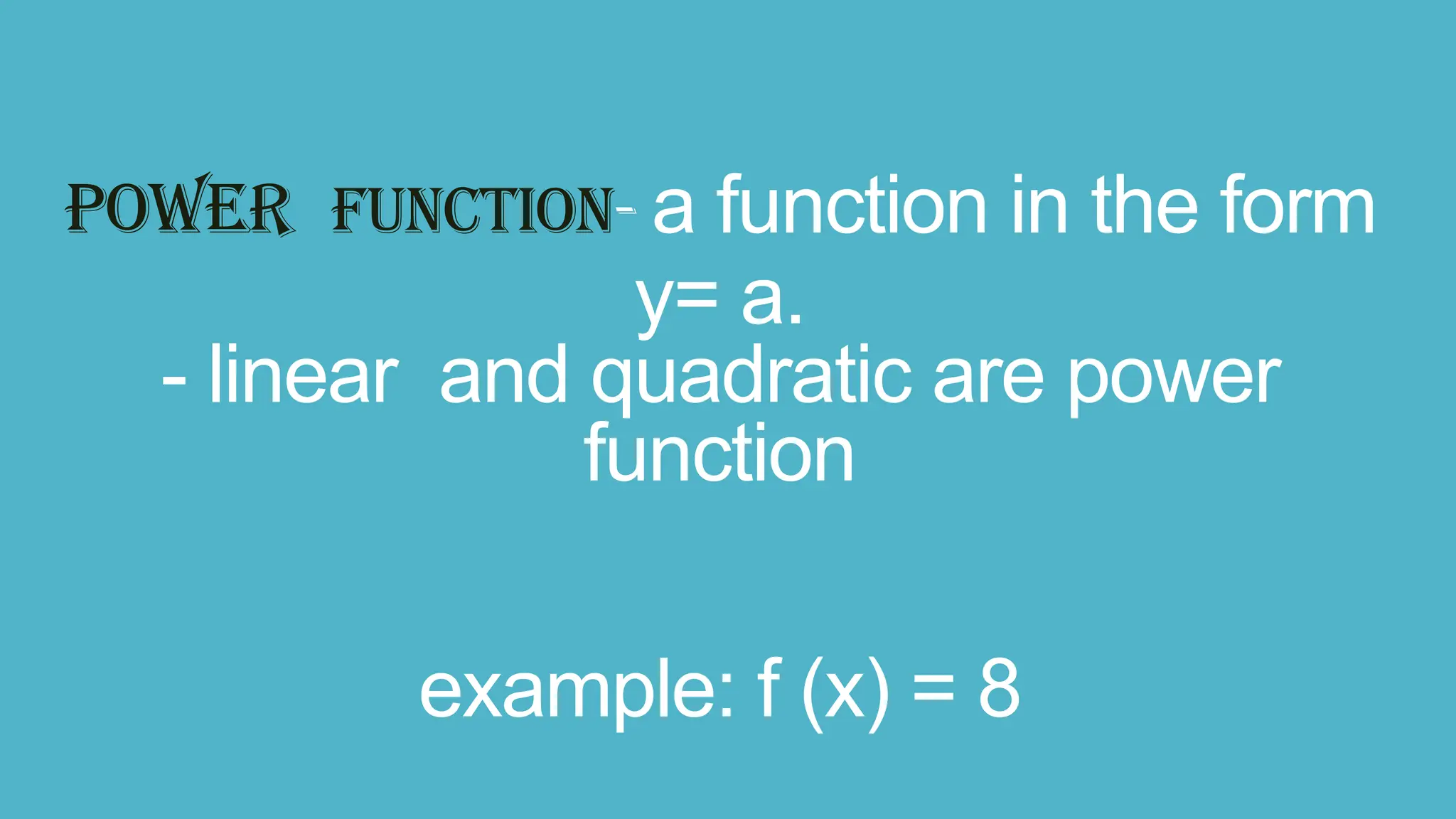
Power function- a function in the form
y= a.
- linear and quadratic are power
function
example: f (x) = 8
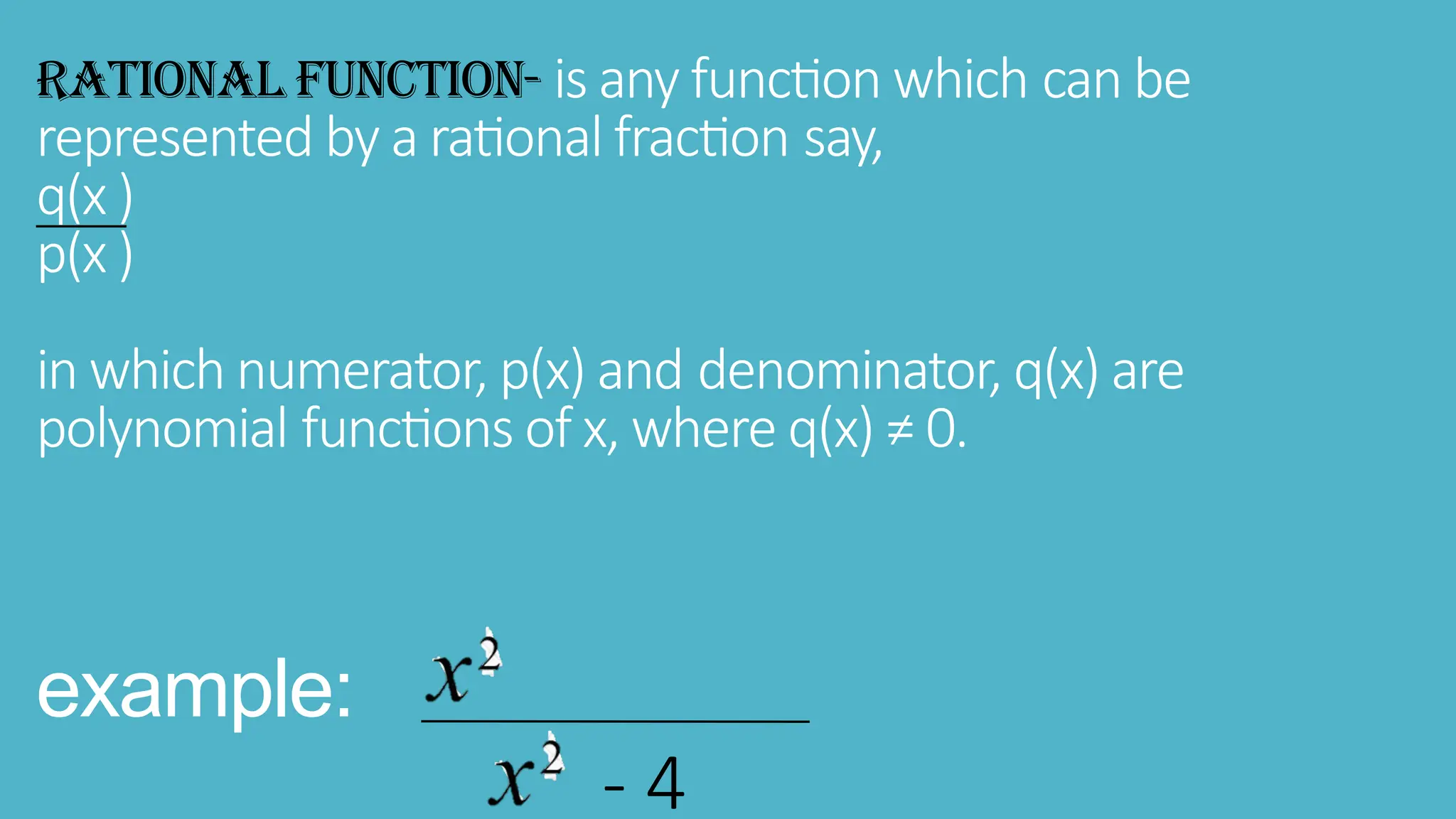
Rational Function- is any function which can be
represented by a rational fraction say,
q(x )
p(x )
in which numerator, p(x) and denominator, q(x) are
polynomial functions of x, where q(x) ≠ 0.
example:
- 4
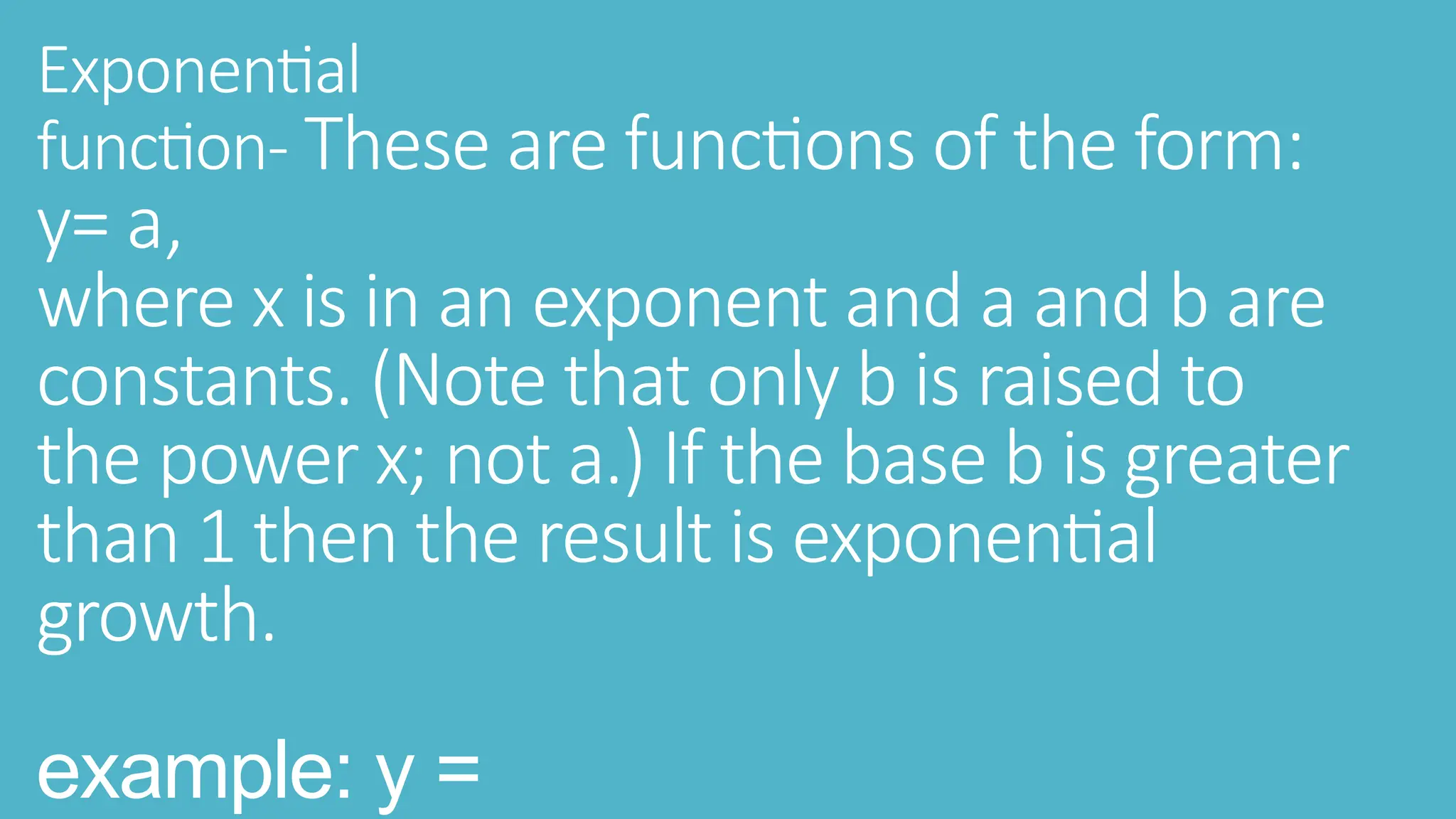
Exponential
function- These are functions of the form:
y= a,
where x is in an exponent and a and b are
constants. (Note that only b is raised to
the power x; not a.) If the base b is greater
than 1 then the result is exponential
growth.
example: y =
Logarithmic Function: are the inverses
of exponential functions, and any
exponential function can be
expressed in
logarithmic form.

Types-of-FUNCTIONS-Gen-math-grade 11-.pptx

  • 1.
  • 2.
    Constant function- functionthat has the same output value no matter what your input value is. -form f(x) = b , where b is a constant example: y= 7
  • 3.
    identity function- functionwhich returns the same value which was used as argument. example: f(2) = 2
  • 5.
    Linear function- apolynomial with a degree of one. - form is y = mx + b example: y = 2x + 5
  • 6.
    quadratic function- apolynomial with a degree of two. y= a + bx + c, where a, b and c are constant, a ≠ 0 and x is a variable. example: y= 4x – 10
  • 7.
    cubic function- apolynomial with a degree of three. y= a + b + cx + d, where a, b, c and d are constant, a ≠ 0 and x is a variable. example: y= 5 + 3 + 2x + 5
  • 8.
    Power function- afunction in the form y= a. - linear and quadratic are power function example: f (x) = 8
  • 9.
    Rational Function- isany function which can be represented by a rational fraction say, q(x ) p(x ) in which numerator, p(x) and denominator, q(x) are polynomial functions of x, where q(x) ≠ 0. example: - 4
  • 10.
    Exponential function- These arefunctions of the form: y= a, where x is in an exponent and a and b are constants. (Note that only b is raised to the power x; not a.) If the base b is greater than 1 then the result is exponential growth. example: y =
  • 11.
    Logarithmic Function: arethe inverses of exponential functions, and any exponential function can be expressed in logarithmic form.