FOOD FERMENTATIONS
Submitted by
Girija muthuraj
III B.SC., -Microbiology
Department of Microbiology
Vivekananda Arts and Science College for Women
Sankagiri, Salem.
Tamil Nadu, India.
Subject: Food Microbiology
DEPARTMENT OF MICROBIOLOGY
VIVEKANANDA ARTS AND SCIENCE COLLEGE FOR WOMEN
SANKAGIRI
What is food fermentation?
● In food processing, fermentation is the
conversion of carbohydrates to alcohol
or organic acids using microorganisms—
yeasts or bacteria—under anaerobic
conditions. Fermentation usually implies
that the action of microorganisms is
desired. The science of fermentation is
known as zymology or zymurgy
● the process of creating food or
changing the properties of food using
microbes.
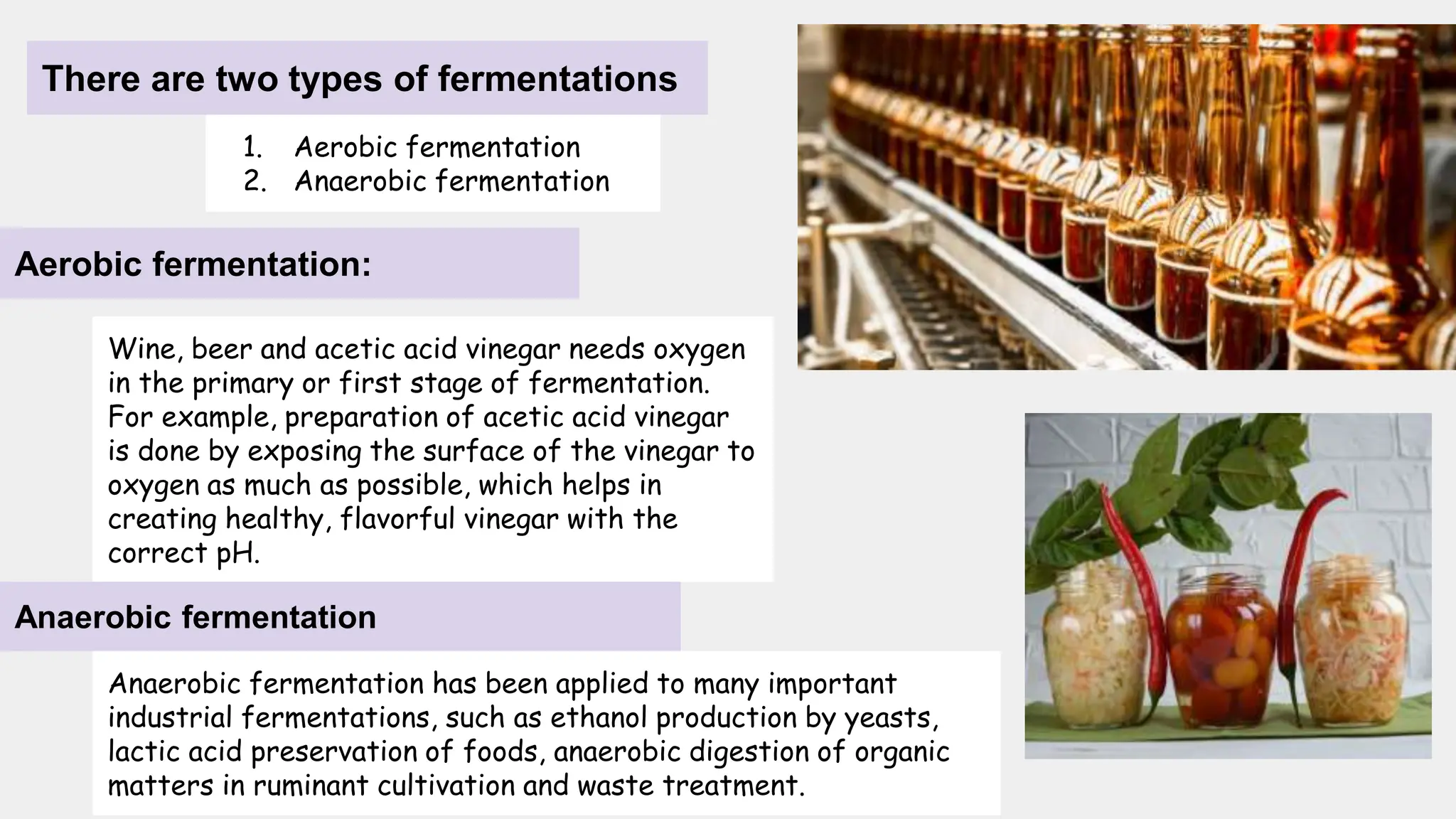
There are two types of fermentations
1. Aerobic fermentation
2. Anaerobic fermentation
Aerobic fermentation:
Wine, beer and acetic acid vinegar needs oxygen
in the primary or first stage of fermentation.
For example, preparation of acetic acid vinegar
is done by exposing the surface of the vinegar to
oxygen as much as possible, which helps in
creating healthy, flavorful vinegar with the
correct pH.
Anaerobic fermentation
Anaerobic fermentation has been applied to many important
industrial fermentations, such as ethanol production by yeasts,
lactic acid preservation of foods, anaerobic digestion of organic
matters in ruminant cultivation and waste treatment.
Lactic acid fermentation :
The lactic acid fermentation of cabbage, cucumbers, and
green olives not only helps preserve the foods but also
results in distinctive new food products. Many fermenta-
tions make new and desired products, and preservative
effects are incidental. The fermentations may be by
yeasts, bacteria, molds, or combinations of these organ-
isms. In the first group of food products-bread, beer,
wine, and distilled liquors— fermentation by yeasts is of
primary importance. Yeasts and bacteria are involved in
the manufacture of vinegar from sugar-bearing
materials, and bacteria chiefly in the production of
fermented milks. Molds are important in the preparation
of some cheeses and Oriental foods.
Famous fermented foods
● kefir.
● tempeh.
● natto.
● kombucha.
● miso.
● kimchi.
● sauerkraut.
● probiotic yogurt.
● In a bread dough, oxygen
supply is limited and the yeast
can only achieve partial
fermentation and instead of
carbon dioxide and water
being given off, carbon
dioxide and alcohol are
produced. This is called
alcoholic fermentation.
Microorganisms are useful in two chief
ways in breadmaking:
(1) They may produce gas to leaven, or
raise, the dough, giving the bread the
desired loose, porous texture, and
(2) they may produce desirable flavoring
substances. They also may function in the
conditioning of the dough.
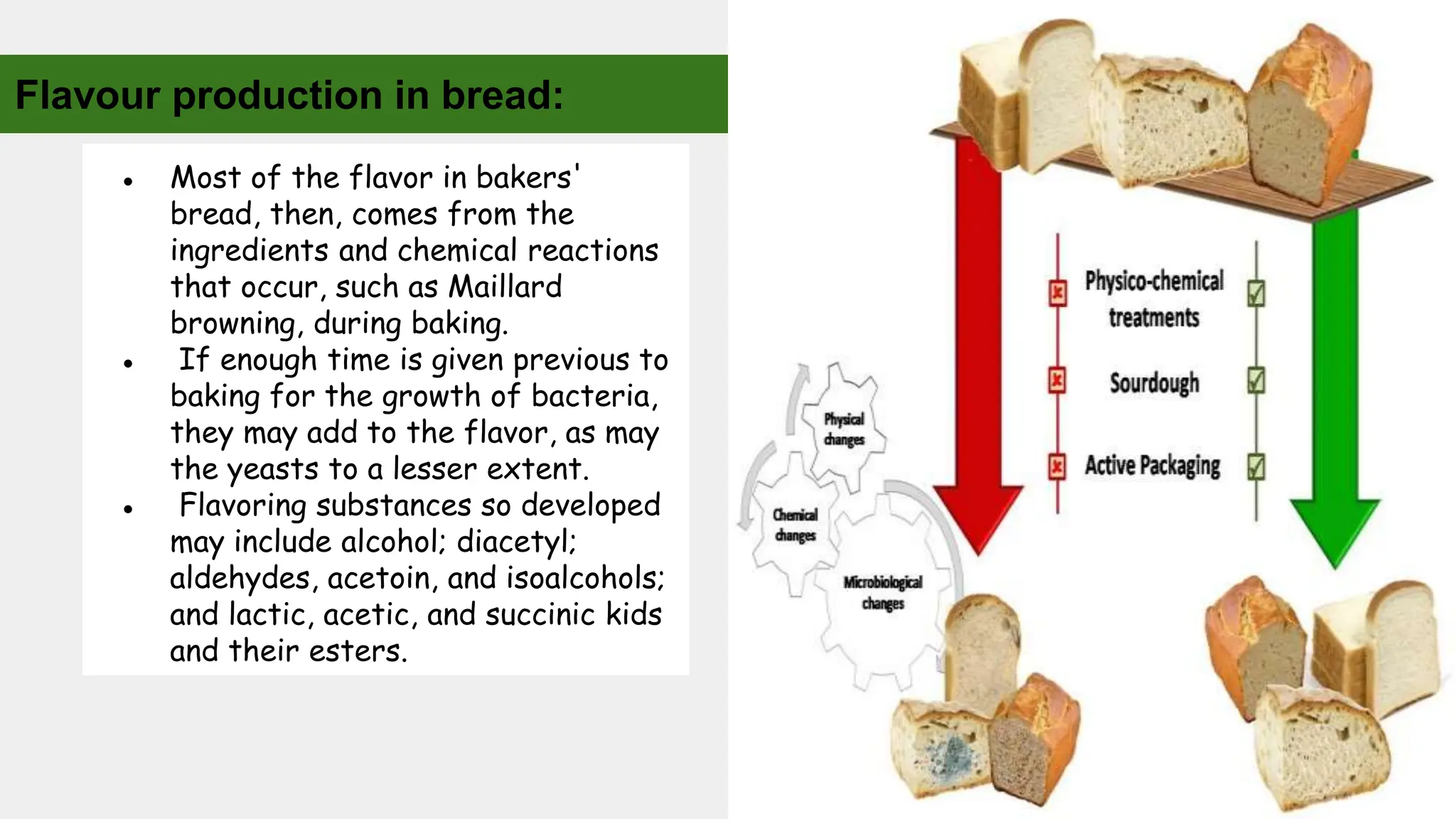
● Most of the flavor in bakers'
bread, then, comes from the
ingredients and chemical reactions
that occur, such as Maillard
browning, during baking.
● If enough time is given previous to
baking for the growth of bacteria,
they may add to the flavor, as may
the yeasts to a lesser extent.
● Flavoring substances so developed
may include alcohol; diacetyl;
aldehydes, acetoin, and isoalcohols;
and lactic, acetic, and succinic kids
and their esters.
Flavour production in bread:
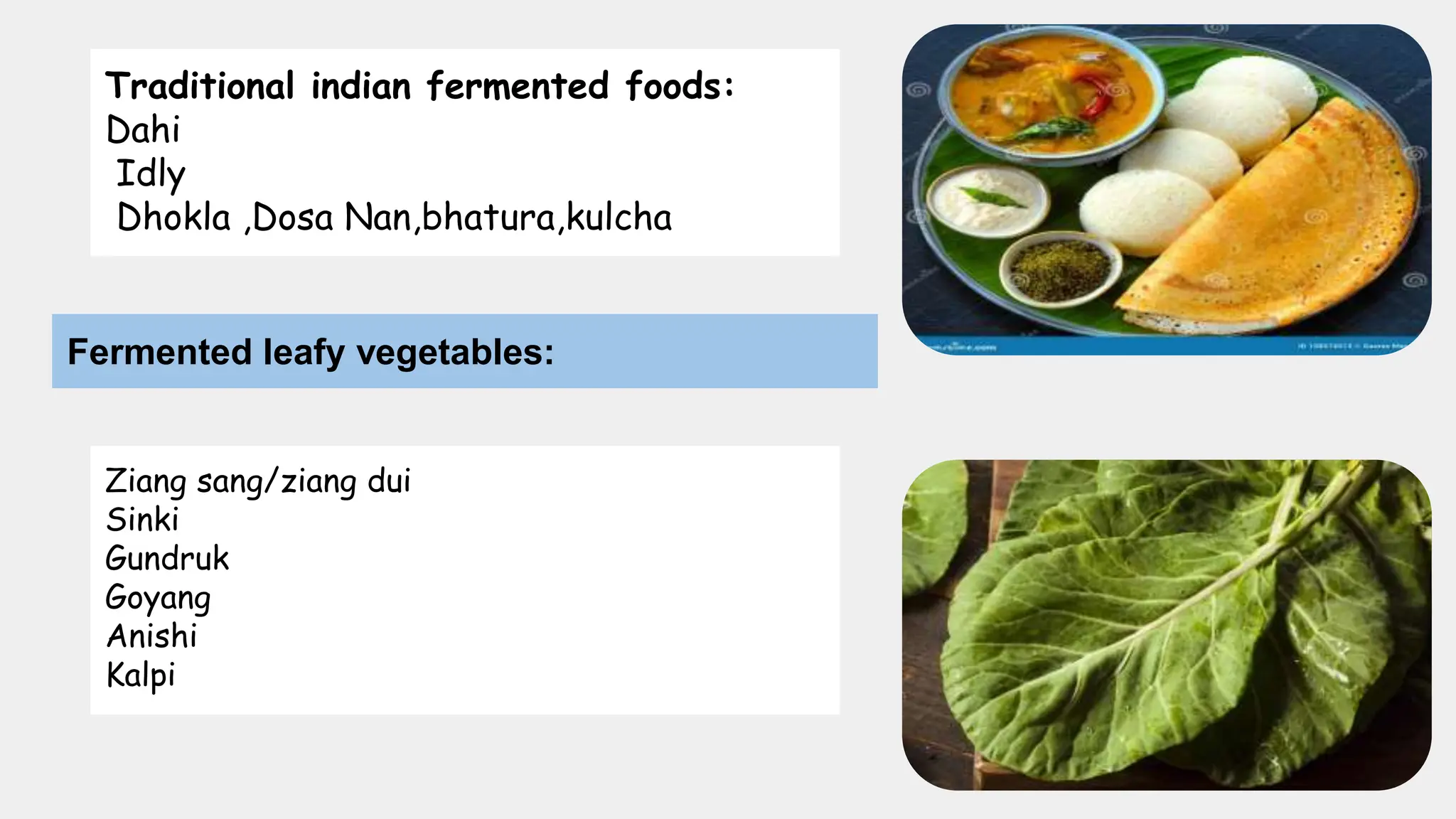
Traditional indian fermented foods:
Dahi
Idly
Dhokla ,Dosa Nan,bhatura,kulcha
Fermented leafy vegetables:
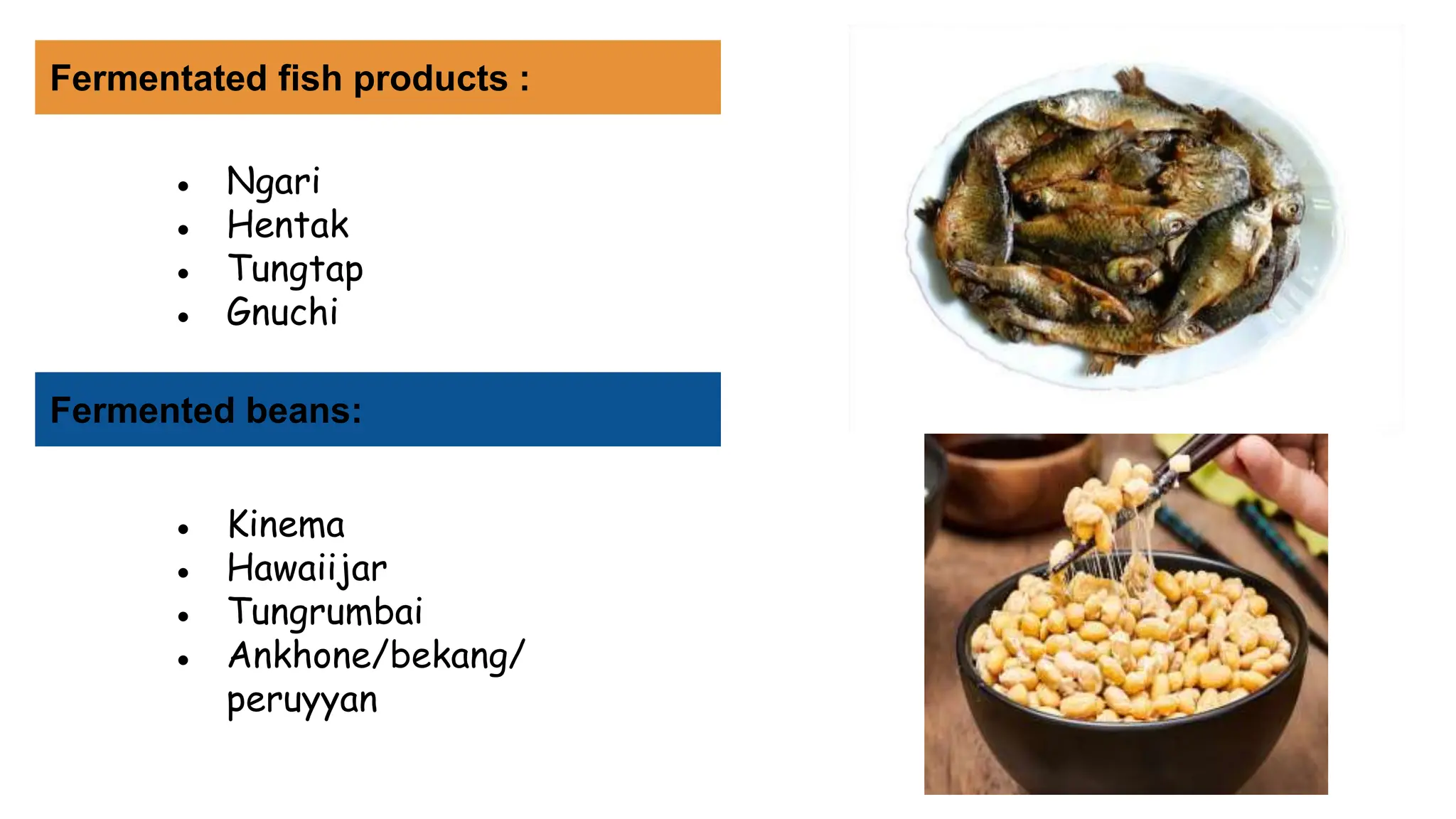
Fermentated fish products :
● Ngari
● Hentak
● Tungtap
● Gnuchi
Fermented beans:
● Kinema
● Hawaiijar
● Tungrumbai
● Ankhone/bekang/
peruyyan
Fermentated bamboo shoots
● Soibum/soidon
● Mesu
● Lung-seji
● Bas_tenga
● Miya mikhri
● Ekung/Hirring
Fermentated Alcoholic beverages
● Ennong/Sai mod
● Apong
● Kodo ko jaanr
● Xaj-pani
● Zutho
● Judima
● Antingba
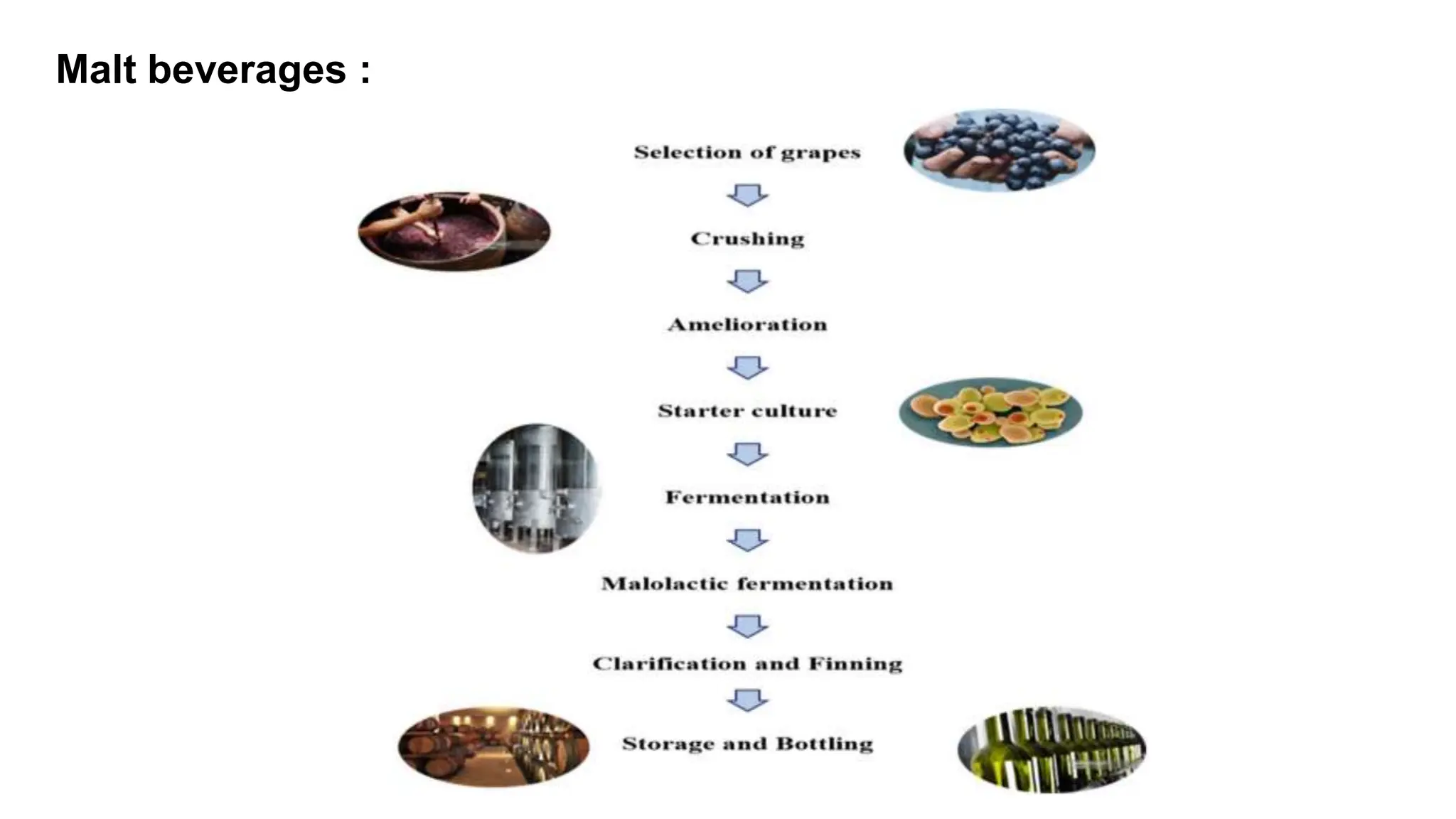
Malt beverages :
sauerkraut
Sauerkraut is particularly nutritious because
it undergoes fermentation, a process during
which microorganisms on the cabbage digest
its natural sugars and convert them into
carbon dioxide and organic acids.
Fermentation
Fermentation starts when
naturally present yeast and
bacteria come into contact
with the sugars in the cabbage.
Sauerkraut fermentation creates conditions that promote the growth of beneficial
probiotics, bacteria that provide powerful health benefits. Probiotics also help make
foods more digestible, which increasesTrusted Source your gut’s ability to absorb
the vitamins and minerals they contain.However, unlike cabbage, sauerkraut can be
high in sodium. Keep this in mind if you’re watching your salt intake.
Fermentated dairy products :
● Cultured buttermilk, sour cream,
and yogurt are among the most
common fermented dairy
products in the Western world.
● Other, lesser-known products
include kefir, koumiss, acidophilus
milk, and new yogurts
containingBifidobacteria Cultured
dairy foods provide numerous
potential health benefits to the
human diet.
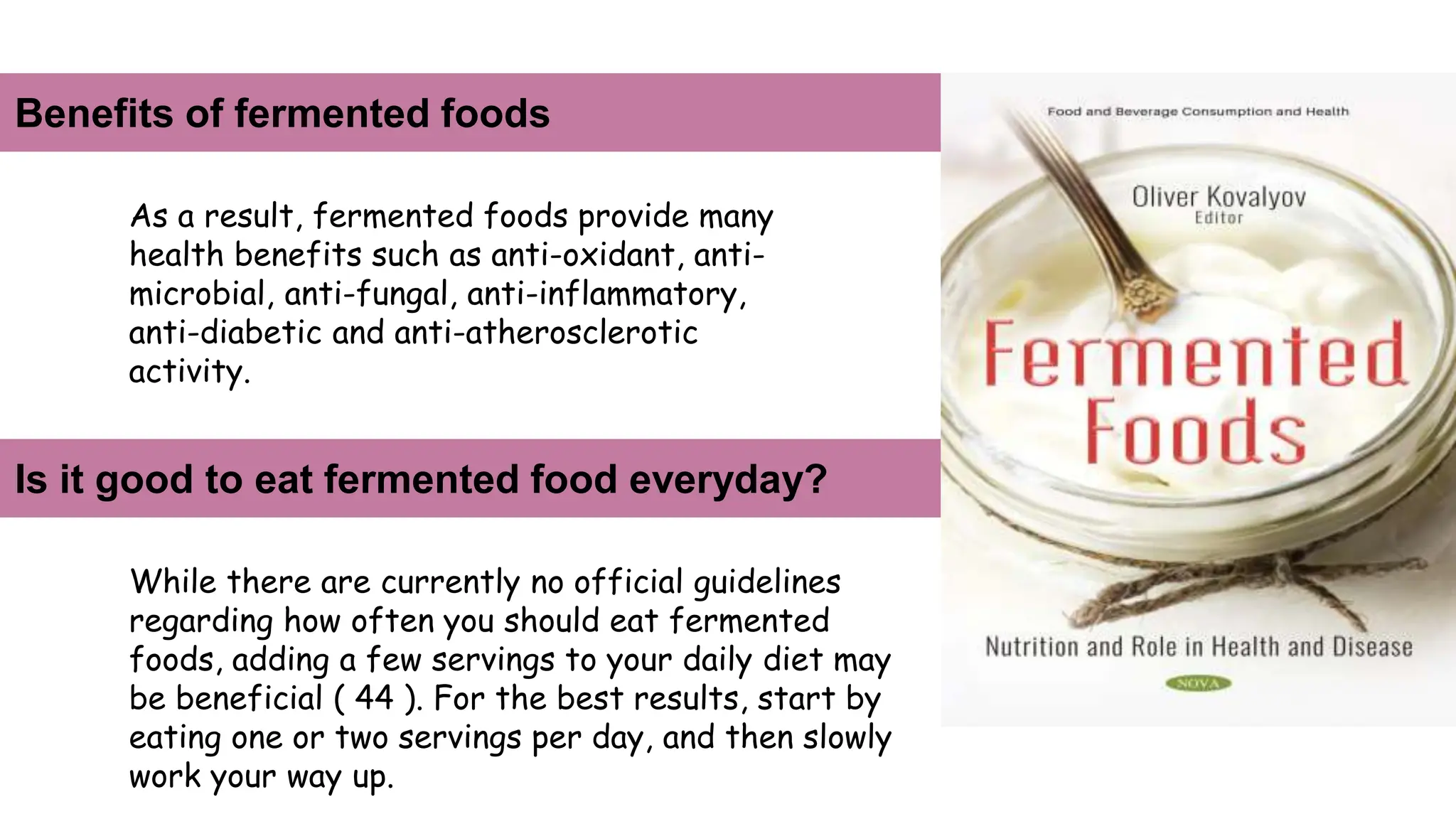
Benefits of fermented foods
As a result, fermented foods provide many
health benefits such as anti-oxidant, anti-
microbial, anti-fungal, anti-inflammatory,
anti-diabetic and anti-atherosclerotic
activity.
Is it good to eat fermented food everyday?
While there are currently no official guidelines
regarding how often you should eat fermented
foods, adding a few servings to your daily diet may
be beneficial ( 44 ). For the best results, start by
eating one or two servings per day, and then slowly
work your way up.
● Bloating.
● The most common reaction to fermented foods is a temporary increase in gas
and bloating. ...
● Headaches and migraines. ...
● Histamine intolerance. ...
● Food-borne illness. ...
● Infection from probiotics. ...
● Antibiotic resistance
● Another disadvantage is the high sodium
levels in many fermented foods. Under some
conditions, harmful microbes may also cause
undesirable effects from the ingestion of
fermented foods in certain conditions, such
as mycotoxicosis and botulinism.
disadvantages of fermented foods
Thank you

Food fermentation

  • 1.
    FOOD FERMENTATIONS Submitted by Girijamuthuraj III B.SC., -Microbiology Department of Microbiology Vivekananda Arts and Science College for Women Sankagiri, Salem. Tamil Nadu, India. Subject: Food Microbiology DEPARTMENT OF MICROBIOLOGY VIVEKANANDA ARTS AND SCIENCE COLLEGE FOR WOMEN SANKAGIRI
  • 3.
    What is foodfermentation? ● In food processing, fermentation is the conversion of carbohydrates to alcohol or organic acids using microorganisms— yeasts or bacteria—under anaerobic conditions. Fermentation usually implies that the action of microorganisms is desired. The science of fermentation is known as zymology or zymurgy ● the process of creating food or changing the properties of food using microbes.
  • 4.
    There are twotypes of fermentations 1. Aerobic fermentation 2. Anaerobic fermentation Aerobic fermentation: Wine, beer and acetic acid vinegar needs oxygen in the primary or first stage of fermentation. For example, preparation of acetic acid vinegar is done by exposing the surface of the vinegar to oxygen as much as possible, which helps in creating healthy, flavorful vinegar with the correct pH. Anaerobic fermentation Anaerobic fermentation has been applied to many important industrial fermentations, such as ethanol production by yeasts, lactic acid preservation of foods, anaerobic digestion of organic matters in ruminant cultivation and waste treatment.
  • 6.
    Lactic acid fermentation: The lactic acid fermentation of cabbage, cucumbers, and green olives not only helps preserve the foods but also results in distinctive new food products. Many fermenta- tions make new and desired products, and preservative effects are incidental. The fermentations may be by yeasts, bacteria, molds, or combinations of these organ- isms. In the first group of food products-bread, beer, wine, and distilled liquors— fermentation by yeasts is of primary importance. Yeasts and bacteria are involved in the manufacture of vinegar from sugar-bearing materials, and bacteria chiefly in the production of fermented milks. Molds are important in the preparation of some cheeses and Oriental foods.
  • 7.
    Famous fermented foods ●kefir. ● tempeh. ● natto. ● kombucha. ● miso. ● kimchi. ● sauerkraut. ● probiotic yogurt.
  • 8.
    ● In abread dough, oxygen supply is limited and the yeast can only achieve partial fermentation and instead of carbon dioxide and water being given off, carbon dioxide and alcohol are produced. This is called alcoholic fermentation. Microorganisms are useful in two chief ways in breadmaking: (1) They may produce gas to leaven, or raise, the dough, giving the bread the desired loose, porous texture, and (2) they may produce desirable flavoring substances. They also may function in the conditioning of the dough.
  • 9.
    ● Most ofthe flavor in bakers' bread, then, comes from the ingredients and chemical reactions that occur, such as Maillard browning, during baking. ● If enough time is given previous to baking for the growth of bacteria, they may add to the flavor, as may the yeasts to a lesser extent. ● Flavoring substances so developed may include alcohol; diacetyl; aldehydes, acetoin, and isoalcohols; and lactic, acetic, and succinic kids and their esters. Flavour production in bread:
  • 10.
    Traditional indian fermentedfoods: Dahi Idly Dhokla ,Dosa Nan,bhatura,kulcha Fermented leafy vegetables:
  • 11.
    Fermentated fish products: ● Ngari ● Hentak ● Tungtap ● Gnuchi Fermented beans: ● Kinema ● Hawaiijar ● Tungrumbai ● Ankhone/bekang/ peruyyan
  • 12.
    Fermentated bamboo shoots ●Soibum/soidon ● Mesu ● Lung-seji ● Bas_tenga ● Miya mikhri ● Ekung/Hirring Fermentated Alcoholic beverages ● Ennong/Sai mod ● Apong ● Kodo ko jaanr ● Xaj-pani ● Zutho ● Judima ● Antingba
  • 13.
  • 14.
    sauerkraut Sauerkraut is particularlynutritious because it undergoes fermentation, a process during which microorganisms on the cabbage digest its natural sugars and convert them into carbon dioxide and organic acids. Fermentation Fermentation starts when naturally present yeast and bacteria come into contact with the sugars in the cabbage. Sauerkraut fermentation creates conditions that promote the growth of beneficial probiotics, bacteria that provide powerful health benefits. Probiotics also help make foods more digestible, which increasesTrusted Source your gut’s ability to absorb the vitamins and minerals they contain.However, unlike cabbage, sauerkraut can be high in sodium. Keep this in mind if you’re watching your salt intake.
  • 15.
    Fermentated dairy products: ● Cultured buttermilk, sour cream, and yogurt are among the most common fermented dairy products in the Western world. ● Other, lesser-known products include kefir, koumiss, acidophilus milk, and new yogurts containingBifidobacteria Cultured dairy foods provide numerous potential health benefits to the human diet.
  • 17.
    Benefits of fermentedfoods As a result, fermented foods provide many health benefits such as anti-oxidant, anti- microbial, anti-fungal, anti-inflammatory, anti-diabetic and anti-atherosclerotic activity. Is it good to eat fermented food everyday? While there are currently no official guidelines regarding how often you should eat fermented foods, adding a few servings to your daily diet may be beneficial ( 44 ). For the best results, start by eating one or two servings per day, and then slowly work your way up.
  • 18.
    ● Bloating. ● Themost common reaction to fermented foods is a temporary increase in gas and bloating. ... ● Headaches and migraines. ... ● Histamine intolerance. ... ● Food-borne illness. ... ● Infection from probiotics. ... ● Antibiotic resistance ● Another disadvantage is the high sodium levels in many fermented foods. Under some conditions, harmful microbes may also cause undesirable effects from the ingestion of fermented foods in certain conditions, such as mycotoxicosis and botulinism. disadvantages of fermented foods
  • 19.