NUR BA’YAHANNISA BT MOHD TAHIR
33ETM14F2003
SITI FATIMAH BT AHMAD 33ETM14F2002
NUR SYUHADA BT MOHD ALI MERICAN
33ETM14F2001
SITI FARDIANA BT ZAKARIA
33ETM14F2015
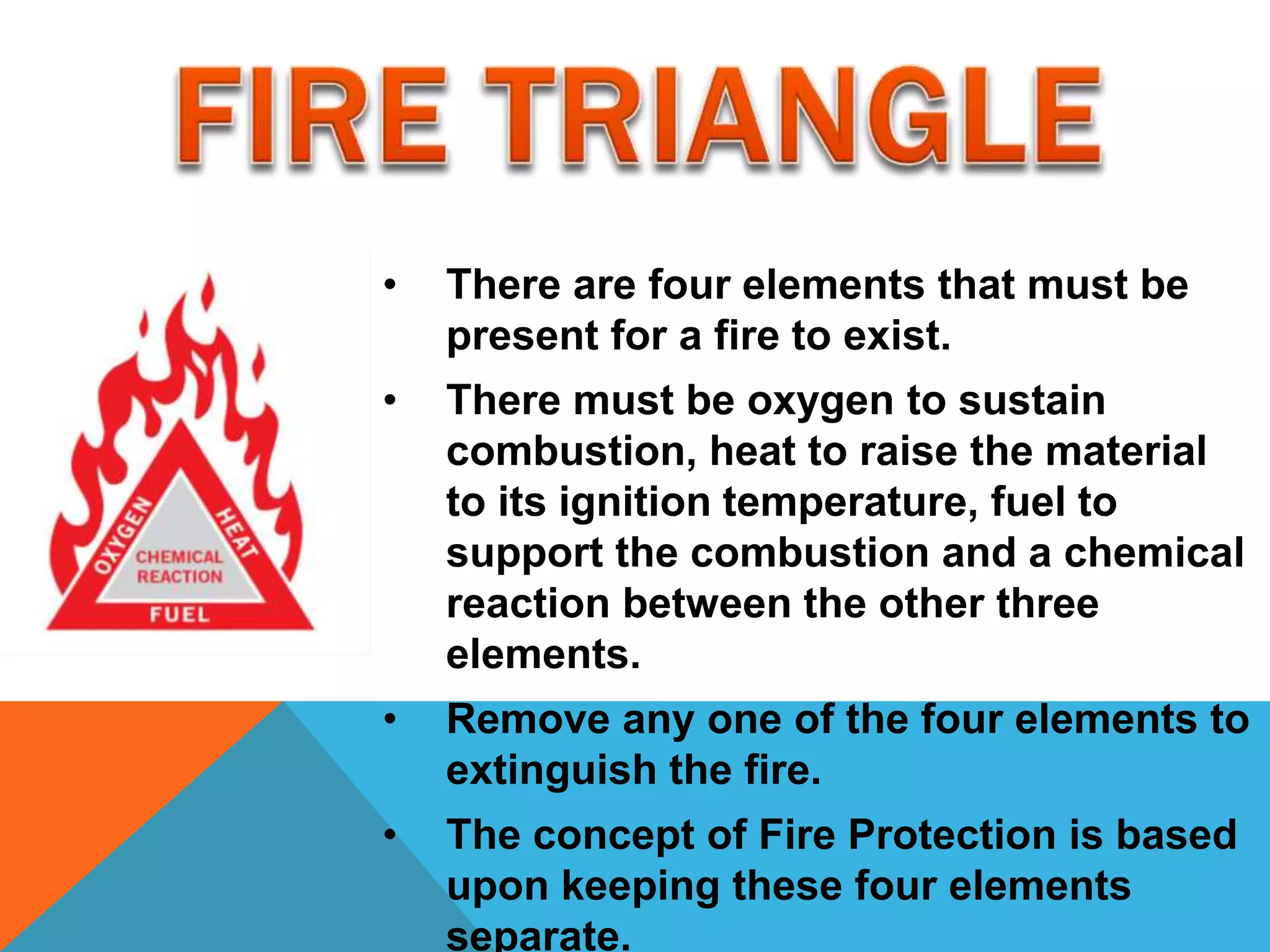
• There are four elements that must be
present for a fire to exist.
• There must be oxygen to sustain
combustion, heat to raise the material
to its ignition temperature, fuel to
support the combustion and a chemical
reaction between the other three
elements.
• Remove any one of the four elements to
extinguish the fire.
• The concept of Fire Protection is based
upon keeping these four elements
separate.
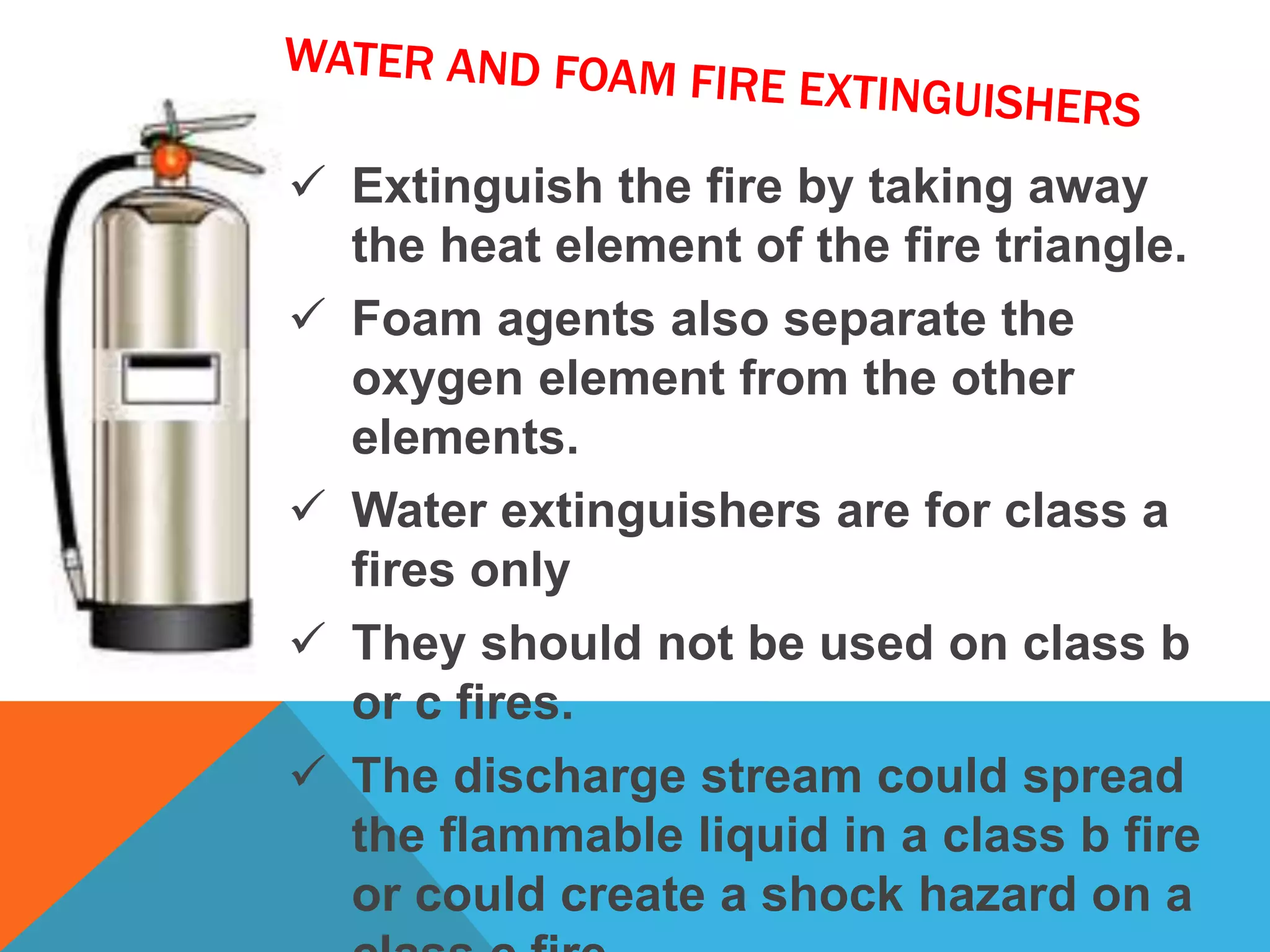
 Extinguish the fire by taking away
the heat element of the fire triangle.
 Foam agents also separate the
oxygen element from the other
elements.
 Water extinguishers are for class a
fires only
 They should not be used on class b
or c fires.
 The discharge stream could spread
the flammable liquid in a class b fire
or could create a shock hazard on a
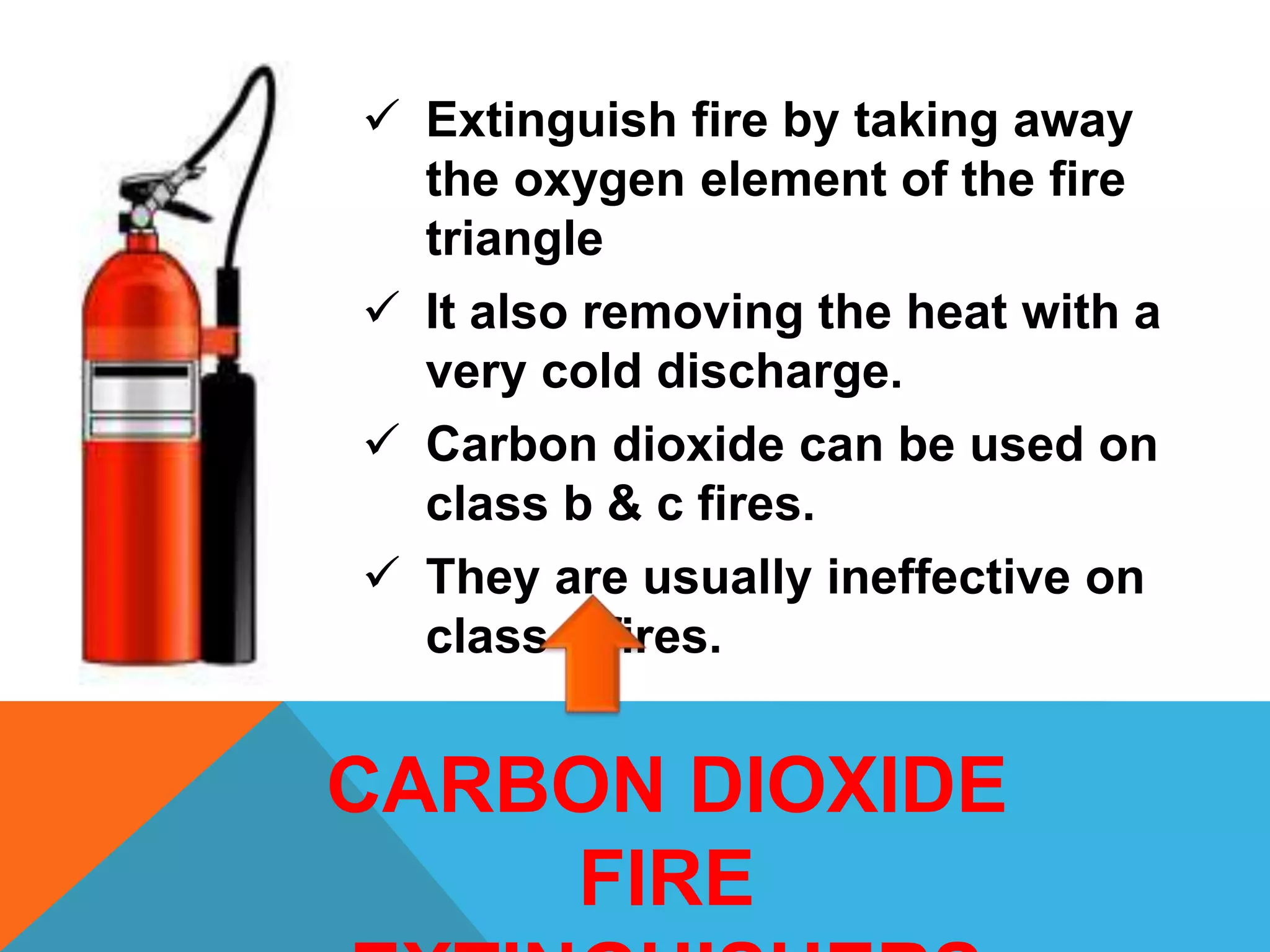
 Extinguish fire by taking away
the oxygen element of the fire
triangle
 It also removing the heat with a
very cold discharge.
 Carbon dioxide can be used on
class b & c fires.
 They are usually ineffective on
class a fires.
CARBON DIOXIDE
FIRE
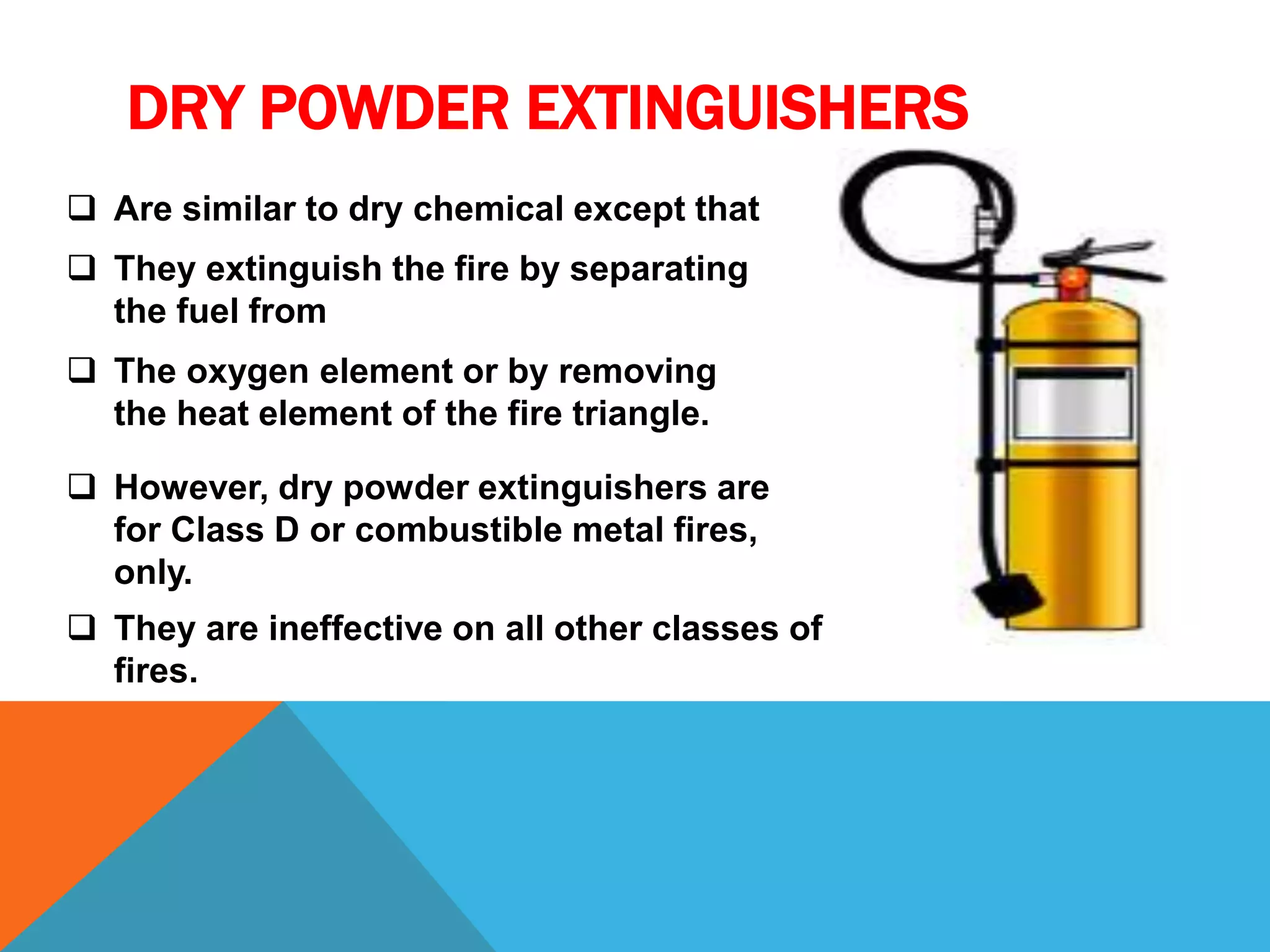
DRY POWDER EXTINGUISHERS
 Are similar to dry chemical except that
 They extinguish the fire by separating
the fuel from
 The oxygen element or by removing
the heat element of the fire triangle.
 However, dry powder extinguishers are
for Class D or combustible metal fires,
only.
 They are ineffective on all other classes of
fires.
FIRE CONTROL METHOD & FIRE
PROTECTION METHOD
A fire hazard is situation where there is greater than
normal risk of harm to property or people due to fire.
It can be defined as a hazardous area where fire will
start or where smokes or gasses can be generated, or
where an explosion can occur endangering the lives
of people.
The most common method to control a class-A fire is to
remove heat by spraying the burning solid fuels with
water.
Another method of controlling a class-A fire would be to
reduce the oxygen content of the atmosphere in the
immediate vicinity of the (i.e., "smother" the fire),
CONTINUE…
Fire control is the practice of reducing the heat output
of a fire, or reducing the area over which the fire
exists, or suppressing or extinguishing the fire by
depriving a fire of fuel, oxygen or heat
Some Class-B fires (hydrocarbons, petroleum's, and
fuels on fire) cannot be efficiently controlled with
water.
Fuels with a specific gravity less than water, such as
gasoline or oil, float on water, resulting in the fire
continuing in the fuel on top of the water.
forming a blanket on top of the liquid fuel which
eliminates the oxygen needed for combustion.
Some class-B fires can be controlled with the
application of chemical fire suppressants.
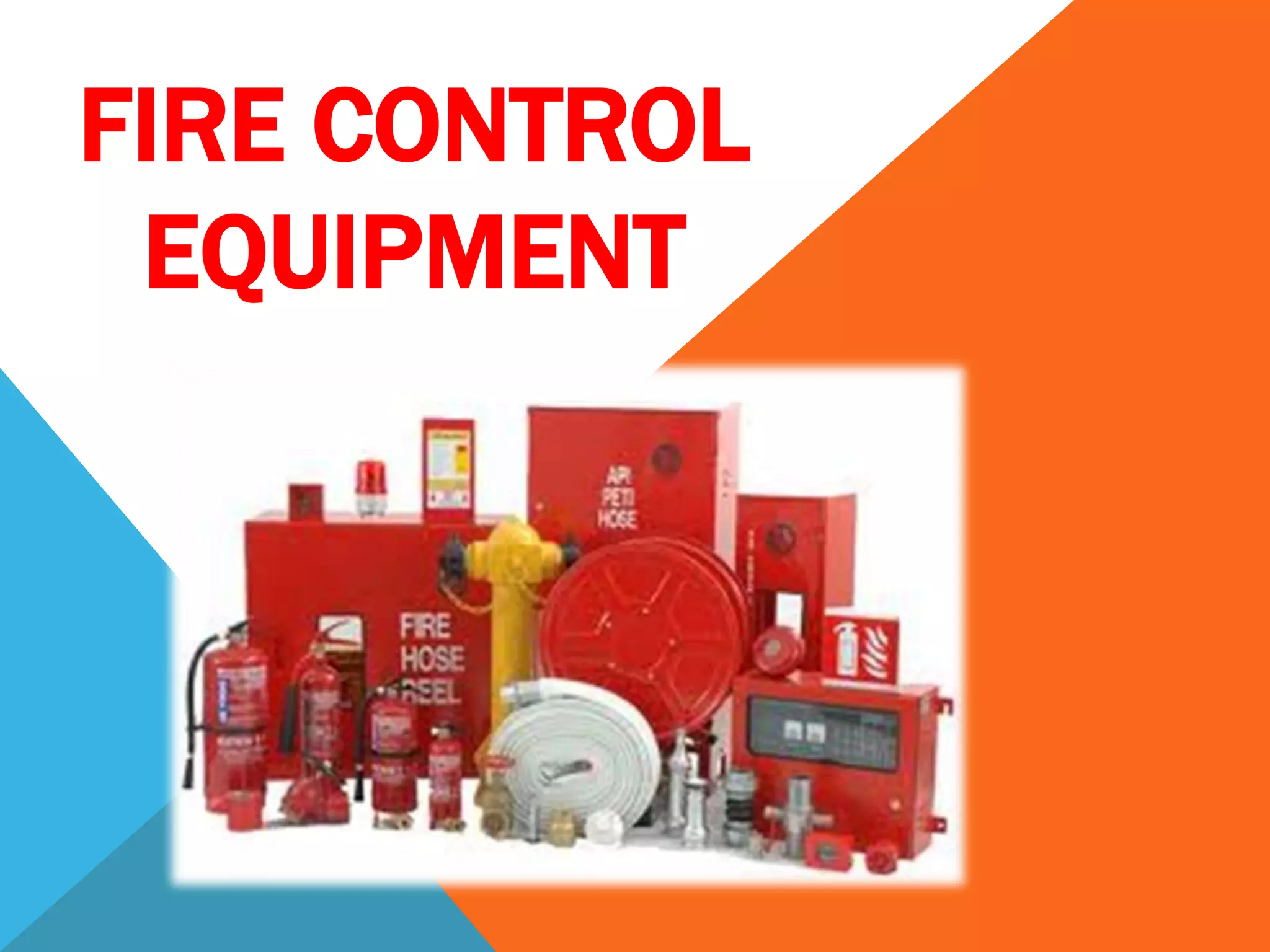
FIRE CONTROL
EQUIPMENT
Fire extinguisher
• Is an active fire protection device used to
extinguish or control small fires, often in
emergency situation
Hydrant and fire hose reel
• A Fire Hydrant System in an effective and
efficient means of extinguishing large fires,
which can otherwise cause devastation.
• Hydrant System enables the fire fighter to
attack the seat of the fire from a distance.
Smoke detector and heat detector
• Is a device that senses smoke, typically as an
indicator of fire.
Fire alarm
• Is a set of equipment working together to detect and
alert people through visual and audio appliances
when smoke or fire is present
• Active from smoke , heat detector, water flow
sensors which are automatic or from manual fire
alarm pull station
Water sprinkler
• Is the component of a fire sprinkler system that
discharges water when the effects of a fire have
been detected
Fire blanket
• Fire blankets can be used to extinguish small fires in
the home, caravan, boat or garage.
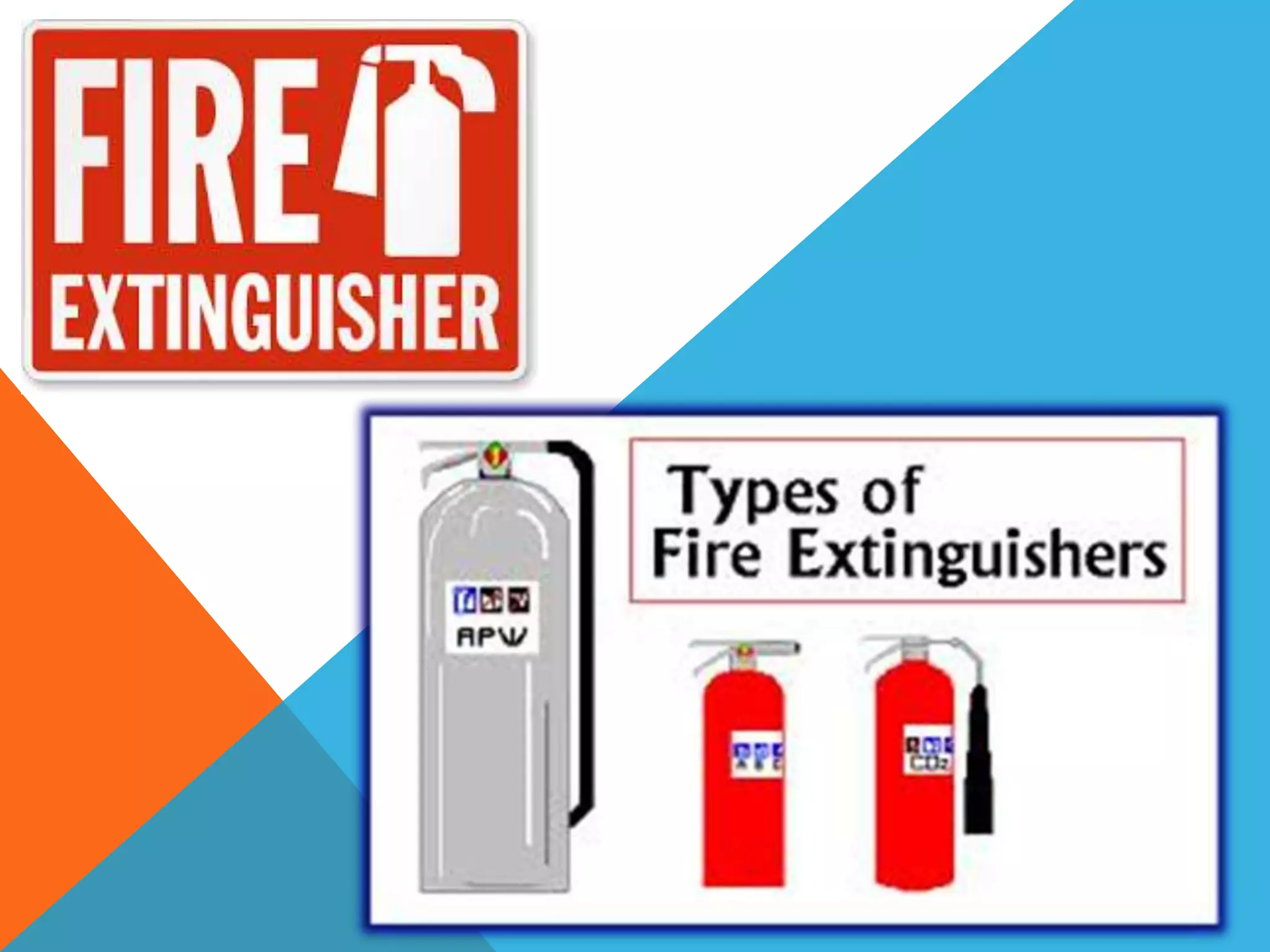
Types of fire extinguishers

Types of fire extinguishers

  • 1.
    NUR BA’YAHANNISA BTMOHD TAHIR 33ETM14F2003 SITI FATIMAH BT AHMAD 33ETM14F2002 NUR SYUHADA BT MOHD ALI MERICAN 33ETM14F2001 SITI FARDIANA BT ZAKARIA 33ETM14F2015
  • 2.
    • There arefour elements that must be present for a fire to exist. • There must be oxygen to sustain combustion, heat to raise the material to its ignition temperature, fuel to support the combustion and a chemical reaction between the other three elements. • Remove any one of the four elements to extinguish the fire. • The concept of Fire Protection is based upon keeping these four elements separate.
  • 4.
     Extinguish thefire by taking away the heat element of the fire triangle.  Foam agents also separate the oxygen element from the other elements.  Water extinguishers are for class a fires only  They should not be used on class b or c fires.  The discharge stream could spread the flammable liquid in a class b fire or could create a shock hazard on a
  • 5.
     Extinguish fireby taking away the oxygen element of the fire triangle  It also removing the heat with a very cold discharge.  Carbon dioxide can be used on class b & c fires.  They are usually ineffective on class a fires. CARBON DIOXIDE FIRE
  • 6.
    DRY POWDER EXTINGUISHERS Are similar to dry chemical except that  They extinguish the fire by separating the fuel from  The oxygen element or by removing the heat element of the fire triangle.  However, dry powder extinguishers are for Class D or combustible metal fires, only.  They are ineffective on all other classes of fires.
  • 7.
    FIRE CONTROL METHOD& FIRE PROTECTION METHOD A fire hazard is situation where there is greater than normal risk of harm to property or people due to fire. It can be defined as a hazardous area where fire will start or where smokes or gasses can be generated, or where an explosion can occur endangering the lives of people. The most common method to control a class-A fire is to remove heat by spraying the burning solid fuels with water. Another method of controlling a class-A fire would be to reduce the oxygen content of the atmosphere in the immediate vicinity of the (i.e., "smother" the fire),
  • 8.
    CONTINUE… Fire control isthe practice of reducing the heat output of a fire, or reducing the area over which the fire exists, or suppressing or extinguishing the fire by depriving a fire of fuel, oxygen or heat Some Class-B fires (hydrocarbons, petroleum's, and fuels on fire) cannot be efficiently controlled with water. Fuels with a specific gravity less than water, such as gasoline or oil, float on water, resulting in the fire continuing in the fuel on top of the water. forming a blanket on top of the liquid fuel which eliminates the oxygen needed for combustion. Some class-B fires can be controlled with the application of chemical fire suppressants.
  • 9.
  • 10.
    Fire extinguisher • Isan active fire protection device used to extinguish or control small fires, often in emergency situation Hydrant and fire hose reel • A Fire Hydrant System in an effective and efficient means of extinguishing large fires, which can otherwise cause devastation. • Hydrant System enables the fire fighter to attack the seat of the fire from a distance. Smoke detector and heat detector • Is a device that senses smoke, typically as an indicator of fire.
  • 11.
    Fire alarm • Isa set of equipment working together to detect and alert people through visual and audio appliances when smoke or fire is present • Active from smoke , heat detector, water flow sensors which are automatic or from manual fire alarm pull station Water sprinkler • Is the component of a fire sprinkler system that discharges water when the effects of a fire have been detected Fire blanket • Fire blankets can be used to extinguish small fires in the home, caravan, boat or garage.