EQUILIBIRUM
PREPARED BY
MUHAMAD MUZAMMAL
ROHAIL KHALID
HASSAM ALI
PRESENTATION
Defination of equilibrium
 A body is said to be in equilibrium
if it is at rest or moving with uniform
velocity. In other words if the linear
and angular acceleration of a body
are zero , the body is said to be in equilibrium .
 Or we can say that when two or more forces act on
a body such that their resultant or combining
effect on the body is Zero and the body retains its
state of rest or uniform motion then the body is said
to be in equilibrium.
Types Of Equilibrium
 With respect to the state of a
body ,equilibrium may be divided into
two categories:
 1. Static equilibrium
 2. Dynamic equilibrium
STATIC EQUILIBRIUM
 If the combined effect of all
the forces acting on a body is
zero and the body is in the
state of rest then its
equilibrium is termed as
static equilibrium.
 For example: All stationary
bodies.
Dynamic equilibirum
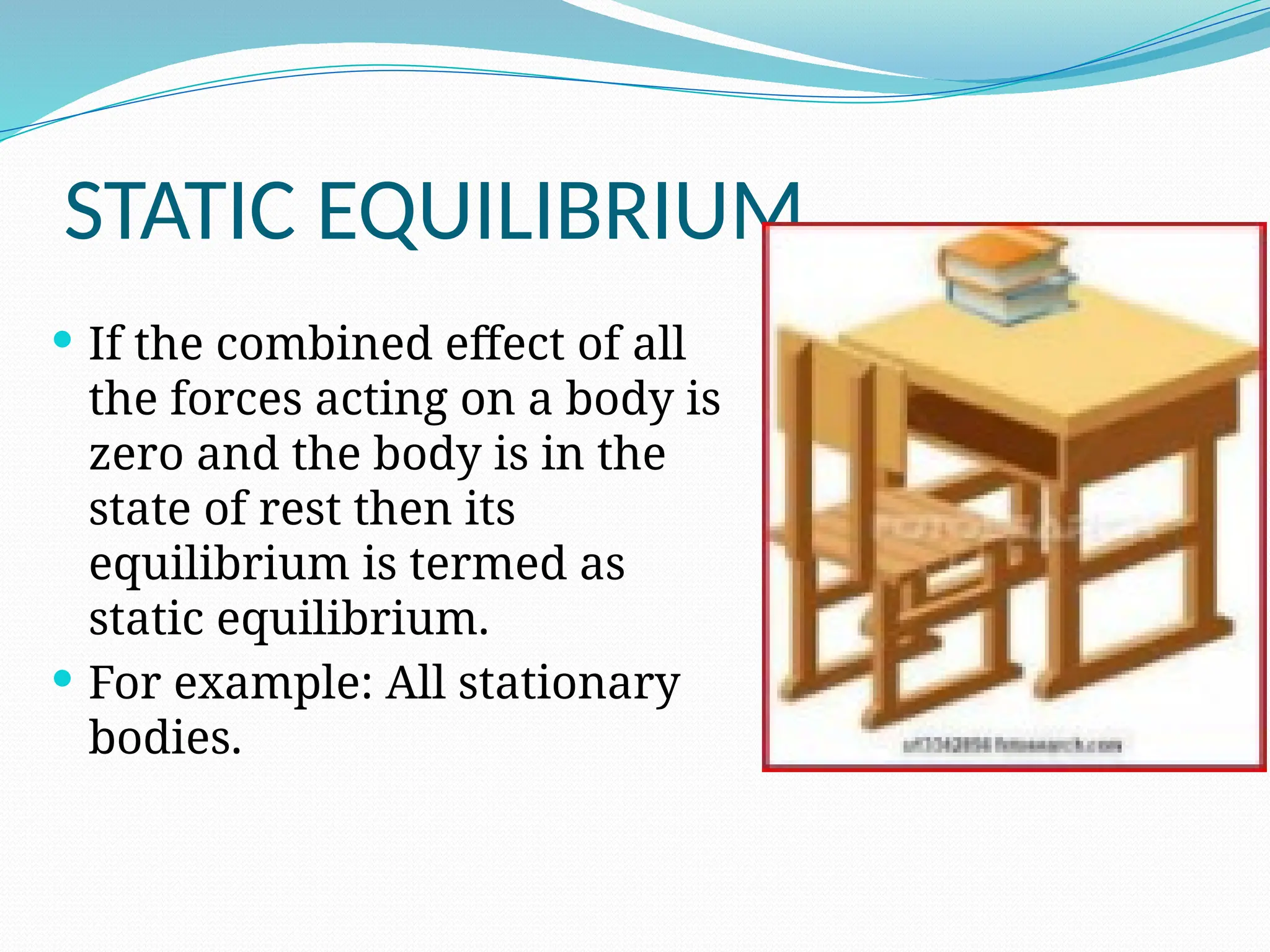
 When a body is in state of
uniform motion and the
resultant of all the forces
acting upon it is zero then
it is said to be in dynamic
equilibrium .
 For example : Jump by
using parachute.
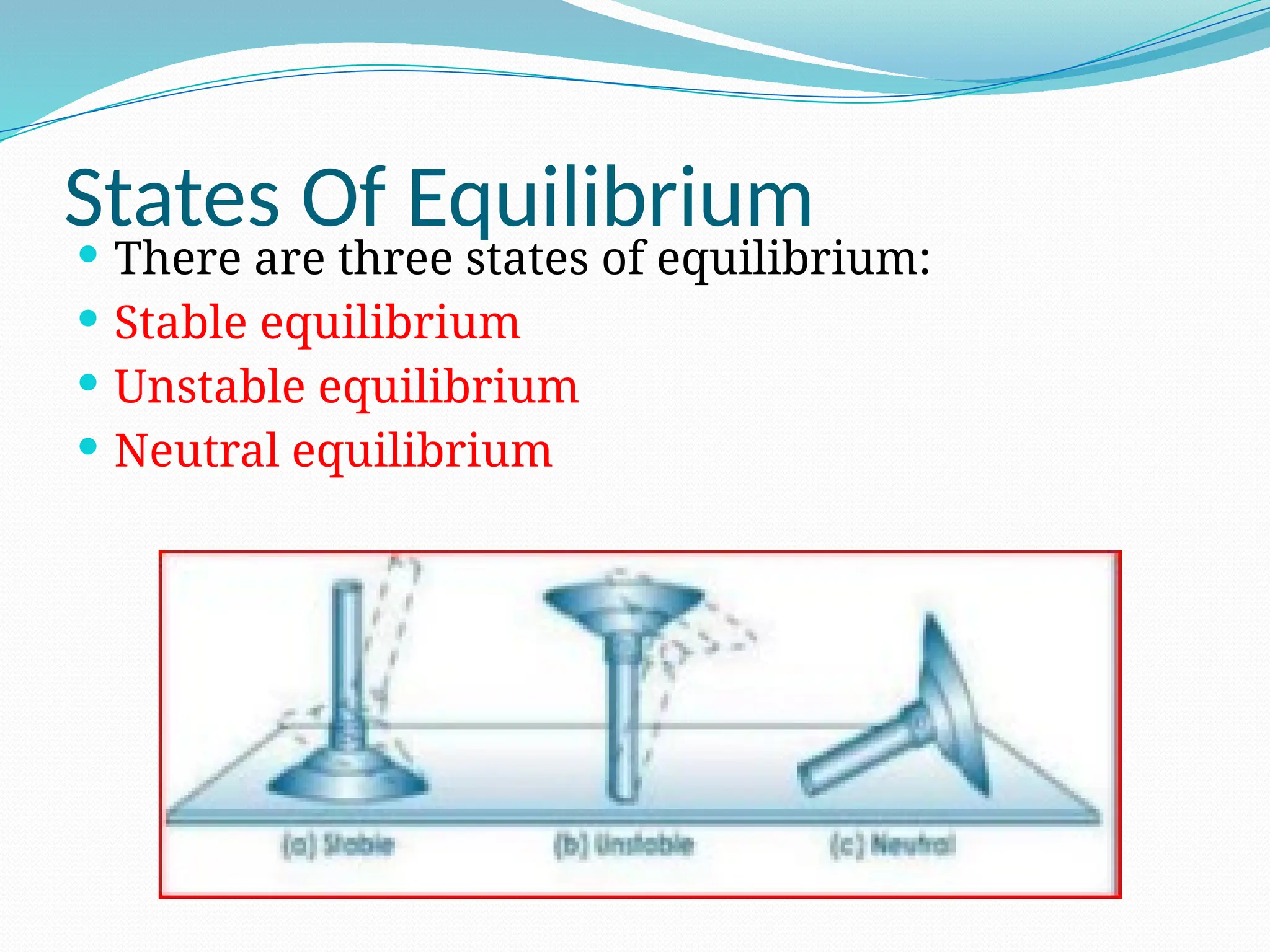
States Of Equilibrium
 There are three states of equilibrium:
 Stable equilibrium
 Unstable equilibrium
 Neutral equilibrium
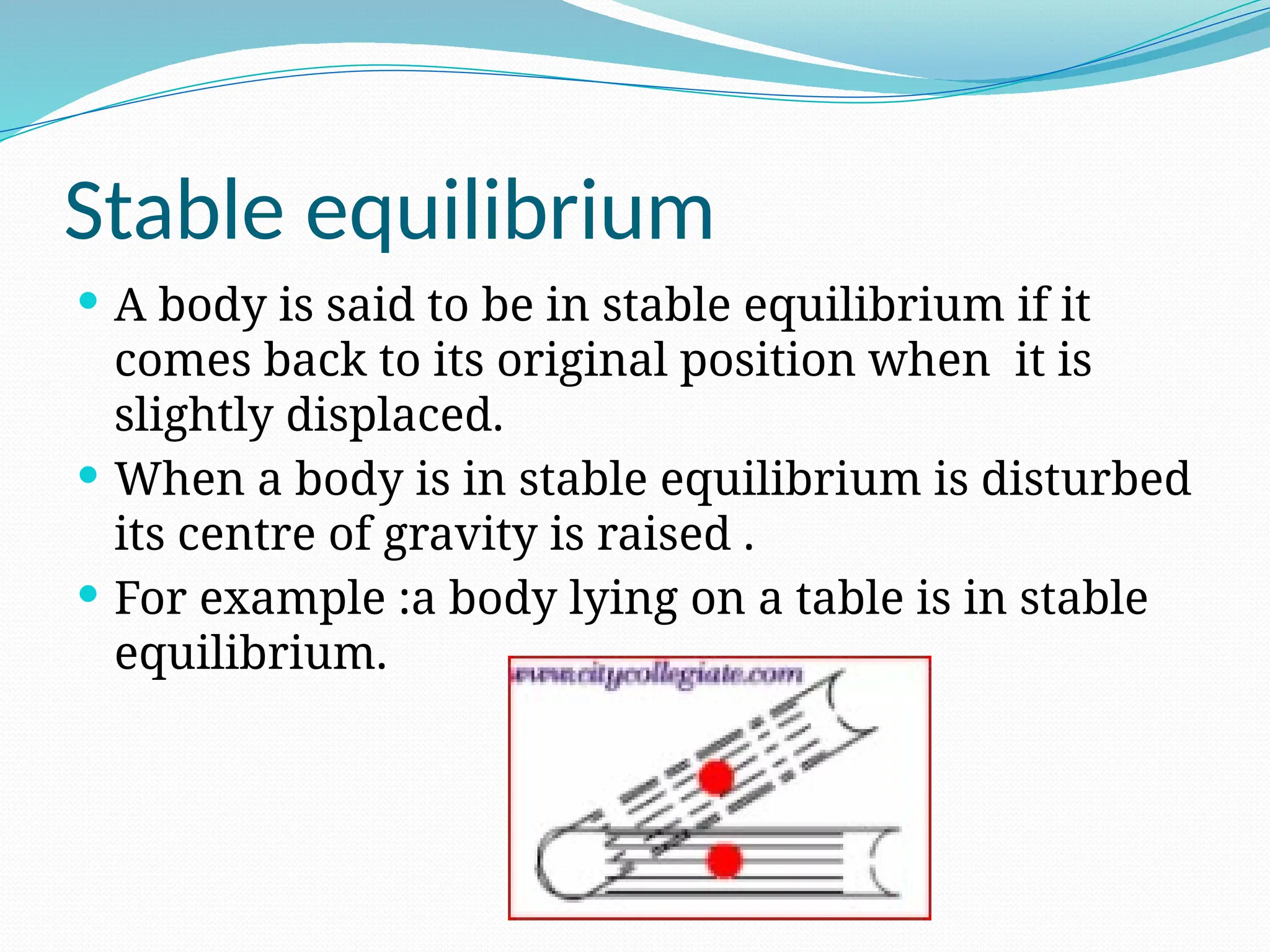
Stable equilibrium
 A body is said to be in stable equilibrium if it
comes back to its original position when it is
slightly displaced.
 When a body is in stable equilibrium is disturbed
its centre of gravity is raised .
 For example :a body lying on a table is in stable
equilibrium.
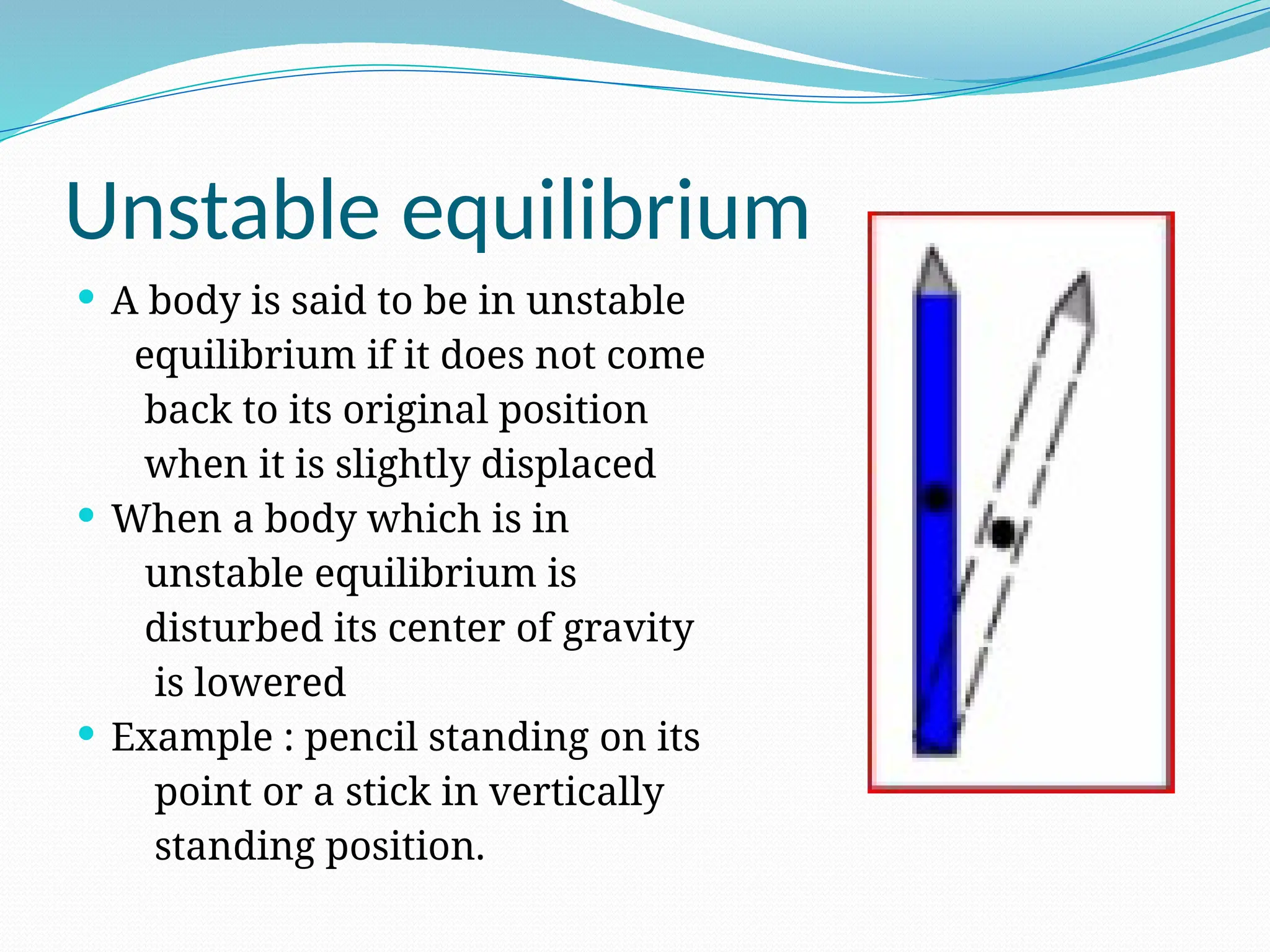
Unstable equilibrium
 A body is said to be in unstable
equilibrium if it does not come
back to its original position
when it is slightly displaced
 When a body which is in
unstable equilibrium is
disturbed its center of gravity
is lowered
 Example : pencil standing on its
point or a stick in vertically
standing position.
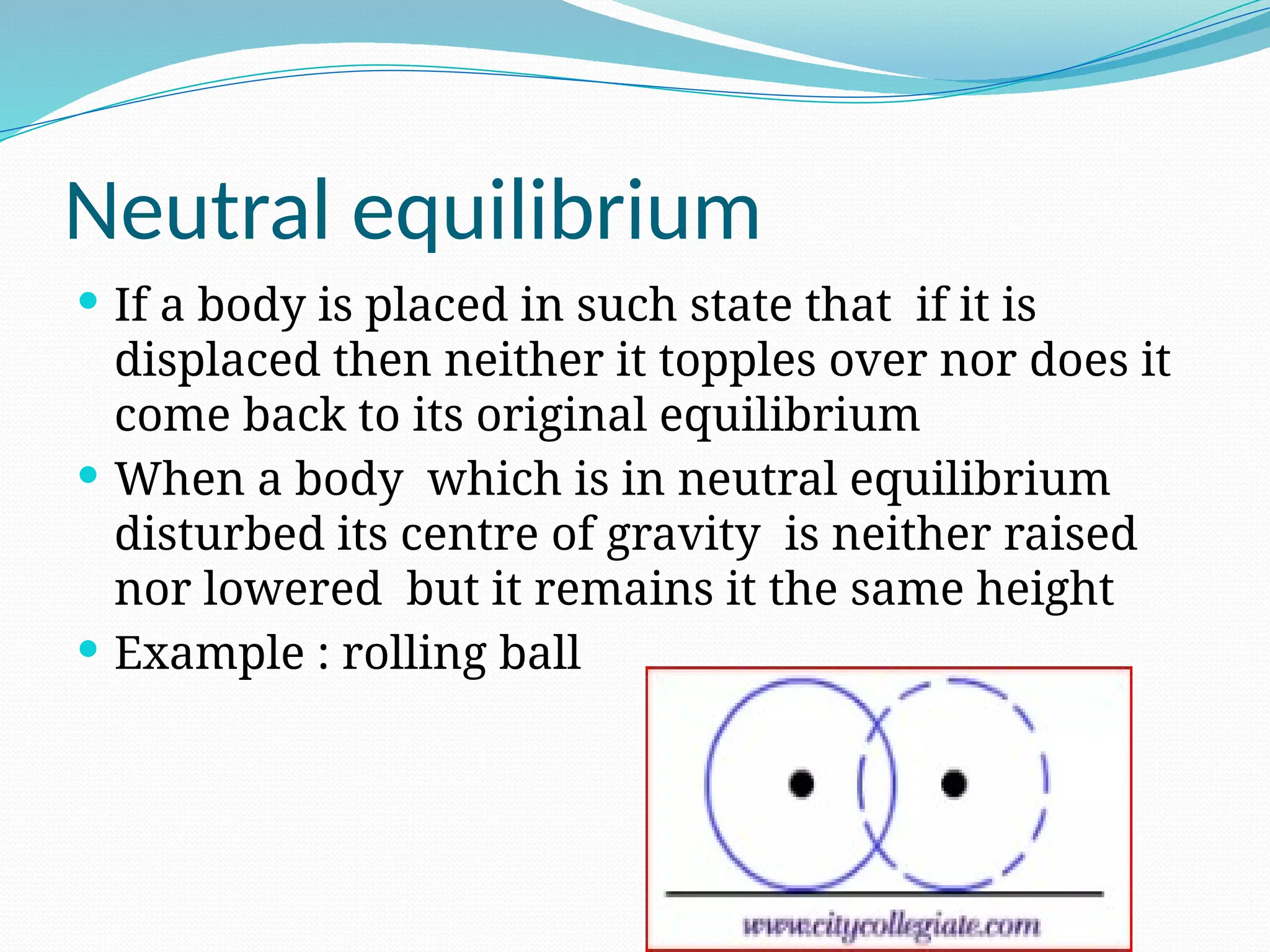
Neutral equilibrium
 If a body is placed in such state that if it is
displaced then neither it topples over nor does it
come back to its original equilibrium
 When a body which is in neutral equilibrium
disturbed its centre of gravity is neither raised
nor lowered but it remains it the same height
 Example : rolling ball
Condition of equilibrium
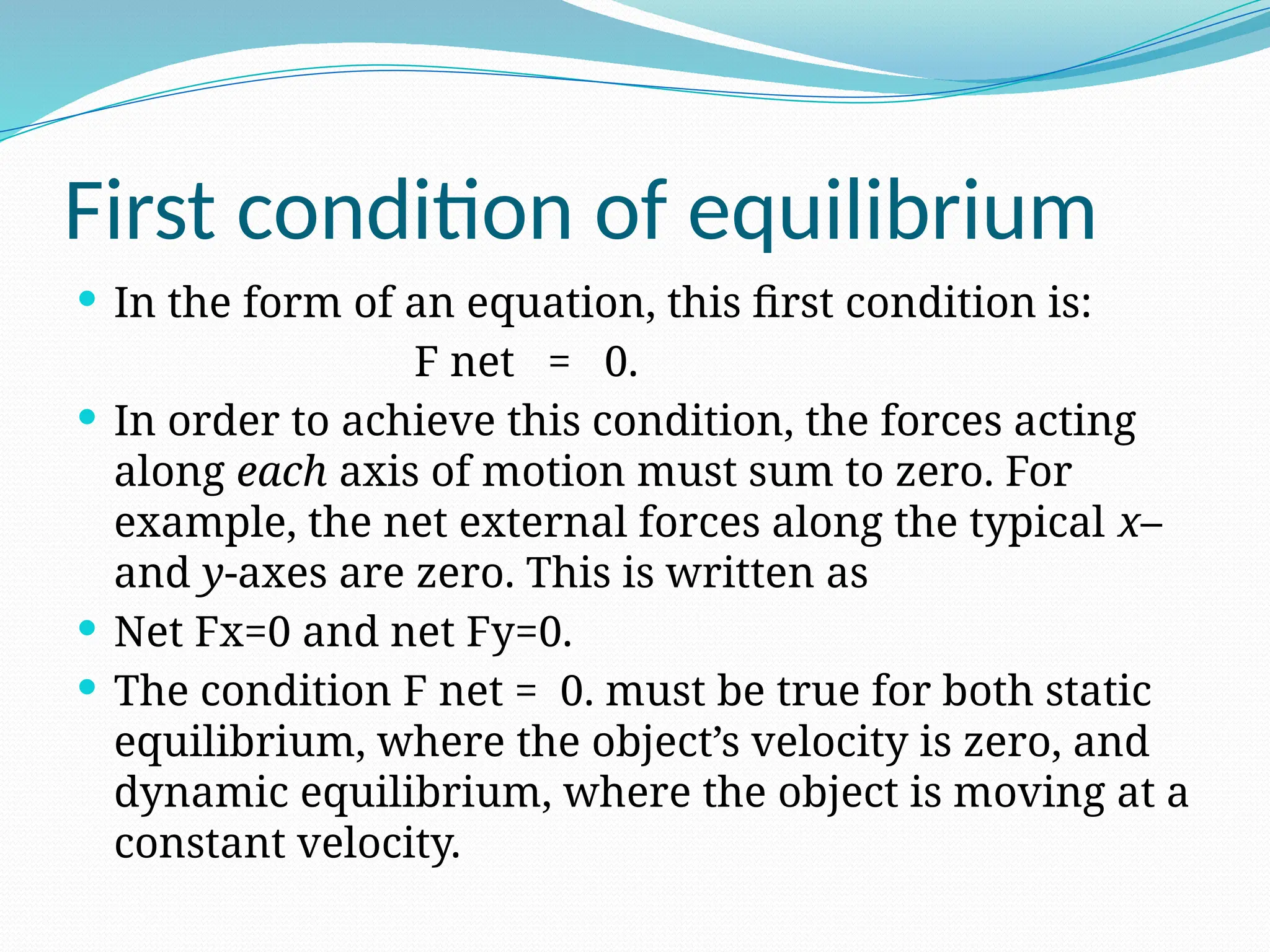
There are two condition of equilibrium
 First condition of equilibrium
 Second condition of equilibrium
First condition of equilibrium
 In the form of an equation, this first condition is:
F net = 0.
 In order to achieve this condition, the forces acting
along each axis of motion must sum to zero. For
example, the net external forces along the typical x–
and y-axes are zero. This is written as
 Net Fx=0 and net Fy=0.
 The condition F net = 0. must be true for both static
equilibrium, where the object’s velocity is zero, and
dynamic equilibrium, where the object is moving at a
constant velocity.
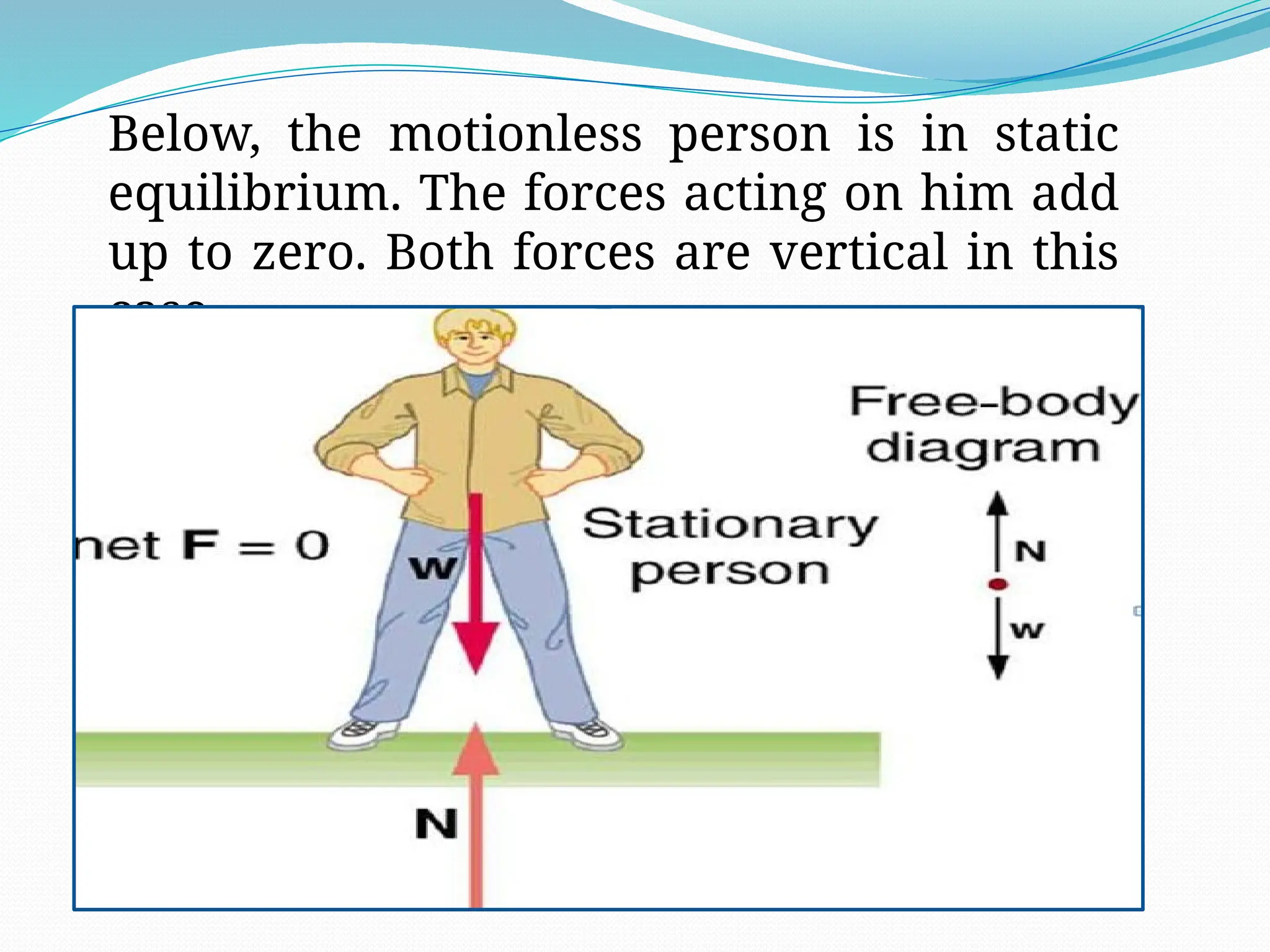
Below, the motionless person is in static
equilibrium. The forces acting on him add
up to zero. Both forces are vertical in this
case.
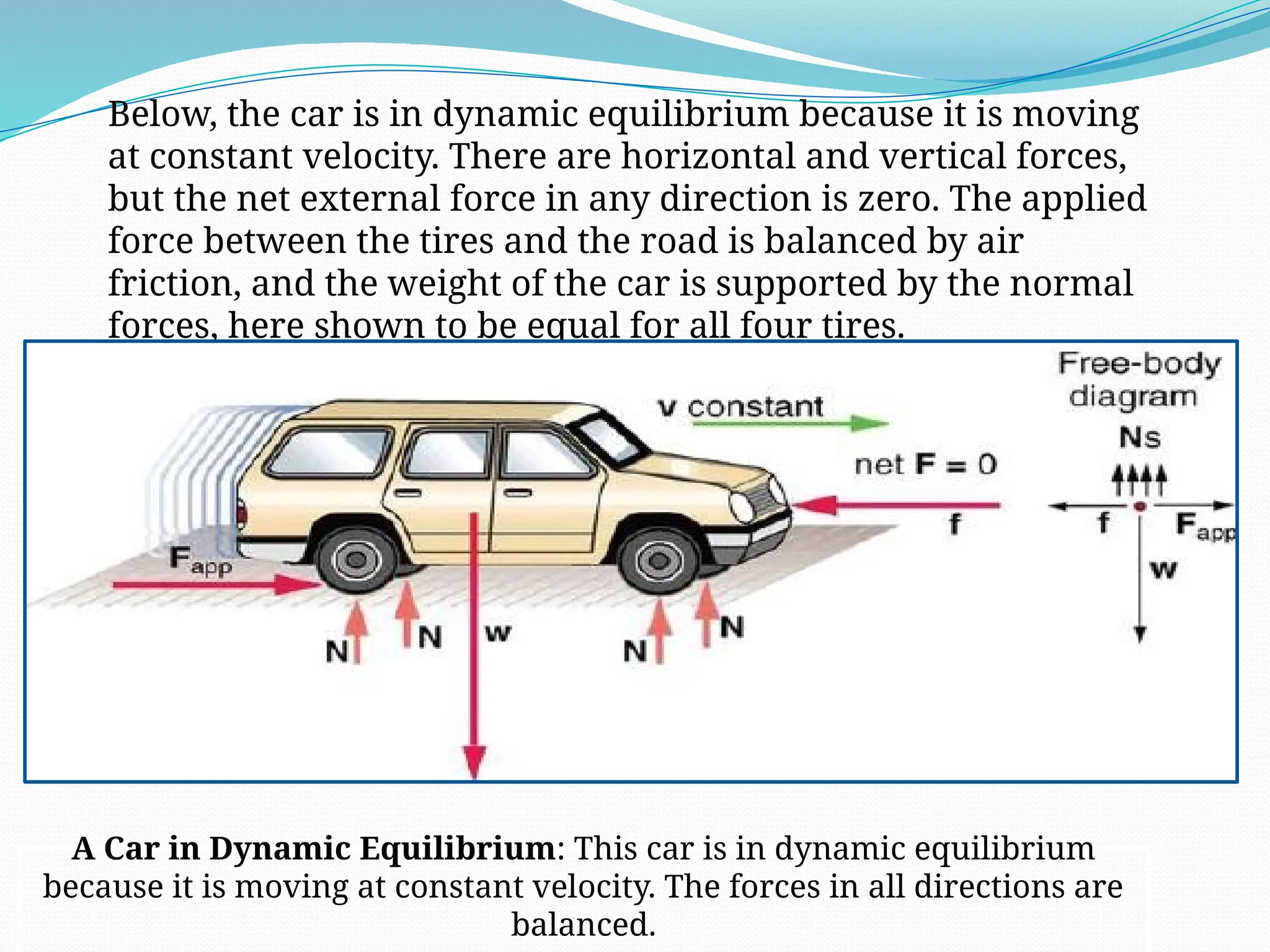
Below, the car is in dynamic equilibrium because it is moving
at constant velocity. There are horizontal and vertical forces,
but the net external force in any direction is zero. The applied
force between the tires and the road is balanced by air
friction, and the weight of the car is supported by the normal
forces, here shown to be equal for all four tires.
A Car in Dynamic Equilibrium: This car is in dynamic equilibrium
because it is moving at constant velocity. The forces in all directions are
balanced.
Second Condition of quilibrium
 The second condition of static equilibrium says
that the net torque acting on the object must be
zero.
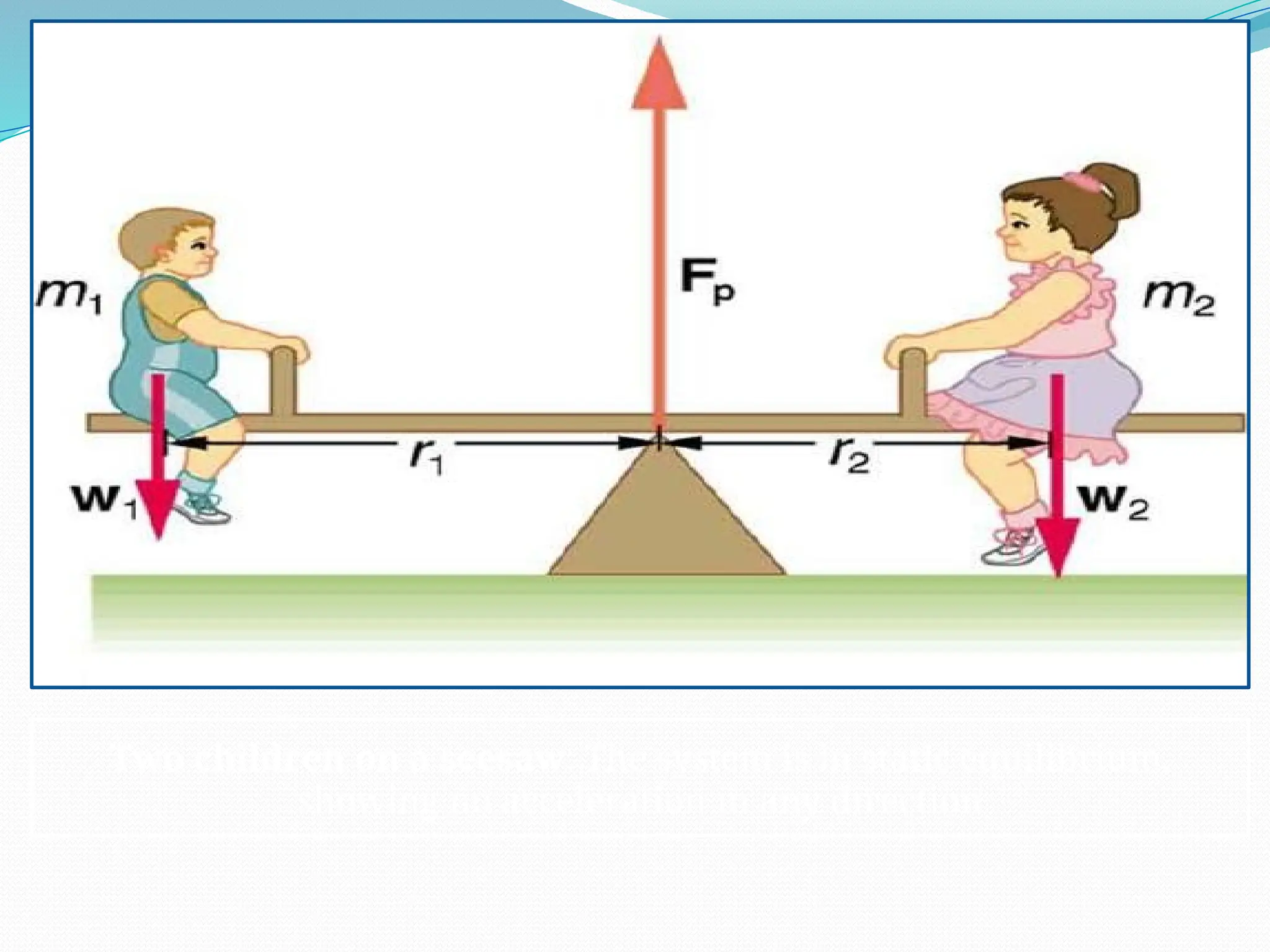
 For example : A child’s seesaw, shown in figure,
is an example of static equilibrium. An object in
static equilibrium is one that has no acceleration
in any direction. While there might be motion,
such motion is constant.
Two children on a seesaw: The system is in static equilibrium,
showing no acceleration in any direction

Types of Equilibrium and Conditions.pptx

  • 1.
  • 2.
    Defination of equilibrium A body is said to be in equilibrium if it is at rest or moving with uniform velocity. In other words if the linear and angular acceleration of a body are zero , the body is said to be in equilibrium .  Or we can say that when two or more forces act on a body such that their resultant or combining effect on the body is Zero and the body retains its state of rest or uniform motion then the body is said to be in equilibrium.
  • 3.
    Types Of Equilibrium With respect to the state of a body ,equilibrium may be divided into two categories:  1. Static equilibrium  2. Dynamic equilibrium
  • 4.
    STATIC EQUILIBRIUM  Ifthe combined effect of all the forces acting on a body is zero and the body is in the state of rest then its equilibrium is termed as static equilibrium.  For example: All stationary bodies.
  • 5.
    Dynamic equilibirum  Whena body is in state of uniform motion and the resultant of all the forces acting upon it is zero then it is said to be in dynamic equilibrium .  For example : Jump by using parachute.
  • 6.
    States Of Equilibrium There are three states of equilibrium:  Stable equilibrium  Unstable equilibrium  Neutral equilibrium
  • 7.
    Stable equilibrium  Abody is said to be in stable equilibrium if it comes back to its original position when it is slightly displaced.  When a body is in stable equilibrium is disturbed its centre of gravity is raised .  For example :a body lying on a table is in stable equilibrium.
  • 8.
    Unstable equilibrium  Abody is said to be in unstable equilibrium if it does not come back to its original position when it is slightly displaced  When a body which is in unstable equilibrium is disturbed its center of gravity is lowered  Example : pencil standing on its point or a stick in vertically standing position.
  • 9.
    Neutral equilibrium  Ifa body is placed in such state that if it is displaced then neither it topples over nor does it come back to its original equilibrium  When a body which is in neutral equilibrium disturbed its centre of gravity is neither raised nor lowered but it remains it the same height  Example : rolling ball
  • 10.
    Condition of equilibrium Thereare two condition of equilibrium  First condition of equilibrium  Second condition of equilibrium
  • 11.
    First condition ofequilibrium  In the form of an equation, this first condition is: F net = 0.  In order to achieve this condition, the forces acting along each axis of motion must sum to zero. For example, the net external forces along the typical x– and y-axes are zero. This is written as  Net Fx=0 and net Fy=0.  The condition F net = 0. must be true for both static equilibrium, where the object’s velocity is zero, and dynamic equilibrium, where the object is moving at a constant velocity.
  • 12.
    Below, the motionlessperson is in static equilibrium. The forces acting on him add up to zero. Both forces are vertical in this case.
  • 13.
    Below, the caris in dynamic equilibrium because it is moving at constant velocity. There are horizontal and vertical forces, but the net external force in any direction is zero. The applied force between the tires and the road is balanced by air friction, and the weight of the car is supported by the normal forces, here shown to be equal for all four tires. A Car in Dynamic Equilibrium: This car is in dynamic equilibrium because it is moving at constant velocity. The forces in all directions are balanced.
  • 14.
    Second Condition ofquilibrium  The second condition of static equilibrium says that the net torque acting on the object must be zero.  For example : A child’s seesaw, shown in figure, is an example of static equilibrium. An object in static equilibrium is one that has no acceleration in any direction. While there might be motion, such motion is constant.
  • 15.
    Two children ona seesaw: The system is in static equilibrium, showing no acceleration in any direction