3 ppts.pdf, Equilibrium & conditions and types of equilibrium
1.
Think!
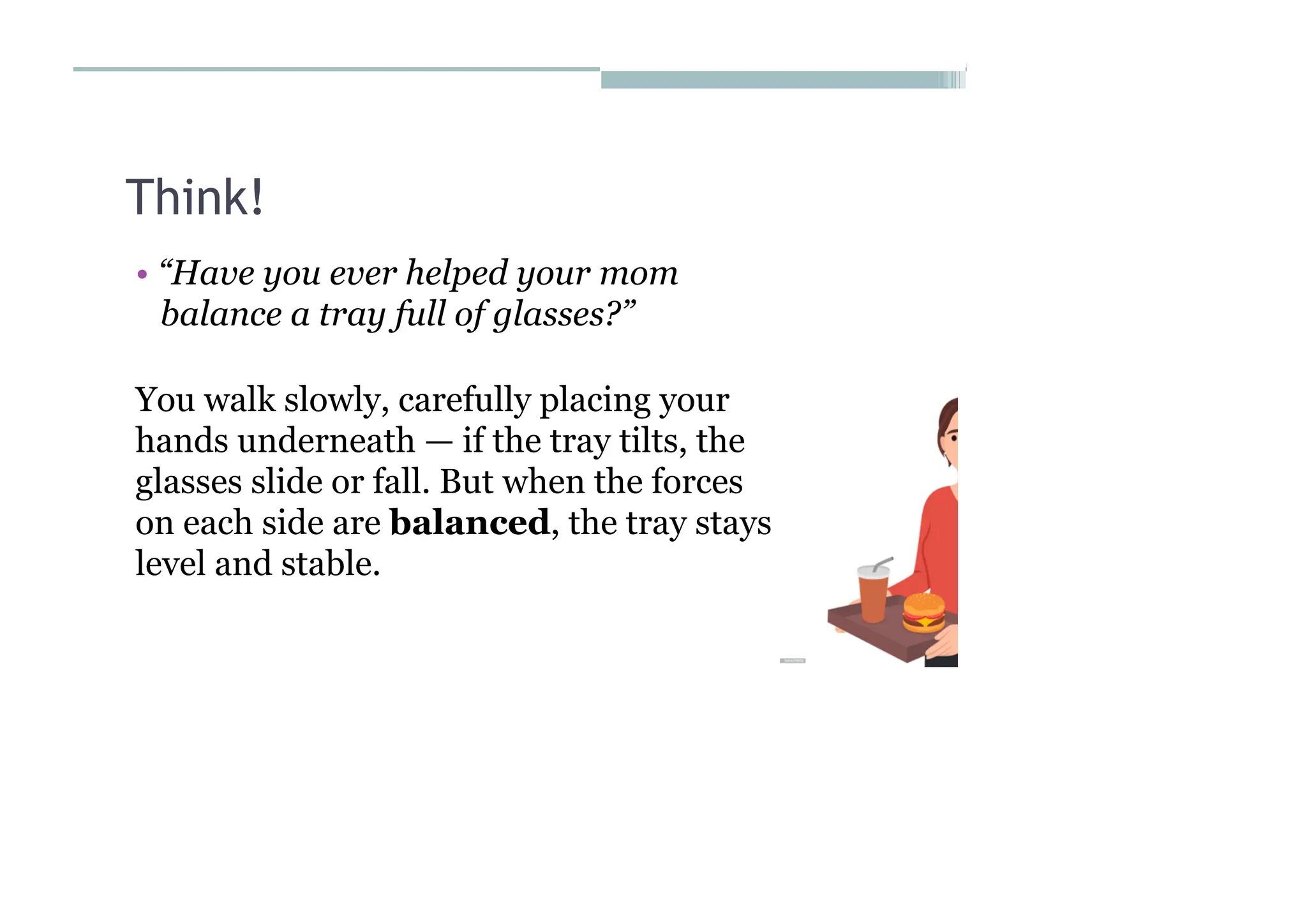
• “Have youever helped your mom
balance a tray full of glasses?”
You walk slowly, carefully placing your
hands underneath — if the tray tilts, the
glasses slide or fall. But when the forces
on each side are balanced, the tray stays
level and stable.
2.
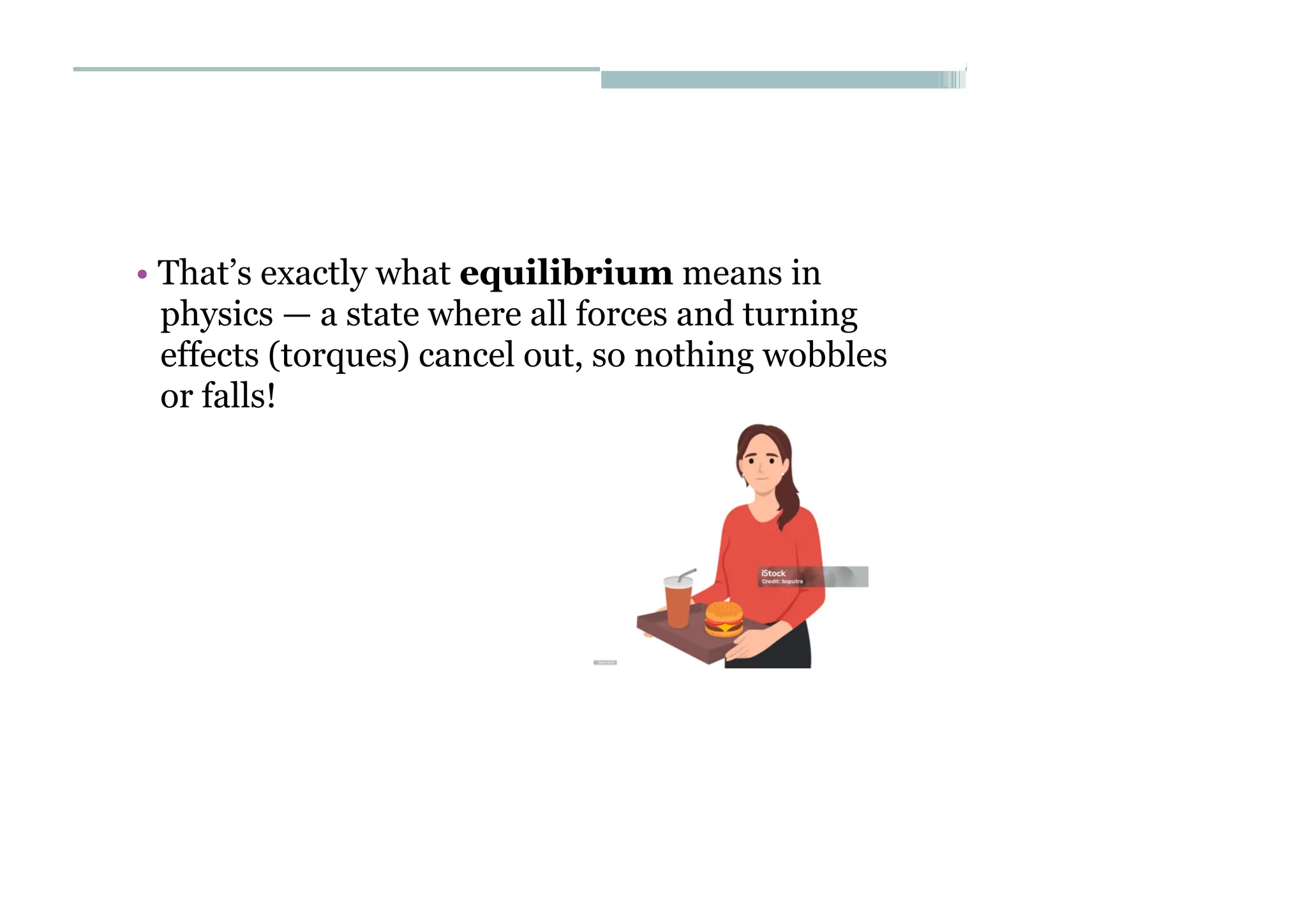
• That’s exactlywhat equilibrium means in
physics — a state where all forces and turning
effects (torques) cancel out, so nothing wobbles
or falls!
3.
What is Equilibrium?
Definition:
Abody is in equilibrium when the net force and
net torque acting on it are both zero.
It may either:
• Stay at rest
• Move with constant velocity
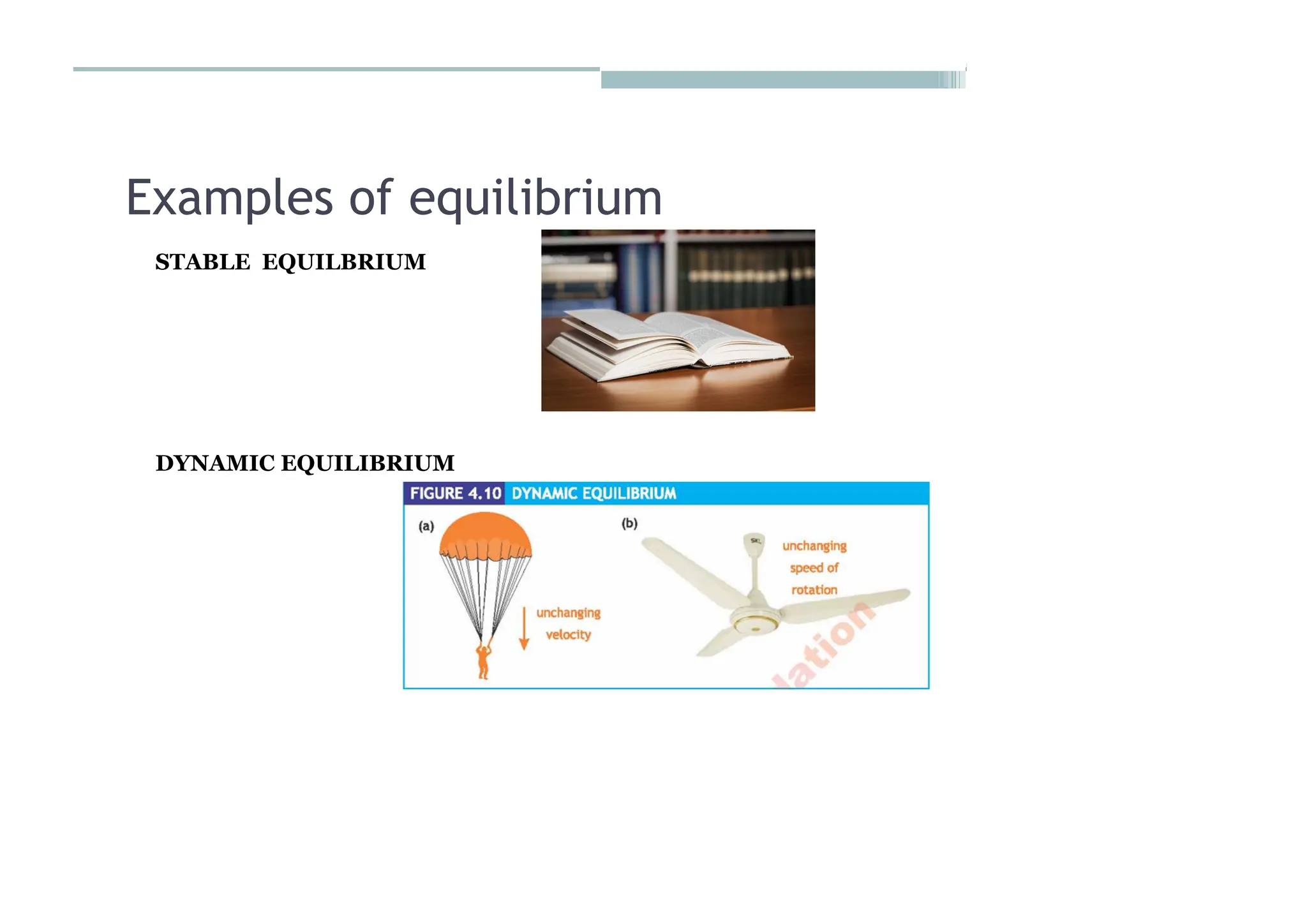
Daily Life Examples:
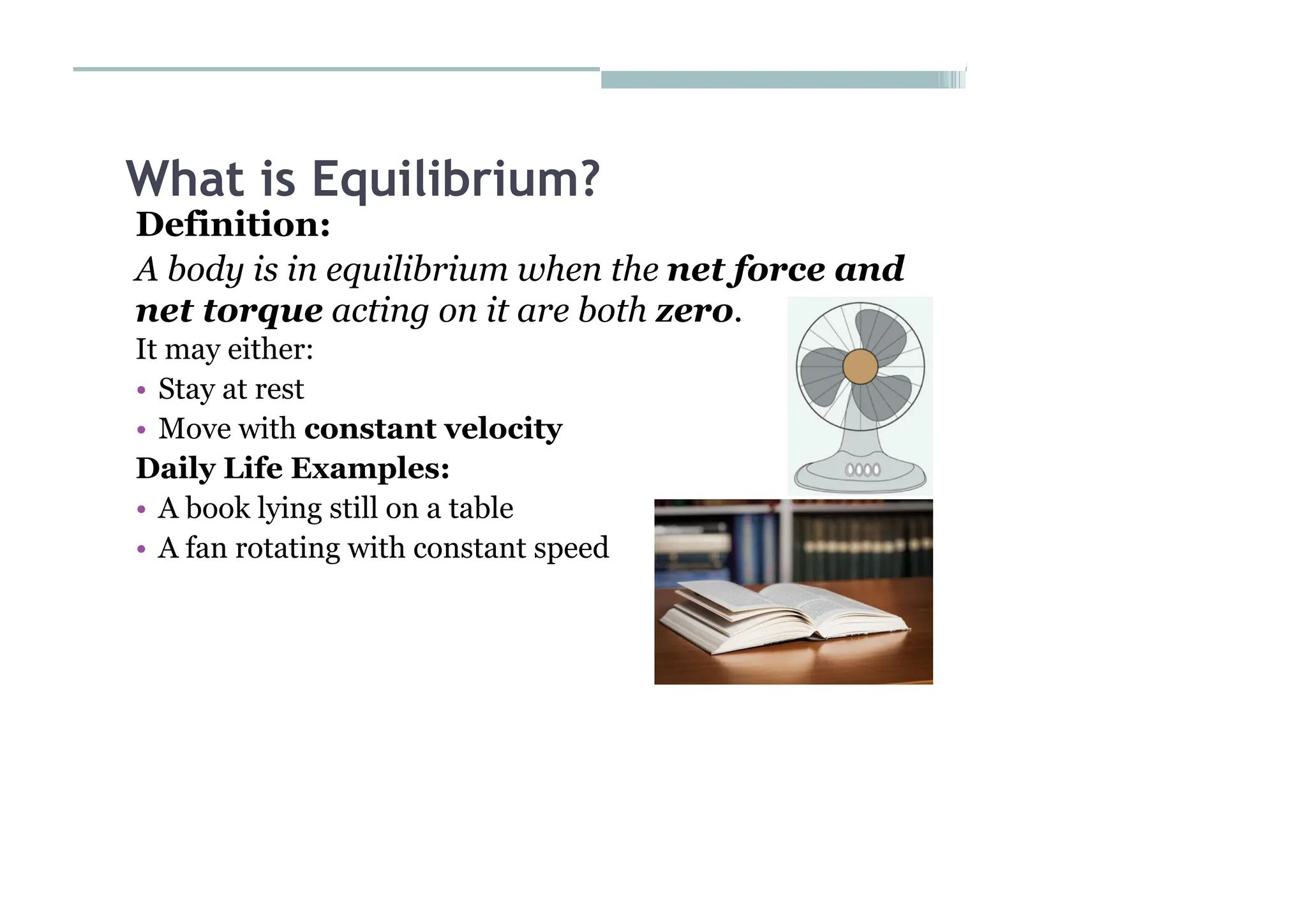
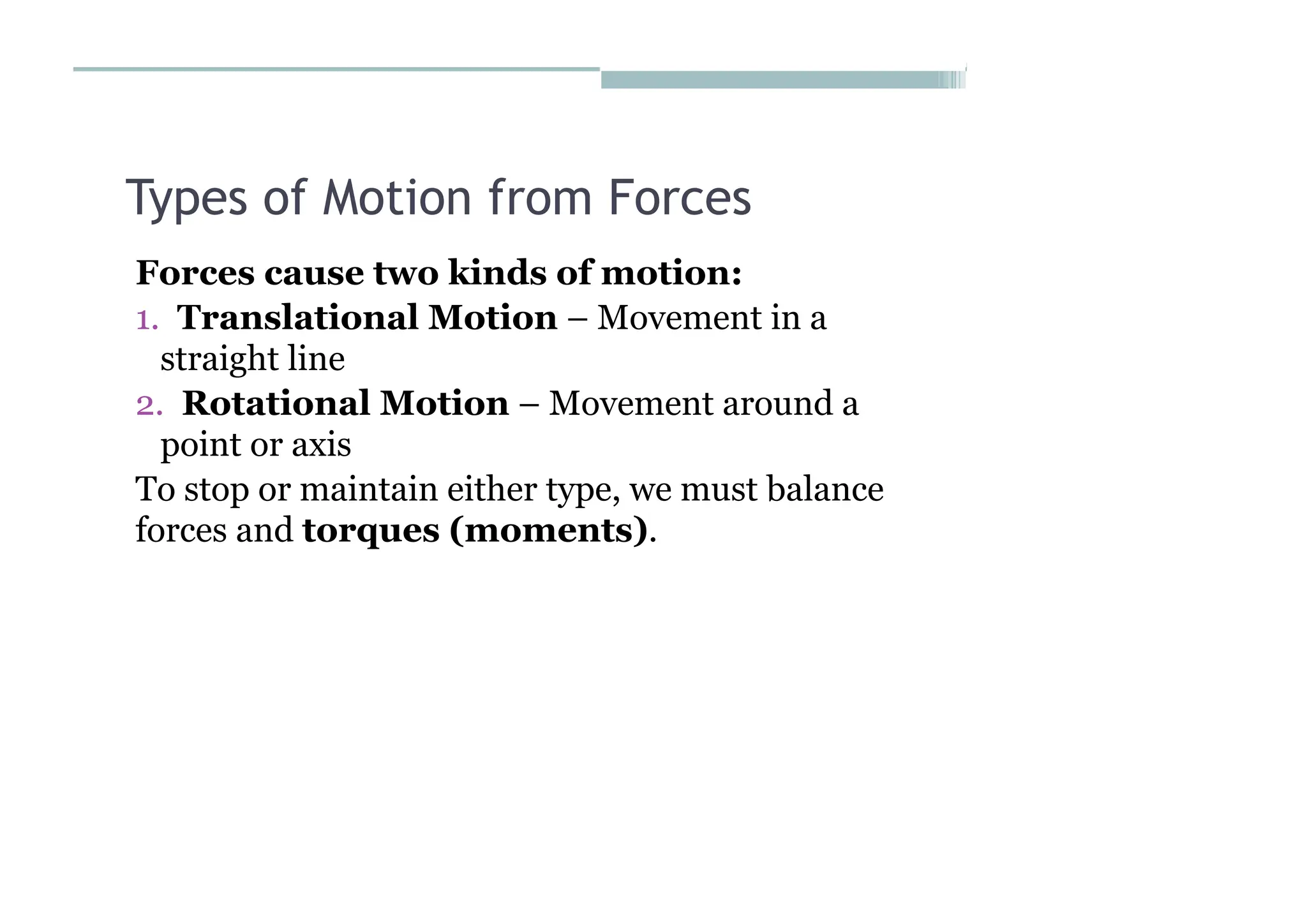
• A book lying still on a table
• A fan rotating with constant speed
4.
Types of Motionfrom Forces
Forces cause two kinds of motion:
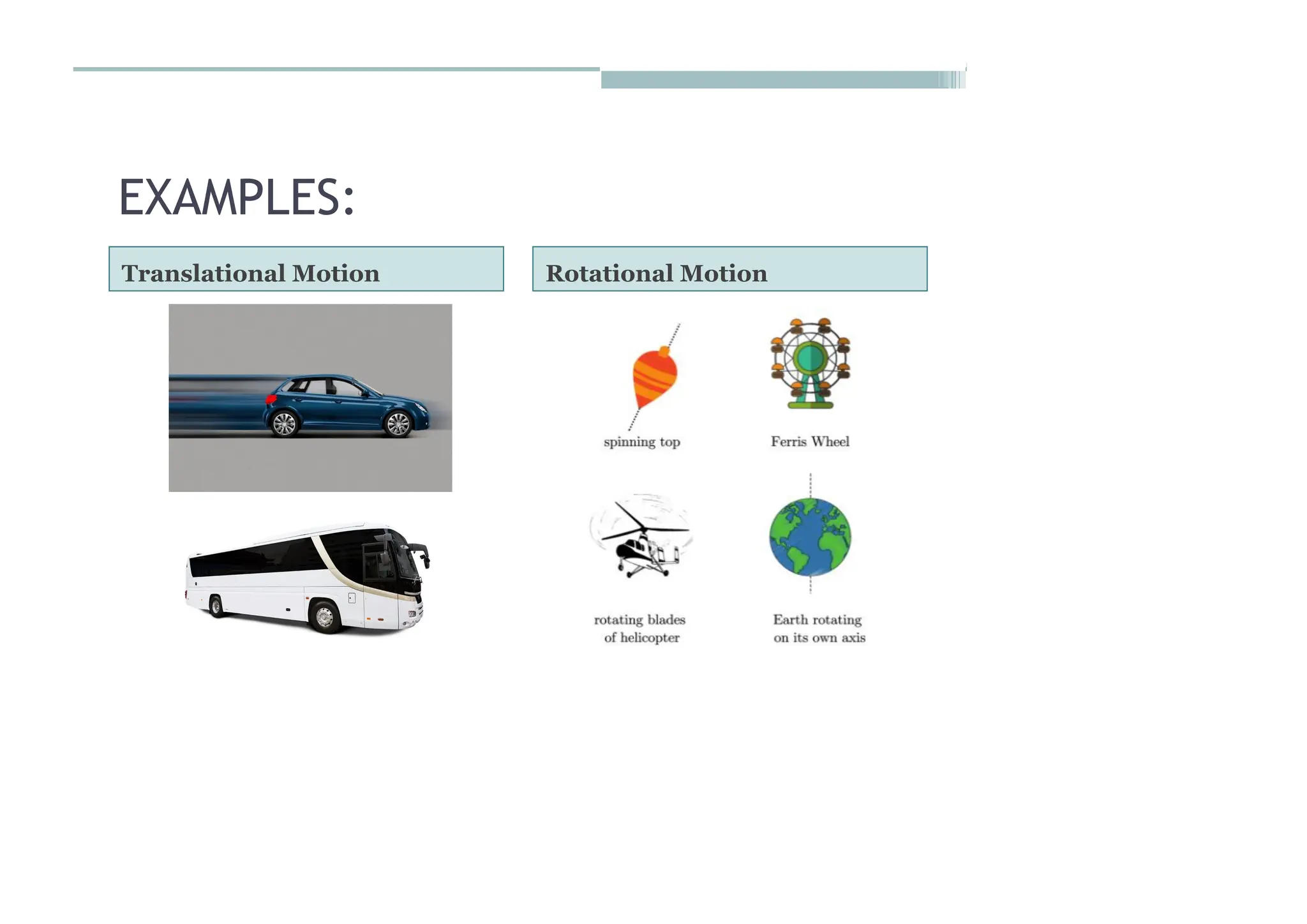
1. Translational Motion – Movement in a
straight line
2. Rotational Motion – Movement around a
point or axis
To stop or maintain either type, we must balance
forces and torques (moments).
Second Condition ofEquilibrium
(Torques)
• Condition:
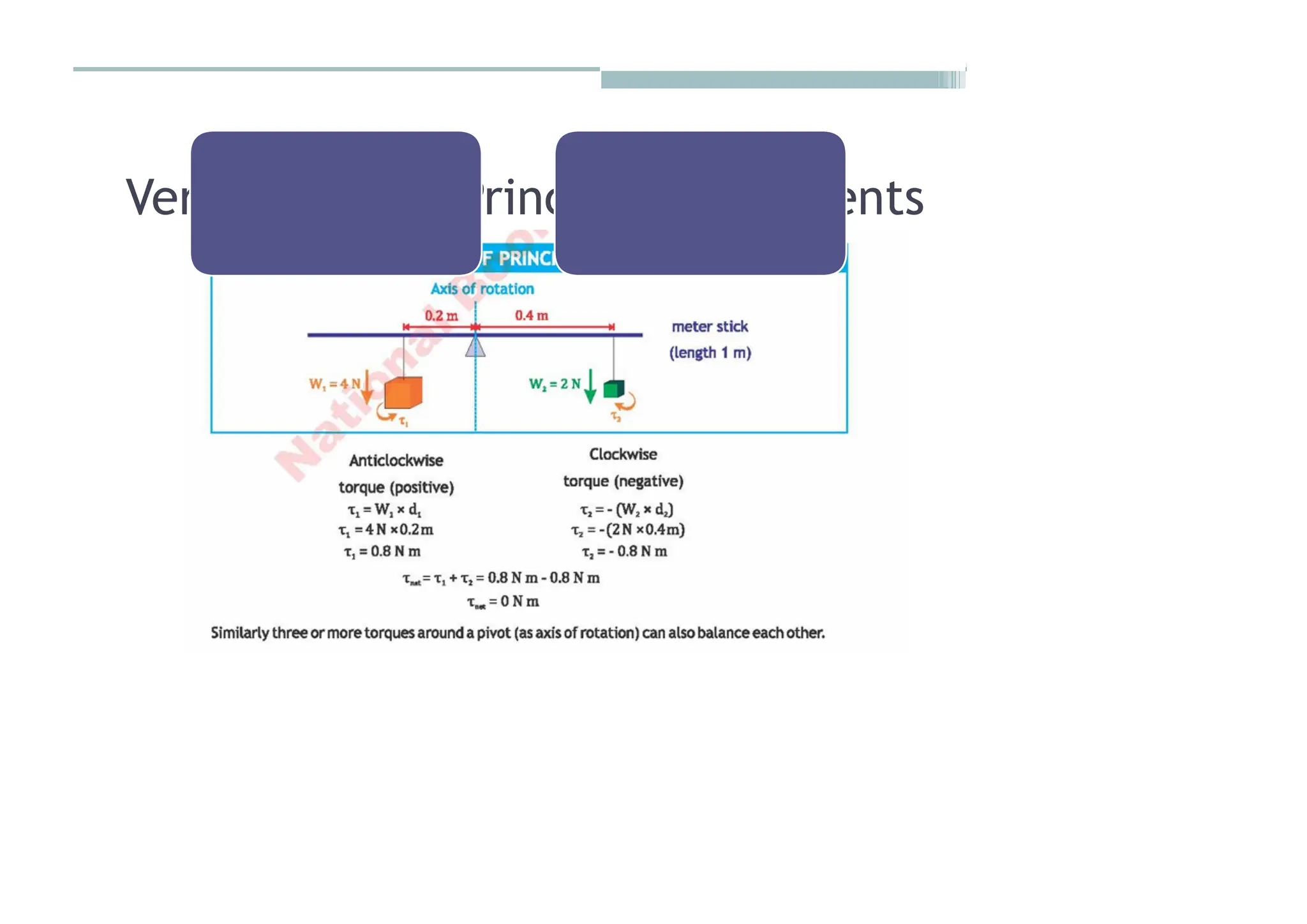
The sum of all torques about a pivot = 0
∑τ=0
Clockwise torques = Anticlockwise torques
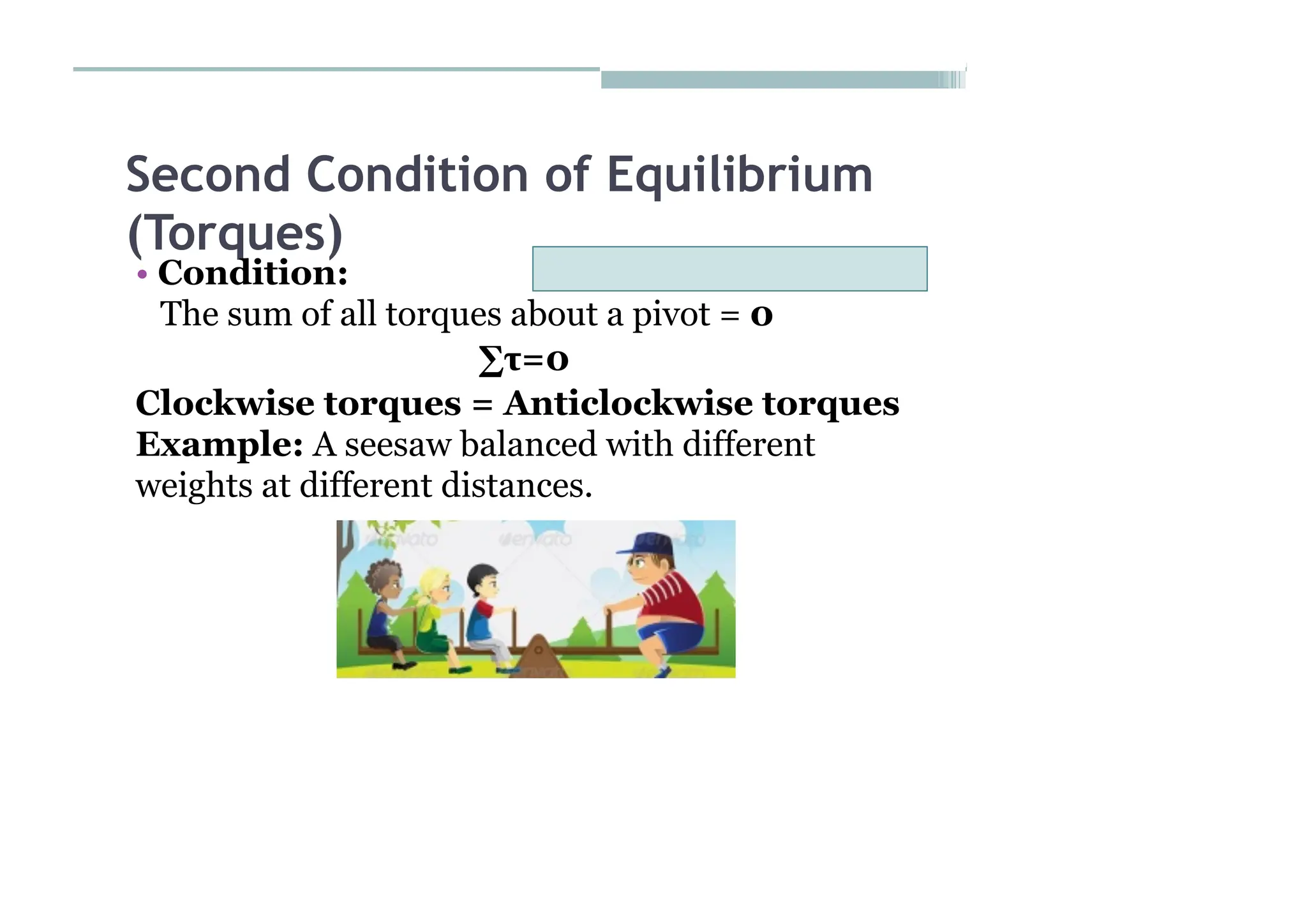
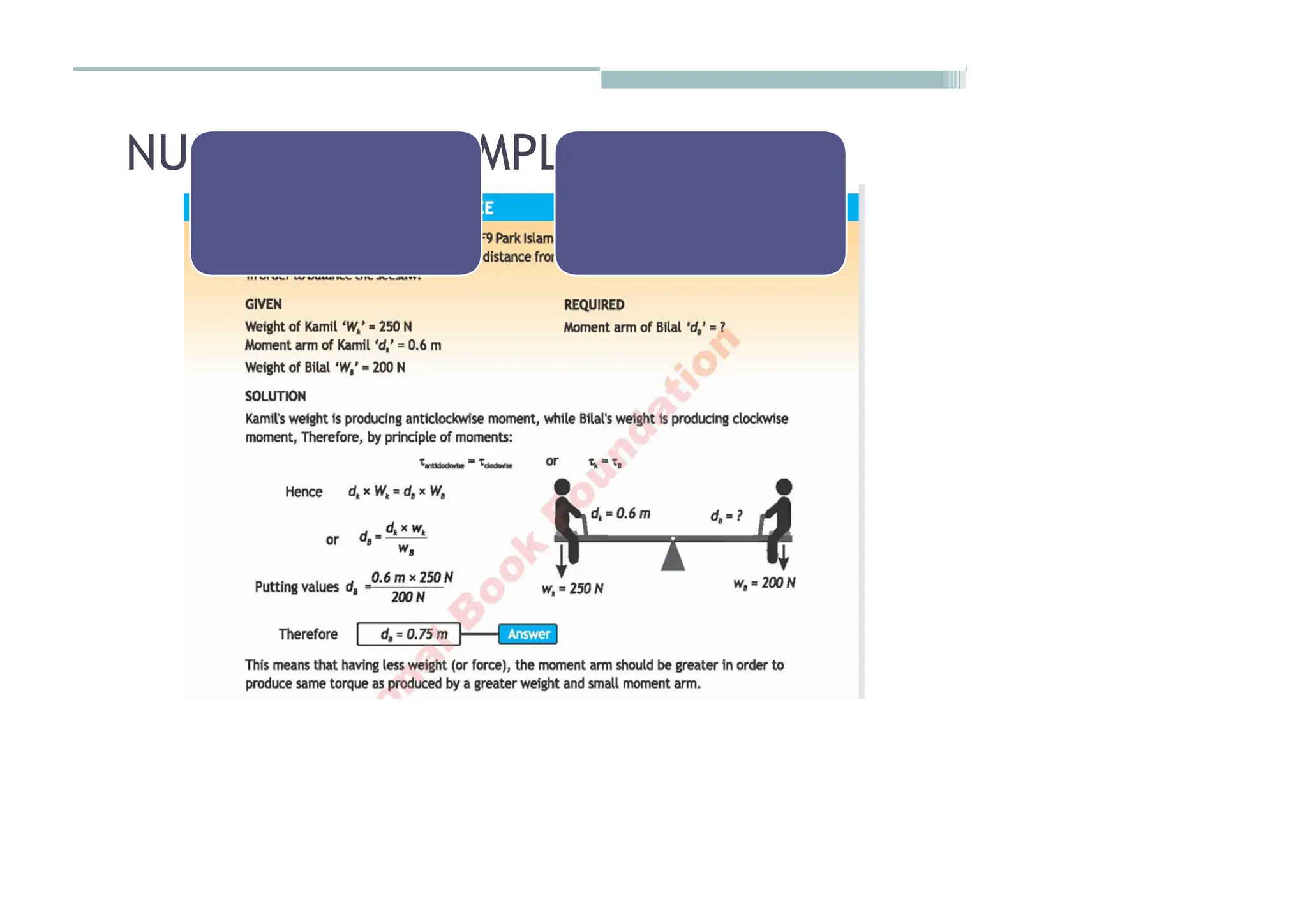
Example: A seesaw balanced with different
weights at different distances.
8.
• For acomplete equilibrium , both first and
second conditions for equilibrium are to be
satisfied.
9.
Anti-clockwise torques aretaken as positive Clockwise torques are taken as negative
• SUM OF BOTH TORQUES MUST BE EQUAL TO ZERO
TO SATISFY THE SECOND CONDITION OF
EQUILIBRIUM
• TO BALANCE TORQUE OR MOMENT OF FORCE, THE
PERPENDICULAR DISTANCE FROM THE AXIS OF
ROTATION PLAY AN IMPORTANT ROLE.
TYPES OF EQUILIBRIUM
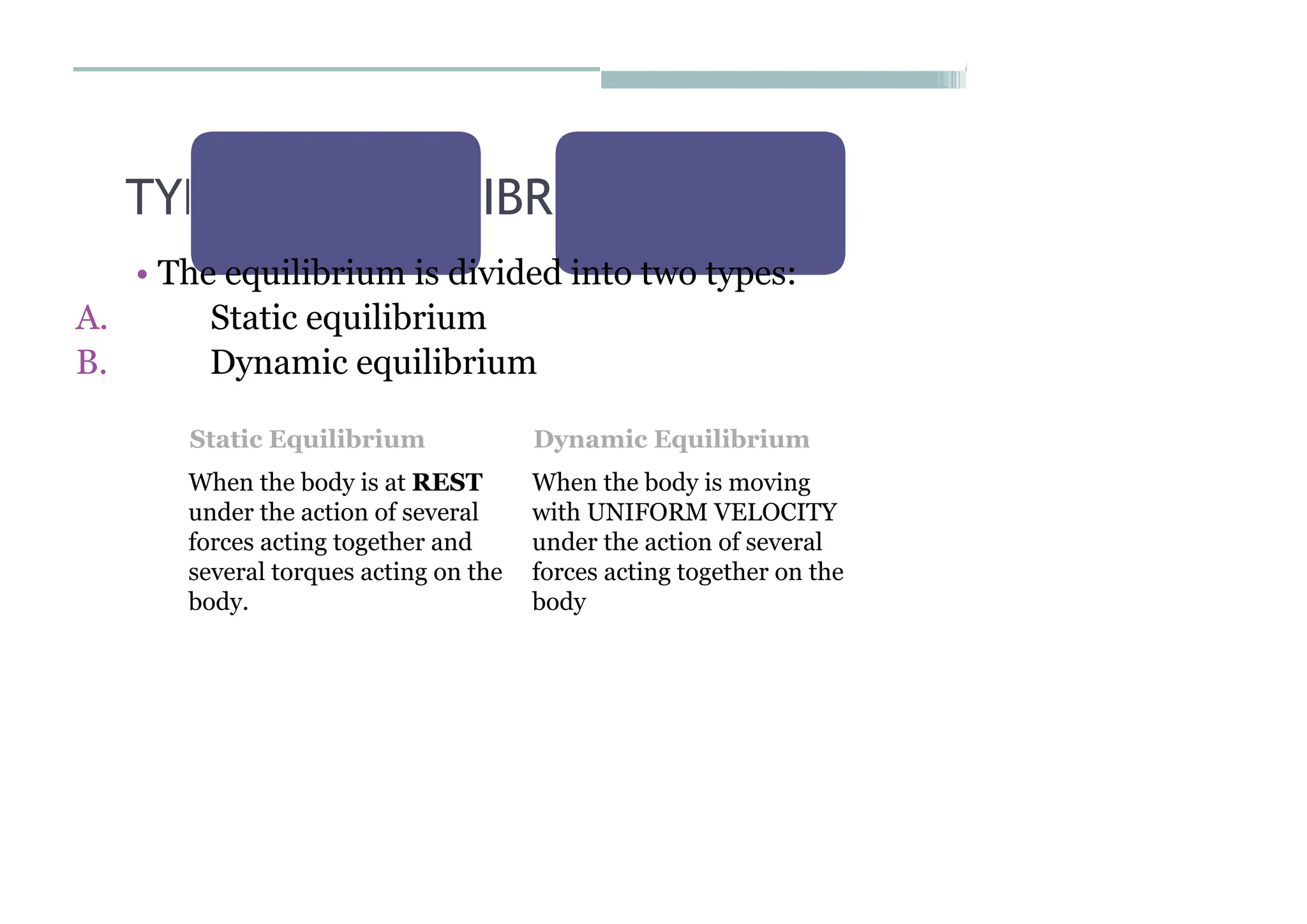
•The equilibrium is divided into two types:
A. Static equilibrium
B. Dynamic equilibrium
Static Equilibrium Dynamic Equilibrium
When the body is at REST
under the action of several
forces acting together and
several torques acting on the
body.
When the body is moving
with UNIFORM VELOCITY
under the action of several
forces acting together on the
body
13.
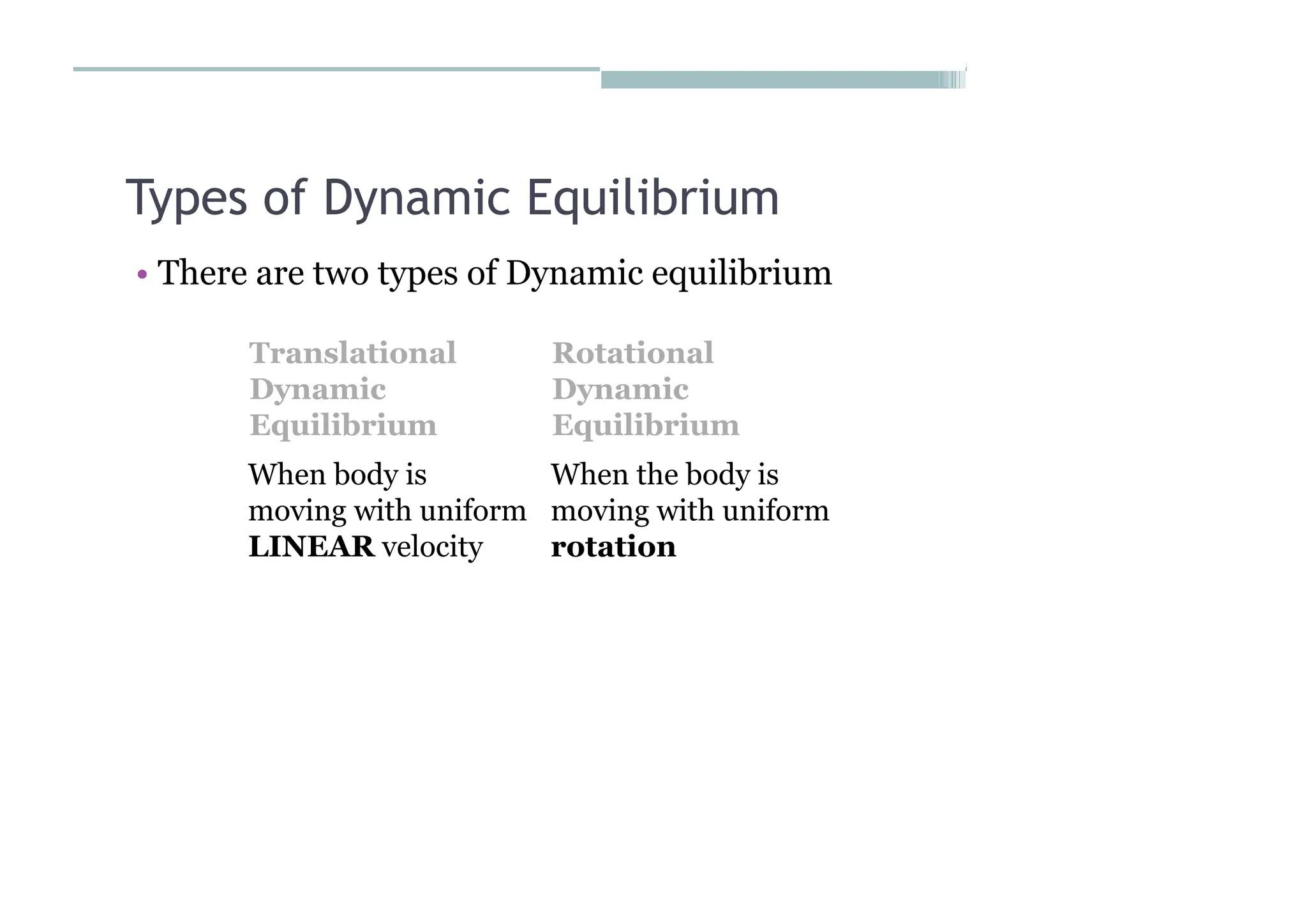
Types of DynamicEquilibrium
• There are two types of Dynamic equilibrium
Translational
Dynamic
Equilibrium
Rotational
Dynamic
Equilibrium
When body is
moving with uniform
LINEAR velocity
When the body is
moving with uniform
rotation