WELCOME TO MY
PRESENTATION
AHSANULLAH UNIVERSITY
OF
SCIENCE AND TECHNOLOGY
PRE-STRESSED CONCRETE
SESSIONAL
PRESENTED BY
MUNSHI MD. RASEL
ID: 10.01.03.075
SECTION B
4th YEAR AND 2nd SEMESTER
DEPARTMENT OF CIVIL ENGINEERING
PRESENTATION TOPIC
EQUILIBRIUM AND EQUATION OF
EQUILIBRIUM:2D
Equilibrium
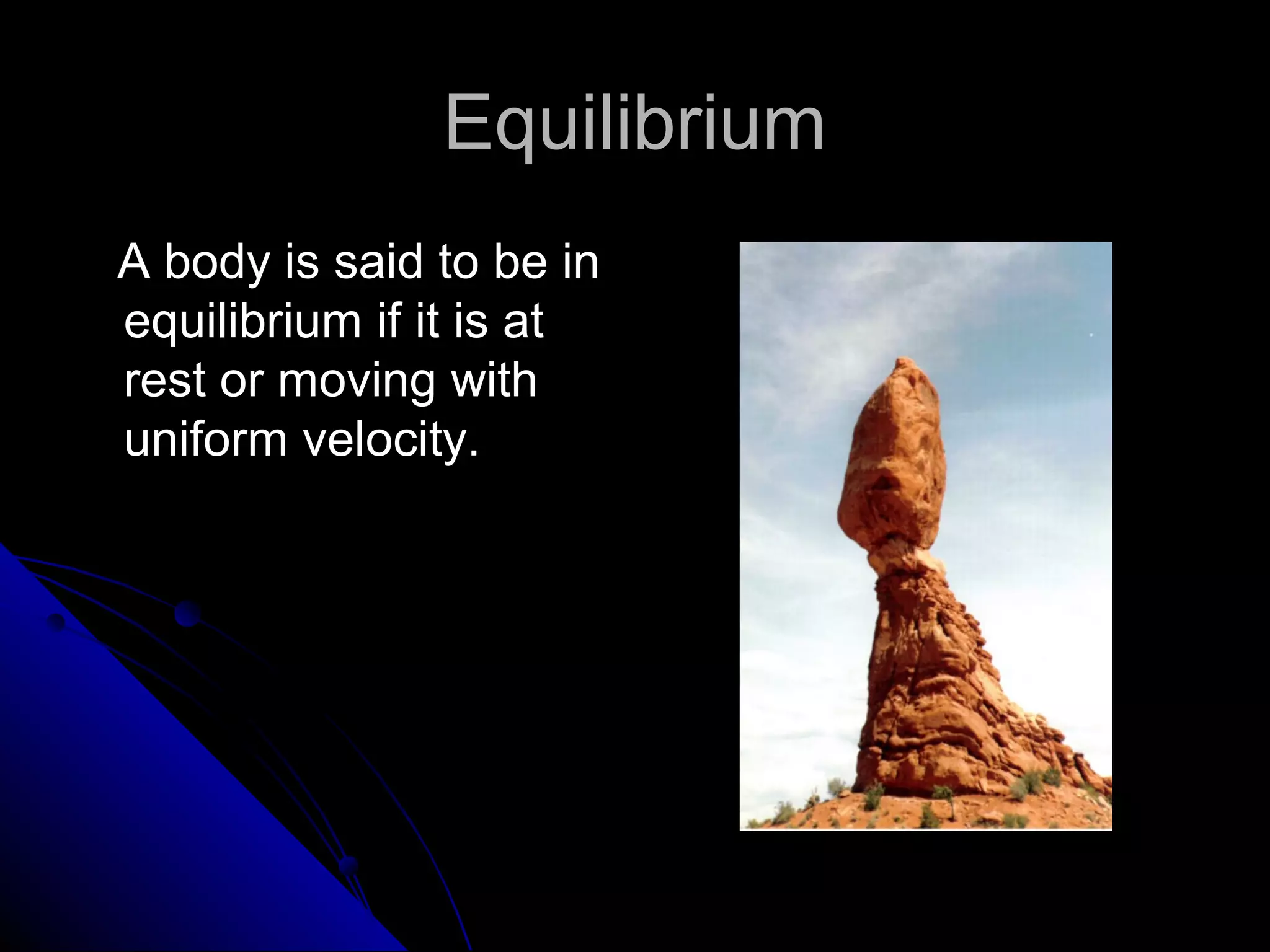
A body is said to be in
equilibrium if it is at
rest or moving with
uniform velocity.
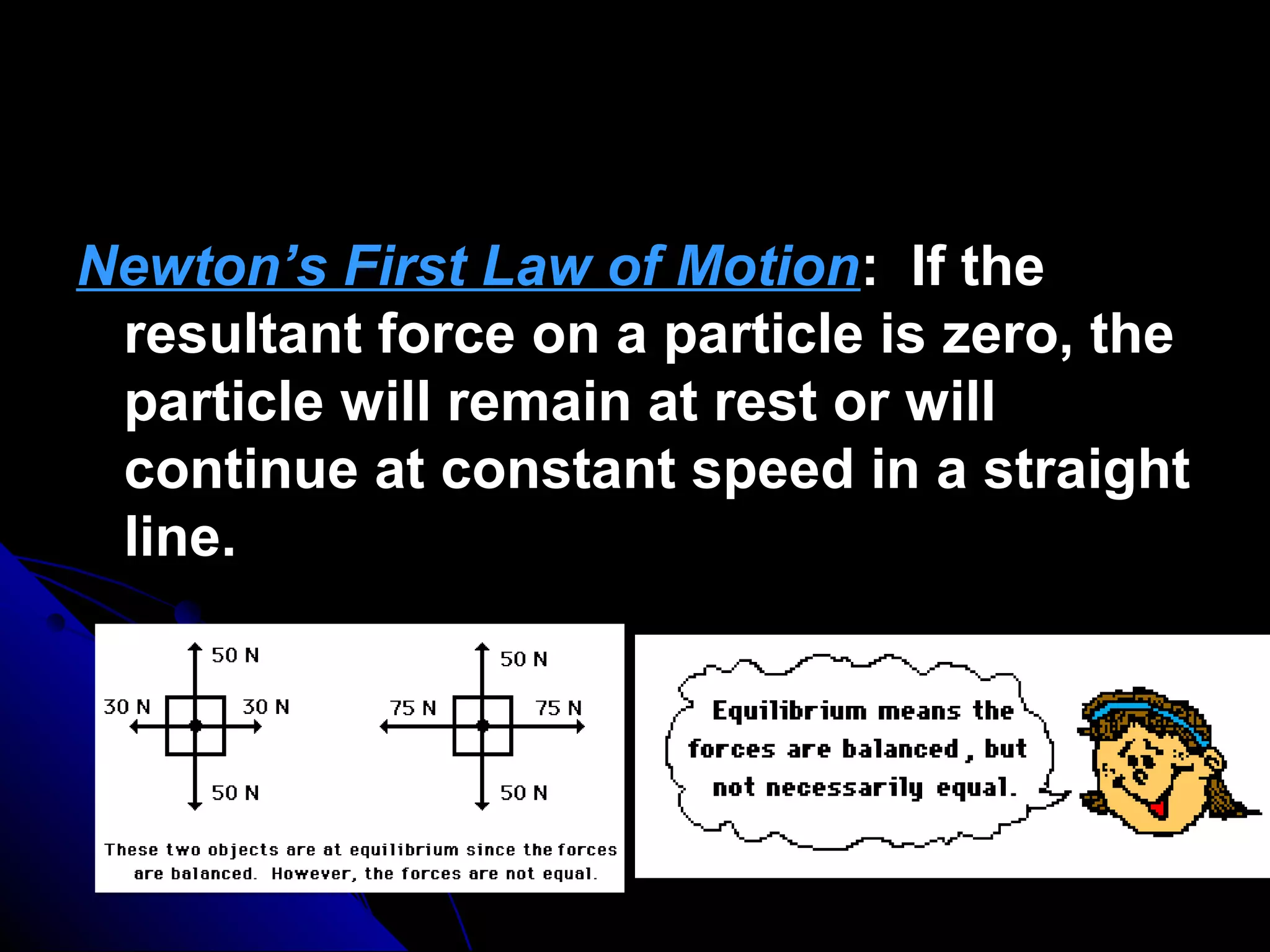
Newton’s First Law of Motion: If the
resultant force on a particle is zero, the
particle will remain at rest or will
continue at constant speed in a straight
line.
Factors that affect equilibrium




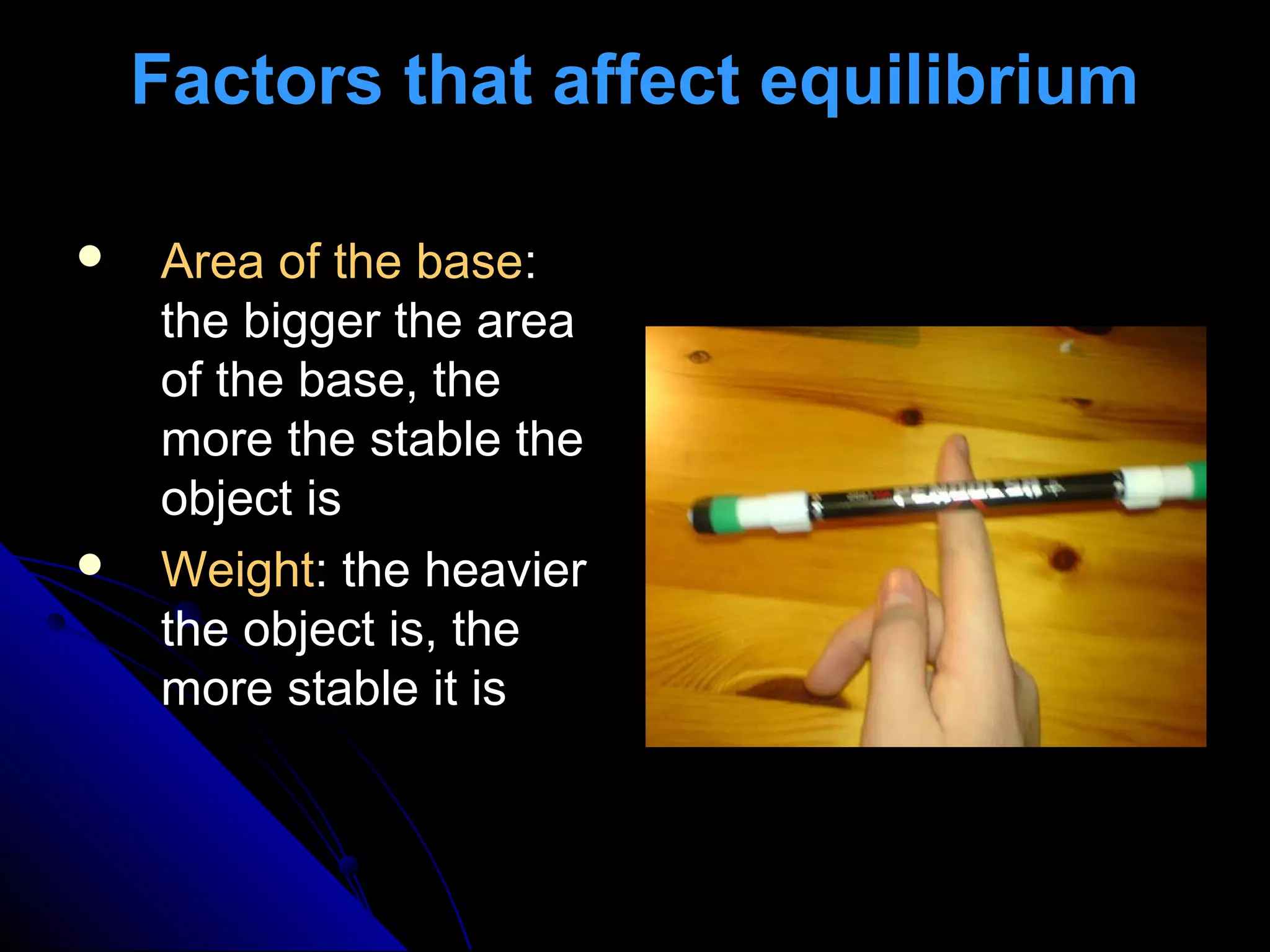
Area of the base:
the bigger the area
of the base, the
more the stable the
object is
Weight: the heavier
the object is, the
more stable it is
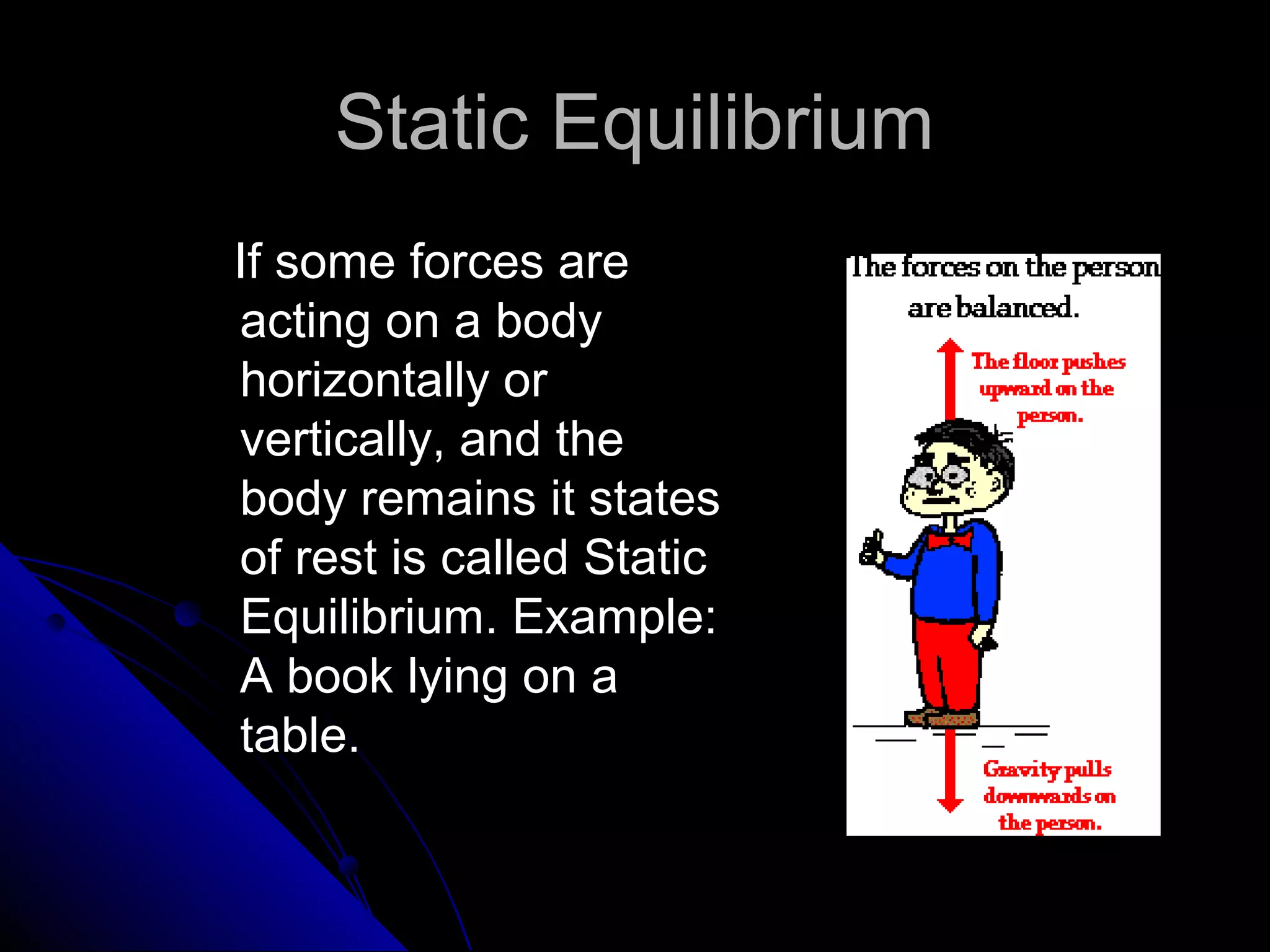
Types of Equilibrium
 Static

Equilibrium
 Dynamic Equilibrium
Static Equilibrium
If some forces are
acting on a body
horizontally or
vertically, and the
body remains it states
of rest is called Static
Equilibrium. Example:
A book lying on a
table.
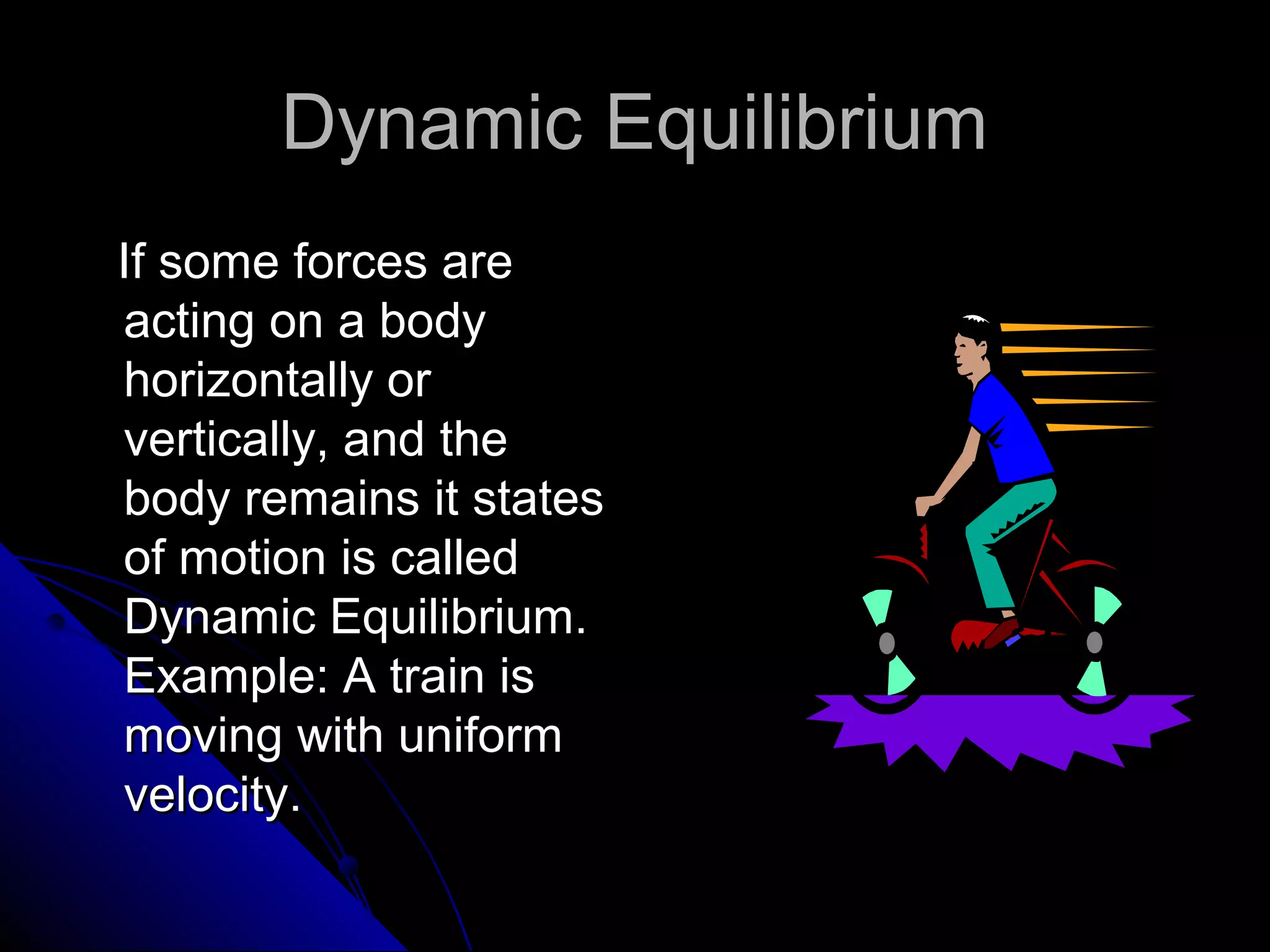
Dynamic Equilibrium
If some forces are
acting on a body
horizontally or
vertically, and the
body remains it states
of motion is called
Dynamic Equilibrium.
Example: A train is
moving with uniform
velocity.
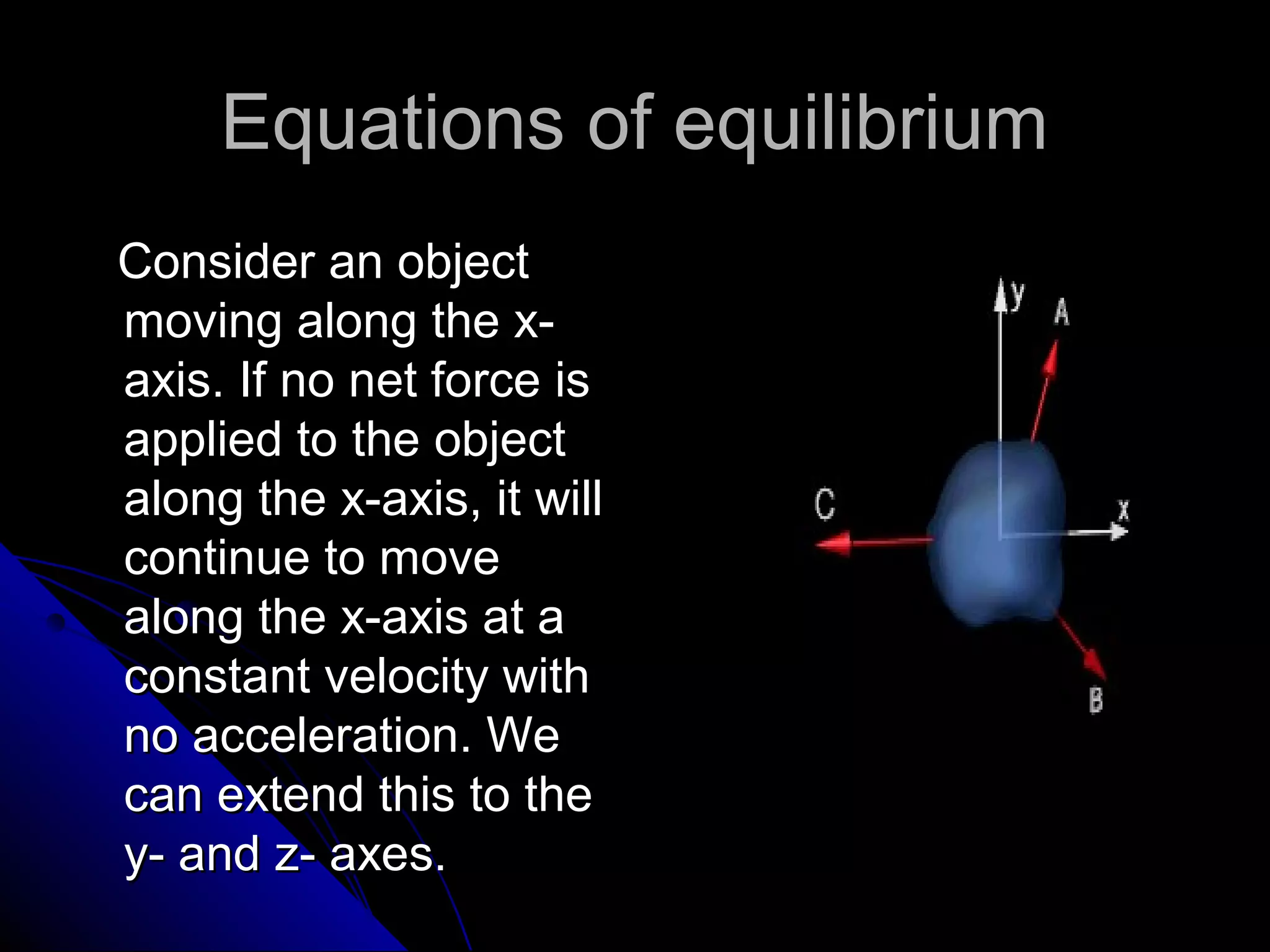
Equations of equilibrium
Consider an object
moving along the xaxis. If no net force is
applied to the object
along the x-axis, it will
continue to move
along the x-axis at a
constant velocity with
no acceleration. We
can extend this to the
y- and z- axes.
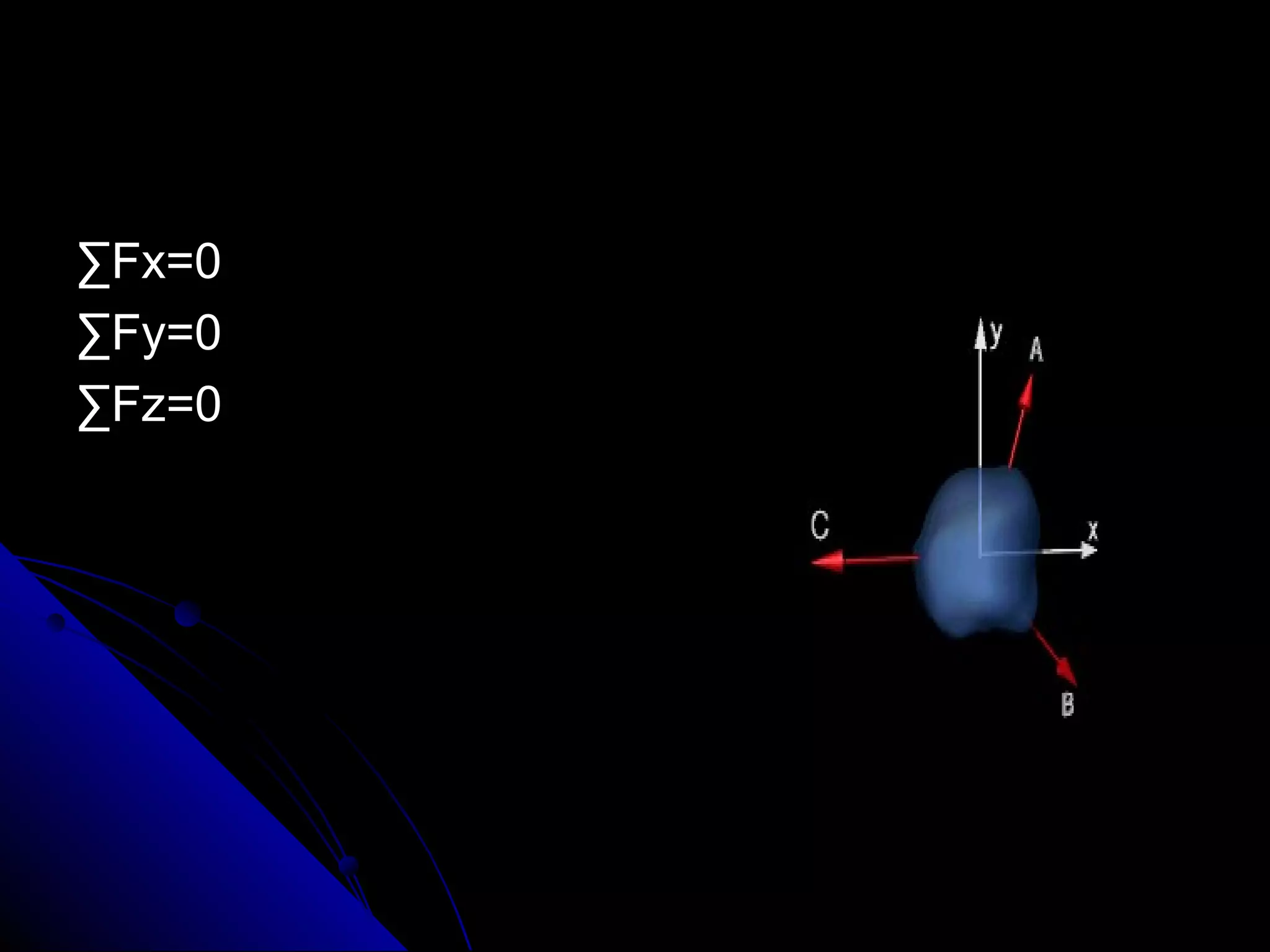
In static systems, where motion does not
occur, the sum of the forces in all
directions must always equal zero
(otherwise, it's a dynamics problem). This
concept can be represented
mathematically with the following
equations:
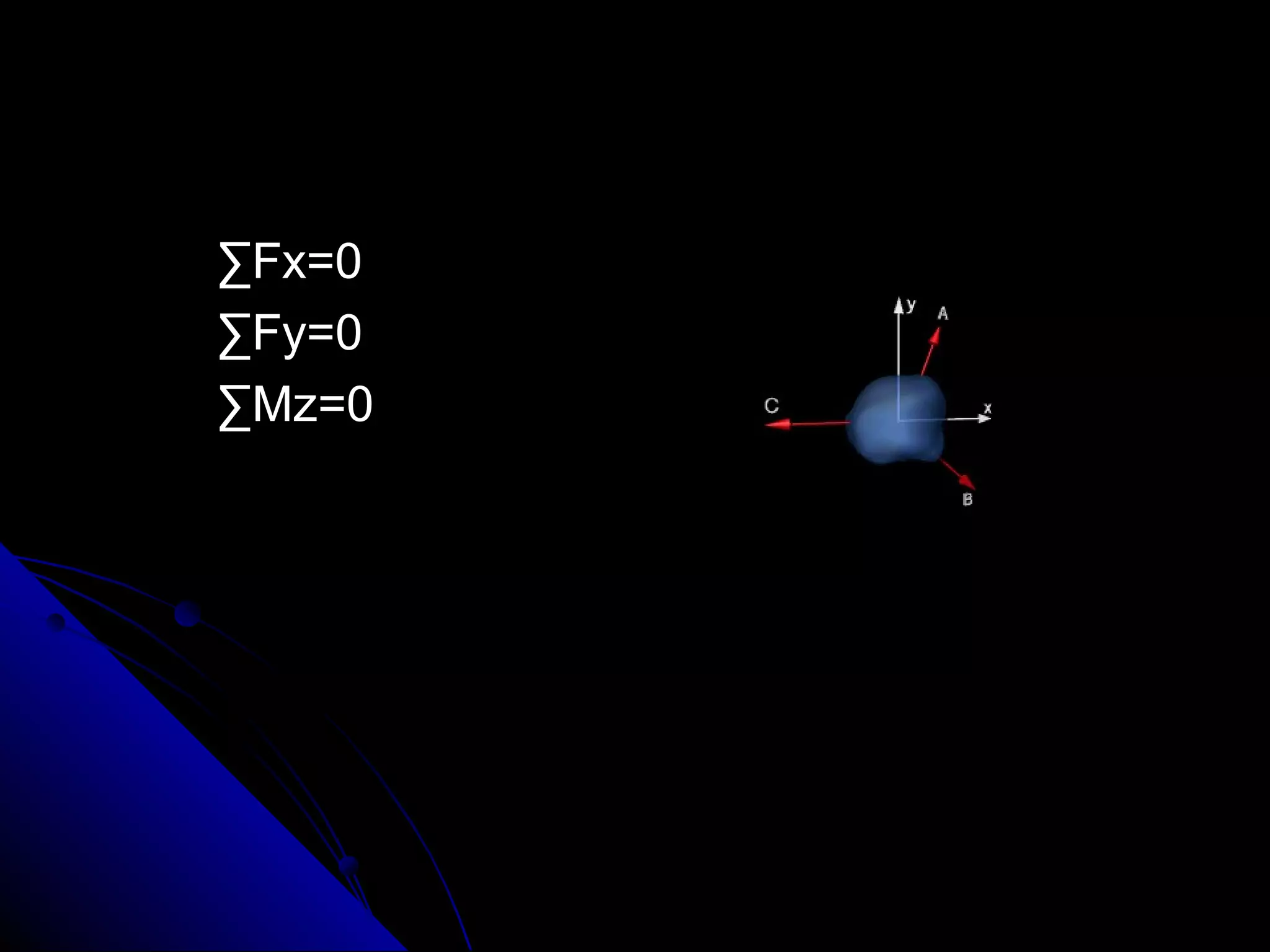
∑Fx=0
∑Fy=0
∑Fz=0
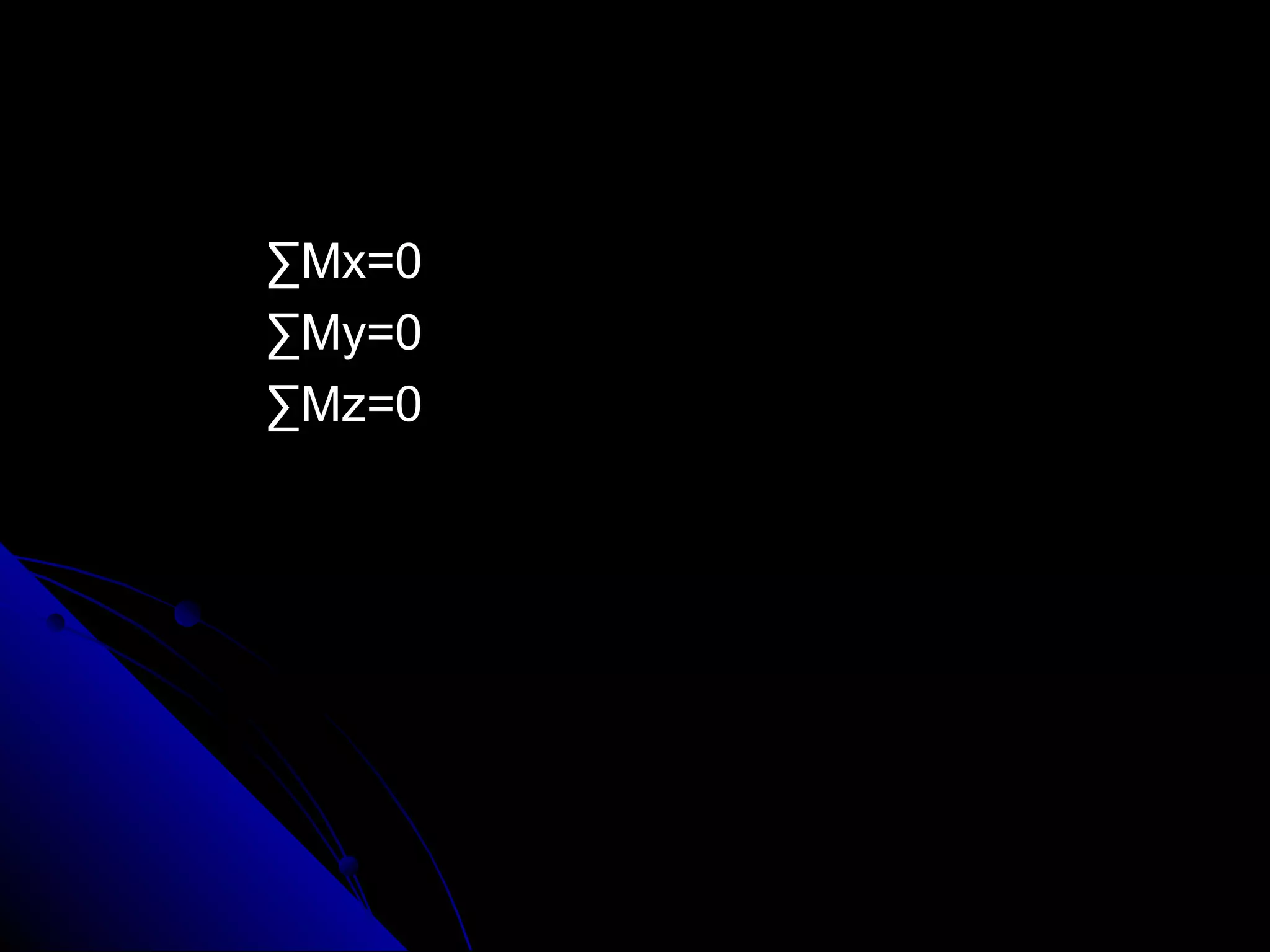
 The

concept also applies to rotational
motion.
 If the resultant moment about an axis is
zero, the object will have no rotational
acceleration about the axis. Again, we can
extend this to moments about the y-axis
and the z-axis. This is represented
mathematically with the following.
∑Mx=0
∑My=0
∑Mz=0
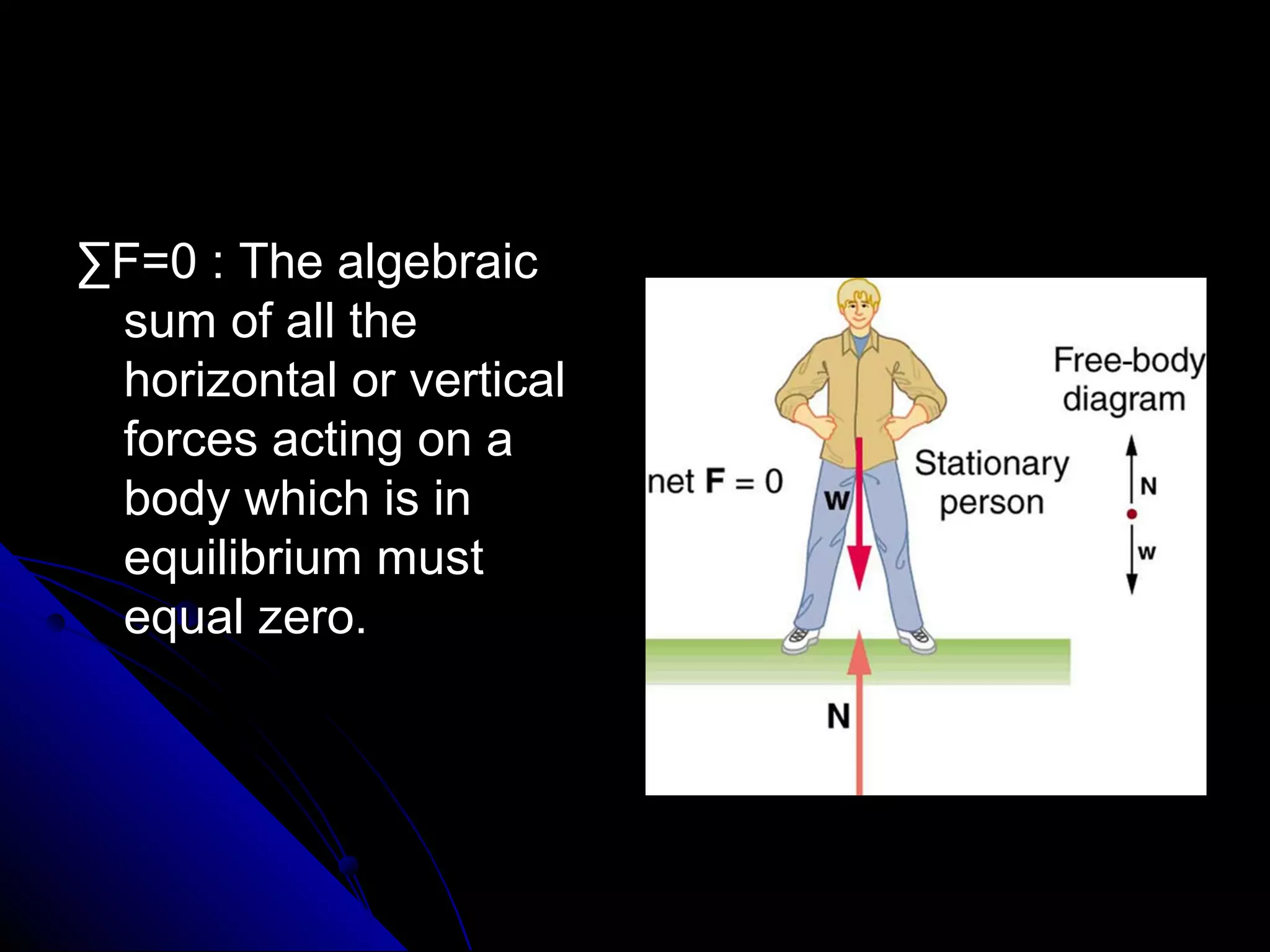
∑F=0 : The algebraic
sum of all the
horizontal or vertical
forces acting on a
body which is in
equilibrium must
equal zero.
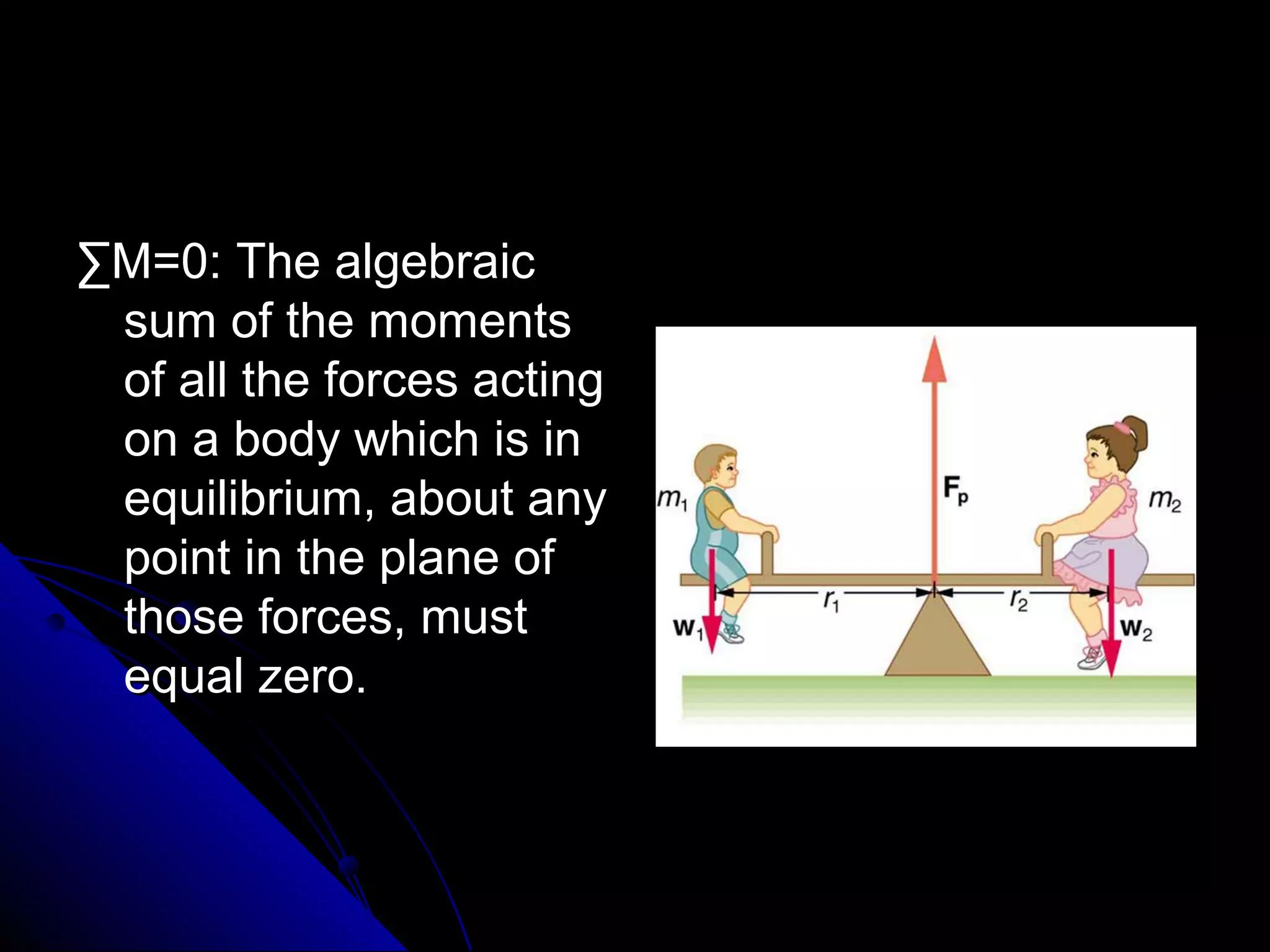
∑M=0: The algebraic
sum of the moments
of all the forces acting
on a body which is in
equilibrium, about any
point in the plane of
those forces, must
equal zero.
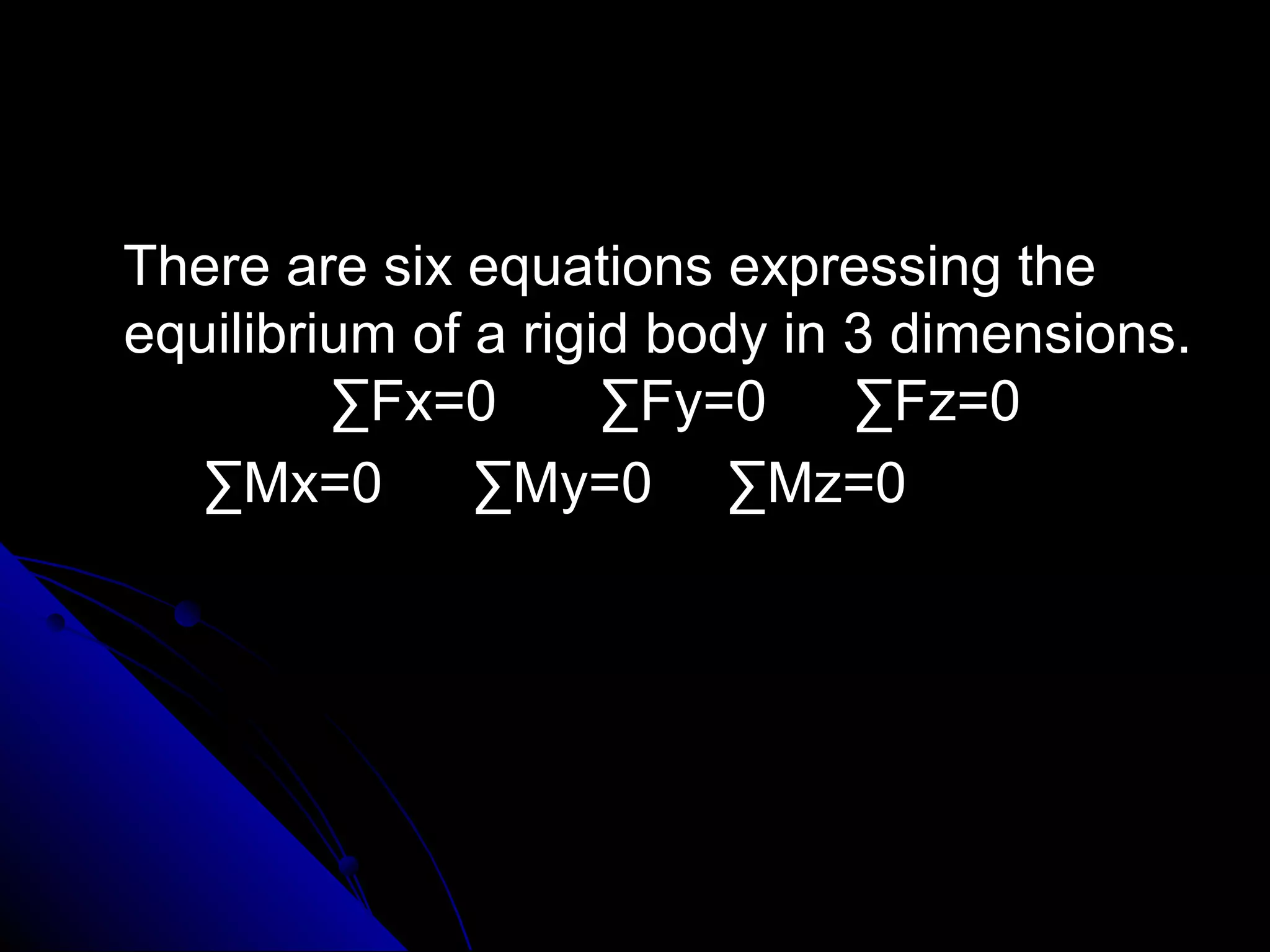
There are six equations expressing the
equilibrium of a rigid body in 3 dimensions.
∑Fx=0
∑Fy=0
∑Fz=0
∑Mx=0
∑My=0 ∑Mz=0
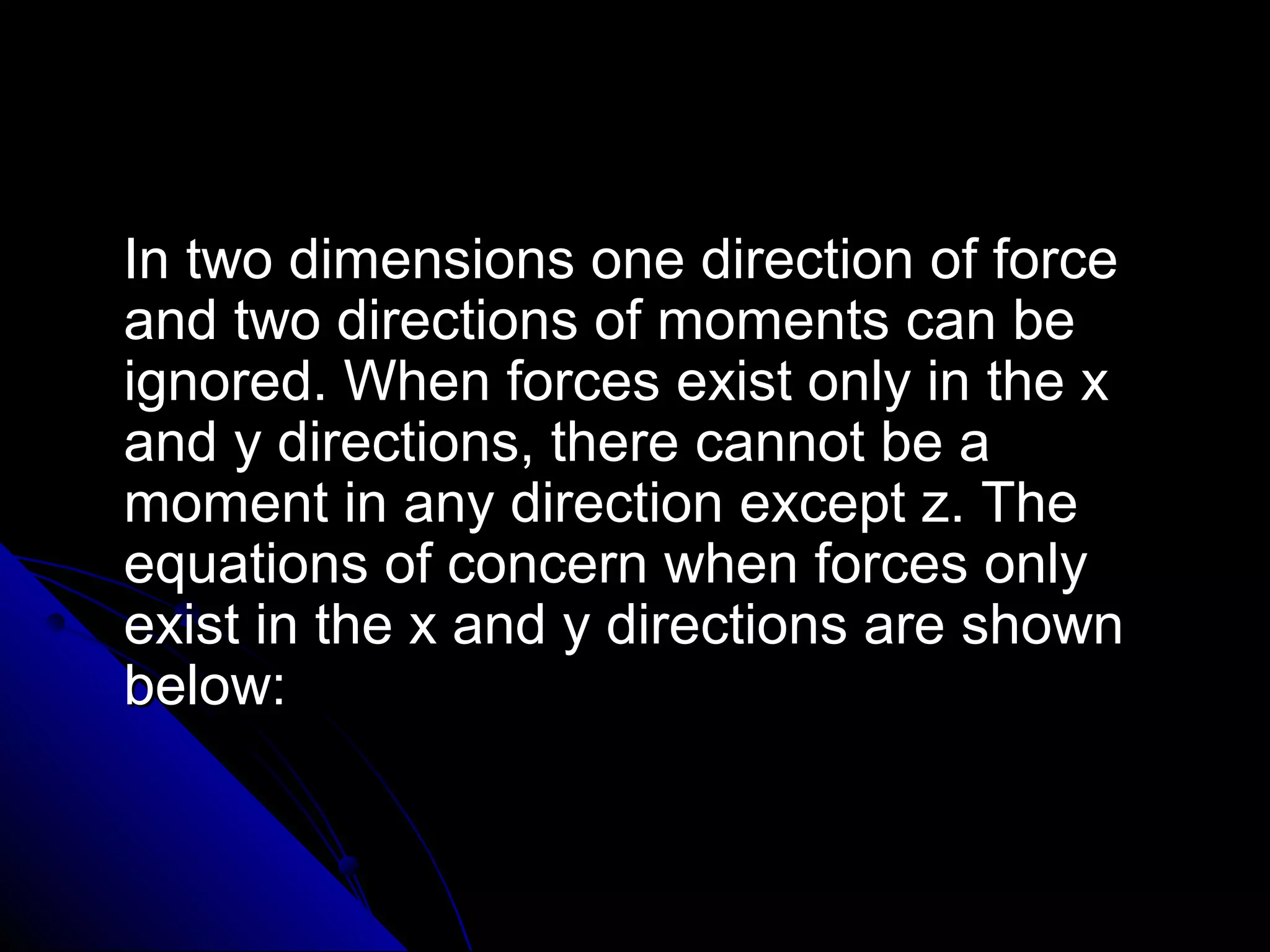
In two dimensions one direction of force
and two directions of moments can be
ignored. When forces exist only in the x
and y directions, there cannot be a
moment in any direction except z. The
equations of concern when forces only
exist in the x and y directions are shown
below:
∑Fx=0
∑Fy=0
∑Mz=0
How to apply equations of
equilibrium?
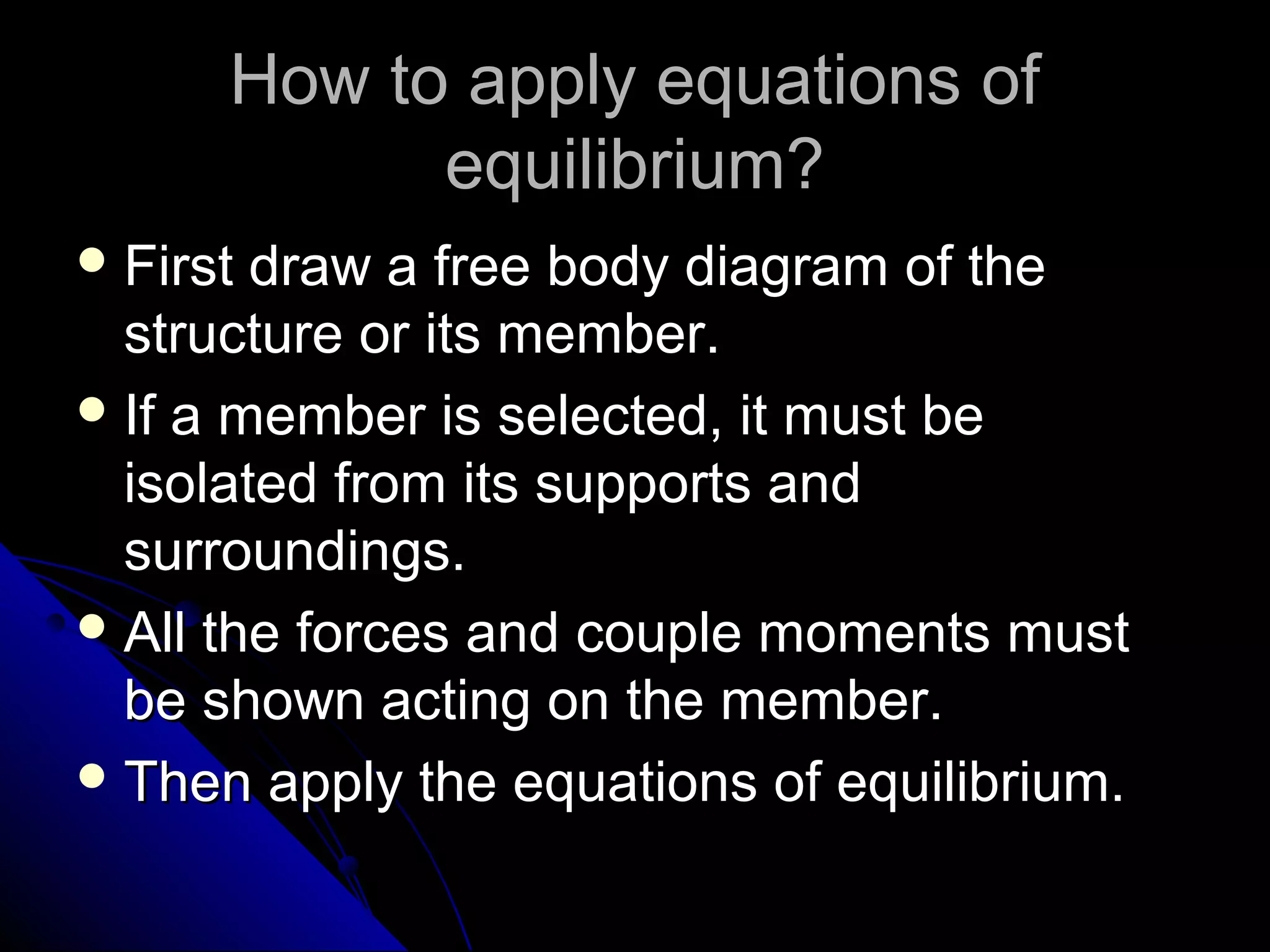
 First

draw a free body diagram of the
structure or its member.
 If a member is selected, it must be
isolated from its supports and
surroundings.
 All the forces and couple moments must
be shown acting on the member.
 Then apply the equations of equilibrium.
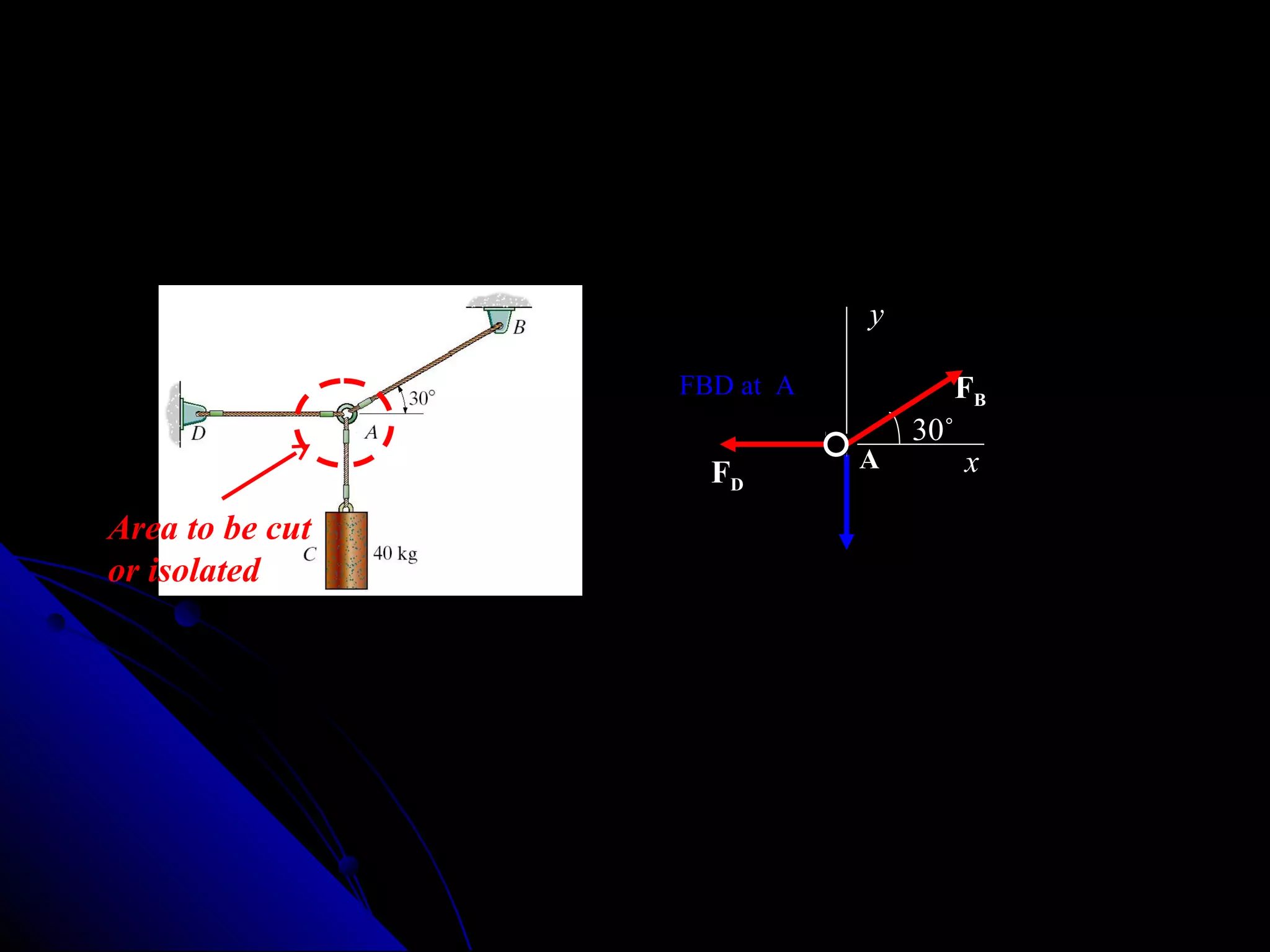
y
FBD at A

FD A

Area to be cut
or isolated

FB
A

30˚

x
Example
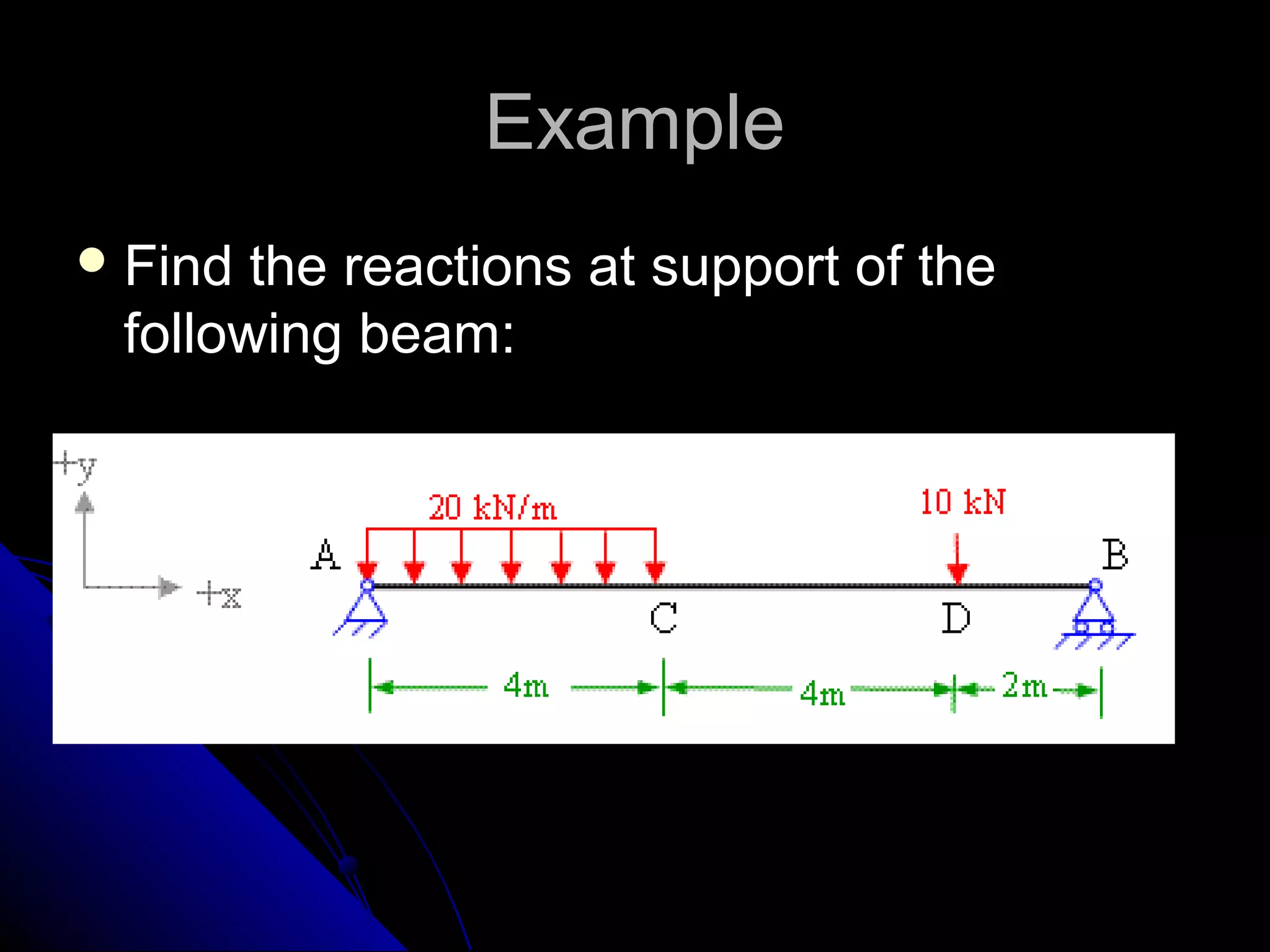
 Find

the reactions at support of the
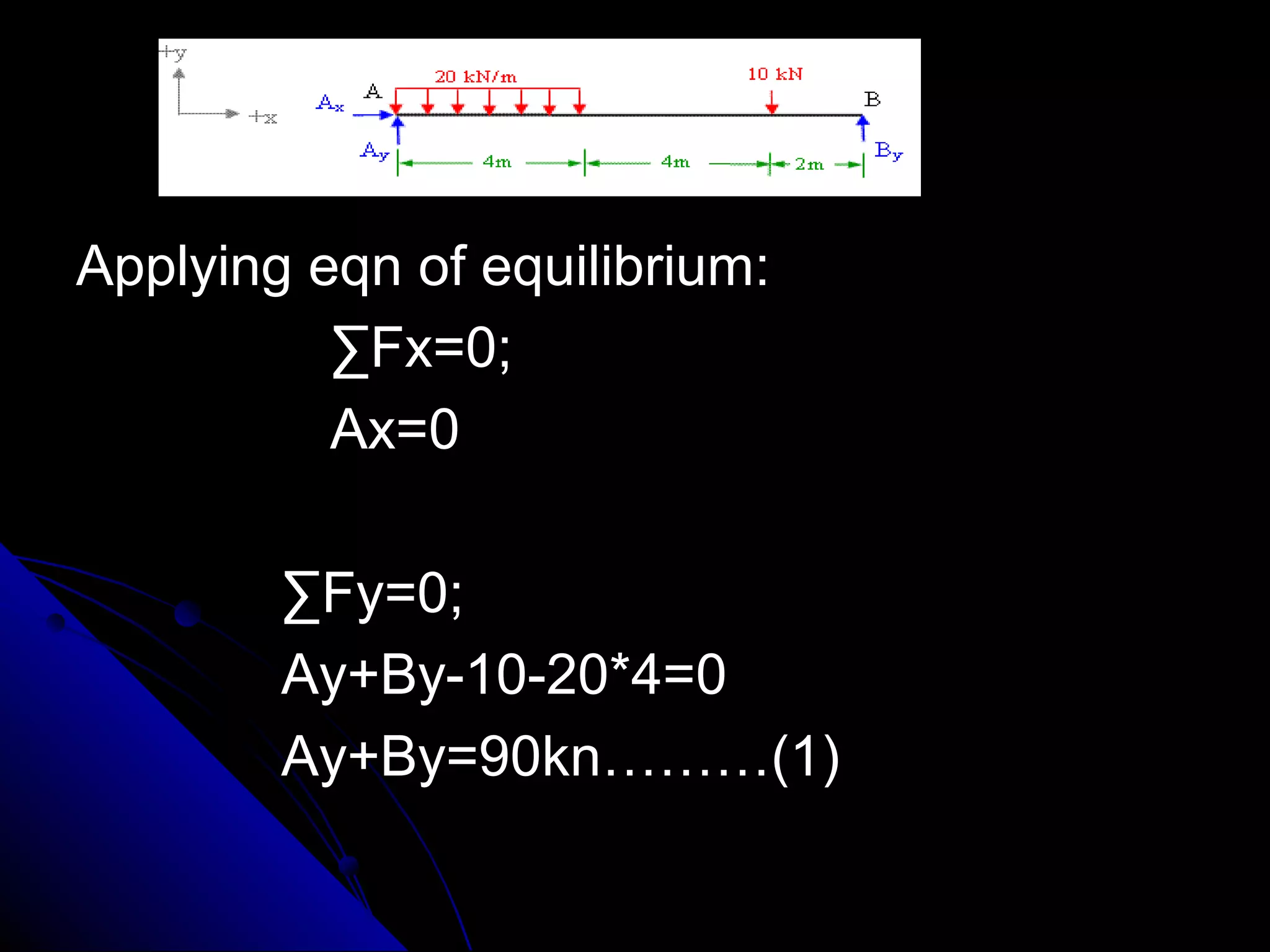
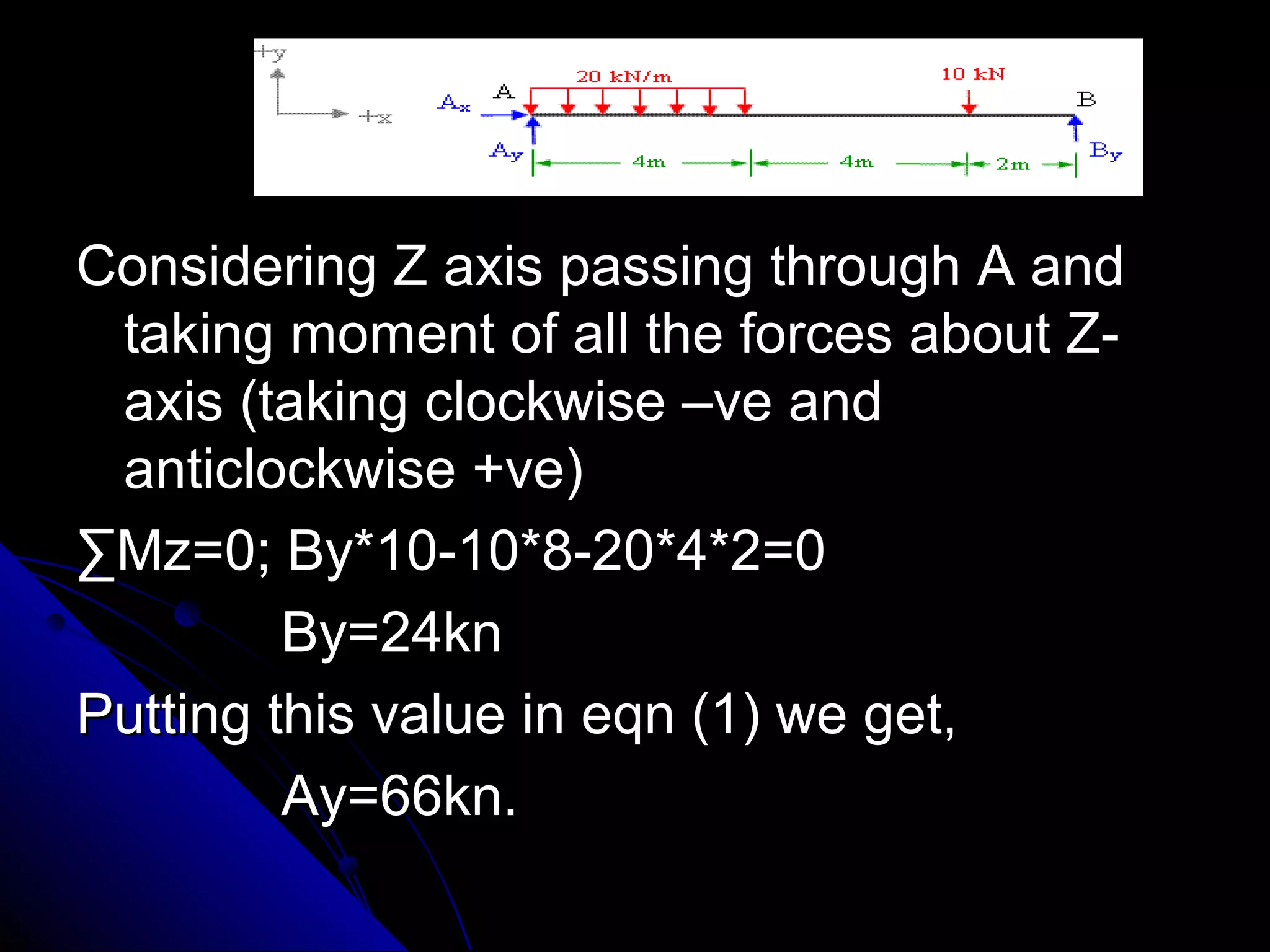
following beam:
Applying eqn of equilibrium:
∑Fx=0;
Ax=0
∑Fy=0;
Ay+By-10-20*4=0
Ay+By=90kn………(1)
Considering Z axis passing through A and
taking moment of all the forces about Zaxis (taking clockwise –ve and
anticlockwise +ve)
∑Mz=0; By*10-10*8-20*4*2=0
By=24kn
Putting this value in eqn (1) we get,
Ay=66kn.
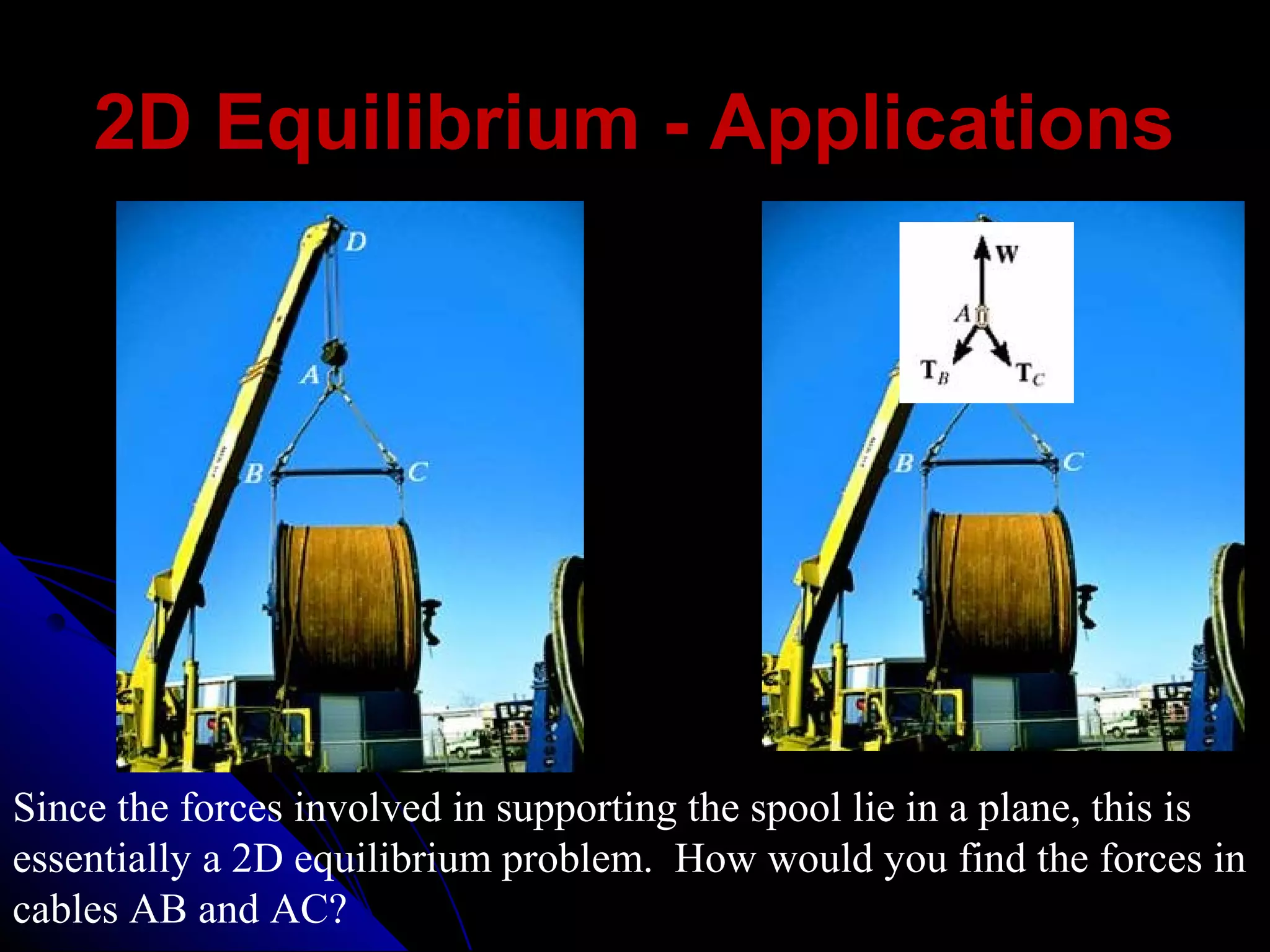
2D Equilibrium - Applications

Since the forces involved in supporting the spool lie in a plane, this is
essentially a 2D equilibrium problem. How would you find the forces in
cables AB and AC?
2D Equilibrium -- Applications
2D Equilibrium Applications

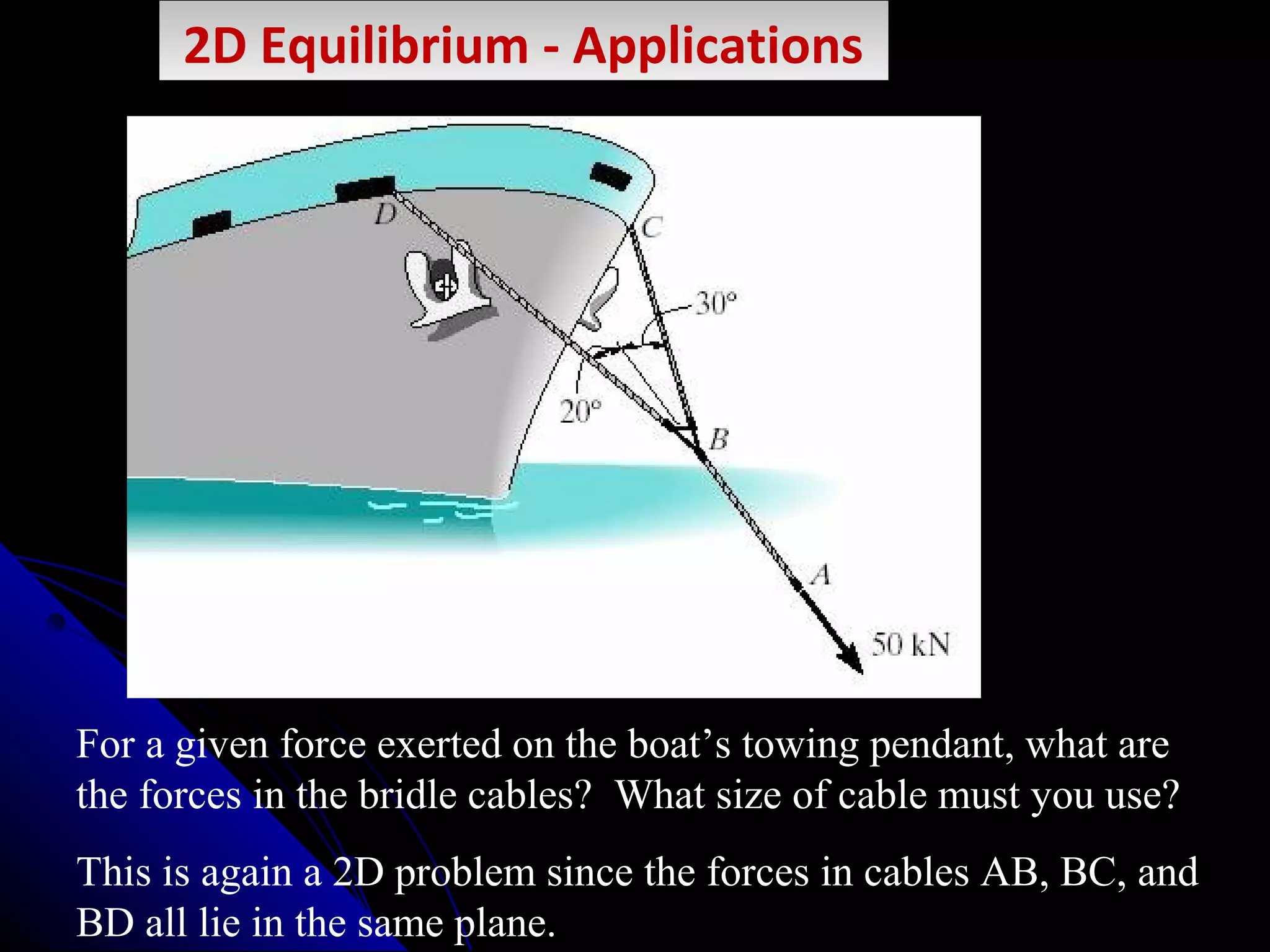
For a given force exerted on the boat’s towing pendant, what are
the forces in the bridle cables? What size of cable must you use?
This is again a 2D problem since the forces in cables AB, BC, and
BD all lie in the same plane.
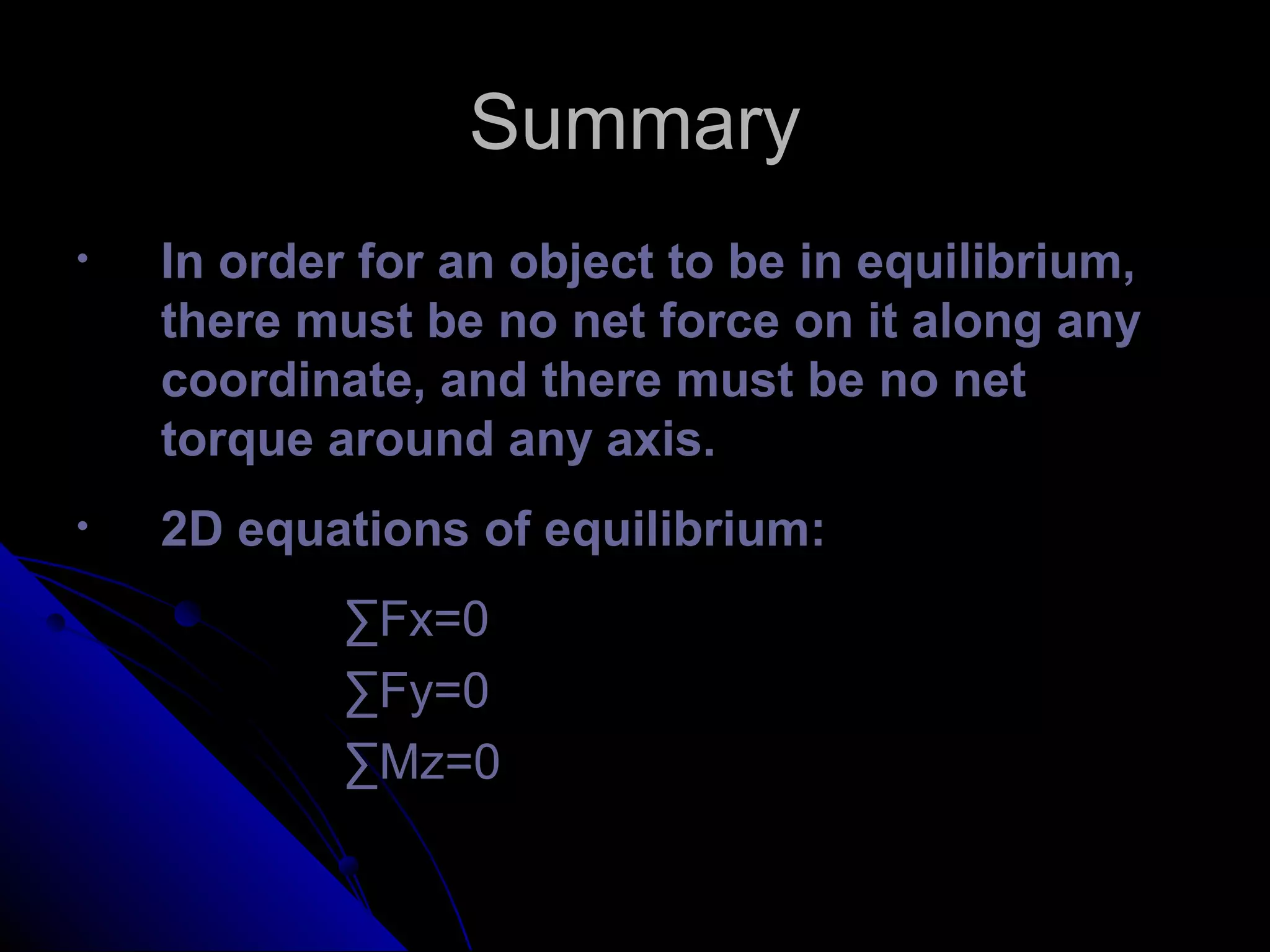
Summary
•

In order for an object to be in equilibrium,
there must be no net force on it along any
coordinate, and there must be no net
torque around any axis.

•

2D equations of equilibrium:
∑Fx=0
∑Fy=0
∑Mz=0
Thanks for your kind attention

Any Questions?

Equilibrium and Equation of Equilibrium:2D

  • 1.
  • 2.
    AHSANULLAH UNIVERSITY OF SCIENCE ANDTECHNOLOGY PRE-STRESSED CONCRETE SESSIONAL
  • 3.
    PRESENTED BY MUNSHI MD.RASEL ID: 10.01.03.075 SECTION B 4th YEAR AND 2nd SEMESTER DEPARTMENT OF CIVIL ENGINEERING
  • 4.
    PRESENTATION TOPIC EQUILIBRIUM ANDEQUATION OF EQUILIBRIUM:2D
  • 5.
    Equilibrium A body issaid to be in equilibrium if it is at rest or moving with uniform velocity.
  • 6.
    Newton’s First Lawof Motion: If the resultant force on a particle is zero, the particle will remain at rest or will continue at constant speed in a straight line.
  • 7.
    Factors that affectequilibrium   Area of the base: the bigger the area of the base, the more the stable the object is Weight: the heavier the object is, the more stable it is
  • 8.
    Types of Equilibrium Static Equilibrium  Dynamic Equilibrium
  • 9.
    Static Equilibrium If someforces are acting on a body horizontally or vertically, and the body remains it states of rest is called Static Equilibrium. Example: A book lying on a table.
  • 10.
    Dynamic Equilibrium If someforces are acting on a body horizontally or vertically, and the body remains it states of motion is called Dynamic Equilibrium. Example: A train is moving with uniform velocity.
  • 11.
    Equations of equilibrium Consideran object moving along the xaxis. If no net force is applied to the object along the x-axis, it will continue to move along the x-axis at a constant velocity with no acceleration. We can extend this to the y- and z- axes.
  • 12.
    In static systems,where motion does not occur, the sum of the forces in all directions must always equal zero (otherwise, it's a dynamics problem). This concept can be represented mathematically with the following equations:
  • 13.
  • 14.
     The concept alsoapplies to rotational motion.  If the resultant moment about an axis is zero, the object will have no rotational acceleration about the axis. Again, we can extend this to moments about the y-axis and the z-axis. This is represented mathematically with the following.
  • 15.
  • 16.
    ∑F=0 : Thealgebraic sum of all the horizontal or vertical forces acting on a body which is in equilibrium must equal zero.
  • 17.
    ∑M=0: The algebraic sumof the moments of all the forces acting on a body which is in equilibrium, about any point in the plane of those forces, must equal zero.
  • 18.
    There are sixequations expressing the equilibrium of a rigid body in 3 dimensions. ∑Fx=0 ∑Fy=0 ∑Fz=0 ∑Mx=0 ∑My=0 ∑Mz=0
  • 19.
    In two dimensionsone direction of force and two directions of moments can be ignored. When forces exist only in the x and y directions, there cannot be a moment in any direction except z. The equations of concern when forces only exist in the x and y directions are shown below:
  • 20.
  • 21.
    How to applyequations of equilibrium?  First draw a free body diagram of the structure or its member.  If a member is selected, it must be isolated from its supports and surroundings.  All the forces and couple moments must be shown acting on the member.  Then apply the equations of equilibrium.
  • 22.
    y FBD at A FDA Area to be cut or isolated FB A 30˚ x
  • 23.
    Example  Find the reactionsat support of the following beam:
  • 24.
    Applying eqn ofequilibrium: ∑Fx=0; Ax=0 ∑Fy=0; Ay+By-10-20*4=0 Ay+By=90kn………(1)
  • 25.
    Considering Z axispassing through A and taking moment of all the forces about Zaxis (taking clockwise –ve and anticlockwise +ve) ∑Mz=0; By*10-10*8-20*4*2=0 By=24kn Putting this value in eqn (1) we get, Ay=66kn.
  • 26.
    2D Equilibrium -Applications Since the forces involved in supporting the spool lie in a plane, this is essentially a 2D equilibrium problem. How would you find the forces in cables AB and AC?
  • 27.
    2D Equilibrium --Applications 2D Equilibrium Applications For a given force exerted on the boat’s towing pendant, what are the forces in the bridle cables? What size of cable must you use? This is again a 2D problem since the forces in cables AB, BC, and BD all lie in the same plane.
  • 28.
    Summary • In order foran object to be in equilibrium, there must be no net force on it along any coordinate, and there must be no net torque around any axis. • 2D equations of equilibrium: ∑Fx=0 ∑Fy=0 ∑Mz=0
  • 29.
    Thanks for yourkind attention Any Questions?